Kyoto National Museum: Japan's Pre-Modern Art Treasury in Higashiyama
The Kyoto National Museum holds one of Japan's most significant collections of pre-modern Japanese and East Asian art, spanning painting, sculpture, ceramics, textiles, and calligraphy. Housed in a landmark Meiji-era building beside Sanjusangen-do, it rewards slow, careful visitors far more than rushed ones.
Quick Facts
- Location
- 527 Chaya-cho, Higashiyama-ku, Kyoto 605-0931
- Getting There
- Shichijo Station (Keihan Railway), 7-min walk; Kyoto Station (JR/Kintetsu) + city bus
- Time Needed
- 1.5 to 3 hours for collection galleries; longer during special exhibitions
- Cost
- Collection galleries: ¥700 adults, ¥350 students; under 18 and over 70 free; special exhibitions vary
- Best for
- Art lovers, history enthusiasts, rainy-day culture seekers, travelers who want depth over spectacle
- Official website
- www.kyohaku.go.jp/eng
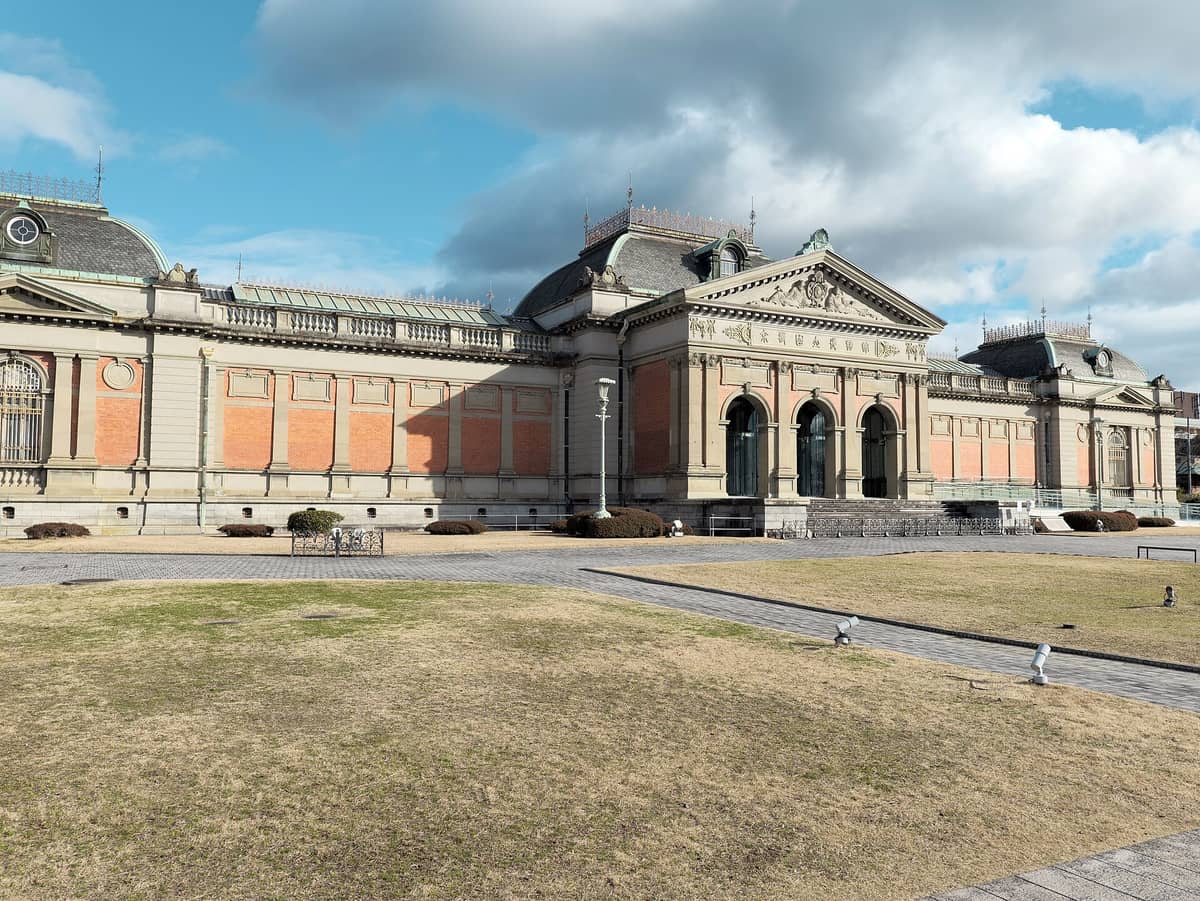
What the Kyoto National Museum Actually Is
The Kyoto National Museum (京都国立博物館) is a national institution dedicated to the preservation, study, and display of pre-modern Japanese and East Asian art and cultural objects. It is not a general history museum and it is not a temple-and-shrine showcase. Its collection database holds over 9,000 objects and more than 21,000 images, drawn from Kyoto temples, imperial collections, private estates, and international acquisitions. The depth here is unusual even by Japanese museum standards.
The museum operates across two distinct architectural eras. The original 1895 Meiji-period building, now called the Meiji Kotokan, is a red-brick Western-style structure that sits in the garden as a visual anchor. The primary exhibition spaces occupy the 2014 Heisei Chishinkan Wing, designed by architect Taniguchi Yoshio, known internationally for redesigning New York's Museum of Modern Art. The Chishinkan is spare, light-filled, and deliberately calm, designed to let objects rather than architecture dominate.
ℹ️ Good to know
The museum runs two types of programming: rotating Collection Exhibitions (permanent holdings shown in thematic or seasonal arrangements) and periodic Special Exhibitions (large-scale ticketed events that draw significant crowds). Check the current exhibition calendar on the official website before your visit, as the experience differs considerably between the two.
Getting There: The Easiest Route from Multiple Points
The most convenient approach is the Keihan Railway to Shichijo Station, a seven-minute walk from the museum's main gate. From Kyoto Station, take city bus routes 206 or 208 to the Hakubutsukan-Sanjusangen-do-mae stop, which deposits you directly in front of the entrance. The bus is a convenient option for travelers arriving by Shinkansen.
The museum sits at the southern end of the Higashiyama sightseeing corridor, so it pairs naturally with a walk that begins atKiyomizu-dera and winds downhill through Ninenzaka and Sannenzaka, ending at the museum. This approach takes roughly two to three hours of walking before you even enter the building, so plan your energy accordingly.
Disability parking is available next to the South Gate, with parking available upon presentation of a parking ticket and a disability certificate at the information desk. The South Gate entrance is ramped, and the Heisei Chishinkan is step-free throughout, with accessible multipurpose toilets. Free wheelchair loans are available subject to availability.
Tickets & tours
Hand-picked options from our booking partner. Prices are indicative; availability and final rates are confirmed when you complete your booking.
Kyoto Coast, Amanohashidate and Ine Bay 1-Day Trip from Osaka or Kyoto
From 46 €Instant confirmationFree cancellationKyoto Sanzen-in, Arashiyama and Bamboo Grove Full Day Tour
From 47 €Instant confirmationFree cancellationKyoto Arashiyama insider walking tour
From 66 €Instant confirmationFree cancellationMatcha green tea tour in Kyoto's Uji Market
From 130 €Instant confirmationFree cancellation
The Experience Inside: What You See and How It Feels
Passing through the ticket gates into the Heisei Chishinkan on a weekday morning, the first thing you notice is the quiet. Even during busy Kyoto travel seasons, the museum interior rarely reaches the elbow-to-elbow density of the outdoor temple circuit. The galleries are cool, acoustically soft, and laid out with enough spacing between cases that you can actually read labels and stand still without people pressing past you.
Collection Exhibition galleries are organized by medium rather than strict chronology, which is a deliberate choice. You move through dedicated rooms for ceramics, lacquerware, paintings, calligraphy, metalwork, textiles, and sculpture. Buddhist sculpture gets significant gallery space, with pieces dating back to the Heian period (794-1185). Several of the wooden figures here come from Kyoto-area temples and have not been accessible to the public in their home locations for decades.
The ceramics rooms tend to stop people in their tracks even if they came primarily for paintings. The range spans Chinese Tang-dynasty wares, Japanese Bizen and Shigaraki stoneware, and Edo-period Imari porcelain, displayed with enough variety to communicate clearly how these traditions borrowed from and diverged from one another. Labels are in Japanese and English, and while the English translations are accurate, they are occasionally sparse on context, so a basic familiarity with Japanese art periods helps.
💡 Local tip
The museum's audio guide (available for some special exhibitions) is worth checking at the information desk on arrival. For Collection Exhibitions, the gallery layout map distributed at the ticket gate is useful since the numbering system is not always intuitive.
Time of Day and Crowd Behavior
Morning visits, particularly on weekday mornings between 10:00 and 11:30, offer the calmest conditions. The galleries are sparsely attended, lighting conditions for photography are consistent, and staff are attentive without being intrusive. By early afternoon the interior picks up noticeably, especially during special exhibitions when timed-entry queues can form at the entrance.
On select Fridays during special exhibitions the museum stays open until 20:00, with last admission at 19:30. Evening visits have a different character: tour groups have departed, ambient sound drops further, and the lit cases in the darkened galleries take on an atmospheric quality that daytime visits cannot replicate. If you are visiting during a special exhibition period and your schedule allows, the Friday evening extension is worth using.
Cherry blossom and autumn foliage seasons bring higher visitor numbers to Higashiyama overall, and some of that overflow reaches the museum. If you are visiting in late March to early April or November, arrive at opening time (9:30) to secure calm gallery time before the crowds from the outdoor walking routes work their way south.
Rainy days in Kyoto reliably push visitors toward indoor attractions, and the museum benefits from this pattern. A gray, wet afternoon is actually one of the better times to visit: the garden is still walkable under an umbrella, and the indoor galleries are calm. For context on Kyoto's rain patterns, including the June baiu rainy season, theKyoto weather guide explains what to expect month by month.
The Garden and the Meiji Kotokan
The museum garden is accessible separately when the galleries are closed, at ¥300 for adults and ¥150 for students. When the galleries are open, the garden is included with standard admission. It centers on the 1895 red-brick Meiji Kotokan, a building that spent decades as an administrative structure before being designated an Important Cultural Property of Japan. Restoration work has been underway on the Kotokan; check the official website for current access status, as interior exhibition use of the building has been intermittent.
The garden itself is modest compared with Kyoto's celebrated strolling gardens, but it works as a decompression space between gallery sessions. Stone lanterns, small ponds, and mature trees provide enough visual interest for a 15-minute break. The contrast between the Western red-brick architecture and the surrounding traditional landscape elements is a small but telling reminder of the Meiji period's complicated relationship with Western and Japanese aesthetics.
Admission, Hours, and Practical Details
Standard hours are 9:30 to 17:00, with last admission at 16:30. During some special exhibitions, Friday hours extend to 20:00 with last admission at 19:30. The museum is closed on Mondays and during New Year's holidays, and may also close for exhibition changes. Always check the official website for current closure dates before traveling specifically to visit.
- Collection Exhibition: Adults ¥700, university/college students ¥350 (valid student ID required); high school students and younger free
- Garden only (when galleries closed): Adults ¥300, college students ¥150
- Free admission: visitors under 18, visitors 70 and older (proof required), persons with a physical or mental disability certificate plus one caregiver
- Special exhibitions: prices vary by event; check the official exhibition page
- High school students and younger: free for Collection Exhibitions
The museum sits in the southern stretch of Higashiyama, Kyoto's most concentrated historic district. The neighboringSanjusangen-dohall, home to 1,001 standing Kannon figures, is a three-minute walk south and makes a natural pairing for a half-day cultural itinerary in this part of the city.
Photography Inside the Museum
Photography policies at the Kyoto National Museum are worth knowing in advance. For Collection Exhibitions, photography of many objects is permitted without flash, though specific pieces may be restricted due to loan agreements or conservation concerns. Signage in each gallery indicates restrictions. During Special Exhibitions, photography is often prohibited throughout. Do not assume the same rules apply to both types of exhibition on the same visit.
Tripods and monopods are not permitted. Smartphone photography is practical for most Collection Exhibition objects given the display lighting, but the glass cases can produce reflections in certain gallery positions. Arriving early when gallery lighting is at its most even, and positioning yourself at a slight angle to cases rather than directly front-on, reduces glare considerably.
⚠️ What to skip
Do not photograph any object bearing a red 'no photography' symbol on its label or case, even if neighboring objects allow it. Individual loan restrictions may apply to single pieces within an otherwise photographable gallery.
Who Should Reconsider This Visit
Travelers whose primary interest is the visual drama of Kyoto's outdoor heritage landscape (temple gates, mountain views, garden reflections) may find the museum's controlled interior environment less compelling than the walking routes nearby. The collection is scholarly in tone and rewards prior interest in Japanese art history. If you have never engaged with Japanese ceramics or Buddhist sculpture and have no particular interest in developing that engagement, three hours here may feel long.
Children under high school age are admitted free but the museum offers limited dedicated programming for young visitors compared with some of Kyoto's more interactive attractions. Families with young children may find the Kyoto Railway Museum or Kyoto Aquarium better suited to keeping everyone engaged. That said, the garden space gives children somewhere to move, and parents traveling with slightly older children often find the sculpture galleries hold attention better than expected.
For travelers focused on getting maximum coverage of Kyoto's most celebrated sites in limited time, the museum is not the highest-priority stop for a first visit. Afirst-timer's Kyoto itinerarytypically prioritizes outdoor landmarks over museums. Return visitors or those with a specific interest in Japanese art will find the National Museum irreplaceable.
Insider Tips
- The Keihan Railway Shichijo Station exit closest to the museum is convenient. Turn right immediately upon exiting and the museum gate is visible within a few minutes.
- The museum shop near the exit carries high-quality reproductions of collection objects, including noren textiles, ceramics, and art books not widely available outside Japan. It is worth 15 minutes even if you buy nothing, as it functions as a compact curated design survey.
- If you are visiting during a Collection Exhibition period with no major special show running, Tuesday through Thursday mornings are the quietest days. Friday evenings during special exhibitions offer the opposite experience: fewer crowds than the weekend but the extended hours and atmospheric lighting.
- The free museum garden entry on standard admission days is useful as an arrival buffer. If you reach the museum before the 9:30 opening, the garden often admits visitors to wait in a pleasant outdoor setting rather than queuing on the street.
- Combination visits with Sanjusangen-do work well logistically but can be mentally taxing given the density of objects at both venues. Consider spending your sharper attention on whichever interests you more and approaching the second venue more selectively.
Who Is Kyoto National Museum For?
- Travelers with genuine interest in Japanese Buddhist sculpture, ceramics, or pre-modern painting who want to engage with objects beyond what temples display in situ
- Return visitors to Kyoto who have covered the main outdoor circuit and want a slower, more contemplative experience
- Rainy-day or summer-heat visitors seeking quality indoor cultural programming
- Art historians, researchers, or students using the museum's collection database or reading room resources
- Accessibility-conscious travelers: the Heisei Chishinkan is among the most thoughtfully accessible cultural venues in Kyoto
Nearby Attractions
Other things to see while in Higashiyama:
- Ishibe-koji Lane
Tucked behind Kodai-ji temple in the Higashiyama district, Ishibe-koji Lane is a narrow, stone-paved passage lined with traditional machiya townhouses, lantern-lit inns, and discreet restaurants. Free to walk at any hour, it offers a rare glimpse of old Kyoto that the bigger sightseeing streets rarely deliver.
- Kiyomizu-dera
Kiyomizu-dera is a UNESCO World Heritage Buddhist temple perched on the forested slopes of Higashiyama in eastern Kyoto. Its vast wooden stage, supported by 139 pillars without a single nail, overlooks a valley of maples and cedars that shifts dramatically with the seasons. This guide covers exactly what to expect, when to go, and how to make the most of a visit.
- Ninenzaka & Sannenzaka
Ninenzaka and Sannenzaka are two interconnected stone-paved lanes in Higashiyama that form part of the historic approach to Kiyomizu-dera. Free to walk and open around the clock, they offer a rare glimpse of preserved historic streetscape amid traditional teahouses, pottery shops, and matcha cafes.
- Sanjusangen-do Temple
Sanjusangen-do is a 13th-century Buddhist temple hall in Higashiyama, Kyoto, stretching 120 meters and housing 1,001 statues of Kannon. It is one of the most visually overwhelming religious spaces in Japan, and one of the most accessible. Here is everything you need to know before you visit.