Fushimi Inari Hike: The Complete Trail Guide (2026)
The Fushimi Inari hike is one of the most iconic walks in Japan, threading thousands of vermilion torii gates up Mt. Inari in southern Kyoto. This guide covers every trail option, the best times to go, how to get there cheaply, and the the reality about what the experience is actually like.
Plan and book this trip
Tools from our partner Travelpayouts help you compare flights and hotels. If you book through them, we may earn a commission at no extra cost to you.
Flights
Hotels map
TL;DR
- Entry is completely free with no tickets, reservations, or timed entry slots required.
- The full loop around Mt. Inari is about 4 km and takes 2 to 3 hours for most walkers.
- Arrive before 8 am or after 6 pm to beat the worst crowds on the lowerFushimi Inari Taisha approach.
- From Kyoto Station, it is about a 5 to 10-minute train ride on the JR Nara Line (around ¥150) to JR Inari Station.
- The shrine and mountain trails are open 24 hours a year-round, including major holidays.
What Is the Fushimi Inari Hike?
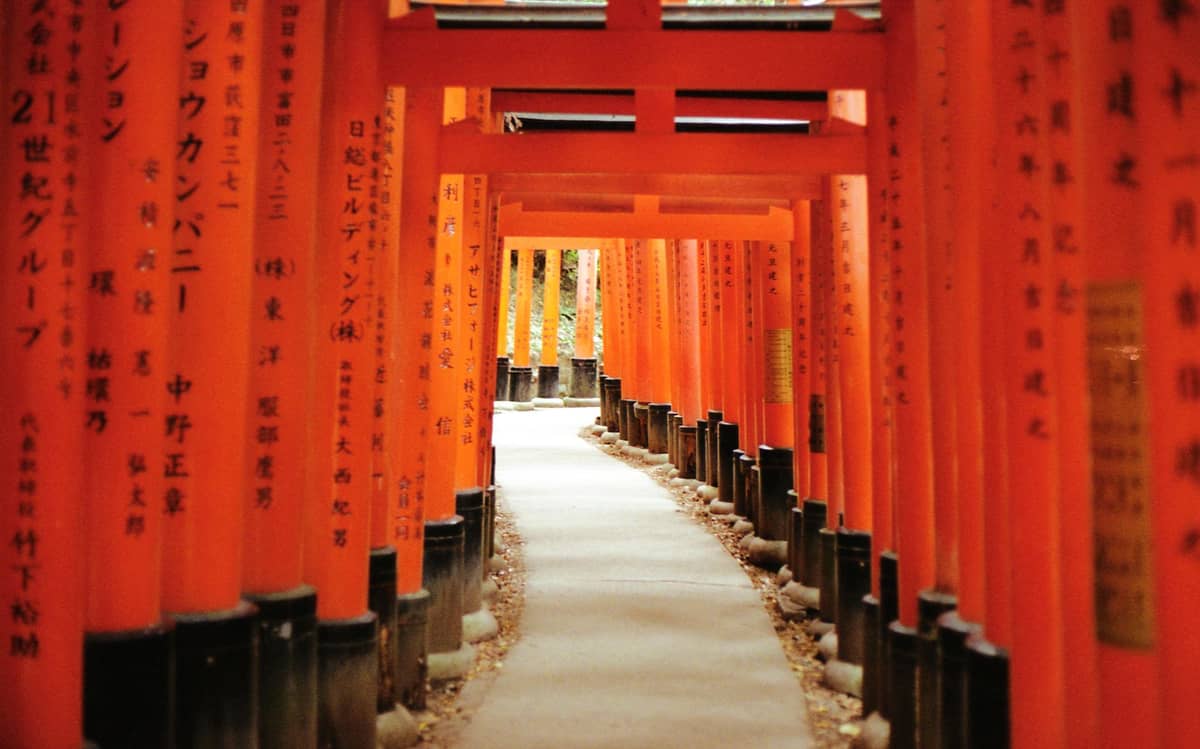
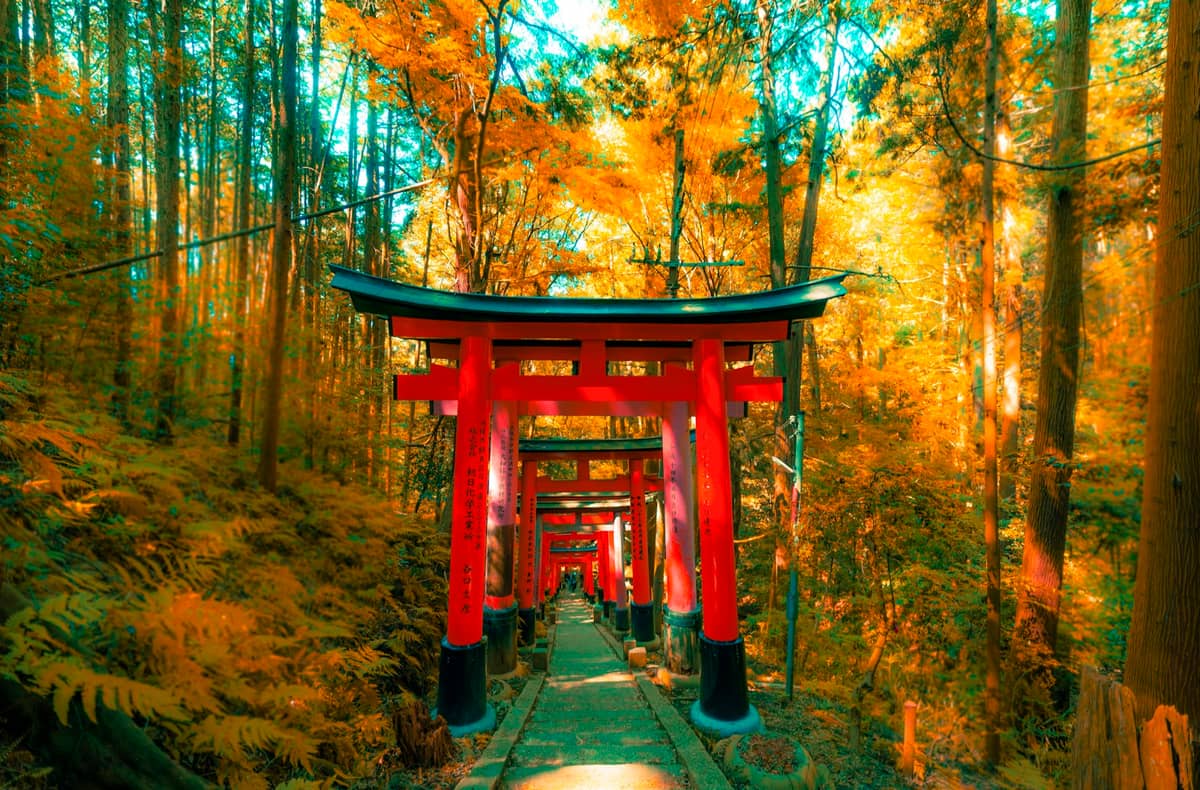
Fushimi Inari Taisha is a Shinto shrine in the Fushimi districtof southern Kyoto, dedicated to Inari, the kami of rice, agriculture, and foxes. The main shrine complex sits at the base of Mt. Inari, but the real draw is the network of forested trails that climb the mountain, lined with thousands of vermilion torii gates donated by businesses and individuals over centuries. The practice of dedicating a torii to pray for business success dates back centuries, and the density of gates at Fushimi Inari Taisha is unmatched anywhere in Japan.
The trail is not a wilderness hike. It is a paved, well-maintained path with stone steps, tea houses, small shrines, and food stalls along the way. That said, the upper sections past the Yotsutsuji viewpoint thin out dramatically in terms of both crowds and services, and can feel genuinely remote on a quiet morning. The combination of cultural depth and physical challenge makes this one of the more rewarding half-day experiences available anywhere in Kyoto.
Trail Options: How Far Do You Want to Go?
One of the biggest misconceptions about Fushimi Inari is that you have to complete the full mountain loop. You do not. The trail works at multiple levels depending on your time, fitness, and interest. Here is a practical breakdown:
- Senbon Torii only (30 to 60 minutes) Walk through the famous lower tunnels of orange torii gates, reach the Okamoto-sha sub-shrine area, and turn back. This is the section featured in virtually every photo of the place, and covers the densest gate sections. Suitable for all fitness levels, including families with young children.
- Yotsutsuji viewpoint and back (60 to 90 minutes) Roughly halfway up the mountain, Yotsutsuji is where the trail forks and where you get a clear view west over Kyoto city. This is the recommended turnaround point for casual visitors who want more than just the lower gates. The incline is moderate with stone steps.
- Full loop, Mt. Inari summit (2 to 3 hours) The complete circuit covers approximately 4 km and climbs to the summit of Mt. Inari at around 233 meters elevation. The upper trail passes through quieter sub-shrines, fox statues, and forest. Pace yourself on the stairs and wear comfortable shoes with grip.
💡 Local tip
If you only have an hour, go beyond the Senbon Torii to the Okamoto-sha area at minimum. The view from the first major fork gives you a sense of the mountain, and the crowds thin noticeably even 15 minutes past the main torii tunnels.
Getting There: Access from Kyoto
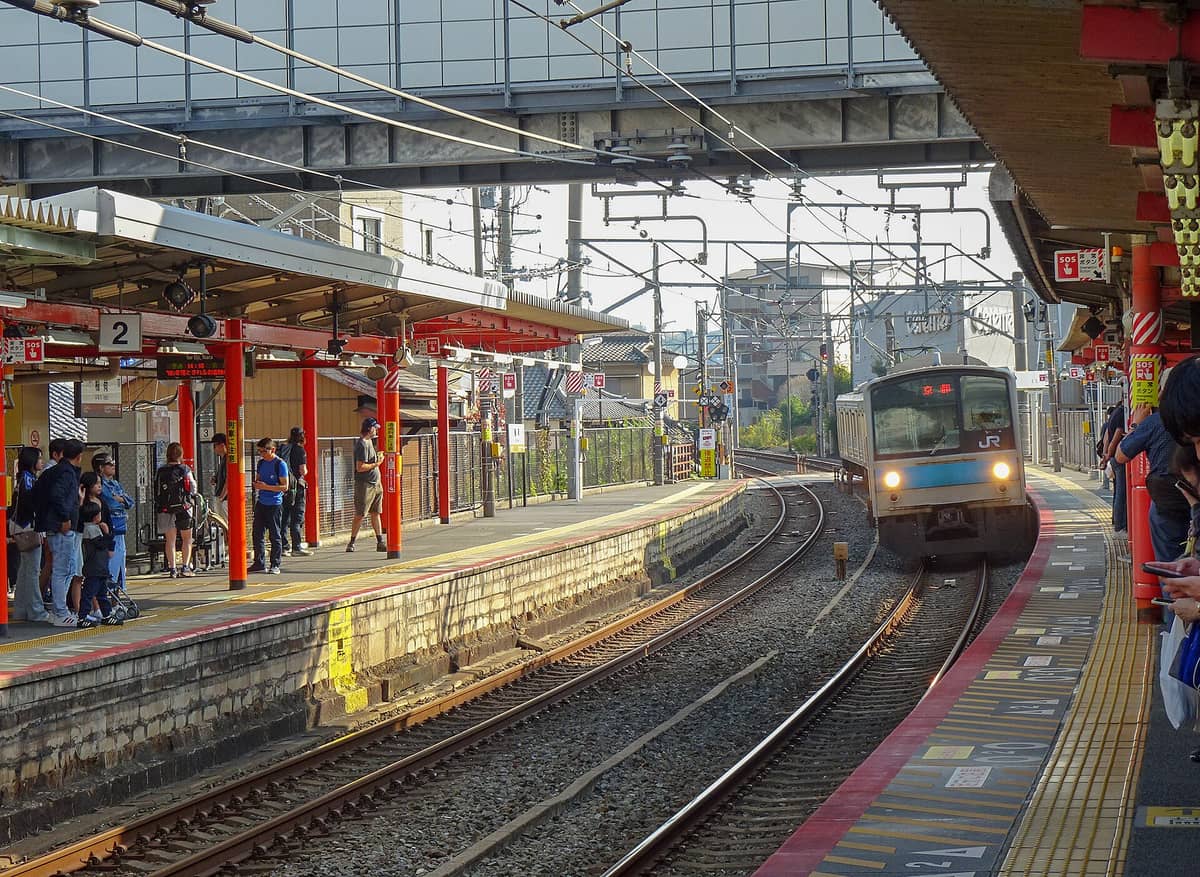
Getting to Fushimi Inari is straightforward and inexpensive. The easiest route is fromKyoto Station: board a local train on the JR Nara Line and get off at JR Inari Station, the second stop. The journey takes about 5 minutes and costs around ¥150 one way. Critically, rapid trains skip JR Inari Station entirely, so make sure you board a local (futsu) service. The shrine entrance is literally steps from the station exit.
Alternatively, the Keihan Fushimi-Inari Station on the Keihan Main Line is about a 5-minute walk from the shrine. This is the better option if you are coming from Gion, Sanjo, or the Demachiyanagi area. Either access point works well; the JR option is simply faster and cheaper from central Kyoto Station.
- JR Nara Line local train: Kyoto Station to JR Inari Station, about 5 to 10 minutes, approximately ¥150.
- Keihan Main Line: Demachiyanagi or Sanjo to Keihan Fushimi-Inari Station, then 5-minute walk to shrine.
- Bus: Kyoto City Bus routes do serve the area but are slower and less direct than rail.
- Taxi or rideshare: possible but expensive relative to the short rail journey and not recommended.
⚠️ What to skip
Do not rely on express or rapid JR trains for this journey. They skip JR Inari Station. Always check the local train departure board at Kyoto Station and confirm the train stops at Inari before boarding.
Best Time to Visit: Crowds, Seasons, and Hours
Fushimi Inari Taisha is open 24 hours a day, 365 days a year. There is no closing time, no seasonal shutdown, and no holiday when it locks its gates. This is genuinely unusual for a major Japanese cultural site and works significantly in your favor for timing your visit strategically.
The lower Senbon Torii section attracts very heavy foot traffic from mid-morning through late afternoon, particularly between 10 am and 4 pm. Tour groups, school excursions, and day-trippers from Osaka and Nara pile in during these hours, making it difficult to photograph the gates without crowds in the frame and somewhat uncomfortable to walk at your own pace. The practical solution: arrive by 7 am or visit after 6 pm.
Seasonally, the hike is worthwhile year-round. Spring brings mild temperatures ideal for the climb, though cherry blossom season in late March through early April coincides with peak tourist volume across all of Kyoto. Autumn, particularly October and November, offers the most comfortable hiking weather with daytime temperatures around 17 to 22°C. For more on seasonal planning, see theKyoto in autumn guide. Summer is hot and humid, with August highs reaching 32 to 33°C in the Kyoto basin, making an early morning start non-negotiable. Winter mornings can be cold and occasionally frosty on the upper trail, but crowd levels drop considerably.
New Year's (hatsumode, typically January 1 to 3) is the single busiest period of the year. Hundreds of thousands of visitors come to pray at Inari for business success, and the crowds are exceptional. Worth noting for planning purposes, not necessarily for avoidance: the New Year atmosphere at a major Shinto shrine is genuinely interesting, but expect a very different experience from a quiet mountain walk.
✨ Pro tip
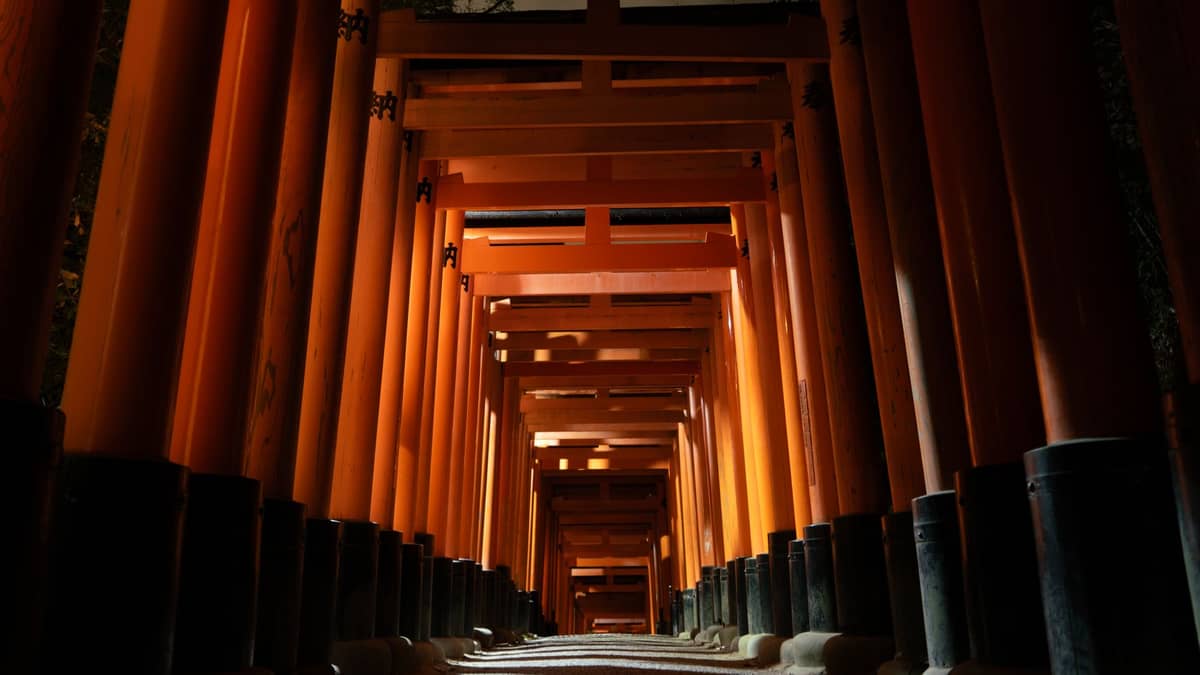
Visiting at night is a legitimate option and genuinely atmospheric. The main approach and shrine buildings are illuminated, the torii glow orange against the dark, and the upper mountain is quiet to the point of being deserted. Bring a small torch for the unlit sections above Yotsutsuji if you plan to go all the way up.
What to Expect on the Trail
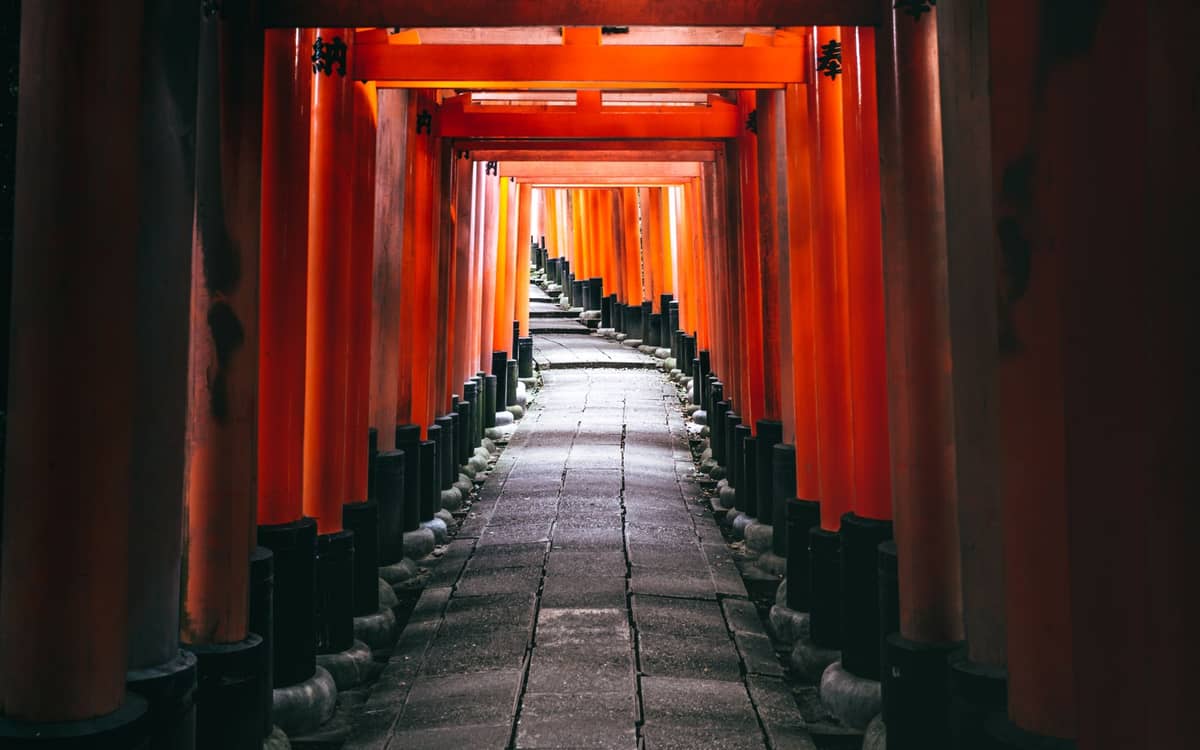
From the shrine entrance, you pass through the iconic Romon Gate before reaching the main hall (Honden). The torii tunnels begin just behind the Honden, where the gates are so closely spaced they form a continuous orange corridor. Two parallel paths run side by side here, one designated for ascending and one for descending, though this is more a guideline than a strictly enforced rule.
As you climb, the path passes several sub-shrines, each with its own cluster of stone fox statues (foxes are the messengers of Inari) and smaller torii offerings. The stone steps can be uneven in places, and the incline steepens noticeably past Yotsutsuji. Wear shoes with a closed toe and some grip. Sandals and flip-flops make the upper sections uncomfortable and can be slippery after rain.
Food stalls and small restaurants are concentrated near the base and along the lower trail, selling inari-zushi (rice in fried tofu pouches, named for the shrine), grilled skewers, and soft drinks. Options thin out the higher you climb. Bring water if you plan to go past Yotsutsuji. For broader food planning in Kyoto, theKyoto food guidecovers the wider culinary landscape, including the Fushimi sake district nearby.
Shrine office facilities, including amulet (omamori) sales and formal worship services, operate on daytime hours, typically roughly 09:00 to 17:00. If purchasing a specific amulet or engaging with shrine staff, plan to arrive within those windows. The mountain trail itself has no such restrictions.
Practical Tips and Common Mistakes
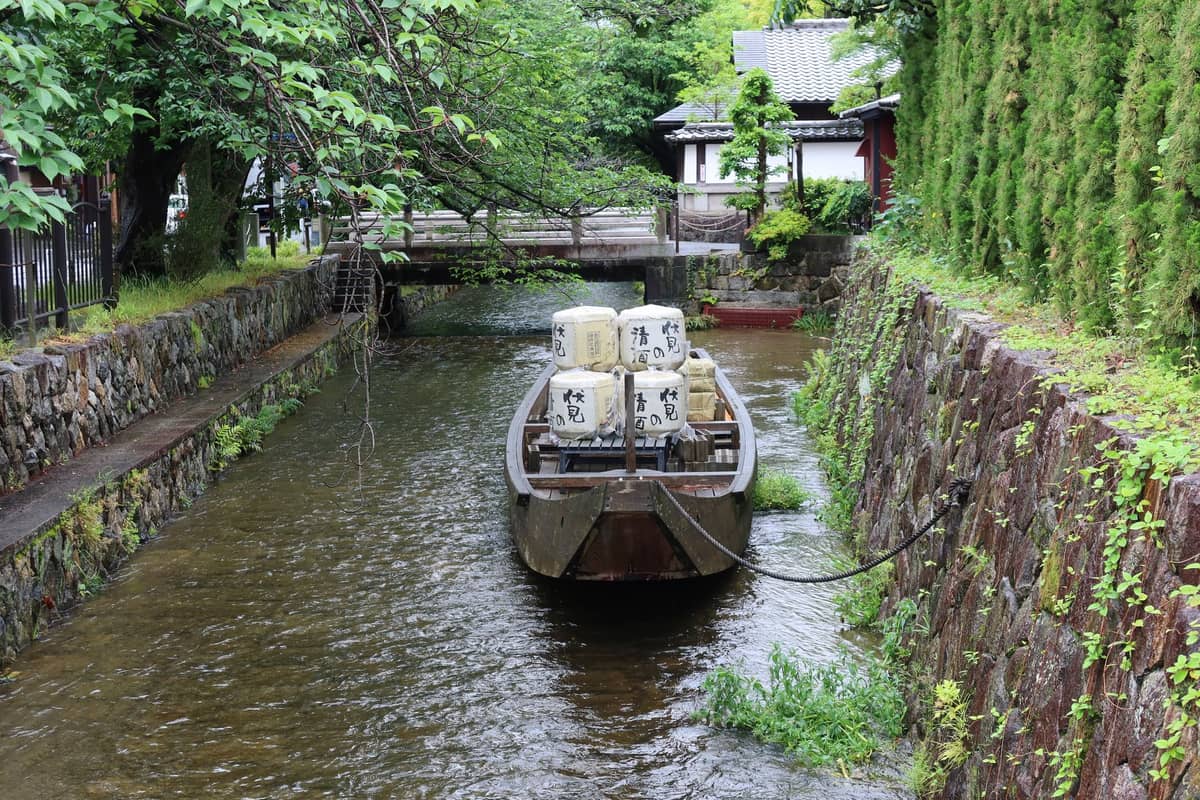
Fushimi Inari pairs naturally with the nearby Fushimi sake district, a 15 to 20-minute walk or short taxi ride away. The area around Fushimi-Momoyama is one of Japan's most historically significant sake-brewing zones, with working breweries, tastings, and canal-side streets that see a fraction of the crowds compared to Inari itself. Combining the two makes for a full and varied day in southern Kyoto.
If you are structuring a multi-day itinerary, Fushimi Inari works well as an early morning start before heading to other parts of the city. The3-day Kyoto itinerary suggests pairing it with Higashiyamain the afternoon, since both are easily connected by public transit.
- There is no admission fee anywhere on the mountain. Ignore any unofficial-looking stalls or persons suggesting otherwise.
- Tipping is not customary in Japan. Do not tip at food stalls, shrine offices, or anywhere else on site.
- Photography of the gates is unrestricted. Photography of worshippers at prayer is not appropriate.
- Dogs are sometimes seen on the trail but rules can vary; if you bring a dog, keep it on a lead and follow any posted guidance in the shrine grounds.
- The trail is not wheelchair accessible beyond the immediate lower shrine area due to stone steps.
- Mobile phone reception is generally good on the lower trail and patchy on the upper mountain sections.
For those combining Fushimi Inari with broader temple and shrine exploration across Kyoto, thebest shrines in Kyoto guideprovides useful context on how Inari compares to other major sites likeKamigamo Shrine and Shimogamo Shrine. Each has a distinct character; Inari is singular in its scale and visual drama but is not a quiet contemplative space during peak hours.
ℹ️ Good to know
Fushimi Inari Taisha is a functioning religious site. Hundreds of thousands of Japanese visitors come here each year for genuine worship, not just sightseeing. Be mindful around people who are praying, keep noise levels appropriate, and follow basic shrine etiquette: bow before entering torii gates if you choose to observe the custom, and do not touch the fox statues or torii offerings.
FAQ
How long does the Fushimi Inari hike take?
The full loop around Mt. Inari takes most walkers 2 to 3 hours at a comfortable pace. If you only want to see the famous Senbon Torii tunnel and the lower gate sections, budget 30 to 60 minutes. The Yotsutsuji viewpoint halfway up is a popular turnaround point and adds about 60 to 90 minutes total for the out-and-back.
Do you need tickets for Fushimi Inari?
No. Entry to the shrine grounds and the entire mountain trail is completely free. There are no tickets to buy, no reservations required, and no timed entry system. Anyone claiming otherwise is misinformed or misleading you.
What is the best time to visit Fushimi Inari to avoid crowds?
Arriving before 8 am is the single most effective strategy. The lower torii sections are nearly empty in the first hour or two after dawn. Evenings after 6 pm also see significantly fewer visitors, and the lit approach creates a different atmosphere entirely. Midday and early afternoon are the worst times for crowds.
Is the Fushimi Inari hike difficult?
It is moderate rather than challenging. The full loop involves around 4 km of walking on paved paths and stone steps, with a total elevation gain of roughly 230 meters to the summit. Fit adults and older children should manage without difficulty. The challenge is cumulative rather than steep, and you can turn around at any point.
What should I wear and bring for the hike?
Closed-toe shoes with decent grip are strongly recommended, particularly for the upper trail. Avoid sandals and heeled footwear. Bring water, especially in summer when temperatures climb above 30°C. Sunscreen and a hat matter for the exposed sections near the summit. The trail has food and drink available near the base, but options diminish the higher you go.