Fushimi Sake District: Kyoto's Brewing Heartland
Fushimi is one of Japan's most celebrated sake-producing areas, a southern Kyoto neighborhood where white-walled breweries line narrow canals and the craft of brewing rice wine has shaped the local landscape for centuries. Visitors can walk freely through the streets, tour the Gekkeikan Okura Sake Museum, ride a traditional canal boat, and sample sake directly from the source.
Quick Facts
- Location
- Fushimi-ku, southern Kyoto (near Horikawa River and Otesuji Shopping Street)
- Getting There
- Keihan Line – Chushojima Station (5–10 min walk to core area); also Fushimi-Momoyama Station (Keihan) or Momoyamagoryo-Mae (Kintetsu), both ~8–10 min walk
- Time Needed
- 2–4 hours for a full walk, museum visit, and canal boat; 1 hour minimum for a quick taste
- Cost
- Free to walk the district; Gekkeikan Okura Sake Museum ¥600 adults / ¥100 ages 13–19 / free under 12; canal boats approx. ¥1,200–¥1,900 (seasonal)
- Best for
- Sake enthusiasts, architecture lovers, slow-travel walkers, food and drink explorers
- Official website
- www.gekkeikan.com/museum
What the Fushimi Sake District Actually Is
The Fushimi Sake District is not a theme park or a gated complex. It is a functioning urban neighborhood in Fushimi-ku, the southern ward of Kyoto, where traditional sake breweries, called kura, have operated for centuries. The streets are public. There are no tickets to enter. What you find is a rare thing in Japanese cities: a working industrial tradition that has become its own form of architecture, preserved largely intact because sake itself never stopped being made here.
The district centers on a stretch of streets around the Horikawa River canal system, anchored by major breweries including Gekkeikan, one of the largest and most historic sake producers in Japan. White-plastered walls, heavy wooden beams, and the faint, yeasty aroma of fermenting rice set this neighborhood apart from the temple corridors that define most of Kyoto's tourist geography. It is quieter here, less photographed, and more honest about what it is.
💡 Local tip
The district streets are accessible at all hours, but the Gekkeikan Okura Sake Museum is open 09:30–16:30 (last admission 16:00) and closes during New Year (Dec 28–Jan 4) and Obon (Aug 13–16). Plan your visit accordingly if the museum is a priority.
A Brief History: Why Fushimi Became Japan's Sake Capital
Fushimi's identity as a brewing center is inseparable from its geography. The district sits above a natural aquifer that produces exceptionally soft, mineral-balanced water, locally called meisui or 'celebrated water.' Sake brewers learned early that this water produced a distinctively mellow, rounded style of sake, different from the drier brews made in Nada, near Kobe. The reputation stuck, and Fushimi became synonymous with soft, easy-drinking sake that pairs well with Kyoto's refined cuisine.
Fushimi developed as both a port town and a castle town during the late sixteenth century, when Toyotomi Hideyoshi built Fushimi Castle nearby. The area's canal network, originally designed to move goods and people along the Uji River route toward Osaka, became the artery for transporting sake barrels to markets across Japan. By the early modern period, the sake industry had grown large enough to define the entire ward. Some of the brewery families that operate today trace their roots back centuries.
Fushimi is closely associated with Fushimi Inari Taisha, one of Japan's most visited shrines, located about 20 minutes' walk to the east. Many visitors treat the two as a combined half-day, though the sake district deserves its own unhurried time.
Tickets & tours
Hand-picked options from our booking partner. Prices are indicative; availability and final rates are confirmed when you complete your booking.
Kyoto sake brewery and tasting tour
From 76 €Instant confirmationFree cancellationSake, whisky and cocktail luxury tour in Kyoto
From 130 €Instant confirmationFree cancellationSake brewery tour in Kyoto
From 130 €Instant confirmationFree cancellationFushimi Inari hidden hiking tour
From 50 €Instant confirmationFree cancellation
Walking the District: What You Actually See
The core of the Fushimi Sake District is compact enough to cover on foot in an hour, though the slower you walk, the more you notice. The main brewery streets run roughly north to south from the Otesuji shopping arcade toward the canal. Buildings with thick white walls, slatted wooden windows, and bundles of cedar branches called sakabayashi hanging over doorways signal active or historic kura. When a sakabayashi is fresh green, it indicates a new batch of sake has just been released: the custom dates back centuries.
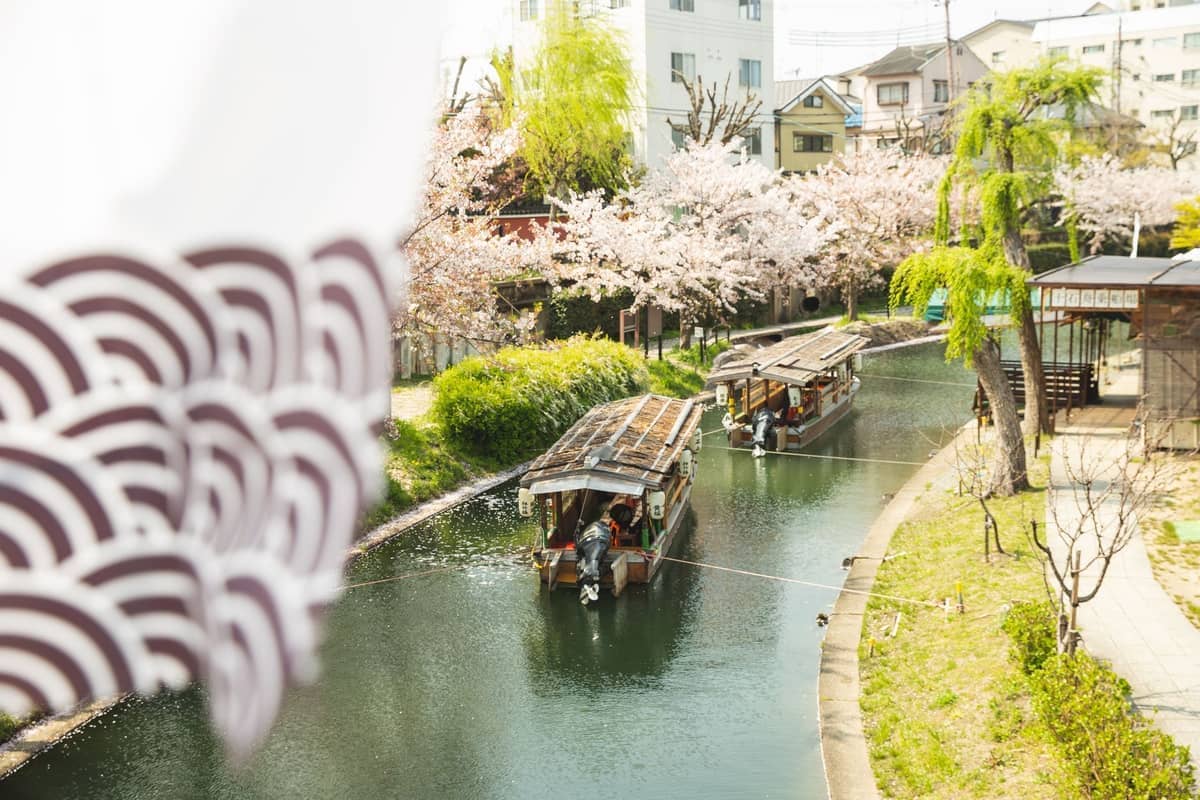
The Horikawa River canal cuts through the southern part of the district, and the stone-edged waterway is flanked by weeping willows that trail into the water in spring and turn a faded gold in autumn. On weekday mornings, the canal path is quiet enough that you can hear the water moving. In late March and early April, cherry trees along the canal bloom, and the combination of blossoms, old brewery walls, and still water makes this one of the less crowded cherry blossom spots in Kyoto.
For a broader look at Kyoto's spring season, the Kyoto cherry blossom guide covers timing, crowds, and the best spots across the city.
ℹ️ Good to know
The canal boats, called Jikkokubune, typically operate from late March to early December on selected dates. Adult fares run approximately ¥1,200–¥1,900 depending on operator and season. Check schedules before visiting as boats do not run year-round and dates can vary.
The Gekkeikan Okura Sake Museum: The District's Main Interior Stop
The Gekkeikan Okura Sake Museum is the most structured visitor experience in the district. Housed inside a genuine nineteenth-century brewery building, the museum traces the full history of Fushimi sake and the Gekkeikan company through tools, fermentation vessels, illustrated timelines, and preserved equipment at production scale. The cedar vats used for large-batch brewing are enormous, and standing next to them in the dim interior gives a physical sense of how industrially demanding this craft has always been.
Admission is ¥600 for adults over 20, ¥100 for ages 13–19, and free for children 12 and under. The ticket price includes a small sake tasting and a souvenir cup or miniature bottle for eligible visitors. The museum is not very large and can be covered in 40–60 minutes at a relaxed pace. English signage is available throughout, which makes it accessible without a guide.
The museum shop at the exit stocks Gekkeikan sake in formats ranging from single-serving cups to gift boxes, along with sake-based cosmetics and snacks. Prices are reasonable and the selection is broader than what you find in most Kyoto convenience stores or department food halls.
How the District Changes by Time of Day
Early mornings, before 09:00, the streets near the brewery buildings have almost no foot traffic. The canal reflects flat gray or pale gold depending on the season, and the only sounds are birds and the occasional delivery vehicle. This is when the neighborhood feels most authentically industrial: not a tourist zone but a place where people actually work.
By late morning, tour groups from Fushimi Inari begin to spill into the district, and the Otesuji shopping arcade fills with visitors looking for sake to take home. The canal boat departure point near Chushojima sees its peak activity around midday and early afternoon on weekends. If you want to ride the boat without waiting, arrive before 11:00 or go on a weekday.
Late afternoon, after 15:00 on weekdays, is arguably the most pleasant time. The museum crowds thin out, the low sun hits the white brewery walls at an angle that makes the plaster glow, and the sake bars along the main street start to fill with a local after-work crowd. Standing at one of the outdoor counter windows with a small cup of sake while the canal catches the last of the light is exactly the kind of unremarkable, specific moment that makes a place worth visiting.
Getting There and Getting Around
The Keihan Electric Railway is the most convenient option. From Kyoto's central Shijo-Kawaramachi area, take the Keihan Main Line south to Chushojima Station, about 10 minutes by express. From Chushojima, the canal boat landing and the core brewery streets are a 5–10 minute walk northwest. If you are coming from Kyoto Station, the easiest connection is the JR Nara Line to Momoyama Station, though that adds a 15–18 minute walk into the district.
Many visitors combine Fushimi Sake District with Fushimi Inari Taishain a single half-day. If you do this, visit Inari first (it gets crowded early), then walk or take the Keihan one stop to the sake district for the afternoon. See theFushimi Inari hiking guide for detailed route options.
💡 Local tip
Chushojima Station is your best entry point for the canal boats and the Gekkeikan museum. Fushimi-Momoyama Station (Keihan) or Momoyamagoryo-Mae (Kintetsu) are better if you want to start with the Otesuji shopping street and work your way down toward the canal.
Practical Notes: What to Know Before You Go
The district is largely flat, which makes it easy to walk even in light footwear. Some of the older brewery lanes use uneven stone paving, and a few facilities have shallow steps at the entrance. Full wheelchair access varies by individual building; the canal boats are generally not accessible for wheelchair users, as boarding requires stepping down into a low wooden vessel. If accessibility is a concern, the outdoor streets and canal path are manageable, but confirm with individual venues before planning around specific stops.
In summer, Fushimi gets genuinely hot. Kyoto's basin geography traps heat, and the canal-side streets offer limited shade. If you visit between July and early September, bring water, wear light clothing, and plan to be out before midday or after 16:00. Autumn, from October through November, is the most comfortable season for a long walk: temperatures settle around 15–20°C during the day, crowds are manageable, and the district has none of the extreme congestion you find at Arashiyama or Higashiyama.
For a full picture of when to visit and what the weather means for your plans, thebest time to visit Kyoto guide covers every month in detail.
Photography: the white kura walls photograph well in overcast light, which diffuses harsh shadows and brings out the texture of the plaster. Direct midday sun in summer tends to wash out the walls and flatten the scene. The canal is most reflective in calm morning conditions. There are no photography restrictions on the public streets.
Honest Assessment: Who Will Love This, Who Might Not
The Fushimi Sake District works best for travelers who like their sightseeing to feel purposeful and unhurried. There is genuine architecture here, a legitimate historical narrative, and real sake to drink. If you enjoy the kind of neighborhood walking that reveals how a place actually functions rather than how it performs for visitors, this is one of the more rewarding districts in Kyoto.
However, if you are not interested in sake, the district loses a significant part of its appeal. The streets are attractive but not spectacular. The museum, while well-executed, is modest in scale. Visitors expecting dramatic scenery comparable to Arashiyama or a major cultural monument like Kinkaku-ji will find the district underwhelming. It is also worth noting that some of the sake bars along the main street cater primarily to domestic visitors, with menus and staff who may not speak English. Pointing at what others are drinking is a perfectly effective strategy.
If you want a broader sense of how to structure time in the city, the3-day Kyoto itinerary places Fushimi sensibly within a compact visit.
Insider Tips
- Buy a small ceramic sake cup (ochoko) at the Gekkeikan museum shop, then use it at the tasting counter stalls along Otesuji shopping street, where several breweries offer self-serve sake dispensers for around ¥100–¥200 per pour. It makes the whole walk feel like a progressive tasting.
- The canal boat (Jikkokubune) fills up quickly on weekends and during cherry blossom season. Arrive at the Chushojima departure point before 10:30 to secure a seat without a long wait. The 40-minute route passes under low stone bridges and alongside working brewery buildings not visible from the street.
- Look for the cedar sakabayashi (a round bundle of dried cedar branches) hanging over brewery entrances. A fresh green one signals a newly released batch of sake from that kura — a detail most visitors walk past without knowing what it means.
- Weekday afternoons in autumn offer the district at its most relaxed. The domestic tour groups that arrive on weekend mornings are gone, the light is softer, and several of the smaller sake bars put out standing tables on the canal path.
- If you are visiting in late March or early April, the cherry trees along the Horikawa canal are in bloom but largely off the standard tourist circuit. The combination of blossoms and brewery walls attracts far fewer crowds than Maruyama Park or the Philosopher's Path.
Who Is Fushimi Sake District For?
- Sake enthusiasts who want to understand how one of Japan's defining drinks is actually made
- Architecture and slow-travel walkers drawn to preserved industrial streetscapes rather than temple corridors
- Couples looking for a low-key afternoon combining a canal boat ride, sake tasting, and neighborhood wandering
- Food and drink travelers building a picture of Kyoto's culinary identity beyond matcha and kaiseki
- Repeat visitors to Kyoto who have covered the standard circuit and want somewhere less scripted
Nearby Attractions
Other things to see while in Fushimi:
- Fushimi Inari Taisha
Fushimi Inari Taisha is Kyoto's most photographed shrine, where thousands of vermillion torii gates climb through cedar forest to the summit of Mount Inari. Entry is free, the grounds never close, and the full hiking circuit is far more rewarding than the postcard views near the entrance suggest.