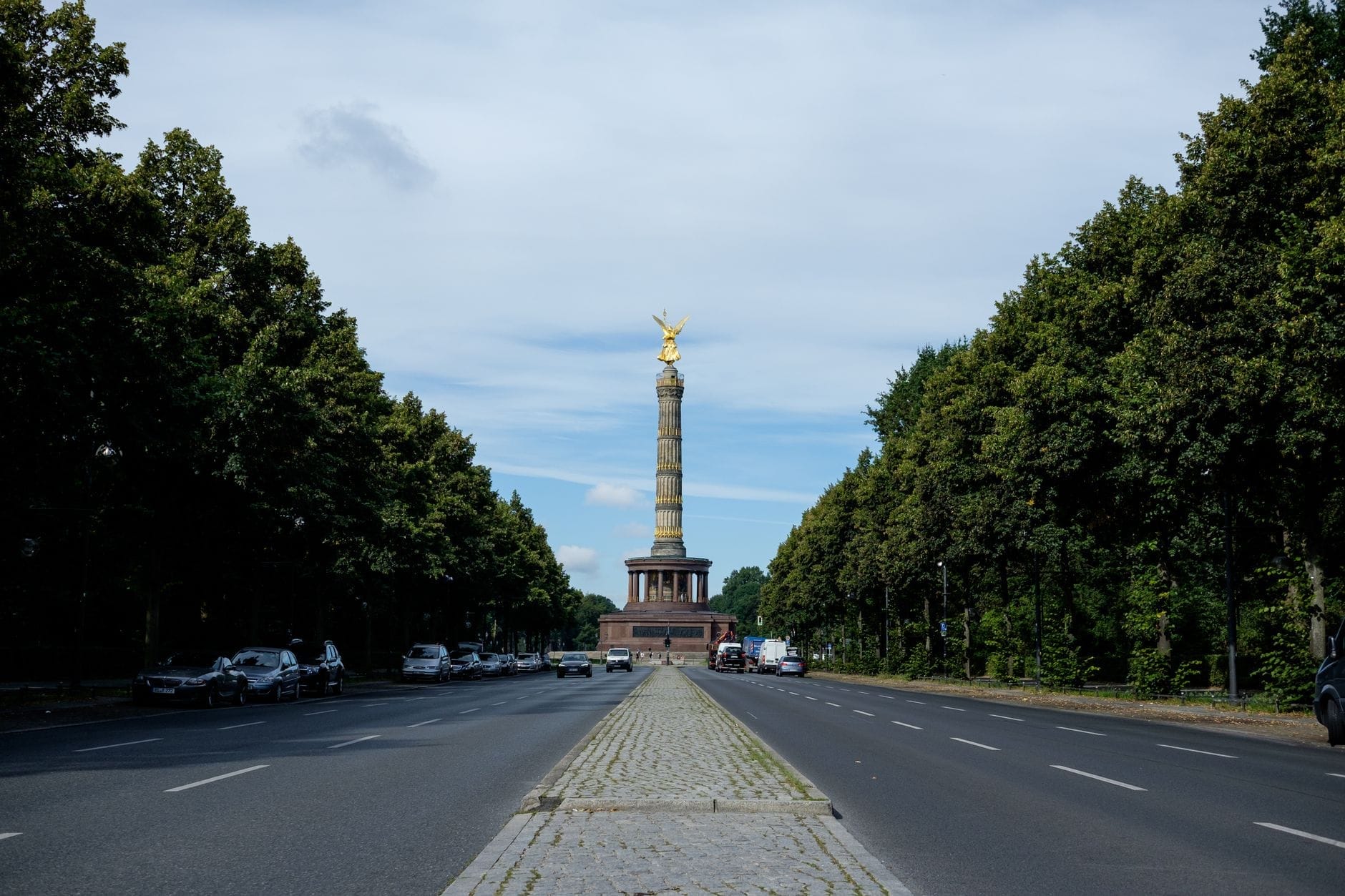
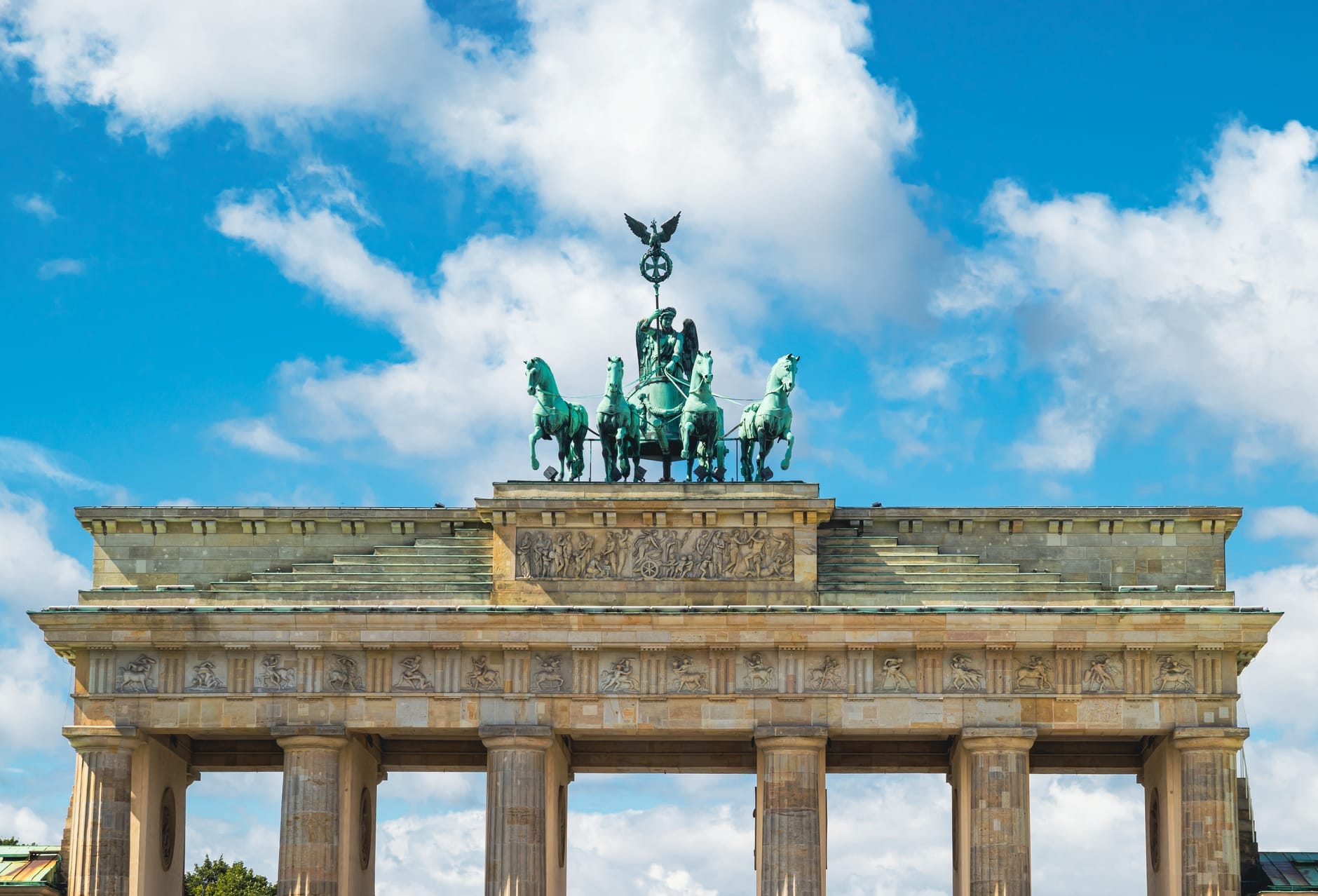
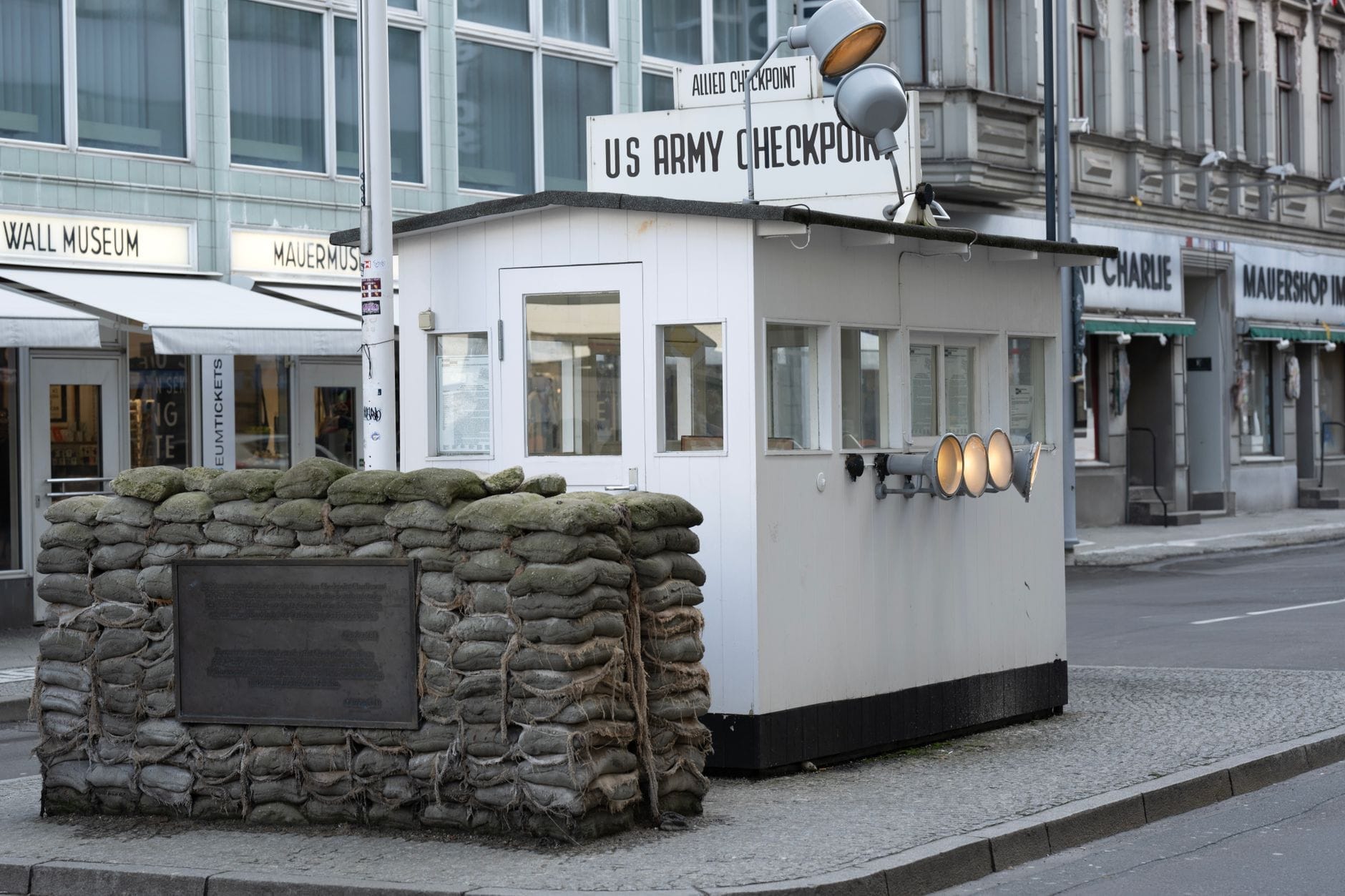
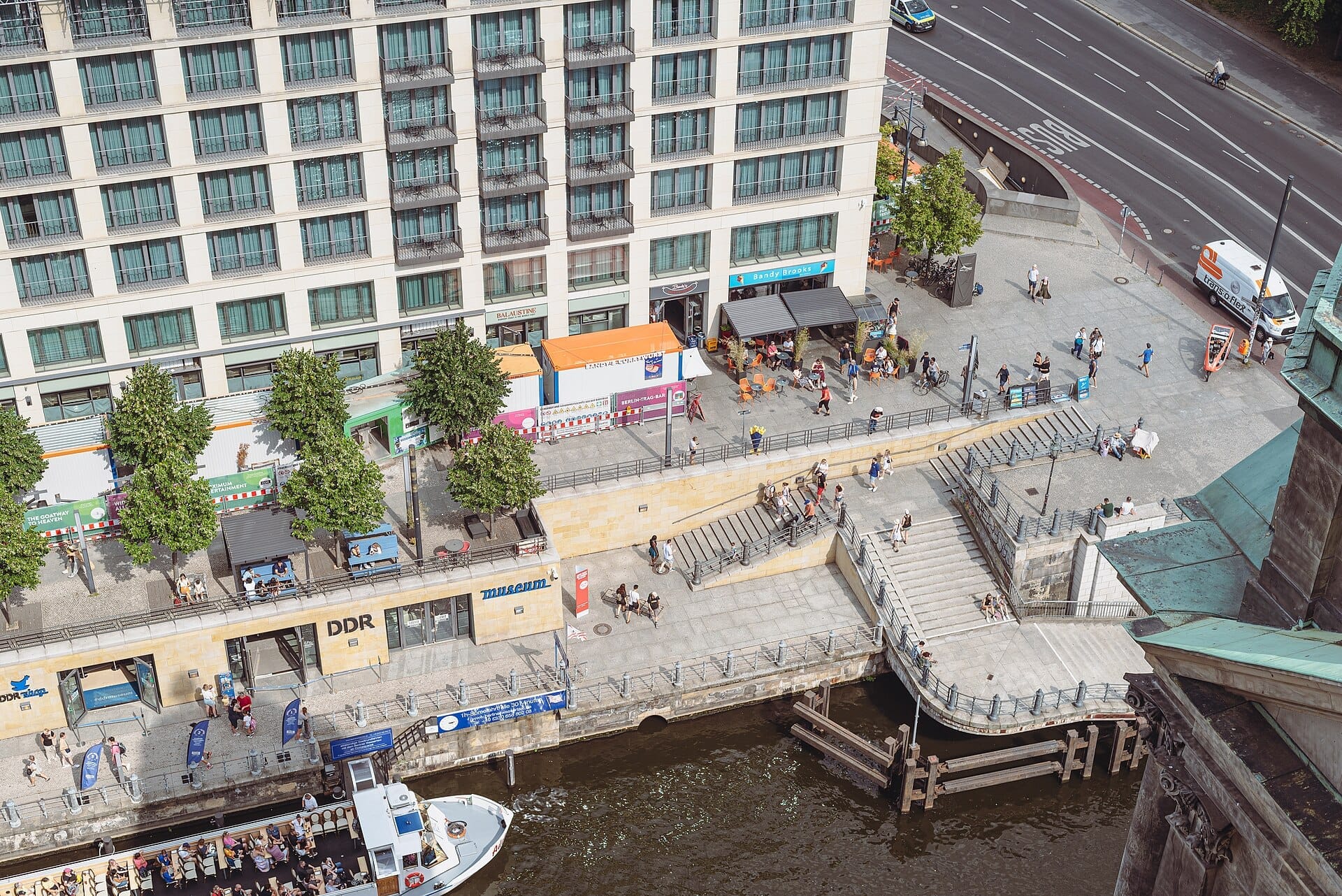
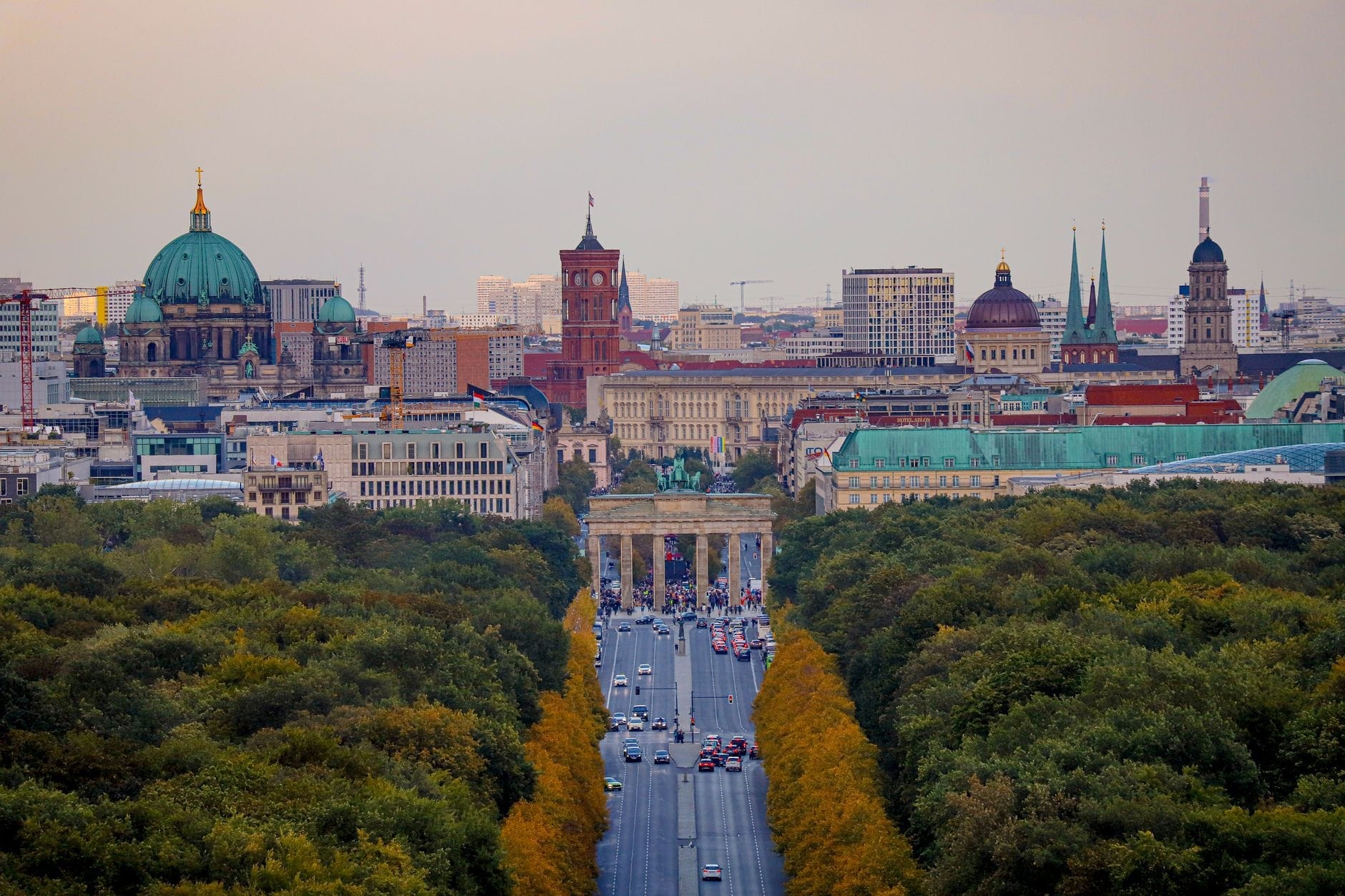
Mitte is Berlin's geographic and historic center, where the city was born on the banks of the Spree in the 13th century. Today it holds a higher concentration of major landmarks than almost any other district in Europe, making it essential for first-time visitors and rewarding even for those who know Berlin well.
Mitte is where Berlin began and, in many ways, where it still makes its most powerful impression. From the sandstone columns of the Brandenburg Gate to the cathedral dome rising above Museum Island, this is the district that carries the full weight of German history on its streets. It rewards slow walking, early mornings, and a willingness to look past the tourist infrastructure to the layers beneath.
Orientation
Mitte sits at the geographic heart of Berlin, straddling the River Spree along two main east-west corridors that together form the city's ceremonial spine. The first runs from the Brandenburg Gate east along Unter den Linden to Alexanderplatz, passing through the Mitte of royal Prussia and later socialist East Germany. The second follows the Stadtbahn elevated rail line through Hackescher Markt and into the Spandauer Vorstadt neighborhood, where the streets feel more intimate and the architecture shifts from grand avenue to courtyard-laced quarter.
The district's western boundary roughly follows the old Prussian excise wall, which is why the Brandenburg Gate sits at what feels like an entrance rather than a midpoint. To the west, Mitte gives way to the Tiergarten park and eventually to Charlottenburg-Wilmersdorf. To the south, it borders Friedrichshain-Kreuzberg across the Spree, with the area around Märkisches Museum and Jannowitzbrücke marking the transition point. Pankow lies to the north and northeast, while Reinickendorf forms the northern edge.
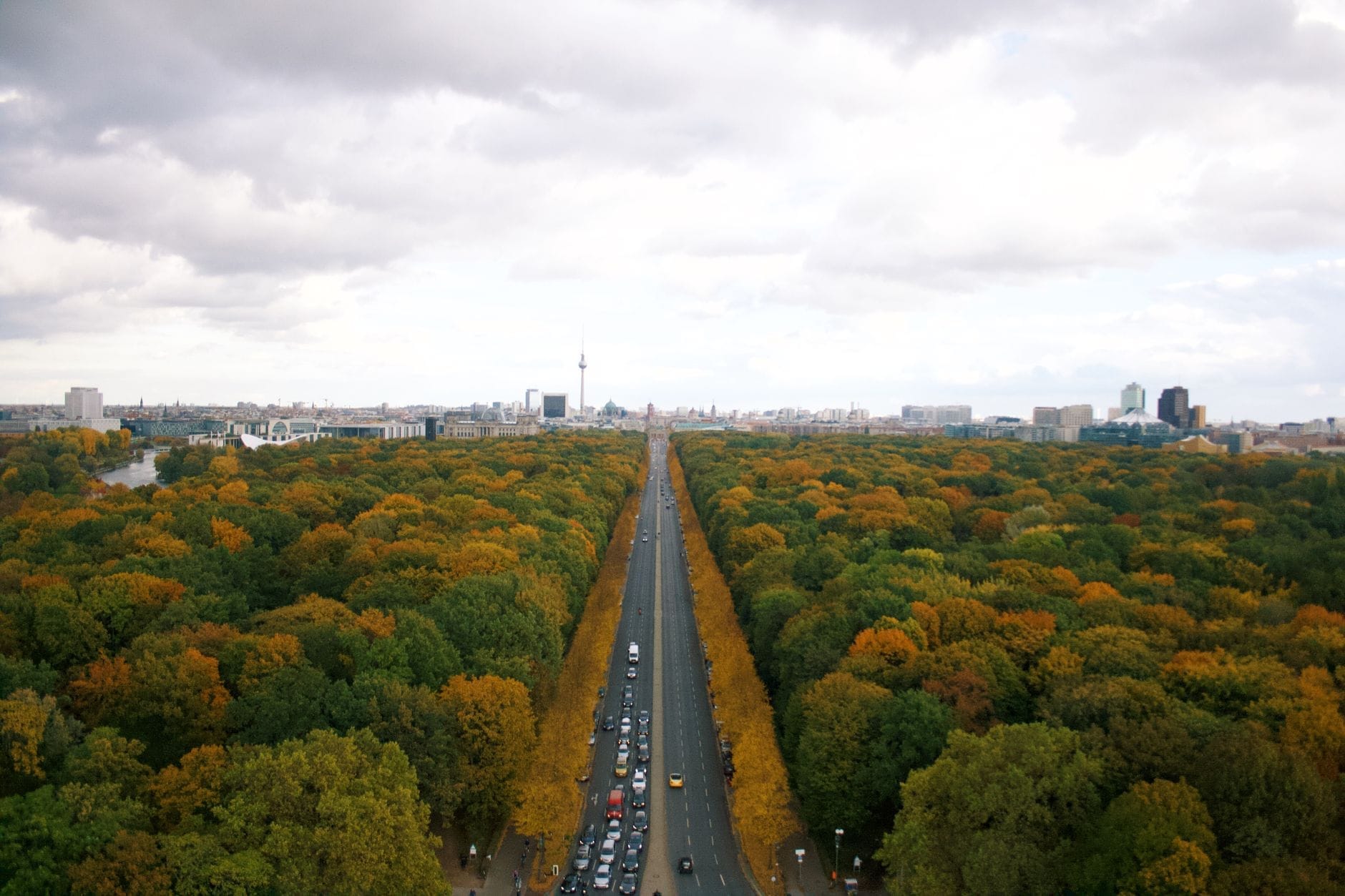
For visitors building a mental map of Berlin, Mitte is the anchor. Alexanderplatz in the east and the Brandenburg Gate in the west are roughly 2.5 kilometers apart on foot, connected by one of the most historically loaded walks in Europe. Museum Island sits in the middle on a small Spree island, and the government quarter including the Reichstag occupies the northwestern corner of the district near Hauptbahnhof, Berlin's central railway station.
ℹ️ Good to know
Mitte is one of Berlin's 12 official boroughs, but confusingly it also contains several distinct sub-neighborhoods: Scheunenviertel, Spandauer Vorstadt, Nikolaiviertel, and the government quarter near the Reichstag. Where you are within Mitte shapes your experience significantly.
Character & Atmosphere
Mitte operates on two different frequencies simultaneously. Along Unter den Linden and around Alexanderplatz, the scale is monumental: wide boulevards designed for processions and state spectacle, grand facades built to project power, and pavements crowded with visitors from every corner of the world. The tourist infrastructure here is dense, with souvenir stalls, hop-on-hop-off buses, and restaurant menus in six languages. This is unavoidable and worth accepting before you arrive.
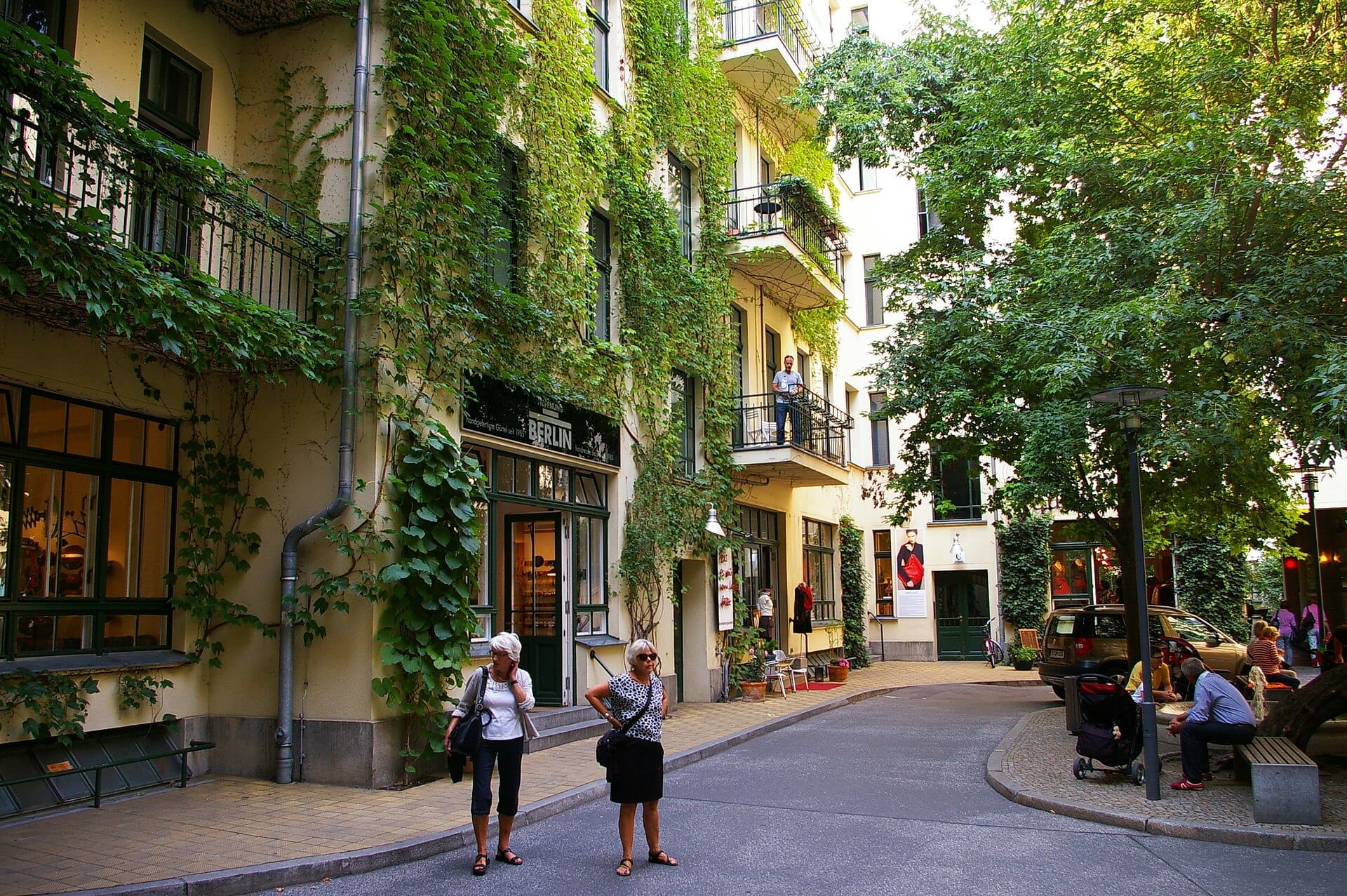
Shift a few streets north into Spandauer Vorstadt and the character changes noticeably. Around Rosenthaler Platz and along Torstraße, Mitte becomes a neighborhood where people actually live and work: independent cafés with queues of regulars on weekend mornings, design studios, gallery spaces tucked into former factory buildings, and the cobbled courtyards of the Hackesche Höfe hosting a mix of boutiques and restaurants. The streets feel human-scaled again, and the light in the late afternoon catches the plaster facades in a way that makes the whole area glow amber.
Early mornings on Unter den Linden before 8am are a different experience entirely. The linden trees line the boulevard in a green corridor, and without the crowds, the proportions of the avenue become clear. Runners and cyclists use the central pedestrian strip, and the Brandenburg Gate can be photographed without people stacked three rows deep in front of it. By 10am, the tour groups have arrived and that window has closed. The Nikolaiviertel, a reconstructed medieval quarter near the Rotes Rathaus, is also best appreciated early, when the cobblestones are quiet and the half-timbered facades aren't serving primarily as a backdrop for group photos.
After dark, Mitte is less a nightlife destination than a place where dinner runs late and the government quarter empties out. The bars around Hackescher Markt and Rosenthaler Platz stay lively until midnight or later, and there's a concentration of theater and concert venues that draws a well-dressed local crowd. But serious nightlife pushes south to Kreuzberg or east to Friedrichshain. Mitte at night is quieter than its daytime volume would suggest.
What to See & Do
The density of major attractions in Mitte is genuinely unmatched in Berlin. The risk is trying to cover too many in a single day and ending up with a superficial impression of each. A more rewarding approach is to pick one large institution and give it proper time, then structure the rest of the day around the walk between landmarks rather than rushing between them.
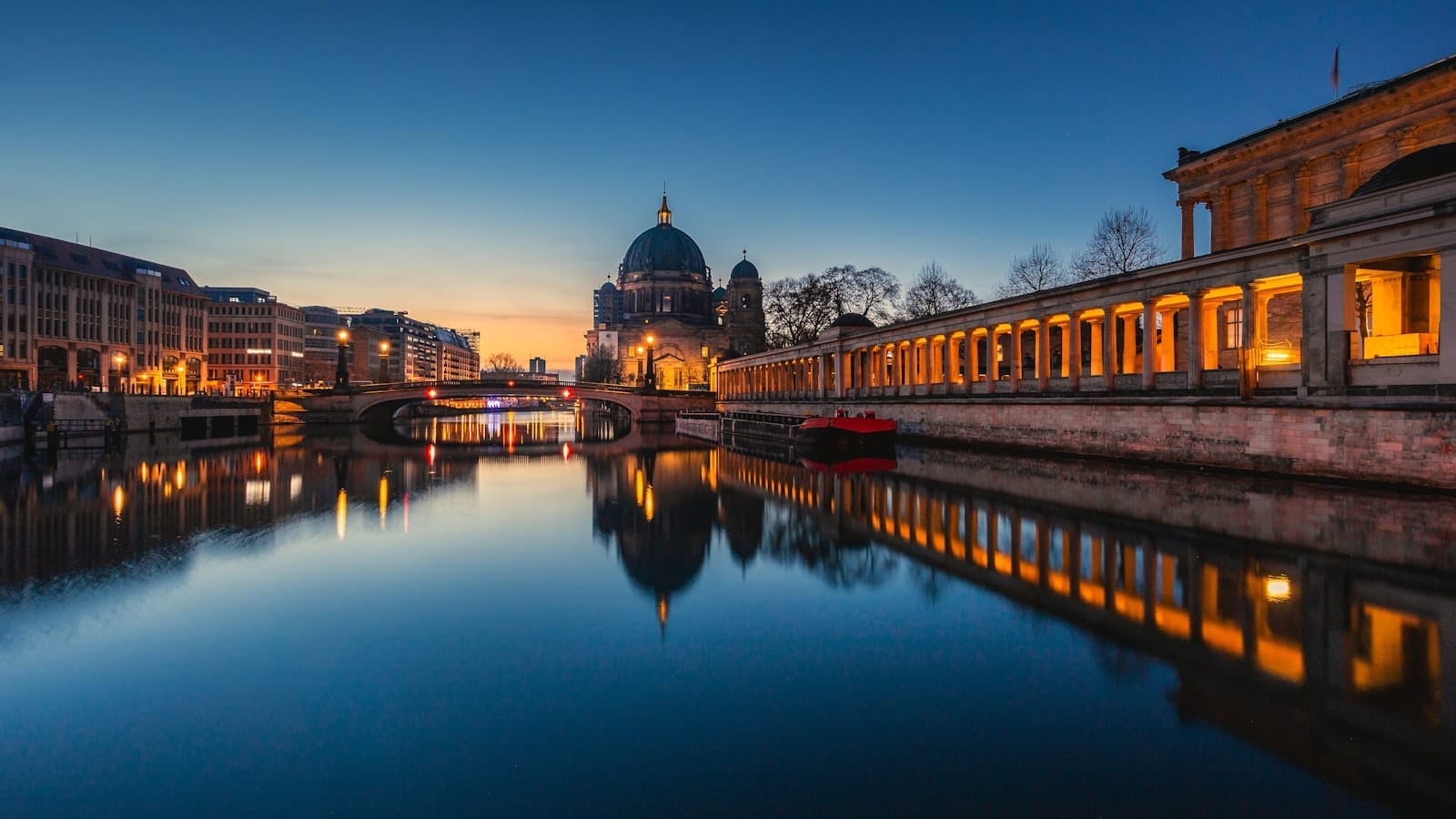
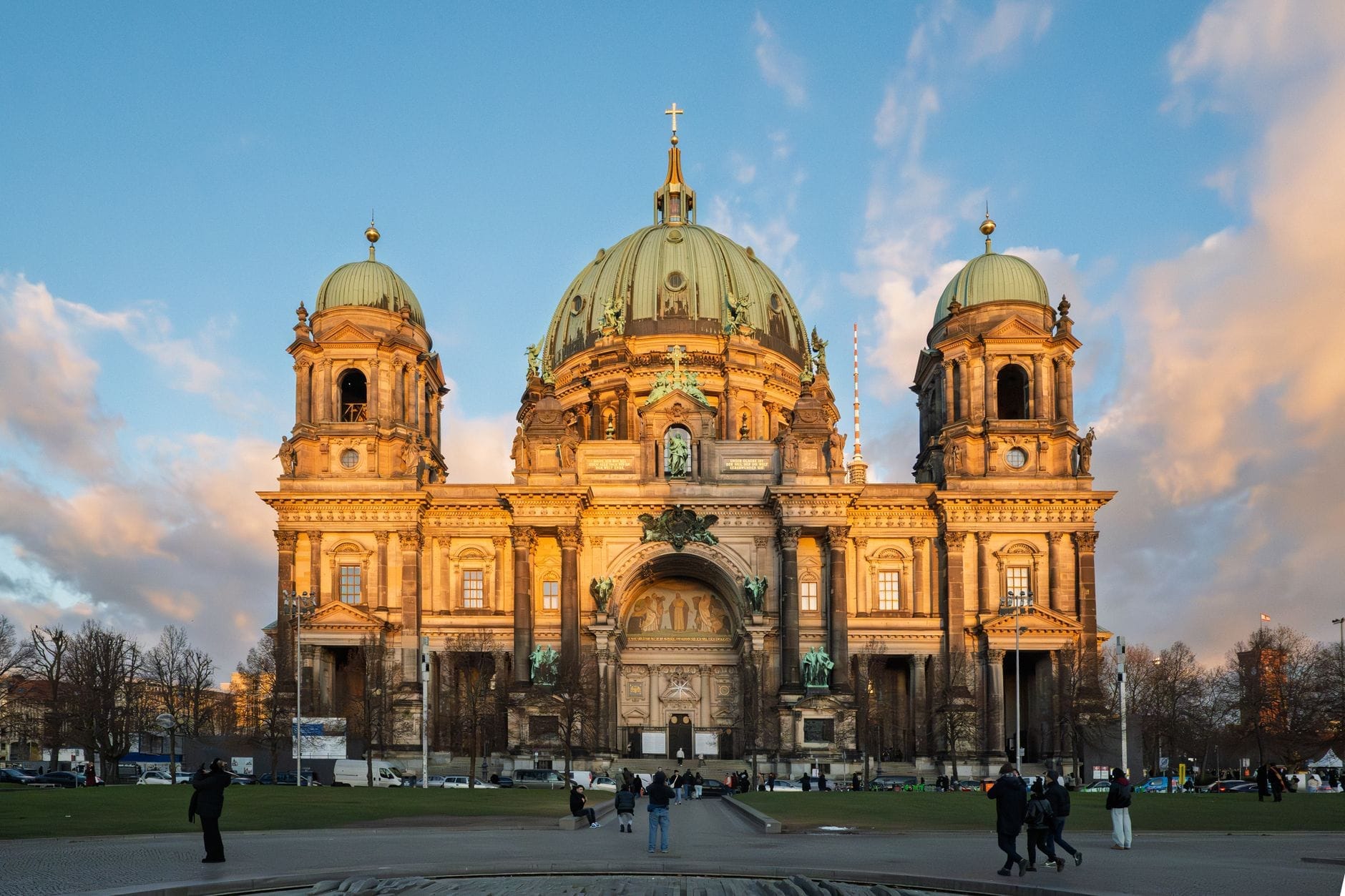
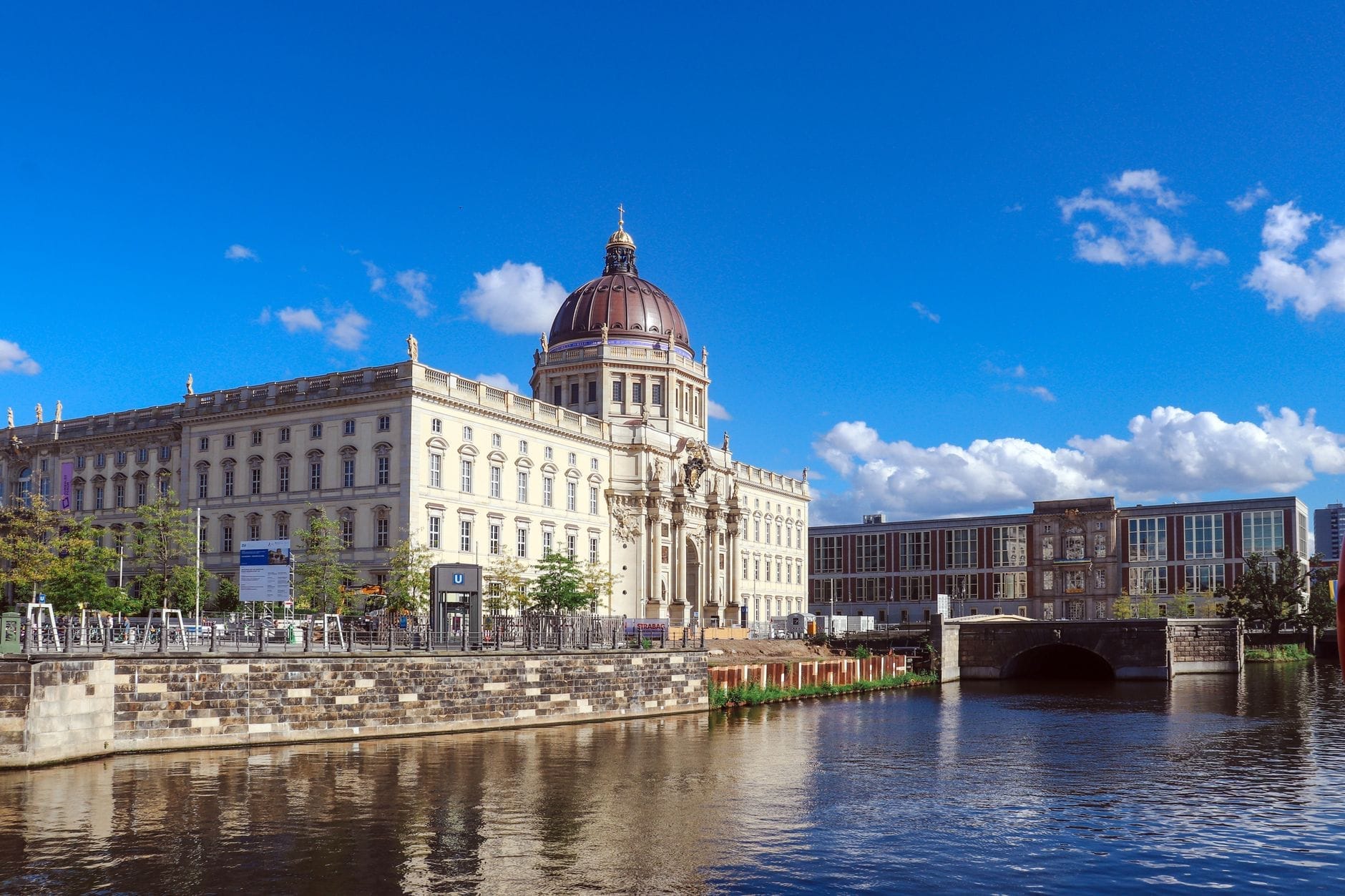
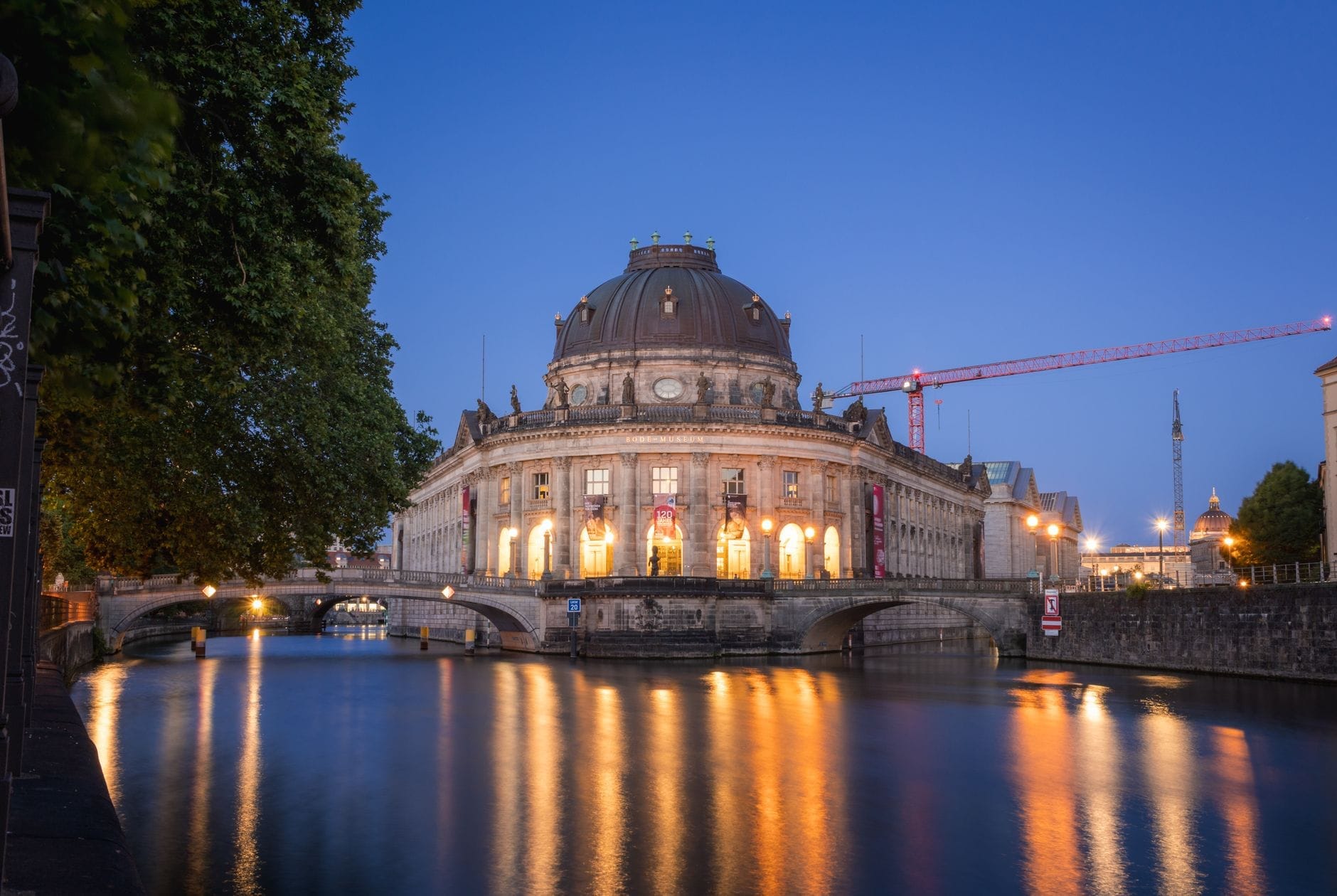
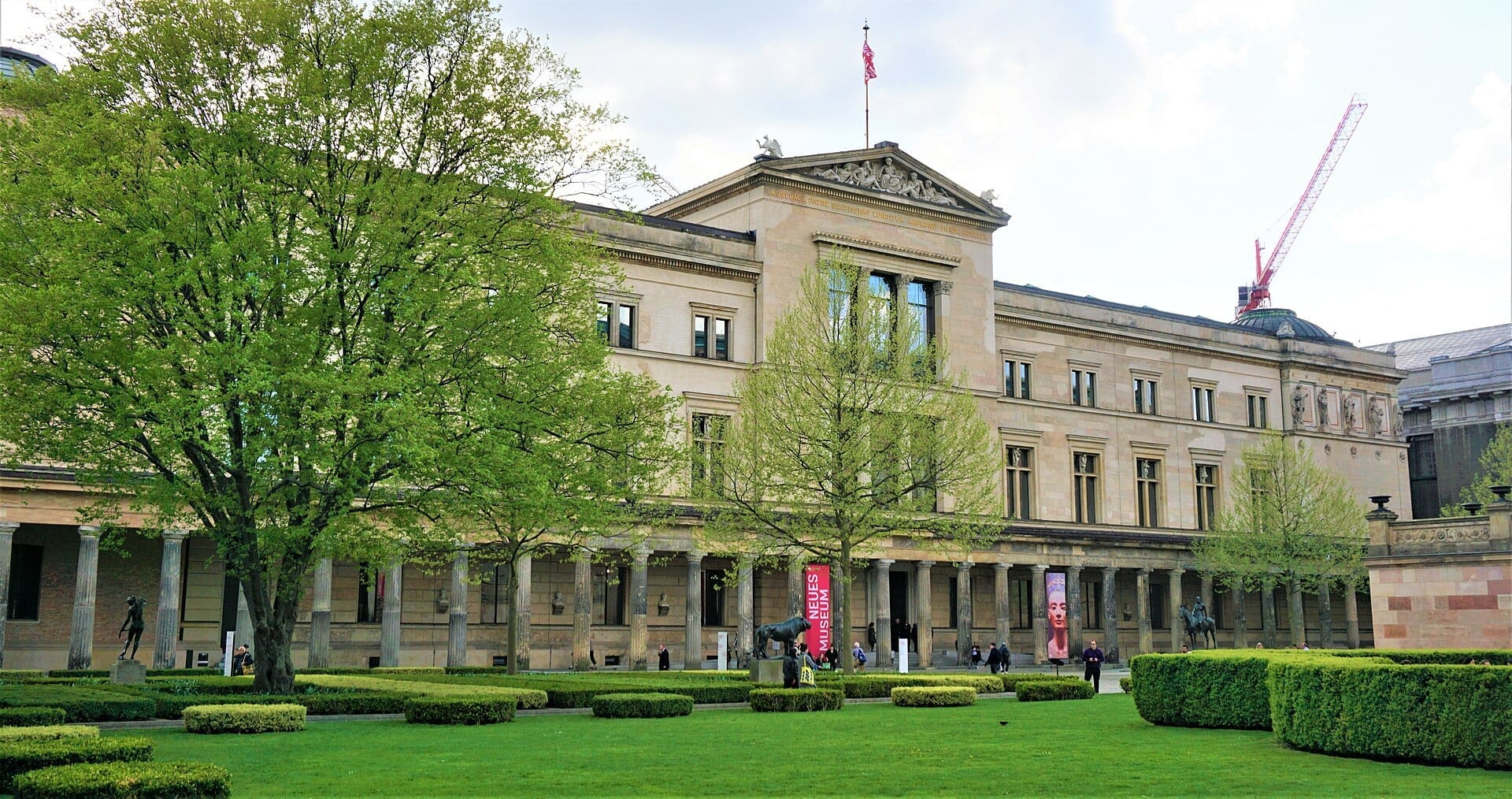
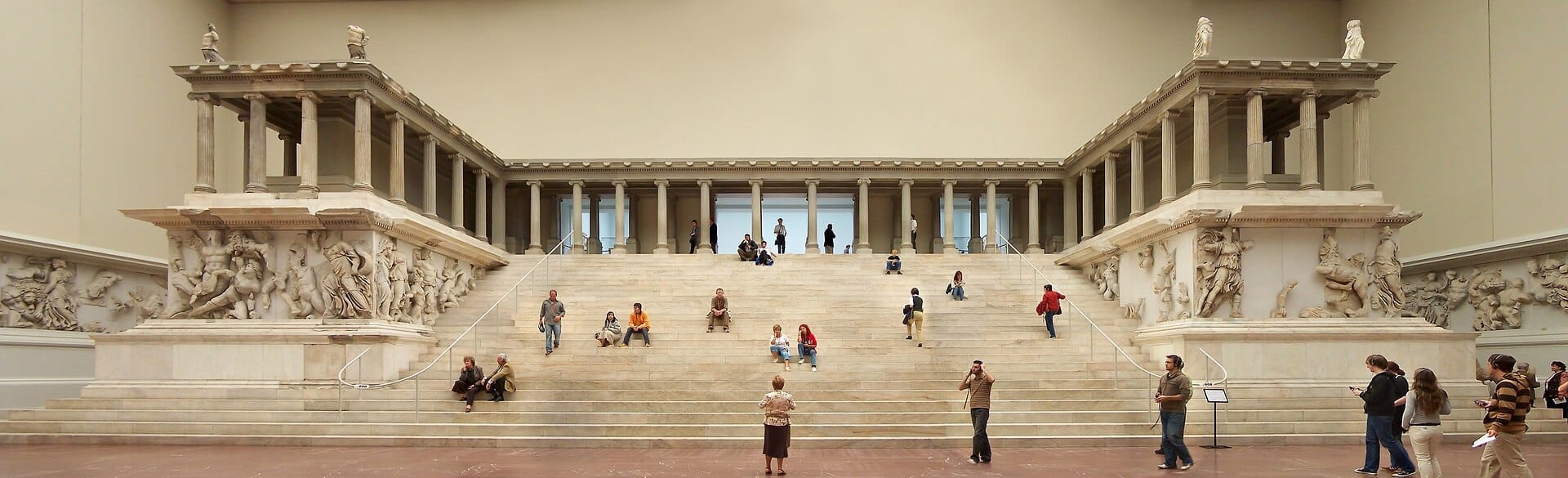
Museum Island, a UNESCO World Heritage Site at the northern tip of the Spree island, is the obvious anchor for any first visit. The complex holds five major museums in close proximity, including the Pergamon Museum with its ancient architectural reconstructions and the Neues Museum containing the bust of Nefertiti. Allocate at least half a day if you plan to go inside. The Berlin Cathedral on the adjacent Lustgarten is worth entering for the dome climb alone, which offers an unusual elevated view across the island.
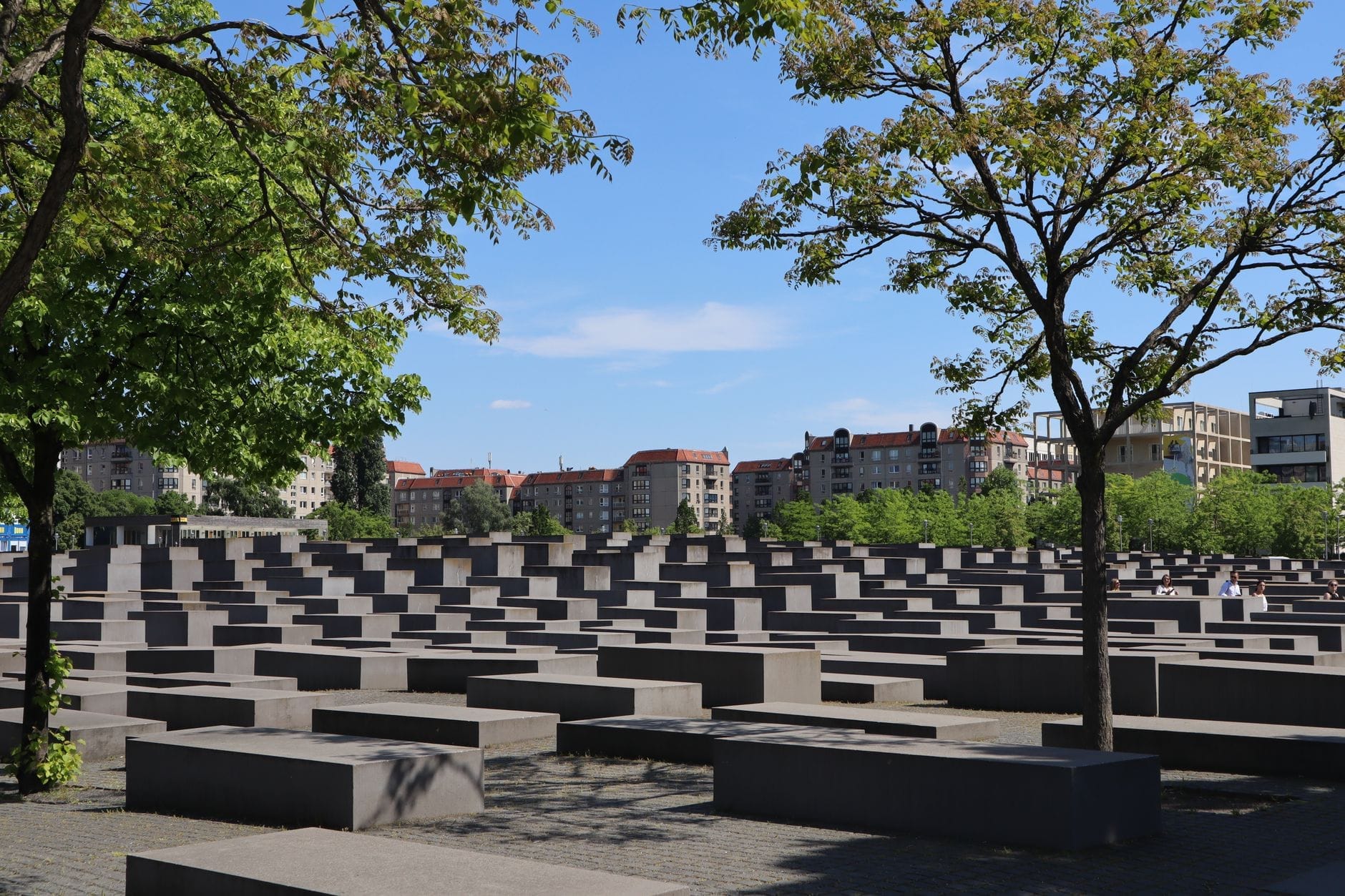
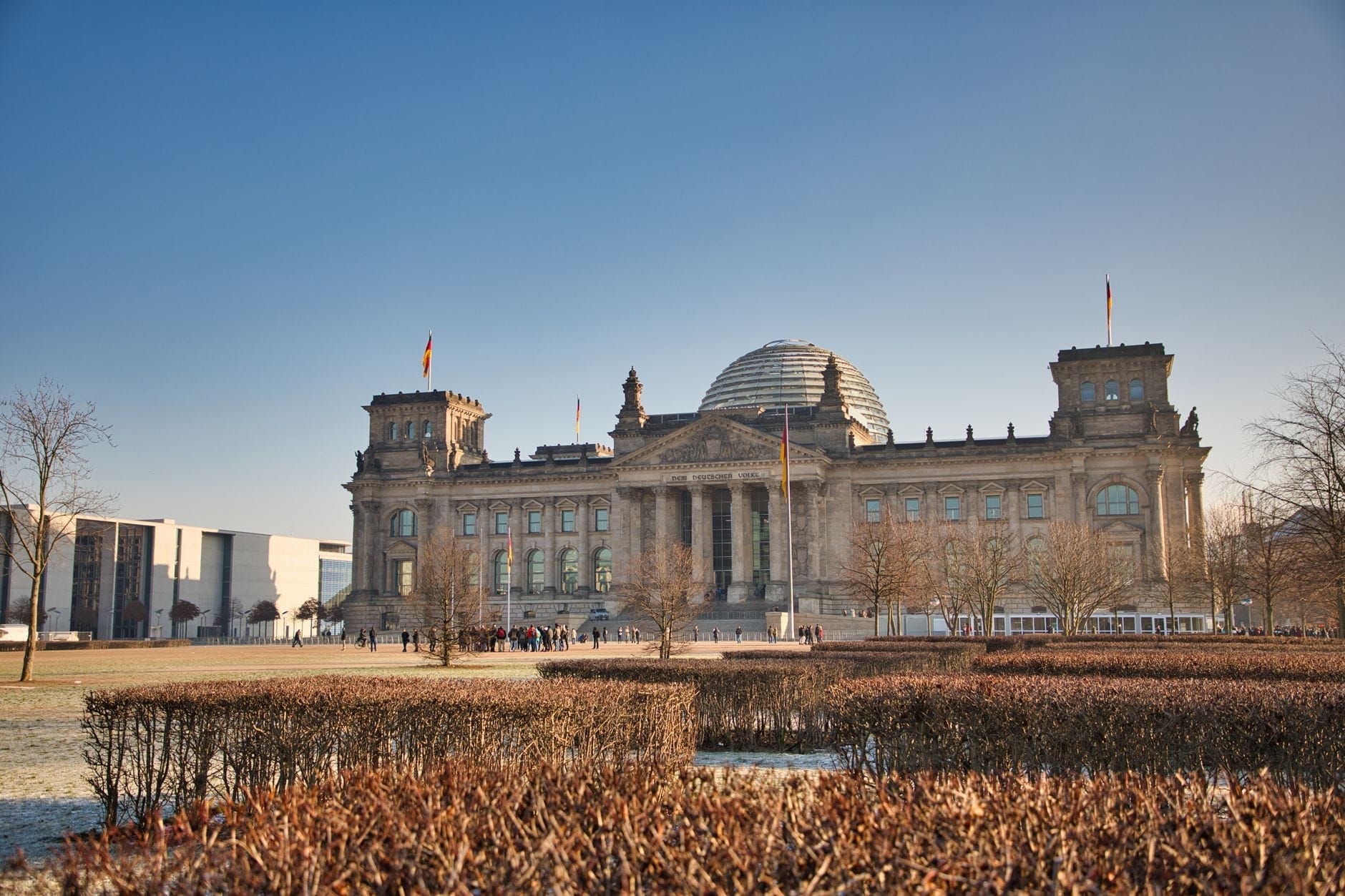
The western end of Mitte is anchored by the Brandenburg Gate, the city's most recognizable symbol, and the Reichstag Building, home to the German parliament and its famous glass dome designed by Norman Foster. The Reichstag dome requires advance booking but is free; the views over the government quarter and Tiergarten are among the best in the city. A short walk south from the gate brings you to the Holocaust Memorial, a field of 2,711 concrete stelae that creates a disorienting, genuinely affecting experience at ground level.
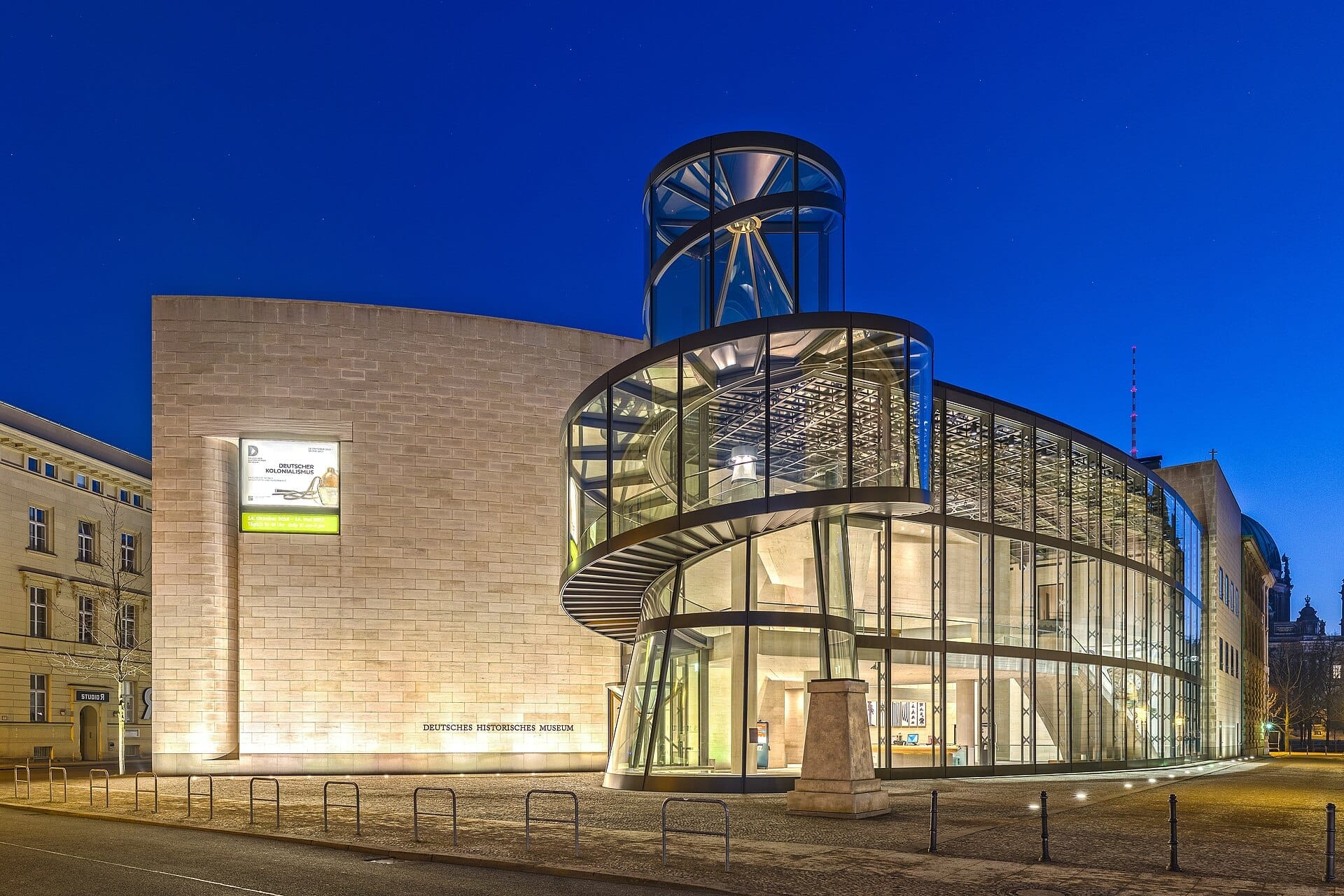
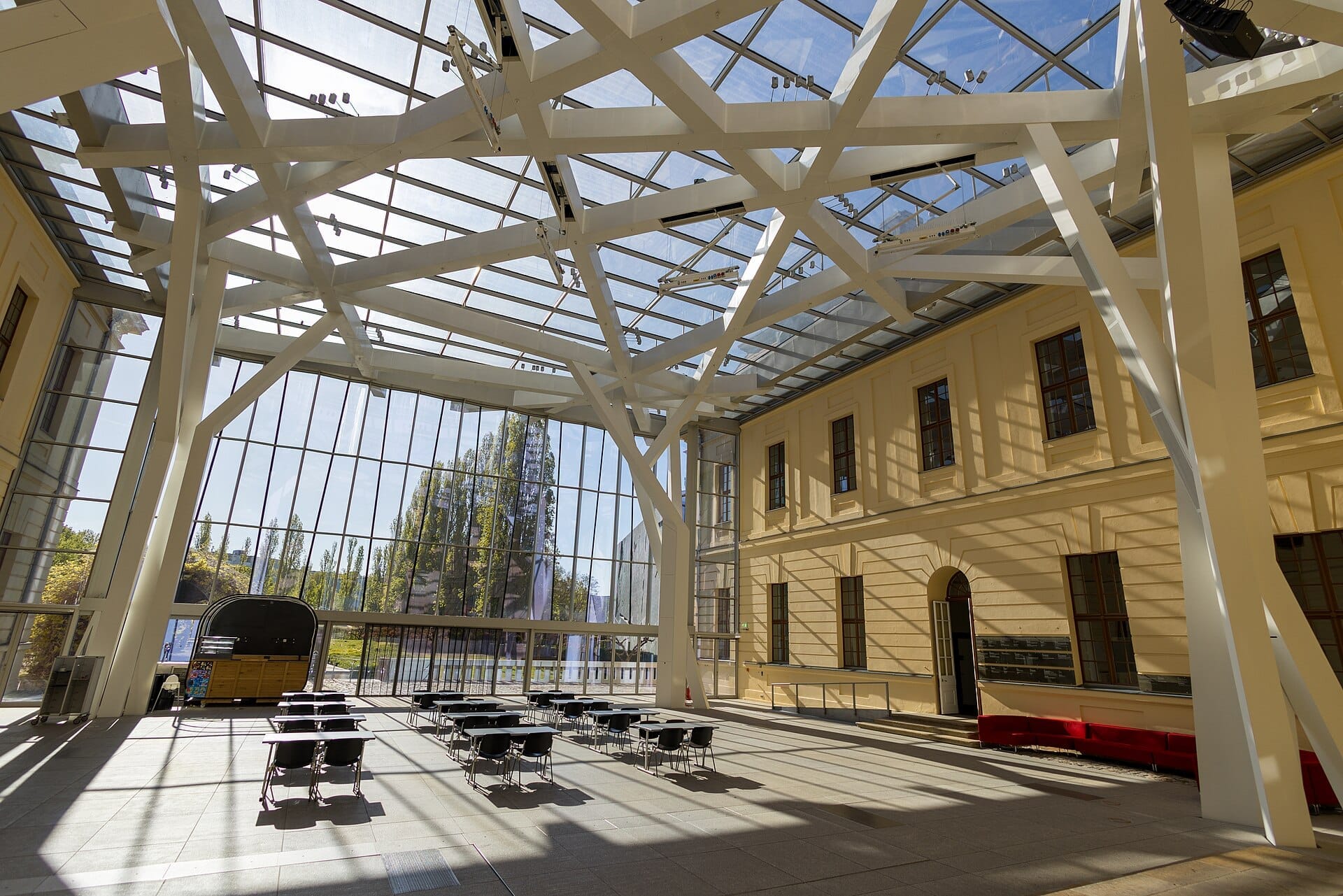
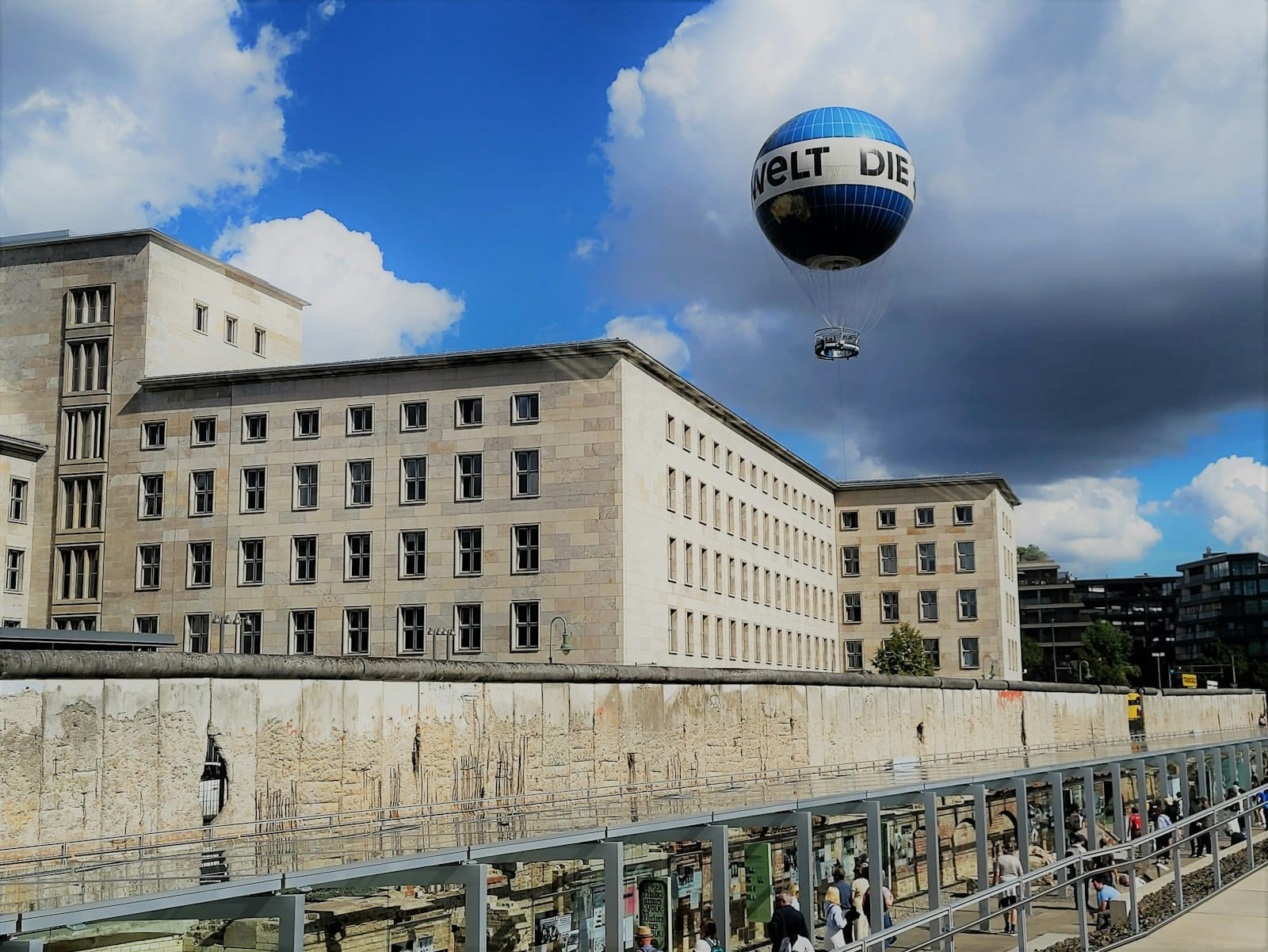
Along Unter den Linden, the German Historical Museum in the former Zeughaus (arsenal) building is one of the most comprehensive history museums in Europe, covering German history from the Middle Ages to the present. Near Checkpoint Charlie, the Topography of Terror occupies the excavated foundations of the former Gestapo and SS headquarters and offers unflinching documentation of the Nazi apparatus, entirely free of charge.
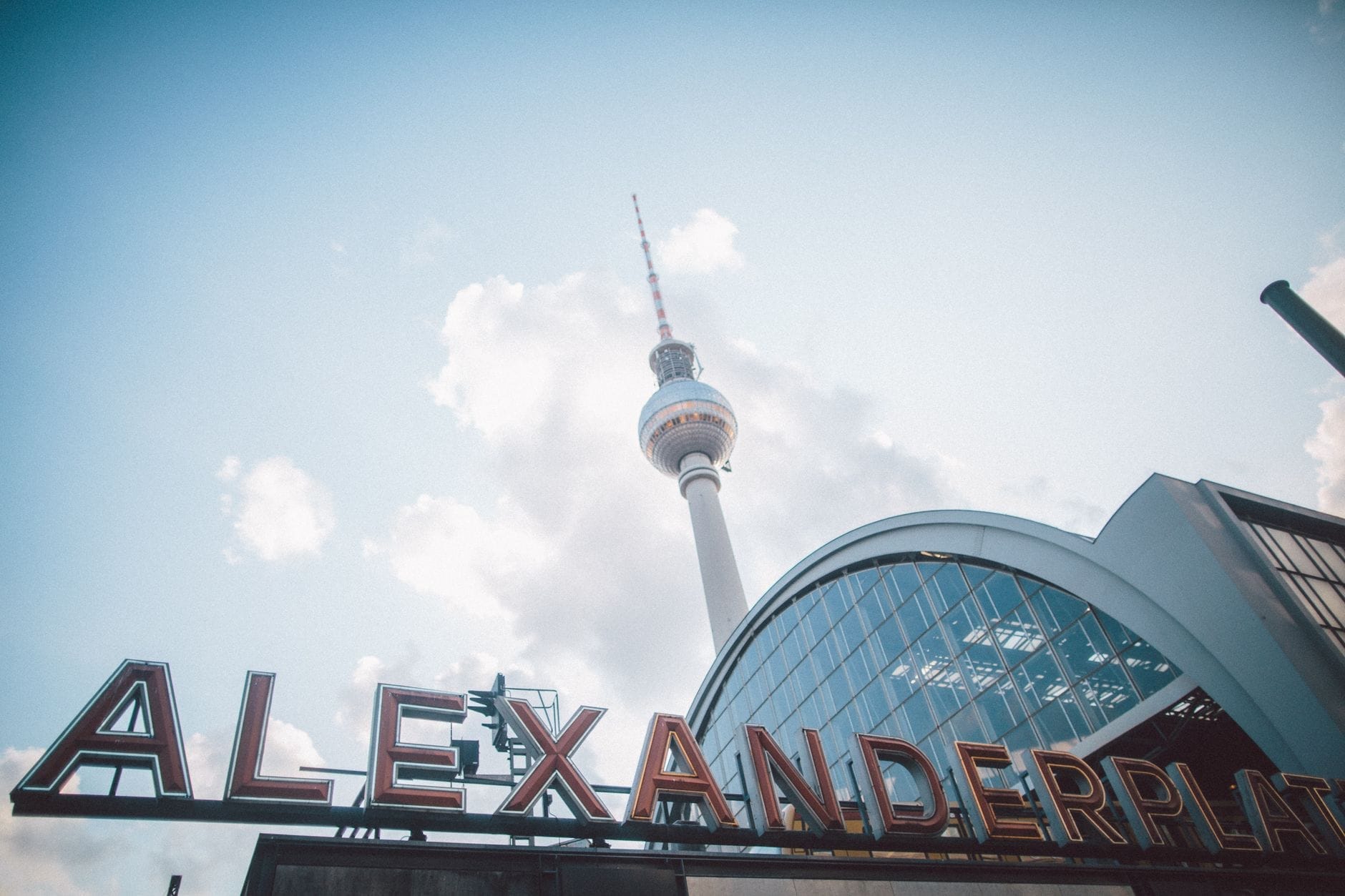
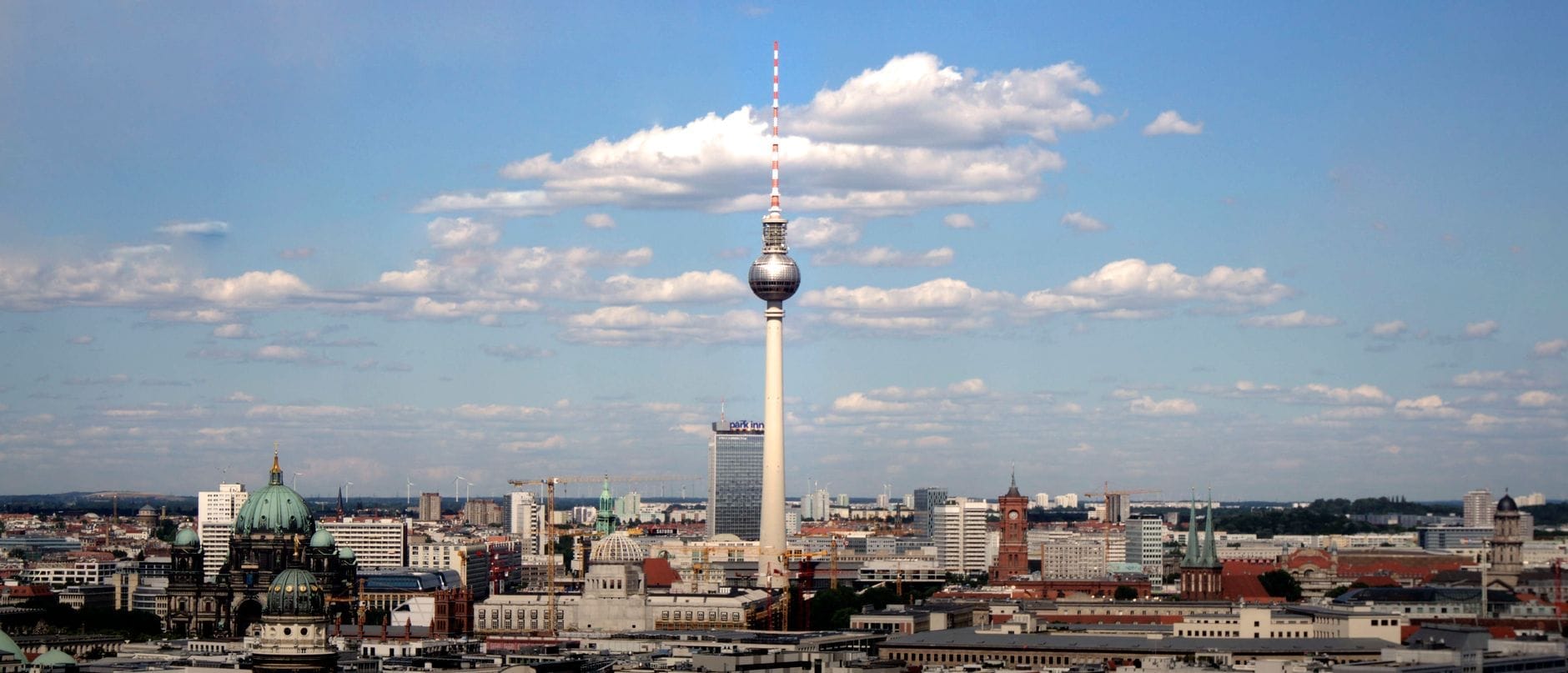
In the east of the district, the Berlin TV Tower at Alexanderplatz is the tallest structure in Germany and visible from almost anywhere in the city. The viewing platform at 203 meters provides an unobstructed panorama and a useful way to understand Berlin's layout. The Hackesche Höfe nearby, an interconnected series of eight Art Nouveau courtyards built in 1907, are worth exploring both for the architecture and for the shops, cafés, and cinema that occupy them.
💡 Local tip
Book the Reichstag dome at least a week in advance through the Bundestag website. Slots fill quickly, especially in summer. It's free and one of the best views in Berlin, so don't skip it out of inconvenience.
Museum Island: five world-class museums on a single Spree island, UNESCO-listed
Brandenburg Gate and Holocaust Memorial: Berlin's most significant commemorative axis
Reichstag Building: the glass dome offers free panoramic views, booking required
Unter den Linden: the 1.5km ceremonial boulevard lined with lime trees and landmarks
Hackesche Höfe: nine interconnected Art Nouveau courtyards near Hackescher Markt
Topography of Terror: one of Berlin's most important memorial sites, free entry
Berlin TV Tower: tallest structure in Germany, 368 m high, observation deck open daily
Nikolaiviertel: reconstructed medieval quarter near the Rotes Rathaus city hall
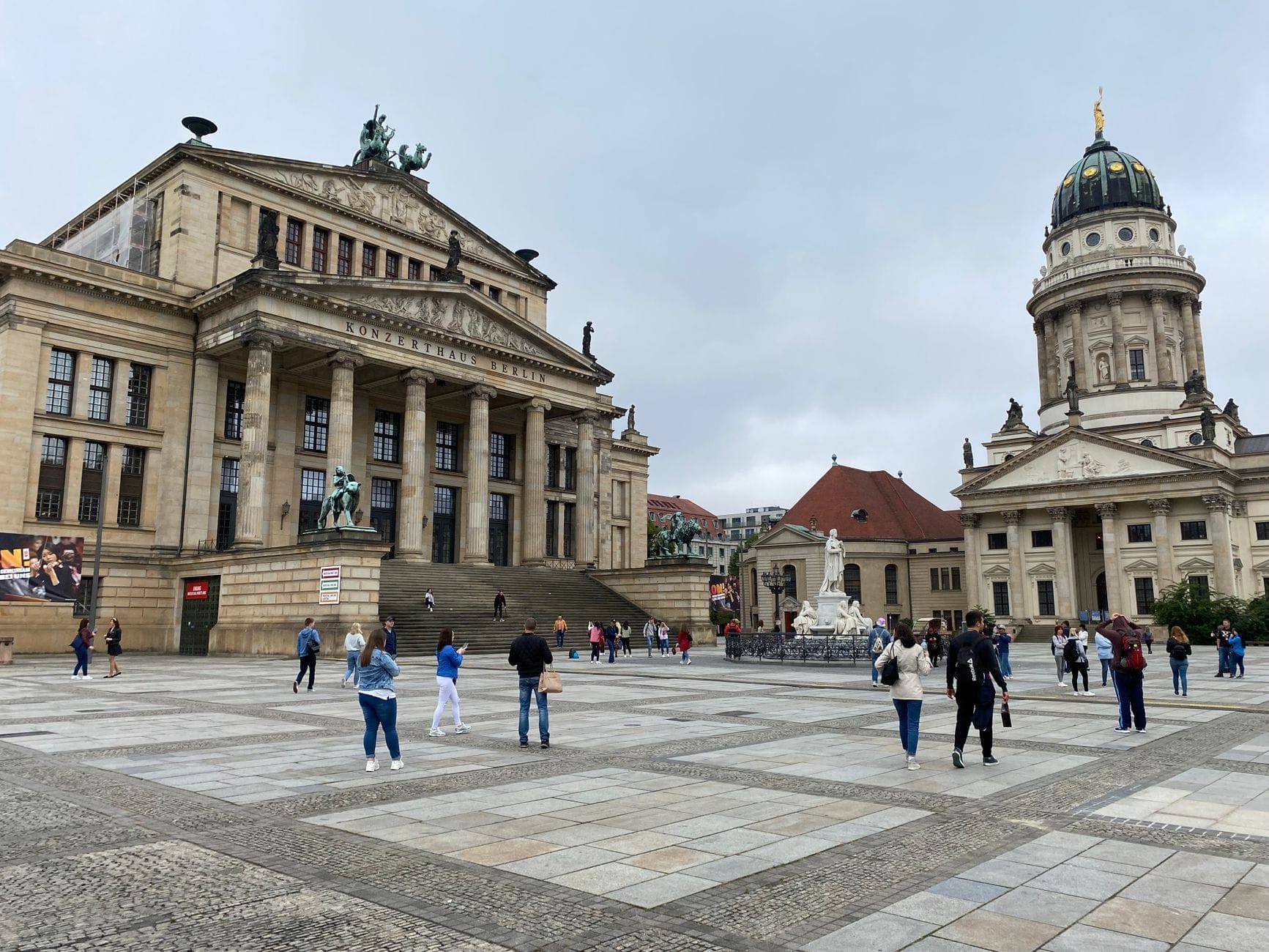
Gendarmenmarkt: elegant 18th-century square flanked by two matching cathedral buildings
Eating & Drinking
Mitte's food scene divides sharply along geographic lines within the district. The stretch of Unter den Linden and the streets immediately around Museum Island and Checkpoint Charlie tend toward tourist-facing restaurants with elevated prices and average food. Eating here is convenient, but you're paying for location more than quality. The general rule is: the closer to a landmark, the worse the value.
Moving north into Spandauer Vorstadt, the picture improves considerably. The streets around Hackescher Markt, Rosenthaler Platz, and Torstraße support a genuine independent food culture. Torstraße in particular has developed into one of the better restaurant streets in central Berlin, with a range that covers everything from Vietnamese and Middle Eastern to seasonal European cooking. The price range here is mid-level, with dinner for two at a sit-down restaurant typically landing in the 40 to 80 euro range before drinks.
For quick, affordable eating during the day, the food stalls and bakeries around Alexanderplatz and Hackescher Markt provide good options. Currywurst stands are part of the Berlin landscape here, and there are several reliable döner and falafel spots within a short walk of Rosenthaler Platz. The Markthalle around nearby Invalidenstraße and Torstraße also hosts food vendors during market hours.
The bar scene in the northern part of Mitte is understated but genuinely good. Wine bars and cocktail bars have multiplied along Torstraße and the side streets around Weinbergspark over the past decade, and there are several spots that draw a local crowd rather than a tourist one. Cafés in this part of the district typically open by 8am on weekdays and later on weekends, and some double as work spaces with reliable wifi.
⚠️ What to skip
Restaurants directly on Gendarmenmarkt and along the main tourist stretch of Unter den Linden charge significantly more than comparable places a few streets away. Walk two or three blocks off the main axis and prices drop noticeably.
Getting There & Around
Mitte is the best-connected district in Berlin by public transit. The S-Bahn Stadtbahn, which runs elevated across the city on an east-west line, stops at Hackescher Markt, Friedrichstraße, Hauptbahnhof, and Bellevue, giving fast access to most of the district's main areas. S-Bahn lines S3, S5, S7, and S9 all use this corridor, so trains are frequent even outside peak hours.
U-Bahn coverage within Mitte is provided by four lines. The U5 runs the full length of the Unter den Linden axis from Alexanderplatz west to Hauptbahnhof, with stops at Museumsinsel and Brandenburger Tor, making it the most useful single line for visitors. The U2 serves southern Mitte, the U6 runs north-south through the district, and the U8 connects the northern section toward Rosenthaler Platz and the Spandauer Vorstadt. Alexanderplatz functions as the eastern transit hub, with U-Bahn, S-Bahn, tram, and multiple bus lines all converging there.
From Berlin Brandenburg Airport (BER), the FEX express train connects to Hauptbahnhof via Potsdamer Platz in roughly 23 minutes. Regional trains (RB24, RB32) connect via Ostkreuz to eastern Mitte. The BVG public transit network covers the full journey on a standard AB fare zone ticket. The Berlin Welcome Card can make financial sense for stays of three days or more if you plan to use transit frequently and visit multiple museums.
Within Mitte itself, walking is by far the most practical way to move between attractions. The walk from the Brandenburg Gate to Alexanderplatz along Unter den Linden takes about 30 to 35 minutes at a comfortable pace, with Museum Island roughly in the middle. Cycling is also viable on most streets, and there are bike-share stations throughout the district. Trams are useful in the northern section of Mitte, particularly the M1 and M2 lines that connect Hackescher Markt northward.
Where to Stay
Mitte is the most hotel-dense area of Berlin, and staying here puts you within walking distance of the city's main attractions. The trade-off is that it isn't the most atmospheric or locally flavored base, and prices per night run higher than comparable rooms in Prenzlauer Berg or Kreuzberg. That said, if your priority is minimizing transit time to landmarks and you're visiting Berlin for the first time, Mitte is a sensible choice.
The best accommodation zones within Mitte are around Hackescher Markt and the Spandauer Vorstadt for a mix of central access and neighborhood feel, or along the Friedrichstraße corridor if you want something close to the main sightseeing axis. Hotels near Alexanderplatz are convenient for transit but the immediate surroundings are more commercial than atmospheric. The area around the Gendarmenmarkt, just south of Unter den Linden, offers some of the most elegant hotel options in the city at corresponding prices.
For budget travelers, options within Mitte are limited. Most hostels and budget hotels concentrate in Friedrichshain and Neukölln, both of which have good S-Bahn connections back into Mitte. Read our full guide to where to stay in Berlin for a comparison of neighborhoods across all price ranges.
💡 Local tip
Rooms directly overlooking Unter den Linden or the area around Alexanderplatz can be noisy well into the night, particularly in summer when outdoor events and late pedestrian traffic are common. Ask for an inner courtyard room if noise sensitivity is a concern.
A Few Honest Notes
Mitte demands some patience. The areas around Checkpoint Charlie, the south end of Friedrichstraße, and the immediate environs of the TV Tower are among the most tourist-saturated zones in Germany. The souvenir economy is omnipresent, and the reconstructed Checkpoint Charlie installation has drawn criticism for being more theatrical prop than serious memorial. These aren't reasons to avoid the area, but they're worth knowing before you arrive with different expectations.
The district also carries visible weight from its history as part of East Berlin. The traces are everywhere if you know where to look: the scale of Karl-Marx-Allee a short distance to the east, the Palace of Tears at Friedrichstraße station, the deliberately preserved ruins behind the Topography of Terror. Mitte rewards visitors who engage with this history rather than walking past it. The Cold War history of Berlin and the story of the Berlin Wall both run through this district more directly than anywhere else in the city.
Safety in Mitte is not a significant concern for most visitors. The area around Alexanderplatz can attract petty theft and occasional disorder in the evenings, as with any large transit hub, but the standard city-wide precautions apply: keep phones and wallets in front pockets in crowded areas. The rest of the district is calm and well-lit at night.
TL;DR
Mitte holds the highest concentration of major landmarks in Berlin, including Museum Island, the Reichstag, the Brandenburg Gate, the Holocaust Memorial, and the TV Tower. It's unavoidable for first-time visitors.
The tourist infrastructure is heavy along the main sightseeing axis. Restaurants and cafés near the landmarks are overpriced; move two or three blocks north toward Torstraße for better value and quality.
Transit access is excellent. The U5 runs the full Unter den Linden corridor, Alexanderplatz is a major hub, and Hauptbahnhof connects the district directly to Berlin Brandenburg Airport.
Spandauer Vorstadt (Hackescher Markt, Rosenthaler Platz) is the most livable and characterful part of Mitte, and the best area for hotels if you want a neighborhood feel alongside central access.
Mitte is best suited to first-time visitors to Berlin, travelers with a strong interest in German history, and anyone who wants to minimize the gap between hotel and major attractions. Those seeking nightlife or a local residential feel will find Kreuzberg or Prenzlauer Berg a better fit.
Three days in Berlin is enough to cover the essential history, art, and culture of Germany's capital, but only if you plan smartly. This day-by-day itinerary groups attractions by location, cuts the tourist traps, and gives you the practical details to make every hour count.
Berlin runs 80 to 100+ Christmas markets each season, spread across dozens of neighbourhoods with wildly different characters. This guide covers the best markets, when to go, what things cost, how to get around, and what to skip.
Berlin's flea markets are a city institution, drawing locals and visitors every Sunday to browse vintage clothing, vinyl records, GDR curiosities, and handmade goods. This guide covers the best markets across the city, from the massive and famous to the small and locals-only.
Berlin's food scene is unlike anywhere else in Germany. It mixes post-war street food traditions with Turkish culinary heritage, international market culture, and a thriving modern restaurant scene. This guide covers what to eat, where to find it, and how much to pay.
Summer in Berlin runs from June through August and offers long daylight hours, warm temperatures, open-air events, and easy access to lakes and river cruises. This guide covers what the weather is actually like, the best outdoor activities, where locals spend their time, and what to pack.
Berlin in winter is colder, darker, and quieter than summer — but that's exactly what makes it compelling. From Advent Christmas markets to uncrowded museum halls and budget-friendly hotels, this guide covers what to expect, what to skip, and how to make the most of the season.
Berlin is surrounded by dozens of swimmable lakes, many reachable by S-Bahn in under 30 minutes. This guide covers the best spots for a beach day, a forest swim, or a full lake day trip, from classic lidos to quieter shores.
Berlin has one of the world's most established and expansive queer scenes, rooted in over a century of LGBTQ+ history. This guide covers the best neighborhoods, bars, clubs, cultural institutions, Pride events, and practical tips for LGBTQ+ travelers visiting Berlin.
Berlin holds more memorials per square kilometer than almost any city on earth. This guide covers the essential sites across the city, from Nazi-era documentation centers to Cold War border crossings, with practical advice on making the most of each visit.
Berlin's after-dark scene is unlike anywhere else in the world. This guide covers the top clubs, bar districts, door policy realities, seasonal shifts, and practical logistics so you spend less time queuing and more time on the dancefloor.
Berlin remains one of Europe's more affordable capitals, but prices have risen. This guide breaks down realistic daily budgets, the cheapest ways to get around, free and low-cost attractions, and where to eat well without spending much — all updated for 2026.
The Reichstag Dome is one of Berlin's most iconic experiences, and entry is completely free. But you cannot simply walk up and go in. This guide covers the registration process, opening hours, seasonal closures, guided tour options, and the best times to visit, so you arrive prepared and don't waste a trip.
Berlin is one of Europe's most visited cities, and for most travelers it is perfectly safe. But petty theft, transit scams, and a few recurring tourist traps are real. This guide covers what the risks actually look like, where they are concentrated, and exactly how to avoid them.
Berlin is one of the world's great open-air galleries, with significant clusters of murals and graffiti across Friedrichshain, Kreuzberg, Mitte, and beyond. This guide covers the best locations, iconic individual pieces, the URBAN NATION museum, Teufelsberg, and everything you need to plan a serious street art itinerary.
The Berlin to Prague train is one of Europe's most rewarding rail journeys: direct EuroCity service, around 4 hours, and fares starting from €25 if you book ahead. This guide covers schedules, prices, booking platforms, seat reservations, and what to expect on board.
Berlin rewards those who go high. Whether you climb a Cold War listening station, ride a lift to 203 meters, or sip a drink on a rooftop above the Ku'damm, the city looks extraordinary from above. This guide covers the best viewpoints and rooftop bars in Berlin, with practical advice on tickets, timing, and what to expect.
Berlin is one of the world's great walking cities, where every street corner carries a layer of history. This guide covers the top attractions to include on guided tours and self-guided walks, from the monumental boulevards of Mitte to the Wall memorials of Friedrichshain.
The Berlin Wall divided a city and defined an era. This guide covers every major surviving site, the history you need to understand what you're looking at, practical visitor information, and honest advice on how to make the most of your time.
The Berlin WelcomeCard promises unlimited public transport and discounts at 170+ attractions. But it only makes financial sense for certain types of visitors. This guide breaks down both versions, the real math behind the savings, and who should skip it entirely.
Berlin is one of Europe's most family-friendly cities, with world-class museums, vast parks, excellent public transport, and enough hands-on attractions to keep children genuinely engaged. This guide covers the best activities, practical logistics, and honest advice for travelling to Berlin with kids.
Berlin has around 175 museums, from ancient civilizations on Museum Island to Cold War surveillance headquarters in Friedrichshain. This guide cuts through the noise and picks the museums worth your time, organized by theme so you can plan your days efficiently.
Berlin rewards visitors in every season, but not equally. This guide breaks down what to expect month by month, from summer festival heat to winter market charm, so you can choose the trip that actually matches your priorities.
Berlin preserves more Cold War history than almost any city on earth. This guide covers the essential sites, from the Berlin Wall Memorial to the Stasi prison in Hohenschönhausen, with honest assessments of what's worth your time and what's overrated.
Berlin's position at the heart of northern Germany makes it one of Europe's best bases for day trips. Within an hour by train you can reach a Rococo palace, a former concentration camp, a vast lake, or a Cold War spy station. This guide covers the best excursions from the city, with practical travel advice for each.
Berlin is one of Europe's most rewarding cities for budget travelers. From world-class memorials and open-air galleries to vast parks and free museums, here are 20 genuinely free experiences that showcase the best of the German capital.
Berlin has one of Europe's most comprehensive public transport networks, but it comes with its own rules, zones, and quirks. This guide covers everything from ticket prices and fare zones to night buses, cycling, and getting in from the airport — so you spend less time figuring out logistics and more time actually exploring the city.
Museum Island is one of Europe's great cultural concentrations: five world-class museums on a sliver of land in the heart of Berlin, all within a UNESCO World Heritage Site. This guide covers every practical detail you need to make the most of a visit, from tickets and timing to which collections are worth your time.
Berlin rewards curious travelers with an extraordinary range of experiences, from free Cold War memorials and five-museum island complexes to legendary nightlife and Sunday flea markets. This guide cuts through the noise with specific prices, honest assessments, and practical logistics to help you plan the city your way.
Berlin's food scene runs deeper than döner kebab and currywurst. This guide covers where to eat in Berlin across every budget and neighborhood, from legendary street food institutions to world-ranked fine dining, with practical advice on reservations, prices, and what to skip.
Choosing where to stay in Berlin shapes your entire trip. This guide breaks down the city's main neighborhoods by traveler type, budget, and priorities, so you can find the right base without second-guessing your booking.