Berlin in Summer: What to Expect & Best Things to Do
Summer in Berlin runs from June through August and offers long daylight hours, warm temperatures, open-air events, and easy access to lakes and river cruises. This guide covers what the weather is actually like, the best outdoor activities, where locals spend their time, and what to pack.
Plan and book this trip
Tools from our partner Travelpayouts help you compare flights and hotels. If you book through them, we may earn a commission at no extra cost to you.
Flights
Hotels map
TL;DR
- Summer in Berlin (June–August) means average highs of 23–25°C, up to 17 hours of daylight near the solstice, and a city that moves almost entirely outdoors.
- Heatwaves above 35°C do happen, but they're short. Rain is more common in summer than in winter, arriving as sharp afternoon thunderstorms rather than grey drizzle.
- The best outdoor priorities: swimming at Berlin's lakes, evening Spree cruises, and open-air cinema. See the full Berlin lakes guide for swimming spots.
- Crowds peak in July and August, particularly around major landmarks in Mitte. Book tickets for popular attractions and the Badeschiff well in advance.
- Summer in Germany generally favors Berlin over beach destinations for culture, nightlife, and urban outdoor life. Check the best time to visit Berlin guide for a full seasonal comparison.
Berlin Summer Weather: What the Numbers Actually Mean
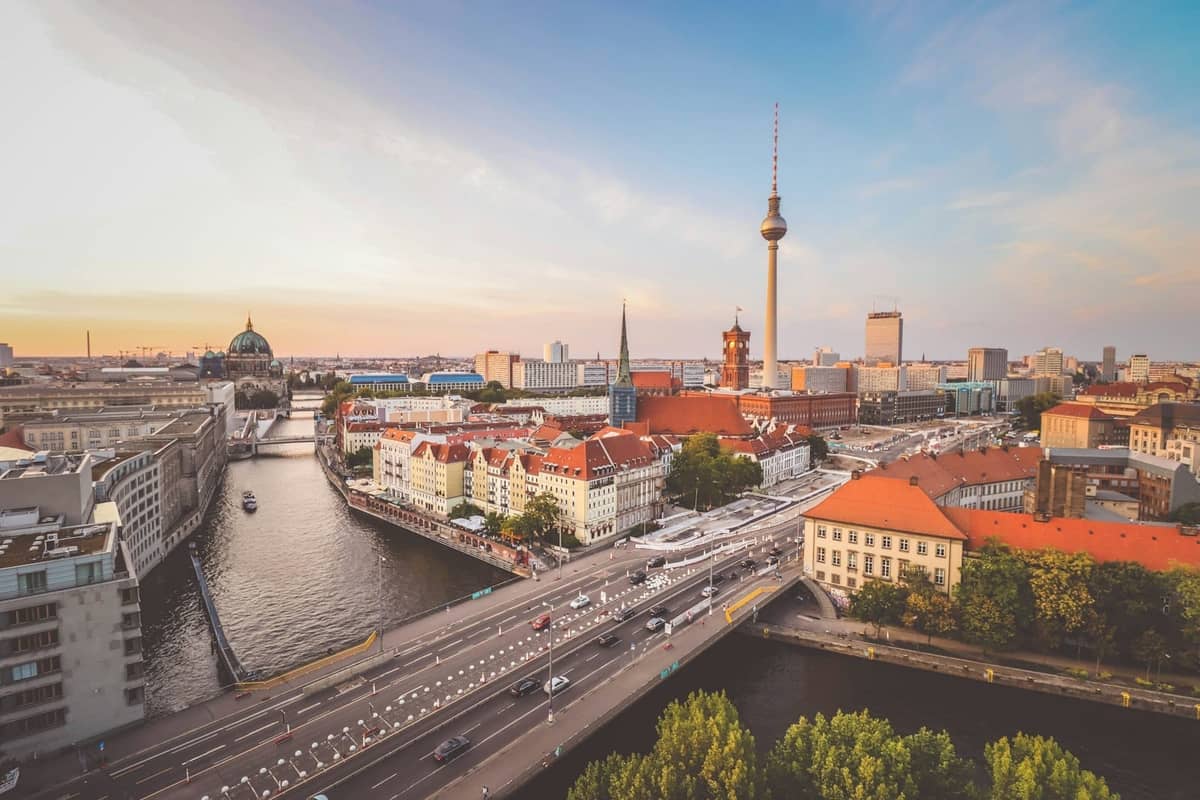
Berlin sits on the North German Plain with a temperate continental climate, which means summers are genuinely warm without being oppressively humid. July is the peak month: average highs around 23–25°C, average lows around 12°C, roughly 7 hours of sunshine per day, and about 8 rainy days across the month. Those numbers sound moderate, but the real story is the extremes. Heatwaves pushing 30–35°C are increasingly common and can last several days. When that happens, Berlin's lack of air conditioning in older buildings and public transport becomes noticeable.
Daylight is one of Berlin's biggest summer assets. Around the summer solstice in late June, sunrise comes before 05:00 and sunset after 21:00, giving close to 17 hours of usable light. That means long evening walks, outdoor dining that stretches past 21:00, and the genuine feeling that the day never really ends. By late August the days shorten noticeably, but evenings are still warm enough for outdoor seating until 20:00 or so.
⚠️ What to skip
Summer is not Berlin's driest season. Afternoon thunderstorms are common, especially in July and August. They tend to be short but intense. Carry a compact rain jacket or a small umbrella, particularly if you're planning full-day walking routes.
Annual precipitation in Berlin averages around 575 mm, spread fairly evenly across the year. Summer months get a slightly higher share, driven by convective storms rather than persistent overcast. The practical result: mornings are often clear and hot, afternoons can turn dramatically, and evenings recover. Plan outdoor excursions for the morning hours if reliability matters.
Swimming, Lakes, and Getting on the Water
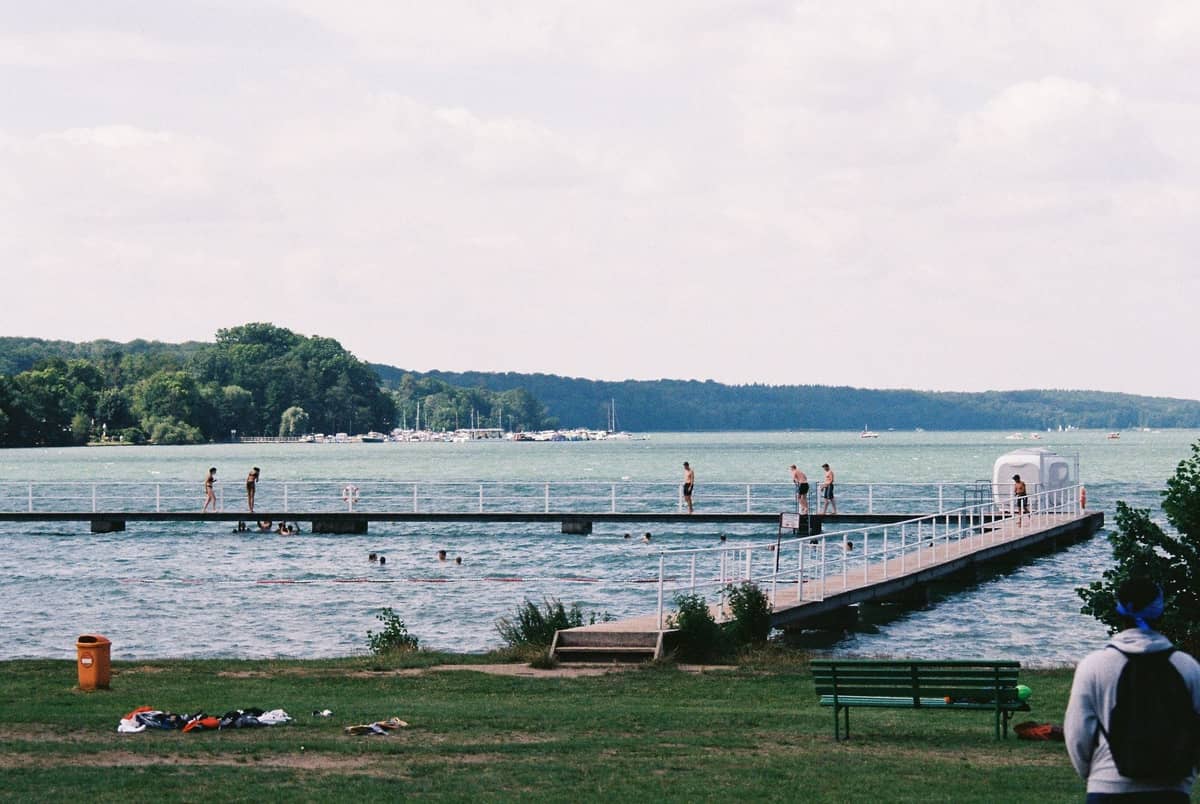
Berlin has more lakes, rivers, and waterways than almost any other major European capital, and in summer the entire city takes advantage of them. The most popular swimming lakes, including Wannsee, Müggelsee, and Krumme Lanke, are reachable by S-Bahn and are perfectly swimmable from June through early September. WannseeStrandbad Wannsee is the most famous and gets crowded on hot weekends, but it's large enough that you can find space if you arrive by 10:00.
For something more urban, the Badeschiff on the Spree in Treptow is a converted cargo ship turned swimming pool, floating in the river. It's one of the more unusual swimming experiences in Europe. Entry requires booking timed slots online in advance, especially on weekends; prices and availability change each season, so check the venue's official site closer to your visit.
Boat tours on the Spree are worth doing at least once, particularly the evening cruises that depart from the Nikolaiviertel or near the Museum Island area. The light at 19:00 on a clear July evening, with the Berliner Dom and Humboldt Forum reflected in the water, is spectacular. Most operators run 1-hour and 3-hour options; book directly through their websites or via the visitBerlin ticket platform.
💡 Local tip
For free swimming, head to Krumme Lanke or Schlachtensee in the Grunewald forest. Both are reachable on the S1 S-Bahn line and are far less crowded than Wannsee on weekday mornings. Water quality is monitored by the Berlin Senate and results are published online before each season.
Parks, Open-Air Events, and How Locals Actually Spend Summer
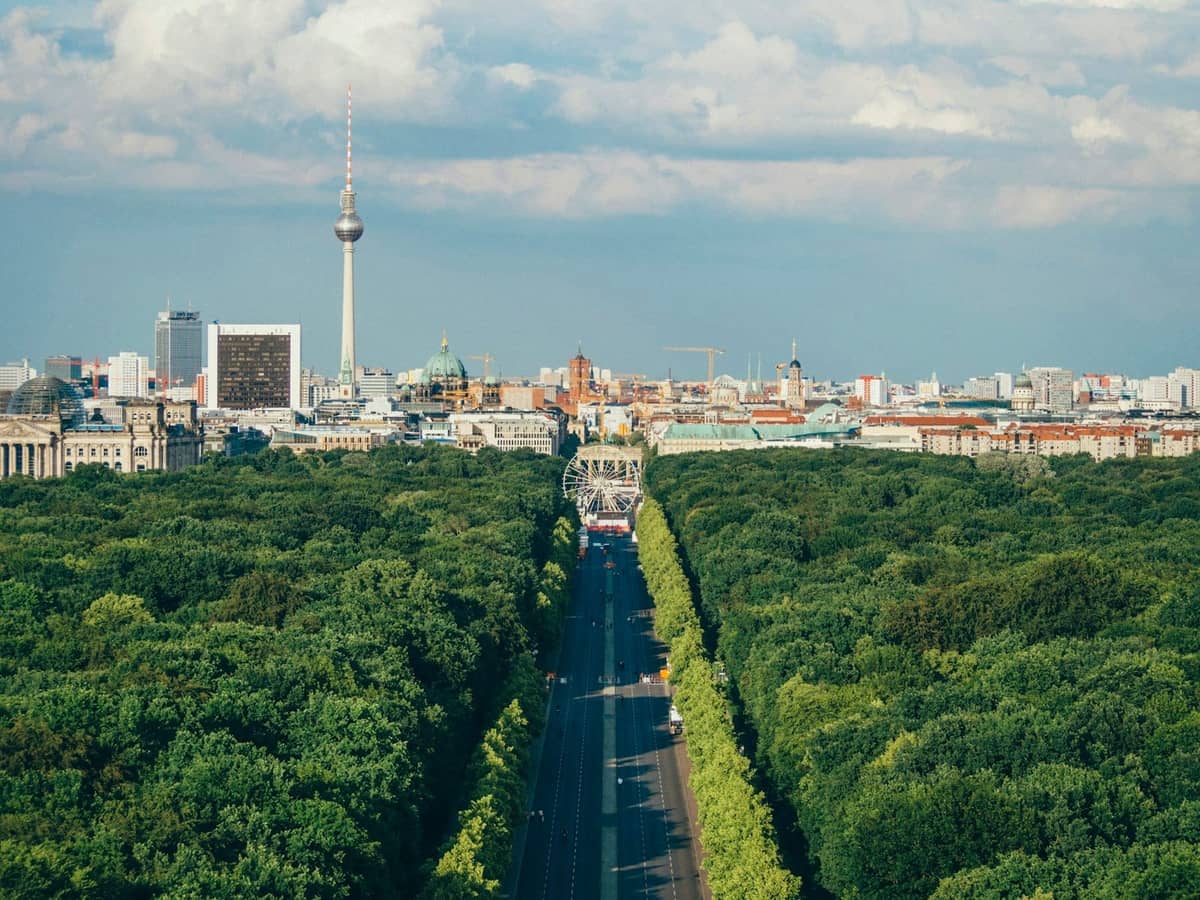
Berliners treat parks as extensions of their living rooms in summer. Tiergarten is the city's central green space and gets filled with picnickers, cyclists, and barbecue groups every weekend from May through September. The 210-hectare park has beer gardens, a rose garden that peaks in June, and enough space to lose yourself in. It connects directly to the Reichstag quarter, the Philharmonie, and the Berlin Victory Column, making it an easy base for a full-day outdoor loop.
Tempelhofer FeldTempelhofer Feld is arguably Berlin's most singular summer experience. The former Tempelhof Airport has been a public park since 2010, but the runways are still intact. On any warm afternoon you'll find rollerbladers, kite-flyers, cyclists, urban gardeners, and barbecues spread across a 386-hectare open field. There are no trees, almost no shade, and no concession stands inside. Bring water, sunscreen, and food.
- Mauerpark (Prenzlauer Berg) Famous for its Sunday flea market and open-air karaoke. Very crowded in summer, but the atmosphere is worth it. Arrive before 11:00 to browse the market without the worst of the crowds.
- Görlitzer Park (Kreuzberg) A neighbourhood park with a mixed-use feel, adjacent to the canal. Better on weekdays when it's less packed. The Turkish Market at nearby Maybachufer runs on Tuesdays and Fridays and is one of Berlin's best food markets.
- Volkspark Friedrichshain The oldest public park in Berlin, with a fairy-tale fountain, open-air cinema in summer, and good cycling paths. Less touristy than Tiergarten.
- Grunewald Forest 3,000 hectares of pine forest on Berlin's western edge with cycling trails, wild deer, and the Wannsee lake at its southern tip. Best reached by S7 S-Bahn.
Open-air cinema (Freiluftkino) is a Berlin summer institution. Several venues operate across the city from June through August, including screens at Volkspark Friedrichshain, Kreuzberg, and the Kulturforum. Films are typically shown in their original language with German subtitles. Bring a blanket because temperatures drop after sunset even in July.
Major Summer Events and What to Know Before You Go
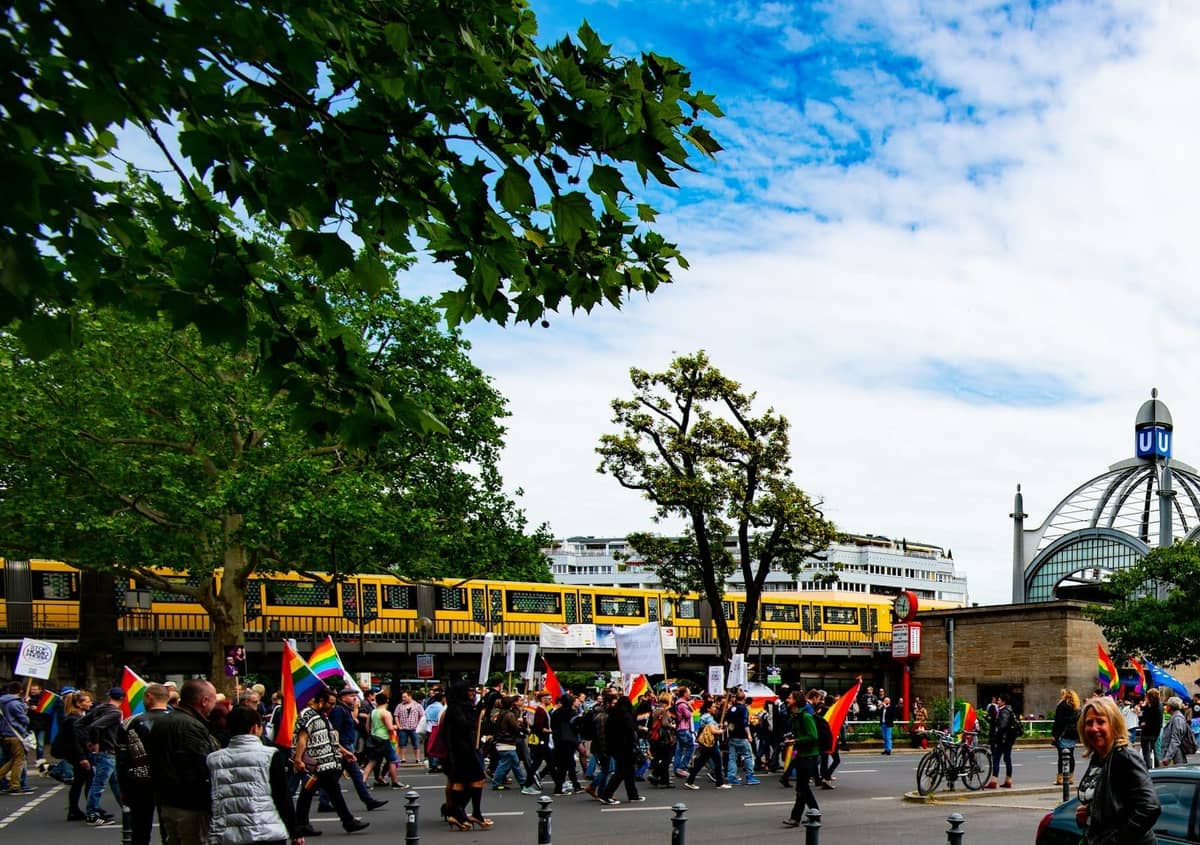
Berlin's event calendar in summer is dense. Christopher Street Day (CSD Berlin) is one of the largest Pride events in Europe, typically held in late July, drawing hundreds of thousands of participants to the city centre. Hotel prices spike significantly during this week, and the area around Tiergarten and Kurfürstendamm gets extremely crowded. Book accommodation months in advance if your trip overlaps.
The Classic Open Air, traditionally held on Gendarmenmarkt, runs for several evenings in early July, with classical music performances in one of Berlin's finest squares or alternative venues during renovation periods. Tickets sell out early. Lollapalooza Berlin (usually September) and various outdoor club events at venues like RAW Gelände extend the outdoor season well into autumn. For LGBTQ+ travellers planning around CSD, the dedicated Berlin LGBTQ+ guide covers the full calendar and neighbourhood specifics.
✨ Pro tip
Berlin's Kulturbrauerei in Prenzlauer Berg runs a regular outdoor summer programme including film screenings, markets, and live events in a converted brewery courtyard. Entry to many events is free. It's a reliable fallback on evenings when you don't want to plan too carefully.
Sightseeing Strategy for Summer Crowds
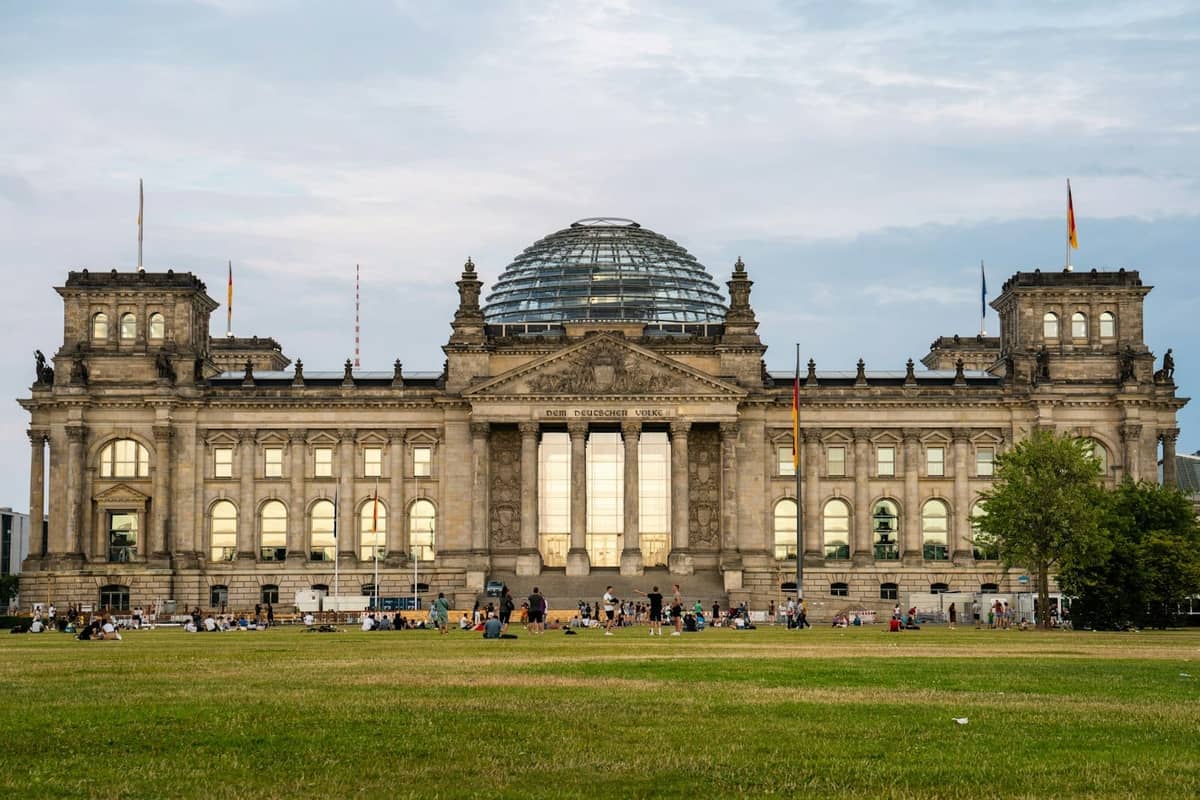
Berlin's most-visited landmarks in summer are the Reichstag, the Holocaust Memorial, Brandenburg Gate, and Museum Island. All of them are more crowded in July and August than at any other point in the year. The Reichstag dome requires free timed registration through the Bundestag website, often booked several weeks ahead in summer. Don't leave this until the day before.
Museum Island is worth a morning even in summer heat because the interiors are cool. The Pergamon Museum has ongoing renovation work affecting some galleries through the mid-2020s, so check what's accessible before visiting. The Neues Museum and Berlin Cathedral are both worth prioritising if your time is limited. Full Museum Island coverage is in the dedicated Museum Island Berlin guide.
- Arrive at major outdoor sites before 09:00 or after 18:00 to avoid peak crowd hours.
- The East Side Gallery is best in the morning before tour groups arrive. It runs 1.3 km along the Spree and is always free.
- Book Reichstag dome access at least 2–3 weeks ahead in July and August.
- The Berlin TV Tower at Alexanderplatz has shorter queues if you book the first or last slot of the day.
- Consider the Berlin WelcomeCard if you plan to use public transport heavily — it covers the BVG network and includes discounts at major attractions.
What to Pack for a Summer Trip to Berlin
The core packing challenge for Berlin in summer is the temperature range. A single day can start at 13°C in the morning, peak at 28°C by early afternoon, and cool back to 17°C by 22:00. Lightweight layers solve this better than any single piece of clothing. Breathable shirts and trousers or shorts for daytime, a light jacket or zip-up fleece for evenings, and a compact rain jacket that packs into a pocket.
Comfortable walking shoes matter more in Berlin than in most cities. The centre involves a lot of pavement and cobblestone, distances between sights are longer than they look on maps, and the city is built for walking. Sandals work for park days but will tire you out on a full sightseeing day. Bring sunscreen: the combination of long daylight hours and reflective urban surfaces means you'll burn faster than expected, particularly at Tempelhofer Feld where there's no shade.
ℹ️ Good to know
Berlin tap water is safe to drink and widely considered excellent quality. A reusable water bottle will save you money and reduce plastic waste across a multi-day trip. Bottles can often be refilled at restaurant toilets, parks with public fountains, and at the larger S-Bahn station food courts.
FAQ
How hot does Berlin get in summer?
Average daytime highs in July sit around 23–25°C, but Berlin regularly experiences heatwaves where temperatures exceed 30–35°C for several days at a stretch. Nights usually cool down to 12–15°C even during hot spells, which makes sleeping more comfortable than in many southern European cities.
Does it rain a lot in Berlin in summer?
Summer is actually one of the wetter seasons in Berlin, but the rain pattern is different from northern Atlantic climates. Instead of grey persistent drizzle, Berlin gets sharp afternoon or evening thunderstorms that typically pass within an hour. July averages around 8 rainy days and 48 mm of precipitation. A compact umbrella or rain jacket is worth packing.
When is the best time to visit Berlin in summer?
June offers the longest days and slightly fewer tourists than July and August. Late August is excellent for warm weather with noticeably smaller crowds as European school holidays wind down. July is the peak of everything: events, crowds, and prices. If you're flexible, aim for the first two weeks of June or the last two weeks of August.
What are the best free things to do in Berlin in summer?
Tempelhofer Feld, the East Side Gallery, Tiergarten, the Berlin Wall Memorial, and the Holocaust Memorial are all free. Sunday morning markets at Mauerpark and the Turkish Market at Maybachufer cost nothing to browse. Many open-air cultural events at the Kulturbrauerei and district festivals are also free. The dedicated free things guide covers this in detail.
Is Berlin good for summer swimming?
Yes, Berlin has more urban swimming options than almost any other European capital. The Wannsee lake is the most famous and reachable by S-Bahn. Krumme Lanke and Schlachtensee in the Grunewald are less crowded alternatives. The Badeschiff floating pool on the Spree in Treptow is the most unusual option and requires advance ticket booking. Water quality at official bathing spots is monitored and published online by the Berlin Senate before each season.