Tiergarten Park: Berlin's Green Heart at the Centre of Everything
Covering 210 hectares in central Berlin, the Großer Tiergarten is one of Germany's largest urban parks. Free to enter at any hour, it stretches from the Brandenburg Gate westward through a landscape shaped by royal hunting grounds, Prussian garden design, and postwar replanting.
Quick Facts
- Location
- Straße des 17. Juni, 10557 Berlin (Mitte)
- Getting There
- S Tiergarten (S3/S5/S7/S75/S9), U Hansaplatz (U9)
- Time Needed
- 1 to 4 hours depending on route
- Cost
- Free, open 24 hours daily
- Best for
- Walkers, cyclists, picnickers, history seekers
What the Tiergarten Actually Is
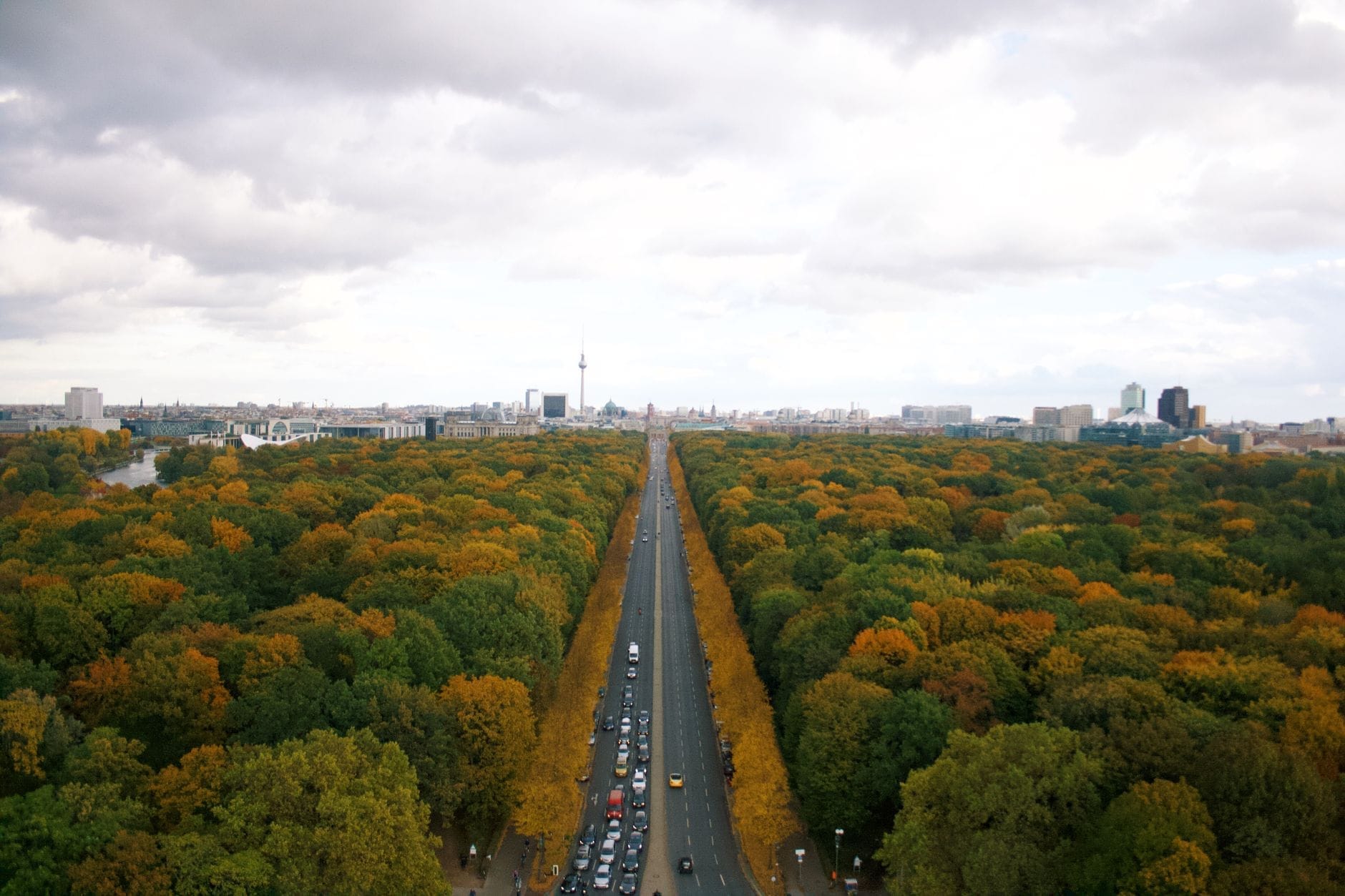
The Großer Tiergarten is a 210-hectare public park sitting at the geographical and symbolic centre of Berlin. It is not a manicured garden to stroll through in 20 minutes. It is a full urban forest: dense canopy, tangled paths, open meadows, ponds, and long straight avenues interrupted by sculptures and monuments. The park runs east to west from the edge of the Brandenburg Gate through to the Zoologischer Garten area, and it is wide enough that you can lose sight of the city entirely once you are a few hundred metres inside.
That quality, the ability to genuinely disappear from the city while remaining in its dead centre, is the park's most valuable attribute. Berlin's transit lines, embassies, and major government buildings ring its edges. But inside the treeline, the main sounds are wind, birdsong, and the distant rumble of the S-Bahn crossing the northern perimeter.
ℹ️ Good to know
The park is open 24 hours a day, 365 days a year. There are no gates, no closing time, and no admission fee. Enter from dozens of street-level access points along its perimeter.
From Royal Hunting Ground to Public Landscape
The Tiergarten's origins explain a lot about its current character. The name means roughly 'animal garden' in German, a direct reference to its original use as a royal hunting reserve. In the late 17th century, Elector Friedrich III opened the area as a public pleasure ground, though it remained a formal baroque space for some time after.
The landscape you see today owes its fundamental shape to Peter Joseph Lenné, the Prussian royal garden director who redesigned the park between 1833 and 1838. Lenné reimagined it in the style of the English landscape garden: informal curves, naturalistic planting, meadows interrupted by water features, and long sight lines broken by carefully placed trees. That philosophy is still legible in the layout, even after everything the park has been through since.
World War II left the Tiergarten severely damaged. By 1945, much of the tree cover was gone, cleared partly by bombing and partly by Berliners desperate for firewood during brutal postwar winters. Replanting began in 1949, with trees donated by cities and communities across Germany. The mature forest visitors walk through today is therefore relatively young by European standards, largely 70 to 80 years old, which explains why the canopy feels lush but not ancient.
The park's position also shaped Cold War history. The Berlin Victory Column stands at the park's central roundabout, the Großer Stern, relocated there by the Nazi government in 1939 from its original position in front of the Reichstag. Walking the Straße des 17. Juni, the park's central east-west axis, you pass through layers of Prussian, Nazi, Cold War, and reunified German history in a single kilometre.
Tickets & tours
Hand-picked options from our booking partner. Prices are indicative; availability and final rates are confirmed when you complete your booking.
Self-guided digital scavenger hunt in Berlin - Tiergarten
From 13 €Instant confirmationTiergarten Park exploration audio tour in Berlin
From 5 €Instant confirmationSkip-the-line ticket for Gemaldegalerie Berlin
From 14 €Instant confirmationPanoramapunkt Berlin ticket with skip-the-line option
From 9 €Instant confirmation
How the Park Feels at Different Times of Day
Early morning, before 8am, the Tiergarten belongs to joggers and dog walkers. The light filters green through the canopy, and the ponds near the centre reflect it back. The gravel paths are damp and smell of earth and leaf litter. There is very little noise beyond footsteps and birds. This is genuinely the best window for photography: the quality of light is soft, the crowds are absent, and the park feels like a place apart from any city.
By mid-morning on weekdays, cyclists begin to appear in numbers, mostly commuters cutting through rather than tourists. The Tiergarten functions as practical cycling infrastructure for central Berlin. Wide, mostly flat paths run in several directions, and the park is a legitimate shortcut between Mitte and Charlottenburg. Cyclists and pedestrians generally share space without conflict, but stay aware of bike traffic on the main paths.
Weekend afternoons, particularly in summer, are a different experience altogether. The meadows fill with picnic groups, the beer garden at Café am Neuen See does strong business, and the lawns around the Großer Stern become crowded. On sunny days in May through August, the park is actively festive: grills, blankets, footballs, and the smell of food from dozens of small gatherings. For visitors who want solitude, this is not the time. For visitors who want to see how Berliners actually spend leisure time, it is worth experiencing at least once.
💡 Local tip
Winter visits are underrated. The park is nearly empty on weekday mornings between November and February, the bare trees reveal the Lenné layout in its structural form, and the fog that settles over the ponds in cold weather is genuinely atmospheric.
What to See Inside the Park
The park is large enough that a single visit without a loose plan risks missing the most interesting sections. The Großer Stern roundabout at the centre is the most direct orientation point. Five major avenues radiate from it, and the Victory Column rises 67 metres above the intersection. Climbing its interior spiral staircase (separately ticketed, subject to opening hours) gives the best aerial view of the park's geometry.
East of the Großer Stern, the Straße des 17. Juni leads directly toward the Brandenburg Gate and the Reichstag building. The avenue is wide and formal, lined with chestnut trees, and serves as the route for major national events including the Love Parade in its original incarnation and, more recently, large public viewings and festivals.
North of the Großer Stern, the park's interior becomes denser and quieter. A network of smaller paths leads through woodland to the Neuer See, the park's largest lake. The cafe and beer garden on its western bank, Café am Neuen See, is one of the better places in central Berlin to sit outdoors, and renting a rowing boat on the lake is a practical way to spend an hour without spending much money.
Scattered throughout the park are memorial sculptures and monuments, including statues of poets and composers that once lined the Siegesallee, a now-dismantled avenue of Prussian rulers. Several of these have been re-sited in the park's interior, where they stand slightly incongruously between the trees. The Soviet War Memorial near the park's eastern edge on Straße des 17. Juni is distinct in character and worth a short detour.
Getting There and Getting Around
The park has no single entrance. It is accessible from the streets surrounding it at dozens of points, none of which are gated. From the east, most visitors arrive on foot from the Brandenburg Gate area, a 5-minute walk into the park along the main avenue. From the north, the S-Bahn station S Tiergarten (lines S3, S5, S7, S9) puts you at the park's northern edge, roughly a 3-minute walk to the first tree cover.
U Hansaplatz on line U9 accesses the park from the northwest and is useful if you are combining the Tiergarten with the Hansaviertel district, which contains notable postwar modernist architecture. For visitors arriving from Charlottenburg, the western end of the park connects directly to the zoo area at Breitscheidplatz.
Cycling is an excellent way to cover the park. Paths are wide and well-maintained on the main routes, though some secondary tracks are unpaved gravel or packed earth and can be muddy after rain. Flat terrain throughout the park makes it manageable for almost any cyclist. Bike hire is available from multiple providers in the surrounding area, including docked and dockless options from the BVG network.
⚠️ What to skip
The park's interior path network is not comprehensively signposted. If you are planning to navigate to a specific monument or lake, download an offline map before you enter. Mobile data coverage inside the denser woodland sections can be patchy.
Photography, Accessibility, and Practical Notes
For photography, the park's best light falls in the two hours after sunrise and the hour before sunset. The ponds in the park's interior, particularly the Neuer See and the smaller Löwenbrücke pond, reflect morning light cleanly on calm days. The formal avenue of the Straße des 17. Juni photographs well in autumn when the chestnut trees turn, and the Victory Column at the roundabout makes a strong compositional anchor from several approach angles.
Accessibility across the park is generally good on the main paths, which are wide and level. The Straße des 17. Juni is fully paved. Secondary and woodland paths vary: some are compacted gravel suitable for wheelchairs, others are uneven earth that would be difficult for mobility aids. The park has no steps at any of its street-level entry points, and the terrain is flat throughout.
Visitors combining the Tiergarten with nearby attractions should note that the Holocaust Memorial is a 10-minute walk east from the park's edge, and the Gemäldegalerie is about 15 minutes south on foot. The park makes a natural connecting route between these sites.
What the Tiergarten Is and Isn't
The Tiergarten is not a manicured showpiece park with curated flower displays, immaculate lawns, or a strong designed aesthetic throughout. It is a working urban green space that serves Berlin residents primarily and tourists secondarily. In places it is slightly scruffy. Some of the secondary paths are poorly maintained. The main avenue can feel empty and exposed on cold, grey days.
Visitors who come expecting something like Hyde Park in London or the Jardin du Luxembourg in Paris will find the Tiergarten more naturalistic and less polished. That is not a criticism. It is why the park works. But travellers with limited time in Berlin who are prioritising cultural attractions may find the Tiergarten most useful as a pleasant walking route between the Brandenburg Gate and the Zoologischer Garten rather than a destination in itself.
For those whose Berlin visit centres on history and memorials, the park sits directly adjacent to several of the city's most significant sites. The Berlin memorials guide covers the full range of what is within walking distance of the Tiergarten's eastern edge.
Insider Tips
- The beer garden at Café am Neuen See accepts cash and card and does not take reservations. Arrive before noon on summer weekends to get a table near the water. The boat hire on the lake operates independently and closes earlier than the cafe.
- The park's main avenue, Straße des 17. Juni, is closed to private vehicles on the first Sunday of each month under Berlin's car-free street policy, making it pleasant for cycling and walking without traffic.
- Several of the park's smaller ponds are home to breeding mallards and coots in spring. The reed beds near the Luiseninsel are a good spot to observe them without disturbing nesting activity.
- If you are visiting the Victory Column, note that access to the viewing platform is via a separate entrance at the base of the column. Confirm current opening hours before visiting, as they are seasonal and not always the same as the park's 24-hour access.
- The Tiergarten connects directly to the Diplomatenviertel, the diplomatic quarter, on its southern edge. A quiet loop through this area, past the embassy buildings along Tiergartenstraße, adds architectural interest to a southern park route.
Who Is Tiergarten Park For?
- Cyclists looking for a flat, traffic-reduced route across central Berlin
- Travellers who want outdoor time without leaving the city centre
- Picnickers and families, especially on summer weekends near the Neuer See
- History-focused visitors using the park as a connector between the Brandenburg Gate area and Kulturforum sites
- Early-morning walkers or runners who want quiet before the city wakes up
Nearby Attractions
Other things to see while in Mitte:
- Alexanderplatz
Alexanderplatz sits at the geographical and historical heart of former East Berlin, a vast open square with roots going back to the 13th century. Today it's a free, always-open crossroads of transit, Cold War monuments, and everyday Berlin life — chaotic, fascinating, and impossible to avoid.
- Berlin Cathedral (Berliner Dom)
The Berlin Cathedral, or Berliner Dom, is Germany's largest Protestant church and one of the most architecturally striking buildings in the city. Built between 1894 and 1905, it anchors Museum Island with a dome you can climb, a royal crypt below ground, and a nave that rewards slow, unhurried attention.
- Berlin TV Tower (Fernsehturm)
Standing 368 metres above central Berlin, the Berliner Fernsehturm is the tallest structure in Germany and the tallest publicly accessible building in Europe. Its observation deck at 203 metres delivers an unobstructed 360-degree panorama of the city. This guide covers what you actually see up there, when crowds are worst, and whether the ticket price is justified.
- Berlin Victory Column (Siegessäule)
Rising from the centre of the Großer Stern roundabout in Tiergarten, the Siegessäule is one of Berlin's most recognisable monuments. At around 67 metres tall, it offers a sweeping panorama over the city's forest-park heart — but you earn the view with 285 steps and no lift.