Berlin TV Tower (Fernsehturm): What to Expect Before You Go
Standing 368 metres above central Berlin, the Berliner Fernsehturm is the tallest structure in Germany and the tallest publicly accessible building in Europe. Its observation deck at 203 metres delivers an unobstructed 360-degree panorama of the city. This guide covers what you actually see up there, when crowds are worst, and whether the ticket price is justified.
Quick Facts
- Location
- Panoramastraße 1A, 10178 Berlin (Alexanderplatz, Mitte)
- Getting There
- S+U Alexanderplatz Bhf — S3, S5, S7, S75, S9, U5 (approx. 100m walk)
- Time Needed
- 1 to 2 hours
- Cost
- From €25.50 (standard view); from €39.00 (View & Drink); children 4–14 from €18.50; under 4 free
- Best for
- First-time visitors wanting city orientation, sunset views, photography
- Official website
- tv-turm.de/en
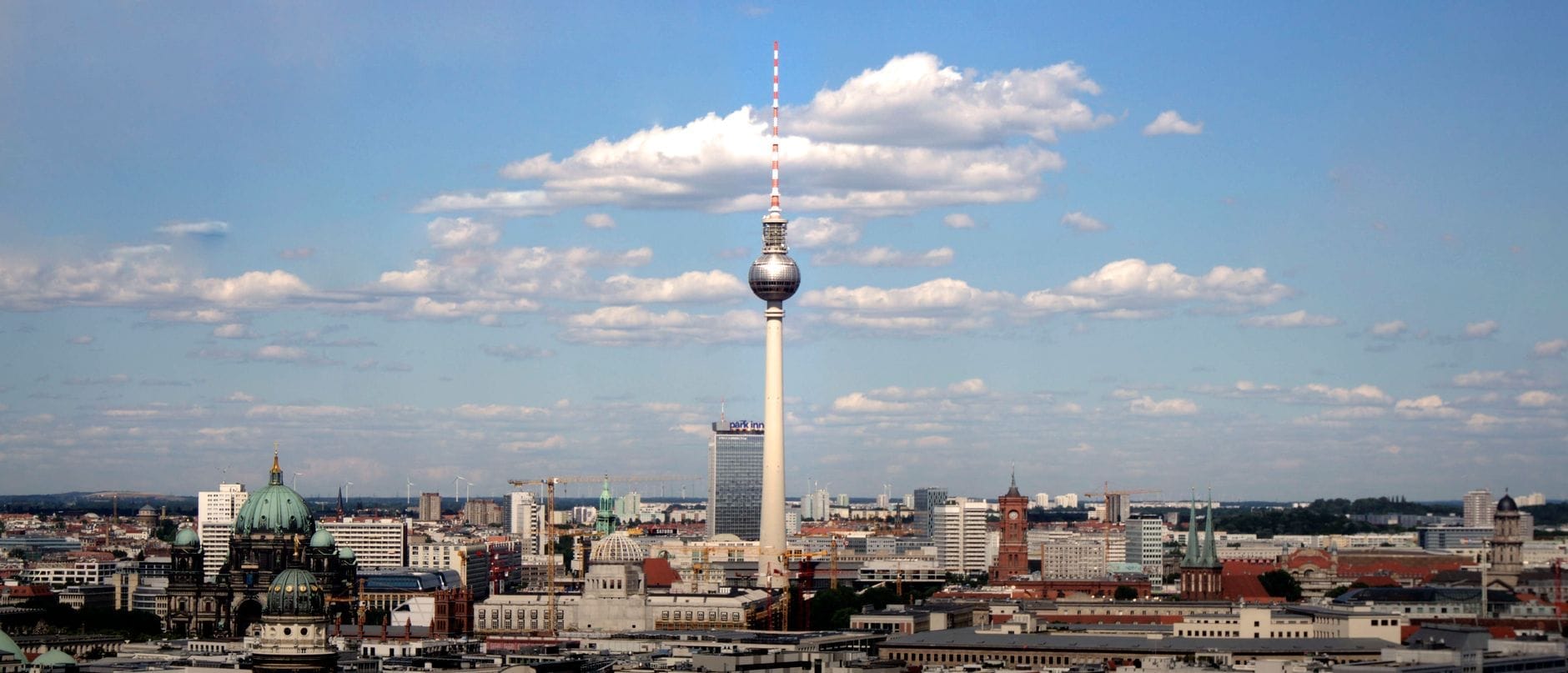
What Is the Berlin TV Tower, and Is It Worth It?
The Berliner Fernsehturm is hard to ignore. At 368 metres, it punches through Berlin's flat skyline from almost every corner of the city, and for good reason: the GDR government built it between 1965 and 1969 as a deliberate symbol of socialist modernity, inaugurating it on 3 October 1969. For a state that had walled off its own citizens just eight years earlier, the tower was meant to say something about confidence and permanence. It ended up outlasting the state that built it by decades, and is now one of the most recognisable structures in Europe.
The honest answer to whether it is worth visiting: yes, with conditions. The observation deck at 203 metres is the highest publicly accessible point in central Berlin, and the panorama it offers is genuinely useful for orienting yourself in a city that can feel geographically disorienting. You can trace the path of the former Berlin Wall across the urban landscape, pick out the domes of Museum Island, follow Unter den Linden west toward the Brandenburg Gate, and on clear days see the forested edges of the city. What it is not is a deeply atmospheric or immersive cultural experience. The deck itself is compact, the interiors are functional, and the views do the heavy lifting.
💡 Local tip
Book tickets online in advance at tv-turm.de. Walk-up queues during summer and on weekends can be long. Online tickets let you skip the ground-floor queue entirely.
The Structure: Architecture and Cold War Context
The tower follows a design by architects Hermann Henselmann, Jörg Streitparth, and others working under GDR state direction. Its profile — a tall concrete shaft topped by a steel sphere and a slender antenna — was not accidental. The sphere houses the observation deck and the revolving restaurant one floor above it, and from the outside it has the proportions of a Soviet-era Sputnik sat atop a needle. The visual reference to the space age was intentional: the GDR wanted to project technological ambition to an audience that included West Berlin, which had an unobstructed view of the tower from across the Wall.
There is an anecdote, well-documented in Berlin's architectural history, about the sunlight reflecting off the sphere. When sunlight hits it at the right angle, the reflection on the sphere's surface takes the shape of a cross, prompting some observers in West Berlin to nickname it the 'Pope's Revenge' (Rache des Papstes) — a reference to the GDR's officially atheist state. The story has passed into Berlin folklore and is still repeated on guided tours today.
The tower sits on Alexanderplatz, the historic East Berlin city square that the GDR redeveloped into a large pedestrian zone. If you spend time before or after your visit in that area, the contrast between the tower's ambition and the functional Soviet-style architecture surrounding it tells a compressed story about the GDR's urban priorities. For broader historical context on that era, the Cold War Berlin guide covers the surrounding landmarks in detail.
Tickets & tours
Hand-picked options from our booking partner. Prices are indicative; availability and final rates are confirmed when you complete your booking.
Berlin landmarks audio tour with TV Tower ticket
From 53 €Instant confirmationBerlin highlights private full-day tour
From 576 €Instant confirmationFree cancellationBerlin TV Tower observation deck skip-the-line ticket
From 27 €Instant confirmationBerlin audio guide with TravelMate app
From 4 €Instant confirmation
The Observation Deck: What You Actually See
The high-speed lift takes you to the observation deck at 203 metres. The deck is circular and fully enclosed, with floor-to-ceiling windows divided by narrow structural columns. The windows are large enough for clear photography but angled slightly outward, which means reflections from interior lighting can appear in photos if you do not shade your lens against the glass. Pressing your camera lens flush against the window or using a rubber lens hood almost completely eliminates this problem.
The deck labels key landmarks at eye level on the windows, which helps you identify what you are looking at. To the west you can follow Unter den Linden all the way to the Brandenburg Gate and, beyond it, the Tiergarten's green mass. To the north, Prenzlauer Berg's dense rooftop landscape stretches out. To the south and southeast, Friedrichshain and Kreuzberg blend into one continuous urban spread. On exceptionally clear days the forests around Grunewald are visible to the southwest, roughly 15 kilometres away.
The revolving restaurant (Sphere) sits one floor above the observation deck and completes a full rotation approximately every 30 minutes. Booking a table there is separate from the standard View & Drink ticket. If you want a meal with the view rather than just a drink, check availability through the official site well in advance, especially in summer. For a broader look at good eating in the city, the Berlin food guide is worth reading before you plan your day.
Best Time to Visit: Light, Crowds, and Seasons
The deck is open daily from 10:00 to 23:00. The crowd pattern is predictable: mornings from opening until around 10:30 are quiet on weekdays, as tour groups have not yet arrived and leisure visitors tend to sleep later. Midday from roughly 11:00 to 16:00 is the heaviest period, with the deck feeling crowded and the lift wait reaching 30 to 45 minutes on peak summer days. Late afternoon to early evening (17:00 to 20:00 in summer) sees a second wave, though the golden-hour light during this window is the best for photography.
The single best time to visit for a combination of atmosphere, light quality, and manageable crowds is about 45 minutes before sunset on a clear day in late spring or early autumn. Berlin's sunsets in May, September, and October can be spectacular from the deck, with the low-angle light turning the city's flat roofscape warm orange while the shadows lengthen across the streets far below. The deck stays open until 23:00, so a night visit is also genuinely worthwhile: the city lights spread out in all directions, and landmarks like the illuminated Brandenburg Gate are clearly visible.
Winter visits are underrated. The lines are shorter, the sky is often dramatically overcast or clear and icy, and on snowy days the view of Berlin's grey-white rooftops has a quality you will not find in summer. Dress warmly regardless of season — the deck is enclosed but air-conditioned, and standing still against cold glass for 30 minutes is chilly.
⚠️ What to skip
The Berlin TV Tower is not barrier-free. Visitors with limited mobility cannot access the observation deck for safety reasons. The suggested accessible alternative is Panorama Point at Potsdamer Platz.
Getting There and Buying Tickets
The tower is located at Panoramastraße 1A, a 100-metre walk from the S+U Alexanderplatz station. S-Bahn lines S3, S5, S7, S75 and S9, plus U-Bahn line U5, all stop at Alexanderplatz, making it one of the most accessible major attractions in the city. Trams and buses also converge on the square. From most central Berlin hotels, a combination of S-Bahn and short walk will get you there in under 20 minutes.
Tickets are priced from €25.50 for standard admission (view only), from €33.00 for the View & VR Experience combination, and from €39.00 for the View & Drink ticket. Children aged 4 to 14 pay from €18.50; children under 4 enter free. These prices are subject to change, so confirm current pricing at tv-turm.de before you visit. The Berlin Welcome Card does not include entry to the TV Tower, so budget for it separately.
If you are structuring a full day in central Berlin, the TV Tower pairs naturally with an afternoon around Alexanderplatz and an evening walk along Unter den Linden toward the Brandenburg Gate. The 3-day Berlin itinerary builds this route into a logical first-day sequence for first-time visitors.
Photography Tips and Practical Notes
The windows on the observation deck are clean and large but slightly angled. To avoid interior reflections in your shots, press your lens hood or hand flat against the glass to block ambient light from the room. Smartphone cameras work well here, especially in good light. Wide-angle lenses capture more of the panorama but will include the window frames; a moderate telephoto compression can isolate landmarks like the dome of the Berlin Cathedral against the urban background more effectively.
For video work, the revolving restaurant floor above the deck offers a slow, smooth pan as the floor rotates. You cannot walk around up there in the same way, but the mechanical rotation produces a consistent shot if you mount a camera and let it run. At night, the long-exposure possibilities from the deck are significant: street grids become light trails, and the reflections of Berlin's central illuminated landmarks create clean geometric compositions.
If panoramic views are a priority for your trip, the Berlin viewpoints guide compares the TV Tower observation deck with other options across the city, including free alternatives that some visitors prefer.
Who Might Not Enjoy This
Visitors who are sensitive to heights should think carefully: the deck is fully enclosed and there is no open-air element, but the sensation of height is pronounced. The windows go nearly floor to ceiling, and looking straight down 203 metres is unavoidable. Most people acclimate within a few minutes, but if enclosed heights cause significant discomfort, the experience will be stressful rather than enjoyable.
Travellers who have already visited similar observation decks in other European capitals may find the experience competent but unremarkable. The deck's interior design is functional rather than considered, and the attraction's popularity means it can feel like a processing operation during peak hours: lift, queue, glass, repeat. For visitors who prioritize depth of experience over altitude, the time might be better spent at ground level exploring the city's history and neighbourhoods.
Insider Tips
- The first lift run of the day at 09:00 is almost always queue-free on weekdays, even in high summer. If you want the deck to yourself, arrive at opening.
- The revolving restaurant completes a full rotation approximately every 30 minutes. If you sit for a meal, you will see the full 360-degree view without standing up. Book the restaurant well in advance during summer months.
- Overcast days can produce better photography than direct sun: the soft diffused light eliminates harsh shadows on the city below and gives a moodier, more layered look to the roofscape.
- The tower is visible from nearly everywhere in central Berlin. If you want to photograph it from the outside, the area around the Neptune Fountain (Neptunbrunnen) just south of the tower offers a clean foreground with the sphere visible above the surrounding buildings.
- Combine your visit with the nearby DDR Museum on the Spree riverbank for a full half-day focused on East German history. The two attractions are about a 5-minute walk apart and thematically connected.
Who Is Berlin TV Tower (Fernsehturm) For?
- First-time visitors who want to read the city's geography before exploring on foot
- Photographers chasing sunset or night-time city panoramas
- Travellers interested in Cold War architecture and GDR history
- Families with children who can handle the height and will enjoy the novelty of the lift and rotating restaurant
- Anyone wanting a clear visual reference point for Berlin's layout before a walking day
Nearby Attractions
Other things to see while in Mitte:
- Alexanderplatz
Alexanderplatz sits at the geographical and historical heart of former East Berlin, a vast open square with roots going back to the 13th century. Today it's a free, always-open crossroads of transit, Cold War monuments, and everyday Berlin life — chaotic, fascinating, and impossible to avoid.
- Berlin Cathedral (Berliner Dom)
The Berlin Cathedral, or Berliner Dom, is Germany's largest Protestant church and one of the most architecturally striking buildings in the city. Built between 1894 and 1905, it anchors Museum Island with a dome you can climb, a royal crypt below ground, and a nave that rewards slow, unhurried attention.
- Berlin Victory Column (Siegessäule)
Rising from the centre of the Großer Stern roundabout in Tiergarten, the Siegessäule is one of Berlin's most recognisable monuments. At around 67 metres tall, it offers a sweeping panorama over the city's forest-park heart — but you earn the view with 285 steps and no lift.
- Brandenburg Gate
The Brandenburg Gate stands at the heart of Berlin as both a Neoclassical architectural landmark and a symbol of the city's turbulent modern history. Free to visit at any hour, it rewards early risers with quiet grandeur and rewards night visitors with dramatic floodlighting. Here is everything you need to make the most of your visit.