Cold War Berlin: Sites, History & What to See
Berlin preserves more Cold War history than almost any city on earth. This guide covers the essential sites, from the Berlin Wall Memorial to the Stasi prison in Hohenschönhausen, with honest assessments of what's worth your time and what's overrated.
Plan and book this trip
Tools from our partner Travelpayouts help you compare flights and hotels. If you book through them, we may earn a commission at no extra cost to you.
Flights
Hotels map
TL;DR
- Berlin's Cold War sites range from free outdoor memorials to guided prison tours — plan at least two full days to cover the highlights.
- The Berlin Wall Memorial on Bernauer Straße is the most historically serious Wall site — free entry, 1.4 km of preserved border strip, open daily.
- Checkpoint Charlie is heavily commercialized; the checkpoint hut and sandbags are replicas. Visit the location, but skip the overpriced museum next door unless Cold War spy history is your specific interest.
- The Stasi prison memorial in Hohenschönhausen requires a guided tour — book in advance, especially for English sessions.
- Germany is cold from November through March (average around 0°C in winter), so dress accordingly for outdoor sites. See the Berlin in winter guide for seasonal tips.
Why Berlin Is the World's Cold War Capital
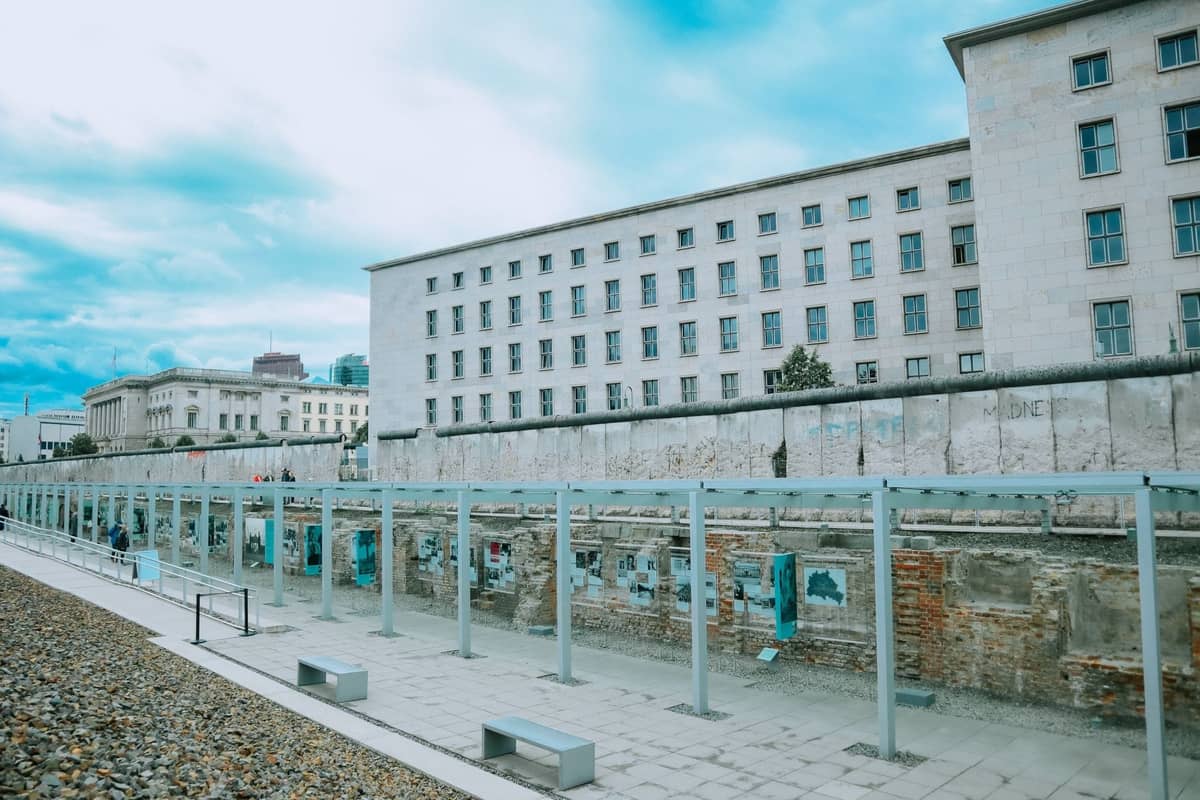
From 1961 to 1989, Berlin was physically divided by a fortified barrier that split families, neighborhoods, and an entire way of life. The Berlin Wall was not a single concrete line but a multi-layered system: a front wall, a sandy death strip patrolled by guards with shoot-to-kill orders, watchtowers, and a second wall on the eastern side. At least 140 people died trying to cross it, according to the Berlin Wall Foundation's confirmed research. More than 3.5 million East Germans had already fled west before the Wall went up on 13 August 1961, which is exactly why the East German government built it.
The Cold War lasted here longer and more literally than almost anywhere else. Berlin was occupied by four powers simultaneously: the US, UK, France, and the Soviet Union each controlled a sector. The city hosted the 1948-49 Soviet blockade and the Western Airlift response, standoffs at Checkpoint Charlie involving US and Soviet tanks facing each other at point-blank range, and the final symbolic moment when the Wall came down on November 9, 1989. That layered history is still physically readable in the city today, if you know where to look.
ℹ️ Good to know
Germany has a temperate continental climate. Winter temperatures in Berlin average around 0°C (32°F), and many Cold War sites involve significant outdoor walking. Layer up from November through March. Most indoor museums are well-heated, but the Wall Memorial and East Side Gallery are entirely outdoors.
The Berlin Wall Memorial: The Most Important Site
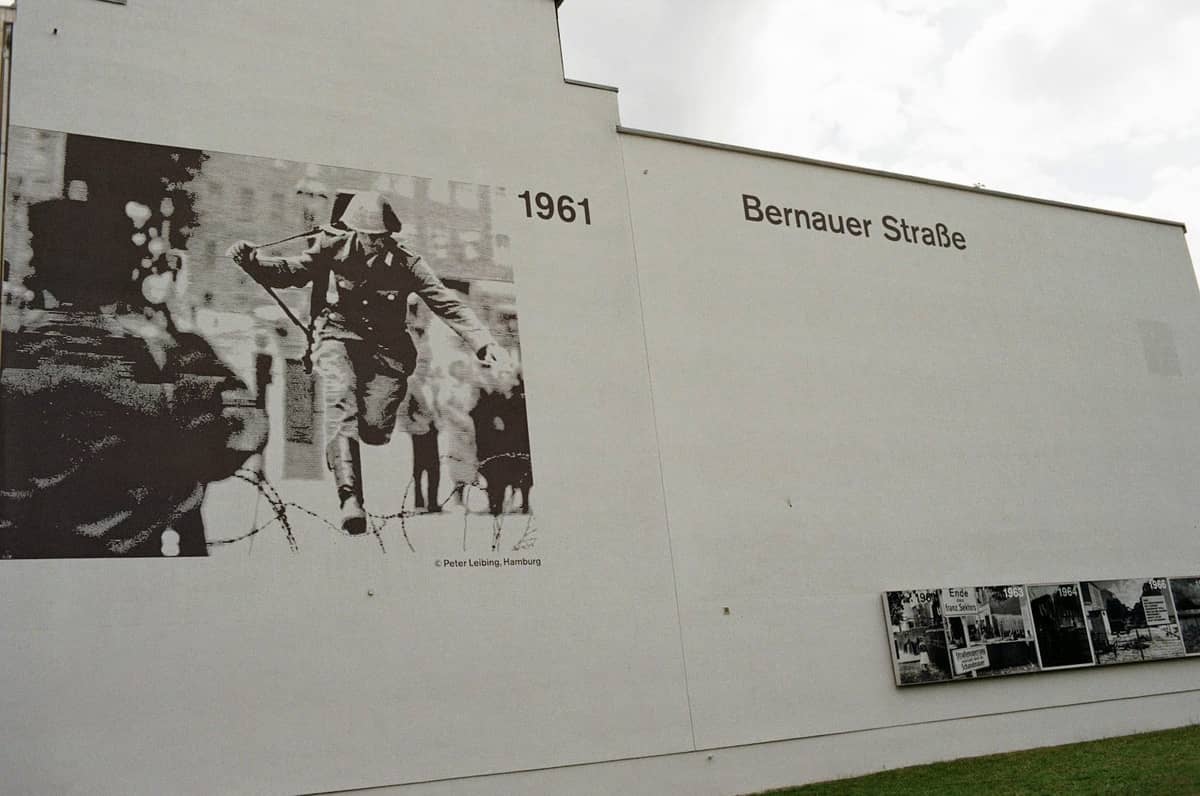
The Gedenkstätte Berliner Mauer on Bernauer Straße is the definitive place to understand what the Wall actually was. This is not a tourist attraction in the commercial sense — it is a serious memorial site managed by the Berlin Wall Foundation, preserving 1.4 km of the original border strip in its full complexity: the front wall, the death strip, the rear wall, watchtowers, and a signal fence. Admission is free.
The outdoor memorial is open daily from 8:00 to 22:00. The indoor Documentation Center at Bernauer Straße 119 opens Tuesday through Sunday, 10:00 to 18:00. The rooftop observation platform gives a direct view down into the preserved death strip, which is the clearest way to grasp the physical reality of the border system. Allow two hours minimum. The memorial also marks the Chapel of Reconciliation, built on the site of a church that was demolished by the East German government because it stood in the death strip.
💡 Local tip
The Wall Memorial offers free guided tours in English on weekends — check the Berlin Wall Foundation website (stiftung-berliner-mauer.de) for current schedules before your visit. Self-guided audio tours are also available via the foundation's app.
Checkpoint Charlie: What It Is, What It Isn't
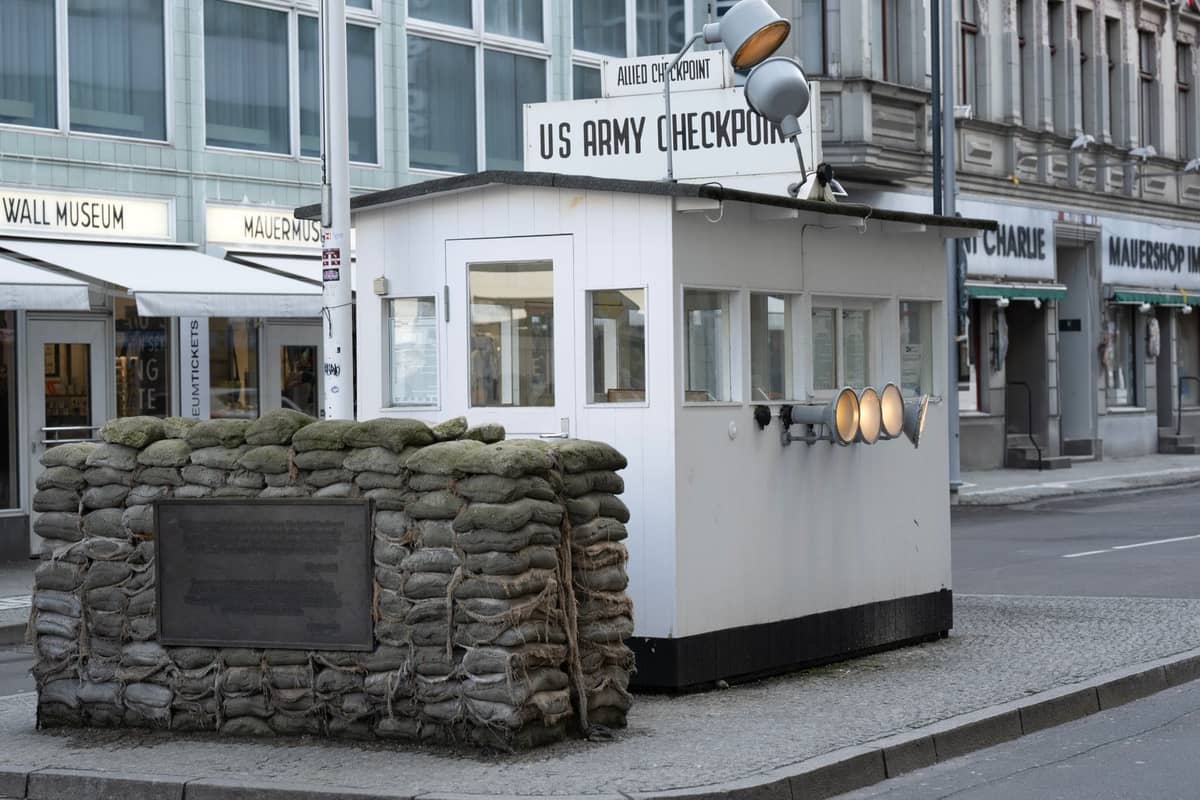
Checkpoint Charlie sits at the corner of Friedrichstraße and Zimmerstraße in Mitte, and it draws enormous crowds. The honest assessment: the location is historically significant, but what you see there today is almost entirely fake. The famous checkpoint hut, the sandbags, the soldier photographs — all replicas set up for tourism. According to the Berlin Wall Foundation, visible traces of the original border installations no longer exist at this site. That said, standing at the spot where US and Soviet tanks faced each other in October 1961 still carries weight if you know the context.
The Mauermuseum next door (Checkpoint Charlie Museum) charges around €18.50 for adults and has genuinely interesting material on escape attempts and Cold War espionage. However, the presentation is cluttered and the museum hasn't been significantly updated in years. It's worth considering only if escape tunnel engineering and spy gadgetry specifically interest you. For a more rigorous historical experience, the Berlin Wall Memorial gives you more for free.
⚠️ What to skip
Actors in US and Soviet military costumes near Checkpoint Charlie will ask to pose for photos and then demand payment. This is a well-known tourist trap. The city has repeatedly tried to regulate it. Ignore them entirely and you'll avoid an unpleasant confrontation.
The East Side Gallery and the Palace of Tears
The East Side Gallery is the longest remaining section of the Berlin Wall still standing: approximately 1.3 km of concrete running along the Spree between Ostbahnhof and the Oberbaumbrücke. After the Wall fell in 1989, artists from more than 20 countries painted murals directly onto the eastern face. The most reproduced image is Dmitri Vrubel's 'Fraternal Kiss,' depicting Leonid Brezhnev and Erich Honecker embracing.
The East Side Gallery is always open and free to visit. It works well combined with the nearby Oberbaumbrücke, the iconic double-decker bridge that was itself a border crossing point. Be aware that graffiti regularly covers the original artworks — they have been restored multiple times. The murals are a post-Wall creation, not a Cold War artifact, but they provide a striking physical connection to the Wall's scale.
A short walk away, the Tränenpalast (Palace of Tears) is the former border crossing hall at Friedrichstraße S-Bahn station. East Berliners came here to say farewell to Western visitors who had to return through this checkpoint each night — hence the name. The building now houses a free permanent exhibition run by the House of History Foundation, covering the GDR's border regime and the personal stories of divided families. It is less visited than Checkpoint Charlie but far more emotionally affecting.
Stasi Sites: The Secret Police in Physical Form
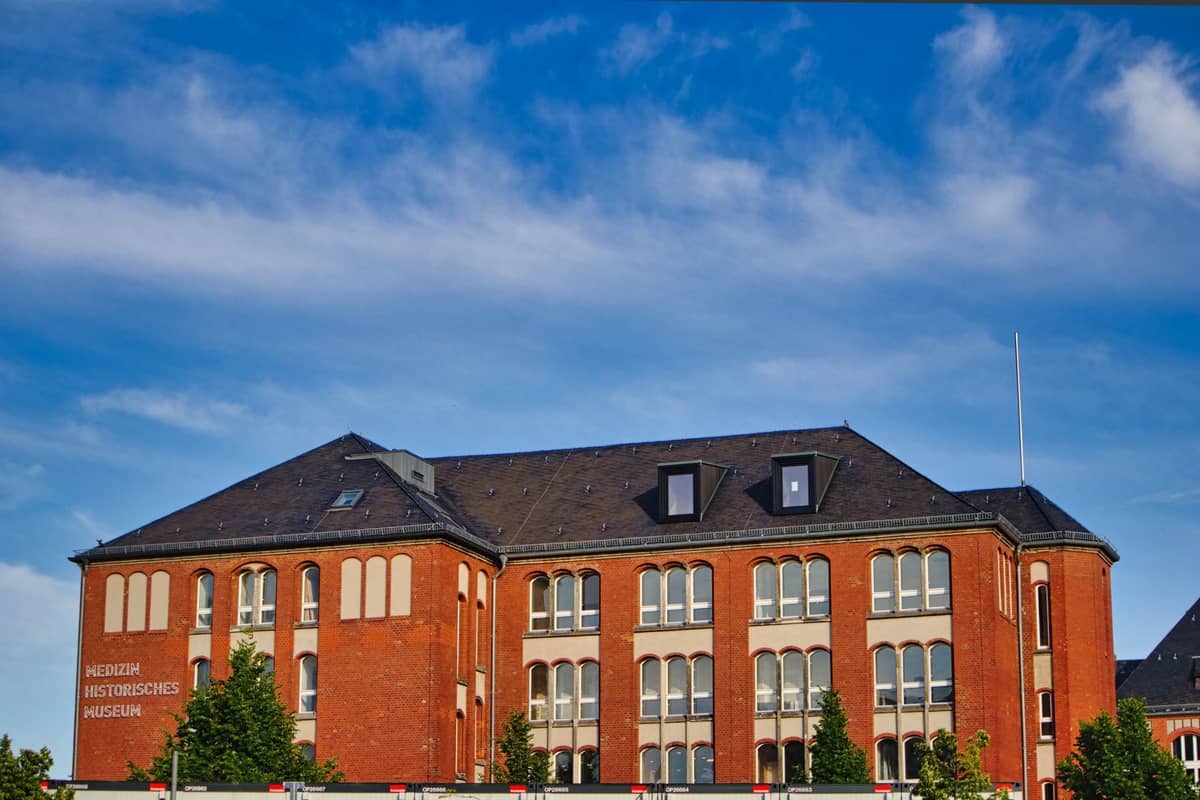
The East German Ministry for State Security, known universally as the Stasi, ran one of the most comprehensive surveillance states in history. At its peak, the Stasi employed around 90,000 full-time officers and had an estimated 180,000 unofficial informants monitoring a population of around 17 million. Berlin preserves two major sites where you can engage with this history directly.
- Gedenkstätte Berlin-Hohenschönhausen (Stasi Prison Memorial) The former main remand prison of the Stasi, located in the northeastern district of Lichtenberg. Visits are only possible on guided tours, which last approximately two hours. English tours typically run at 10:40, 12:40, and 14:40 — book in advance via the foundation's website (stiftung-hsh.de). The prison is open daily 10:00 to 18:00. Many tours are led by former prisoners, which makes the experience unlike anything a conventional museum can offer.
- Stasi Museum (Forschungs- und Gedenkstätte Normannenstraße) The former Stasi headquarters in Lichtenberg, where Minister Erich Mielke had his office. The preserved office interiors are genuinely unsettling in their mundanity. Lighter on guided interpretation than Hohenschönhausen but easier to visit independently. Check current hours before visiting.
For broader GDR everyday life context, the DDR Museum on the Spree riverbank near the Berlin Cathedral offers an interactive look at daily life in East Germany — Trabant cars, apartment interiors, nudist beach culture. It's deliberately light in tone and gets crowded, but it provides useful counterpoint to the grimmer Stasi sites.
More Cold War Sites Worth Your Time
The AlliiertenMuseum (Allied Museum) in Dahlem focuses on the Western Allies' presence in Berlin, covering the 1948-49 Berlin Airlift in detail, along with occupation history and Cold War intelligence operations. Address: Clayallee 135, 14195 Berlin. Check current opening status and hours before visiting, as the museum is in the process of relocating to Tempelhof Airport. The museum houses an original Airlift aircraft and a genuine section of a British spy tunnel dug under East Berlin. It's in the far southwest of the city — factor in travel time on the Berlin public transport network.
- Karl-Marx-Allee The showpiece socialist boulevard of East Berlin, stretching from Alexanderplatz eastward through Friedrichshain. The Stalinist architecture — known in German as Zuckerbäckerstil (wedding cake style) — was designed to impress and intimidate in equal measure. Walk the full length for a visceral sense of GDR urban planning ideology. Free, always accessible.
- Deutsch-Russisches Museum Karlshorst Located in the former Soviet military headquarters in Karlshorst, this is where Germany signed its unconditional surrender on May 8-9, 1945. The museum covers the Soviet-German War and the Soviet occupation of East Germany. Free entry. The building itself is part of the exhibit.
- Teufelsberg (Devil's Mountain) A man-made hill in the Grunewald built from WWII rubble, topped by a former NSA/British intelligence listening station that monitored Soviet and East German communications. The ruins are now an urban art site open for tours. Atmospheric and strange, though more interesting to Cold War intelligence enthusiasts than general visitors.
- Soviet War Memorial, Treptower Park A massive Soviet memorial complex dedicated to the Red Army soldiers who died taking Berlin in 1945. Not strictly a Cold War site, but the scale and Soviet aesthetics make it an essential companion to understanding the ideological landscape of the period. Free, always accessible.
Planning Your Cold War Berlin Itinerary
Two full days covers the core sites without rushing. On day one, combine the Berlin Wall Memorial on Bernauer Straße with Checkpoint Charlie and the Palace of Tears — all are in or near Mitte and walkable or a short U-Bahn ride apart. On day two, take the M5 tram from Alexanderplatz to Hohenschönhausen for the Stasi prison morning tour, then head to the East Side Gallery and Karl-Marx-Allee in Friedrichshain in the afternoon.
For context before or after visiting the sites, the German Historical Museum on Unter den Linden covers the full sweep of German history and puts the Cold War period in national context. The Topography of Terror next to the Wall remnants on Niederkirchnerstraße focuses on Nazi terror institutions but is free, exhaustive, and directly adjacent to a surviving Wall segment — worth including on day one.
- Book Hohenschönhausen English tours at least a week in advance during peak season (May to September)
- All Wall Memorial, Topography of Terror, and Palace of Tears sites are free; check the AlliiertenMuseum’s current status, as its regular free admission is affected by relocation plans.
- The BVG day ticket (Tageskarte) covers all public transport and makes cross-city Cold War site hopping practical
- Outdoor sites are least enjoyable in heavy rain — plan indoor museum days around weather forecasts
- Many sites are closed on Mondays, including the Stasi Museum — check official websites before visiting
✨ Pro tip
The Berlin Welcome Card includes unlimited public transport and discounts at some paid attractions. If you're covering multiple Cold War sites across multiple days, it can offset costs. Compare it against a standard 48 or 72-hour transit pass based on which paid attractions you actually plan to visit.
FAQ
Is Germany cold when visiting Berlin's outdoor sites?
Yes, Germany can be cold, particularly in Berlin. Winter temperatures average around 0°C (32°F) from December through February. Outdoor Cold War sites like the Berlin Wall Memorial, East Side Gallery, and Karl-Marx-Allee require substantial walking in exposed conditions. Spring (April-May) and autumn (September-October) offer mild temperatures ideal for outdoor sightseeing. Summer (June-August) averages around 18°C and is the most comfortable season.
Is Checkpoint Charlie worth visiting?
The location is historically significant and worth seeing briefly — it takes about 15 minutes. However, the current checkpoint hut and sandbags are replicas; the original structures are gone. The adjacent Mauermuseum charges around €18.50 and has interesting material on escape attempts, but the Berlin Wall Memorial on Bernauer Straße gives you more historical depth for free. Visit Checkpoint Charlie for the atmosphere but don't build your day around it.
How much does it cost to visit Cold War sites in Berlin?
Many of the best sites are free: the Berlin Wall Memorial, East Side Gallery, Palace of Tears, Topography of Terror, and the Soviet War Memorial at Treptower Park all charge nothing, and the AlliiertenMuseum normally offers free entry but is currently affected by relocation plans. The Hohenschönhausen Stasi prison memorial charges a small fee for guided tours. The Mauermuseum at Checkpoint Charlie costs around €18.50. The DDR Museum charges entry. Budget around €20-30 total if you include one or two paid attractions.
Do I need to book Cold War tours in Berlin in advance?
For the Gedenkstätte Berlin-Hohenschönhausen Stasi prison, advance booking is strongly recommended for English-language tours, especially from May through September. English tours typically run at 10:40, 12:40, and 14:40 but spaces fill quickly. All other major sites can be visited without advance booking, though the Wall Memorial's free guided weekend tours also benefit from early arrival.
What is the best Cold War site in Berlin for first-time visitors?
The Berlin Wall Memorial on Bernauer Straße. It's free, historically rigorous, and preserves the only remaining full section of the border system including the death strip. It gives first-time visitors an accurate understanding of what the Wall actually was — not just a concrete barrier but a fortified zone designed to kill anyone who attempted to cross it. The Documentation Center provides essential context, and the outdoor area is emotionally powerful without being exploitative.