Berlin Wall Memorial (Gedenkstätte Berliner Mauer): What to See, Know, and Feel
The Berlin Wall Memorial on Bernauer Straße is the most complete and historically serious place to understand the Wall. Stretching 1.4 km along the former border strip, it preserves original fortifications, a watchtower, the death strip, and the stories of those who tried to cross. Entry is free for all areas of the memorial.
Quick Facts
- Location
- Bernauer Straße 111/119, 13355 Berlin (border of Wedding and Mitte)
- Getting There
- S-Bahn Nordbahnhof (S1, S2, S25); also U8 Bernauer Straße
- Time Needed
- 2 to 3 hours for the full site; 45 minutes for a focused visit
- Cost
- Free — no tickets required for any part of the memorial
- Best for
- History seekers, Cold War research, reflective solo travel, school groups
- Official website
- www.stiftung-berliner-mauer.de/en/berlin-wall-memorial
What the Berlin Wall Memorial Actually Is
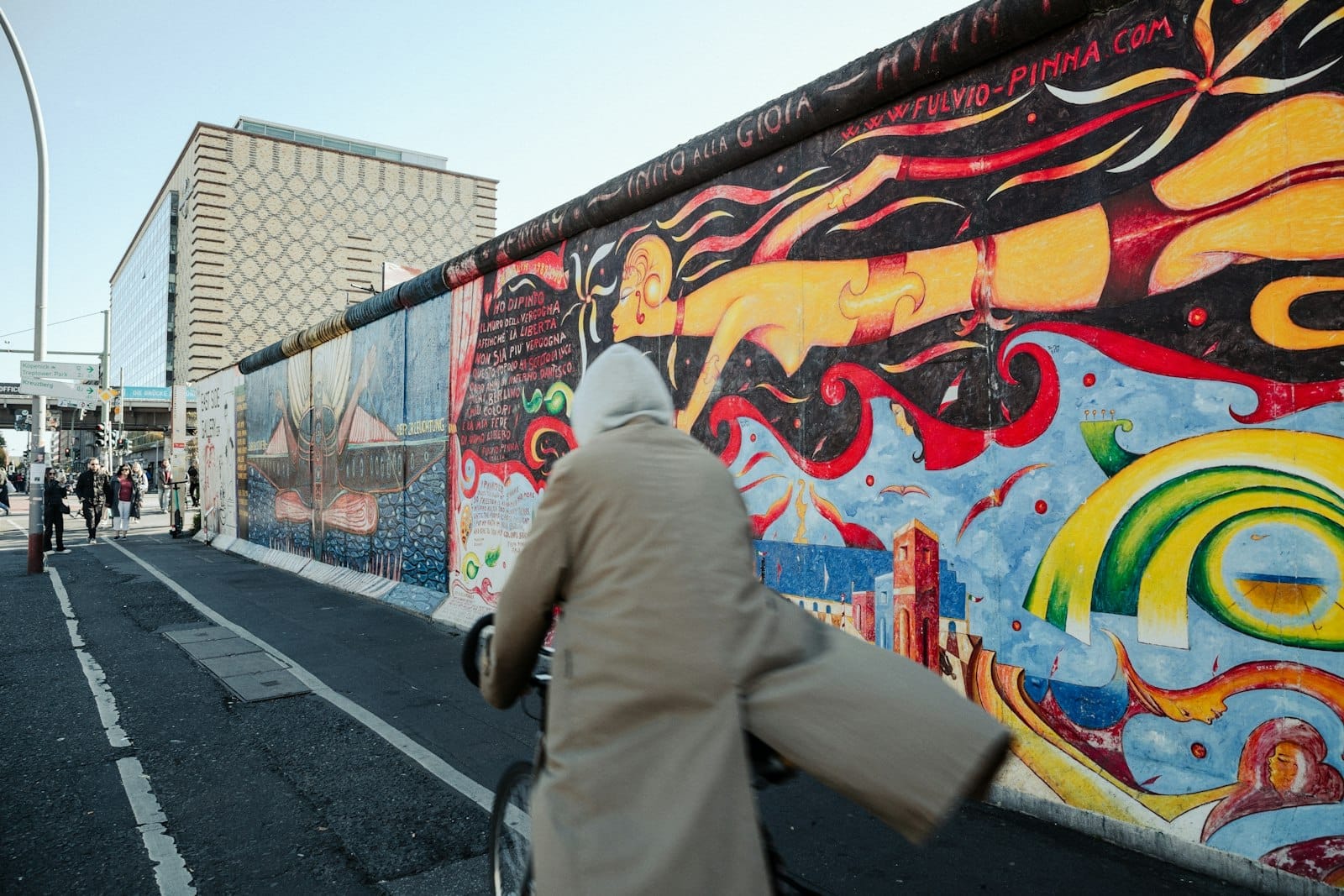
The Gedenkstätte Berliner Mauer is not a single building or monument. It is a 1.4-kilometre open-air site along Bernauer Straße that preserves the last remaining section of the Berlin Wall in its full border-strip form: the concrete wall itself, the sandy death strip, the signal fence, a watchtower, and the anti-vehicle trenches that made escape so difficult and so deadly. Most of the Wall's physical remains were demolished after 1989 and sold off as souvenirs or used as rubble in construction projects. This stretch on Bernauer Straße is the exception, maintained with deliberate care by the Berlin Wall Foundation precisely because it shows what the full border apparatus looked like — not just a graffiti-covered slab, but an entire fortified corridor designed to prevent human movement.
The open-air memorial grounds are accessible daily from 08:00 to 22:00 year-round. The Visitor Centre, Documentation Centre, and observation tower are open Tuesday through Sunday, 10:00 to 18:00, and closed on Mondays. Everything is free of charge.
💡 Local tip
Start at the Visitor Centre (Bernauer Straße 119) to orient yourself with a map and timeline before walking the grounds. The Documentation Centre's observation tower gives you the clearest aerial perspective of how the border strip was layered.
The History Embedded in This Street
When the Wall was erected on the night of 13 August 1961, Bernauer Straße had a peculiar geography: the apartment building facades on the south side sat in East Berlin, while the pavement in front of them belonged to West Berlin. In the first days after the border was sealed, residents on the upper floors jumped from their windows onto mattresses and nets held by West Berlin firefighters below. The street became a symbol of the Wall's human cost almost immediately.
Over the following decades, the East German state progressively demolished the buildings on its side to widen the death strip and eliminate hiding spots. The most striking example of this erasure is the Church of Reconciliation, which stood in the border zone for years before being blown up in 1985. In its place, the Chapel of Reconciliation now stands on the memorial grounds — an oval structure built from rammed clay mixed with rubble from the original church. It holds ecumenical services and a daily prayer for those who died trying to cross the Wall.
The Wall stood from 1961 until 9 November 1989, when its border crossings were opened following a misinterpreted announcement at a press conference. Demolition began almost immediately, carried out largely by crowds with hammers, and the formal dismantling by the state was completed by 1994. Understanding the full scope of what was lost and what was preserved is easier here than at any other site in Berlin. For a broader overview of Wall remnants and memorials across the city, the Berlin Wall guide covers the key locations in context.
Tickets & tours
Hand-picked options from our booking partner. Prices are indicative; availability and final rates are confirmed when you complete your booking.
Sachsenhausen Concentration Camp Memorial in Berlin by Bus
From 60 €Instant confirmationFree cancellationSecrets of the Berlin Wall a self-guided audio walking tour
From 12 €Instant confirmationFree cancellationBerlin Wall and Cold War Bike Tour in Dutch
From 34 €Instant confirmationFree cancellationExcursion to Sachsenhausen concentration camp by train from Berlin
From 0 €Instant confirmationFree cancellation
Walking the Site: What You Will Actually See
The memorial divides into several distinct zones along Bernauer Straße. At the northern end near Nordbahnhof, the S-Bahn station itself contains a small permanent exhibition about the so-called ghost stations — East Berlin underground stations that West Berlin trains passed through without stopping during the division years. The station lighting was deliberately kept dim during that period, and the exhibition uses original photographs and signage to document what passengers glimpsed through the windows.
Moving south along the street, you reach the preserved 70-metre wall segment with the original watchtower and death strip intact. Standing next to the actual structure, the scale becomes concrete in a way that photographs cannot convey. The wall was not just a wall: it was a system well over 100 metres wide at points, combining the outer facing wall, a gravel patrol path, the signal fence, watchtowers positioned for sightlines, and the anti-vehicle trench. The ground between the barriers was kept raked so footprints would be visible.
The Documentation Centre sits adjacent to the preserved strip and contains two floors of archival photographs, personal testimonies, and explanatory panels. The observation tower on top gives a direct overhead view of the border installation below. On a clear day the spatial logic of the entire fortification system becomes immediately legible. Allow at least 45 minutes inside the Documentation Centre if history is your priority.
ℹ️ Good to know
The window installation along the steel fence shows photographs and biographical details of people who died attempting to cross the border. These are not symbolic — each portrait represents a documented individual. Slow down here.
How the Experience Changes by Time of Day
Early morning, before 09:00, the open-air grounds are nearly empty. The gravel paths, the rusted metal fence running parallel to the preserved wall, and the low morning light across the death strip create a stillness that afternoon crowds do not allow. This is when the site's weight is most palpable. There are no audio guides playing in the background, no school groups moving in formation, just the sound of pigeons and occasional S-Bahn trains on the elevated track nearby.
Midday in summer brings significant foot traffic, particularly school groups from Germany and abroad. The Documentation Centre can feel crowded between 11:00 and 14:00 on weekdays in July and August. The grounds remain manageable given their length: even on a busy afternoon, you can find stretches of the 1.4-kilometre path with only a handful of other visitors.
Late afternoon, roughly 16:00 to 18:00, is often the most comfortable time for a combined indoor and outdoor visit in warmer months. The Documentation Centre closes at 18:00, but the grounds remain open until 22:00. On summer evenings the long northern light and the quiet make the outdoor sections worth experiencing after the indoor facilities close.
⚠️ What to skip
The Documentation Centre and Visitor Centre are closed on Mondays. The open-air memorial is accessible every day, but arriving on a Monday means no access to the indoor exhibitions, observation tower, or staff. Plan accordingly.
Getting There and Getting Around the Site
The most direct public transport option is the S-Bahn to Nordbahnhof, served by lines S1, S2, and S25. The station exit opens directly onto Bernauer Straße, placing you at the northern end of the memorial grounds. Alternatively, U-Bahn line U8 stops at Bernauer Straße, a short walk to the southern end of the site. Both are straightforward from central Berlin. If you are coming from Mitte or the area around Brandenburg Gate, the S-Bahn from Friedrichstraße to Nordbahnhof takes under ten minutes.
The memorial site is long and linear. Most visitors walk its full length in one direction and return along the same path, or exit at the far end and catch a tram or bus back. Wear comfortable, flat shoes — the path surface alternates between paved sections and compacted gravel. There are no significant inclines. The open-air areas are level and accessible by wheelchair; specific accessibility features inside the Documentation Centre are not detailed in publicly available sources, so contact the memorial in advance if this is a primary concern.
The memorial sits in the northern part of Prenzlauer Berg, close to the boundary with Wedding. The surrounding streets are residential and quiet. There are cafés and small restaurants within a five-minute walk, but nothing directly on-site. Bring water in warm weather, particularly if you plan to spend two or more hours outdoors.
Photography, Tone, and What to Expect Emotionally
Photography is permitted throughout the grounds and inside the Documentation Centre. The light on the preserved wall segment is best in the morning when it catches the concrete texture from a low angle. The portrait windows along the steel fence photograph well in overcast conditions, which soften reflections. Use a standard or wide lens for the death strip overview from the observation tower: the spatial relationships between the barriers are the subject, not individual details.
This is not an attraction that delivers a pleasant afternoon out. The subject matter is the systematic suppression of movement, the deaths of people trying to cross a border in their own city, and the long-term psychological effects of a divided society. Visitors who approach it as a backdrop for selfies will miss the point and may find the site underwhelming. Visitors who read the panels, pause at the biographical portraits, and take time in the Chapel of Reconciliation typically describe the experience as one of the most affecting of any Berlin trip.
If you are building a Cold War itinerary, this site pairs well with the Stasi Museum in Lichtenberg and the Topography of Terror near Potsdamer Platz. The Cold War Berlin guide covers how to sequence these sites across a full day or two.
Who This Site is Not For
Visitors looking for a quick, visually spectacular stop will find the memorial slower and less cinematic than they expect. There is no dramatic ruin, no immersive technology, and no theatrical presentation. The power of the site is in its restraint and its density of documented fact. Young children may find the long walking distance and the emphasis on text-heavy panels difficult to sustain. If you are travelling with children and want a more interactive introduction to Berlin's history, the DDR Museum near Alexanderplatz covers the East German experience in a more hands-on format.
Insider Tips
- The Nordbahnhof S-Bahn station exhibition about ghost stations is easy to miss because it is inside the station concourse. Look for the panels before you exit onto the street — it adds meaningful context to the memorial at no extra time cost.
- The Chapel of Reconciliation holds a brief ecumenical service on weekday mornings. It is open to visitors outside of service times and is one of the quietest, most considered architectural spaces in Berlin. The rammed-earth walls contain rubble from the church that was demolished in 1985.
- The open-air grounds are accessible until 22:00. A late evening walk in summer, when the site is empty and the light is soft, is qualitatively different from any daytime visit and worth considering if your schedule allows.
- The Documentation Centre's permanent exhibition includes a detailed timeline of escape attempts and methods. This section is more specific and less widely known than the main Wall narrative — it changes how you read the physical fortifications outside.
- If you want to understand the full geography of the former border in this area, walk north from the memorial toward Invalidenstraße. The street still shows traces of the former checkpoint at its crossing, and several information panels mark the route.
Who Is Berlin Wall Memorial (Gedenkstätte Berliner Mauer) For?
- History-focused travellers who want the most contextually complete Berlin Wall site
- Cold War researchers or anyone building a serious itinerary around 20th-century German history
- Solo travellers who appreciate slow, self-guided experiences with room to reflect
- School groups and educators: the Documentation Centre provides structured educational materials
- Photographers seeking authentic architectural remnants rather than painted tourist sections
Nearby Attractions
Other things to see while in Prenzlauer Berg:
- Kulturbrauerei
Once the engine of Berlin's most celebrated brewery, the Kulturbrauerei in Prenzlauer Berg is now a sprawling cultural complex spread across 25,000 square metres of red and yellow brick. Entry to the courtyards is free, and what you find inside ranges from a permanent Cold War museum to some of the city's most respected club nights.
- Mauerpark
Mauerpark occupies the former Berlin Wall death strip between Prenzlauer Berg and Wedding, covering about 15 hectares of grass, gravel paths, and a remaining 300-metre stretch of the Wall itself. Every Sunday, the park transforms into one of Berlin's most atmospheric flea markets, followed by the legendary Bearpit Karaoke. Entry is always free.