Prenzlauer Berg sits northeast of central Berlin, a residential district of grand 19th-century apartment blocks, tree-lined streets, and one of the city's most established café cultures. Once a neglected post-reunification neighbourhood, it has transformed into a polished, family-friendly area with strong transit links, weekly markets, and cultural venues that draw visitors and long-term residents alike.
Prenzlauer Berg is where Berlin slows down just enough to feel liveable. The district's Wilhelminian architecture survived the Second World War largely intact, giving its streets a coherence and elegance rare in the city. It is quieter than Mitte, less raw than Friedrichshain, and genuinely residential in a way that rewards visitors who prefer café mornings and market Sundays over club nights.
Orientation
Prenzlauer Berg is an Ortsteil (sub-district) of the borough of Pankow, covering roughly 11 square kilometres in the northeast of the city. Its population of around 156,900 makes it one of Berlin's more densely inhabited residential areas. The district sits directly northeast of Mitte, separated from it by Torstraße to the south, while the Ringbahn railway line marks its northern edge. Friedrichshain lies to the southeast, Wedding to the west.
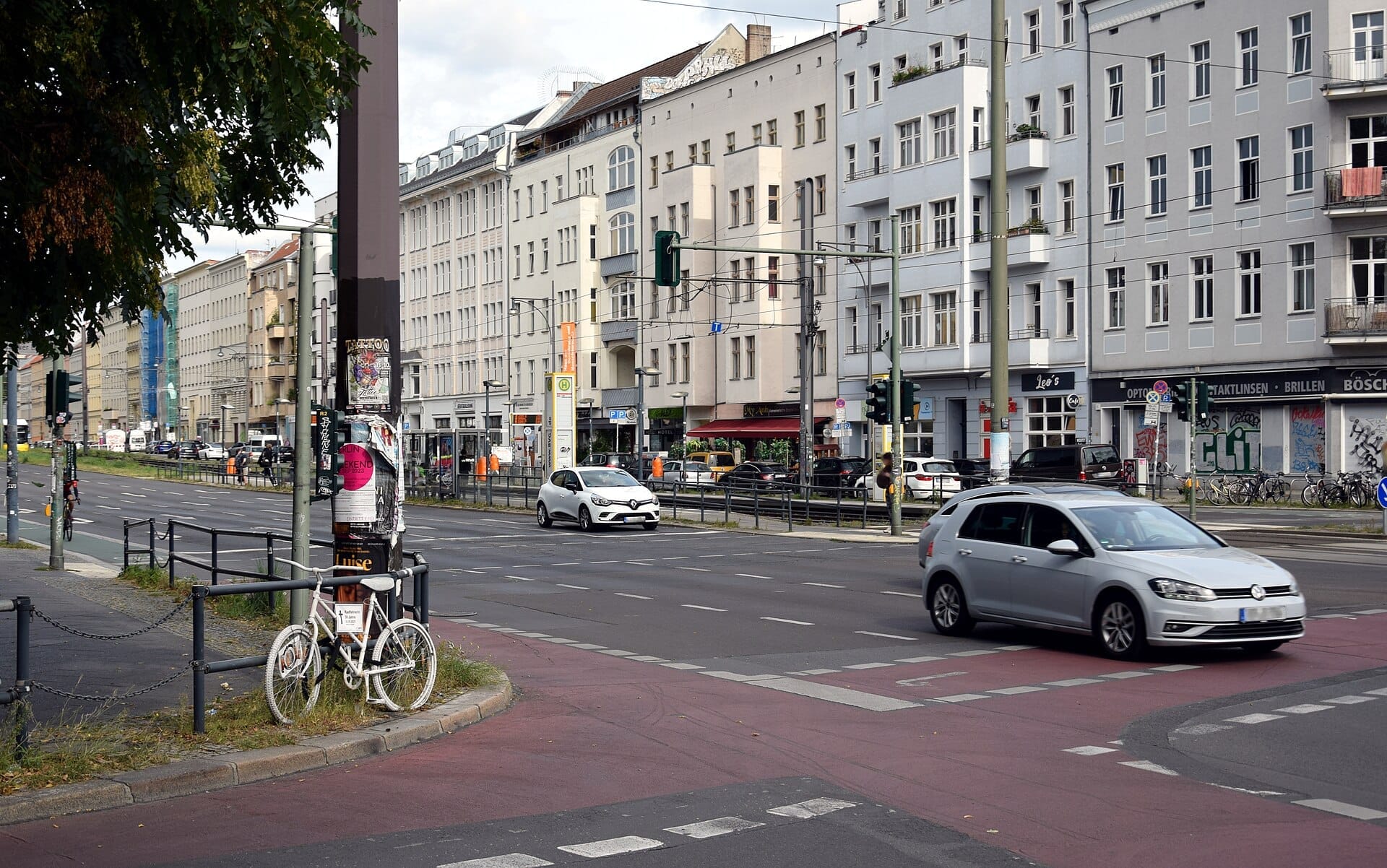
The internal geography is easy to read. Schönhauser Allee runs like a spine from south to north, anchoring the district's commercial life. The streets radiating out from Kollwitzplatz and Helmholtzplatz form the neighbourhood's social core. Kastanienallee, running southwest toward Rosenthaler Platz in Mitte, is the main artery for bars and independent shops. Prenzlauer Allee heads northeast toward the Ringbahn, connecting the district to Friedrichshain via tram.
Understanding Prenzlauer Berg's position means understanding its relationship with its neighbours. To the south, Mitte's major landmarks are a 15-minute tram or U-Bahn ride away. To the east, Friedrichshain offers a rougher, more nightlife-oriented contrast. Prenzlauer Berg sits between these two registers, which is precisely what makes it attractive as a base.
Character & Atmosphere
The defining visual fact about Prenzlauer Berg is the architecture. The district contains the largest contiguous area of Wilhelminian-era residential buildings in Germany, ornate late-19th-century apartment blocks with high ceilings, tiled stairwells, and street-facing facades that were renovated thoroughly in the decades after reunification. Walking along Sredzkistraße or the streets fanning out from Kollwitzplatz, the scale and consistency of these buildings gives the neighbourhood a different texture from much of Berlin.
On a weekday morning, the pace is set by parents pushing prams toward the many playgrounds tucked into the neighbourhood's courtyard-dense blocks, and by the café crowd settling in with laptops along Kastanienallee and Lychener Straße. The coffee is taken seriously here, and the tables fill by nine. By midday, Schönhauser Allee becomes genuinely busy: a mix of locals running errands and visitors working their way between the U-Bahn stations.
The afternoon light in summer falls long and golden across the cobblestones around Helmholtzplatz, where benches fill with a cross-section of the neighbourhood: retirees, students, young families, the occasional group sharing wine on the grass. The evening shifts the balance further toward the bars clustered around Danziger Straße and the side streets off Schönhauser Allee. It is not a late-night district by Berlin standards, and you will not hear techno through the walls at dawn, but it holds its own as a place for a long dinner and a few drinks.
ℹ️ Good to know
Prenzlauer Berg has gentrified significantly since the early 2000s. Rents are among the highest in Berlin, and the district's original bohemian character has largely given way to a more settled, professional demographic. Visitors looking for an edgier Berlin experience should also spend time in Kreuzberg or Friedrichshain.
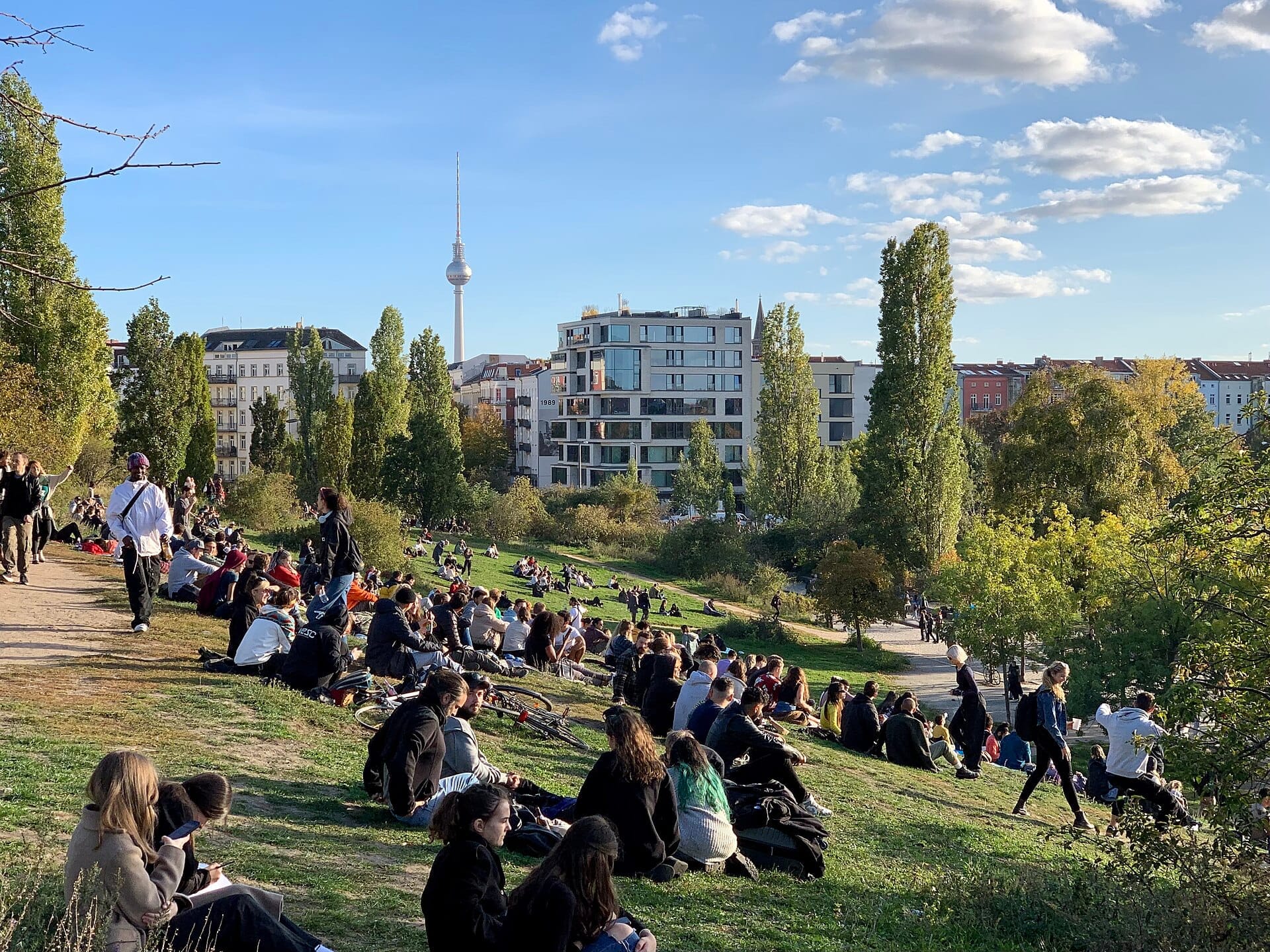
Sundays have a distinct rhythm. Mauerpark's flea market draws thousands from across the city, and the streets leading to it along Bernauer Straße and Eberswalder Straße fill with a crowd that feels genuinely mixed: tourists, collectors, teenagers, expats. By afternoon, the noise around the amphitheatre carries across the park as informal karaoke sessions attract a standing audience. It is one of the few places in contemporary Berlin where the tourist experience and the local Sunday ritual genuinely overlap.
What to See & Do
The weekly flea market at Mauerpark is the neighbourhood's most-visited event, running every Sunday along the former death strip of the Berlin Wall. The market itself spans antiques, secondhand clothing, vinyl, and street food, but the surrounding park, amphitheatre, and grassy slopes are the real draw. Arrive before noon to browse at a reasonable pace; by early afternoon the crowds make it harder to move.
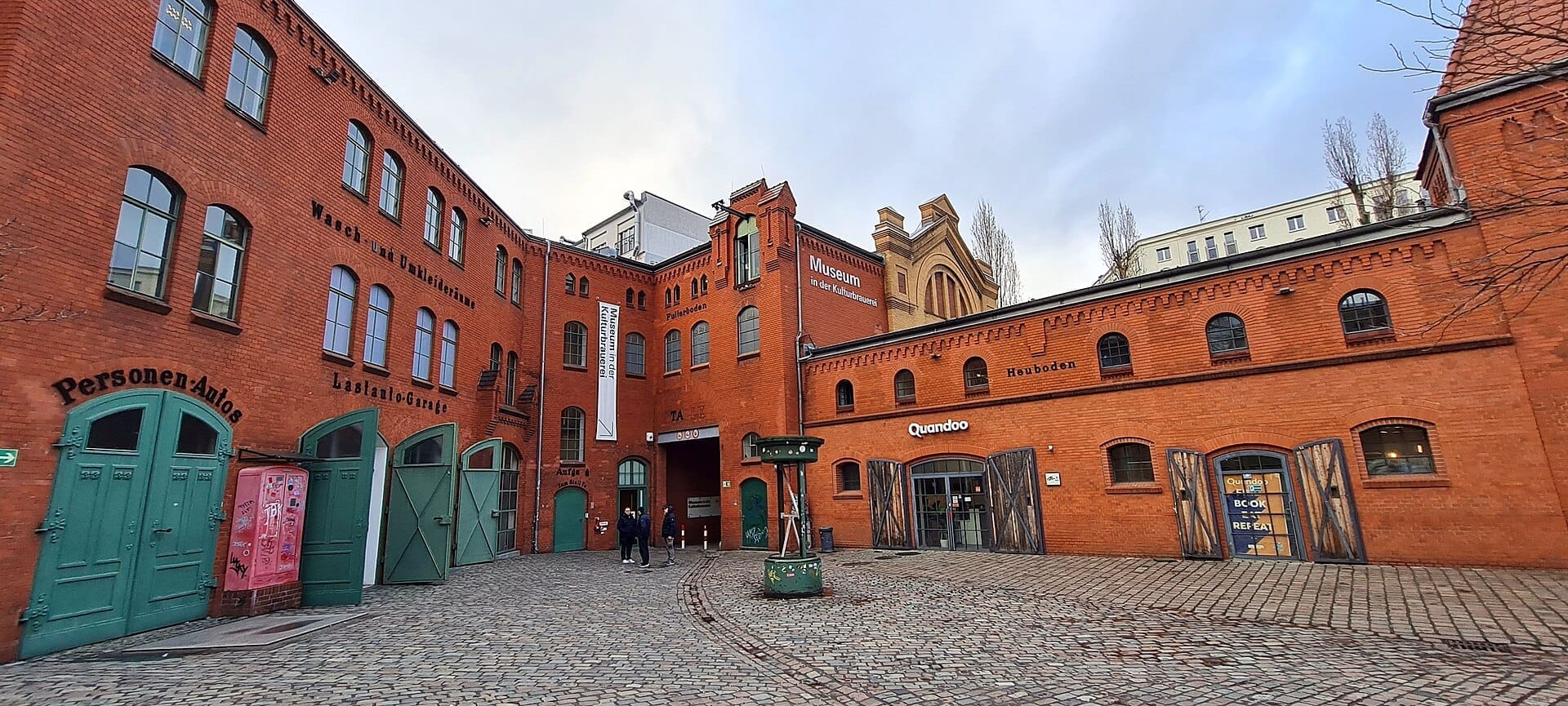
The Kulturbrauerei is worth visiting regardless of what's on. The former Schultheiss brewery complex on Schönhauser Allee is a listed ensemble of red-brick industrial buildings from the late 19th century, now housing cinemas, a concert venue, restaurants, a supermarket, and the Museum in der Kulturbrauerei, which covers everyday life in the GDR. The courtyard is one of the more atmospheric public spaces in the district.
Kollwitzplatz: The neighbourhood's social square, named for artist Käthe Kollwitz, with a statue of her at its centre. A farmers' market runs here on Thursdays and Saturdays.
Helmholtzplatz: A more local square, slightly quieter, ringed by cafés and used by residents throughout the day.
Zeiss-Großplanetarium on Prenzlauer Allee: One of the most technically advanced planetariums in Europe, fully modernized in 2016 and open for public shows. Worth booking ahead for evening programmes.
Kastanienallee: Known locally as 'Casting Allee' for its concentration of design-conscious shops, independent boutiques, and pavement cafés. Best explored on foot from Eberswalder Straße southward.
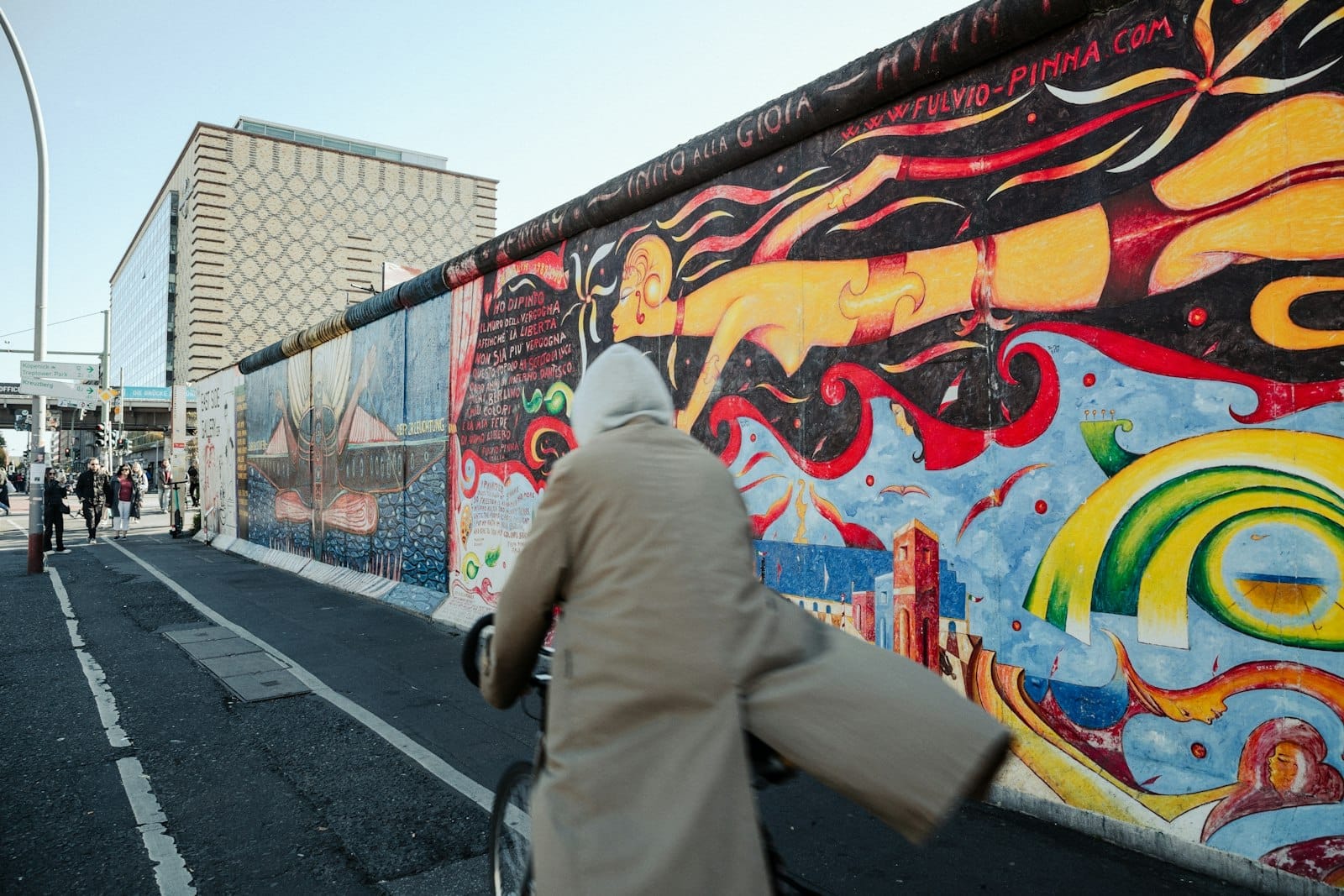
For context on the district's proximity to Berlin's divided past, the Berlin Wall Memorial on Bernauer Straße sits on the southwestern edge of Prenzlauer Berg, a 15-minute walk from Mauerpark. The open-air documentation centre and preserved Wall sections are among the most thorough and sobering memorial sites in the city, and far less crowded than Checkpoint Charlie.
💡 Local tip
The Kollwitzplatz farmers' market on Saturday mornings is smaller and more local-feeling than the Sunday Mauerpark circus. If you want produce, bread, and coffee without fighting through crowds, this is the better option.
Eating & Drinking
The food scene in Prenzlauer Berg skews toward sit-down cafés, neighbourhood restaurants, and a handful of more ambitious kitchens. Street food is less central here than in Kreuzberg or Mitte: this is a district for long brunches, not quick falafel. Brunch culture in particular is taken extremely seriously, and on weekend mornings queues form outside the more popular spots along Kastanienallee and the streets around Kollwitzplatz.
The price range across the district is broadly mid-market. You will find plenty of options in the 12 to 18 euro main-course range, with higher-end restaurants appearing around Kollwitzplatz and Husemannstraße. Coffee shops tend toward the specialty end of the spectrum, with single-origin filter and proper espresso far easier to find here than a chain.
For drinking, the bars around Helmholtzplatz and the lower section of Lychener Straße are reliable in the early evening. The Kulturbrauerei complex has several large-format venues that work well for groups. Kastanienallee's bar strip gets busy after 10pm on weekends. The overall atmosphere leans toward conversation over dancing: this is not the district for club nights, but for the kind of bar where you can actually hear each other.
For a broader overview of what Berlin's food scene offers across districts, the Berlin food guide covers neighbourhoods side by side. Prenzlauer Berg also has good access to the Turkish Market on Maybachufer in Neukölln, reachable by U-Bahn in around 25 minutes, should you want to see a different style of market food culture.
Husemannstraße: A restored 19th-century street with outdoor seating in summer, cafés and restaurants in handsome period buildings.
Lychener Straße: Dense concentration of neighbourhood bars and casual restaurants between Helmholtzplatz and Danziger Straße.
Danziger Straße: Broader street with a mix of restaurants, supermarkets, and takeaway options serving the working end of the neighbourhood.
Schönhauser Allee arcade: Street-level retail and food options running beneath the elevated U2 line, good for quick options between the main squares.
Getting There & Around
Prenzlauer Berg is well served by public transport, and almost every part of the district is within comfortable walking distance of a U-Bahn or S-Bahn stop. The BVG network covers it comprehensively, and the combination of U-Bahn and tram lines means you rarely need more than two stops to reach the neighbourhood's main points.
The U2 line is the main U-Bahn route through the district. Eberswalder Straße is the most central stop for the Kollwitzplatz and Kastanienallee area, while Senefelderplatz serves the southern edge near Torstraße. The line connects directly to Alexanderplatz in Mitte (two stops south) and continues west toward Charlottenburg.
The S-Bahn Ringbahn (lines S41 and S42) runs along the northern boundary of the district. Schönhauser Allee S-Bahn station, sitting above the U-Bahn stop of the same name, connects to Ostkreuz in Friedrichshain in one direction and to Wedding and Gesundbrunnen in the other. Prenzlauer Allee station gives access to the eastern side of the district near the planetarium.
Tram M1: Runs along Kastanienallee and connects Prenzlauer Berg southwest toward Hackescher Markt in Mitte.
Tram M10: Runs along Danziger Straße through the southern part of the district (stops at Eberswalder Straße, Prenzlauer Allee/Danziger Str.), linking to Friedrichshain and Warschauer Straße.
Cycling: The district is flat and well-served by cycle lanes, particularly along Schönhauser Allee and Prenzlauer Allee. Bike hire is available from several locations near the U-Bahn stations.
Walking: From Eberswalder Straße U-Bahn, Kollwitzplatz is a 5-minute walk east. Mauerpark is an 8-minute walk northwest. The Berlin Wall Memorial on Bernauer Straße is around 15 minutes on foot.
💡 Local tip
The U2 runs frequently and is the fastest way to reach Alexanderplatz and Museum Island in Mitte. From Eberswalder Straße, the journey takes under 10 minutes. A single BVG ticket covers tram and U-Bahn within the same validity window, so there is no reason not to combine both.
For a full breakdown of how Berlin's transit system works, including day passes and the Berlin Welcome Card, see the getting around Berlin guide. If you plan to visit multiple districts in a single day, the day ticket represents strong value.
Where to Stay
Prenzlauer Berg makes a practical and genuinely pleasant base for visitors who want easy access to central Berlin without staying in the middle of the tourist infrastructure. The accommodation offer skews toward apartment rentals and smaller boutique hotels rather than large international chains, which suits the neighbourhood's residential character.
The area around Eberswalder Straße and Kastanienallee is the most convenient location: you are a short walk from the main squares, the Kulturbrauerei, and the U2 line. Staying here means a 10-minute transit ride to Museum Island and under 20 minutes to Potsdamer Platz. The streets immediately around Kollwitzplatz and Helmholtzplatz are quieter in the evenings than Kastanienallee, which can get noisy on weekends.
Prenzlauer Berg suits travellers who prioritise a neighbourhood atmosphere over a central landmark address. Families in particular tend to find the district's pace and infrastructure appealing. Those whose main priority is Berlin's nightlife would be better placed in Friedrichshain or Kreuzberg. For a broader comparison of Berlin's accommodation options by neighbourhood, the where to stay in Berlin guide is the most useful starting point.
⚠️ What to skip
Prenzlauer Berg is one of Berlin's more expensive neighbourhoods for accommodation. Prices reflect the high demand and desirable location. Book well in advance for weekend stays, particularly in summer, when the Sunday Mauerpark market draws large numbers of day visitors who also book overnight.
Practical Tips
Prenzlauer Berg is safe by any reasonable measure. The district has a well-established residential character and no specific safety concerns beyond the standard advice that applies across Berlin: watch your belongings in crowded market settings and on public transit.
The best time to visit is between May and September, when the outdoor café culture fully activates and the parks and squares are in use throughout the day. The Berlin in summer guide covers what to expect across the city in the warmer months. In winter, the neighbourhood takes on a quieter character, but the Kulturbrauerei hosts a Christmas market that is notably less commercial than the major central markets, and worth seeking out.
German is the primary language, but English is widely understood in the district's cafés, restaurants, and hotels. Tipping at cafés and restaurants is customary: rounding up the bill or adding roughly 10 percent is the standard practice. Tap water is safe to drink across Berlin.
TL;DR
Prenzlauer Berg is one of Berlin's most architecturally coherent districts, defined by intact Wilhelminian apartment blocks, tree-lined streets, and a settled, residential atmosphere.
Best suited to visitors who want a neighbourhood base with good transit access to central Berlin, rather than a location in the middle of the main tourist circuit.
The Sunday Mauerpark flea market and the Kulturbrauerei complex are the district's anchor attractions; the Berlin Wall Memorial on Bernauer Straße is within easy walking distance.
The food and café scene is strong and mid-to-upper market in price; brunch culture is taken seriously and weekend queues at popular spots are common.
Not the right choice for visitors whose primary goal is Berlin's club and late-night scene; for that, Friedrichshain or Kreuzberg are better positioned.
Three days in Berlin is enough to cover the essential history, art, and culture of Germany's capital, but only if you plan smartly. This day-by-day itinerary groups attractions by location, cuts the tourist traps, and gives you the practical details to make every hour count.
Berlin runs 80 to 100+ Christmas markets each season, spread across dozens of neighbourhoods with wildly different characters. This guide covers the best markets, when to go, what things cost, how to get around, and what to skip.
Berlin's flea markets are a city institution, drawing locals and visitors every Sunday to browse vintage clothing, vinyl records, GDR curiosities, and handmade goods. This guide covers the best markets across the city, from the massive and famous to the small and locals-only.
Berlin's food scene is unlike anywhere else in Germany. It mixes post-war street food traditions with Turkish culinary heritage, international market culture, and a thriving modern restaurant scene. This guide covers what to eat, where to find it, and how much to pay.
Summer in Berlin runs from June through August and offers long daylight hours, warm temperatures, open-air events, and easy access to lakes and river cruises. This guide covers what the weather is actually like, the best outdoor activities, where locals spend their time, and what to pack.
Berlin in winter is colder, darker, and quieter than summer — but that's exactly what makes it compelling. From Advent Christmas markets to uncrowded museum halls and budget-friendly hotels, this guide covers what to expect, what to skip, and how to make the most of the season.
Berlin is surrounded by dozens of swimmable lakes, many reachable by S-Bahn in under 30 minutes. This guide covers the best spots for a beach day, a forest swim, or a full lake day trip, from classic lidos to quieter shores.
Berlin has one of the world's most established and expansive queer scenes, rooted in over a century of LGBTQ+ history. This guide covers the best neighborhoods, bars, clubs, cultural institutions, Pride events, and practical tips for LGBTQ+ travelers visiting Berlin.
Berlin holds more memorials per square kilometer than almost any city on earth. This guide covers the essential sites across the city, from Nazi-era documentation centers to Cold War border crossings, with practical advice on making the most of each visit.
Berlin's after-dark scene is unlike anywhere else in the world. This guide covers the top clubs, bar districts, door policy realities, seasonal shifts, and practical logistics so you spend less time queuing and more time on the dancefloor.
Berlin remains one of Europe's more affordable capitals, but prices have risen. This guide breaks down realistic daily budgets, the cheapest ways to get around, free and low-cost attractions, and where to eat well without spending much — all updated for 2026.
The Reichstag Dome is one of Berlin's most iconic experiences, and entry is completely free. But you cannot simply walk up and go in. This guide covers the registration process, opening hours, seasonal closures, guided tour options, and the best times to visit, so you arrive prepared and don't waste a trip.
Berlin is one of Europe's most visited cities, and for most travelers it is perfectly safe. But petty theft, transit scams, and a few recurring tourist traps are real. This guide covers what the risks actually look like, where they are concentrated, and exactly how to avoid them.
Berlin is one of the world's great open-air galleries, with significant clusters of murals and graffiti across Friedrichshain, Kreuzberg, Mitte, and beyond. This guide covers the best locations, iconic individual pieces, the URBAN NATION museum, Teufelsberg, and everything you need to plan a serious street art itinerary.
The Berlin to Prague train is one of Europe's most rewarding rail journeys: direct EuroCity service, around 4 hours, and fares starting from €25 if you book ahead. This guide covers schedules, prices, booking platforms, seat reservations, and what to expect on board.
Berlin rewards those who go high. Whether you climb a Cold War listening station, ride a lift to 203 meters, or sip a drink on a rooftop above the Ku'damm, the city looks extraordinary from above. This guide covers the best viewpoints and rooftop bars in Berlin, with practical advice on tickets, timing, and what to expect.
Berlin is one of the world's great walking cities, where every street corner carries a layer of history. This guide covers the top attractions to include on guided tours and self-guided walks, from the monumental boulevards of Mitte to the Wall memorials of Friedrichshain.
The Berlin Wall divided a city and defined an era. This guide covers every major surviving site, the history you need to understand what you're looking at, practical visitor information, and honest advice on how to make the most of your time.
The Berlin WelcomeCard promises unlimited public transport and discounts at 170+ attractions. But it only makes financial sense for certain types of visitors. This guide breaks down both versions, the real math behind the savings, and who should skip it entirely.
Berlin is one of Europe's most family-friendly cities, with world-class museums, vast parks, excellent public transport, and enough hands-on attractions to keep children genuinely engaged. This guide covers the best activities, practical logistics, and honest advice for travelling to Berlin with kids.
Berlin has around 175 museums, from ancient civilizations on Museum Island to Cold War surveillance headquarters in Friedrichshain. This guide cuts through the noise and picks the museums worth your time, organized by theme so you can plan your days efficiently.
Berlin rewards visitors in every season, but not equally. This guide breaks down what to expect month by month, from summer festival heat to winter market charm, so you can choose the trip that actually matches your priorities.
Berlin preserves more Cold War history than almost any city on earth. This guide covers the essential sites, from the Berlin Wall Memorial to the Stasi prison in Hohenschönhausen, with honest assessments of what's worth your time and what's overrated.
Berlin's position at the heart of northern Germany makes it one of Europe's best bases for day trips. Within an hour by train you can reach a Rococo palace, a former concentration camp, a vast lake, or a Cold War spy station. This guide covers the best excursions from the city, with practical travel advice for each.
Berlin is one of Europe's most rewarding cities for budget travelers. From world-class memorials and open-air galleries to vast parks and free museums, here are 20 genuinely free experiences that showcase the best of the German capital.
Berlin has one of Europe's most comprehensive public transport networks, but it comes with its own rules, zones, and quirks. This guide covers everything from ticket prices and fare zones to night buses, cycling, and getting in from the airport — so you spend less time figuring out logistics and more time actually exploring the city.
Museum Island is one of Europe's great cultural concentrations: five world-class museums on a sliver of land in the heart of Berlin, all within a UNESCO World Heritage Site. This guide covers every practical detail you need to make the most of a visit, from tickets and timing to which collections are worth your time.
Berlin rewards curious travelers with an extraordinary range of experiences, from free Cold War memorials and five-museum island complexes to legendary nightlife and Sunday flea markets. This guide cuts through the noise with specific prices, honest assessments, and practical logistics to help you plan the city your way.
Berlin's food scene runs deeper than döner kebab and currywurst. This guide covers where to eat in Berlin across every budget and neighborhood, from legendary street food institutions to world-ranked fine dining, with practical advice on reservations, prices, and what to skip.
Choosing where to stay in Berlin shapes your entire trip. This guide breaks down the city's main neighborhoods by traveler type, budget, and priorities, so you can find the right base without second-guessing your booking.