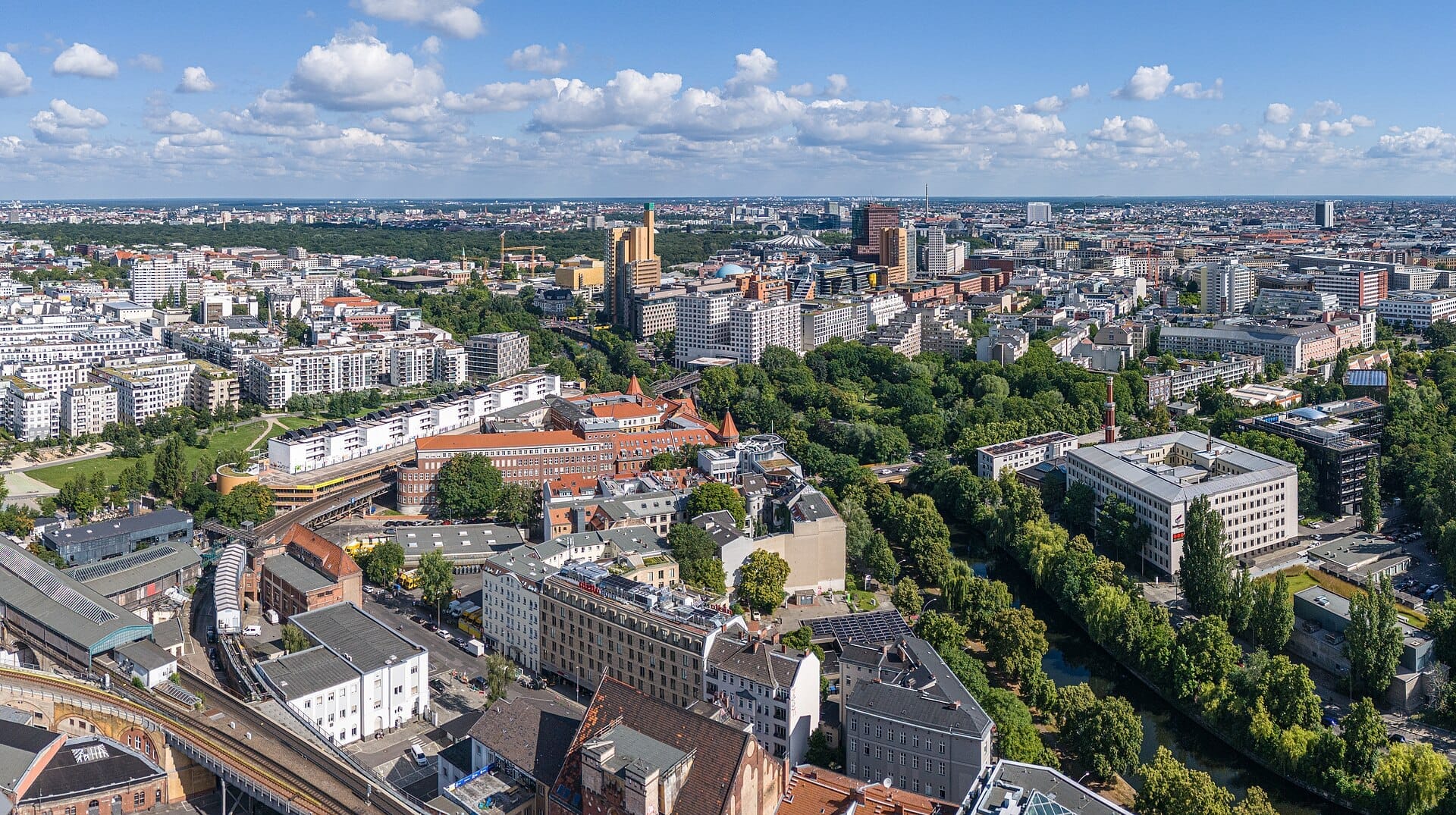
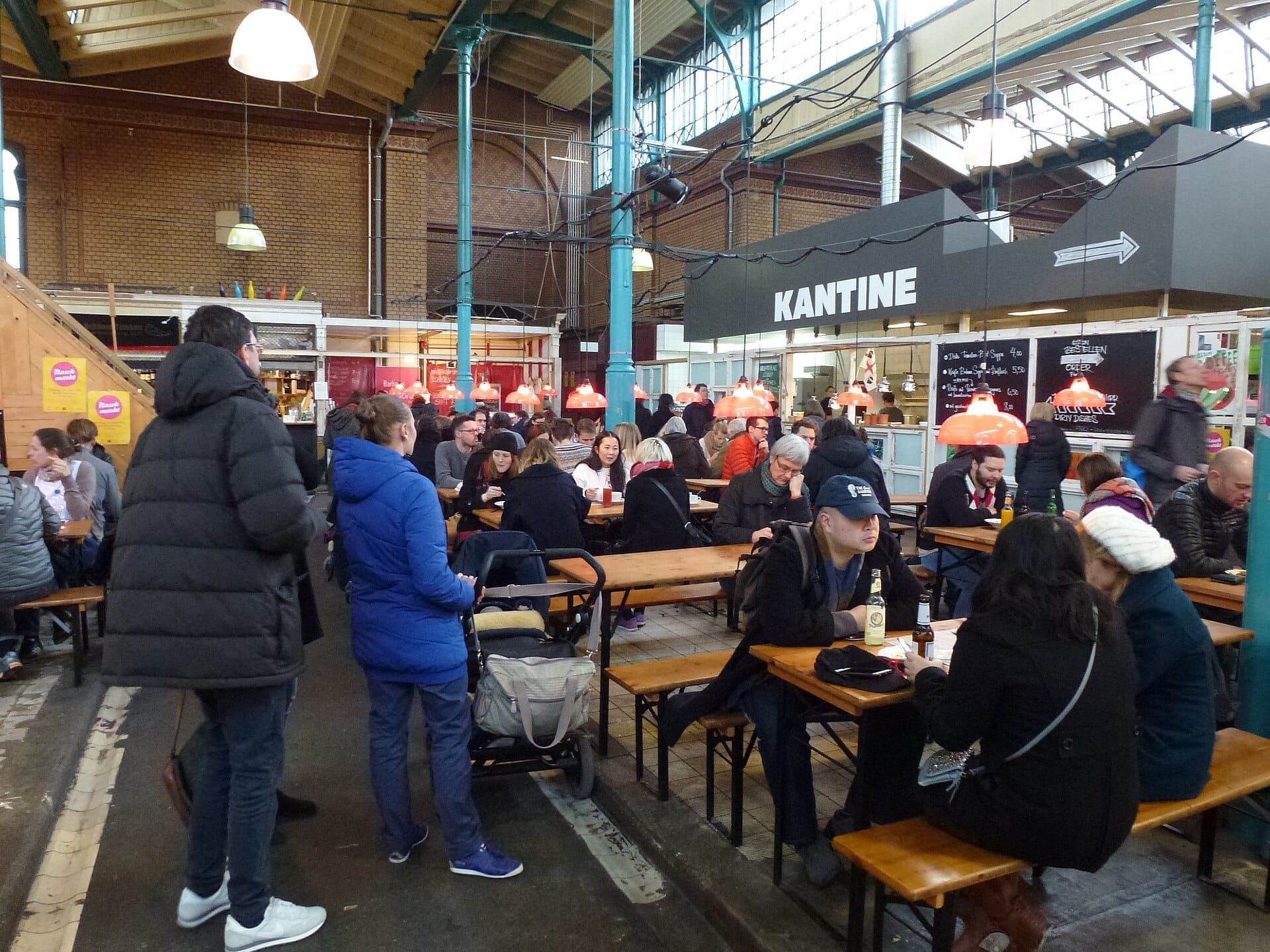
Kreuzberg sits south of the Spree in the heart of Berlin, split between the calmer, greener streets of Kreuzberg 61 and the denser, louder SO 36 quarter. It holds the city's most famous street food market, two landmark museums, and a nightlife scene that has defined Berlin's reputation for decades. For travelers who want intensity, cultural depth, and genuine urban texture, few neighborhoods in Europe match it.
Kreuzberg is the district where Berlin's reputation was made and where it continues to be tested. Straddling the Landwehrkanal in the inner south of the city, it combines a dense immigrant community, a strong counter-cultural history, landmark museums, and a bar scene that operates on its own clock. It rewards slow exploration far more than a quick pass-through.
Orientation
Kreuzberg covers roughly 10.4 km² in the borough of Friedrichshain-Kreuzberg, bounded to the north by the River Spree and to the south by the long diagonal of Yorckstrasse and Hasenheide. Mitte lies across the water to the north, Neukölln begins where Hasenheide ends to the southeast, and Schöneberg sits to the west beyond Mehringdamm.
Locals and longtime Berliners still use the old postal code system to distinguish the two halves of the district. Kreuzberg 61, south and west of the Landwehrkanal, is the quieter half: leafy streets around Viktoriapark, pre-war residential blocks, and the canal towpath. SO 36, north and east of the canal, is denser, louder, and more diverse, centered on Oranienstrasse, Görlitzer Park, and the elevated U1 rail line that cuts through the area at rooftop height.
The major east-west axis is the sequence of Hallesches Ufer, Gitschiner Strasse, and Skalitzer Strasse, running from the edge of Mitte through the heart of SO 36. Mehringdamm runs north-south and serves as a kind of commercial spine connecting the Kreuzberg 61 side to the U-Bahn hub at Mehringdamm station. Understanding these two axes makes navigation simple on foot.
Kreuzberg borders Mitte to the north, Neukölln to the southeast, and Schöneberg to the west — a central position that makes it an easy base for exploring most of inner Berlin.
Character & Atmosphere
On a Tuesday morning, the streets around Oranienstrasse are quieter than you expect. Shopkeepers roll up shutters on Turkish greengrocers and small döner shops. Older residents carry shopping bags past walls thick with posters and spray paint. The light in winter is flat and grey; in summer, it falls long and golden in the late afternoon across the canal paths, and the Landwehrkanal towpath fills with cyclists and people carrying takeaway food to eat on the grass banks.
The district's character comes directly from its history. After World War II, SO 36 was rebuilt with 1970s social housing blocks and became one of the areas where Berlin's large Turkish and Kurdish communities settled, shaping the neighborhood's food, commerce, and street culture. It also attracted squatters, artists, and political activists in the 1970s and 1980s, particularly in the years when West Berlin was an island inside East German territory. That combination of working-class immigrant life and counter-cultural energy is still legible in the streets, even as rents have climbed and the neighborhood has gentrified in parts.
Kreuzberg 61 has a different feel: the streets between Viktoriapark and the canal are wider, lined with older apartment buildings, and considerably more residential. The hill itself, the Kreuzberg, rises to about 66 metres, making it one of the highest natural points in inner Berlin. It is not dramatic by any standard, but the view from the Schinkel monument at the top gives a useful read of the city's flat roofscape. Below the hill, Viktoriapark has an artificial waterfall and a summer wine garden that draws local families rather than tourists.
By 10pm on a Friday, the atmosphere in SO 36 shifts decisively. Bars that looked half-empty at 8 begin filling. The elevated U1 line rattles overhead on its iron viaduct, illuminating the street briefly as it passes. Crowds move between spots on Oranienstrasse and the side streets feeding off it. This is not a neighborhood that shuts down early, and if you are looking for a quiet evening after 10pm, you will not find it in SO 36.
⚠️ What to skip
Görlitzer Park in SO 36 has a visible open drug market, particularly in the warmer months. It remains a public park used by families and locals during the day, but it is worth knowing before you walk through after dark. The situation is longstanding and widely reported.
What to See & Do
The single most important cultural institution in Kreuzberg is the Jewish Museum Berlin, located just off Lindenstrasse in Kreuzberg 61. Daniel Libeskind's zinc-clad building is as significant as anything inside it: the architecture uses disorientation and fragmentation as deliberate tools. The permanent collection traces 2,000 years of Jewish life in German-speaking lands. Allow at least two hours, and book tickets in advance.
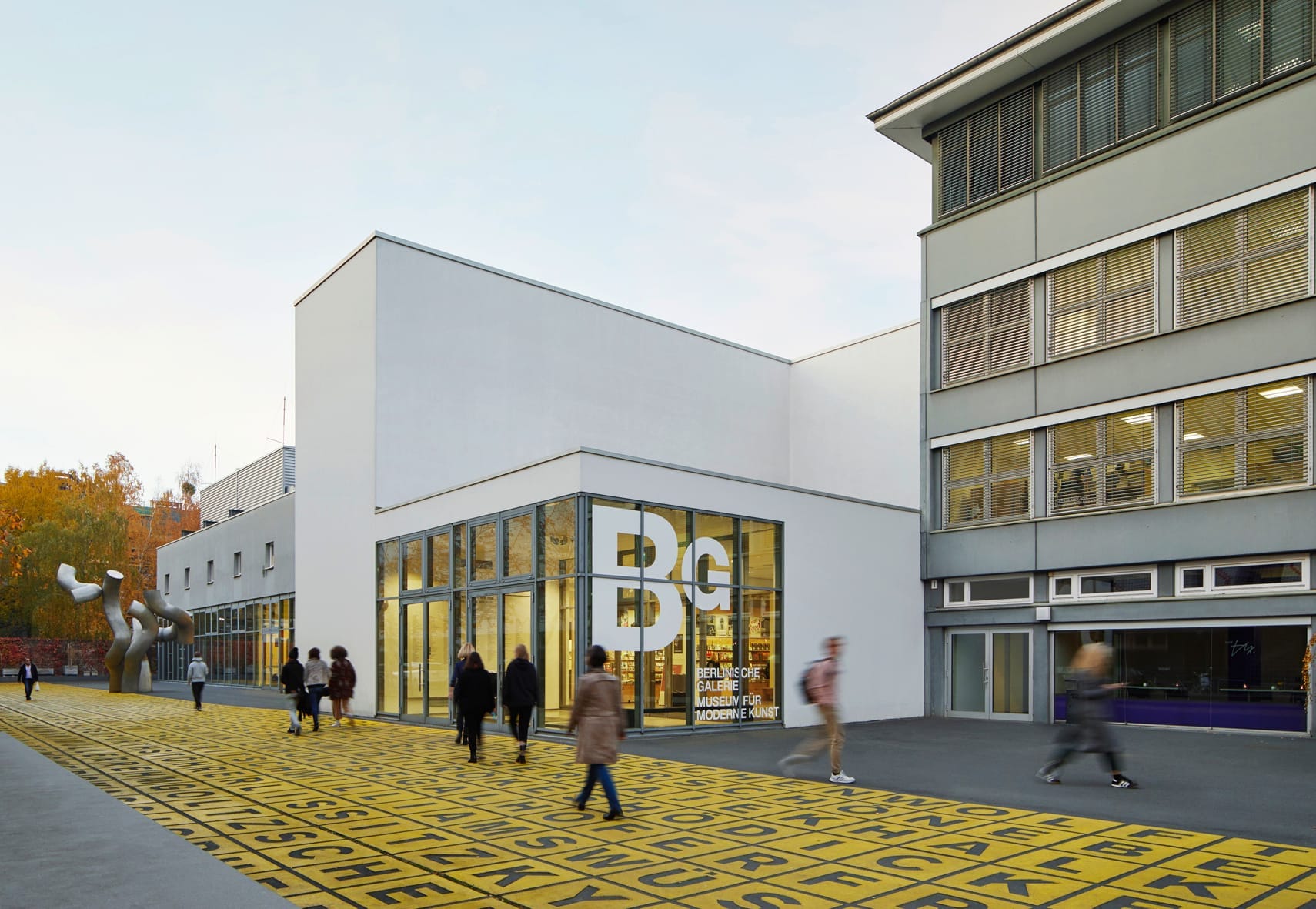
A short walk away on Alte Jakobstrasse, the Berlinische Galerie is Berlin's museum for modern and contemporary art, architecture, and photography from the 20th and 21st centuries. It holds a strong collection of work by artists connected to the Berlin Dada movement and the divided city period. The building is an adapted warehouse, and it handles light well. It is consistently less crowded than the major museums in Mitte.
The Topography of Terror sits at the northern edge of Kreuzberg, just across Niederkirchnerstrasse near the former Gestapo and SS headquarters. It is free to enter and documents the Nazi security apparatus in precise, unflinching detail. A remaining section of the Berlin Wall runs along the site's perimeter. This is one of the most important historical sites in the city.
The Turkish Market at Maybachufer runs along the Landwehrkanal every Tuesday and Friday afternoon. It is the best street market in Berlin for food: fresh produce, olives, flatbreads, grilled meats, Turkish pastries, spices, and fabrics spread along several hundred metres of canal path. It draws a genuine mix of local shoppers and visitors and is best reached from Schönleinstrasse U-Bahn station.
Viktoriapark and the Kreuzberg hill: a short climb for elevated city views and a summer wine garden at the base
The Landwehrkanal towpath: cycling or walking between Kreuzberg and the Tiergarten district to the west
Oranienstrasse: the commercial and nightlife spine of SO 36, worth walking end to end in the afternoon
Görlitzer Park: large open space used for sunbathing, football, and outdoor events in summer (note the caveats above)
💡 Local tip
The Topography of Terror is free and open daily. Combine it with a walk along the nearby East Side Gallery in Friedrichshain for a coherent half-day of Wall-era history — they are connected by a 20-minute walk or a single U-Bahn stop.
Eating & Drinking
Kreuzberg's food scene is one of the most genuinely diverse in Berlin, and that diversity is not recent. The long Turkish and Kurdish presence in the neighborhood means the standard of döner kebab, lahmacun, and gözleme is high in a way it simply is not in more tourist-facing parts of the city. Mehringdamm is often cited as the block with the best döner in Berlin, with competing shops that have been operating for decades. Eat standing at the counter, not sitting down.
The Tuesday and Friday market at Maybachufer is the obvious starting point for anyone who wants to understand what the neighborhood eats. Beyond the market, the streets south of the canal in Kreuzberg 61 have a quieter, slightly more upscale restaurant scene: independent Italian, modern German, and natural wine bars that attract a local after-work crowd rather than a tourist one.
The café culture in Kreuzberg runs later than in Prenzlauer Berg or Charlottenburg. Many cafés do not open until 10am and serve coffee until 5pm or later. The streets around Bergmannstrasse in Kreuzberg 61 have a concentration of cafés and independent shops that are worth an afternoon wander. Prices here are middle-range: a coffee costs roughly what it does anywhere in Berlin, which is to say less than in most Western European cities.
For bars, Oranienstrasse and the streets immediately around it offer everything from cheap Kneipe (neighborhood pubs) to cocktail bars and club pre-drinks spots. The area is active from early evening but genuinely picks up after midnight. Kreuzberg's bar scene does not rush. People arrive late and stay late. If you want to eat before midnight in the SO 36 area, there are plenty of options, but you will rarely feel any pressure from a restaurant to turn the table.
ℹ️ Good to know
Many smaller restaurants and bars in Kreuzberg are cash-only. Bring euros. ATMs are available throughout the district but can have queues on weekend nights.
Getting There & Around
Kreuzberg has unusually good U-Bahn coverage for a district of its size. The U1, which runs as an elevated railway on a visible iron viaduct, crosses through SO 36 and connects the neighborhood eastward to Friedrichshain. Stations at Görlitzer Bahnhof, Kottbusser Tor, and Prinzenstrasse are all within SO 36. Kottbusser Tor, served by both the U1 and U8, is the transport hub of the neighborhood.
The U7 runs north-south through Kreuzberg 61, with key stops at Mehringdamm (connected to U6) and Gneisenaustrasse. The U6 itself provides a direct link north to Checkpoint Charlie, Stadtmitte, and the central Mitte area, making Kreuzberg a genuinely convenient base for sightseeing. S-Bahn lines S1 and S2 pass through the district's western and northern edges respectively.
Getting around the neighborhood itself is easiest on foot or by bicycle. The flat terrain and the Landwehrkanal path make cycling practical year-round. Rental bikes and e-scooters are available throughout the district. For transit planning and ticketing, see the guide to getting around Berlin, and consider whether the Berlin Welcome Card makes sense for your trip length.
From Berlin Brandenburg Airport (BER), a fast connection is via regional train (RB24 or RB32) to Ostkreuz, then S-Bahn or U-Bahn west to Kottbusser Tor or Görlitzer Bahnhof. Alternatively, take the FEX to Südkreuz and change to the S-Bahn ring. The journey typically takes around 40-60 minutes depending on connections.
Where to Stay
Kreuzberg works well as a base if you want immediate access to nightlife and central Berlin equally. For a more complete picture of where it sits relative to other options, the where to stay in Berlin guide covers the tradeoffs between districts.
Kreuzberg 61, particularly the streets around Bergmannstrasse and Viktoriapark, is the better choice for travelers who want character without noise. Apartment-style accommodation is common here, the residential streets are pleasant to walk in the morning, and the S-Bahn and U-Bahn are within easy reach. This part of the district suits couples, solo travelers, and anyone who wants to see the city on foot during the day without returning to noise every night.
SO 36 is better for travelers who are in Kreuzberg specifically for the nightlife and do not mind the trade-off in ambient noise. Streets around Kottbusser Tor can be loud on weekend nights, and light sleepers who choose accommodation directly on Oranienstrasse or Skalitzer Strasse should factor that in. The upside is unmatched proximity to bars, markets, and the elevated U1 rail line.
Hotel density in Kreuzberg is lower than in Mitte or Charlottenburg. Boutique hotels and aparthotels account for most of the available accommodation, with relatively few large chain hotels. Prices tend to be lower than the equivalent quality in Mitte, and availability is generally better outside of summer and major festivals.
Who Kreuzberg Is For
Kreuzberg covers a lot of ground: a serious history museum, a canal-side food market, a counter-cultural bar scene, and the city's most politically charged street art. It overlaps with the Berlin nightlife world without being defined by it, and its food scene rewards the kind of traveler who finds a good market as satisfying as a restaurant. Anyone building a 3-day Berlin itinerary should plan at least a full afternoon here.
It is not a neighborhood for travelers who want quiet mornings and polished surroundings. The streets are not manicured, the parks are well-used, and the general atmosphere is urban in the specific, unfiltered sense. That is precisely the point. Kreuzberg does not perform for visitors. It continues being itself regardless, which is a quality increasingly rare in European city centers.
TL;DR
Kreuzberg is split into two distinct halves: the quieter, greener Kreuzberg 61 to the south and west, and the denser, louder SO 36 to the north and east. Choose your accommodation accordingly.
The Jewish Museum Berlin and the Berlinische Galerie are two of the best museums in the city and both are located here. The Topography of Terror is just over the northern boundary.
The Tuesday and Friday Turkish Market at Maybachufer is a leading street food market in Berlin. Döner and lahmacun on Mehringdamm are a close second.
U-Bahn coverage is excellent: U1, U6, U7, and U8 all serve the district, making it a practical base for the wider city.
Best suited to travelers who want cultural depth, food variety, and access to nightlife. Not ideal for light sleepers near Kottbusser Tor or anyone expecting a quiet, polished environment.
Three days in Berlin is enough to cover the essential history, art, and culture of Germany's capital, but only if you plan smartly. This day-by-day itinerary groups attractions by location, cuts the tourist traps, and gives you the practical details to make every hour count.
Berlin runs 80 to 100+ Christmas markets each season, spread across dozens of neighbourhoods with wildly different characters. This guide covers the best markets, when to go, what things cost, how to get around, and what to skip.
Berlin's flea markets are a city institution, drawing locals and visitors every Sunday to browse vintage clothing, vinyl records, GDR curiosities, and handmade goods. This guide covers the best markets across the city, from the massive and famous to the small and locals-only.
Berlin's food scene is unlike anywhere else in Germany. It mixes post-war street food traditions with Turkish culinary heritage, international market culture, and a thriving modern restaurant scene. This guide covers what to eat, where to find it, and how much to pay.
Summer in Berlin runs from June through August and offers long daylight hours, warm temperatures, open-air events, and easy access to lakes and river cruises. This guide covers what the weather is actually like, the best outdoor activities, where locals spend their time, and what to pack.
Berlin in winter is colder, darker, and quieter than summer — but that's exactly what makes it compelling. From Advent Christmas markets to uncrowded museum halls and budget-friendly hotels, this guide covers what to expect, what to skip, and how to make the most of the season.
Berlin is surrounded by dozens of swimmable lakes, many reachable by S-Bahn in under 30 minutes. This guide covers the best spots for a beach day, a forest swim, or a full lake day trip, from classic lidos to quieter shores.
Berlin has one of the world's most established and expansive queer scenes, rooted in over a century of LGBTQ+ history. This guide covers the best neighborhoods, bars, clubs, cultural institutions, Pride events, and practical tips for LGBTQ+ travelers visiting Berlin.
Berlin holds more memorials per square kilometer than almost any city on earth. This guide covers the essential sites across the city, from Nazi-era documentation centers to Cold War border crossings, with practical advice on making the most of each visit.
Berlin's after-dark scene is unlike anywhere else in the world. This guide covers the top clubs, bar districts, door policy realities, seasonal shifts, and practical logistics so you spend less time queuing and more time on the dancefloor.
Berlin remains one of Europe's more affordable capitals, but prices have risen. This guide breaks down realistic daily budgets, the cheapest ways to get around, free and low-cost attractions, and where to eat well without spending much — all updated for 2026.
The Reichstag Dome is one of Berlin's most iconic experiences, and entry is completely free. But you cannot simply walk up and go in. This guide covers the registration process, opening hours, seasonal closures, guided tour options, and the best times to visit, so you arrive prepared and don't waste a trip.
Berlin is one of Europe's most visited cities, and for most travelers it is perfectly safe. But petty theft, transit scams, and a few recurring tourist traps are real. This guide covers what the risks actually look like, where they are concentrated, and exactly how to avoid them.
Berlin is one of the world's great open-air galleries, with significant clusters of murals and graffiti across Friedrichshain, Kreuzberg, Mitte, and beyond. This guide covers the best locations, iconic individual pieces, the URBAN NATION museum, Teufelsberg, and everything you need to plan a serious street art itinerary.
The Berlin to Prague train is one of Europe's most rewarding rail journeys: direct EuroCity service, around 4 hours, and fares starting from €25 if you book ahead. This guide covers schedules, prices, booking platforms, seat reservations, and what to expect on board.
Berlin rewards those who go high. Whether you climb a Cold War listening station, ride a lift to 203 meters, or sip a drink on a rooftop above the Ku'damm, the city looks extraordinary from above. This guide covers the best viewpoints and rooftop bars in Berlin, with practical advice on tickets, timing, and what to expect.
Berlin is one of the world's great walking cities, where every street corner carries a layer of history. This guide covers the top attractions to include on guided tours and self-guided walks, from the monumental boulevards of Mitte to the Wall memorials of Friedrichshain.
The Berlin Wall divided a city and defined an era. This guide covers every major surviving site, the history you need to understand what you're looking at, practical visitor information, and honest advice on how to make the most of your time.
The Berlin WelcomeCard promises unlimited public transport and discounts at 170+ attractions. But it only makes financial sense for certain types of visitors. This guide breaks down both versions, the real math behind the savings, and who should skip it entirely.
Berlin is one of Europe's most family-friendly cities, with world-class museums, vast parks, excellent public transport, and enough hands-on attractions to keep children genuinely engaged. This guide covers the best activities, practical logistics, and honest advice for travelling to Berlin with kids.
Berlin has around 175 museums, from ancient civilizations on Museum Island to Cold War surveillance headquarters in Friedrichshain. This guide cuts through the noise and picks the museums worth your time, organized by theme so you can plan your days efficiently.
Berlin rewards visitors in every season, but not equally. This guide breaks down what to expect month by month, from summer festival heat to winter market charm, so you can choose the trip that actually matches your priorities.
Berlin preserves more Cold War history than almost any city on earth. This guide covers the essential sites, from the Berlin Wall Memorial to the Stasi prison in Hohenschönhausen, with honest assessments of what's worth your time and what's overrated.
Berlin's position at the heart of northern Germany makes it one of Europe's best bases for day trips. Within an hour by train you can reach a Rococo palace, a former concentration camp, a vast lake, or a Cold War spy station. This guide covers the best excursions from the city, with practical travel advice for each.
Berlin is one of Europe's most rewarding cities for budget travelers. From world-class memorials and open-air galleries to vast parks and free museums, here are 20 genuinely free experiences that showcase the best of the German capital.
Berlin has one of Europe's most comprehensive public transport networks, but it comes with its own rules, zones, and quirks. This guide covers everything from ticket prices and fare zones to night buses, cycling, and getting in from the airport — so you spend less time figuring out logistics and more time actually exploring the city.
Museum Island is one of Europe's great cultural concentrations: five world-class museums on a sliver of land in the heart of Berlin, all within a UNESCO World Heritage Site. This guide covers every practical detail you need to make the most of a visit, from tickets and timing to which collections are worth your time.
Berlin rewards curious travelers with an extraordinary range of experiences, from free Cold War memorials and five-museum island complexes to legendary nightlife and Sunday flea markets. This guide cuts through the noise with specific prices, honest assessments, and practical logistics to help you plan the city your way.
Berlin's food scene runs deeper than döner kebab and currywurst. This guide covers where to eat in Berlin across every budget and neighborhood, from legendary street food institutions to world-ranked fine dining, with practical advice on reservations, prices, and what to skip.
Choosing where to stay in Berlin shapes your entire trip. This guide breaks down the city's main neighborhoods by traveler type, budget, and priorities, so you can find the right base without second-guessing your booking.