German Museum of Technology Berlin: The Complete Visitor Guide
The Deutsches Technikmuseum in Kreuzberg is one of Berlin's largest and most hands-on museums, covering aviation, railways, shipping, computers, and more across around 26,500 square metres of exhibition space. Free for under-18s, and free for everyone on the first Friday afternoon of each month, it offers serious depth for curious visitors of almost any age.
Quick Facts
- Location
- Trebbiner Straße 9, 10963 Berlin (Kreuzberg)
- Getting There
- U-Bahn Möckernbrücke (U1/U3/U7) or Gleisdreieck (U1/U2/U3); S-Bahn Anhalter Bahnhof (S1/S2/S25/S26)
- Time Needed
- 3–5 hours; full day if visiting Science Center Spectrum too
- Cost
- Adults €12 (online) / €13 on-site; under-18s free; free for all first Fridays from 13:00
- Best for
- Families, technology enthusiasts, history buffs, rainy-day escapes
- Official website
- technikmuseum.berlin
What Is the Deutsches Technikmuseum?
The German Museum of Technology Berlin, known in German as the Deutsches Technikmuseum Berlin, is one of the city's most substantial and genuinely rewarding museums. Spread across around 26,500 square metres of exhibition space on the former grounds of the Anhalter Bahnhof railway terminus, it covers the full arc of industrial and technological history: from early printing presses and sailing vessels to full-scale locomotives, early computers, and interactive chemistry labs.
The museum is actually two places in one. The main building on Trebbiner Straße handles the historical collections, while the Science Center Spectrum at Möckernstraße 26 is a hands-on science centre aimed primarily at younger visitors. The two are connected via the museum grounds, so plan to walk between them if you want to see both.
💡 Local tip
Buy tickets online before you visit: on-site tickets cost €1 more per person due to a service fee. The online price for adults is €12; reduced admission is €6 online.
The Setting: A Former Railway Station Reimagined
The location itself is part of the experience. The Anhalter Bahnhof was once one of the most important railway stations in Europe, a terminus that connected Berlin to Vienna, Rome, and beyond. Heavily bombed during World War II, most of the station was demolished in the 1950s, leaving only a ghostly portico fragment standing on Askanischer Platz nearby. The museum now occupies a cluster of warehouse and depot buildings on the station's former goods yard, giving the grounds an industrial texture that feels entirely appropriate.
Outside, between the main building and the Spectrum, a sprawling museum park holds rolling stock, an old watermill, a windmill, and various outdoor exhibits. On a clear morning, the park is worth a slow walk before the indoor crowds pick up. The contrast between rusting industrial iron and the surrounding Kreuzberg streets makes for a quietly striking atmosphere.
The museum sits at the edge of one of Berlin's most historically layered districts. Kreuzberg has long drawn a mix of working-class residents, immigrant communities, and artists, and the streets immediately around the museum reflect that density. Grab a coffee on Möckernstraße before heading in.
Tickets & tours
Hand-picked options from our booking partner. Prices are indicative; availability and final rates are confirmed when you complete your booking.
German Spy Museum Berlin skip-the-line tickets
From 23 €Instant confirmationFree cancellationLife in Nazi Germany exploration game and tour in Berlin
From 12 €Instant confirmationFree cancellationBerlin Wall and Cold War Bike Tour in German
From 34 €Instant confirmationFree cancellationAlternative Berlin Bike Tour in German
From 34 €Instant confirmationFree cancellation
What You'll Actually See Inside
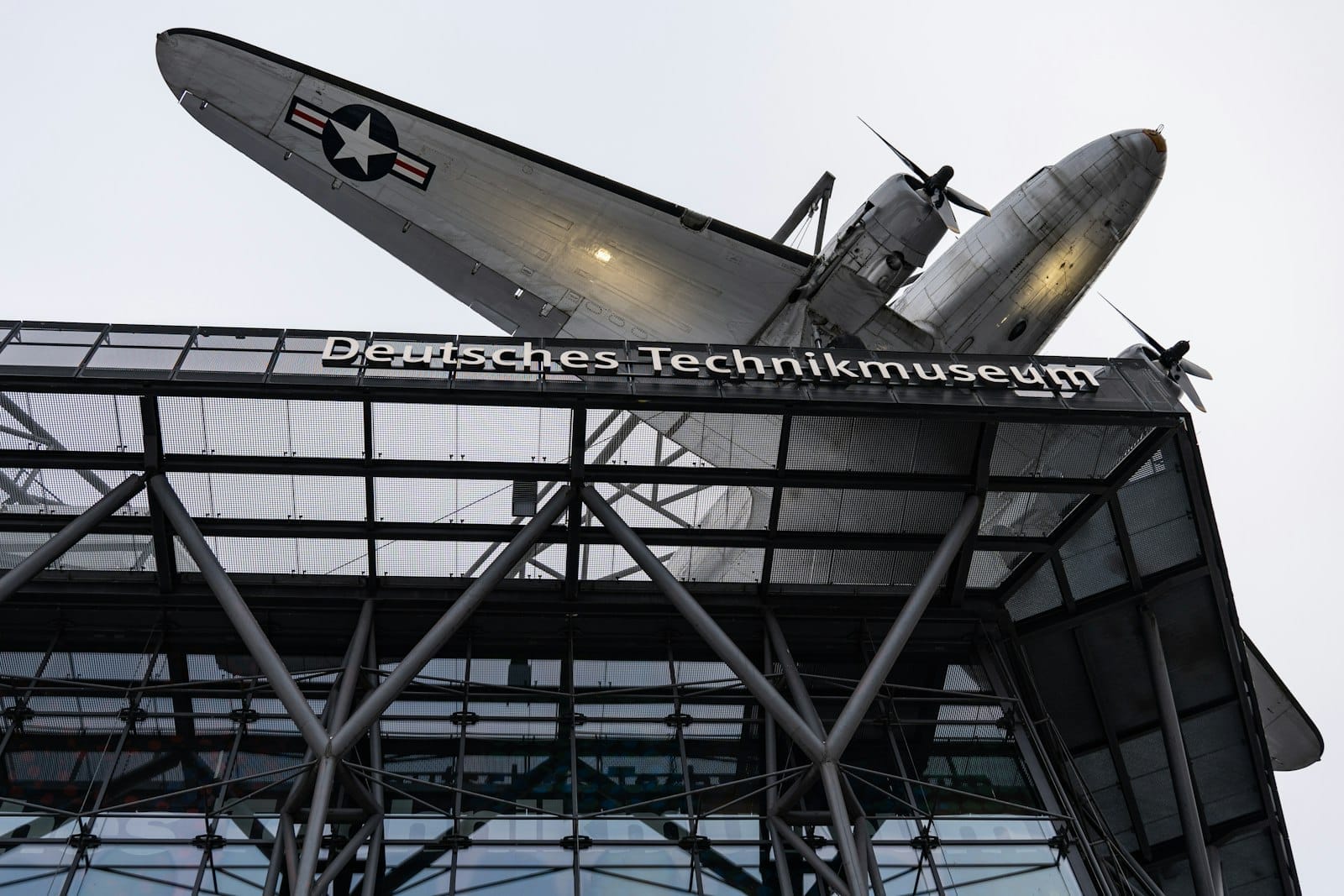
The scale of the permanent collection is the first thing that surprises most visitors. The aviation hall contains real aircraft suspended from the ceiling at various heights, including a Douglas DC-3 and a Junkers Ju 52. Walking beneath them while reading about the early days of civilian flight gives a sense of physical scale that photographs simply cannot convey.
The railway section is among the most impressive in Europe. Full-size steam locomotives, freight wagons, and historic coaches fill an enormous hall that was itself once a repair shed. The weight of the machines, the smell of old grease and iron, and the low echo of footsteps on the concrete floor make this section feel more like entering a cathedral than a museum gallery.
Beyond railways and aviation, the museum covers maritime history (including a reconstructed section of a wooden sailing vessel), textiles, printing, photography, film, computing, and electrical engineering. The computing and telecommunications section traces the development from early telephone exchanges to room-sized mainframes, with enough original hardware to give serious context to any modern smartphone.
ℹ️ Good to know
The Science Center Spectrum at Möckernstraße 26 has a separate entrance from the main building. Both are included in the standard admission ticket. Allow at least 90 minutes for Spectrum alone if you're visiting with children.
How the Experience Changes by Time of Day
Tuesday through Friday mornings, between opening at 09:00 and around 11:00, the museum is at its quietest. School groups tend to arrive mid-morning, so if you want the locomotive hall largely to yourself for photography, aim to be at the door shortly after 09:00. By 11:30 on weekdays, the energy shifts noticeably as guided school visits fill the ground-floor galleries.
Weekends draw a broader mix: families with young children dominate the Spectrum building, while adults with a slower pace tend to linger in the aviation and printing halls. Saturday afternoons in school holidays can feel genuinely crowded near the interactive exhibits, though the upper floors of the main building stay relatively calm throughout the day.
The first Friday of each month from 13:00 is free for all visitors, and it draws a noticeably different crowd: students, curious locals, and budget-conscious travellers. It's worth experiencing for the atmosphere, but expect the popular sections to be busy from around 14:00 onward. A free ticket still needs to be reserved in advance on the official website as a 0-euro "Free admission on Friday afternoon" ticket.
Getting There and Getting Around
The most direct public transport option is U-Bahn station Möckernbrücke, served by lines U1, U3, and U7. From there it's a five-minute walk south along Möckernstraße. Gleisdreieck station (U1, U2, U3) also works well and puts you slightly closer to the main building on Trebbiner Straße. If you're arriving from the direction of Friedrichshain or Mitte, S-Bahn Anhalter Bahnhof is convenient and adds a small note of historical irony: you're arriving at a surviving station to visit a museum built on the ruins of one that didn't survive.
Berlin's public transport system makes this an easy stop to combine with other visits. The Topography of Terror is roughly a ten-minute walk northeast, and Checkpoint Charlie is about fifteen minutes on foot. If you're planning a full day across multiple sites, the Berlin Welcome Card can cover your transit costs across the day.
Almost all areas of the main museum building are wheelchair accessible. Exceptions include the historic brewery, the mills in the museum park, and the third floor of the Beamtenhaus. The Spectrum building has ramp access from Möckernstraße. Two wheelchairs are available to borrow at the entrance. Visitors with visual impairments can access a guidance and information system throughout the museum park, and special tours for blind and visually impaired groups can be arranged. Induction loops and text versions of audio guides are available for visitors with hearing impairments. Assistance dogs are welcome throughout.
Visiting with Children
Children under 18 enter free, which makes this one of the most accessible major museums in Berlin for families. The Science Center Spectrum is designed explicitly for younger visitors, with over 250 hands-on experiments covering physics, chemistry, optics, and engineering. Unlike passive museum exhibits, Spectrum is loud, active, and best enjoyed with time to spare.
For families planning a broader day in the city, the museum pairs well with the nearby Berlin Zoo in Charlottenburg, though that would require a transit ride across town. For families staying closer to Kreuzberg, the outdoor park exhibits at the museum itself are worth at least 30 minutes, especially for children interested in trains and windmills.
⚠️ What to skip
The museum is closed on Mondays, 1 May, 24–25 December, and 31 December. On 1 January it opens late from 13:00 to 18:00. Check the official website for current closures before building your itinerary.
Practical Summary
Opening hours are Tuesday to Friday 09:00 to 17:30, and Saturday, Sunday, and public holidays 10:00 to 18:00. Last admission is at 17:00. The museum is closed on Mondays. Adult tickets are €12 online or €13 on-site; reduced tickets (students, concessions) are €6 online or €7 on-site; group tickets from 10 persons are €7 per person regular or €2 reduced. Children and young people under 18 and those still in full-time school education enter free.
The main entrance address is Trebbiner Straße 9, 10963 Berlin. The Science Center Spectrum entrance is at Möckernstraße 26, 10963 Berlin. Both are included in a single standard admission ticket.
Photography without flash is generally permitted throughout the permanent collection. If you're building a wider museum itinerary for Berlin, the guide to the best museums in Berlin can help you prioritise across the city's considerable options.
Insider Tips
- The first Friday of each month is free from 13:00, but you must reserve a free ticket online in advance. Don't assume you can just walk in.
- The locomotive hall in the main building is best photographed from the upper walkways, which give a clear overhead angle across the machines. Head up first before crowds accumulate.
- If you're visiting with children, do Spectrum before the main building, not after. Children who've spent two hours at interactive Spectrum exhibits rarely have the patience for the slower historical galleries afterwards.
- The museum park between the buildings is easy to rush past, but it contains a working windmill and watermill that run on scheduled demonstration days. Check the museum's calendar for demonstration times before your visit.
- Online tickets save €1 per adult compared to buying at the door. For a family of four adults, that's a €4 saving with no downside.
Who Is German Museum of Technology (Deutsches Technikmuseum) For?
- Families with children aged 6 and older, especially those interested in trains, planes, or science experiments
- Technology and engineering enthusiasts who want serious depth, not just surface displays
- Travellers visiting Berlin in winter or on a rainy day who need a full-day indoor option
- History buffs interested in how industrialisation shaped modern Europe
- Budget-conscious visitors planning their trip around the free first-Friday afternoon admission
Nearby Attractions
Other things to see while in Kreuzberg:
- Berlinische Galerie
The Berlinische Galerie is Berlin's dedicated museum for modern art, photography, and architecture, housed in a converted 1964 glass warehouse in Kreuzberg. With a focused permanent collection rooted in Berlin's art history and rotating special exhibitions, it rewards visitors who want depth over spectacle.
- Markthalle Neun
Built in 1891 and relaunched as a food-focused community market in 2011, Markthalle Neun is the most serious food destination in Kreuzberg. From Saturday's Big Market to the legendary Street Food Thursday, it draws producers, chefs, and curious eaters in equal measure.
- Tempelhofer Feld
Tempelhofer Feld is Berlin's largest inner-city open space, a 355-hectare former airport converted into a free public park where Berliners cycle, skate, fly kites, and garden on the same runways that once carried airliners. It is equal parts city lung, social experiment, and urban history lesson.