What to Eat in Berlin: A Food Lover's Guide
Berlin's food scene is unlike anywhere else in Germany. It mixes post-war street food traditions with Turkish culinary heritage, international market culture, and a thriving modern restaurant scene. This guide covers what to eat, where to find it, and how much to pay.
Plan and book this trip
Tools from our partner Travelpayouts help you compare flights and hotels. If you book through them, we may earn a commission at no extra cost to you.
Flights
Hotels map
TL;DR
- Currywurst and döner kebab are the two defining street foods of Berlin, both available for €3–€6 at dozens of spots citywide.
- Markthalle Neun's Street Food Thursday (every Thursday evening in Kreuzberg) is one of the best food experiences in the city.
- Traditional Berlin cuisine is earthy and pork-heavy: think Eisbein, Berliner Pfannkuchen, and potato pancakes, not Bavarian pretzels.
- Berlin restaurants span every price bracket. Street food runs €3–€6; a solid sit-down meal costs €12–€25; fine dining starts around €50.
- Food markets are seasonal: Thai Park operates weekends in warm weather, while Christmas markets bring Kartoffelpuffer from late November. See the best time to visit Berlin for seasonal planning.
Berlin's Culinary Identity: What Actually Defines the Food Here
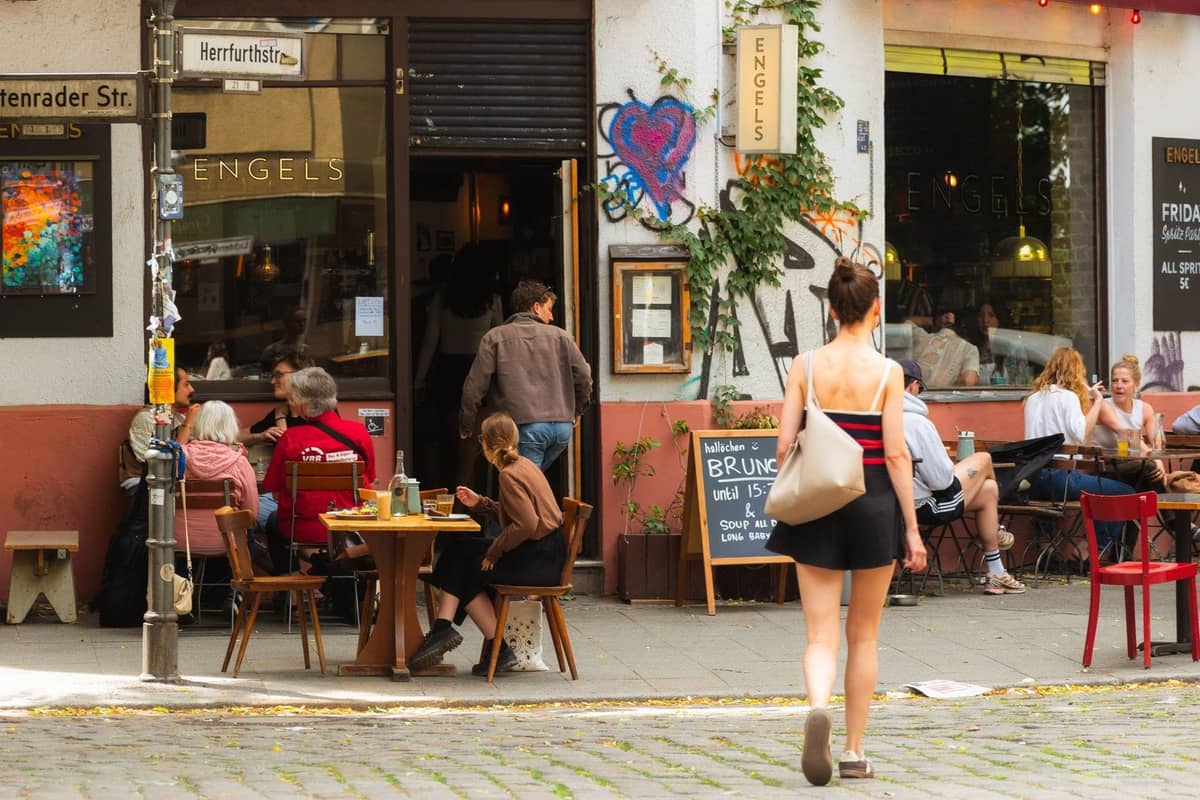
Berlin is often lumped in with generic "German food" expectations, which usually means Bavaria: pretzels, white sausage, wheat beer. That picture barely applies here. Berlin's traditional cuisine is a product of its geography and history, built on pork, goose, freshwater fish, legumes, and root vegetables. It is hearty, unpretentious, and shaped by centuries of working-class cooking rather than royal banquets.
The city's post-war division and eventual reunification created a food culture that is genuinely plural. West Berlin's large Turkish-German community, which grew significantly from the 1960s onward, embedded döner kebab and Turkish bakeries so deeply into daily life that they are now inseparable from the city's identity. Add waves of immigration from Vietnam, Lebanon, and across the globe, and you get a food scene where a great bowl of pho sits three doors down from a century-old Gasthaus serving Eisbein.
ℹ️ Good to know
Berlin's food scene is not seasonal in the way that beach resorts or ski towns are. You can eat excellently here in January or August. The main seasonal shift is in market availability: outdoor food markets like Thai Park run roughly April through October, while Christmas markets introduce specific seasonal dishes from late November through December.
Essential Berlin Street Foods: Currywurst, Döner, and Beyond
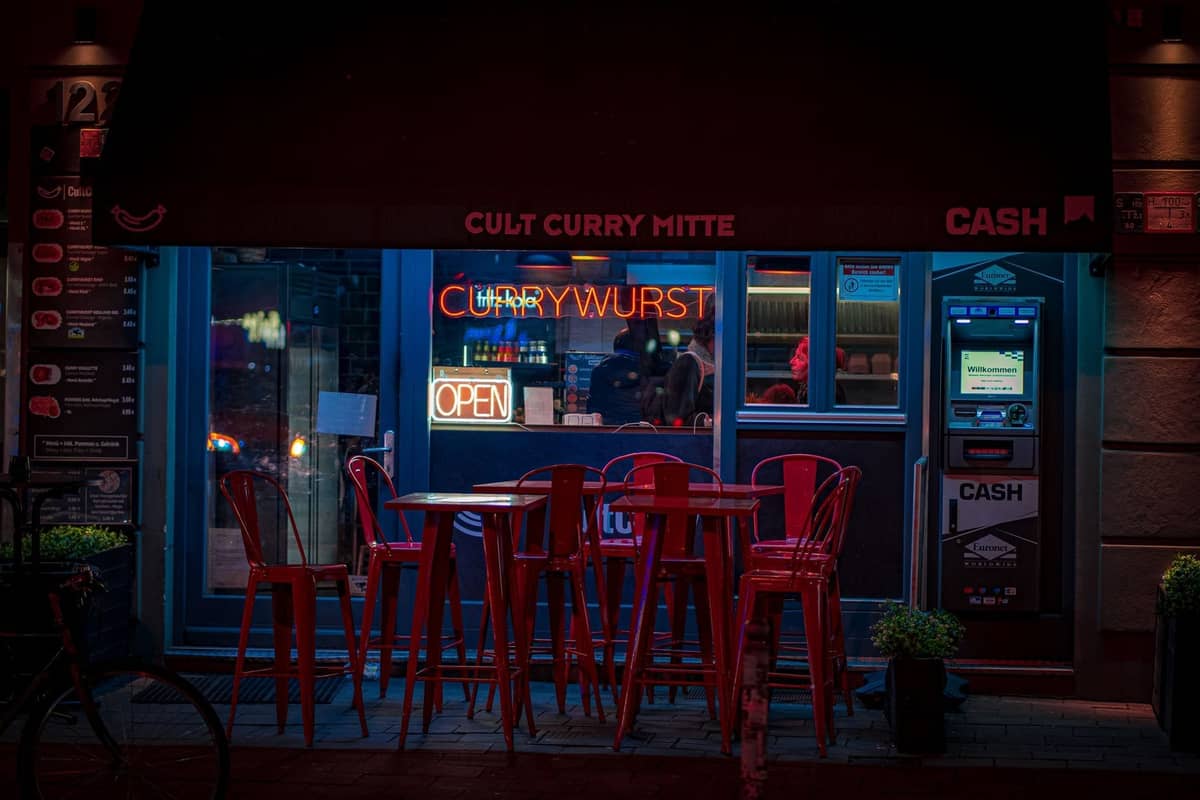
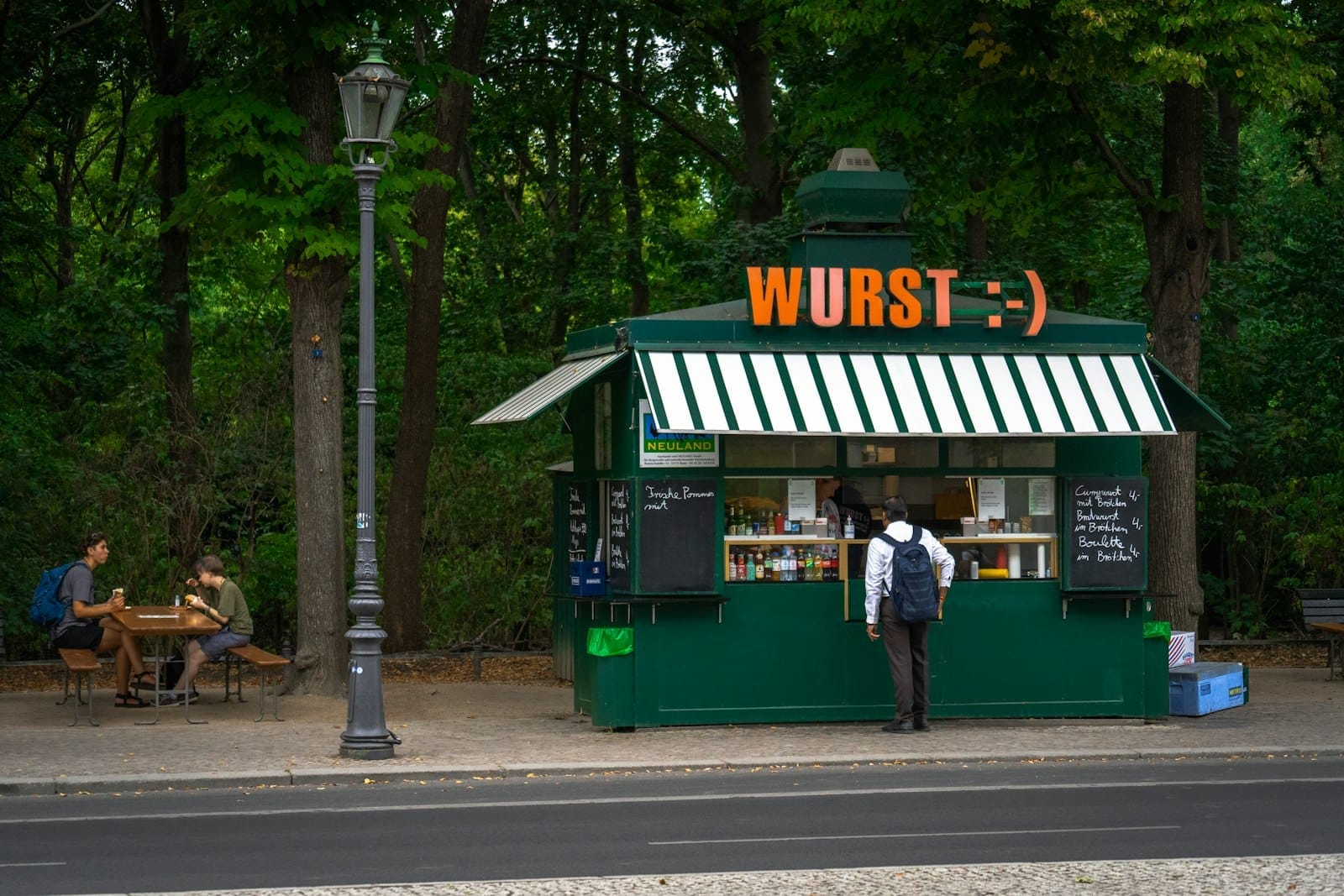
Currywurst is a post-war invention, widely credited to Herta Heuwer, who reportedly created the recipe in 1949 by combining ketchup with curry powder and pouring it over a grilled pork sausage. Today it is sold at Imbiss stands across the city, sliced into rounds and served with a roll or fries. The quality varies considerably. At its best, with a properly spiced sauce and a snappy sausage, it earns its reputation. At tourist traps near major sights, it can be underwhelming.
Curry 36 on Mehringdamm 36 in Kreuzberg is consistently rated among the best in the city, open daily until around 5:00 AM. A portion with fries runs approximately €4–€5. For more context on navigating Berlin's streets and neighborhoods, the getting around Berlin guide covers transport logistics in detail.
Döner kebab has a specific Berlin origin story. Kadir Nurman opened a stand near Zoologischer Garten in West Berlin in 1972, selling spiced meat in flatbread to workers on the go. That format, adapted from Turkish dürüm traditions, became the template for the döner sold across Germany today. In Berlin, you will find both the classic version (beef and lamb in a round bread pocket) and the dürüm wrap. Prices at reputable spots fall in the €5–€7 range. Avoid places where the meat has been sitting under a heat lamp for hours; a busy stand with visible turnover is a better sign than a quiet one.
- Currywurst Grilled pork sausage with spiced curry ketchup, usually served with fries or a roll. Price: €3–€5. Best at Curry 36, Mehringdamm 36.
- Döner Kebab Spiced meat (usually beef/lamb) in flatbread with salad and sauces. Price: €5–€7. Quality varies enormously; choose stands with visible turnover.
- Berliner Pfannkuchen Jam-filled doughnuts, a genuine Berlin specialty. Sold at bakeries across the city; Sugarclan on Grünberger Str. 85 is a dedicated spot (open Wed–Sun).
- Eisbein Slow-cooked pork knuckle, typically served with sauerkraut and pea purée. A proper old-school Berlin dish, found at traditional Gasthaus-style restaurants.
- Kartoffelpuffer Potato pancakes, common at street markets and Christmas stalls. Served with applesauce or sour cream. Seasonal peak: November–December.
Food Markets: Where to Eat Like a Local
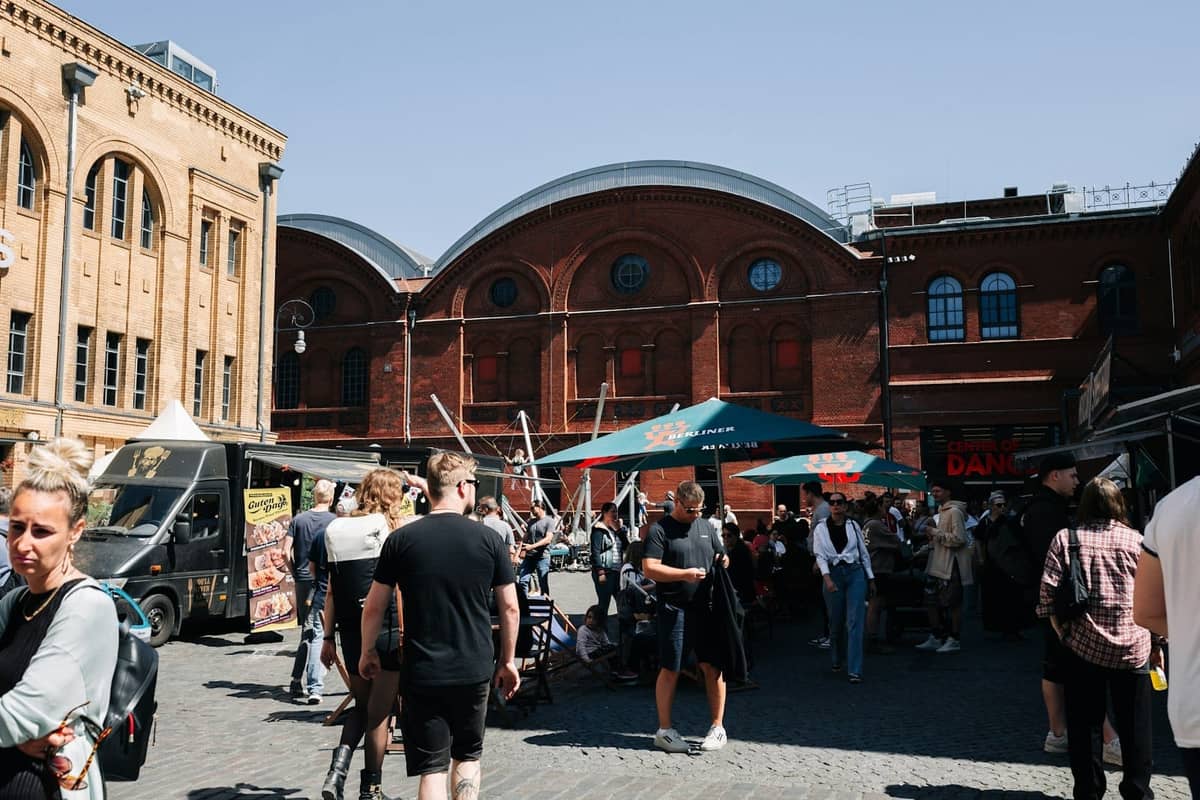
Markthalle NeunMarkthalle Neun in Kreuzberg is the anchor of Berlin's market food scene. The Victorian market hall hosts Street Food Thursday every week, with vendors covering everything from Korean fried chicken to Georgian khachapuri to locally sourced German charcuterie. It runs from 17:00 to 22:00, and the crowd reflects the neighborhood: mixed, unpretentious, and genuinely interested in food. Arrive before 18:30 if you want to avoid the longest queues.
Thai Park, located in Preußenpark in Charlottenburg, is one of Berlin's more distinctive food gatherings. Informal vendors, many of them members of Bangkok-connected expat families, set up on the grass on weekends from spring through autumn. The food is genuinely Thai, not adapted for European palates. Dishes like boat noodles, som tam, and sticky rice with mango appear here at prices rarely above €8–€10. There is no infrastructure: no seating beyond the grass, no signage, no guaranteed vendors. That is part of the appeal, but it also means it works best on a dry Saturday afternoon in summer.
Mauerpark runs a Sunday flea market that includes a solid ring of street food stalls. It is not purely a food destination, but it is a convenient stop if you are spending a Sunday afternoon in Prenzlauer Berg. The Berlin flea markets guide covers the full market circuit including food options.
💡 Local tip
For Christmas market food specifically, Kartoffelpuffer (potato pancakes) and Glühwein are the staples. The markets at Gendarmenmarkt and Charlottenburg Palace are among the most atmospheric, though prices run slightly higher than neighborhood markets. See the Berlin Christmas markets guide for the full breakdown.
Sit-Down Dining: Neighborhoods and Price Ranges
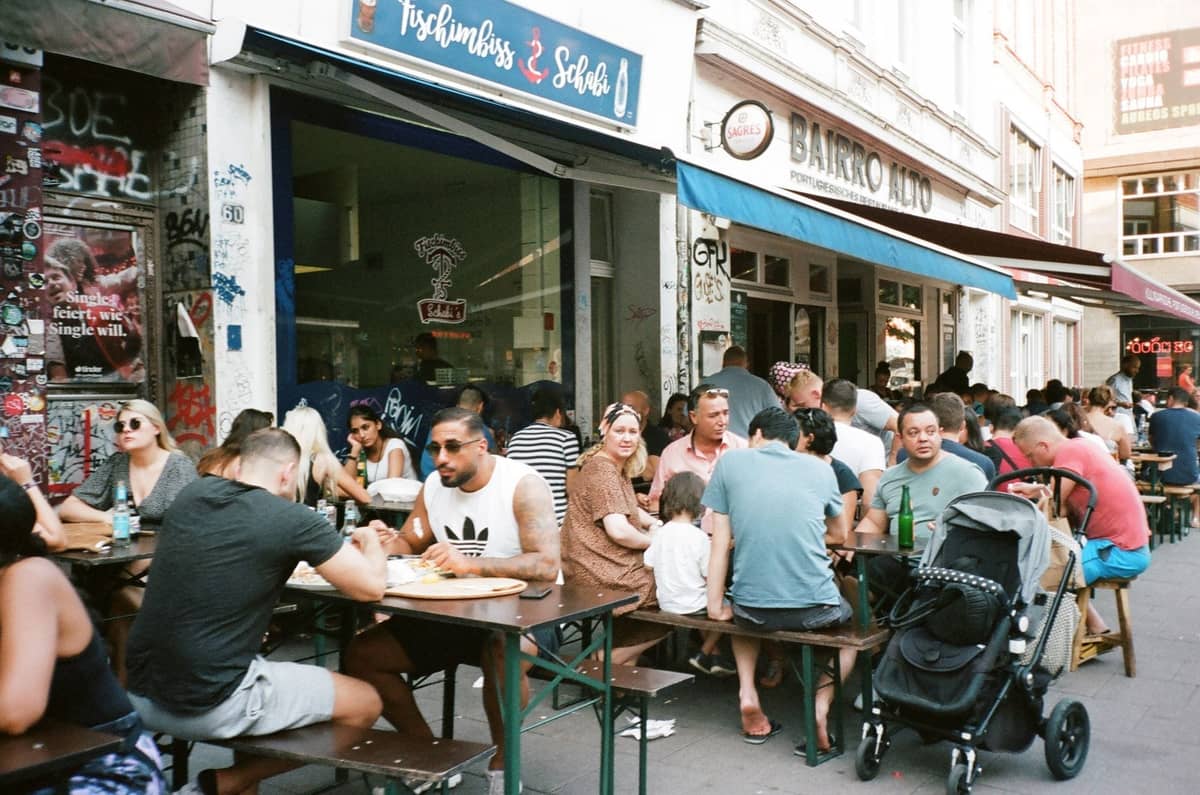
Berlin restaurants cover every price point, and the city's size means the best options are rarely in the most obvious tourist zones. Mitte has convenience but tends toward tourist pricing. The better dining-to-value ratio is found in Kreuzberg, Neukölln, Prenzlauer Berg, and Friedrichshain, where a genuinely good meal at a neighborhood restaurant costs €12–€20 per person for a main course.
Kreuzberg and Neukölln are the two districts where food diversity is most concentrated. Turkish and Arab bakeries, Vietnamese noodle shops, and Ethiopian restaurants sit alongside newer German bistros. Prices are kept honest by local competition. A bowl of pho in Neukölln can still be found for under €10; a solid Middle Eastern mezze spread for two runs around €25–€35.
Prenzlauer Berg skews toward brunch culture. Weekend brunch lines form early at popular spots. Expect to pay €10–€15 for a full brunch spread. Charlottenburg hosts more polished European dining near Kurfürstendamm, with prices reflecting the western shopping-district atmosphere.
- Budget (€5–€10): Street food stands, döner shops, Vietnamese and Turkish restaurants in Kreuzberg and Neukölln
- Mid-range (€12–€25): Neighborhood restaurants, modern German bistros, brunch spots in Prenzlauer Berg and Friedrichshain
- Upscale (€40–€80+): European and international fine dining, Michelin-level tasting menus in Mitte and Charlottenburg
Food Tours and Guided Eating Experiences
Guided food tours in Berlin are genuinely worth considering for first-time visitors, not because you cannot find great food alone, but because they compress a lot of context into a short time. A good street food tour will explain why currywurst tastes different at different stands, take you to a döner shop you would not have found on your own, and walk you through a neighborhood with a guide who can explain what you are seeing. Most run two to three hours and cover four to six tastings. Prices typically fall in the €35–€65 range per person.
✨ Pro tip
Book food tours that start outside of Mitte. Tours beginning in Kreuzberg, Neukölln, or Prenzlauer Berg tend to access better food at lower price points than those centered around Brandenburg Gate or Checkpoint Charlie, which cater heavily to the day-tripper market.
Practical Tips for Eating in Berlin
Tipping in Berlin follows German norms: rounding up the bill or adding around 10% is standard and appreciated, but tipping 15–20% as in North America is not expected. At street stalls, you might simply round up €3.80 to €4. At a sit-down restaurant, telling the server the total you want to pay (rather than leaving cash on the table) is the conventional method.
Many smaller restaurants, street stalls, and market vendors in Berlin still prefer cash. It is worth carrying €20–€30 in coins and small notes if you plan to eat at markets or Imbiss stands. Card acceptance has improved significantly in recent years, but do not rely on it at outdoor food markets.
Berlin's tap water is safe to drink. Ordering Leitungswasser (tap water) at a restaurant is acceptable, though some places will decline and only serve bottled water. For budget eating strategies across the city, the Berlin on a budget guide covers food alongside accommodation and transport costs.
- Carry cash: many Imbiss stands and market vendors do not accept cards
- Eat lunch at restaurants that offer a Mittagstisch (lunch menu) for €8–€12, typically weekdays only
- Avoid restaurants immediately adjacent to Brandenburg Gate and Checkpoint Charlie: quality drops, prices rise
- Street Food Thursday at Markthalle Neun peaks between 18:30 and 20:00; arrive earlier or later to avoid queues
- Thai Park operates only in good weather, spring through autumn, and is not reliable in early spring or late autumn
⚠️ What to skip
The Berliner Pfannkuchen (jam doughnut) is only called a 'Berliner' outside of Berlin. In Berlin itself, locals call it Pfannkuchen. Ordering a 'Berliner' at a bakery in the city may get you a puzzled look. This is a minor but genuine local quirk worth knowing.
FAQ
What is the most famous food in Berlin?
Currywurst is the most iconic Berlin food: a grilled pork sausage sliced and served with a spiced curry ketchup. It was invented in Berlin in the late 1940s and remains a daily staple at Imbiss stands citywide. Döner kebab is equally embedded in the city's food culture and is arguably eaten more frequently by locals day-to-day.
Where should I eat in Berlin as a first-time visitor?
Start with street food: a currywurst at Curry 36 in Kreuzberg and a döner at a busy stand in any neighborhood. For markets, Street Food Thursday at Markthalle Neun (every Thursday evening) is one of the best single food experiences in the city. For sit-down meals, Kreuzberg and Neukölln offer the best variety at honest prices.
Is Berlin good for vegetarians and vegans?
Yes, significantly. Berlin has one of the most developed vegan food scenes in Europe, with dedicated vegan restaurants, supermarkets, and menu options throughout the city. Kreuzberg and Neukölln in particular have a high concentration of plant-based options. Traditional Berlin cuisine is meat-heavy, but vegetarians will find ample alternatives without much effort.
How much does food cost in Berlin?
Street food (currywurst, döner) runs €3–€7. A sit-down lunch at a neighborhood restaurant costs €10–€18. Dinner at a mid-range restaurant is typically €20–€35 per person including a drink. Fine dining starts at €50 per person. Berlin is notably cheaper than London, Paris, or Amsterdam for comparable quality dining.
What is the best food market in Berlin?
Markthalle Neun in Kreuzberg is the strongest overall food market, particularly on Street Food Thursdays. Thai Park in Preußenpark (weekends, spring to autumn) is worth the trip for authentic Thai food. The Turkish Market at Maybachufer runs Tuesdays and Fridays from late morning to early evening and is excellent for produce, cheeses, olives, and street snacks.