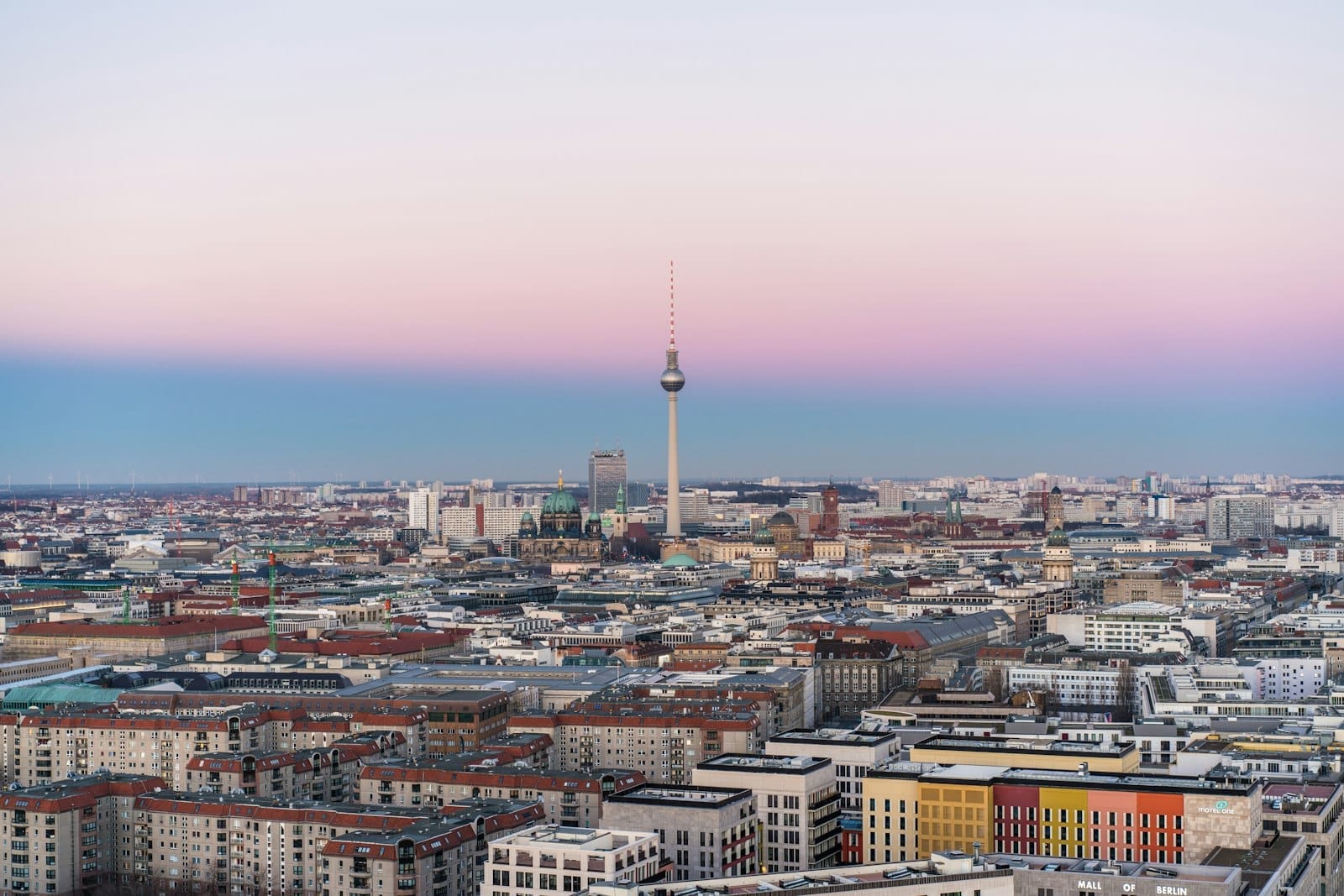
Neukölln stretches from the inner-city canal district of Kreuzkölln south to the Brandenburg border, encompassing some of Berlin's most diverse and rapidly changing streets. It is a district of contrasts: Arab bakeries next to specialty coffee bars, brutalist housing blocks within cycling distance of a former airport turned urban park. For travelers willing to look past the polished tourist trail, Neukölln offers a more honest, less curated version of Berlin.
Neukölln is the district that keeps redefining what Berlin looks like: a dense, multicultural inner-city quarter in the north where over 160 nationalities share the same streets, and a stretch of quieter, greener residential neighborhoods to the south. It is not the easiest neighborhood to read at first, but it rewards patience.
Orientation
Neukölln sits in the south-eastern quadrant of Berlin, beginning where Kreuzberg ends and pushing south all the way to the city's boundary with Brandenburg. The borough is formally divided into five localities: Neukölln (the northernmost inner-city quarter), Britz, Buckow, Rudow, and Gropiusstadt. For most visitors, the action is concentrated in the northern Neukölln quarter and the transitional zone along the Landwehr Canal known as Kreuzkölln.
The Ringbahn, Berlin's orbital S-Bahn loop, cuts through the northern edge of the district. Hermannplatz, at the intersection of U-Bahn lines U7 and U8, is the functional heart of northern Neukölln and the most practical reference point for navigation. From Hermannplatz, Karl-Marx-Strasse runs south through the district's commercial spine, while Sonnenallee and Weserstrasse branch off into the neighborhood's most lively side streets.
Neukölln shares its northern border with Kreuzberg, and the boundary between the two is deliberately blurred in practice. The canal along Maybachufer is technically the dividing line, but the café culture and street life flow across it without interruption. To the west, Tempelhofer Feld forms a massive open border with the Tempelhof district, while the south of the borough gradually gives way to post-war housing estates and semi-suburban streets.
Character & Atmosphere
Neukölln in the early morning feels more like a working-class Mediterranean city than a European capital. On Sonnenallee, the bakeries open before 7am: the smell of sesame bread, za'atar flatbreads, and strong coffee carries into the street. Produce vendors arrange crates of pomegranates and dried figs on the pavement. The neighborhood wakes up quickly and practically, without ceremony.
By midday, Weserstrasse and the streets around it take on a different register. The brunch crowd fills the newer cafés, and the contrast between long-established Turkish grocers and Scandinavian-style coffee bars makes for a genuinely odd, genuinely Berlin streetscape. This is the Kreuzkölln zone, the area that has experienced the most visible change since the mid-2000s, when artists and students priced out of Mitte and Prenzlauer Berg began moving in.
After dark, the northern quarter becomes one of Berlin's most active nightlife corridors. Weserstrasse in particular is lined with bars running from small cocktail spots to no-frills venues with DJs and open doors. The crowds on a Thursday or Friday night are younger and more mixed than almost anywhere else in Berlin: students, long-term residents, recent arrivals, tourists. The energy is informal and often loud.
Moving south toward Britz and Buckow, the atmosphere shifts completely. The streets widen, the buildings drop to two and three storeys, and the density of the inner city gives way to quieter residential blocks with garden plots and local Kiezkneipen, the neighbourhood pubs that feel like they have not changed since the 1980s. These southern quarters see almost no tourist traffic and are worth an afternoon for anyone wanting to understand the full range of what Neukölln actually is.
ℹ️ Good to know
The name 'Kreuzkölln' is informal: it refers to the area where Kreuzberg and Neukölln overlap, roughly between the Landwehr Canal and Herrmannstrasse. You will not find it on official maps, but locals and listings use it consistently.
What to See & Do
The single most compelling attraction at Neukölln's edge is Tempelhofer Feld, the decommissioned Tempelhof Airport that was handed over to the public as the park Tempelhofer Feld in 2010 and has since become one of Europe's most unusual urban parks. The former runways are still intact: people cycle, rollerblade, and fly kites across a flat expanse that feels genuinely enormous by city standards. Community gardens line the perimeter. On warm evenings in summer, the field draws an enormous cross-section of Berlin residents, and the light at dusk across the open tarmac is unlike anything else in the city.
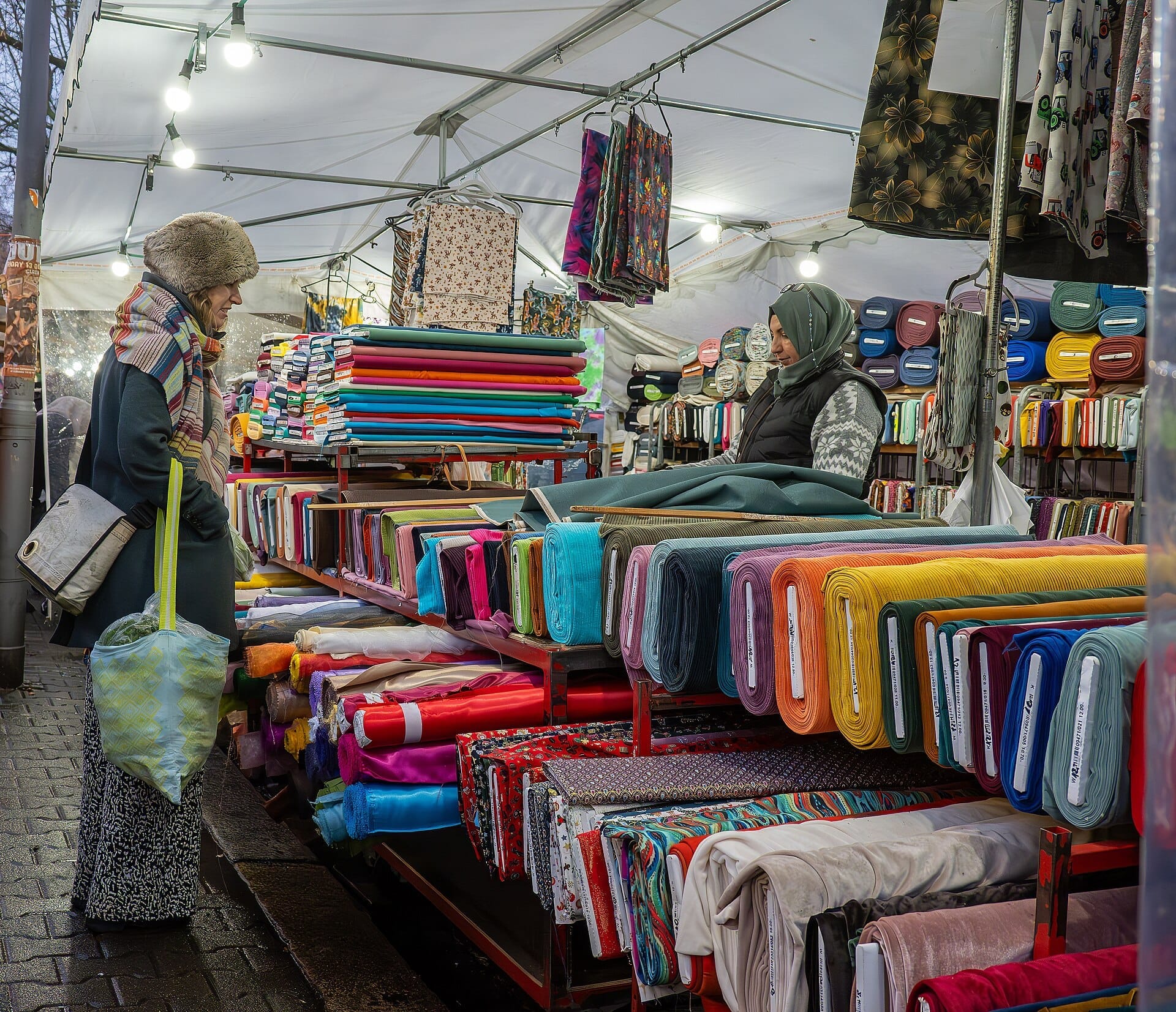
Along Maybachufer, the canalside path running parallel to the Landwehr Canal, the Turkish Market at Maybachufer sets up every Tuesday and Friday. It is one of Berlin's most atmospheric street markets: vendors sell fresh produce, olives, cheeses, fabrics, and street food along the canal bank, and the crowd reflects the actual demographic mix of the area rather than the tourist version of it. Arrive before noon for the best selection.
The historic Rixdorf quarter, tucked into the district's inner streets, is one of Neukölln's less-visited pockets. The Bohemian settlement here dates to the 18th century, and a small cluster of older buildings around Richardplatz preserves something of its original village character. In December, the traditional Christmas market at Richardplatz is smaller and less crowded than the major city-centre markets, which has made it something of a local favourite.
The Schillerkiez, the residential area immediately east of Tempelhofer Feld near Schillerpromenade, rewards a slow walk. The streets here have a particularly well-preserved turn-of-the-century Berlin residential character, with ornate Wilhelminian-era apartment blocks and a low-key café scene that serves local residents more than visitors. The area has attracted creative businesses and independent restaurants without losing its residential footing.
Tempelhofer Feld: cycling, kite-flying, community gardens on former airport runways
Turkish Market at Maybachufer: Tuesday and Friday mornings along the canal
Richardplatz and Rixdorf: 18th-century Bohemian settlement and December Christmas market
Schillerkiez: Wilhelminian residential streets east of Tempelhofer Feld
Weserstrasse bar and gallery corridor: independent venues, rotating exhibitions, live music
Eating & Drinking
Neukölln has one of Berlin's most genuinely diverse food scenes, not diverse in the marketing sense but in the sense that the restaurants here primarily cook for a neighbourhood with roots across the Middle East, North Africa, Southeast Asia, and the Balkans. Sonnenallee, sometimes nicknamed an 'Arab street' for its dense concentration of Lebanese and Syrian restaurants, falafel counters, and bakeries. For context on how this fits into Berlin's wider food culture, the Berlin food guide covers the full picture across districts.
For sit-down meals, the streets around Weserstrasse and Pannierstrasse concentrate most of the newer restaurant openings: natural wine bars, small-plates spots, and contemporary European kitchens that sit alongside long-established Turkish and Vietnamese joints. Prices across most of the neighborhood remain significantly lower than in Mitte or Prenzlauer Berg, and it is still possible to eat a full meal for under 12 euros at many of the older canteen-style places.
The Schillerkiez area has developed a quieter café culture anchored around Schillerpromenade. A former laundry on the street houses Lavanderia Vecchia, a restaurant that has become something of a Neukölln institution, known for Italian-influenced cooking in an atmospheric tiled space. Reservations are strongly recommended.
After dinner, the bar scene on Weserstrasse takes over from roughly 9pm. The street has a high density of small bars with no cover charge, DJs playing across a range of genres, and outdoor seating that fills quickly in warmer months. It is less polished than the Mitte bar scene and considerably less expensive. Several spots along the strip transition from daytime café to late-night bar without changing much about themselves, which gives the street a natural energy that does not feel manufactured.
💡 Local tip
For a focused food itinerary in Neukölln, start with the Tuesday or Friday market at Maybachufer for lunch, walk south along the canal into the Kreuzkölln backstreets for afternoon coffee, and end the evening on Weserstrasse. That route covers the neighbourhood's range without requiring any transit.
Getting There & Around
Northern Neukölln is well-connected by U-Bahn. The U8 line runs through the heart of the district, with key nearby stops including Hermannplatz and Rathaus Neukölln, and onward via Karl-Marx-Straße to Neukölln station. The U7 also serves Hermannplatz, connecting Neukölln directly westward to Kreuzberg and onward to Schöneberg and Spandau. Journey time from central Berlin stations like Alexanderplatz is around 13–15 minutes by U-Bahn.
The Ringbahn's S41 and S42 lines stop at Neukölln S-Bahn station, which is a short walk from Hermannplatz. This connection makes it straightforward to reach Neukölln from Friedrichshain, Treptow, or Tempelhof without going through the city centre. Several bus lines, including the 104 and 246, provide additional coverage across the district.
For getting around within Neukölln, cycling is the most practical option. The district is largely flat, the streets are wide enough for dedicated lanes in most areas, and the ride along Maybachufer and through Tempelhofer Feld is genuinely pleasant. Berlin's public bike-sharing system and several private rental providers cover the area. For general transit planning across the city, the guide to getting around Berlin covers all options including the BVG day pass, which provides good value if you plan to combine Neukölln with visits to central attractions.
💡 Local tip
Hermannplatz is the easiest single orientation point in Neukölln. From the station exit, Karl-Marx-Strasse heads south through the commercial district, while Sonnenallee runs southeast and Weserstrasse is a short walk northwest toward the canal. Getting comfortable with these three axes covers most of what travelers want to explore.
Where to Stay
Neukölln is not a major hotel district, but it has a growing supply of apartments, boutique guesthouses, and independent hostels, concentrated mostly in the northern quarter around Hermannplatz and the Kreuzkölln zone. Staying here makes sense for travelers prioritizing neighborhood immersion over proximity to the major monuments. The city's main historical sites in Mitte are 20 to 25 minutes away by U-Bahn, which is manageable but not trivial if you are planning heavy sightseeing days.
The Schillerkiez and the streets immediately around Tempelhofer Feld offer the most pleasant residential setting for a longer stay: quieter than the Weserstrasse corridor, walkable to the park, and well-served by the U6 line at Platz der Luftbrücke just outside the district boundary. For travelers comparing options across the city, the where to stay in Berlin guide gives a clear breakdown of each district's accommodation character and price range.
Budget travelers will find Neukölln generally more affordable than equivalent rooms in Mitte, Prenzlauer Berg, or Charlottenburg. The trade-off is that the neighborhood's character can feel abrupt at night in some areas around Hermannplatz, particularly late on weekends. Lighter sleepers should look for accommodations set back from Karl-Marx-Strasse and the main U-Bahn plaza.
Who Should Visit Neuk?lln
Neukölln is one of the most genuinely interesting neighborhoods in Berlin to spend time in, but it is not universally the right choice. The northern quarter, especially around Hermannplatz and Karl-Marx-Strasse, can feel chaotic and at times uncomfortable, particularly at night. The area has historically ranked among the higher-crime districts in Berlin, and while the experience for most visitors is simply that of a dense, noisy city neighborhood, it is worth acknowledging that it is not comparable in feel to Prenzlauer Berg or Charlottenburg.
The gentrification of northern Neukölln is real and ongoing. Some of what made the area interesting to early arrivals, low rents, experimental venues, a genuine mix of communities, is under pressure. The Weserstrasse corridor has become noticeably more polished since the early 2010s. For travelers curious about how this fits into Berlin's wider patterns of change, the Berlin nightlife guide contextualizes the district's role in the city's after-dark geography.
That said, Neukölln remains one of the best places in Berlin to eat well without spending much, to encounter a neighborhood that is not primarily oriented toward tourism, and to get a sense of the city's actual demographic complexity. The combination of the Turkish Market, Tempelhofer Feld, and an evening walk through the Schillerkiez represents as honest a portrait of contemporary Berlin as you will find anywhere.
⚠️ What to skip
The area immediately around Hermannplatz station can feel unsettled late at night, particularly on weekends. Exercise the same awareness you would in any dense urban transit hub. The wider neighborhood, especially the Schillerkiez and Maybachufer areas, is considerably calmer. Check Berlin safety guidance before traveling for the most current advice.
TL;DR
Neukölln is Berlin's most culturally layered district: multicultural in the deepest sense, with residents from about 160 nations and a food scene that reflects that directly.
The northern Neukölln quarter and Kreuzkölln zone are best for eating, drinking, and street-level exploration; Tempelhofer Feld and the Schillerkiez are best for open space and quieter residential atmosphere.
Transit access is strong via the U7 and U8 at Hermannplatz, with S-Bahn connections adding further reach across the Ringbahn.
Best suited for independent travelers, food-focused visitors, nightlife seekers, and anyone wanting to experience a Berlin neighborhood that is still primarily shaped by the people who live there rather than by tourism infrastructure.
Not ideal for travelers prioritizing comfort, quiet, or easy access to central monuments: the tradeoffs are real, but for the right traveler, they are entirely worth it.
Three days in Berlin is enough to cover the essential history, art, and culture of Germany's capital, but only if you plan smartly. This day-by-day itinerary groups attractions by location, cuts the tourist traps, and gives you the practical details to make every hour count.
Berlin runs 80 to 100+ Christmas markets each season, spread across dozens of neighbourhoods with wildly different characters. This guide covers the best markets, when to go, what things cost, how to get around, and what to skip.
Berlin's flea markets are a city institution, drawing locals and visitors every Sunday to browse vintage clothing, vinyl records, GDR curiosities, and handmade goods. This guide covers the best markets across the city, from the massive and famous to the small and locals-only.
Berlin's food scene is unlike anywhere else in Germany. It mixes post-war street food traditions with Turkish culinary heritage, international market culture, and a thriving modern restaurant scene. This guide covers what to eat, where to find it, and how much to pay.
Summer in Berlin runs from June through August and offers long daylight hours, warm temperatures, open-air events, and easy access to lakes and river cruises. This guide covers what the weather is actually like, the best outdoor activities, where locals spend their time, and what to pack.
Berlin in winter is colder, darker, and quieter than summer — but that's exactly what makes it compelling. From Advent Christmas markets to uncrowded museum halls and budget-friendly hotels, this guide covers what to expect, what to skip, and how to make the most of the season.
Berlin is surrounded by dozens of swimmable lakes, many reachable by S-Bahn in under 30 minutes. This guide covers the best spots for a beach day, a forest swim, or a full lake day trip, from classic lidos to quieter shores.
Berlin has one of the world's most established and expansive queer scenes, rooted in over a century of LGBTQ+ history. This guide covers the best neighborhoods, bars, clubs, cultural institutions, Pride events, and practical tips for LGBTQ+ travelers visiting Berlin.
Berlin holds more memorials per square kilometer than almost any city on earth. This guide covers the essential sites across the city, from Nazi-era documentation centers to Cold War border crossings, with practical advice on making the most of each visit.
Berlin's after-dark scene is unlike anywhere else in the world. This guide covers the top clubs, bar districts, door policy realities, seasonal shifts, and practical logistics so you spend less time queuing and more time on the dancefloor.
Berlin remains one of Europe's more affordable capitals, but prices have risen. This guide breaks down realistic daily budgets, the cheapest ways to get around, free and low-cost attractions, and where to eat well without spending much — all updated for 2026.
The Reichstag Dome is one of Berlin's most iconic experiences, and entry is completely free. But you cannot simply walk up and go in. This guide covers the registration process, opening hours, seasonal closures, guided tour options, and the best times to visit, so you arrive prepared and don't waste a trip.
Berlin is one of Europe's most visited cities, and for most travelers it is perfectly safe. But petty theft, transit scams, and a few recurring tourist traps are real. This guide covers what the risks actually look like, where they are concentrated, and exactly how to avoid them.
Berlin is one of the world's great open-air galleries, with significant clusters of murals and graffiti across Friedrichshain, Kreuzberg, Mitte, and beyond. This guide covers the best locations, iconic individual pieces, the URBAN NATION museum, Teufelsberg, and everything you need to plan a serious street art itinerary.
The Berlin to Prague train is one of Europe's most rewarding rail journeys: direct EuroCity service, around 4 hours, and fares starting from €25 if you book ahead. This guide covers schedules, prices, booking platforms, seat reservations, and what to expect on board.
Berlin rewards those who go high. Whether you climb a Cold War listening station, ride a lift to 203 meters, or sip a drink on a rooftop above the Ku'damm, the city looks extraordinary from above. This guide covers the best viewpoints and rooftop bars in Berlin, with practical advice on tickets, timing, and what to expect.
Berlin is one of the world's great walking cities, where every street corner carries a layer of history. This guide covers the top attractions to include on guided tours and self-guided walks, from the monumental boulevards of Mitte to the Wall memorials of Friedrichshain.
The Berlin Wall divided a city and defined an era. This guide covers every major surviving site, the history you need to understand what you're looking at, practical visitor information, and honest advice on how to make the most of your time.
The Berlin WelcomeCard promises unlimited public transport and discounts at 170+ attractions. But it only makes financial sense for certain types of visitors. This guide breaks down both versions, the real math behind the savings, and who should skip it entirely.
Berlin is one of Europe's most family-friendly cities, with world-class museums, vast parks, excellent public transport, and enough hands-on attractions to keep children genuinely engaged. This guide covers the best activities, practical logistics, and honest advice for travelling to Berlin with kids.
Berlin has around 175 museums, from ancient civilizations on Museum Island to Cold War surveillance headquarters in Friedrichshain. This guide cuts through the noise and picks the museums worth your time, organized by theme so you can plan your days efficiently.
Berlin rewards visitors in every season, but not equally. This guide breaks down what to expect month by month, from summer festival heat to winter market charm, so you can choose the trip that actually matches your priorities.
Berlin preserves more Cold War history than almost any city on earth. This guide covers the essential sites, from the Berlin Wall Memorial to the Stasi prison in Hohenschönhausen, with honest assessments of what's worth your time and what's overrated.
Berlin's position at the heart of northern Germany makes it one of Europe's best bases for day trips. Within an hour by train you can reach a Rococo palace, a former concentration camp, a vast lake, or a Cold War spy station. This guide covers the best excursions from the city, with practical travel advice for each.
Berlin is one of Europe's most rewarding cities for budget travelers. From world-class memorials and open-air galleries to vast parks and free museums, here are 20 genuinely free experiences that showcase the best of the German capital.
Berlin has one of Europe's most comprehensive public transport networks, but it comes with its own rules, zones, and quirks. This guide covers everything from ticket prices and fare zones to night buses, cycling, and getting in from the airport — so you spend less time figuring out logistics and more time actually exploring the city.
Museum Island is one of Europe's great cultural concentrations: five world-class museums on a sliver of land in the heart of Berlin, all within a UNESCO World Heritage Site. This guide covers every practical detail you need to make the most of a visit, from tickets and timing to which collections are worth your time.
Berlin rewards curious travelers with an extraordinary range of experiences, from free Cold War memorials and five-museum island complexes to legendary nightlife and Sunday flea markets. This guide cuts through the noise with specific prices, honest assessments, and practical logistics to help you plan the city your way.
Berlin's food scene runs deeper than döner kebab and currywurst. This guide covers where to eat in Berlin across every budget and neighborhood, from legendary street food institutions to world-ranked fine dining, with practical advice on reservations, prices, and what to skip.
Choosing where to stay in Berlin shapes your entire trip. This guide breaks down the city's main neighborhoods by traveler type, budget, and priorities, so you can find the right base without second-guessing your booking.