The Berlin Wall: A Complete Visitor Guide
The Berlin Wall divided a city and defined an era. This guide covers every major surviving site, the history you need to understand what you're looking at, practical visitor information, and honest advice on how to make the most of your time.
Plan and book this trip
Tools from our partner Travelpayouts help you compare flights and hotels. If you book through them, we may earn a commission at no extra cost to you.
Flights
Hotels map
TL;DR
- The Berlin Wall ran 155 km around West Berlin from 1961 to 1989 — it was a multi-layered border system, not a single wall.
- The Berlin Wall Memorial on Bernauer Straße is the most comprehensive site; admission is free. See our Berlin Wall Memorial guide for details.
- The East Side Gallery (1.3 km of painted Wall along the Spree) is an open-air gallery accessible 24/7 at no cost.
- At least 140 people died attempting to cross the Wall — understanding this context matters before you visit.
- If you want historical depth, combine Wall sites with the Cold War Berlin circuit for a full-day itinerary.
Understanding the Berlin Wall: What It Actually Was
The Berlin Wall was built on 13 August 1961 by the German Democratic Republic (GDR) and stood until 9 November 1989 — 28 years of concrete, wire, and enforced separation. Most visitors arrive expecting a single wall. What the GDR constructed was far more elaborate: a double-wall system with a heavily fortified corridor between them, known as the Todesstreifen, or 'death strip'. This inner zone contained raked sand to reveal footprints, tripwire alarms, patrol roads, and floodlights. Guard towers were positioned at regular intervals along the border.
The outer wall facing West Berlin reached nearly 3.6 metres (12 feet) high — that's the painted concrete sections you see in photographs. Behind it, the death strip averaged around 15 metres wide but reached 150 metres in some areas. The total barrier system ran 155 km around all of West Berlin, not just the urban divide between east and west. It also cut West Berlin off from the surrounding GDR countryside, encircling the western half of the city entirely.
ℹ️ Good to know
The Wall was built primarily to stop emigration from East to West Germany. By 1961, over 3.5 million East Germans had left since 1949 — roughly 20% of the entire GDR population. The GDR called it the 'Anti-Fascist Protection Rampart'. Most of the people it was built to contain called it something else entirely.
At least 140 people were killed at the Berlin border zone through shootings, accidents during escape attempts, or suicides. This figure, documented by the Berlin Wall Foundation (Stiftung Berliner Mauer), is the most carefully verified count, though some researchers cite higher numbers when including deaths further along the inner-German border. Either way, this history isn't abstract — several of the memorials mark individual deaths with names and photographs.
Berlin Wall Memorial, Bernauer Straße: The Definitive Site
If you visit only one Berlin Wall site, make it the Berlin Wall Memorial on Bernauer Straße. This is where the Stiftung Berliner Mauer (the official Berlin Wall Foundation) has preserved and interpreted the most complete surviving stretch of the original border system. Unlike the East Side Gallery, which is essentially a painted wall, Bernauer Straße shows you what the entire border apparatus looked like — walls, death strip, guard tower, and all.
- Outdoor exhibition Runs approximately 1.4 km along Bernauer Straße, largely barrier-free. The core commemorative stretch between Gartenstraße and Strelitzer Straße is around 500 metres. Free to walk at any time.
- Documentation Center Houses a permanent indoor exhibition on the history of the Wall's construction, the lives divided, and the escape attempts. Free admission; check the Stiftung Berliner Mauer website for current opening hours.
- Chapel of Reconciliation Built on the site of a church demolished by the GDR in 1985. A quiet, moving space worth a short pause.
- Window of Remembrance A memorial to those who died at the Wall, with photographs and names of identified victims.
- Preserved guard tower One of the few remaining original watchtowers, showing the actual infrastructure used to enforce the border.
Admission to the outdoor exhibition, visitor center, and Documentation Center is free. Public guided tours are offered; check the Stiftung Berliner Mauer website or contact them directly for current durations and prices, as these may change. The memorial is largely outdoors, so dress for the weather — summer heat can make a full walk exhausting, and winter visits in cold rain are uncomfortable without proper gear.
💡 Local tip
Visit Bernauer Straße on a weekday morning if possible. Weekend afternoons bring school groups and tour buses. The outdoor sections are always open, but arriving before 10am gives you quiet time at the most emotionally significant spots — especially the Window of Remembrance.
East Side Gallery: The Wall as Open-Air Art
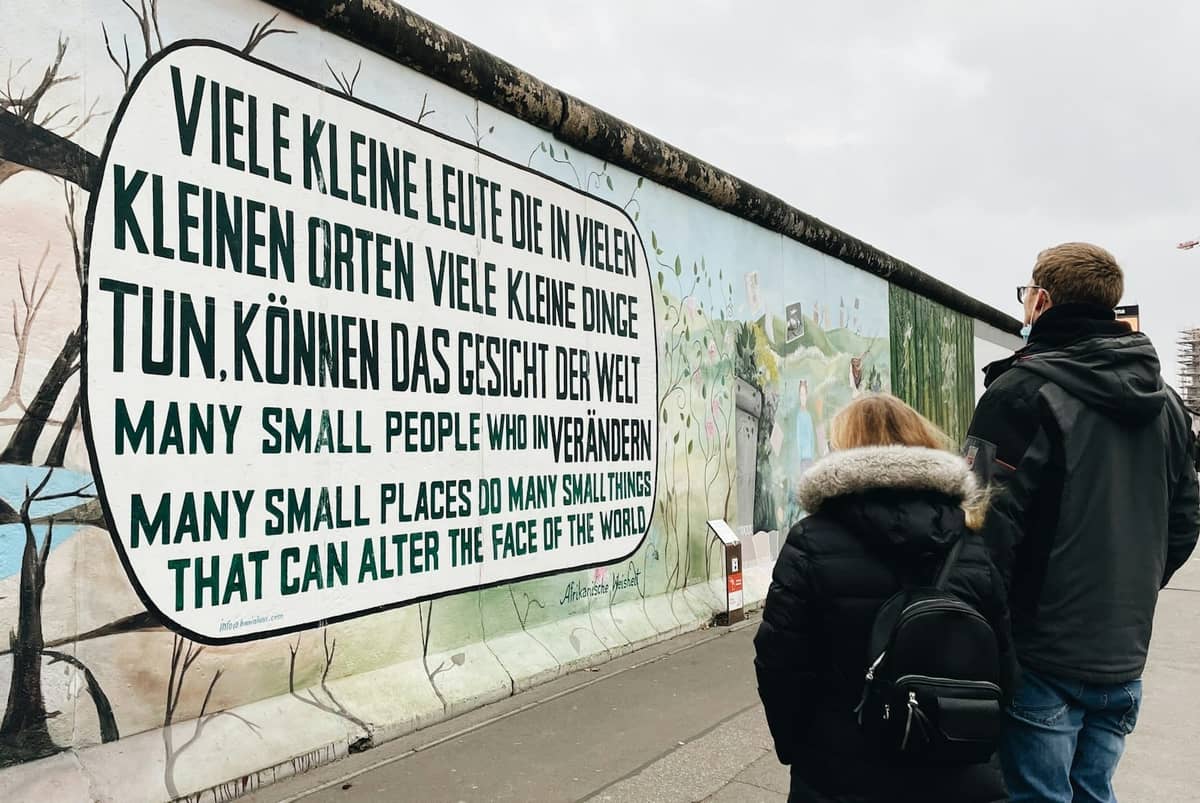
The East Side Gallery is the longest continuous remaining section of the Berlin Wall — around 1.3 km of concrete running along the Spree river in Friedrichshain. In 1990, 118 artists from 21 countries painted murals directly onto the surviving outer wall, transforming it into an open-air gallery. The most photographed image is Dmitri Vrubel's 'My God, Help Me to Survive This Deadly Love', depicting a kiss between Erich Honecker and Leonid Brezhnev.
The East Side Gallery is free and accessible 24 hours a day, every day of the year. It's located between the Ostbahnhof and Warschauer Straße S-Bahn stations, making it extremely convenient to reach. The honest assessment: it's impressive but very crowded at peak times, and the murals have been restored multiple times, meaning what you're seeing isn't entirely original paint. It's also frequently used as a backdrop for outdoor events and concerts, which can disrupt the atmosphere. Morning visits (before 9am) or evening walks offer a calmer experience.
⚠️ What to skip
Several stretches of the East Side Gallery have been compromised by 'souvenir' graffiti and tags added over the original murals. This is an ongoing preservation issue. Some sections are in noticeably worse condition than others. Manage expectations if you're coming specifically to see the artwork in pristine condition.
Other Major Berlin Wall Sites Across the City
The Berlin Wall didn't fall in one place, and its remnants aren't concentrated in one neighborhood. A serious visitor should know about several other significant locations spread across the city.
- Bornholmer Straße checkpoint This is where the Wall first opened on the night of 9 November 1989. A modest memorial marks the spot where GDR border guards, overwhelmed by crowds, lifted the barrier for the first time. Understated and worth the visit precisely because it doesn't feel like a tourist attraction.
- Mauerpark A former section of the death strip turned public park in Prenzlauer Berg. The small remaining Wall fragment here is heavily graffitied, and the park is famous for its Sunday flea market and open-air karaoke. More recreational than educational, but the original border geography is still readable in the landscape.
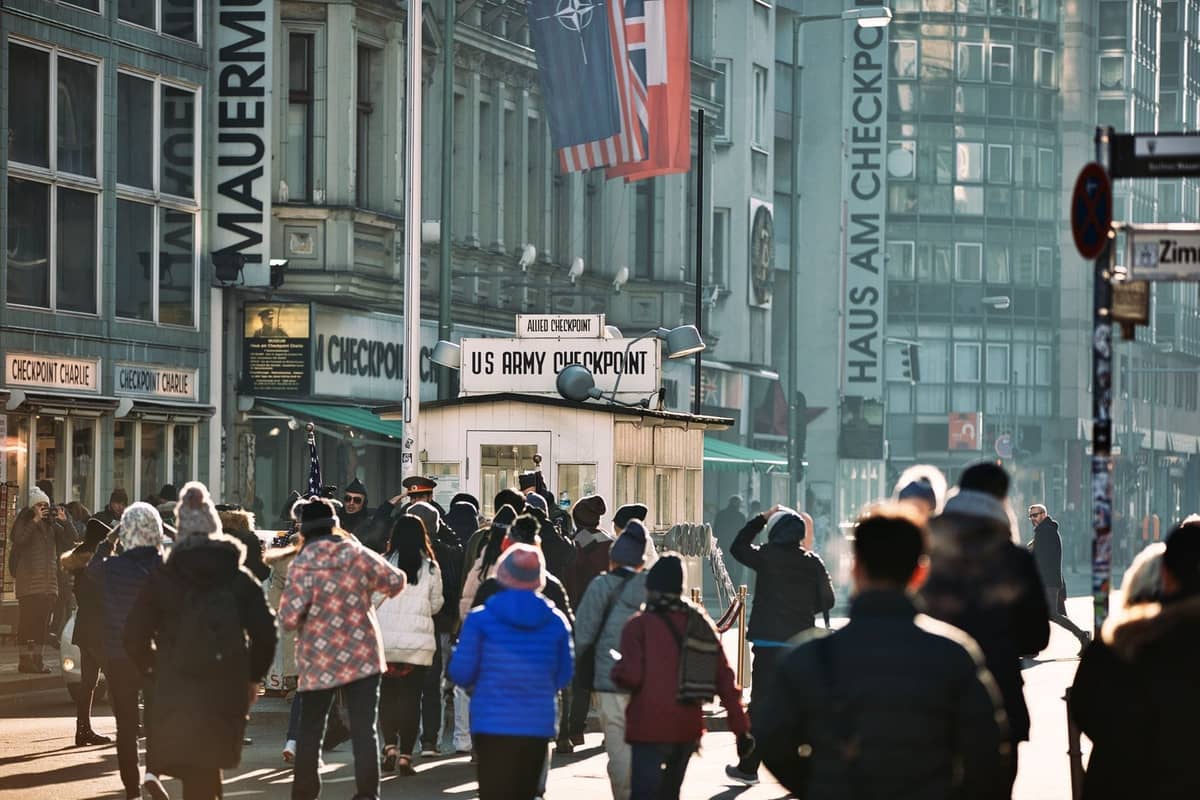
- Checkpoint Charlie The most famous Allied crossing point, now one of Berlin's most tourist-heavy spots. The reconstructed guardhouse in the middle of Friedrichstraße is a replica. The surrounding area is packed with souvenir shops. The adjacent Haus am Checkpoint Charlie museum has significant historical content but inconsistent curation. Approach with tempered expectations.
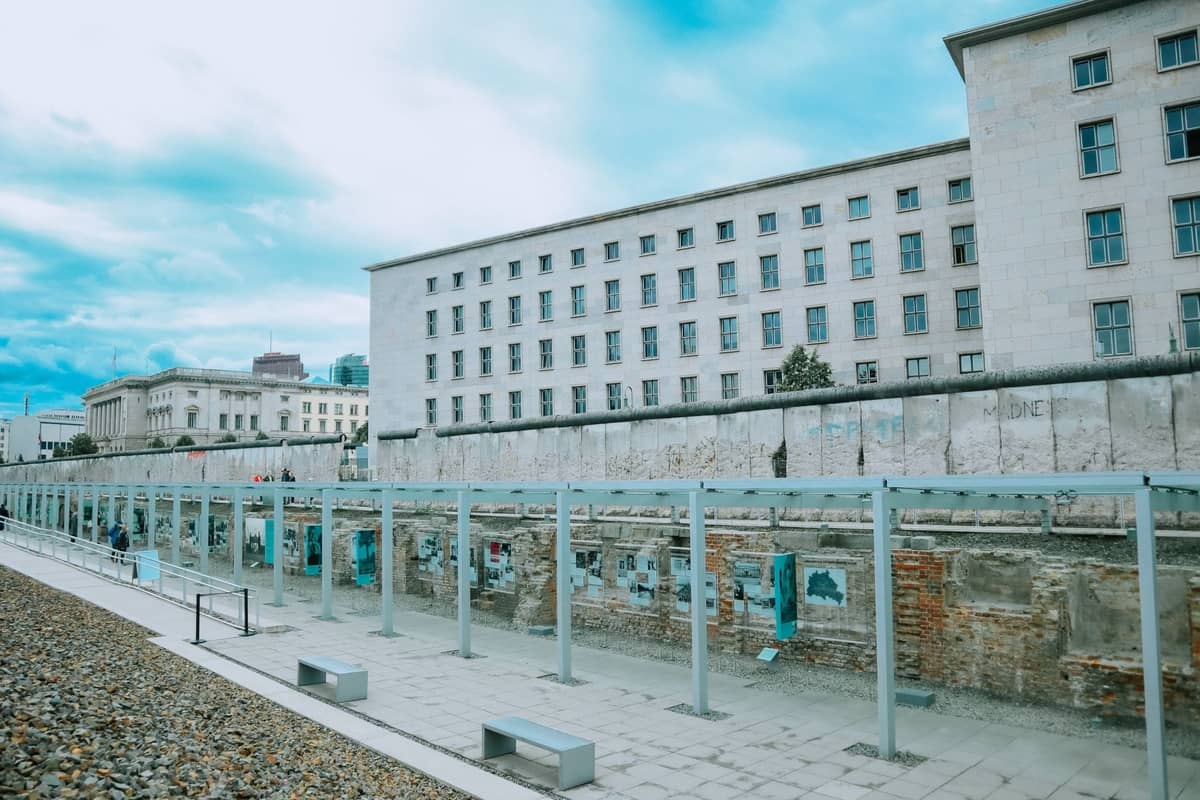
- Topography of Terror Built on the former site of SS and Gestapo headquarters, this free museum includes an outdoor section with a preserved Wall segment alongside an exhibition on Nazi terror — important context for understanding the political landscape that preceded and surrounded the Wall era.
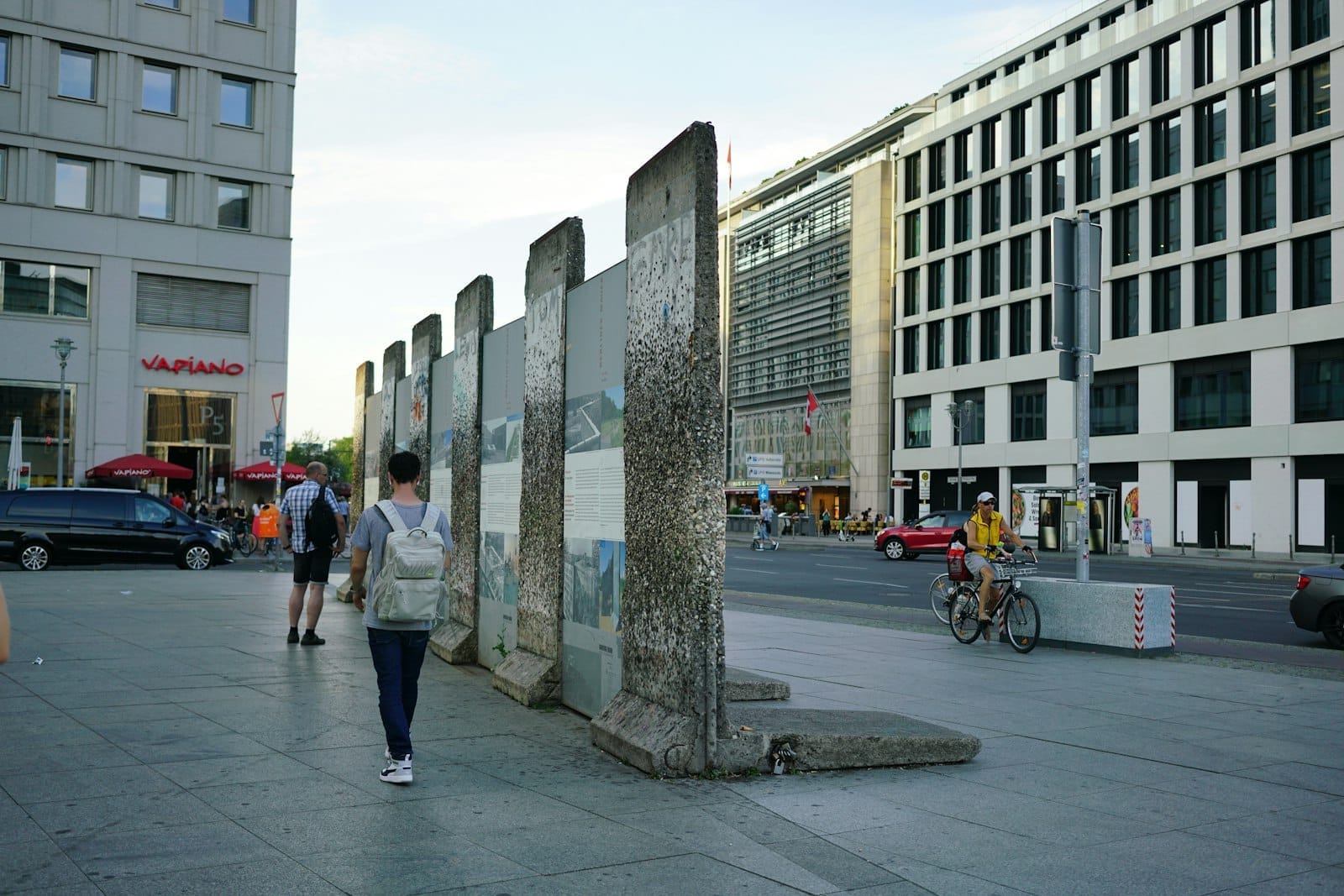
- Invalidenstraße / Kieler Eck A short but well-preserved stretch of original Wall in Mitte, less visited than the main sites and worth a detour for those wanting to see authentic material without crowds.
For visitors combining Wall history with broader Cold War context, the Palace of Tears at Friedrichstraße station is worth adding to the itinerary. It was the crossing point where East Germans said farewell to Western visitors — a deeply emotional space during the division years, now a permanent exhibition.
Planning Your Visit: Practical Logistics
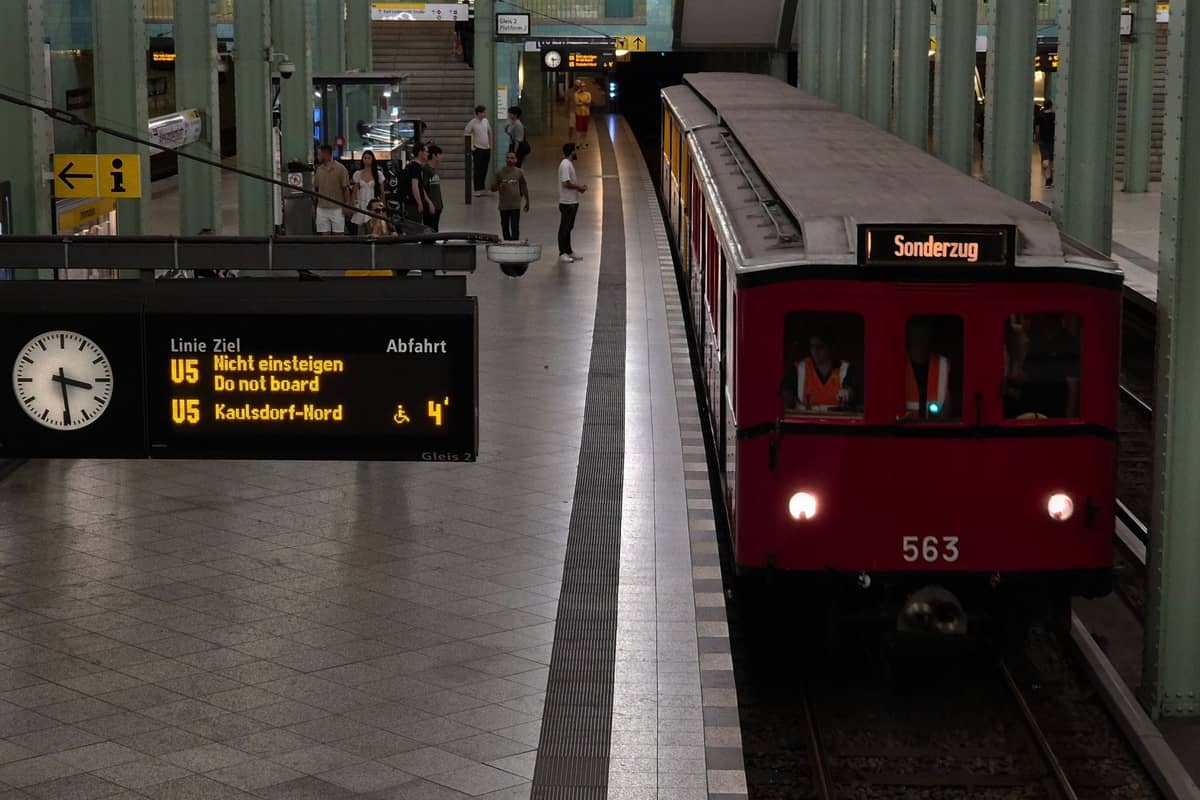
The main Wall sites are spread across several districts. Bernauer Straße is in Mitte / Wedding; the East Side Gallery is in Friedrichshain; Mauerpark is in Prenzlauer Berg. Berlin's BVG transit network connects all of them efficiently. The U8 stops at Bernauer Straße; the S-Bahn serves Ostbahnhof and Warschauer Straße for the East Side Gallery; the U2 reaches Eberswalder Straße for Mauerpark.
A dedicated Berlin Wall day covering Bernauer Straße, the East Side Gallery, and Checkpoint Charlie takes roughly six to eight hours at a comfortable pace, including transit time. If you're combining Wall sites with museums like the Topography of Terror or the DDR Museum, add another two to three hours. Wear comfortable shoes — you'll cover several kilometres on foot.
Seasonal considerations matter more than most guides admit. Summer (June to August) brings the largest crowds to all sites, particularly the East Side Gallery and Checkpoint Charlie. The outdoor Bernauer Straße memorial is excellent in summer but can feel exhausting in heat above 30°C. Winter visits to Bernauer Straße are atmospheric and uncrowded, but the documentation center hours may be shorter — check the Stiftung Berliner Mauer website before going. For more on timing your trip, see our guide on the best time to visit Berlin.
✨ Pro tip
The Stiftung Berliner Mauer offers an excellent free app and an online map showing all surviving Wall segments and memorial sites across the city. Download it before your visit — it's more useful than most paid audio guides and covers locations that don't appear in standard tourist itineraries.
Common Misconceptions Worth Clearing Up
Several persistent myths about the Berlin Wall cause confusion for visitors and occasionally lead to embarrassing errors in conversation with Berliners who lived through the era.
- The Wall was one concrete barrier False. It was a multi-layered border system: two main walls, a death strip with alarms and patrol roads, and hundreds of guard towers. What you see in photographs and at the East Side Gallery is only the outer western-facing wall.
- The Wall only divided East and West Berlin False. The 155 km barrier system encircled all of West Berlin, also cutting the city off from the surrounding GDR countryside. It wasn't just an urban divide — it turned West Berlin into an island inside East Germany.
- The Wall fell on 3 October 1990 False. The Wall effectively opened on 9 November 1989 after a GDR press conference announcement triggered crowds to gather at crossing points. Bornholmer Straße was the first to open. 3 October 1990 is the date of German reunification — a different event.
- Checkpoint Charlie is the most historically significant site Debatable at best. Checkpoint Charlie was a key military crossing point during the Cold War, but for understanding the Wall as it actually existed, Bernauer Straße is incomparably more informative. Checkpoint Charlie's current form is heavily commercialised.
If you want deeper historical context about the political forces that shaped Cold War Berlin, the German Historical Museum on Unter den Linden provides a comprehensive overview from Prussian history through reunification, with strong coverage of the GDR period.
FAQ
Is visiting the Berlin Wall free?
Yes, the main sites are free. The Berlin Wall Memorial on Bernauer Straße, the outdoor exhibition, and the Documentation Center are all free to enter. The East Side Gallery, Mauerpark Wall segment, and most outdoor memorial sites cost nothing. Public guided tours at Bernauer Straße cost around 5 EUR (reduced 3 EUR). The Haus am Checkpoint Charlie museum charges an entry fee — currently check their official site for current pricing.
How long does it take to visit the Berlin Wall?
The Bernauer Straße memorial alone takes two to three hours if you walk the full outdoor exhibition and visit the Documentation Center. The East Side Gallery takes 45 to 90 minutes to walk. A full day covering Bernauer Straße, East Side Gallery, and Checkpoint Charlie takes six to eight hours including transit. If you're short on time, prioritise Bernauer Straße over the other sites.
When was the Berlin Wall built and why?
The Berlin Wall was built starting 13 August 1961 by the East German government (GDR). The primary reason was to stop mass emigration to West Germany — over 3.5 million East Germans had left since 1949, causing a severe economic and demographic crisis for the GDR. Construction began overnight with barbed wire, quickly replaced by concrete.
What is the best Berlin Wall site to visit?
The Berlin Wall Memorial on Bernauer Straße is the most informative and historically complete site. It preserves an original stretch of the full border system including the death strip and a guard tower, and the free Documentation Center provides essential context. The East Side Gallery is more visually dramatic but offers less historical interpretation. Avoid treating Checkpoint Charlie as the main event — the current setup is heavily commercialised and the guardhouse is a replica.
Can you still see the Berlin Wall today?
Yes, though less of it survives than most people expect. After the Wall fell, most concrete was demolished quickly — Berliners were understandably eager to remove it. Today, key surviving sections include the East Side Gallery (1.3 km), the Bernauer Straße memorial stretch, a segment at the Topography of Terror, and smaller preserved pieces at locations like Invalidenstraße. A brass line of cobblestones also runs through Berlin's streets marking the original Wall path in many locations.