Palace of Tears (Tränenpalast): Berlin's Most Emotionally Powerful Free Museum
The Tränenpalast, or Palace of Tears, is the preserved border crossing hall where East and West Berliners said their goodbyes from 1962 to 1989. Now a free federal memorial and permanent exhibition, it is one of the most quietly affecting Cold War sites in Germany.
Quick Facts
- Location
- Reichstagufer 17, 10117 Berlin (Mitte), beside Friedrichstraße station
- Getting There
- S-Bahn, U-Bahn, and regional rail to Friedrichstraße (S1, S2, S25, S5, S7, S75, U6)
- Time Needed
- 1 to 2 hours
- Cost
- Free — no ticket required
- Best for
- History lovers, Cold War buffs, first-time visitors to Berlin
- Official website
- www.hdg.de/en/traenenpalast
What Is the Palace of Tears?
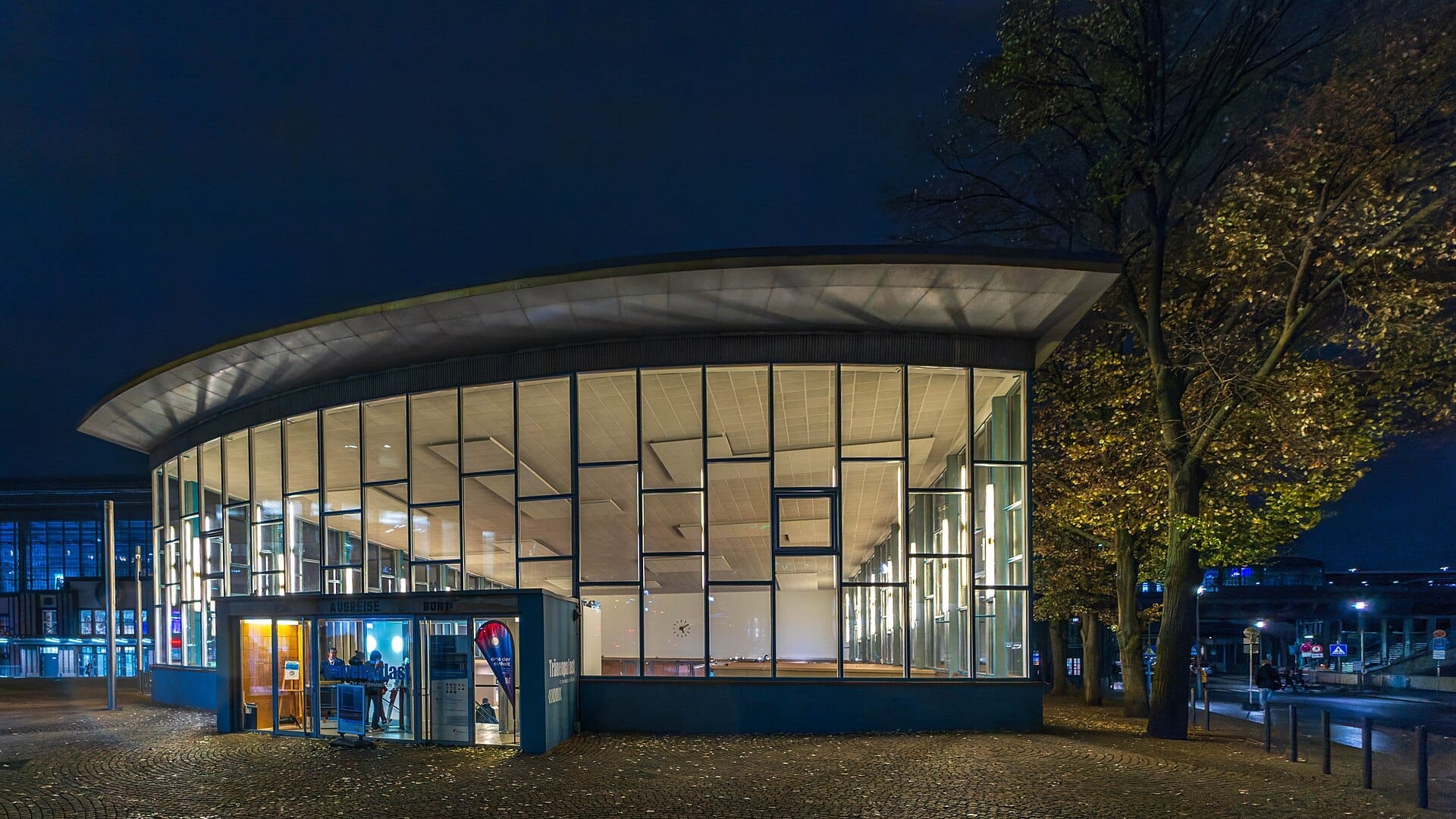
The Tränenpalast — German for 'Palace of Tears' — is a former East German border checkpoint pavilion attached to Friedrichstraße railway station in central Berlin. Between 1962 and 1989, this low glass-and-steel hall served as the compulsory exit point for Western visitors and transit passengers leaving East Berlin by train. Families, friends, and couples who had spent precious hours together had to say farewell here, not knowing when they would meet again. The tears shed on this platform gave the building its name.
Today the building operates as a permanent federal memorial under the Haus der Geschichte (House of History Foundation). The exhibition, officially titled 'Site of German Division,' opened in 2011 and presents the history of German division through original objects, personal testimonies, and interactive displays. Entry is free.
ℹ️ Good to know
Opening hours: Tuesday to Friday 09:00–18:00, Saturday and Sunday 10:00–18:00. Closed on Mondays. Verify hours before visiting, as special closures may apply.
The History Behind the Building
The structure was built in 1962, one year after the Berlin Wall divided the city on 13 August 1961. Friedrichstraße station, located in East Berlin, was one of the few transit points that allowed limited movement between the two halves of the city. Western visitors with day passes could cross into the East, but they were required to depart through this specifically constructed pavilion, separated from local East German residents who used the main station.
Architecturally, the building is a modest glass-and-concrete hall: functional and deliberately stripped of warmth. Its construction reflected GDR state priorities: control, surveillance, and the management of human movement rather than comfort. Border guards observed every departure through glass partitions. Luggage was searched. Documents were scrutinized. The contrast between the intimacy of farewell and the cold efficiency of the checkpoint made the space psychologically loaded in a way few modern travelers can easily imagine.
The building was listed as a protected historic monument in 1990, just before German reunification, preserving it from demolition. It became a federal memorial site in 2008. For deeper context on the broader history of the Wall itself, the Berlin Wall Memorial on Bernauer Strasse is the essential companion site — more outdoor and expansive, focused on the physical barrier itself.
Tickets & tours
Hand-picked options from our booking partner. Prices are indicative; availability and final rates are confirmed when you complete your booking.
Skip-the-line ticket for Gemaldegalerie Berlin
From 14 €Instant confirmationPanoramapunkt Berlin ticket with skip-the-line option
From 9 €Instant confirmation1-Hour Berlin Spree River Cruise with On-Board Guide
From 21 €Instant confirmationFree cancellationSamurai Experience Berlin skip-the-line ticket
From 15 €Instant confirmation
What the Exhibition Covers
The permanent exhibition is compact but dense. It is organized across several thematic sections covering the political division of Germany, the mechanics of the GDR border regime, the human cost of separation, and stories of individual crossings, escapes, and reunions.
Original artifacts carry real weight: a suitcase packed for a trip that became a permanent relocation, Stasi surveillance files, photographs of the farewell hall in use, and reconstructed border checkpoint elements including the narrow inspection corridor. Audio stations feature testimonies from people who crossed here — some in tears, some relieved, some terrified. The accounts are in German and English.
The exhibition does not dramatize or sensationalize. It documents, and trusts the material to speak for itself. That restraint is part of what makes it effective. If you want to understand how the surveillance apparatus actually worked, the Stasi Museum in Lichtenberg provides the institutional side, while this site captures the human experience at the border itself.
💡 Local tip
Audio guides are available in multiple languages and significantly deepen the experience. Plan enough time to listen to at least a few of the personal testimonies — they are the emotional core of the exhibition.
What It Feels Like to Visit
Arriving at the Tränenpalast is low-key, almost disorienting in its simplicity. The building sits directly beside the south exit of Friedrichstraße station, easily missed if you do not know to look for it. There is no dramatic entrance plaza or grand gate. A modest glass facade faces the street, and a small queue sometimes forms outside when school groups arrive mid-morning.
Inside, the hall retains its original proportions: wide, flat-ceilinged, and flooded with natural light through the glass walls. In the early morning on weekdays, the space can be near-silent except for the ambient audio from the exhibit stations. You can hear the distant rumble of trains above. That sound, combined with the preserved checkpoint booths and the quality of winter light through the old glazing, adds a layer of accidental atmosphere that no museum designer could manufacture.
By late morning on weekends, the hall fills with family groups and school tours, and the quieter register of the experience shifts considerably. For those who prefer to absorb the material slowly, Tuesday or Wednesday mornings are noticeably calmer. The exhibition is not large — you could walk through in 45 minutes — but most visitors who engage seriously with the testimonies and displays stay closer to 90 minutes.
💡 Local tip
Visit on a weekday morning for the most reflective experience. Weekend afternoons see the highest foot traffic, particularly during the spring and summer tourist season.
Practical Information for Your Visit
The Tränenpalast is at Reichstagufer 17, 10117 Berlin, immediately beside Friedrichstraße station. Friedrichstraße is served by multiple S-Bahn lines (S1, S2, S25, S5, S7, S75), U-Bahn line U6, and regional rail. It is one of the best-connected stations in central Berlin, making this site extremely easy to reach from almost any starting point in the city.
Admission is free. No booking is required. The entrance is at street level, making initial access straightforward, though visitors with specific accessibility needs should contact the Haus der Geschichte directly to confirm current barrier-free arrangements inside the exhibition.
The museum is located in Mitte, Berlin's central district, and fits naturally into a broader day that takes in the nearby Holocaust Memorial and Topography of Terror — both free and within reasonable walking or transit distance. Together, they form one of the most historically serious days you can spend in the city.
⚠️ What to skip
The museum is closed on Mondays. Special closures occur occasionally. Check the official Haus der Geschichte website before visiting, especially around public holidays.
Photography and Who This Is For
Photography is permitted in most areas of the exhibition. The glass walls and natural light make the main hall photogenic without any effort — particularly in the low-angle winter sun of late afternoon, when the checkpoint booth structures cast long shadows across the original floor. Flash photography near the original artifacts should be avoided as a courtesy.
The Tränenpalast is not an attraction that rewards a casual five-minute stop. It asks something of the visitor: attention, patience with text-heavy panels, and a willingness to sit with uncomfortable historical material. Those who approach it that way consistently find it one of the most affecting experiences in Berlin. Those looking for a quick photo stop or an interactive, child-focused museum will find it slow and text-heavy.
For visitors building a full Cold War itinerary in Berlin, the Cold War Berlin guide maps out the most significant sites across the city, including how to sequence them efficiently.
Families with young children should know that the content is heavy and the format is adult-oriented. There are no interactive child-level displays, and the subject matter requires context that most children under twelve may struggle to engage with meaningfully. It is not a bad experience for older teenagers, but it is decidedly not a family activity in the way that, for example, the DDR Museum a few minutes away is designed to be.
Insider Tips
- The building's original glass panels, installed in the 1960s, have a slight greenish tint that is most visible in morning light — a small but genuine artifact of GDR-era construction materials.
- The farewell booth reconstructions near the center of the hall are the most photographed elements, but the personal testimony audio stations on the perimeter walls are where the real weight of the exhibition lives. Do not skip them.
- Friedrichstraße station has several exits — follow signs specifically for 'Tränenpalast' from the south side of the station to avoid circling the building.
- The gift shop sells an unusually good selection of scholarly books on GDR history and German division in both German and English, including titles not readily available elsewhere in Berlin.
- If you plan to visit both this site and the Berlin Wall Memorial on the same day, allow at least half a day total. Combining heavy memorial sites back-to-back is emotionally demanding, and both deserve unhurried attention.
Who Is Palace of Tears (Tränenpalast) For?
- First-time visitors to Berlin who want to understand the city's divided past in a single, focused hour
- History and Cold War enthusiasts who want primary-source artifacts and personal testimony rather than reconstructed sets
- Travelers on a tight budget — the free admission and central location make it one of the highest-value experiences in the city
- Solo travelers or couples who prefer quiet, self-paced exploration over guided group tours
- Those combining a broader memorial circuit through Mitte with the Holocaust Memorial and Topography of Terror
Nearby Attractions
Other things to see while in Mitte:
- Alexanderplatz
Alexanderplatz sits at the geographical and historical heart of former East Berlin, a vast open square with roots going back to the 13th century. Today it's a free, always-open crossroads of transit, Cold War monuments, and everyday Berlin life — chaotic, fascinating, and impossible to avoid.
- Berlin Cathedral (Berliner Dom)
The Berlin Cathedral, or Berliner Dom, is Germany's largest Protestant church and one of the most architecturally striking buildings in the city. Built between 1894 and 1905, it anchors Museum Island with a dome you can climb, a royal crypt below ground, and a nave that rewards slow, unhurried attention.
- Berlin TV Tower (Fernsehturm)
Standing 368 metres above central Berlin, the Berliner Fernsehturm is the tallest structure in Germany and the tallest publicly accessible building in Europe. Its observation deck at 203 metres delivers an unobstructed 360-degree panorama of the city. This guide covers what you actually see up there, when crowds are worst, and whether the ticket price is justified.
- Berlin Victory Column (Siegessäule)
Rising from the centre of the Großer Stern roundabout in Tiergarten, the Siegessäule is one of Berlin's most recognisable monuments. At around 67 metres tall, it offers a sweeping panorama over the city's forest-park heart — but you earn the view with 285 steps and no lift.