Alexanderplatz: Berlin's Beating Central Square
Alexanderplatz sits at the geographical and historical heart of former East Berlin, a vast open square with roots going back to the 13th century. Today it's a free, always-open crossroads of transit, Cold War monuments, and everyday Berlin life — chaotic, fascinating, and impossible to avoid.
Quick Facts
- Location
- Alexanderplatz, 10178 Berlin, Mitte
- Getting There
- U2, U5, U8 / S3, S5, S7, S9, S75 / Tram M2, M4, M5, M6 / Bus 100, 248, 300
- Time Needed
- 30 minutes to 2 hours depending on what you do
- Cost
- Free to enter; individual attractions vary
- Best for
- First-time Berlin visitors, history enthusiasts, transit connections
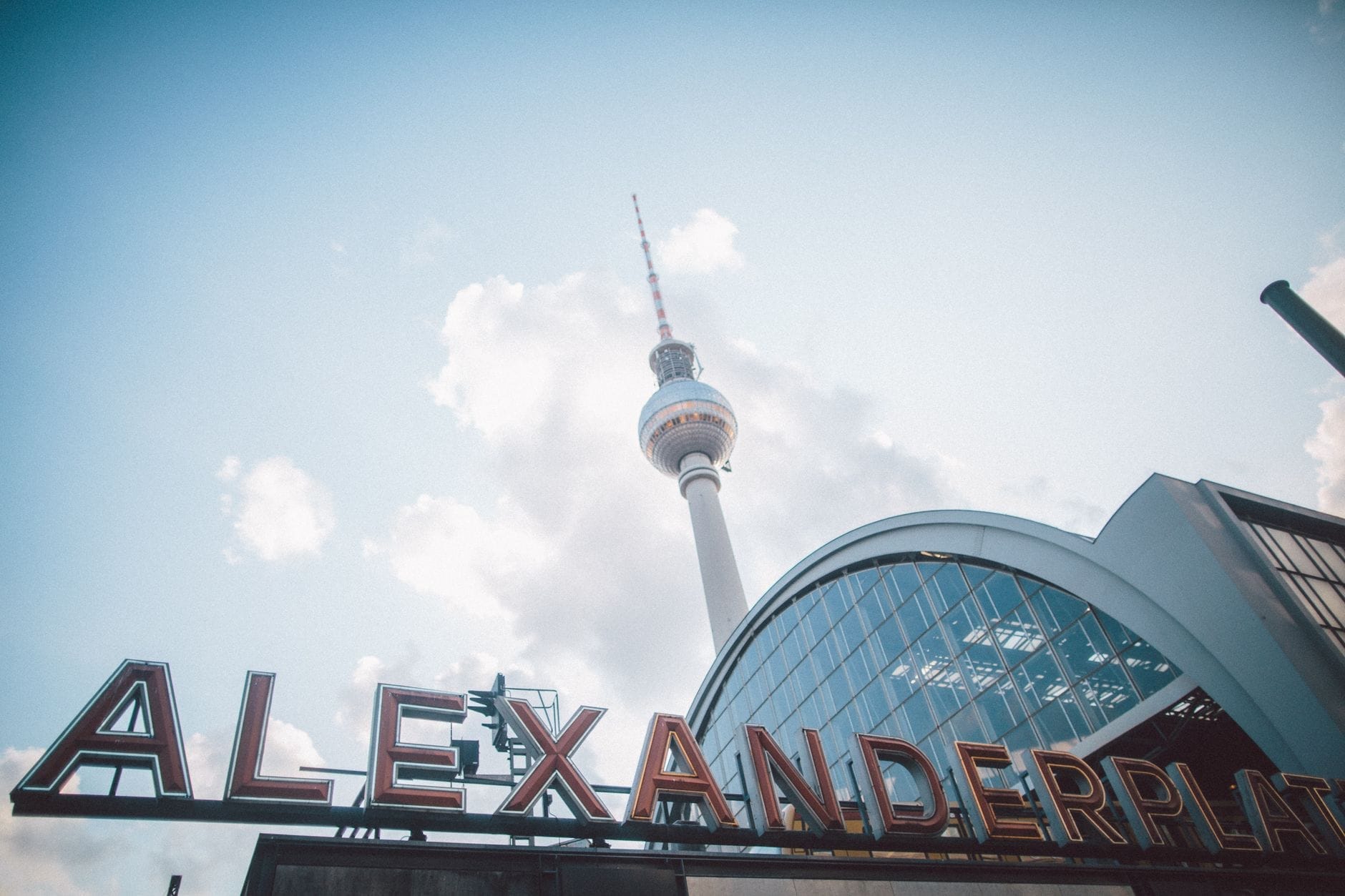
What Alexanderplatz Actually Is
Alexanderplatz is a large public square covering approximately 80,000 square metres in the Mitte district of central Berlin. It is open at all times, costs nothing to enter, and serves simultaneously as one of Europe's busiest transit junctions and one of Germany's most historically layered public spaces. For many visitors, it functions as a geographic anchor: the place they pass through several times a day without necessarily stopping long.
The square sits in what was once the capital of East Germany, and that context shapes everything you see here. The TV Tower, the World Time Clock, the Fountain of Friendship Between Peoples — these are not incidental decorations. They are deliberate symbols of a political system that no longer exists, preserved in the open air of a reunified city. Walking across Alex, as Berliners call it, means walking across a timeline.
ℹ️ Good to know
Alexanderplatz is free and open 24 hours a day, 7 days a week. The square itself requires no ticket. Some attractions on or near the square — such as the Berlin TV Tower — charge separate admission.
Seven Centuries of History Compressed Into One Square
The site's origins go back to the 13th century, when an open area in front of the Georgentor city gate served as a cattle and wool market on the northeastern edge of medieval Berlin. For centuries it functioned as a working space at the city's edge — messy, commercial, functional. The square received its current name in 1805 to commemorate a visit by Russian Tsar Alexander I, a diplomatic gesture that stuck across every subsequent reinvention of the city.
The square was heavily bombed during World War II and largely rebuilt under the GDR in the 1960s and 1970s as a showpiece of socialist urban planning. The East German government poured enormous ambition into Alex: wide pedestrian pavements, monumental architecture, and carefully staged public amenities designed to project stability and modernity. What remains today is mostly that GDR rebuild, which makes Alexanderplatz one of the most intact large-scale examples of East German city planning still functioning as everyday urban space.
The two monuments you should actually stop to look at are the World Time Clock (Urania Weltzeituhr), installed in 1969, and the Fountain of Friendship Between Peoples (Brunnen der Völkerfreundschaft), also from 1969. The clock displays the current time in cities around the world on a rotating drum mounted on a pillar of planetary rings — it remains technically functional and is a genuinely elegant piece of public design. Both monuments sit in the pedestrian zone and are free to approach. For deeper context on how Alexanderplatz fits into the broader arc of Berlin's divided history, the Cold War Berlin guide covers the GDR urban vision in useful detail.
Tickets & tours
Hand-picked options from our booking partner. Prices are indicative; availability and final rates are confirmed when you complete your booking.
Private Bike Tour from Berlin Zoo to Alexanderplatz
From 35 €Instant confirmationFree cancellationSkip-the-line ticket for Gemaldegalerie Berlin
From 14 €Instant confirmationPanoramapunkt Berlin ticket with skip-the-line option
From 9 €Instant confirmation1-Hour Berlin Spree River Cruise with On-Board Guide
From 21 €Instant confirmationFree cancellation
What You See and Feel at Different Times of Day
Early morning, before 8am, Alexanderplatz has a different character entirely. The transit hub is already moving — trains arriving, trams departing, shift workers crossing the square with takeaway coffee — but the retail areas are shuttered and the wide paved expanses feel almost contemplative. The TV Tower catches the early light. Pigeons own the fountain. It is one of the few times you can photograph the square without crowds.
Midday brings the full weight of foot traffic. The square connects so many transit lines that an enormous number of people pass through between 11am and 3pm, many of them not sightseeing at all but simply changing between U-Bahn, S-Bahn, trams, and buses. The noise level rises considerably — wheels on stone, announcement chimes from the transit stations below, the low hum of the shopping centres. If crowds bother you, this is the window to avoid.
Evening, especially in summer, is when the square softens. Commuter traffic thins, the light on the TV Tower turns amber, and small groups gather around the World Time Clock and the fountain. In December, the square hosts one of Berlin's largest Christmas markets, completely transforming its character with wooden stalls, mulled wine, and a ferris wheel that gives elevated views across Mitte.
💡 Local tip
For the best photographs of the TV Tower from Alexanderplatz, position yourself near the World Time Clock facing southwest. Early morning light hits the tower's sphere from the east, and there's no direct glare in your lens before around 9am.
Getting There and Getting Around
Alexanderplatz is served by three U-Bahn lines (U2, U5, U8), four S-Bahn lines (S5, S7, S9, S75), tram lines M4, M5, and M6, and multiple bus routes including the 100 and 200, which connect it to the Brandenburg Gate and western Mitte. Regional trains (RE and RB lines) also stop at the Alexanderplatz mainline station, making this one of the most connected single points in the entire city.
In practice, you will almost certainly pass through Alexanderplatz at some point during a Berlin trip regardless of whether you plan to visit it as an attraction. The square is a natural hub for transit across the city. If you're planning to use public transport extensively, the getting around Berlin guide explains BVG ticketing, zone boundaries, and which passes make sense for different itinerary types.
The square itself is a large, level open space with no significant steps or barriers in the main pedestrian zone. Transit stations vary in their elevator availability — the S-Bahn and mainline rail stations generally have better step-free access than some older U-Bahn platforms. If accessibility is a priority, check BVG's accessibility map before planning your route.
What's Around the Square Worth Your Time
The Berlin TV Tower (Fernsehturm) stands immediately adjacent to the square and is the most recognisable structure in the Berlin skyline. At 368 metres, it is the tallest structure in Germany. The observation deck at 203 metres offers panoramic views across the city and can be reached by lift. Tickets must be booked in advance, particularly in summer, as queues can be significant. The tower is separately priced and operated.
A short walk west along Karl-Liebknecht-Strasse brings you to the Berlin Cathedral and Museum Island, a UNESCO World Heritage Site containing five major museums including the Pergamon and the Neues Museum. This is one of the densest concentrations of world-class museum collections in Europe, and it is walkable from Alexanderplatz in under ten minutes.
Further west along Unter den Linden, Berlin's grand ceremonial boulevard leads toward the Brandenburg Gate and the Reichstag. The full walk takes about 25 minutes at a relaxed pace and passes the German Historical Museum, the Humboldt Forum, and the Neue Wache war memorial. It's one of the most informative walks in central Berlin if you do it with some awareness of what each building was used for across different political periods.
Is Alexanderplatz Worth Your Time?
Alexanderplatz is frequently described in travel content as more interesting for its historical weight than for its current atmosphere, and that is a fair reading. The square itself is not architecturally beautiful by conventional standards. The GDR-era buildings are functional and large-scaled. The retail presence — several shopping centres, fast food chains, a Kaufhof department store — feels ordinary by any city's standards. If you arrive expecting a picturesque European plaza with café terraces and cobblestones, you will be disappointed.
What Alexanderplatz offers instead is something more specific: the feeling of a place that has been politically reinvented multiple times and still hasn't fully resolved into a single identity. The World Time Clock stands next to a Saturn electronics store. The Fountain of Friendship Between Peoples is flanked by food kiosks. That tension is real and worth experiencing, particularly if you're interested in 20th-century European history.
Travellers with very limited time who are only interested in classical European sightseeing may find the square less rewarding than the nearby Museum Island or the Brandenburg Gate area. Visitors who are curious about socialist urbanism, the GDR, and how cities carry their political histories will find Alexanderplatz genuinely interesting. First-time visitors to Berlin should at minimum pass through once, even briefly, because it remains the most legible single piece of the city's divided past.
⚠️ What to skip
Alexanderplatz has a higher-than-average rate of petty theft and pickpocketing compared to many other central Berlin locations, particularly around the transit station exits and in busy markets. Keep bags closed and be aware of your surroundings in crowded periods.
Insider Tips
- The World Time Clock is not just decorative — it still functions accurately and displays time in cities across 148 different time zones. Locals use it as a meeting point, and 'meet me at the Weltzeituhr' is a phrase Berliners actually use.
- Bus line 100 starts at Alexanderplatz and travels directly through the central sightseeing corridor to the Brandenburg Gate and Zoo station. It costs the price of a standard BVG ticket and covers much of the same ground as paid bus tours, entirely by public transport.
- The square looks completely different in December when the Christmas market takes over. If you're visiting in winter, budget extra time — the market is one of the city's larger ones and takes 45 to 60 minutes to walk through properly.
- For a less crowded and more interesting perspective on the area, walk through the streets immediately behind the Rotes Rathaus (Red City Hall), which sits just south of the square. The building dates to the 1860s and is far more architecturally interesting than anything on the square itself.
- If you plan to visit the TV Tower, book tickets online before you arrive at the square. Walk-up queues in summer can exceed 90 minutes. The first observation slot of the morning is consistently the least crowded.
Who Is Alexanderplatz For?
- First-time visitors to Berlin who want to understand the city's East-West division through physical space
- History and architecture enthusiasts interested in GDR urban planning and Cold War Berlin
- Transit users — the square is the most connected single point in the eastern half of the city
- Families visiting in December, when the Christmas market adds colour and atmosphere to an otherwise austere space
- Anyone combining a visit to Museum Island or the TV Tower with a broader Mitte walking itinerary
Nearby Attractions
Other things to see while in Mitte:
- Berlin Cathedral (Berliner Dom)
The Berlin Cathedral, or Berliner Dom, is Germany's largest Protestant church and one of the most architecturally striking buildings in the city. Built between 1894 and 1905, it anchors Museum Island with a dome you can climb, a royal crypt below ground, and a nave that rewards slow, unhurried attention.
- Berlin TV Tower (Fernsehturm)
Standing 368 metres above central Berlin, the Berliner Fernsehturm is the tallest structure in Germany and the tallest publicly accessible building in Europe. Its observation deck at 203 metres delivers an unobstructed 360-degree panorama of the city. This guide covers what you actually see up there, when crowds are worst, and whether the ticket price is justified.
- Berlin Victory Column (Siegessäule)
Rising from the centre of the Großer Stern roundabout in Tiergarten, the Siegessäule is one of Berlin's most recognisable monuments. At around 67 metres tall, it offers a sweeping panorama over the city's forest-park heart — but you earn the view with 285 steps and no lift.
- Brandenburg Gate
The Brandenburg Gate stands at the heart of Berlin as both a Neoclassical architectural landmark and a symbol of the city's turbulent modern history. Free to visit at any hour, it rewards early risers with quiet grandeur and rewards night visitors with dramatic floodlighting. Here is everything you need to make the most of your visit.