Getting Around Berlin: The Complete Transport Guide
Berlin has one of Europe's most comprehensive public transport networks, but it comes with its own rules, zones, and quirks. This guide covers everything from ticket prices and fare zones to night buses, cycling, and getting in from the airport — so you spend less time figuring out logistics and more time actually exploring the city.
Plan and book this trip
Tools from our partner Travelpayouts help you compare flights and hotels. If you book through them, we may earn a commission at no extra cost to you.
Flights
Hotels map
TL;DR
- Berlin's public transport uses three tariff sub-areas (A, B, C) combined into fare zones AB and ABC under the VBB system, operated by BVG and S-Bahn Berlin.
- A single AB ticket costs €4.00; a 24-hour AB pass is €11.20 — good value if you make three or more trips in a day.
- Zone C is required for BER Airport and Potsdam — see our day trips from Berlin guide if you're heading further out.
- Never board without validating your ticket — inspectors are frequent and fines are steep.
- Cash is no longer accepted on Berlin buses; pay by card, mobile, or buy tickets at machines before boarding.
Understanding Berlin's Fare Zones
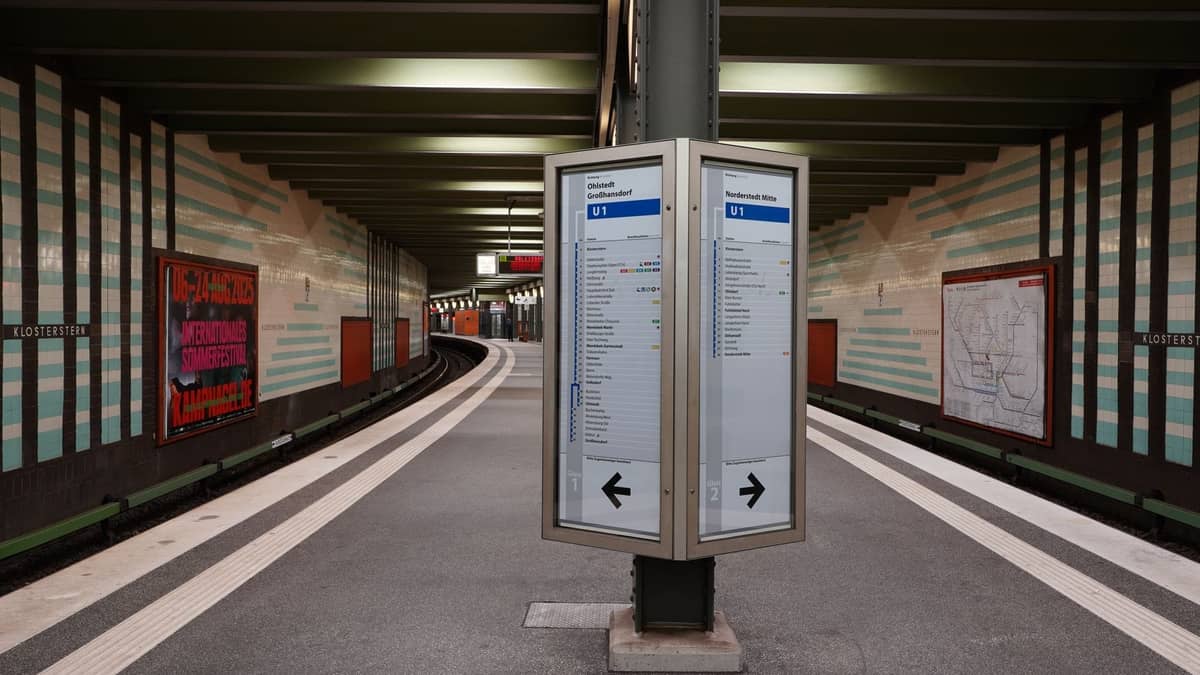
The entire Berlin public transport network operates under the Verkehrsverbund Berlin-Brandenburg (VBB) fare system. Everything — U-Bahn, S-Bahn, trams, buses, and regional rail — uses the same tickets, and those tickets are structured around three concentric zones. Getting the zone right before you buy is the single most important thing to understand about getting around Berlin.
- Zone A The innermost zone, covering everything inside the S-Bahn ring. This includes central areas like Mitte, Prenzlauer Berg, Friedrichshain, Kreuzberg, and most major tourist sites.
- Zone B Everything within Berlin's city limits but outside the S-Bahn ring — outer districts like Spandau, Tempelhof, and most of Charlottenburg. An AB ticket covers zones A and B together and is sufficient for nearly all city travel.
- Zone C The surrounding Brandenburg region. You need an ABC ticket to reach Berlin Brandenburg Airport (BER), Potsdam, and Sachsenhausen memorial. Many visitors underestimate this and get caught out. Note: Wannsee station is within Berlin (Zone B) and only requires an AB ticket.
⚠️ What to skip
An AB ticket does NOT cover BER Airport or Potsdam. Both are in Zone C. Always buy an ABC ticket for airport journeys or day trips to Potsdam. Ticket inspectors actively patrol airport-bound trains.
Tickets, Passes, and What They Cost
Berlin's ticketing is flexible enough for any length of stay, from a quick afternoon to a week-long trip. Prices listed here are for AB zones unless stated otherwise — verify current fares at BVG.de before your trip, as prices do change.
- Single ticket (Einzelfahrschein) From €4.00. Valid for 2 hours of travel in one direction, with unlimited transfers. No return journeys.
- Short trip ticket (Kurzstrecke) From €2.80. Valid for up to 3 stops on U-Bahn or S-Bahn, or 6 stops on bus or tram. No transfers. Good for one or two quick hops.
- 24-hour ticket (Tageskarte) AB: from €11.20. ABC: from €13.70. Starts from first validation and covers unlimited travel for 24 hours. Break-even after about 3 single trips.
- 7-day ticket (7-Tage-Karte) AB: €37.70. ABC: €46.00. The best-value option for stays of 4 days or more when you factor in daily usage.
- Deutschlandticket €58/month (from January 2025). A nationwide monthly pass covering all local and regional public transport across Germany — including all of Berlin's network. Worth it only if you're staying 3+ weeks or combining multiple German cities.
- Children Under 6 travel free. Ages 6–14 pay reduced fares on all ticket types.
Visitors planning to use public transport extensively should also look at the Berlin Welcome Card, which bundles unlimited transport with museum discounts. It's not always cheaper than a standalone transport pass, but if you're hitting multiple museums, the math often works in your favour.
💡 Local tip
Buy tickets at yellow BVG machines on platforms, via the BVG Ticket-App, the S-Bahn app, or VBB app. On buses, you can pay by card or mobile directly with the driver — but cash is no longer accepted anywhere on Berlin's bus network.
The Transport Network: U-Bahn, S-Bahn, Trams, and Buses
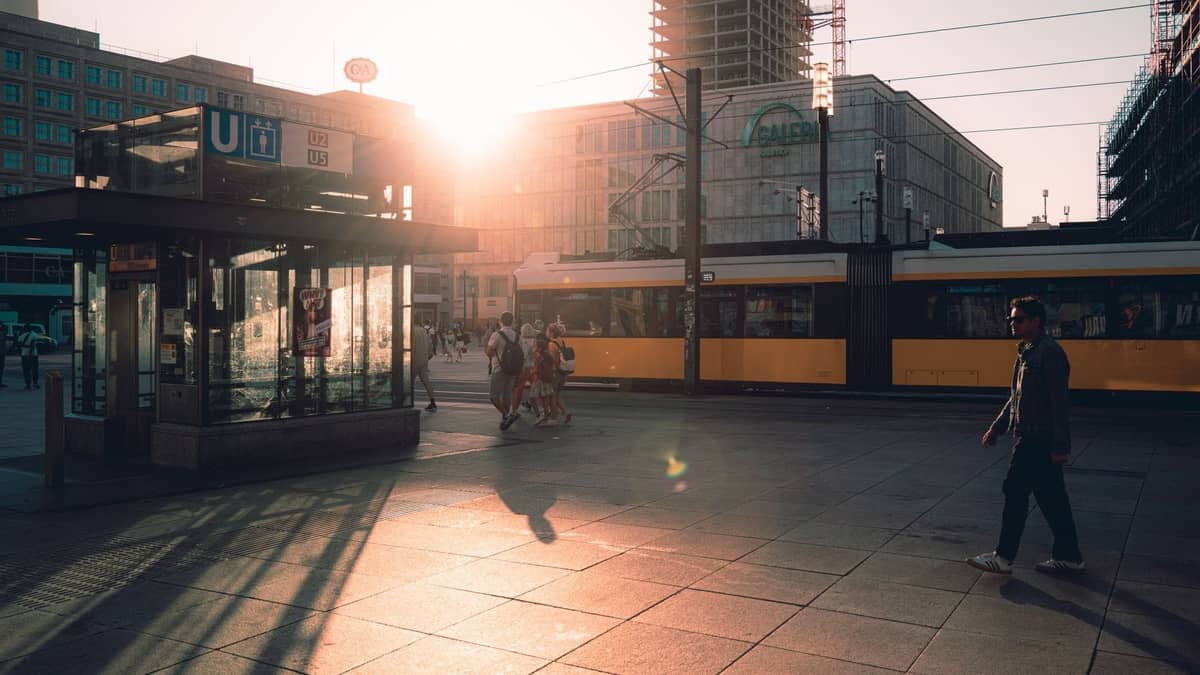
Berlin's network is made up of four main modes, each with a distinct role. Understanding which one to use when saves real time.
The U-Bahn (underground metro) is the fastest option for most central journeys. It runs on 10 lines (U1–U9, with gaps), with trains arriving every 3–5 minutes during peak hours, around every 10 minutes during the day, and every 15 minutes at night on weekdays. On Friday and Saturday nights, the U-Bahn runs continuously — a critical detail for anyone planning a night out. The U-Bahn covers the central districts well but has limited reach into outer areas.
The S-Bahn (suburban rail) forms a circular ring around the city centre and extends far into the suburbs and surrounding region. It's the fastest way to cross from east to west (the Stadtbahn line runs from Alexanderplatz through the centre to Charlottenburg in under 15 minutes) and the only rail route to BER Airport. The S-Bahn is operated separately from the U-Bahn by S-Bahn Berlin GmbH, but the same VBB tickets cover both.
Trams operate almost exclusively in the former East Berlin — covering Prenzlauer Berg, Friedrichshain, and Mitte north of the Spree. If you're staying in the east, trams are often the most direct surface-level connection. They're slower than the U-Bahn but more scenic and easier to board for short trips.
Buses cover the entire city and fill gaps where rail doesn't reach. The network is dense in central areas and sparser in outer districts. Express bus routes (marked with X) skip most stops and are significantly faster for longer journeys. Night buses (N-prefix) cover most routes during the overnight gap on weeknights when U-Bahn and S-Bahn are reduced.
Getting from BER Airport to the City Centre
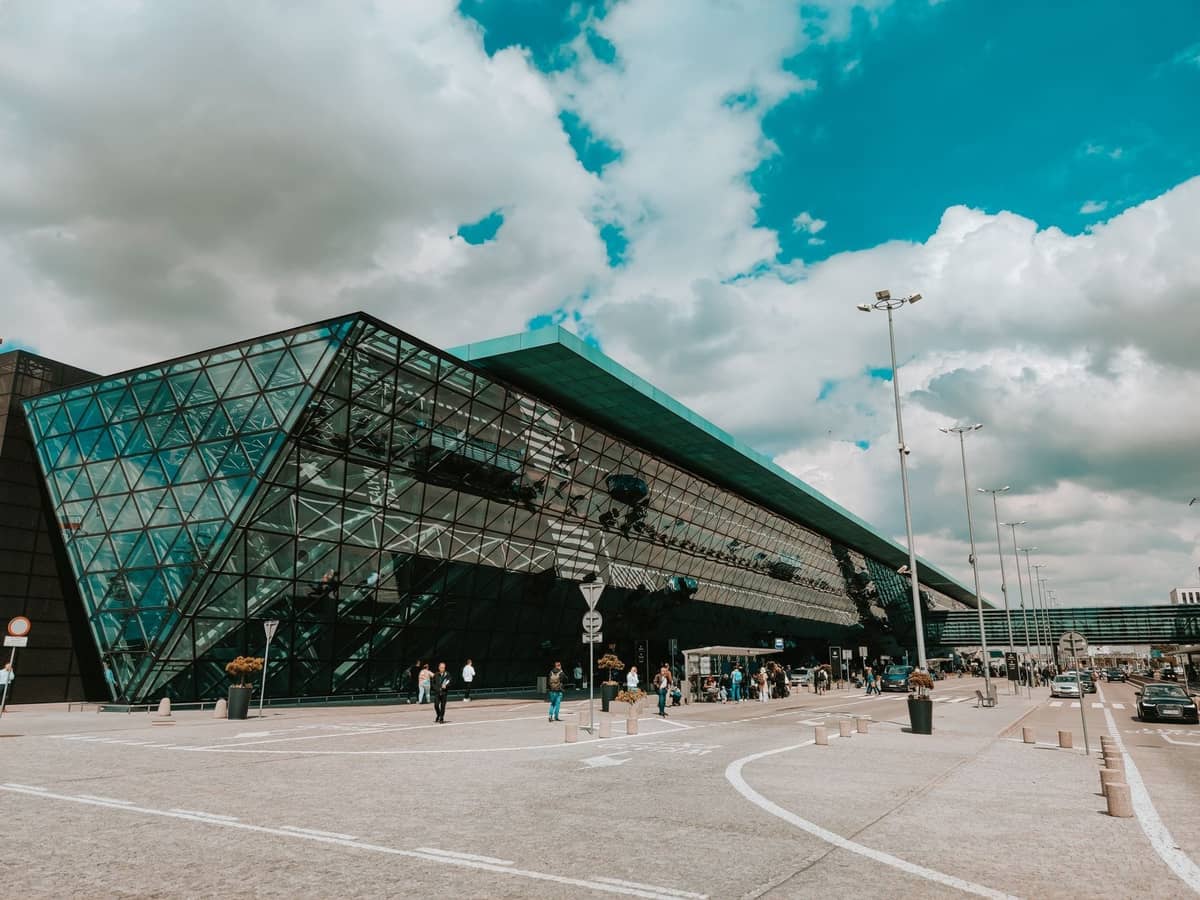
Berlin Brandenburg Airport (BER) is the city's single international airport, opened in October 2020 after years of delay. It sits in Zone C, roughly 18 km southeast of the city centre. Several transit options connect it to the city, and the right choice depends on where you're staying.
- S-Bahn S9 and S45 The S9 runs to Ostkreuz and then west through the Stadtbahn to central stations including Hauptbahnhof. Journey time to Alexanderplatz is around 35–40 minutes. Requires an ABC ticket (from around €4.80 for a single). Runs frequently and is the most reliable rail option.
- Regional Express RE7 and RB14 Faster intercity-style trains stopping at major city stations including Ostbahnhof and Hauptbahnhof. Reaches the centre in around 30 minutes. Also covered by the ABC zone ticket — no surcharge needed.
- Bus routes X7 and X71 Connect BER to U-Bahn stations (Rudow for X7, Zwickauer Damm for X71), where you can then continue by metro. Slower overall but useful if you're staying in south Berlin.
- Taxi and ride-hailing Taxis are metered. Expect around €40–55 for a standard ride to central Berlin, more in heavy traffic. Apps like FreeNow and Uber operate in Berlin.
✨ Pro tip
If you arrive at BER and already have a 7-day ABC ticket or Berlin Welcome Card, you're covered from the moment you land. Buying an ABC day ticket at the airport machines is perfectly fine — just make sure to validate it before boarding the platform, not once you're on the train.
Cycling, Walking, and Other Ways to Get Around
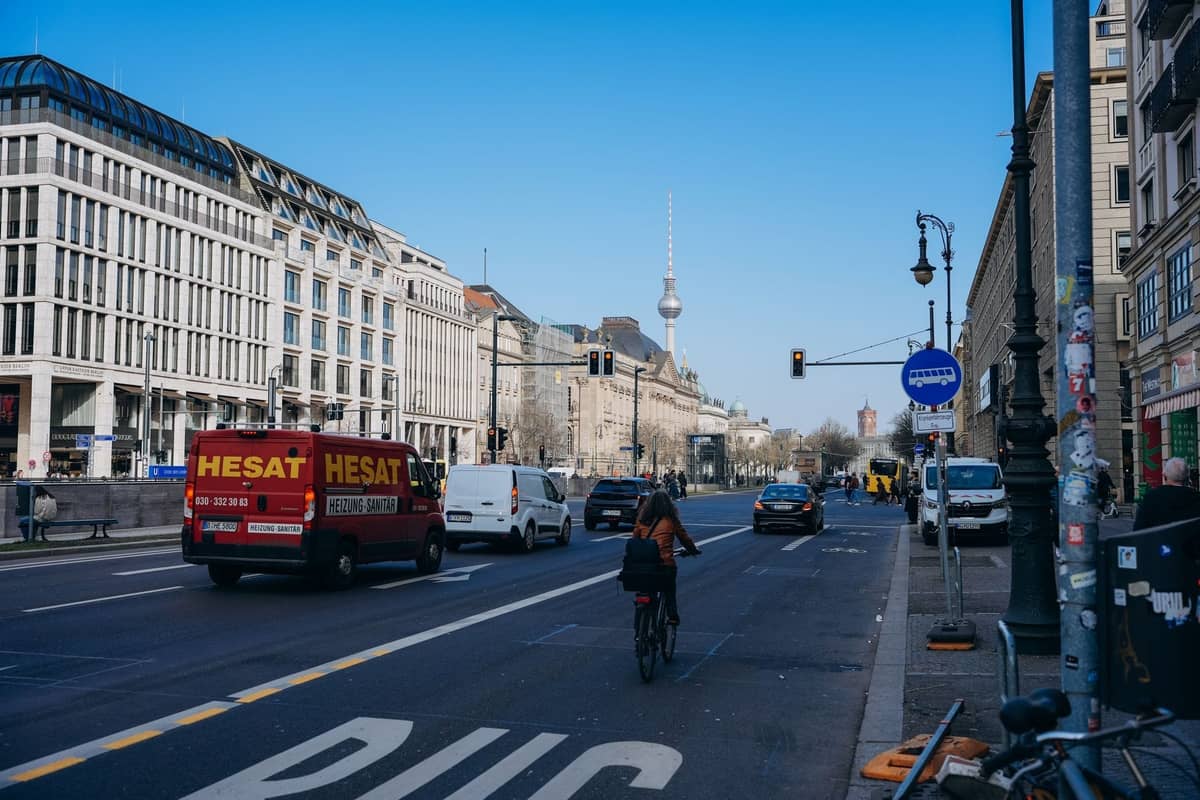
Berlin is a generally flat city across its roughly 891 km², which makes cycling a genuinely practical transport option rather than just a tourist activity. Dedicated cycle lanes run along most major roads, and the city's grid layout in many districts makes navigation intuitive. Cycling is particularly effective for short-to-medium distances in central and eastern Berlin, where the road layout and dedicated infrastructure are strongest.
Rental bikes are widely available through dock-based and dockless systems. Lime and Nextbike both operate in Berlin, and many hotels rent bikes directly. For visitors focused on specific areas, cycling between sites like the East Side Gallery, Mauerpark, and Tiergarten is practical and enjoyable, especially in summer. Note that cycling on footpaths where no cycle lane is marked is illegal in Germany.
Walking works well within individual neighbourhoods but Berlin is large enough that crossing districts on foot takes significant time. The distance from Alexanderplatz to the Brandenburg Gate, for example, is around 2 km — manageable — but from Charlottenburg to Friedrichshain is over 10 km, which is where public transport earns its keep. Budget for time honestly when planning walking-heavy itineraries.
Practical Rules, Common Mistakes, and Local Tips
Berlin's transport system rewards preparation and punishes assumptions. These are the rules and habits that catch out first-time visitors most often.
- Validate every paper ticket Paper tickets must be stamped at the yellow or red validation machines before you board — on the platform or inside the tram/bus. An unvalidated ticket is treated as no ticket. Inspectors (Kontrolleure) dress in plain clothes and boards unexpectedly. Fines start at €60.
- Zone C is non-negotiable BER Airport, Potsdam, Wannsee, and Sachsenhausen are all Zone C. Riding on an AB-only ticket into Zone C is a common mistake that results in fines regardless of whether you knew the rule.
- No cash on buses Berlin buses have stopped accepting cash entirely. Pay by contactless card, mobile payment, or buy a ticket at a machine before boarding.
- Night transport on weekends On Friday and Saturday nights, U-Bahn and S-Bahn run all night. On Sunday to Thursday nights, service reduces after around 01:30, replaced by N-prefix night buses running roughly every 30 minutes.
- Bikes on public transport Bikes are allowed on U-Bahn and S-Bahn with a separate bicycle ticket (Fahrrad-Einzelticket), but not during peak morning and afternoon hours. Trams and buses generally do not allow bikes.
- Google Maps and Apple Maps work well Both navigate Berlin's transit accurately and update for disruptions. The BVG Fahrinfo app is the official planner and includes real-time alerts not always reflected in third-party apps.
If you're planning to combine getting around with exploring Berlin's best districts and attractions, the things to do in Berlin guide lays out the top experiences by area, which helps you cluster activities and minimise unnecessary transit time. For budget-conscious travellers, the Berlin on a budget guide covers how to stretch a day ticket across a full programme of free and low-cost activities.
ℹ️ Good to know
Berlin's public transport information is available in English at BVG.de and VisitBerlin.de. For real-time disruptions, check the BVG app or the S-Bahn Berlin website before heading out — works on the network are frequent and can affect specific lines without warning.
FAQ
Is an AB ticket enough to get around Berlin as a tourist?
For most tourist activities within the city, yes — an AB ticket covers all U-Bahn, S-Bahn, tram, and bus journeys inside Berlin's city limits, including Wannsee. However, you'll need an ABC ticket for BER Airport, Potsdam, and Sachsenhausen memorial. If those are on your itinerary, upgrade to ABC.
What is the cheapest way to get from BER Airport to central Berlin?
The Airport Express (FEX) or S-Bahn S9 are the cheapest options, requiring only an ABC single ticket (around €5.00). The FEX reaches Hauptbahnhof in about 23 minutes via Potsdamer Platz and Südkreuz. The S9 takes longer but serves more intermediate stops. Taxis cost roughly €40–55 and vary with traffic.
Do I need to validate my ticket every time I board?
You validate a paper ticket once before your first journey — it's then valid for 2 hours of travel in one direction. Day and weekly passes are validated once at first use and remain valid for their full duration. Never board with an unvalidated paper ticket; fines are €60 and up.
Does Berlin public transport run all night?
On Friday and Saturday nights, most U-Bahn and S-Bahn lines run throughout the night. On Sunday through Thursday, U-Bahn and S-Bahn reduce after around 01:30, and night buses (N-prefix lines) take over, running roughly every 30 minutes on major routes.
Is the Berlin Welcome Card worth it for transport?
It depends on how many museums you plan to visit. The Welcome Card includes unlimited AB or ABC transport plus discounts at dozens of attractions. If you're doing 3+ paid museum visits alongside heavy transit use, it can work out cheaper than buying transport and entry separately. Run the numbers for your specific itinerary before committing.