Berlin Street Art Guide: Best Murals, Graffiti & Where to Find Them
Berlin is one of the world's great open-air galleries, with significant clusters of murals and graffiti across Friedrichshain, Kreuzberg, Mitte, and beyond. This guide covers the best locations, iconic individual pieces, the URBAN NATION museum, Teufelsberg, and everything you need to plan a serious street art itinerary.
Plan and book this trip
Tools from our partner Travelpayouts help you compare flights and hotels. If you book through them, we may earn a commission at no extra cost to you.
Flights
Hotels map
TL;DR
- Berlin's street art scene spans multiple districts — Friedrichshain, Kreuzberg, and Mitte are the densest zones, but Schöneberg and Grunewald also have major sites.
- The East Side Gallery is a 1.3 km curated memorial on the Berlin Wall — not random graffiti — best visited before 9am to avoid crowds.
- URBAN NATION Museum (Bülowstraße 97, Schöneberg) offers free entry and rotating facade commissions year-round.
- Teufelsberg, the abandoned NSA listening station in Grunewald forest, charges a small entry fee and closes at sunset — plan accordingly.
- Most Berlin street art is technically illegal but widely tolerated — understanding that distinction matters when exploring the city.
Why Berlin Became a Street Art Capital
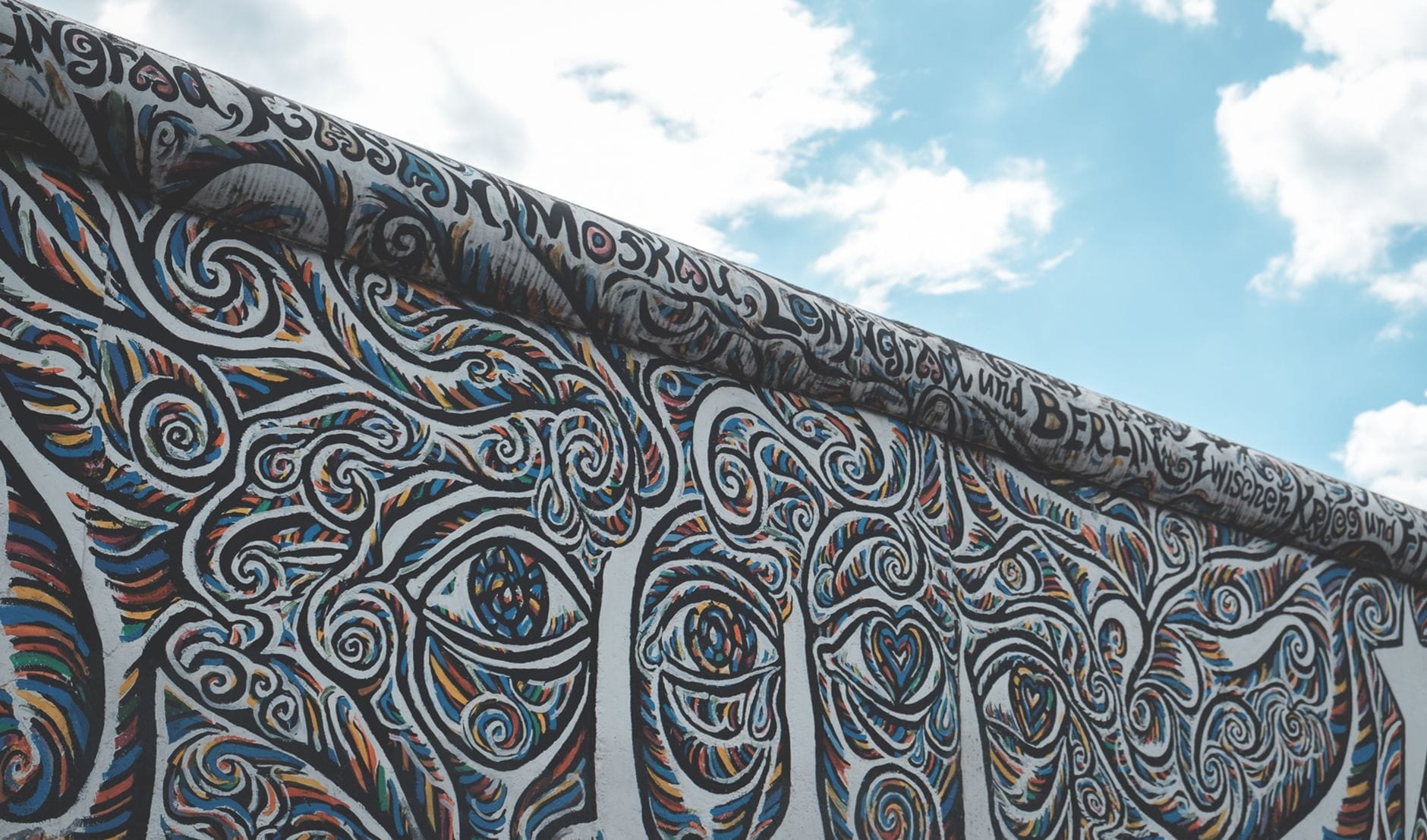
No city in Europe has a more direct physical connection between street art and political history. After the Berlin Wall fell in November 1989, kilometers of concrete suddenly became a canvas. That initial explosion of post-reunification expression set a precedent: in Berlin, walls are meant to carry messages. The city's post-war geography — vast swaths of derelict industrial land, abandoned warehouses in the former East, underdeveloped lots in Kreuzberg and Friedrichshain — gave artists physical space that simply doesn't exist in Paris or London.
Through the 1990s and 2000s, Berlin's low rents attracted artists from across Europe and beyond. The authorities enforced graffiti laws inconsistently, and whole neighbourhoods developed an unspoken tolerance for large-scale murals. By the 2010s, internationally recognized artists including Blu, Victor Ash, and ROA had created landmark pieces here. Today, Berlin's street art ranges from throwaway tags to gallery-commissioned murals that can take weeks to complete — and everything in between.
The Essential Locations: Where to Go and What to Expect
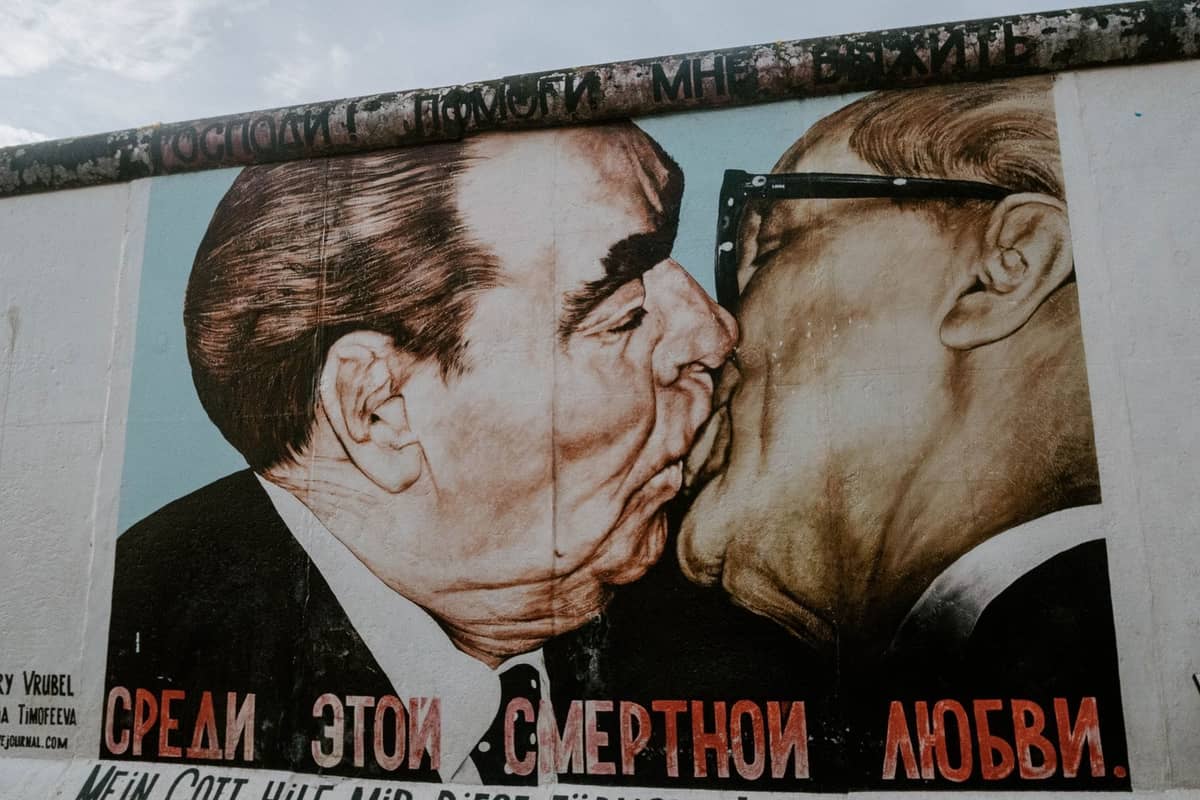
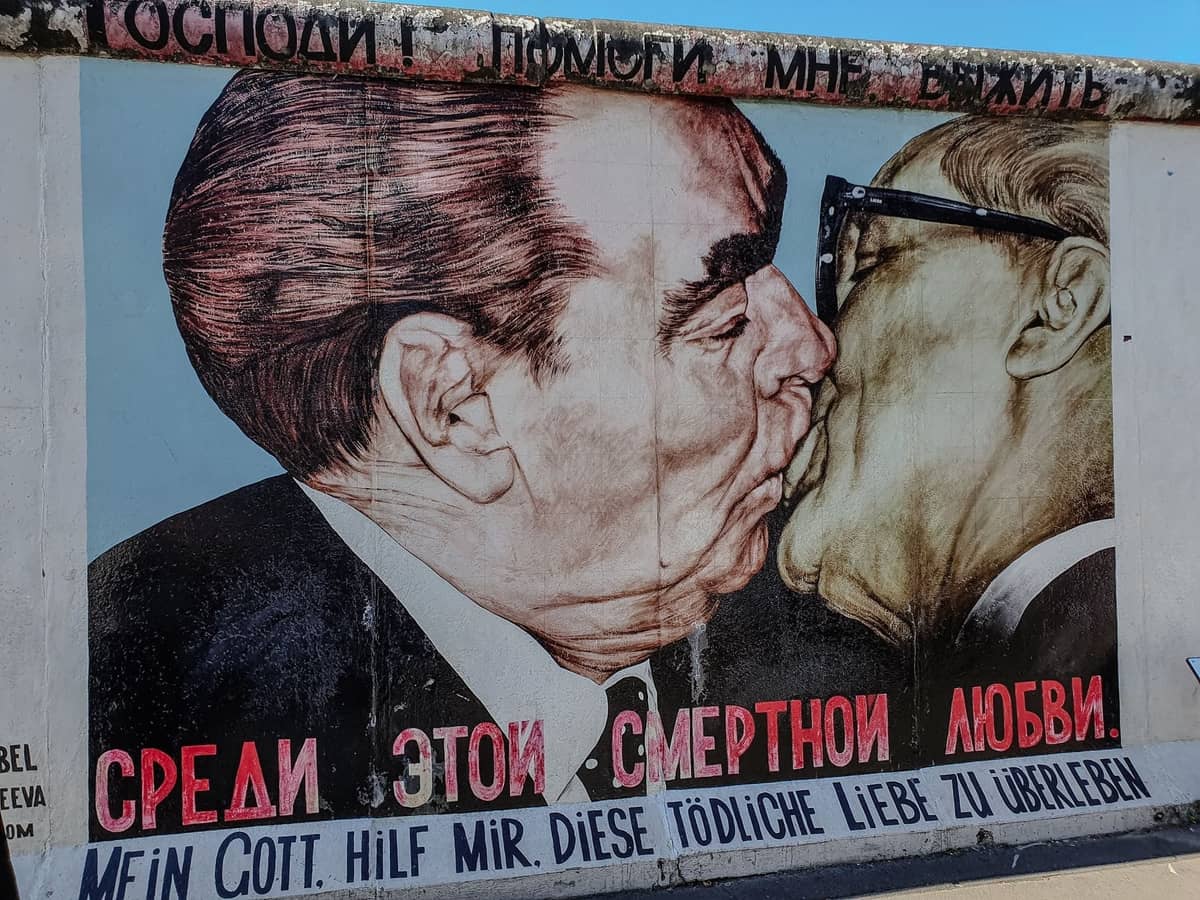
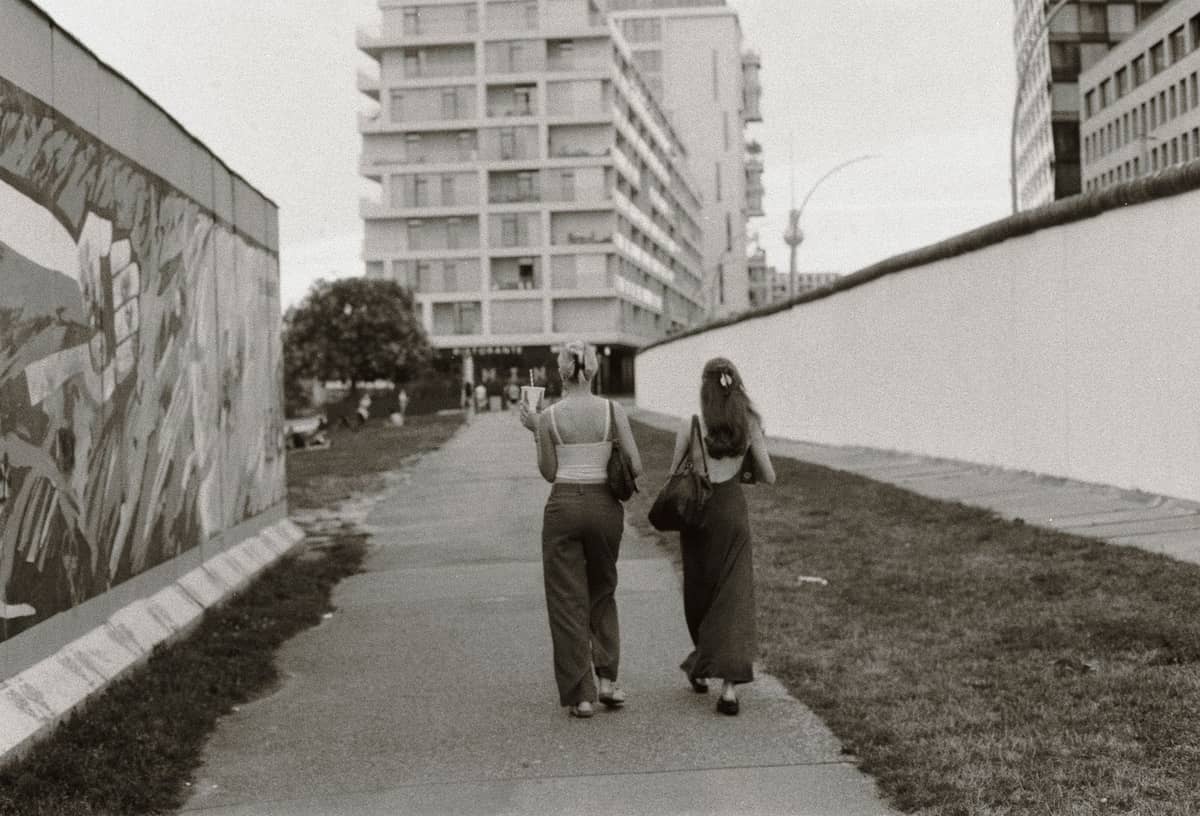
The East Side Gallery on Mühlenstraße in Friedrichshain is the obvious starting point, and for good reason. This 1.3 km stretch of the original Berlin Wall was transformed into a permanent open-air gallery after reunification, with over 100 murals by artists from 21 countries. The most photographed piece is Dmitri Vrubel's 'Fraternal Kiss', depicting Soviet leader Leonid Brezhnev and East German leader Erich Honecker in an embrace. Crucially, this is a protected memorial site, not a free-paint wall — the works are periodically restored and the site is maintained.
💡 Local tip
Visit the East Side Gallery before 9am on weekdays. By mid-morning, tour groups fill the narrow pavement between the Wall and the road, making photography difficult and the experience generally worse. Early morning light is also better for shooting the west-facing murals.
In Kreuzberg, the street art is more raw and political. Around Kottbusser Tor, Schlesisches Tor, Marianneplatz, and along Wassertorstraße, you'll find large warehouse murals sitting alongside fresh paste-ups and political stencils. Victor Ash's 'Astronaut/Cosmonaut' (created 2007, on Skalitzer Straße) is a towering monochrome figure that has become one of Berlin's most recognised individual works — its symbolism of exploration in a city once bisected by Cold War ideology is hard to miss. Blu's 'Pink Man', also from 2007, is another Kreuzberg landmark with pointed political overtones.
Haus Schwarzenberg on Rosenthaler Straße in Mitte is a different kind of street art experience. Set in a courtyard complex near Hackescher Markt, it's a layered, accretive space where newer work is applied over older work in palimpsest fashion. Artists including El Bocho, D*Face, and Jimmy C have worked here. Unlike the East Side Gallery, this feels genuinely spontaneous — it's darker, more cramped, and less photogenic by Instagram standards, but more representative of how street art actually functions as a living medium.
- East Side Gallery (Friedrichshain) 1.3 km of curated Berlin Wall murals. Free, always open. Best before 9am. Access via Ostbahnhof or Warschauer Straße S/U-Bahn.
- Haus Schwarzenberg (Mitte) Courtyard complex on Rosenthaler Straße near Hackescher Markt. Free entry to the courtyards during business hours. Dense, layered graffiti by international artists.
- Kreuzberg murals Self-guided routes around Kottbusser Tor, Skalitzer Straße, and Schlesisches Tor. Mix of commissioned murals, political paste-ups, and evolving graffiti walls.
- Teufelsberg Field Station (Grunewald) Abandoned Cold War listening station with dense, multi-storey murals. Entry fee applies; closes at sunset. Accessible by bus from S-Bahn Heerstraße.
- URBAN NATION Museum (Schöneberg) Bülowstraße 97. Free entry. Purpose-built urban art museum with rotating facade commissions, indoor exhibitions, and workshops.
Teufelsberg: Berlin's Most Unusual Street Art Site
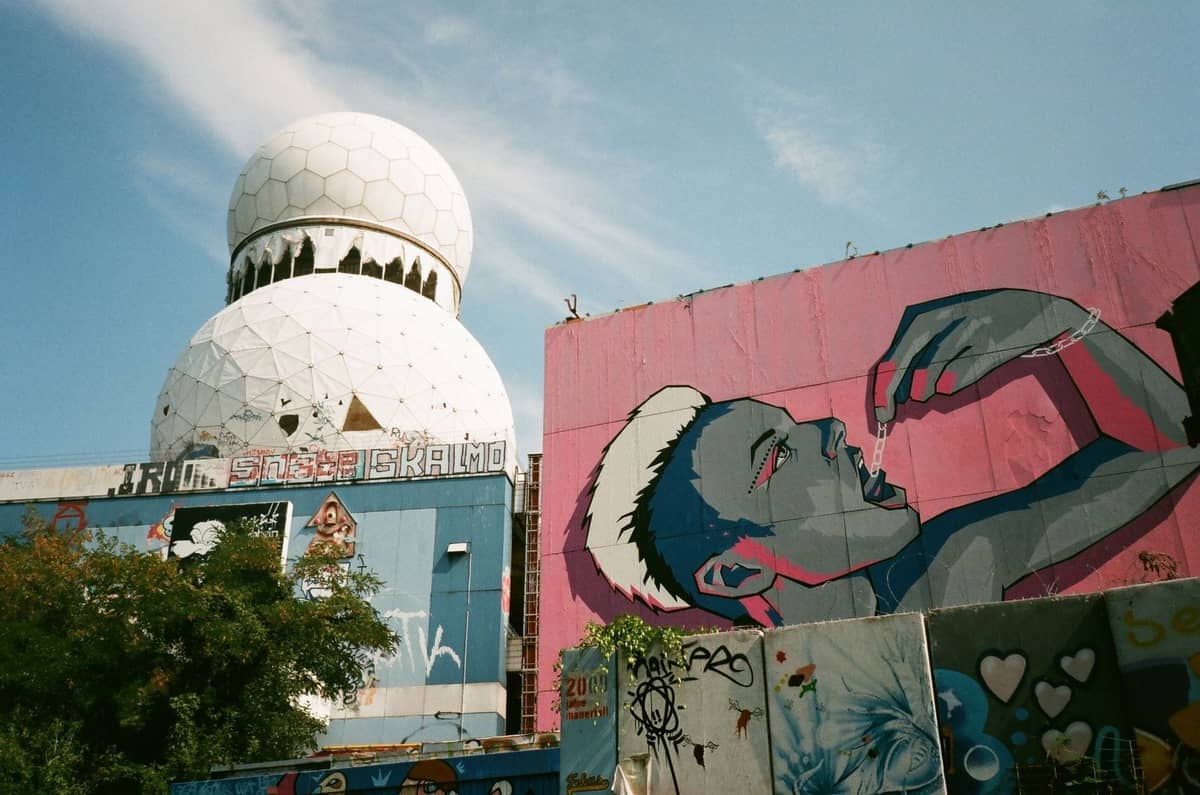
Few places anywhere in the world match Teufelsberg for sheer atmospheric density. Built on a rubble hill in Grunewald forest — itself constructed from WWII debris — this former NSA and British intelligence listening station operated through the Cold War and was abandoned in 1992. Since then, artists have covered virtually every surface inside the decaying radome towers and across the complex's exterior walls. The murals here range from technically sophisticated large-format pieces to abstract experiments that exploit the curved, deteriorating architecture.
The site is privately operated, and a small entry fee is charged (verify current pricing at berlin-teufelsberg.de before visiting). Opening hours depend on the season and available daylight, so this is not a place to turn up at dusk. The hilltop is exposed to wind and weather, which matters in Berlin's winters. Summer visits in the late afternoon offer the best combination of light and comfortable temperatures. Note that the site can get busy on weekends, particularly in summer — weekday visits are quieter.
⚠️ What to skip
Do not attempt to visit Teufelsberg outside official opening hours. The site is private property and unsanctioned access is trespassing. Previous years saw injuries from deteriorating structures during unauthorized visits — the entry fee exists partly to fund structural safety work.
URBAN NATION: When Street Art Moves Indoors
URBAN NATION (Bülowstraße 97, Schöneberg) opened in 2017 as one of the few museums in the world dedicated exclusively to urban contemporary art. Admission is free, which makes it an easy add-on to any Schöneberg visit. The exterior facade alone is worth the trip: it functions as a rotating commission space, with major international artists regularly updating the building's street-facing walls.
Inside, the permanent and temporary exhibitions take urban art seriously as a contemporary medium, contextualising graffiti and mural work within broader art history rather than treating it as subcultural curiosity. The programming includes workshops and guided tours. If you're arriving with more than a passing interest in the scene, check the current exhibition schedule at urban-nation.com before visiting — the quality and relevance of temporary shows varies considerably.
ℹ️ Good to know
URBAN NATION is located near Bülowstraße U-Bahn station (U4 line) in Schöneberg, roughly 15 minutes by U-Bahn from Mitte. It's a logical pairing with a walk along Potsdamer Straße, which has its own concentration of gallery spaces and art-world businesses.
Planning Your Street Art Route: Practical Logistics
A dedicated street art day in Berlin works best if you anchor around two or three zones rather than trying to cover everything. A logical eastern route: start at the East Side Gallery (Warschauer Straße), then walk north through Friedrichshain toward RAW Gelände, a former railway repair yard on Revaler Straße where the walls, containers, and structures are heavily painted and the mix of art and urban culture is genuinely compelling. From there, the Oberbaumbrücke crossing into Kreuzberg takes about 10 minutes on foot.
A western route covers Mitte and Schöneberg: Haus Schwarzenberg near Hackesche Höfe in the morning, then south to URBAN NATION in the afternoon. Add Teufelsberg as a half-day excursion rather than squeezing it into a full route — the journey from central Berlin takes around 45-60 minutes by public transport plus walking, and the site itself merits at least 2 hours.
- Wear comfortable shoes: the East Side Gallery is 1.3 km one way, and RAW Gelände involves uneven ground.
- Bring a wide-angle lens or use portrait mode on your phone — many murals are too large for standard focal lengths at close range.
- Morning light (east-facing walls) and late afternoon light (west-facing walls) produce the best photography conditions.
- Most outdoor street art locations are free. Budget for Teufelsberg entry and optional guided tours.
- Berlin's street art evolves constantly — pieces you see in one visit may be gone or painted over on return trips. This is a feature, not a bug.
What Most Guides Get Wrong About Berlin Street Art
The most persistent misconception is that all street art in Berlin is legal or at least officially condoned. It isn't. Graffiti without permission is illegal under German law, and property owners do pursue claims. What Berlin has is a long-established culture of selective enforcement and widespread tolerance in specific zones — that is not the same thing as legality. The distinction matters if you're photographing privately-owned murals for commercial use, or if you're tempted to add your own tag somewhere.
The other common error is treating the East Side Gallery as equivalent to a standard graffiti wall. It's a protected memorial site. Individual sections have been controversially removed or overwritten in the past, each time triggering significant public debate. Understanding it as a cultural monument rather than just a photo backdrop gives the visit more substance. For deeper historical context on the Wall itself, the Berlin Wall Memorial on Bernauer Straße provides a much more rigorous account of what the Wall actually meant — and the two sites work well together in a single day.
Finally, the scene is not static and it is not limited to a handful of famous districts. Neukölln has developed a strong mural presence along Weserstraße and Karl-Marx-Straße. Mauerpark in Prenzlauer Berg, famous for its flea market, also has a dedicated graffiti wall where legal painting takes place weekly. The scene rewards explorers who go beyond the standard circuit.
✨ Pro tip
Guided street art tours run by local artists are genuinely worth considering for a first visit. They provide access to recent works, explain context that isn't obvious from the art alone, and often include off-circuit locations. Several operators run 2-3 hour walking tours from Mitte and Kreuzberg starting at around €15-25 per person — check current options through visitBerlin or local booking platforms.
FAQ
Is the East Side Gallery free to visit?
Yes, the East Side Gallery is free and accessible 24 hours a day. It runs for 1.3 km along Mühlenstraße in Friedrichshain between Ostbahnhof and Warschauer Straße S/U-Bahn stations. There is no entrance fee and no ticket required.
What is the best time to visit Berlin's street art districts?
For the East Side Gallery, early morning (before 9am) is strongly recommended to avoid crowds. For Kreuzberg and Mitte locations, weekday mornings work well. Teufelsberg is best visited in the afternoon during summer for good light, but always check current opening hours at berlin-teufelsberg.de as the site closes at sunset.
Is there a guided street art tour in Berlin?
Yes, multiple operators run guided street art walking tours, typically lasting 2-3 hours and covering Kreuzberg, Friedrichshain, or Mitte. Prices generally range from €15-25 per person. Check current availability through visitBerlin or local tour booking platforms. Some tours are led by working artists with direct knowledge of the scene.
What is URBAN NATION and is it worth visiting?
URBAN NATION (Bülowstraße 97, Schöneberg) is a dedicated urban contemporary art museum with free entry. It opened in 2017 and features both indoor exhibitions and a rotating commission on its exterior facade. It's particularly worthwhile if you have an interest in street art as a contemporary art form rather than purely as urban decoration. Check the current exhibition programme at urban-nation.com before visiting.
Can I do street art photography in Berlin commercially?
This is legally complex. Many murals are painted with the permission of property owners but without formal copyright assignments. Under German copyright law, murals visible from public streets are generally covered by the 'freedom of panorama' principle for non-commercial use. Commercial use of photographs featuring identifiable artworks may require clearance from the artist. Seek legal advice before using street art photography for commercial purposes.