Grunewald Forest: Berlin's Great Escape Into the Trees
Grunewald Forest is Berlin's largest forested area, stretching across 3,000 hectares in the city's west. Free to enter and open at all hours, it offers lakes, woodland trails, a Renaissance hunting lodge, and genuine quiet within one of Europe's great capital cities.
Quick Facts
- Location
- Falterweg 1, 14055 Berlin (western Berlin, Grunewald locality)
- Getting There
- S Grunewald (S7) — approximately 0.2 km from the forest edge
- Time Needed
- 2–5 hours depending on route; full-day possible
- Cost
- Free to enter; individual sites inside (e.g. Jagdschloss Grunewald) charge separately
- Best for
- Walkers, runners, families, birdwatchers, anyone needing space
What Grunewald Actually Is
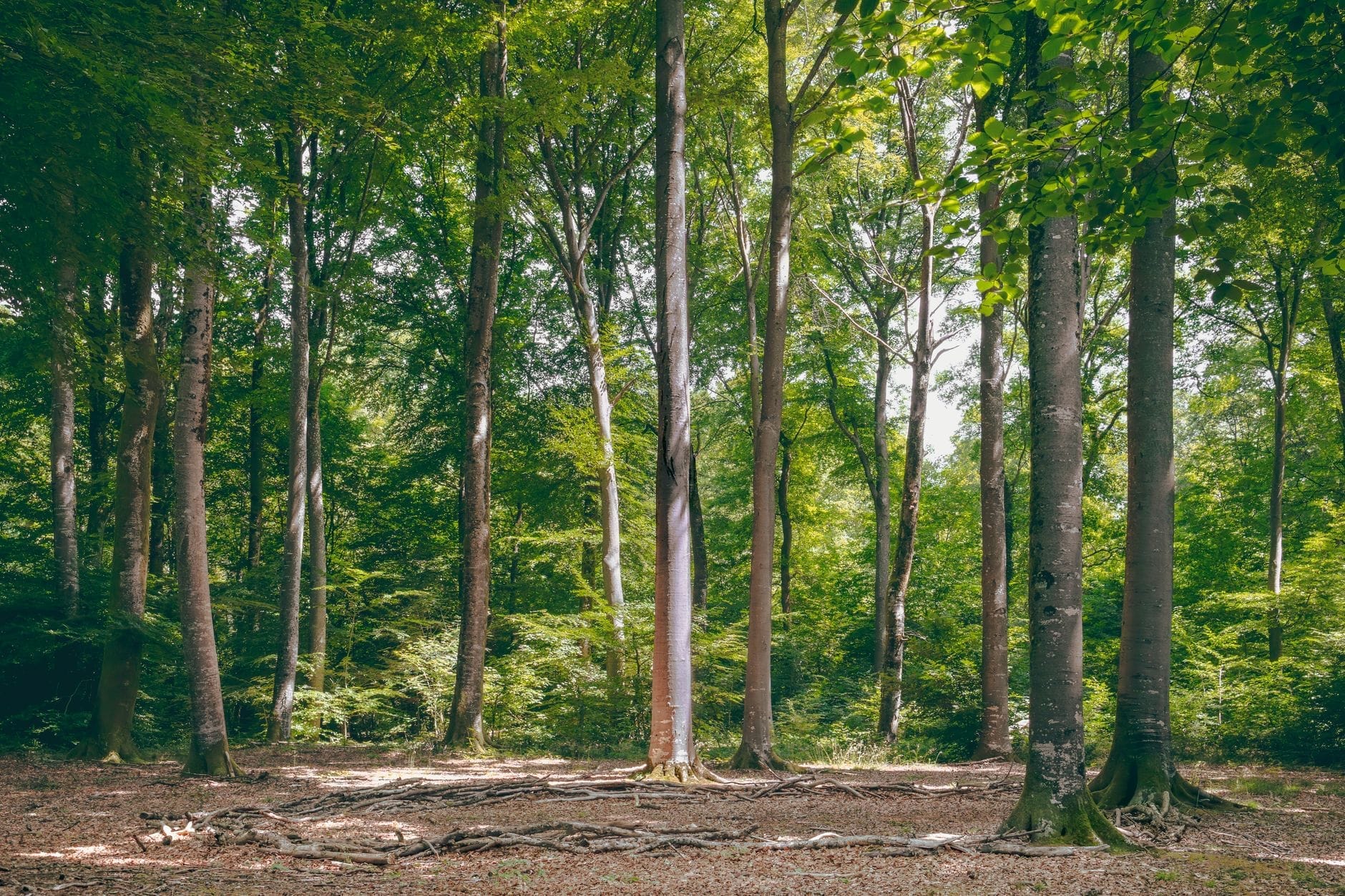
Grunewald Forest is the largest contiguous forested area in Berlin, covering roughly 3,000 hectares (7,400 acres) on the eastern bank of the River Havel in the city's west. That is not a small city park dressed up with forest language. It is a functioning woodland of Scots pine, oak, birch, and beech, with actual undergrowth, sandy soil underfoot, and enough trail distance to walk for hours without doubling back.
Entry is free, access is unrestricted year-round, and there are no gates or ticket booths for the forest itself. You step off the S-Bahn, cross a road, and within three minutes the city disappears behind the treeline. For a capital of nearly four million people, that transition is genuinely surprising.
💡 Local tip
Take the S7 to S Grunewald station. The forest edge is roughly a five-minute walk from the platform. No ticket, no queue, no planning beyond that.
How the Forest Changes Through the Day
Early morning in Grunewald belongs to runners and dog walkers. By 7am on a weekday the main sandy paths already carry a steady flow, but the wider trail network remains quiet enough to hear woodpeckers working through dead timber. The air carries resin from the pines and the particular cool dampness of a forest that hasn't fully dried from overnight dew. Light filters through the canopy in long columns when the sun is low, which makes the first two hours after sunrise the best time for photography.
From mid-morning through early afternoon on weekends, and especially on warm summer days, the forest fills significantly. Families arrive with bicycles, cyclists claim the wider paths, and the shores of the Grunewaldsee lake become crowded. This is not unpleasant, but it is a different experience from the early-morning quiet. If solitude matters to you, arrive before 9am or head for the southern and western sections of the forest rather than the areas directly accessible from the S-Bahn.
Late afternoon light in autumn turns the birch stands golden and the sandy paths take on a warm amber tone. This is arguably the most visually rewarding season in Grunewald. The forest floor fills with fallen leaves, the crowds thin compared to summer, and the temperature stays comfortable for walking well into October.
Tickets & tours
Hand-picked options from our booking partner. Prices are indicative; availability and final rates are confirmed when you complete your booking.
Guided tour: Berlin's villa district in Grunewald
From 22 €Instant confirmationFree cancellationGuided bike tour from Berlin-Grunewald to Charlottenburg
From 30 €Instant confirmationFree cancellationSkip-the-line ticket for Gemaldegalerie Berlin
From 14 €Instant confirmationPanoramapunkt Berlin ticket with skip-the-line option
From 9 €Instant confirmation
The Landscape: What You'll Actually See
Much of Grunewald sits on glacially deposited sand, which gives the paths a dry, crunching texture and explains why the dominant tree is Scots pine rather than the denser deciduous mix you find in moister forests. The sandy soil makes trails walkable even after rain, though deeper forest paths can become soft. Wear shoes you don't mind getting dirty.
The forest contains several lakes, of which the Grunewaldsee is the most central and the most visited. It has a small lido area in summer and a shoreline path that takes roughly 30 minutes to walk. The Schlachtensee and Krumme Lanke lakes sit further south and draw a slightly quieter crowd. Krumme Lanke in particular has a swimming area and is reachable by U-Bahn (Krumme Lanke station, U3), making it a useful southern entry point for a linear walk through the forest.
Wildlife sightings are common if you move quietly. Red foxes, roe deer, and over 100 recorded bird species use the forest. The Havelhügel area near the Havel riverbank offers the most varied habitat. For those interested in Berlin's wider natural landscapes, the Berlin lakes guide covers the broader network of water bodies connected to and near Grunewald.
Jagdschloss Grunewald: Berlin's Oldest Palace
Standing at the edge of the Grunewaldsee, Jagdschloss Grunewald is described as Berlin's oldest surviving palace. It began as a Renaissance hunting lodge in the sixteenth century and was used by Brandenburg electors and Prussian royals across several centuries. The building is compact and sits directly on the lake shore, white-rendered with a courtyard flanked by outbuildings.
The hunting lodge now functions as a museum holding a collection of Dutch and German paintings, including works connected to the Hohenzollern court. Admission to the interior is charged separately from the forest. Even if you skip the interior, the courtyard and lakeside setting make the short detour worthwhile. The contrast between the formal Renaissance architecture and the surrounding woodland is striking.
ℹ️ Good to know
Jagdschloss Grunewald charges its own admission fee separate from forest access. Check current opening hours before visiting, as seasonal closures apply.
Getting There and Moving Through the Forest
The most straightforward access point is S Grunewald station, served by the S7 line. From the station, the forest edge is about 200 metres. Bus route 349 serves S Grunewald, and routes 186 and M19 serve stops near the forest, including Alte Allee. The U3 line provides a useful southern access via Krumme Lanke or Schlachtensee stations, which allows for linear walks north through the forest to exit at S Grunewald.
Cyclists are well served by the forest's wider sandy tracks, though the terrain is not technical mountain biking. Grunewald connects westward toward the Havel riverbank, where a flat cycling path runs along the water. If you are planning a longer Berlin cycling day, combining Grunewald with the Wannsee lakeside area to the southwest is a logical extension. The Wannsee Lake area is reachable by continuing west through the forest or by S-Bahn.
Accessibility across the forest is limited by the natural terrain. The paths closest to the S Grunewald station are broader and more compacted, making them manageable for pushchairs on dry days. Further into the forest, paths become narrower, sandier, and less even. Visitors using wheelchairs will find options restricted once past the immediate access routes from the station.
Teufelsberg: The Surveillance Hill at the Forest's Edge
On the northern edge of Grunewald rises Teufelsberg, a 120-metre artificial hill built from the rubble of World War Two-era Berlin. Atop it sit the distinctive dome structures of a former US Cold War listening station, now a street art site and occasional event venue. It is worth visiting separately, though it borders the forest rather than sitting within it. The Teufelsberg page covers the site in detail, including its Cold War history and current access arrangements.
From ground level, Teufelsberg provides an elevated view over the forest canopy, which is one of the few vantage points in this part of western Berlin. The hill itself can be climbed freely from the forest side, even without paying to enter the listening station complex.
Practical Notes and Who This Is For
Grunewald requires no special planning, no booking, and no budget beyond your S-Bahn fare. Bring water, especially in summer when the forest can feel dry and warm. The sandy paths drain quickly after rain, so post-rain visits are usually fine within a few hours. In winter the forest is quiet, atmospheric, and rarely icy on the lower paths. For context on how Berlin's seasons affect outdoor visits, the Berlin in winter guide offers practical detail.
The forest suits anyone who wants genuine outdoor space rather than a manicured park experience. Families with children who need room to run, runners building distance, birdwatchers, and people who simply want to sit under trees without paying for it will all find what they're looking for. Grunewald also works well as a half-day addition to a broader western Berlin itinerary alongside Charlottenburg Palace, which sits a few kilometres northeast.
Who should skip it: if your Berlin time is limited to two or three days and your focus is on historical sites, museums, and central landmarks, Grunewald will feel like a detour that uses time you don't have. It is not a compact cultural experience. It is a forest. That is the point, but it requires at least a half-day and some tolerance for walking on uneven ground.
⚠️ What to skip
Grunewald has no cafés or water fountains inside the forest itself. Bring supplies. The nearest reliable food options are around S Grunewald station before you enter.
Insider Tips
- Walk a linear route rather than a loop: enter at S Grunewald station and exit at Krumme Lanke or Schlachtensee U-Bahn station to the south. This covers the forest's full depth without retracing steps and takes roughly two hours at a moderate pace.
- The Grunewaldsee shore path is busiest on the western side facing Jagdschloss. Cross to the eastern bank for the same views with significantly fewer people.
- Autumn weekday mornings between late September and early November offer the best combination of colour, quiet, and comfortable walking temperature. This is the forest at its most photogenic.
- If you are cycling, the Havel riverside path west of the forest connects to Wannsee and beyond, making Grunewald a natural starting point for a longer cycling day rather than a destination in itself.
- Mobile signal is patchy in the central and southern forest. Download an offline map (OpenStreetMap or Maps.me) before entering if you plan to go beyond the main trails.
Who Is Grunewald Forest For?
- Runners and cyclists wanting off-road distance inside Berlin city limits
- Families with children who need open, safe woodland space
- Birdwatchers and nature-focused visitors
- Travellers on a tight budget who want a full half-day of outdoor activity for free
- Anyone needing a genuine break from the urban density of central Berlin
Nearby Attractions
Combine your visit with:
- House of the Wannsee Conference (Gedenk- und Bildungsstätte)
On 20 January 1942, fifteen Nazi officials met in a lakeside villa southwest of Berlin and coordinated the systematic murder of European Jews. The House of the Wannsee Conference is now a permanent memorial and educational site. Admission is free. The experience is unforgettable.
- Olympiastadion Berlin
Built for the 1936 Summer Olympics and thoroughly renovated in 2004, the Olympiastadion Berlin is one of Europe's most architecturally significant sports venues. With a capacity of about 74,500, it hosts Hertha BSC matches, major concerts, and regular sightseeing visits that take you from pitch level to the roof walkway.
- Sanssouci Palace and Park (Potsdam)
Built for Frederick the Great between 1745 and 1747, Sanssouci Palace is Germany's most celebrated royal summer retreat. Set within a UNESCO-listed park of terraced vineyards, fountains, and baroque pavilions just outside Potsdam, it rewards visitors who arrive early and stay long.
- Sachsenhausen Memorial and Museum
Located around 30 km north of Berlin in Oranienburg, the Sachsenhausen Memorial and Museum stands on the site of a Nazi concentration camp where more than 200,000 people were imprisoned between 1936 and 1945. Admission is free. The visit takes a minimum of three hours and leaves a lasting impression.