Sachsenhausen Memorial and Museum: What to Know Before You Visit
Located around 30 km north of Berlin in Oranienburg, the Sachsenhausen Memorial and Museum stands on the site of a Nazi concentration camp where more than 200,000 people were imprisoned between 1936 and 1945. Admission is free. The visit takes a minimum of three hours and leaves a lasting impression.
Quick Facts
- Location
- Straße der Nationen 22, 16515 Oranienburg, Germany (approx. 30 km north of central Berlin)
- Getting There
- S-Bahn S1 to Oranienburg station, then 20 min walk or local bus to the memorial
- Time Needed
- 3 to 5 hours for a thorough visit
- Cost
- Free admission; audio guide €3.50 per device
- Best for
- History-focused travelers, students, those with a personal connection to the period
- Official website
- www.sachsenhausen-sbg.de/en
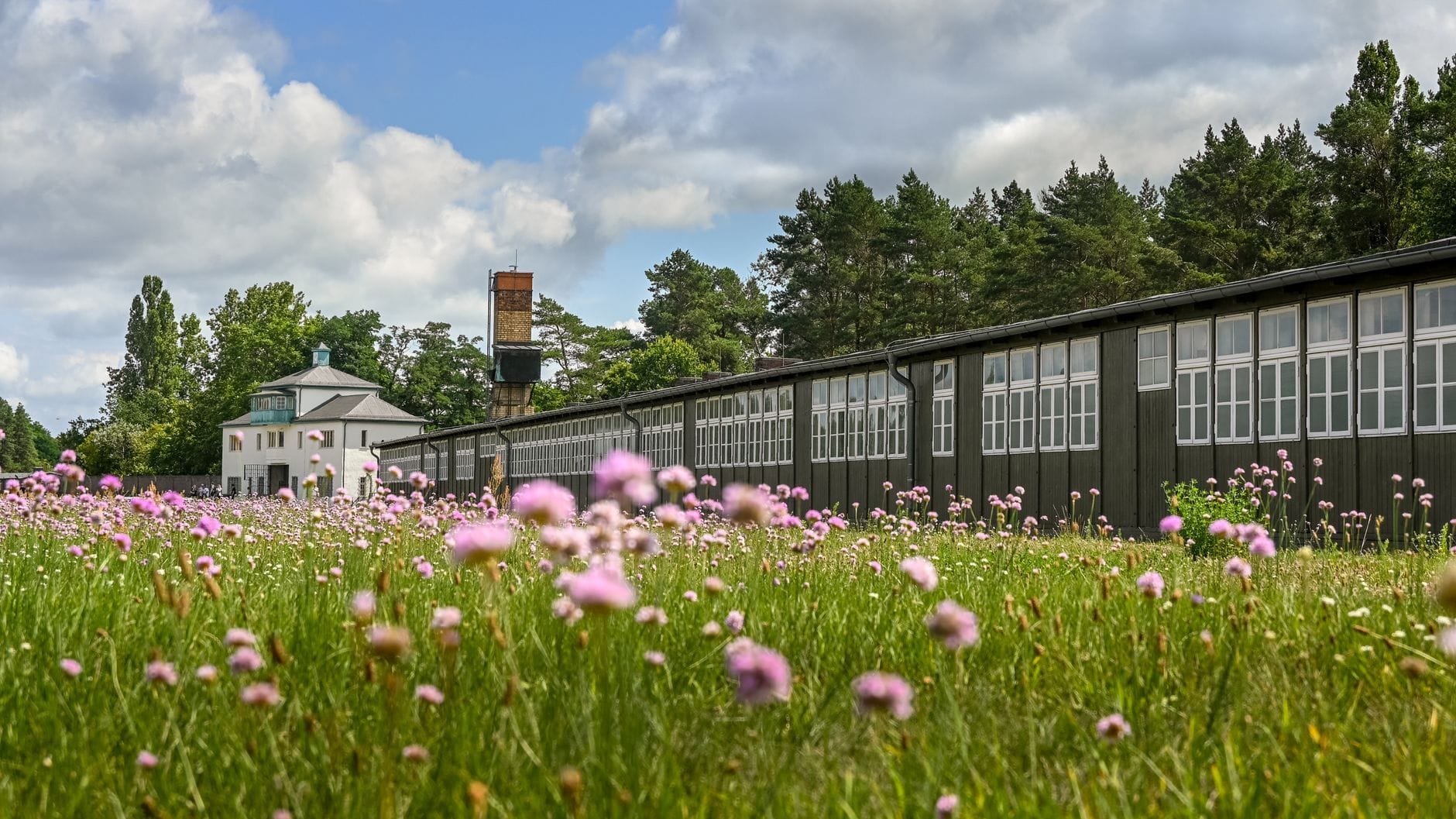
What Sachsenhausen Is — and Why It Matters
The Sachsenhausen Memorial and Museum occupies the grounds of a former Nazi concentration camp built in the summer of 1936 in Oranienburg, Brandenburg. It was designed not as an improvised facility but as a deliberately engineered model camp, intended by the SS to serve as a blueprint for the entire concentration camp system. Its triangular layout, guard towers, and perimeter structures influenced the design of camps built across occupied Europe in subsequent years.
Between 1936 and 1945, more than 200,000 people were imprisoned here: political opponents, Jewish men and boys deported during the November 1938 pogroms, Soviet prisoners of war, Roma, gay men, Jehovah's Witnesses, and others classified as enemies or undesirables by the Nazi state. Tens of thousands died from hunger, disease, forced labor, medical experiments, and systematic execution. The scale is difficult to absorb in a single visit.
After liberation by Soviet and Polish forces in April 1945, the site was repurposed by the Soviet military administration as Special Camp No. 7, where tens of thousands more people, including former Nazis but also many victims of denunciation, were imprisoned until 1950. This layered history sets Sachsenhausen apart from many other memorial sites. Visitors who want a broader framework for understanding the camp's place in Berlin's history of political violence will find deeper context in the Cold War Berlin guide and the general Berlin memorials guide.
ℹ️ Good to know
The Sachsenhausen National Memorial was inaugurated on 23 April 1961. Since 1993, it has been administered by the Brandenburg Memorials Foundation. Admission to the memorial and its indoor museums is free of charge.
Getting There from Berlin
The most straightforward route from central Berlin is the S-Bahn S1 line, which runs from Wannsee in the southwest through Friedrichstraße, Gesundbrunnen, and Hennigsdorf to Oranienburg. From Berlin Friedrichstraße, the journey takes approximately 45 minutes. Trains run roughly every 20 minutes. At Oranienburg station, the memorial is about 20 minutes on foot heading southeast along Straße der Nationen, or reachable by local bus to the stop Sachsenhausen, Gedenkstätte.
By car, the route from Berlin follows the A111 motorway toward Hamburg, connecting to the A10 (Berliner Ring) in the direction of Prenzlau, exiting at Birkenwerder and continuing north on the B96 into Oranienburg. Parking is available near the site. However, the S-Bahn is generally more convenient for visitors staying in central Berlin, and avoids the need to navigate Brandenburg traffic.
💡 Local tip
If you hold a Berlin WelcomeCard or an ABC-zone transit ticket, check whether it covers the journey to Oranienburg, which falls in the outer fare zone. You may need to purchase an extension or a separate ticket. Verify current zone coverage with BVG or VBB before travel.
Tickets & tours
Hand-picked options from our booking partner. Prices are indicative; availability and final rates are confirmed when you complete your booking.
Sachsenhausen Concentration Camp Memorial in Berlin by Bus
From 60 €Instant confirmationFree cancellationExcursion to Sachsenhausen concentration camp by train from Berlin
From 0 €Instant confirmationFree cancellationExcursion to Sachsenhausen concentration camp by train from Berlin
From 0 €Instant confirmationFree cancellationSachsenhausen Concentration Camp Tour by Private Vehicle
From 59 €Instant confirmationFree cancellation
Arriving at the Site: First Impressions
Approaching on foot from Oranienburg station, visitors pass through an ordinary German town — bakeries, a supermarket, residential streets. The transition to the memorial grounds is abrupt in the best possible sense. The flat, grey landscape and the preserved perimeter walls communicate severity before you have read a single information panel.
The Visitor Information Centre at the entrance opens daily at 08:30. Staff here speak German and English and can advise on the layout, current temporary exhibitions, and audio guide availability. The audio guide, available for €3.50 per device, is genuinely useful at this site. Sachsenhausen covers a large area and not every structure has dense on-site interpretation; the audio guide fills in the silences between the physical remains and the exhibition halls.
In summer (31 March to 26 October), outdoor areas and exhibitions close at 18:00. In winter (27 October to 30 March), they close at 16:30. The Visitor Information Centre closes at 17:00 year-round. Arriving by 09:30 gives you the best chance of moving through the site before larger school groups and guided tours concentrate in the central areas mid-morning.
Moving Through the Camp: What You Will See
The entrance gate bears the inscription Arbeit Macht Frei, a phrase used across multiple Nazi camps. Passing through it into the former roll call area, you stand in a large open expanse bordered by the triangular perimeter the SS architects designed. The ground underfoot is mostly gravel and compressed earth. On a cold or overcast day, the emptiness of this space has a particular weight.
The site's main permanent exhibitions are housed in reconstructed or surviving barrack buildings. These cover the camp's administrative history, prisoner categories, daily conditions, the execution trench and shooting station, the camp infirmary where medical experiments were conducted, and the industrial forced labor operations. The exhibition texts are available in German and English throughout. Some areas include personal testimonies and photographs that require visitors to be prepared for graphic content.
Station Z, located in the northwest corner of the camp, was the systematic killing facility: a gas chamber, crematorium, and execution area. What remains today are partial ruins and careful archaeological markings. An enclosing memorial structure was erected in the East German period. This section of the visit is among the most difficult parts of the site, and rightly so.
For visitors already familiar with Berlin's central memorials, Sachsenhausen provides physical scale and material context that urban sites cannot. The Holocaust Memorial in Mitte is a conceptual work; Sachsenhausen is the thing itself. The two complement rather than duplicate each other.
How the Experience Changes by Time of Day and Season
Visiting in early morning, particularly on a weekday, means you will often have significant stretches of the grounds to yourself. The quiet amplifies the experience. By 11:00, especially on weekends and during school term, guided tours arrive in volume and some of the smaller exhibition spaces become crowded.
In winter, the short hours and cold temperatures create a starkly appropriate atmosphere. The ground is often frozen or muddy in the outdoor sections, and the pale winter light over the preserved perimeter is striking. Dress in warm, waterproof layers and wear shoes that can handle uneven, potentially wet ground. In summer, the site can become warm by early afternoon, and the open roll call ground offers no shade. Bringing water is practical common sense.
⚠️ What to skip
Accessibility at Sachsenhausen is limited. Due to historic preservation requirements, fully barrier-free access is not possible across the entire site. The memorial recommends that visitors with visual impairments, walking difficulties, or wheelchair users be accompanied. Contact the memorial in advance for current accessibility details.
Is a Sachsenhausen Visit Worth Your Time?
Sachsenhausen is not an attraction in the conventional sense, and treating it as a box to check on a Berlin itinerary would be a misuse of the site and of your own time. It demands attention, patience, and a willingness to sit with uncomfortable material. A rushed 90-minute pass-through will leave visitors with little more than an impression of gravel and silence.
For visitors with a genuine interest in the history of the Nazi period, the structure of the concentration camp system, or the post-war Soviet use of the same grounds, Sachsenhausen is one of the most substantive and carefully maintained memorial sites in Germany. The exhibitions are scholarly without being inaccessible, and the physical scale of the camp communicates things that photographs and books cannot.
Visitors who want to frame this visit within a wider exploration of Berlin's difficult history will also benefit from the Topography of Terror documentation center in central Berlin, and the Jewish Museum Berlin. Neither duplicates what Sachsenhausen offers, and all three together form a coherent and serious engagement with this history.
Who should skip this visit: travelers with very young children, those visiting Berlin for only a day or two with limited time for outlying sites, or anyone who is not in the right frame of mind for demanding material. This is not a criticism of those visitors; it is simply an honest recognition that Sachsenhausen requires something of you, and it is worth waiting until you can give it that.
Insider Tips
- Book a German-language or English-language guided tour through the memorial's official website in advance if you want a structured walk-through. These tours are led by trained guides and go well beyond what self-guided visitors typically cover.
- The audio guide at €3.50 is worth hiring even if you plan to read every panel. Some of the most important testimony and contextual explanation is embedded in the audio content and not repeated on the physical displays.
- Combine the visit with Oranienburg town itself, which has its own small historical center. Arriving on the S1 before 09:30 lets you reach the memorial as it opens, complete a full visit, and still return to central Berlin before 16:00.
- If you are visiting in winter, check the closing time before you travel. The 16:30 close means you lose an hour and a half compared to summer, which matters when you need at least three hours to do the site justice.
- Photography is permitted throughout most of the site, but approach it with deliberateness. The outdoor spaces and architectural remnants photograph well in morning light; the interior exhibitions often have lower lighting that makes phone cameras struggle.
Who Is Sachsenhausen Memorial and Museum For?
- Travelers with a serious interest in twentieth-century European history
- Students and researchers studying the Nazi period or the Soviet occupation of eastern Germany
- Visitors who have already seen Berlin's central memorials and want the physical reality of an actual camp site
- Those with family or ancestral connections to the people imprisoned at Sachsenhausen
- Anyone planning a multi-day Berlin trip who can dedicate a full half-day to an outlying site
Nearby Attractions
Combine your visit with:
- Grunewald Forest
Grunewald Forest is Berlin's largest forested area, stretching across 3,000 hectares in the city's west. Free to enter and open at all hours, it offers lakes, woodland trails, a Renaissance hunting lodge, and genuine quiet within one of Europe's great capital cities.
- House of the Wannsee Conference (Gedenk- und Bildungsstätte)
On 20 January 1942, fifteen Nazi officials met in a lakeside villa southwest of Berlin and coordinated the systematic murder of European Jews. The House of the Wannsee Conference is now a permanent memorial and educational site. Admission is free. The experience is unforgettable.
- Olympiastadion Berlin
Built for the 1936 Summer Olympics and thoroughly renovated in 2004, the Olympiastadion Berlin is one of Europe's most architecturally significant sports venues. With a capacity of about 74,500, it hosts Hertha BSC matches, major concerts, and regular sightseeing visits that take you from pitch level to the roof walkway.
- Sanssouci Palace and Park (Potsdam)
Built for Frederick the Great between 1745 and 1747, Sanssouci Palace is Germany's most celebrated royal summer retreat. Set within a UNESCO-listed park of terraced vineyards, fountains, and baroque pavilions just outside Potsdam, it rewards visitors who arrive early and stay long.