Jewish Museum Berlin: Architecture, Memory, and 3,500 Years of History
The Jewish Museum Berlin, known in German as the Jüdisches Museum Berlin, is Europe's largest Jewish museum. Housed partly in a striking zinc-clad building designed by Daniel Libeskind, it traces 3,500 years of Jewish history and culture in Germany through a permanent exhibition that is free to enter, and a rotating program of special exhibitions.
Quick Facts
- Location
- Lindenstraße 9–14, 10969 Berlin
- Getting There
- U Hallesches Tor (U6); bus stops Jüdisches Museum, Franz-Klühs-Str., Zossener Brücke
- Time Needed
- 2–3 hours for permanent exhibition; half a day if visiting special exhibitions
- Cost
- Core exhibition free; special exhibitions €10 (reduced €4)
- Best for
- History lovers, architecture enthusiasts, and anyone grappling with German-Jewish identity
- Official website
- www.jmberlin.de/en/planning-your-visit
What the Jewish Museum Berlin Actually Is
The Jewish Museum Berlin, officially the Jüdisches Museum Berlin, opened in 2001 and is one of the largest Jewish museums in Europe. With 3,500 square metres dedicated to its core exhibition, it is the largest Jewish museum in Europe. Its mission is specific and serious: to document and interpret 3,500 years of Jewish history on German soil, from the early medieval period through to the present day. This is not a Holocaust memorial, though the Holocaust is one chapter within a much longer story the museum tells. That distinction matters.
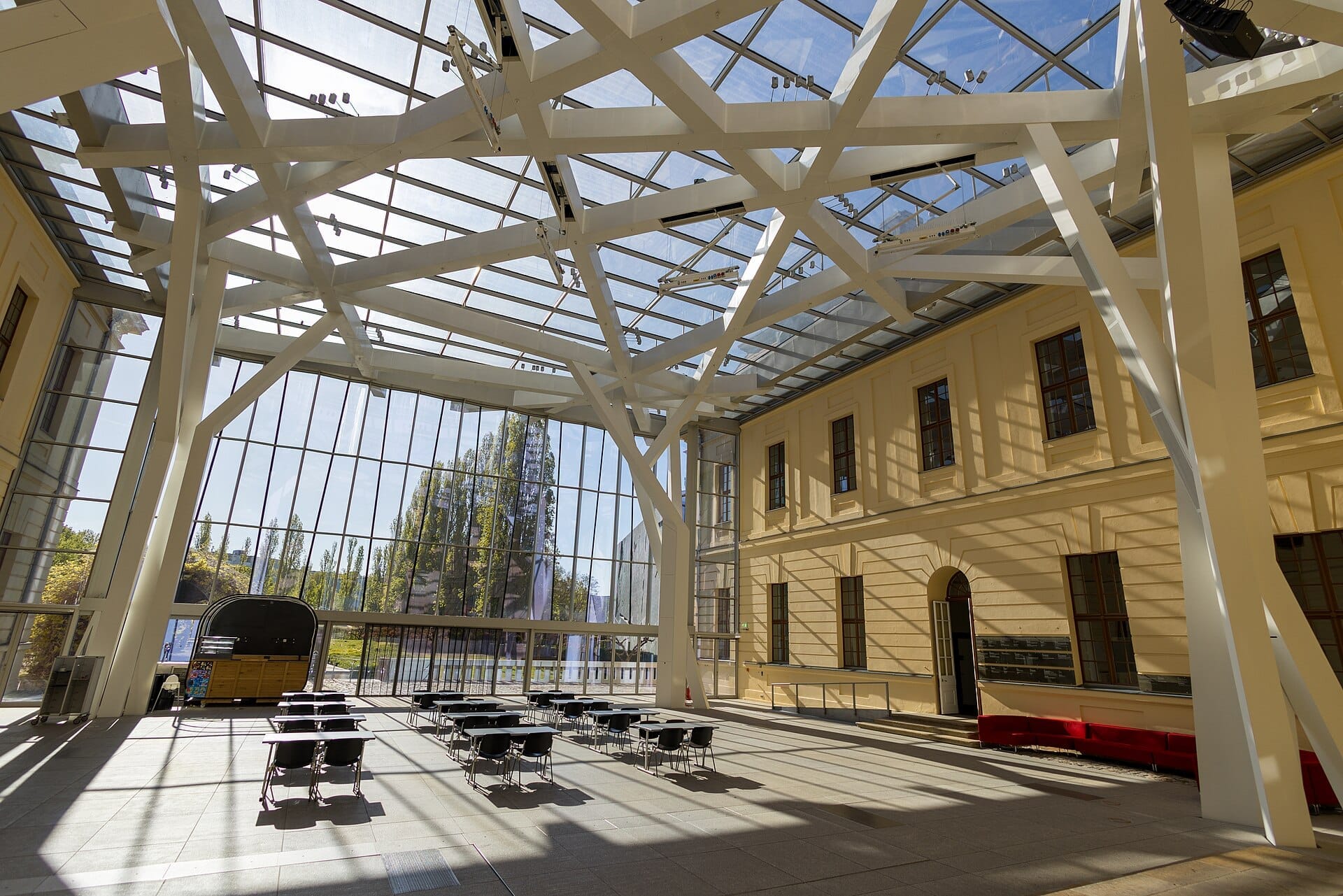
The museum occupies two connected buildings: the baroque Old Building, which served as the former Kollegienhaus, and the Libeskind Building, the zinc-clad extension that became famous before the museum ever opened. All visitors enter through the Old Building, regardless of which part of the museum they intend to visit. This entry point is intentional. The contrast between the measured, symmetrical Old Building and the angular, disorienting Libeskind wing is part of the experience itself. If you want context on Berlin's broader memorial landscape, the Berlin memorials guide covers how this museum fits alongside the city's other sites of remembrance.
ℹ️ Good to know
Opening hours: Tuesday to Sunday, 10:00–18:00. Closed Mondays. Additional closures in 2026 include 12–13 September, 21 September, and 24 December. The permanent exhibition is free of charge. Special exhibitions cost €10 (reduced €4).
The Libeskind Building: Architecture as Argument
Daniel Libeskind's extension, opened to the public in 2001, is one of the most discussed museum buildings of the late 20th century. From above, its floor plan traces a fractured Star of David. From street level, it reads as a series of sharp zinc planes cut through with irregular window slashes, each oriented to reference sites of Jewish significance across Berlin. The facade reflects light differently depending on the hour and season, giving the building a slightly unresolved quality that seems entirely fitting for its subject matter.
Inside, the architecture continues to work on you. Libeskind designed three underground axes that run beneath the building: the Axis of Exile, the Axis of Holocaust, and the Axis of Continuity. Each leads somewhere different, and each makes a different physical demand. The Axis of Exile ends in the Garden of Exile, an outdoor installation of concrete pillars set on a tilted plane.. Standing inside it, even on a clear day, produces a mild but genuine sense of disorientation. The Axis of Holocaust leads to the Holocaust Tower, a bare concrete silo with a sliver of natural light far above. It is cold, almost entirely dark, and quiet. Visitors typically stand there for a moment longer than they expect to.
The Libeskind Building also contains the Void, a series of empty concrete shafts that cut through the exhibition floors. They cannot be entered. They can be glimpsed through narrow windows. Their presence is a deliberate counter-statement to the idea that history can be fully narrated or contained.
Tickets & tours
Hand-picked options from our booking partner. Prices are indicative; availability and final rates are confirmed when you complete your booking.
Spanish guided tour of Jewish quarter and Jewish Museum Berlin
From 20 €Instant confirmationFree cancellationBerlin Jewish legacy sites private walking tour
From 237 €Instant confirmationFree cancellationJewish Quarter mysteries audio tour in Berlin
From 10 €Instant confirmationSkip-the-line ticket for Gemaldegalerie Berlin
From 14 €Instant confirmation
The Permanent Exhibition: 3,500 Years, One Building
The permanent exhibition, which is free to enter, spans from the early medieval period to the present. It covers Jewish religious practice, the integration of Jewish communities into German civic life, periods of persecution and relative tolerance, the Enlightenment, the rise of Reform Judaism, the catastrophe of the Nazi period, and postwar Jewish life in Germany. The narrative is dense and does not simplify. Expect to spend at least two hours moving through it properly.
The exhibition uses objects, documents, personal testimony, and interactive displays in roughly equal measure. Some of the most affecting items are small: a family photograph, a letter, a set of everyday objects from a household that no longer exists. The curatorial approach treats these objects seriously rather than sentimentally, which is what gives them weight. Audio guides are available and worth taking, particularly for the sections covering the medieval period, which are less self-explanatory than the modern galleries.
For visitors whose interest extends beyond this single museum, the Neue Synagogue on Oranienburger Straße offers a complementary perspective on Berlin's Jewish community and the 19th-century period of relative civic integration.
When to Visit and What to Expect
Tuesday through Thursday mornings, between 10:00 and 12:00, offer the quietest experience. By midday, particularly on weekends, school groups and tour groups move through the entry sequence together, which can create congestion in the narrow Libeskind corridors. The Garden of Exile and the Holocaust Tower both feel very different when shared with twenty other people, so timing your visit to reach those spaces early is worth the effort.
The museum is indoors and climate-controlled, making it equally viable in January cold or August heat. That said, the Garden of Exile is an outdoor space, and the 49 tilted pillars are more affecting under a grey sky than in bright sunshine, though this is subjective. The Holocaust Tower draws its impact from near-total darkness and a narrow shaft of natural light above; its effect does not change with season.
💡 Local tip
Book your ticket for special exhibitions in advance via the museum's website. The permanent exhibition is free and requires no booking, but timed entry slots for special shows can sell out on weekends.
The Libeskind architecture photographs well in the early morning when the zinc facade catches low-angle light. Inside, the tilted floors and angular windows create strong compositional geometry that rewards slower, more deliberate shooting.
Getting There and Accessibility
The museum sits on Lindenstraße 9–14, in Berlin-Kreuzberg. The nearest U-Bahn station is Hallesches Tor on the U6 line. Bus stops including Jüdisches Museum, Franz-Klühs-Str., and Zossener Brücke serve the building more directly. The surrounding streets are quiet by Berlin standards, and the walk from Hallesches Tor passes through a pleasant residential stretch.
All exhibitions are accessed through the Old Building entrance. The museum has lift access to multiple floors, and the main permanent exhibition areas are wheelchair accessible. The axes and underground spaces have ramp access as well as stairs. For those planning a broader day in this part of the city, the Topography of Terror is roughly 15 minutes on foot to the north and also offers free permanent admission.
Is the Jewish Museum Worth Your Time?
The Jewish Museum Berlin is not a comfortable visit, and it is not designed to be. The architecture makes physical demands on the visitor that some people find fascinating and others find disorienting in an unpleasant way. The permanent exhibition is substantive but long, and if you approach it without some prior knowledge of German-Jewish history, several sections may feel abstract. The museum provides good context throughout, but visitors who prefer lighter, more visually driven experiences will find this hard going.
Those who bring curiosity and patience will find it genuinely rewarding. The building alone justifies a visit for anyone interested in contemporary architecture. The permanent exhibition, taken seriously, offers a level of historical depth that few institutions in Berlin match. For a broader orientation to what Berlin's museum landscape looks like, the guide to the best museums in Berlin sets useful context.
Visitors who want a quick, emotionally uncomplicated cultural stop should probably look elsewhere. Visitors who want to understand Germany more deeply, or who find architecture and memory compelling as subjects, will leave having experienced something that stays with them.
⚠️ What to skip
The Holocaust Tower and Garden of Exile are not recommended for very young children without parental guidance. The Tower in particular is dark, cold, and deliberately unsettling. There are no exhibits inside it, only the space itself.
The Museum in Its Neighborhood Context
The museum's location places it within walking distance of several other significant sites. The Checkpoint Charlie crossing point is approximately 10 minutes to the north on foot. The Kreuzberg neighborhood extends immediately to the south and west, offering some of Berlin's more interesting independent restaurants and cafes. After a visit to the museum, the quieter streets around Bergmannstraße offer a good place to decompress over coffee before moving on.
The museum also has a well-regarded cafe on site, open during museum hours, which serves light meals and is worth using before or after the permanent exhibition. For those combining this visit with a wider exploration of Berlin's Cold War geography, the Cold War Berlin guide maps out how this part of the city fits into the broader divided-Berlin story.
Insider Tips
- The Garden of Exile is most affecting in overcast weather. The tilted concrete pillars create physical disorientation that bright sunshine slightly mitigates. If you have flexibility, a grey morning visit is more immersive.
- Audio guides cover sections of the medieval exhibition that are difficult to fully interpret from object labels alone. Even if you skip the guide elsewhere, consider using it for the first two gallery rooms.
- The Libeskind facade photographs best from across Lindenstraße in the early morning, when low-angle light catches the zinc cladding and the window slashes cast defined shadows. By noon the effect flattens considerably.
- The permanent exhibition is free, but the museum relies on special exhibition revenue. If you found the visit worthwhile, purchasing a catalog or visiting a paying special exhibition is one way to support the institution without a donation box.
- If you visit on a weekday, the Holocaust Tower is usually empty or nearly so before 11:00. Experiencing it alone, or with one or two other people, is meaningfully different from sharing it with a school group.
Who Is Jewish Museum Berlin For?
- Travelers with a serious interest in German and European Jewish history
- Architecture enthusiasts studying Libeskind's deconstructivist approach
- Visitors on a second or third trip to Berlin who have already covered the headline sites
- Students and academics researching memory, identity, and museum design
- Anyone who found the Holocaust Memorial moving and wants more historical depth and context
Nearby Attractions
Other things to see while in Mitte:
- Alexanderplatz
Alexanderplatz sits at the geographical and historical heart of former East Berlin, a vast open square with roots going back to the 13th century. Today it's a free, always-open crossroads of transit, Cold War monuments, and everyday Berlin life — chaotic, fascinating, and impossible to avoid.
- Berlin Cathedral (Berliner Dom)
The Berlin Cathedral, or Berliner Dom, is Germany's largest Protestant church and one of the most architecturally striking buildings in the city. Built between 1894 and 1905, it anchors Museum Island with a dome you can climb, a royal crypt below ground, and a nave that rewards slow, unhurried attention.
- Berlin TV Tower (Fernsehturm)
Standing 368 metres above central Berlin, the Berliner Fernsehturm is the tallest structure in Germany and the tallest publicly accessible building in Europe. Its observation deck at 203 metres delivers an unobstructed 360-degree panorama of the city. This guide covers what you actually see up there, when crowds are worst, and whether the ticket price is justified.
- Berlin Victory Column (Siegessäule)
Rising from the centre of the Großer Stern roundabout in Tiergarten, the Siegessäule is one of Berlin's most recognisable monuments. At around 67 metres tall, it offers a sweeping panorama over the city's forest-park heart — but you earn the view with 285 steps and no lift.