Charlottenburg Palace (Schloss Charlottenburg): Berlin's Royal Landmark Worth the Journey West
Schloss Charlottenburg is Berlin's largest surviving royal palace, tracing Hohenzollern court life from the 17th to early 20th century. The complex includes the ornate Old Palace, the New Wing, sprawling formal gardens, and several pavilions. It sits in western Berlin and rewards a half-day visit.
Quick Facts
- Location
- Spandauer Damm 10–22, 14059 Berlin (Charlottenburg district, western Berlin)
- Getting There
- Bus stop 'Berlin, Luisenplatz/Schloss Charlottenburg' (BVG buses M45, 109)
- Time Needed
- 2.5–4 hours for palace interiors and gardens
- Cost
- Old Palace and New Wing (combined ticket): €12 / €8 reduced. Charlottenburg+ (all sites): €20 / €16 / family €25
- Best for
- History lovers, architecture enthusiasts, garden walkers, families
What Is Charlottenburg Palace?
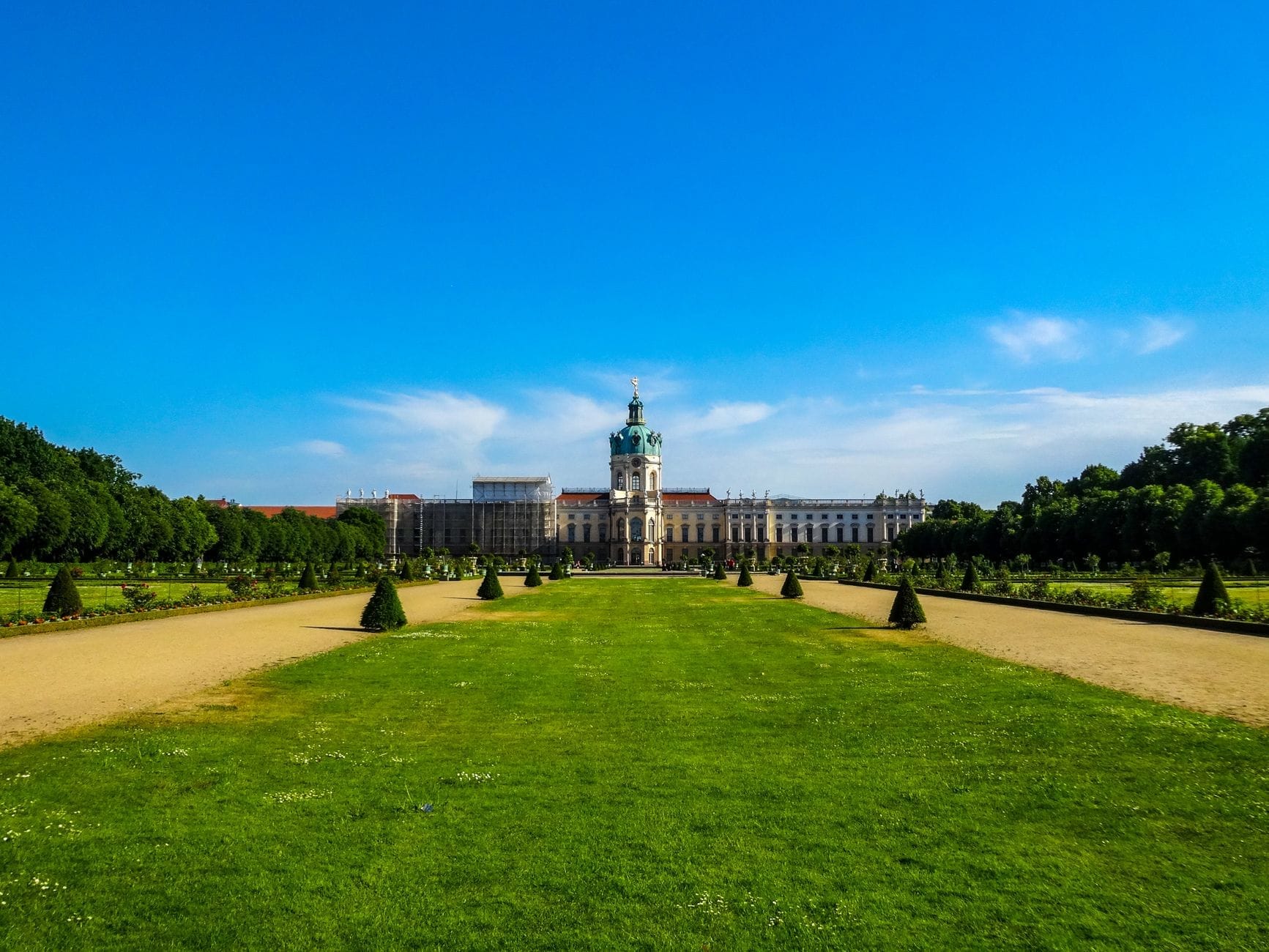
Schloss Charlottenburg is Berlin's largest and most architecturally significant palace complex, and the only one in the city to survive the 20th century in a form that still conveys genuine royal grandeur. Built originally as a summer residence for Sophie Charlotte, the wife of Elector Frederick III of Brandenburg, construction began in 1699. The palace expanded substantially over the following century as Prussia rose to become a European power, and the complex grew to reflect that ambition. Today it covers everything from the ornate Baroque interiors of the Old Palace to the Rococo-inflected rooms of the New Wing, with formal gardens stretching north toward the Spree. For the broader context of Museum Island and central Berlin, the palace offers something distinct: a self-contained world of court culture, away from the tourist density of Mitte.
The palace is managed by the Prussian Palaces and Gardens Foundation (Stiftung Preußische Schlösser und Gärten Berlin-Brandenburg, or SPSG), the same body that oversees Potsdam's palaces. That institutional backing shows in the quality of restoration and interpretation on offer. The palace was heavily damaged in World War II and painstakingly reconstructed in the postwar decades, a fact that adds a quiet layer of meaning to every gilded ceiling you see.
ℹ️ Good to know
The palace is closed on Mondays year-round. April–October hours: Tue–Sun 10:00–17:30. November–March: Tue–Sun 10:00–16:30. Last admission is 30 minutes before closing.
The Old Palace: Baroque Grandeur at Its Most Direct
The Old Palace forms the central section of the complex, crowned by the copper-green dome and the gilded figure of Fortuna that serves as a weathervane. This is the oldest part of the building, and the interiors reflect the tastes of the early Prussian court: heavy drapery, lacquered furniture, ceiling frescoes in earthy reds and golds, and the remarkable Porcelain Cabinet, where hundreds of Chinese and Japanese porcelain pieces are mounted floor-to-ceiling in a room designed to dazzle foreign dignitaries.
The chapel is one of the quieter highlights. It sits at the east end of the central building and retains its original liturgical furniture. Even visitors with no particular interest in religious architecture tend to slow down here. The acoustic quality of the space, largely stone and plaster, gives a faint echo to footsteps, and the light from the tall windows shifts noticeably through the morning.
Audio guides are available at the entrance and are genuinely useful here. The Old Palace is toured without a guide by default, and room labels alone do not convey the political significance of spaces like the Audience Chamber or the Silver Vault. Budget time to actually listen rather than rushing through.
Tickets & tours
Live prices and dates from our booking partner. If you book, we may earn a commission at no extra cost to you.
The New Wing: Frederick the Great's Rococo Taste
The New Wing (Neuer Flügel) was added under Frederick the Great in the 1740s and represents a distinct shift in aesthetic register. Where the Old Palace is weighty and ceremonial, the New Wing is lighter, more personal. The White Hall and Golden Gallery are the showpieces: the Golden Gallery in particular, a 42-metre long ballroom with mirrored walls and gilded stucco, is one of the finest Rococo interiors in Germany and holds up against comparison with far more famous rooms in Versailles or the Residenz in Munich.
The New Wing also contains a collection of 18th-century Prussian paintings and the apartments of Frederick William IV, making it relevant not just as a decorative experience but as a document of changing royal taste across nearly two centuries. The standard ticket (€12, €8 reduced) covers both the Old Palace and New Wing; the Charlottenburg+ pass includes these and the additional garden palaces.
💡 Local tip
If you are choosing between Old Palace and New Wing on a tight schedule, the New Wing's Golden Gallery is harder to find parallels for in Berlin. The Old Palace's Porcelain Cabinet is equally singular. Ideally, buy the combined or Charlottenburg+ ticket and see both.
The Palace Gardens: Formal Design and Open Space
The gardens behind the palace run north in a formal French layout, with clipped hedges, gravel paths, and a central canal reflecting the sky. Early mornings between April and October are the best time to walk here: the light is soft, the crowds are thin, and the symmetry of the layout reads most clearly without tour groups in the sight lines. By midday in summer the gardens fill with visitors eating lunch on the lawns, and the atmosphere becomes considerably more relaxed and less architectural. The gardens are free to enter and make a worthwhile addition to any parks itinerary in Berlin.
The Schinkel Pavilion (Schinkelsche Pavillon) and the Belvedere teahouse sit within the garden grounds and are covered by the Charlottenburg+ ticket. The Belvedere contains an impressive collection of Berlin KPM porcelain, which is of niche interest but genuinely beautiful if you appreciate the craft. The Mausoleum, at the western edge of the gardens, holds the tombs of Queen Luise and Kaiser Wilhelm I and is one of the more affecting spaces on the site, small, cool, and very quiet.
How the Experience Changes by Time of Day
Arriving at opening time (10:00) gives you the best conditions inside both palace buildings. Tour groups tend to arrive between 10:30 and 11:30, and the Porcelain Cabinet and Golden Gallery become noticeably crowded by late morning. On weekends in summer, queues at the ticket desk can add 20–30 minutes to your entry time, so purchasing tickets online via the SPSG website in advance is worth the small effort.
Late afternoon visits in the shoulder season (April–May or September–October) offer a different quality of light through the palace windows, and the crowds drop off after 15:00. In winter, the shorter hours (closing at 16:30) mean light inside the state rooms can feel slightly dim, but the gardens in frost or after light snow have a stillness that summer never provides.
Photography inside the palace is permitted without flash in most areas, though tripods are not allowed. The Golden Gallery is the most photographed interior, and getting a clean shot without other visitors requires arriving early on a weekday. The garden's central axis photographs best in the morning with the sun behind you if you are facing north.
Getting There and Practical Notes
Charlottenburg Palace sits in western Berlin, roughly 7 kilometres from the Brandenburg Gate. It is not on a U-Bahn or S-Bahn line directly, which is the main practical friction for visitors based in Mitte or Friedrichshain. The most reliable route is the M45 bus from S-Bahn station Zoologischer Garten (Zoo station), which drops you at the Luisenplatz/Schloss Charlottenburg stop directly in front of the palace forecourt. Buses 109 and 309 also serve the stop. The journey from Zoo takes around 10 minutes. Berlin's public transport network covers the journey well with a standard day ticket.
Accessibility at the Old Palace is reasonably good: there is a barrier-free entrance, an elevator to parts of the upper floor, and accessible restrooms on the first floor. A service column with a bell and intercom is located to the left of the central building projection for visitors who need assistance. The New Wing has some limitations and is noted by SPSG as conditionally accessible. Visitors with significant mobility restrictions should check directly with SPSG before planning around the upper floor rooms.
The surrounding neighbourhood of Charlottenburg offers several options for eating before or after your visit. The streets around Schloss Charlottenburg have cafés and a palace restaurant. For a longer afternoon in the area, the Kurfürstendamm shopping boulevard is a 15-minute walk or short bus ride south.
Is Charlottenburg Palace Worth the Trip?
For visitors primarily interested in contemporary Berlin, the city's street art, Cold War history, or nightlife culture, Charlottenburg Palace will feel like a detour to a different era and a different city. The travel time from central Berlin is not long, but the palace demands a real time investment to be worthwhile. Rushing through in 90 minutes leaves you with surface impressions only.
For visitors interested in European history, Baroque and Rococo architecture, or the Hohenzollern dynasty that shaped Prussia and later the German Empire, this is the most complete experience Berlin can offer in that category. It pairs well with a visit to the German Historical Museum in Mitte for a fuller picture of Prussian and German history across different periods.
The palace complex is not overhyped in the way that some Berlin attractions are. It is genuinely impressive, particularly the Golden Gallery and the gardens. What it is not is compact or easy to combine with other major sites in a single day. Plan it as its own half-day, ideally on a Tuesday through Friday when crowds are thinner and the interior rooms are easier to move through at your own pace.
Insider Tips
- Buy tickets online via the SPSG website before arriving, especially on summer weekends. The on-site queue at peak times can be significant and eats into your time with the rooms.
- The Charlottenburg+ ticket (€20 standard, €25 family) covers all the palace buildings including the Belvedere and Mausoleum. If you plan to spend more than two hours on site and also want to visit the garden palaces, it is almost always better value than buying only the standard €12 palace ticket.
- The Mausoleum at the western edge of the gardens is free to enter with the garden visit and is consistently less crowded than the main palace buildings. It holds the marble sarcophagi of Queen Luise and Kaiser Wilhelm I and is one of the most quietly powerful spaces in the complex.
- The formal gardens are free to enter and open during daylight hours even when the palace buildings are closed. If you arrive on a Monday when the interiors are shut, the garden walk alone is worthwhile, particularly when the canal and central parterre are in good light.
- Wear comfortable shoes with grip. The historical floors inside the palace, particularly on the upper level of the Old Palace, can be slippery, and soft shoe covers are provided over your footwear at the entrance to some rooms.
Who Is Charlottenburg Palace (Schloss Charlottenburg) For?
- History enthusiasts wanting to understand Prussian and Hohenzollern court culture from the 17th to early 20th century
- Architecture and design lovers drawn to Baroque and Rococo interiors, including one of Germany's finest gilded ballrooms
- Families with children who can appreciate formal gardens, open lawns, and the theatrical scale of a royal palace
- Photographers seeking grand interiors and symmetrical garden compositions away from the Mitte tourist core
- Visitors on a longer Berlin stay who have covered the major Mitte landmarks and want to explore a different dimension of the city's history
Nearby Attractions
Other things to see while in Charlottenburg:
- Berlin Zoological Garden
Germany's oldest zoo, opened in 1844, spreads across 35 hectares in the heart of Charlottenburg and houses one of the largest animal collections on earth. Whether you have two hours or a full day, this guide tells you exactly what to expect, when to go, and how to make the most of it.
- KaDeWe (Kaufhaus des Westens)
Kaufhaus des Westens, known universally as KaDeWe, is one of Europe's largest and most storied department stores. Open since 1907 in the heart of Schöneberg, it draws visitors as much for its extraordinary sixth-floor food hall as for its fashion floors. Entry is free, and the experience runs the full spectrum from window-shopping to serious luxury retail.
- Kaiser Wilhelm Memorial Church (Gedächtniskirche)
Standing at the heart of Breitscheidplatz, the Kaiser Wilhelm Memorial Church is one of Berlin's most recognizable landmarks: a shattered neo-Romanesque tower deliberately left as a ruin, flanked by a striking 1960s modernist church complex. Entry is free, and the contrast between old and new makes it one of the most thought-provoking sites in western Berlin.
- Kurfürstendamm (Ku'damm)
Kurfürstendamm, known to locals as Ku'damm, is Berlin's most storied commercial boulevard, stretching 3.5 kilometres from Breitscheidplatz to Rathenauplatz through Charlottenburg-Wilmersdorf. Originally a 16th-century riding path to the Grunewald hunting grounds, it was transformed into a 53-metre-wide boulevard in the late 19th century. Free to walk at any hour, it rewards visitors with layers of history, architecture, and street life that most shopping streets simply do not carry.
Planning a trip? Discover personalized activities with the Nomado app.