KaDeWe (Kaufhaus des Westens): Berlin's Grand Department Store
Kaufhaus des Westens, known universally as KaDeWe, is one of Europe's largest and most storied department stores. Open since 1907 in the heart of Schöneberg, it draws visitors as much for its extraordinary sixth-floor food hall as for its fashion floors. Entry is free, and the experience runs the full spectrum from window-shopping to serious luxury retail.
Quick Facts
- Location
- Tauentzienstraße 21–24, 10789 Berlin (Schöneberg)
- Getting There
- U Wittenbergplatz (U1, U2, U3)
- Time Needed
- 1.5–3 hours
- Cost
- Free entry; spending optional
- Best for
- Food lovers, design enthusiasts, rainy-day itineraries
- Official website
- www.kadewe.de/en/home
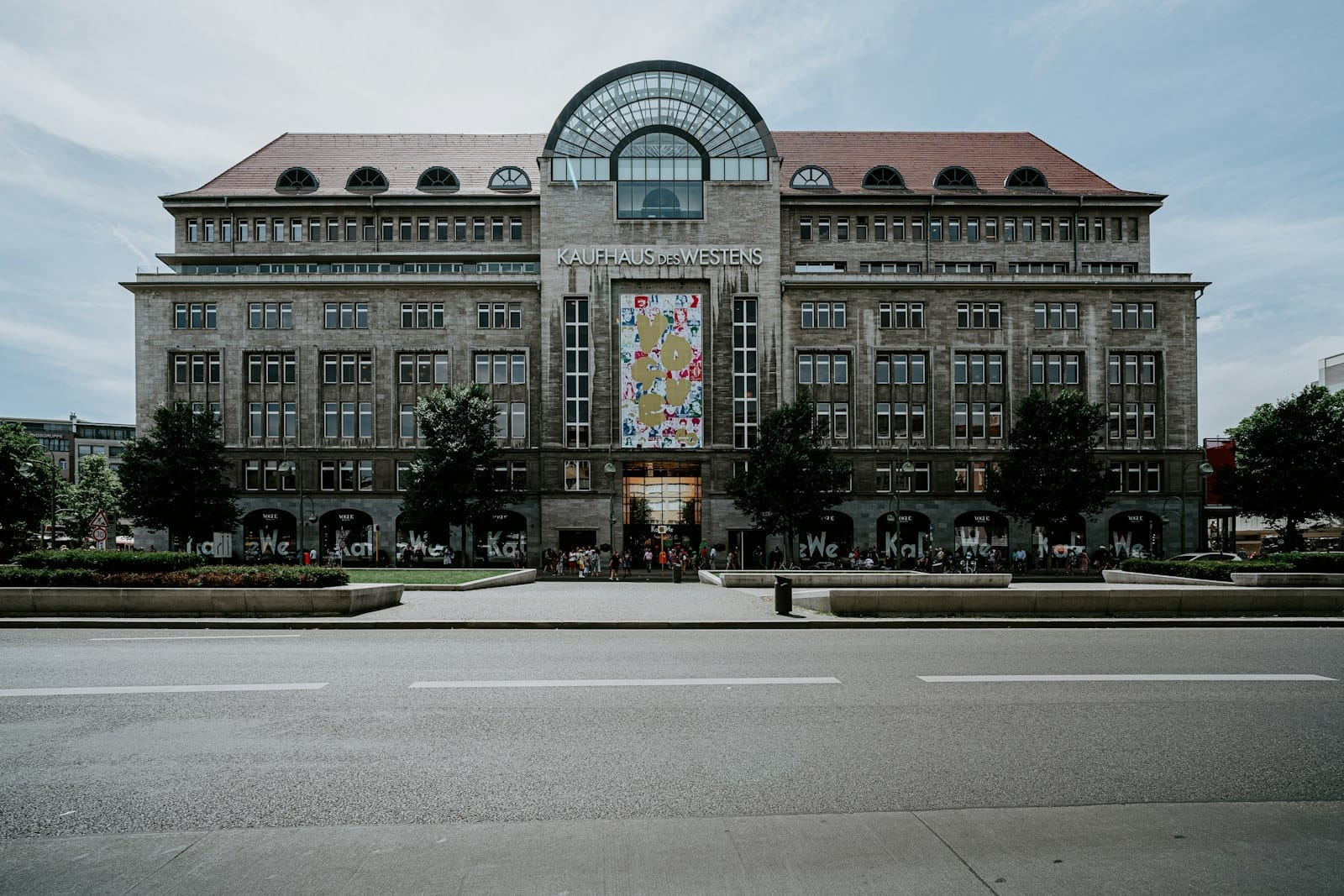
What KaDeWe Actually Is
KaDeWe, short for Kaufhaus des Westens (literally 'Department Store of the West'), opened in March 1907 on Tauentzienstraße in what was then the fashionable western expansion of the German imperial capital. With roughly 60,000 square metres of retail space spread across seven floors, it ranks among the largest department stores in continental Europe, second only to Paris's Galeries Lafayette by some measures. The name itself was a deliberate statement: positioned in the prosperous western quarter, it was designed to rival the luxury emporia of Paris and London from the moment it opened.
For many travelers, KaDeWe sits somewhere between a genuine shopping destination and an attraction in its own right. The building's sheer scale, the curated density of its departments, and the spectacle of the sixth-floor food hall all reward a visit even if you never open your wallet. That said, it would be dishonest not to note that this is, fundamentally, a commercial space. If luxury retail and high-end food shopping hold no interest for you, the novelty wears off after an hour.
ℹ️ Good to know
Opening hours: Monday to Saturday, 10:00–20:00. KaDeWe is usually closed on Sundays except for occasional special trading Sundays; check current hours before you visit.
The Sixth Floor: The Real Reason Most People Come
The sixth floor is KaDeWe's most celebrated feature, and the comparison to a food city within a building is not an exaggeration. The Feinschmeckeretage (gourmet floor) is a sprawling marketplace of prepared foods, fresh counters, specialty grocers, oyster bars, champagne stands, and restaurant counters. The smell changes as you move through it: fresh bread near the bakery section, the brine of shellfish near the seafood counters, roasting coffee at the espresso stands, and the sharp tang of aged cheeses in the charcuterie corridors.
Crowds on the sixth floor behave differently depending on the time of day. Weekday mornings between opening and noon are the calmest: staff are restocking, the counters are freshest, and you can actually hold a conversation with the vendors. Saturday afternoons are the most intense, with queues forming at the most popular counters and navigating the floor becoming a contact sport. If you want to eat here rather than just browse, aim for a weekday lunch slot.
The floor is genuinely worth treating as a food experience, not just a curiosity. Several counters sell high-quality prepared dishes that you can eat on-site at bar seating overlooking the floor. Smoked fish, charcuterie platters, and freshly shucked oysters are perennial options. The champagne bars are priced as you would expect in a luxury store, but the quality is consistent.
💡 Local tip
If you want to pick up exceptional German regional products (Thuringian sausages, Bavarian cheeses, Black Forest items) to take home, the sixth floor stocks a range that exceeds most airport duty-free options at better prices.
Tickets & tours
Hand-picked options from our booking partner. Prices are indicative; availability and final rates are confirmed when you complete your booking.
Skip-the-line ticket for Gemaldegalerie Berlin
From 14 €Instant confirmationPanoramapunkt Berlin ticket with skip-the-line option
From 9 €Instant confirmation1-Hour Berlin Spree River Cruise with On-Board Guide
From 21 €Instant confirmationFree cancellationSamurai Experience Berlin skip-the-line ticket
From 15 €Instant confirmation
Floors One to Five: Fashion, Cosmetics, and Design
The lower floors follow the architecture of a serious European luxury department store. The ground floor and first floor concentrate cosmetics, perfumery, and accessories, with the scent of competing fragrance counters creating a dense olfactory environment that can be overwhelming during busy periods. The beauty hall is large and well-stocked, with international brands alongside some German and European lines less commonly found outside Europe.
Floors two through five cover womenswear, menswear, children's clothing, home goods, and electronics, with the selection skewing toward premium and luxury labels. If you are looking for fast fashion or mid-market brands, KaDeWe is not the right store. The price points throughout are consistent with luxury department stores in any major European capital.
The building's interior architecture is worth pausing to notice. The main atrium and staircase areas retain a grandeur that was largely rebuilt after damage in World War II and again following a partial roof collapse in 1943 caused by an American B-24 bomber crashing into the building. The store has been renovated multiple times since, with the most recent significant renovation updating the upper floors. For context on the surrounding shopping district, the Kurfürstendamm runs just minutes away and offers a very different retail environment.
History and Context: Why This Building Matters
KaDeWe's history tracks closely with Berlin's twentieth-century upheavals. It opened in 1907 as the German empire was at its commercial peak. It survived both world wars, though with significant damage in the second. During the Cold War, it became an important symbol in the divided city: located in West Berlin, it represented Western consumer abundance in direct contrast to the rationed goods available in East Berlin. For West Berliners and visiting East Germans (and later, for East Germans flooding west after 1989), the store carried genuine symbolic weight that extended well beyond shopping.
Today that political dimension has faded, but the store still functions as a cultural landmark of the Charlottenburg district. The surrounding neighborhood, once the undisputed commercial heart of West Berlin, now shares that role with Mitte and other areas that gained prominence after reunification. Understanding KaDeWe in its Cold War context adds a layer of meaning to the visit that the store itself does relatively little to advertise. For a deeper read on divided Berlin, the Cold War Berlin guide provides essential background.
Getting There and Navigating the Visit
The store sits directly at Wittenbergplatz, served by the U1, U2, and U3 U-Bahn lines. The U Wittenbergplatz station itself is a small architectural attraction: an early twentieth-century station hall that has been carefully preserved, with a sign outside listing Nazi concentration camps as a permanent memorial reminder. It takes under ten minutes by U-Bahn from Zoologischer Garten, and around twenty minutes from Alexanderplatz with a transfer.
Multiple bus lines also stop at nearby Breitscheidplatz and Europa-Center, making the area one of the better-connected points in the western city. If you are combining KaDeWe with the Kaiser Wilhelm Memorial Church or a walk along Kurfürstendamm, all three sit within a five-minute walk of each other. Building the area into a half-day in Charlottenburg is a natural structure for a Berlin itinerary.
Inside the store, floor maps are available at the entrances and information desks on each level. Staff generally speak English at the main service counters. The store gets genuinely crowded on Saturdays and in the weeks before Christmas, when queues can form at escalators during peak hours. Weekday mornings offer the smoothest experience.
⚠️ What to skip
KaDeWe is usually closed on Sundays, in line with Berlin's Sunday trading restrictions, though occasional special shopping Sundays are exceptions. Arriving on a typical Sunday to find the doors shut is among the most common disappointed-tourist experiences in this part of the city.
Photography and Practical Notes
Photography for personal use is generally permitted in public areas of the store, and the sixth-floor food hall is one of the more photogenic commercial interiors in Berlin, particularly the seafood and charcuterie sections where the presentation is deliberately theatrical. Avoid photographing other customers without consent, and be aware that staff at some luxury counters may ask you not to photograph products or price displays.
Bags are not checked on entry. Fitting rooms are available on the clothing floors. The store has multiple cafes and the sixth-floor restaurant options if you need to break up a longer visit. No specific detailed accessibility information was available from official sources at the time of writing; contact KaDeWe directly via their official website if you have specific mobility requirements.
KaDeWe makes a particularly practical stop on a rainy Berlin day, when outdoor attractions lose much of their appeal. For a broader look at indoor options across the city, the best museums in Berlin and the Berlin food guide both offer useful context for filling a full day.
Insider Tips
- The sixth floor food hall is most rewarding on a weekday morning when counters are fully stocked and staff have time to explain products. Saturday afternoon is the hardest time to navigate it well.
- The Wittenbergplatz U-Bahn station just outside the entrance is worth a look in itself. The preserved early-twentieth-century station hall and its memorial signage outside are easy to miss if you rush straight into the store.
- KaDeWe's cosmetics and perfumery floors stock several German and European niche fragrance brands that are difficult to find in North American or Asian markets, making this a genuinely useful stop for fragrance enthusiasts.
- The store marks down seasonal items significantly in the weeks after Christmas and in late-summer clearance sales. If your visit coincides with these periods, prices on luxury goods can drop substantially.
- If you want to eat on the sixth floor without queuing, bar seating along the perimeter counters tends to turn over faster than the more formal restaurant sections. Arrive at opening time or after 14:00 for the best chance of a seat.
Who Is KaDeWe (Kaufhaus des Westens) For?
- Food lovers who want to explore German and European regional specialties in one concentrated space
- Travelers interested in Cold War Berlin history and the symbolic geography of West Berlin
- Rainy-day visitors looking for a substantial indoor experience that does not require a museum ticket
- Shoppers seeking European luxury brands and beauty products in a single well-organized building
- Visitors combining a Charlottenburg half-day with the Kaiser Wilhelm Memorial Church and Kurfürstendamm
Nearby Attractions
Other things to see while in Charlottenburg:
- Berlin Zoological Garden
Germany's oldest zoo, opened in 1844, spreads across 35 hectares in the heart of Charlottenburg and houses one of the largest animal collections on earth. Whether you have two hours or a full day, this guide tells you exactly what to expect, when to go, and how to make the most of it.
- Charlottenburg Palace (Schloss Charlottenburg)
Schloss Charlottenburg is Berlin's largest surviving royal palace, tracing Hohenzollern court life from the 17th to early 20th century. The complex includes the ornate Old Palace, the New Wing, sprawling formal gardens, and several pavilions. It sits in western Berlin and rewards a half-day visit.
- Kaiser Wilhelm Memorial Church (Gedächtniskirche)
Standing at the heart of Breitscheidplatz, the Kaiser Wilhelm Memorial Church is one of Berlin's most recognizable landmarks: a shattered neo-Romanesque tower deliberately left as a ruin, flanked by a striking 1960s modernist church complex. Entry is free, and the contrast between old and new makes it one of the most thought-provoking sites in western Berlin.
- Kurfürstendamm (Ku'damm)
Kurfürstendamm, known to locals as Ku'damm, is Berlin's most storied commercial boulevard, stretching 3.5 kilometres from Breitscheidplatz to Rathenauplatz through Charlottenburg-Wilmersdorf. Originally a 16th-century riding path to the Grunewald hunting grounds, it was transformed into a 53-metre-wide boulevard in the late 19th century. Free to walk at any hour, it rewards visitors with layers of history, architecture, and street life that most shopping streets simply do not carry.