Charlottenburg is Berlin's most elegantly proportioned neighborhood, built around the grand sweep of Kurfürstendamm and anchored by the city's largest royal palace. It trades the gritty energy of the east for wide boulevards, department stores, concert halls, and townhouses that recall Berlin's pre-war peak as a European capital.
Charlottenburg occupies the western arc of central Berlin with a confidence that feels earned rather than performed. Where other neighborhoods announce themselves through street art and pop-up bars, Charlottenburg makes its case through a baroque palace, a 3.5-kilometer shopping boulevard, and a cultural infrastructure that includes one of the world's great philharmonic halls. It is the part of Berlin that never needed to reinvent itself.
Orientation
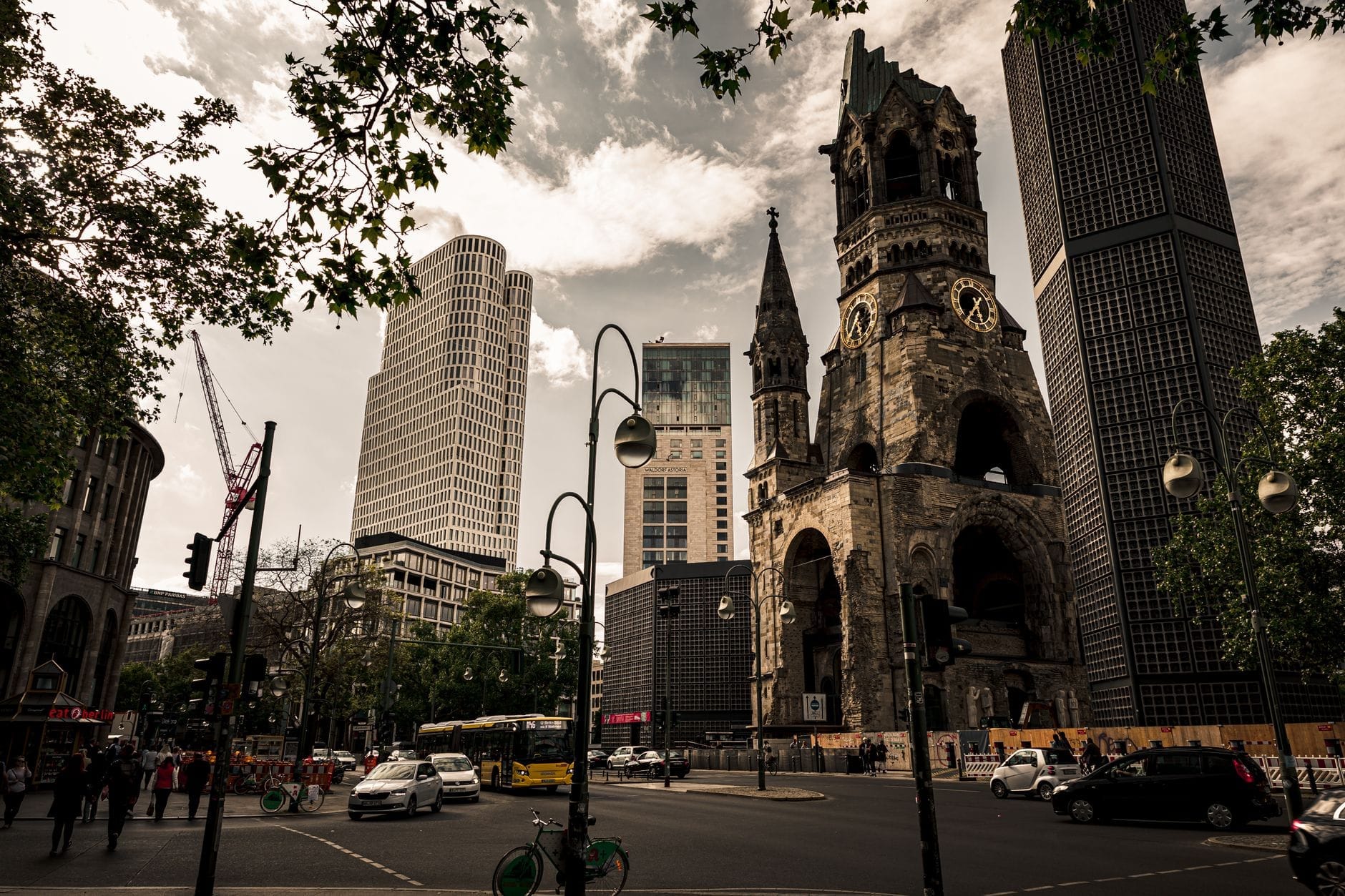
Charlottenburg sits in the central-western part of Berlin, forming the core of the borough Charlottenburg-Wilmersdorf. Its spine is Kurfürstendamm, the long diagonal boulevard that runs southwest from Breitscheidplatz, where the ruined Kaiser Wilhelm Memorial Church marks the neighborhood's eastern threshold. From there, the grid of streets extends north toward Schloss Charlottenburg and the Spree River, and west toward the S-Bahn station at Charlottenburg and the green edge of Westend.
The neighborhood's boundaries are looser than a map suggests. Most visitors concentrate on the corridor between Breitscheidplatz and Savignyplatz, roughly 1.5 kilometers along Kurfürstendamm and the parallel Kantstraße. This is where the density of hotels, restaurants, shops, and cinemas is highest. North of Kantstraße, the streets broaden and quiet down: Schloss Charlottenburg and its baroque gardens are about a 20-minute walk from Breitscheidplatz, or a short bus ride up Sophie-Charlotte-Straße.
To the southwest, Charlottenburg blurs into Wilmersdorf, a quieter residential extension of the same urban character. To the east, across the line of Budapester Straße and Tauentzienstraße, the district connects to the southern edge of Mitte and the Tiergarten quarter. Understanding that geography helps: Charlottenburg is not isolated in the west but sits comfortably within 20 minutes of Brandenburg Gate and Museum Island by U-Bahn or S-Bahn.
Character & Atmosphere
Charlottenburg runs on a different rhythm from the rest of Berlin. The city's eastern neighborhoods are defined by nightlife and counter-culture that evolved from post-reunification emptiness. Charlottenburg never had that emptiness. It was West Berlin's commercial and cultural center during the decades when the Wall divided the city, and it still carries that weight with a certain poise.
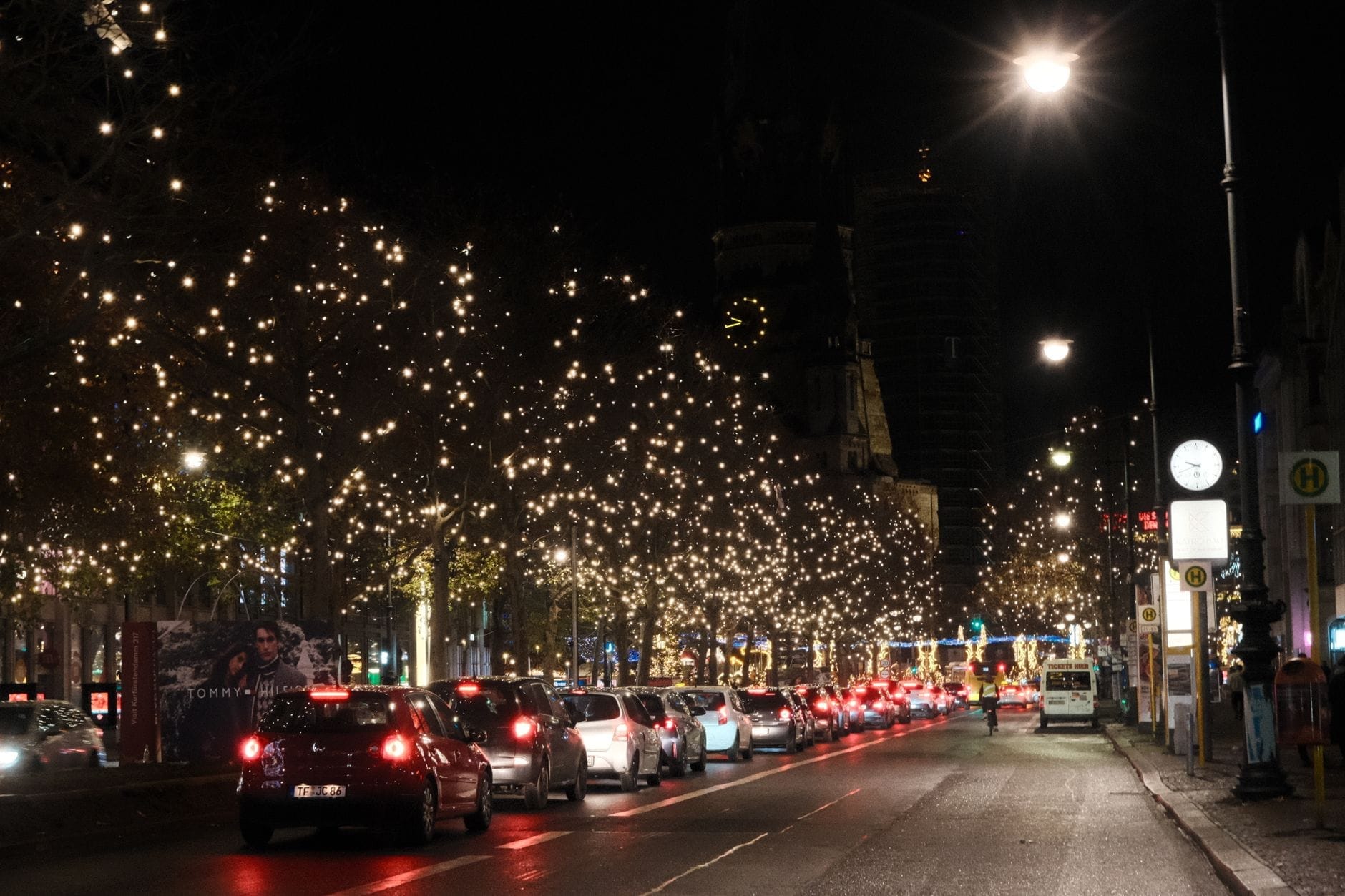
Mornings here are purposeful. By 8am, the Ku'damm is already moving: commuters crossing at Adenauerplatz, café tables filling on Savignyplatz, delivery vans unloading outside department stores. The light in autumn and winter comes in low and golden over the western boulevard, catching the limestone facades of prewar apartment buildings that survived the bombing intact. The neighborhood has more architectural continuity than almost anywhere else in Berlin, which gives it an unhurried, settled feeling.
By afternoon, the shopping streets are at their most crowded, particularly the stretch of Kurfürstendamm between Breitscheidplatz and Uhlandstraße. Tourists mix with local shoppers and office workers. The side streets around Savignyplatz are noticeably calmer: bistros, bookshops, and wine bars replace chain stores, and the pace drops considerably. This is the part of Charlottenburg that residents actually use on a Wednesday afternoon.
After dark, Charlottenburg does not compete with Friedrichshain or Kreuzberg for club culture. The nightlife here is more likely to involve a concert at the Philharmonie, dinner at a long-established restaurant, or drinks at one of the Savignyplatz bars that close at a civilized 2am rather than the following afternoon. If you want underground techno, look east. If you want a well-made cocktail and room to have a conversation, Charlottenburg delivers.
ℹ️ Good to know
Charlottenburg was the cultural and commercial heart of West Berlin from 1961 to 1989. Much of the neighborhood's existing hotel stock, department stores, and theatrical venues date from or were expanded during that era, which partly explains why it feels more polished and less experimental than eastern districts.
What to See & Do
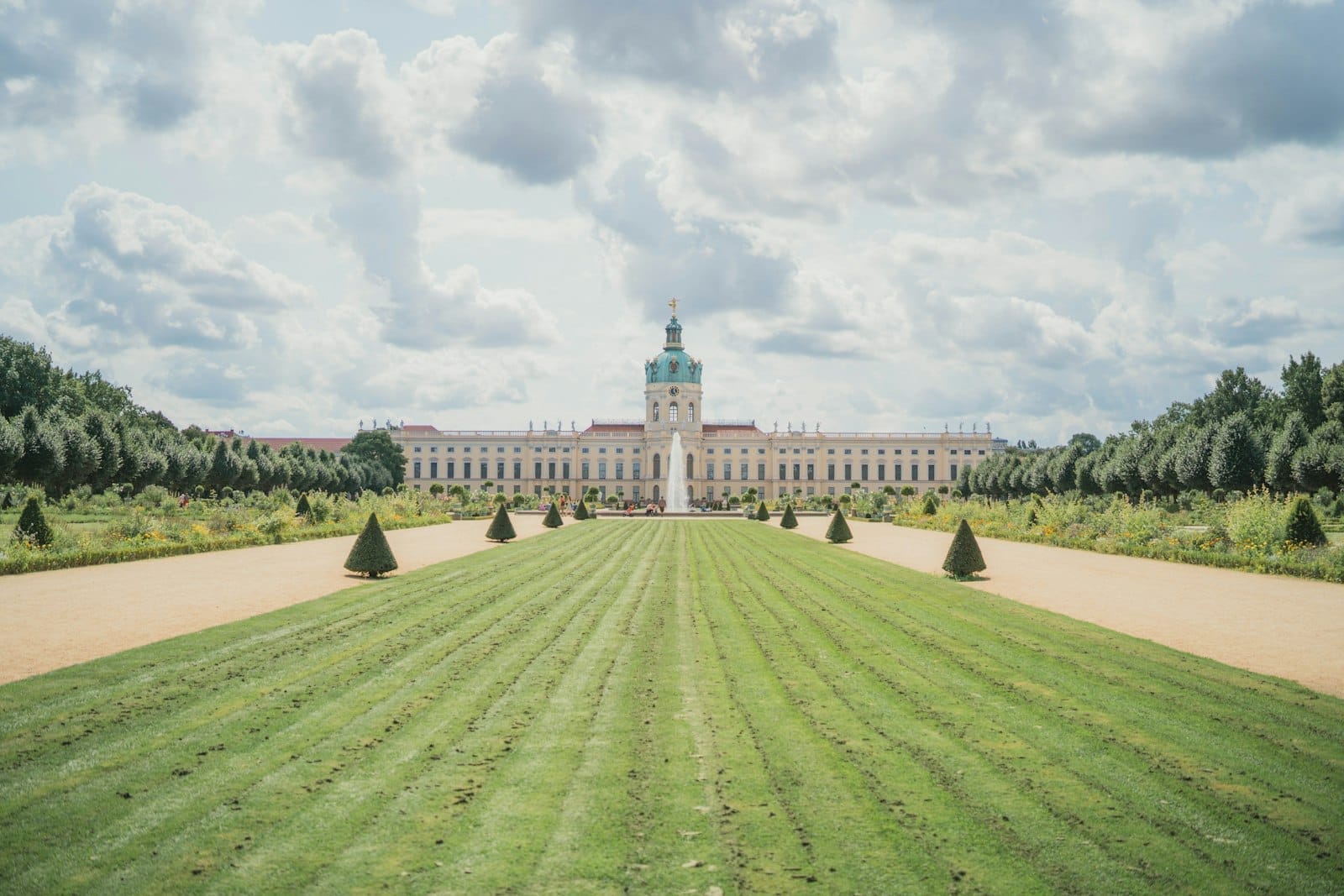
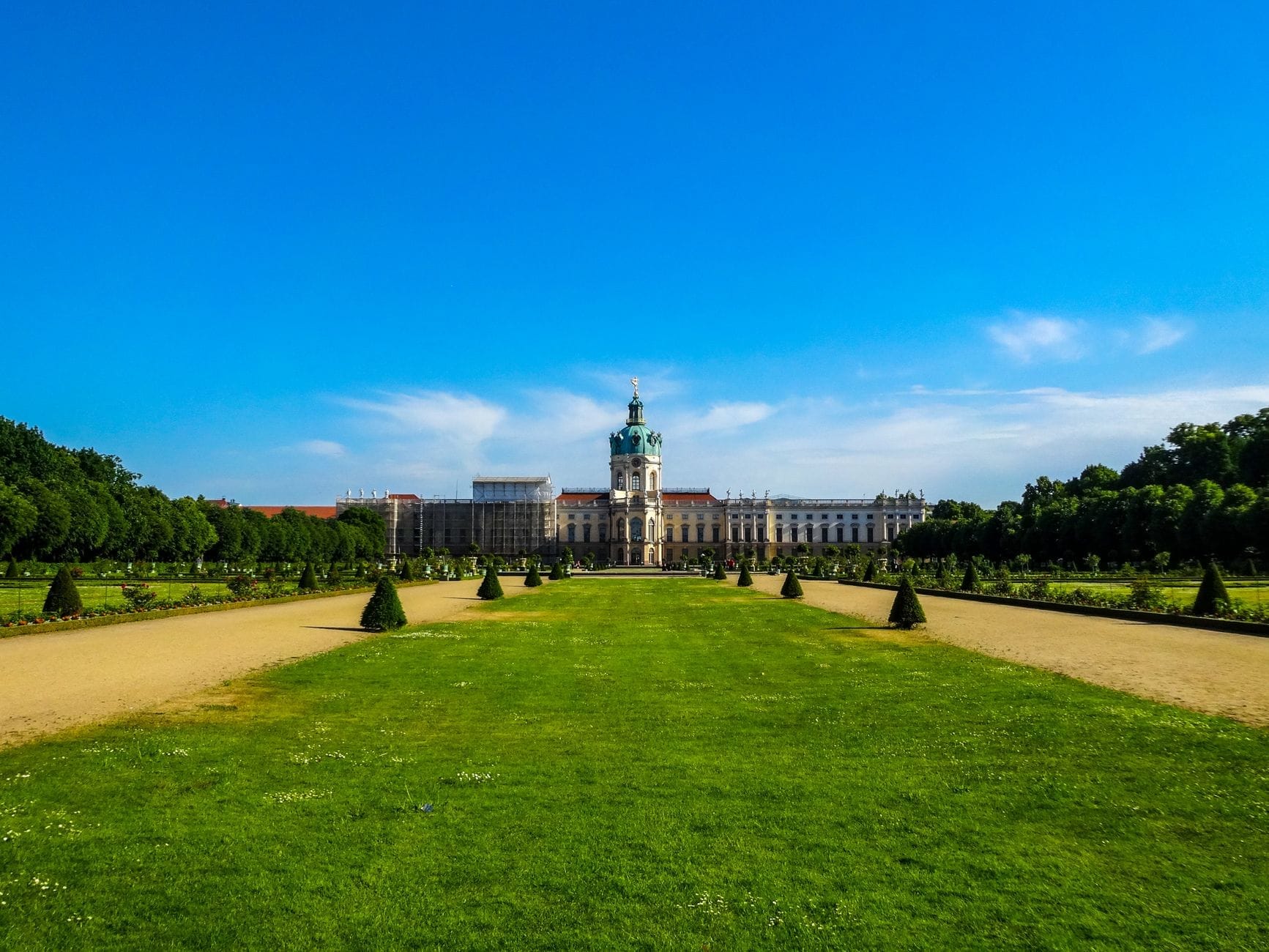
The anchor of any visit is Charlottenburg Palace, Berlin's largest surviving royal residence. Built in the late 17th century for Sophie Charlotte, the consort of the future King Frederick I of Prussia, the palace was expanded over the following century into a sprawling baroque complex with formal gardens descending to the Spree. The interior rooms, particularly the Porcelain Cabinet and the Golden Gallery, demonstrate the Hohenzollern court's taste for theatrical excess. The gardens are free to enter and worth visiting even if you skip the interior.
At the eastern end of Kurfürstendamm, the Kaiser Wilhelm Memorial Church is one of Berlin's most arresting architectural moments. The ruined tower of the original 1895 church was deliberately preserved after World War II as a memorial against war, and the midnight-blue mosaic interior of the modernist annex built alongside it in the 1960s is genuinely moving. The contrast between the crumbling neo-Romanesque spire and the hexagonal glass tower next to it tells more about 20th-century Berlin than most museums.
West of Charlottenburg's urban center, the borough extends to the Grunewald Forest and the Olympiastadion Berlin. The Olympic Stadium, built for the 1936 Games under the Nazi regime, is a significant and complicated site. Tours of the grounds are available on non-match days, and the structure itself is an extraordinary example of Albert Speer-era monumental architecture, worth seeing precisely because it refuses to look comfortable.
Charlottenburg Palace and baroque gardens – allow 2 to 3 hours for the full complex
Kaiser Wilhelm Memorial Church – 20 minutes minimum, more if you enter the new church
Käthe Kollwitz Museum – dedicated to the German Expressionist artist, located in the theatre building at Charlottenburg Palace
C/O Berlin – a major international photography gallery housed on Hardenbergstraße
Olympiastadion Berlin – 45 minutes from central Charlottenburg by S-Bahn, guided tours available
Savignyplatz – the neighborhood's most livable square, ringed by restaurants and independent shops
💡 Local tip
The gardens of Charlottenburg Palace are free to enter year-round and are at their best in late spring when the formal parterres are in bloom. The palace itself requires a ticket, and timed entry is advisable in summer.
Eating & Drinking
Charlottenburg's food scene reflects its character: more established than experimental, with a high baseline quality and prices to match. The main commercial strip along Kurfürstendamm and Tauentzienstraße is heavy with international chains and tourist-oriented restaurants. For better eating, move one block in either direction. Kantstraße, running parallel to Ku'damm one block north, has become one of the city's most interesting restaurant streets, with a concentration of Chinese, Vietnamese, Taiwanese, and Japanese kitchens that draws serious food-minded Berliners from across the city. See the Berlin food guide for a broader overview of the city's dining landscape.
Savignyplatz is the neighborhood's most pleasant dining address. The square itself is modest, but the restaurants spilling out around it represent the kind of Franco-German bistro cooking that Charlottenburg does well: roast chicken, good wine lists, bread that arrives without being requested. These are places for a proper sit-down meal, not a quick lunch.
Fasanenstraße, running south from Kantstraße toward Ku'damm, is worth knowing for its independent cafés. The street is quieter and more residential in feel, with coffee shops that attract a local clientele of architects and gallery professionals rather than tourists. Breakfast and brunch culture runs strong here through late morning on weekends.
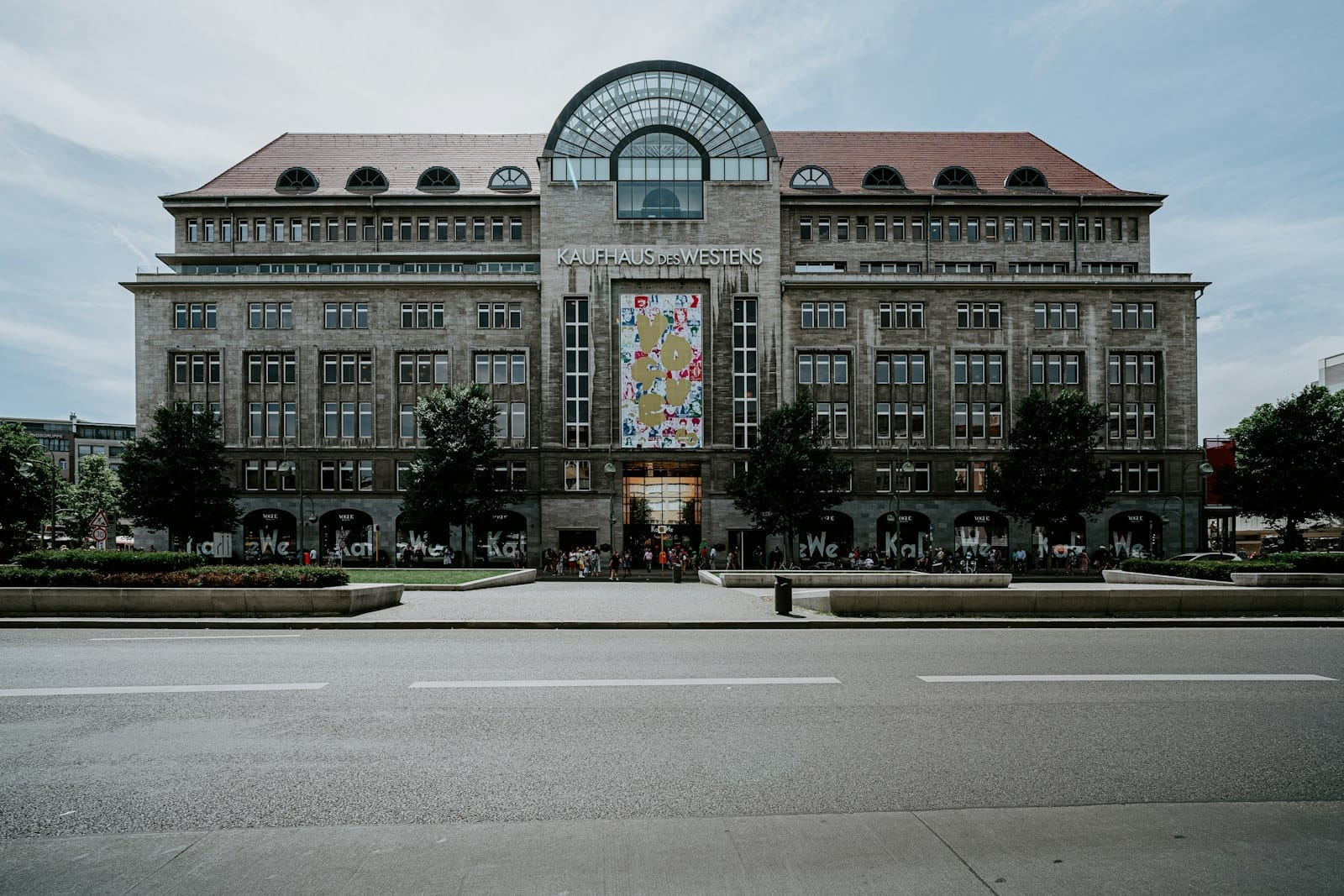
For a department store food experience, the basement food hall of KaDeWe on Tauentzienstraße is genuinely remarkable. KaDeWe, short for Kaufhaus des Westens, has one of the largest and most comprehensive gourmet food floors in Europe: fishmongers, cheese counters, patisseries, sushi bars, and a champagne bar occupying the seventh floor with views over the surrounding rooftops. Even if you are not buying anything, it is worth treating as an attraction.
Kantstraße – the best street for Asian restaurants in western Berlin; range from budget noodle shops to mid-range sit-down
Savignyplatz – Franco-German bistros and wine bars; mid-range to upscale
Fasanenstraße – independent cafés; good for breakfast and afternoon coffee
KaDeWe food hall – upscale deli and prepared foods, sixth-floor champagne and oyster bar
Breitscheidplatz area – avoid for serious eating; focus on chains and tourist traps
Getting There & Around
Charlottenburg is well connected to Berlin's public transport network. The most central U-Bahn stations are Kurfürstendamm (U1, U9), Uhlandstraße (U1), Adenauerplatz (U7), and Zoologischer Garten (U2, U9). S-Bahn services run through the neighborhood at Zoologischer Garten (S3, S5, S7, S9) and Charlottenburg station (S3, S5, S7, S9) further west. Regional trains also stop at Zoologischer Garten, making it reachable from Berlin Brandenburg Airport without changing to another line. For a broader overview of how to move around the city, consult the getting around Berlin guide.
The BVG operates several high-frequency bus routes along Kurfürstendamm and Kantstraße. Bus 109, 110, M29, and M49 are the most useful for moving along the main corridor without descending to the U-Bahn. For Charlottenburg Palace specifically, bus M45 runs north from Zoologischer Garten via Richard-Wagner-Platz to the palace forecourt.
Within the neighborhood itself, Charlottenburg is highly walkable. The distance from Breitscheidplatz to Savignyplatz is under 10 minutes on foot along Ku'damm. From Savignyplatz to Charlottenburg Palace is roughly 25 to 30 minutes walking north through Stuttgarter Platz, a pleasant route through one of the neighborhood's more local-feeling squares. Cycling is practical on the main roads, and the bike lane infrastructure on Kantstraße and Kurfürstendamm is reasonably well developed.
💡 Local tip
Zoologischer Garten station is the district's main transit hub and connects U-Bahn, S-Bahn, regional rail, and long-distance buses. If you are arriving in Charlottenburg from Berlin Brandenburg Airport, regional trains RE7 or RB14 stop here directly, making it one of the easier neighborhoods to reach without navigating multiple connections.
Where to Stay
Charlottenburg is one of Berlin's most practical bases for visitors, particularly those who prioritize comfort, ease of transit, and proximity to major cultural sites without wanting to be in the thick of Mitte's tourist density. The hotel supply here is extensive: the neighborhood has hosted international visitors since the pre-war era, and the stock ranges from large four and five-star hotels near Zoologischer Garten to smaller boutique properties on the side streets around Savignyplatz. For a full overview of Berlin accommodation options, the where to stay in Berlin guide covers all major neighborhoods.
The Savignyplatz area is the sweet spot for most visitors: close enough to Ku'damm to be convenient, far enough from Breitscheidplatz to avoid the worst of the street noise and tourist crowd. Hotels in this pocket tend to be mid-range to upscale, occupying prewar buildings with high ceilings and solid soundproofing.
Travelers who want to stay near Charlottenburg Palace rather than the commercial center will find the streets around Sophie-Charlotte-Platz and Spandauer Damm quieter and more residential. The trade-off is slightly longer transit times to Museum Island and central Mitte, typically 25 to 35 minutes by U-Bahn. That is manageable for most visitors, particularly those who plan to spend significant time in western Berlin.
⚠️ What to skip
The immediate vicinity of Zoologischer Garten station and Breitscheidplatz can feel rough after dark, with some persistent street-level activity near the station entrances. It is safe by any objective measure, but noticeably different in atmosphere from the quieter residential streets two blocks away. Choose accommodation on side streets rather than directly on the square if light sleeper or sensitive to urban edge.
Who Charlottenburg Is For
Charlottenburg will not appeal to every visitor. Travelers who come to Berlin specifically for the techno scene, the street art, the scrappy post-industrial atmosphere, or the raw energy of neighborhoods like Friedrichshain and Kreuzberg may find Charlottenburg too composed, too familiar. The coffee is good but not obsessively sourced. The bars close at a reasonable hour.
What Charlottenburg offers instead is coherence. It is a neighborhood with a clear identity built over more than a century: royal architecture, serious retail, concert halls, and restaurants that take service and wine lists seriously. For first-time visitors to Berlin who want a reliable base with excellent transit connections and proximity to major sites including Kurfürstendamm and the Kaiser Wilhelm Memorial Church, Charlottenburg is one of the most practical choices in the city. For repeat visitors who want to spend time on the western side of Berlin, with day trips to Grunewald or Olympiastadion, it makes genuine sense as a base.
TL;DR
Charlottenburg is Berlin's most polished central-west neighborhood, anchored by Kurfürstendamm, Charlottenburg Palace, and excellent transit connections at Zoologischer Garten.
Best for: first-time Berlin visitors, travelers prioritizing comfort and convenience, those interested in western Berlin's cultural sites including the palace, KaDeWe, and the Philharmonie.
Not ideal for: visitors seeking Berlin's club culture, underground art scene, or budget accommodation; the neighborhood's strengths are establishment rather than experimentation.
Eating is best away from Ku'damm itself: Kantstraße for Asian cuisine, Savignyplatz for European bistros, Fasanenstraße for quieter cafés.
The area around Zoologischer Garten station has some urban edge at night; side streets toward Savignyplatz are noticeably calmer and more comfortable for accommodation.
Three days in Berlin is enough to cover the essential history, art, and culture of Germany's capital, but only if you plan smartly. This day-by-day itinerary groups attractions by location, cuts the tourist traps, and gives you the practical details to make every hour count.
Berlin runs 80 to 100+ Christmas markets each season, spread across dozens of neighbourhoods with wildly different characters. This guide covers the best markets, when to go, what things cost, how to get around, and what to skip.
Berlin's flea markets are a city institution, drawing locals and visitors every Sunday to browse vintage clothing, vinyl records, GDR curiosities, and handmade goods. This guide covers the best markets across the city, from the massive and famous to the small and locals-only.
Berlin's food scene is unlike anywhere else in Germany. It mixes post-war street food traditions with Turkish culinary heritage, international market culture, and a thriving modern restaurant scene. This guide covers what to eat, where to find it, and how much to pay.
Summer in Berlin runs from June through August and offers long daylight hours, warm temperatures, open-air events, and easy access to lakes and river cruises. This guide covers what the weather is actually like, the best outdoor activities, where locals spend their time, and what to pack.
Berlin in winter is colder, darker, and quieter than summer — but that's exactly what makes it compelling. From Advent Christmas markets to uncrowded museum halls and budget-friendly hotels, this guide covers what to expect, what to skip, and how to make the most of the season.
Berlin is surrounded by dozens of swimmable lakes, many reachable by S-Bahn in under 30 minutes. This guide covers the best spots for a beach day, a forest swim, or a full lake day trip, from classic lidos to quieter shores.
Berlin has one of the world's most established and expansive queer scenes, rooted in over a century of LGBTQ+ history. This guide covers the best neighborhoods, bars, clubs, cultural institutions, Pride events, and practical tips for LGBTQ+ travelers visiting Berlin.
Berlin holds more memorials per square kilometer than almost any city on earth. This guide covers the essential sites across the city, from Nazi-era documentation centers to Cold War border crossings, with practical advice on making the most of each visit.
Berlin's after-dark scene is unlike anywhere else in the world. This guide covers the top clubs, bar districts, door policy realities, seasonal shifts, and practical logistics so you spend less time queuing and more time on the dancefloor.
Berlin remains one of Europe's more affordable capitals, but prices have risen. This guide breaks down realistic daily budgets, the cheapest ways to get around, free and low-cost attractions, and where to eat well without spending much — all updated for 2026.
The Reichstag Dome is one of Berlin's most iconic experiences, and entry is completely free. But you cannot simply walk up and go in. This guide covers the registration process, opening hours, seasonal closures, guided tour options, and the best times to visit, so you arrive prepared and don't waste a trip.
Berlin is one of Europe's most visited cities, and for most travelers it is perfectly safe. But petty theft, transit scams, and a few recurring tourist traps are real. This guide covers what the risks actually look like, where they are concentrated, and exactly how to avoid them.
Berlin is one of the world's great open-air galleries, with significant clusters of murals and graffiti across Friedrichshain, Kreuzberg, Mitte, and beyond. This guide covers the best locations, iconic individual pieces, the URBAN NATION museum, Teufelsberg, and everything you need to plan a serious street art itinerary.
The Berlin to Prague train is one of Europe's most rewarding rail journeys: direct EuroCity service, around 4 hours, and fares starting from €25 if you book ahead. This guide covers schedules, prices, booking platforms, seat reservations, and what to expect on board.
Berlin rewards those who go high. Whether you climb a Cold War listening station, ride a lift to 203 meters, or sip a drink on a rooftop above the Ku'damm, the city looks extraordinary from above. This guide covers the best viewpoints and rooftop bars in Berlin, with practical advice on tickets, timing, and what to expect.
Berlin is one of the world's great walking cities, where every street corner carries a layer of history. This guide covers the top attractions to include on guided tours and self-guided walks, from the monumental boulevards of Mitte to the Wall memorials of Friedrichshain.
The Berlin Wall divided a city and defined an era. This guide covers every major surviving site, the history you need to understand what you're looking at, practical visitor information, and honest advice on how to make the most of your time.
The Berlin WelcomeCard promises unlimited public transport and discounts at 170+ attractions. But it only makes financial sense for certain types of visitors. This guide breaks down both versions, the real math behind the savings, and who should skip it entirely.
Berlin is one of Europe's most family-friendly cities, with world-class museums, vast parks, excellent public transport, and enough hands-on attractions to keep children genuinely engaged. This guide covers the best activities, practical logistics, and honest advice for travelling to Berlin with kids.
Berlin has around 175 museums, from ancient civilizations on Museum Island to Cold War surveillance headquarters in Friedrichshain. This guide cuts through the noise and picks the museums worth your time, organized by theme so you can plan your days efficiently.
Berlin rewards visitors in every season, but not equally. This guide breaks down what to expect month by month, from summer festival heat to winter market charm, so you can choose the trip that actually matches your priorities.
Berlin preserves more Cold War history than almost any city on earth. This guide covers the essential sites, from the Berlin Wall Memorial to the Stasi prison in Hohenschönhausen, with honest assessments of what's worth your time and what's overrated.
Berlin's position at the heart of northern Germany makes it one of Europe's best bases for day trips. Within an hour by train you can reach a Rococo palace, a former concentration camp, a vast lake, or a Cold War spy station. This guide covers the best excursions from the city, with practical travel advice for each.
Berlin is one of Europe's most rewarding cities for budget travelers. From world-class memorials and open-air galleries to vast parks and free museums, here are 20 genuinely free experiences that showcase the best of the German capital.
Berlin has one of Europe's most comprehensive public transport networks, but it comes with its own rules, zones, and quirks. This guide covers everything from ticket prices and fare zones to night buses, cycling, and getting in from the airport — so you spend less time figuring out logistics and more time actually exploring the city.
Museum Island is one of Europe's great cultural concentrations: five world-class museums on a sliver of land in the heart of Berlin, all within a UNESCO World Heritage Site. This guide covers every practical detail you need to make the most of a visit, from tickets and timing to which collections are worth your time.
Berlin rewards curious travelers with an extraordinary range of experiences, from free Cold War memorials and five-museum island complexes to legendary nightlife and Sunday flea markets. This guide cuts through the noise with specific prices, honest assessments, and practical logistics to help you plan the city your way.
Berlin's food scene runs deeper than döner kebab and currywurst. This guide covers where to eat in Berlin across every budget and neighborhood, from legendary street food institutions to world-ranked fine dining, with practical advice on reservations, prices, and what to skip.
Choosing where to stay in Berlin shapes your entire trip. This guide breaks down the city's main neighborhoods by traveler type, budget, and priorities, so you can find the right base without second-guessing your booking.