Unter den Linden: Berlin's Grand Boulevard Explained
Stretching 1.5 kilometres from the Brandenburg Gate to the Berlin Palace, Unter den Linden is the spine of historic Berlin. Free to walk at any hour, it passes opera houses, embassies, major museums, and rows of linden trees that have lined the route since 1647.
Quick Facts
- Location
- Unter den Linden, 10117 Berlin, Mitte
- Getting There
- S+U Brandenburger Tor (S1, S2, S25, S26, U5); U Unter den Linden (U5); S+U Friedrichstraße (S1, S2, S25, S26, S3, S5, S7, S75, S9)
- Time Needed
- 45 minutes to walk end-to-end; 2–4 hours with museum or opera stops
- Cost
- Free to walk; individual attractions along the boulevard charge their own admission
- Best for
- History lovers, architecture walkers, first-time Berlin visitors
- Official website
- www.visitberlin.de/en/unter-den-linden
What Unter den Linden Actually Is
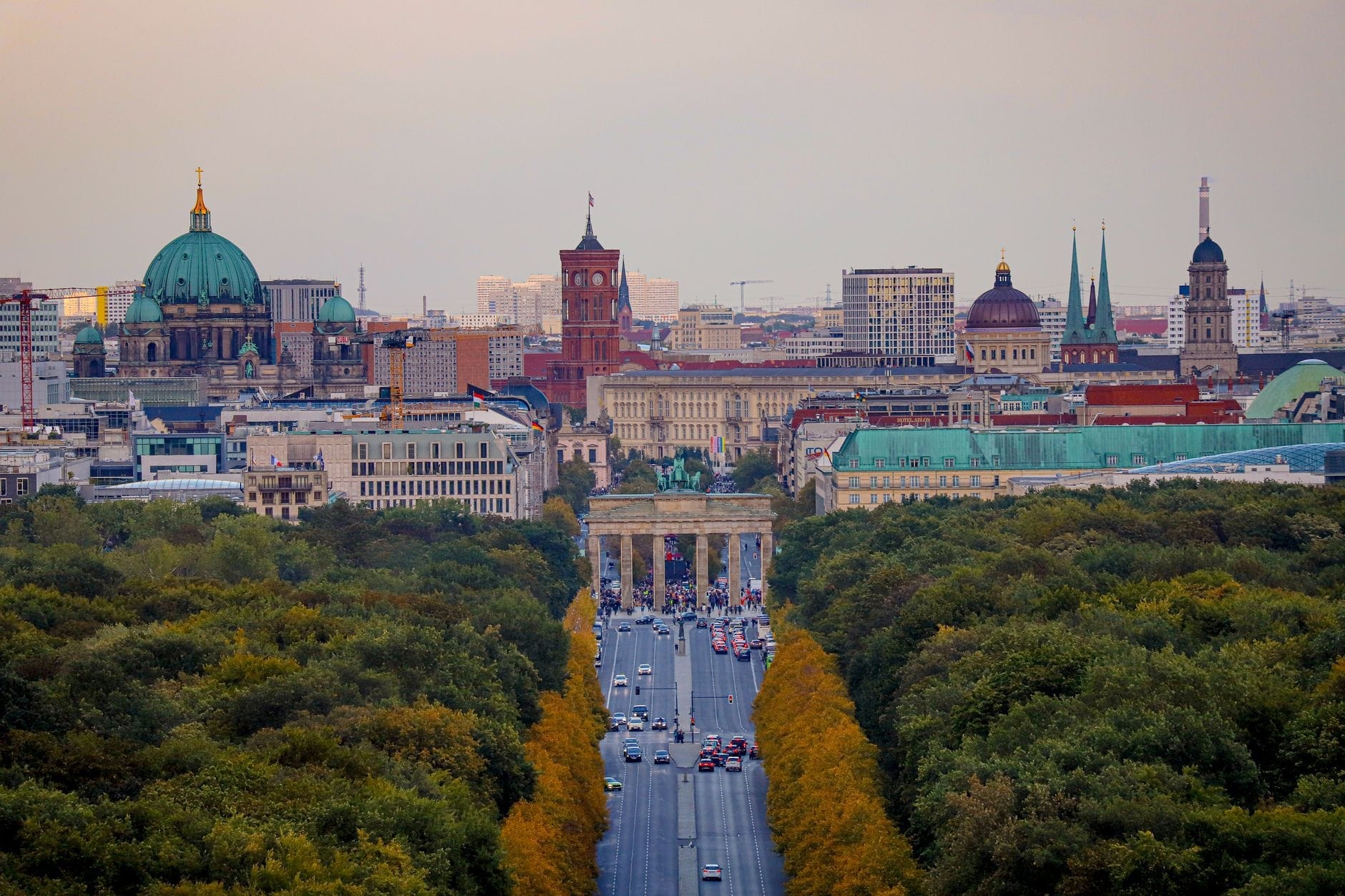
Unter den Linden is a monumental east-west boulevard in the heart of Berlin's Mitte district, running roughly 1.5 kilometres from Pariser Platz and the Brandenburg Gate in the west to Schlossbrücke and the Berlin Palace in the east. At about 60 metres wide, it is proportioned more like a formal European parade ground than an ordinary city street, and that scale is intentional: this road has been designed to project power for nearly four centuries.
The name translates simply as 'under the linden trees', and the rows of lime trees along the central promenade still deliver on that promise, particularly in late spring when the blossoms emit a faint, sweet scent that cuts through the city air. The street is technically a public thoroughfare, open at all hours, free of charge. There are no gates, no tickets, and no queues to enter — just a wide pavement and a sequence of some of the most architecturally and historically significant buildings in Germany.
💡 Local tip
Start at Pariser Platz near the Brandenburg Gate and walk east toward the Berlin Palace. This direction puts the morning sun behind you, gives you a clear view of the boulevard's depth, and ends near Museum Island, making it easy to transition into a museum visit.
History: From Bridle Path to National Symbol
The boulevard's origins are surprisingly modest. In 1573, Elector Johann Georg had a simple bridle path cut through the sand to connect the City Palace with the hunting grounds of the Tiergarten to the west. It was a private route, not a public statement. That changed in 1647 when Elector Friedrich Wilhelm transformed the track into a proper street, flanked by six rows of linden and walnut trees — a design that anticipated the grand European boulevards that would follow in Paris and Vienna.
Through the 18th century, under Frederick the Great, Unter den Linden became the cultural and intellectual heart of Prussia. The Staatsoper Unter den Linden, the Humboldt University, and Saint Hedwig's Cathedral were all built along or near the boulevard in this period. The Neue Wache, erected between 1816 and 1818 by Karl Friedrich Schinkel, cemented the street's reputation as a showcase for neoclassical architecture. By the late 19th century, it was described in guidebooks as one of the finest streets in Europe.
The 20th century treated it badly and then repaired it. The boulevard survived two world wars but was left largely in ruins by 1945. Under East German administration, Unter den Linden was rebuilt as a showpiece of the socialist state: embassies replaced bombed-out mansions, the trees were replanted, and the historic buildings that remained were restored to function as cultural institutions. After reunification, the street was further renovated and the U5 subway line extension added the U Unter den Linden station, which opened in 2020.
For deeper context on the political and cultural history layered across this area, the German Historical Museum sits directly on the boulevard and is one of Germany's most thorough collections covering the full sweep of German history.
Tickets & tours
Hand-picked options from our booking partner. Prices are indicative; availability and final rates are confirmed when you complete your booking.
Berlin Unter den Linden self-guided historical audio tour
From 15 €Instant confirmationGuided tour of the Friedenau district in Berlin
From 24 €Instant confirmationFree cancellationTour hidden gems of the Jewish district in an exploration game
From 10 €Instant confirmationFree cancellationSelf-guided audio tour of Charlottenburg palace and gardens
From 37 €Instant confirmation
Walking the Boulevard: What You'll See
Starting from the western end at Pariser Platz, the walk begins with maximum impact. The Brandenburg Gate frames the entrance to the boulevard, and in the early morning, before tour groups arrive, the proportions of both the gate and the open plaza behind it are striking. The quadriga — the horse-drawn chariot sculpture on top — faces east, toward the boulevard, so you're walking directly toward it as you approach from inside the city.
The first 500 metres heading east are dominated by embassy buildings and the Hotel Adlon on the south side of the gate. Within a few minutes of walking, you reach the intersection with Friedrichstraße, which crosses Unter den Linden at a right angle. This junction has been commercially and politically significant for over a century. One block north of this crossing is the Neue Synagogue, worth a short detour.
Continuing east, the architectural density increases. The Humboldt University main building occupies the south side of the boulevard. Opposite it, the Bebelplatz — a wide open square set back slightly from the pavement — is where the 1933 Nazi book burnings took place. A glass panel set into the cobblestones marks the spot with a room of empty white shelves visible below ground level; this memorial is easy to miss if you don't know to look for it. The Staatsoper Unter den Linden, one of Germany's leading opera houses, faces the square from the south. The equestrian statue of Frederick the Great stands in the middle of the boulevard here, large enough that most visitors stop to read the plaque.
The final section from the Humboldt Forum end becomes more grandiose in scale. The Neue Wache on the north side functions today as the Central Memorial of the Federal Republic of Germany, with Käthe Kollwitz's sculpture of a grieving mother at its centre. The boulevard terminates at Schlossbrücke, a bridge decorated with marble figures, opening onto the reconstructed Berlin Palace (Humboldt Forum) and the approach to Museum Island beyond.
Museum Island is a five-minute walk from the eastern end of Unter den Linden and contains some of the world's great antiquities collections. The Pergamon Museum and the Neues Museum are both on the island and require separate tickets booked in advance.
How the Street Changes by Time of Day
Before 8 am on weekdays, Unter den Linden belongs almost entirely to joggers, cyclists, and the occasional delivery vehicle. The light at this hour, especially in autumn, falls at a low angle through the linden tree canopy and picks out the stone facades of the university and the Neue Wache in warm tones. If you have any interest in photography, this is the hour.
From mid-morning through the afternoon, the boulevard transitions into full tourist operation. The pavement fills with guided groups moving between the Brandenburg Gate and Museum Island, and the Bebelplatz area in particular becomes congested. Souvenir stalls set up near the gate. The street is still walkable and the buildings are still impressive, but the contemplative quality of the early morning disappears entirely.
Evenings offer a different kind of appeal. When the Staatsoper has a performance, the section around Bebelplatz has a formal, dressed-up energy. The boulevard is lit and the trees throw long shadows across the pavements. There are fewer crowds than midday but enough foot traffic to feel safe and lively. Summer evenings in particular, when the light doesn't fade until after 9 pm, make the walk exceptionally pleasant.
ℹ️ Good to know
The linden trees typically bloom in June and July. The scent is most noticeable in the early morning on warm days, concentrated along the central promenade median where the tree density is highest.
Practical Information for Visiting
Unter den Linden is accessible 24 hours a day, every day of the year, with no admission fee. The pavement is fully paved, flat, and wide, making it accessible for wheelchairs and pushchairs without difficulty. The central promenade median, a raised walkway running down the middle of the boulevard, is also paved and accessible, though it requires crossing the main road lanes to reach.
The nearest transit options are practical and well-connected. The S+U Brandenburger Tor station at the western end serves S-Bahn lines S1, S2, and S25 as well as U-Bahn line U5. The U Unter den Linden station (U5) opened in 2020 and sits near the mid-point of the boulevard. S+U Friedrichstraße station, a major hub one block to the north of the Friedrichstraße crossing, adds further options including regional rail. If you are arriving from Alexanderplatz, the U5 is the most direct connection.
Flat shoes are strongly recommended — the cobblestone sections near Bebelplatz and Schlossbrücke are uneven enough to cause discomfort over longer distances. If you're planning to combine Unter den Linden with Museum Island or the Humboldt Forum, budget at least half a day in total.
⚠️ What to skip
Several sections of the boulevard are used for large public events — the marathon finish line, national day parades, and New Year's celebrations — which may close lanes or sections entirely. Check current event schedules before visiting if you're planning around a specific date.
Is Unter den Linden Worth a Walk?
Unter den Linden is not a single attraction in the conventional sense. There is no centrepiece moment, no one thing to see and then leave. What it offers instead is a concentrated corridor of European history, readable in the architecture of successive regimes: Prussian baroque, neoclassical, socialist realism, post-reunification renovation. For anyone genuinely interested in how cities carry their histories in stone and urban planning, it is remarkable.
Visitors who prefer a tighter, more narrative experience may find it less satisfying on its own. The boulevard is best treated as a framework for the specific institutions along it, not a standalone spectacle. If you walk it without entering at least one building — the German Historical Museum, the Humboldt Forum, the Staatsoper lobby, or the Neue Wache — you'll have seen the outside of history without much of the inside.
Travellers on a tight schedule should also know that the area around the Brandenburg Gate at the western end is heavily visited and can feel perfunctory unless you arrive early. Budget extra time to slow down in the middle sections near Bebelplatz and the Neue Wache, which are less crowded and more historically layered.
Insider Tips
- The Bebelplatz book-burning memorial (the glass panel in the cobblestones) has no sign visible from a distance. Walk to the centre of the square and look down — you'll find it embedded in the pavement, easy to miss but affecting once you're standing over it.
- The central promenade median is the best place to walk if you want unobstructed views of both sides of the boulevard. Cross at any pedestrian light and follow the raised path between the traffic lanes; it's quieter and better framed for photographs.
- The Humboldt University courtyard, accessible through the main gate on the south side of the boulevard, is usually open during the day and offers a calm, architecturally interesting break from the street traffic outside.
- If the Staatsoper Unter den Linden has an evening performance, tickets to standing-room positions are available at reduced prices and let you experience one of Germany's finest opera houses without the full ticket cost.
- The view back west toward the Brandenburg Gate from the Schlossbrücke end of the boulevard, with the tree canopy framing the gate in the middle distance, is the best single photograph from the street and requires no detour.
Who Is Unter den Linden For?
- First-time visitors to Berlin who want to understand the city's historic core in one walk
- History and architecture enthusiasts drawn to layers of Prussian, Imperial, Nazi, Cold War, and reunified German history
- Photographers seeking early-morning light on neoclassical facades without crowds
- Visitors using the boulevard as a connecting route between Brandenburg Gate and Museum Island
- Travellers on a budget who want a full day of cultural sightseeing anchored around a free public space
Nearby Attractions
Other things to see while in Mitte:
- Alexanderplatz
Alexanderplatz sits at the geographical and historical heart of former East Berlin, a vast open square with roots going back to the 13th century. Today it's a free, always-open crossroads of transit, Cold War monuments, and everyday Berlin life — chaotic, fascinating, and impossible to avoid.
- Berlin Cathedral (Berliner Dom)
The Berlin Cathedral, or Berliner Dom, is Germany's largest Protestant church and one of the most architecturally striking buildings in the city. Built between 1894 and 1905, it anchors Museum Island with a dome you can climb, a royal crypt below ground, and a nave that rewards slow, unhurried attention.
- Berlin TV Tower (Fernsehturm)
Standing 368 metres above central Berlin, the Berliner Fernsehturm is the tallest structure in Germany and the tallest publicly accessible building in Europe. Its observation deck at 203 metres delivers an unobstructed 360-degree panorama of the city. This guide covers what you actually see up there, when crowds are worst, and whether the ticket price is justified.
- Berlin Victory Column (Siegessäule)
Rising from the centre of the Großer Stern roundabout in Tiergarten, the Siegessäule is one of Berlin's most recognisable monuments. At around 67 metres tall, it offers a sweeping panorama over the city's forest-park heart — but you earn the view with 285 steps and no lift.