Gemäldegalerie Berlin: Inside One of Europe's Greatest Painting Collections
The Gemäldegalerie at Berlin's Kulturforum houses more than 1,200 European paintings spanning the 13th to 18th centuries, from Vermeer and Rembrandt to Raphael and Caravaggio. It is one of the most important Old Master galleries in the world, and among the least crowded for its caliber.
Quick Facts
- Location
- Johanna und Eduard Arnhold Platz 4 (formerly Matthäikirchplatz), 10785 Berlin (Kulturforum, Potsdamer Platz area)
- Getting There
- Bus 200, 300, M29, M41, M48, M85, N1, N2 — stops: Philharmonie, Kulturforum, Tiergartenstr.
- Time Needed
- 2–4 hours; half a day for serious art enthusiasts
- Cost
- €16 standard / €8 reduced; free for under-18s. Closed Mondays.
- Best for
- Art lovers, history buffs, rainy-day culture seekers, slow travelers
- Official website
- www.smb.museum/museen-einrichtungen/gemaeldegalerie/home
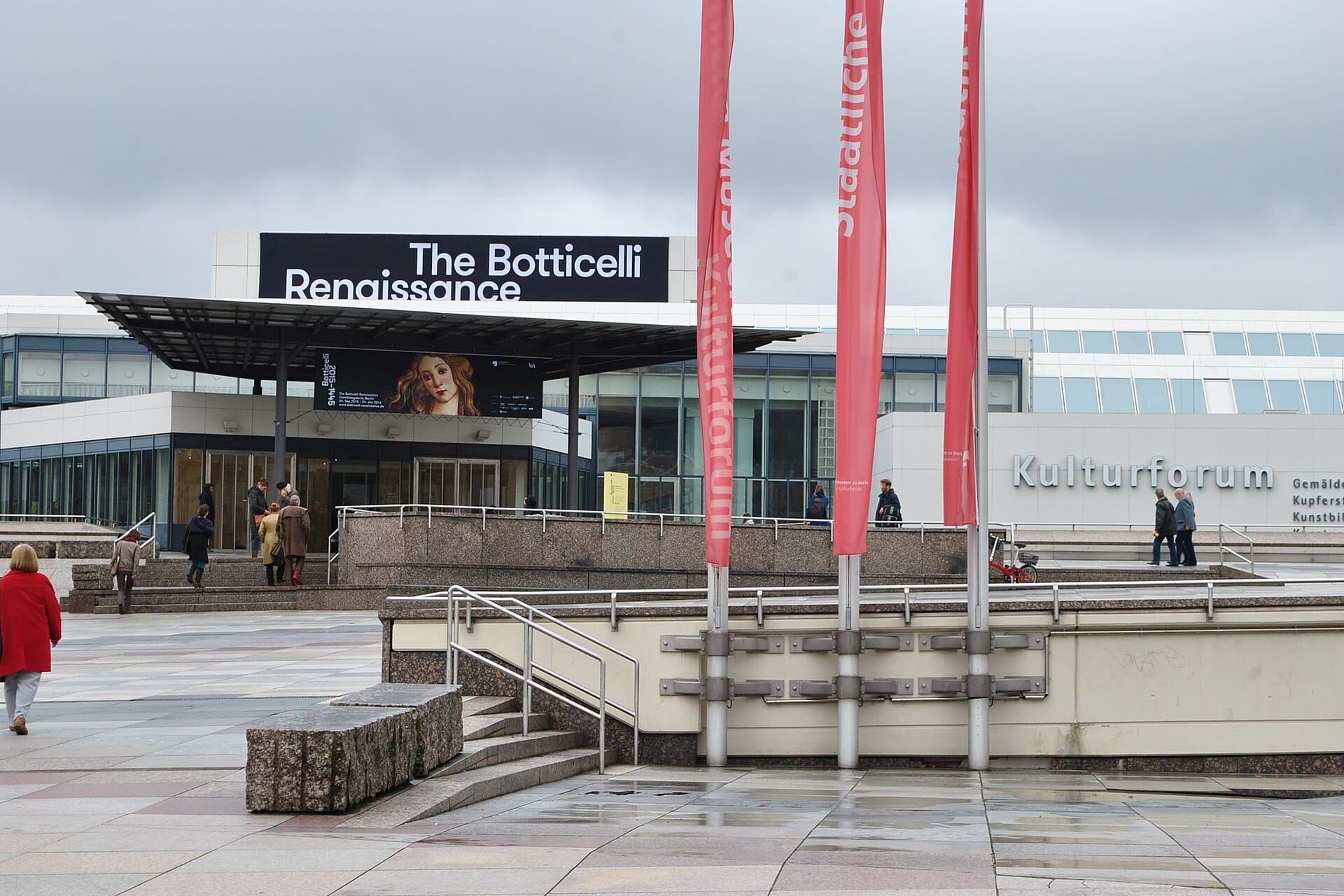
What the Gemäldegalerie Actually Is
The Gemäldegalerie (literally 'painting gallery') is Berlin's dedicated museum for European painting from roughly the 13th to the 18th century. It sits within the Kulturforum cultural complex near Potsdamer Platz, a purpose-built building that opened in 1998 — though the collection itself traces its institutional roots back to 1830. The gallery holds over 1,200 works on permanent display, drawn from a collection of more than 3,000, making it one of the largest and most comprehensive Old Master collections anywhere in Europe.
The range is genuinely staggering. Dutch and Flemish painters from the 17th century form the backbone of the collection: Rembrandt van Rijn alone is represented by around 16 paintings, including the arresting 'Man in the Golden Helmet' (now attributed to his workshop) and the tender 'Joseph and Potiphar's Wife'. Johannes Vermeer's 'Young Woman with a Pearl Necklace' is here. So are major works by Caravaggio, Raphael, Botticelli, Lucas Cranach the Elder, Albrecht Dürer, Peter Paul Rubens, and Jan van Eyck. For the depth and quality of what's inside, the Gemäldegalerie is significantly underattended compared to peer institutions like the Louvre or the Uffizi.
💡 Local tip
Plan to arrive when doors open at 10:00 on a Tuesday–Sunday. The central octagonal hall and the Dutch Golden Age rooms are at their quietest in the first 90 minutes. By early afternoon, school groups and tour parties begin to fill the main corridors.
The Building and How to Navigate It
The Kulturforum building designed by Rolf Gutbrod and completed under Hans Scharoun's overall urban vision is not as celebrated as the neighboring Berliner Philharmonie, but it is a serious architectural statement. The interior is organized around a long central corridor — known as the Kunstlichtraum or 'art light room' — flanked on both sides by a grid of individual galleries with controlled natural and artificial lighting. The ceiling height and spacing feel generous; you are never cramped in front of a large altarpiece.
Navigation follows a rough geographic and chronological logic. The eastern wing concentrates on German, Dutch, and Flemish painting; the western galleries cover Italian, French, Spanish, and English works. Numbered rooms with clear floor plans (available free at the entrance desk in German and English) make orientation straightforward. There is also a separate Cabinet of Drawings and Prints accessible within the museum, though its availability to general visitors can vary.
If you are combining this with other nearby institutions, note that the Kulturforum also houses the Neue Nationalgalerie for 20th-century art and the Berliner Philharmonie just a short walk away — making the entire complex a full cultural day if you have the stamina.
Tickets & tours
Hand-picked options from our booking partner. Prices are indicative; availability and final rates are confirmed when you complete your booking.
Skip-the-line ticket for Gemaldegalerie Berlin
From 14 €Instant confirmationSelf-guided audio tour at the Gemaldegalerie in Berlin
From 27 €Instant confirmationGemaldegalerie audio tour
From 11 €Instant confirmationPanoramapunkt Berlin ticket with skip-the-line option
From 9 €Instant confirmation
Highlights Worth Finding
The Rembrandt rooms alone justify the entrance fee. The self-portraits from different periods of his career hang together, and the contrast in technique between his early precision and his late, textured brushwork is something no reproduction conveys. Stand close and you can see the impasto ridges catching the gallery light. In the Vermeer room, 'Young Woman with a Pearl Necklace' is smaller than most visitors expect — roughly 55 by 45 centimeters — but the stillness of it commands attention even from across the room.
The Italian section contains Botticelli's 'Venus', Raphael's 'Madonna with Child', and a pair of Caravaggio works including 'Amor as Victor' (also titled 'Amor Vincit Omnia'), in which a triumphant, slightly unsettling Cupid stands over symbols of human achievement. This painting has a documented history: it was commissioned around 1601 by the Marchese Vincenzo Giustiniani, and its psychological charge has not diminished over four centuries.
The early Netherlandish panels, including works by Jan van Eyck and Rogier van der Weyden, are displayed in rooms with deliberately subdued lighting that suits the jewel-like precision of the technique. The panels are small, the detail is extraordinary, and most visitors walk past them too quickly. If you slow down here you will be rewarded.
ℹ️ Good to know
The museum offers audio guides (available for hire at the entrance) covering major works in multiple languages. The audio commentary is detailed and worth taking for at least the Rembrandt and Italian galleries.
How the Experience Changes Through the Day
Morning light enters through the corridor skylights in a way that shifts the atmosphere of the central hall. The artificial gallery lighting is consistent by design, so individual rooms do not change dramatically — but the overall feel of the museum is noticeably calmer before noon. The café on site (a modest operation, not a destination in itself) is usually clear of queues before 12:00.
Thursday afternoons can bring school groups in larger numbers. Weekend mornings from around 11:00 onward see a steadier flow of visitors, but the museum's footprint is large enough that crowds rarely produce the shoulder-to-shoulder conditions you might encounter at the Pergamon. If you visit on a Sunday, you will notice a more leisurely pace among Berliners using the Kulturforum as a cultural afternoon out. The museum closes on Mondays.
⚠️ What to skip
The Gemäldegalerie is closed every Monday. Arriving to find the doors shut is a very common tourist mistake in Berlin — the same applies to many state museums across the city.
Getting There and Practical Details
The Kulturforum is within easy reach of Potsdamer Platz by foot — around 5 minutes walking west along Potsdamer Strasse. By bus, lines 200, 300, M29, M41, M48, M85, N1, and N2 all have stops at or near Philharmonie, Tiergartenstr., and Kulturforum. There is no direct U-Bahn or S-Bahn stop immediately in front; Potsdamer Platz station (served by S1, S2, S25, U2) is the closest rapid transit option.
The building is fully wheelchair accessible with ramp access, an elevator between floors, and an accessible restroom on the ground floor. Assistance dogs are permitted. Sign-language tours are available (check the museum website for scheduling), and audio guides include an induction loop for visitors with hearing aids.
Tickets cost €16 standard and €8 reduced. Children and young people up to 18 enter free. If you are visiting multiple Berlin state museums (Staatliche Museen zu Berlin), a combined day ticket can offer better value. The Museum Island museums are part of the same institution network, so it is worth checking current combination options at the ticket desk or online before you pay.
Photography without flash is permitted for personal use in most of the permanent galleries. Bags larger than a small daypack must be checked at the cloakroom. The museum shop near the exit stocks a solid range of catalogs and prints — the Rembrandt and Caravaggio volumes are genuinely good. For eating near the Kulturforum, options are limited immediately around the building; Potsdamer Platz has a wider range of cafés and restaurants within walking distance.
Who Should Skip It (and Who Will Love It)
The Gemäldegalerie is not a museum that performs for you. There are no immersive digital experiences, no theatrical staging, and no particularly child-friendly interactive elements. Visitors who want sensory stimulation or a fast, social-media-ready experience will likely find it dry. Young children under eight tend to struggle with the scale and the uniform gallery format; if you are traveling with kids, the nearby German Museum of Technology or the DDR Museum provide more hands-on engagement.
Conversely, for anyone with a serious interest in Western European painting, this is one of the genuinely great collections in the world. Art historians, painters, and people who have spent time in the Louvre or the Rijksmuseum will find works here that rank among the finest examples in any collection anywhere. It also pairs naturally with the Neues Museum or a broader day around the best museums in Berlin if you are planning a serious cultural itinerary.
Slow travelers who prefer depth over breadth will find the unhurried atmosphere here a relief after the queues and compression of the more famous Berlin landmarks. It is the kind of place you can return to on a second visit and still find something you missed.
Insider Tips
- The Caravaggio room (Room 40 in the Italian section) contains 'Amor Vincit Omnia' and is frequently passed quickly by visitors heading toward the Dutch galleries. Spend time here — the painting rewards close inspection and rarely has more than a handful of people in front of it.
- The museum's free floor plan is available at the entrance desk in English. Pick one up before you start — the room numbering system is not always intuitive from the gallery signage alone.
- If you are visiting in winter, the Kulturforum sits in an exposed position near the Tiergarten and the walk from Potsdamer Platz can feel longer than it looks on a map. Dress for wind.
- The reduced ticket price (€8) applies to students, unemployed persons, and several other qualifying categories. Bring valid documentation — the ticket desk does check.
- The neighboring Berliner Philharmonie offers free lunchtime concerts on select Tuesdays at 13:00. Combining one of these with a morning at the Gemäldegalerie makes for an exceptional cultural half-day at low cost.
Who Is Gemäldegalerie For?
- Art lovers and painters with a specific interest in European Old Masters from 1200–1800
- Travelers who want a major-league gallery experience without the queues of the Louvre or Uffizi
- Rainy-day visitors looking for 3–4 hours of absorbing indoor culture
- Repeat visitors to Berlin who have covered the main historical sites and want depth
- Architecture and museum-design enthusiasts interested in the Kulturforum complex
Nearby Attractions
Other things to see while in Potsdamer Platz:
- Berliner Philharmonie
The Berliner Philharmonie is one of the world's most celebrated concert venues, home to the Berliner Philharmoniker and a landmark of 20th-century architecture. Whether you come for a performance or a guided tour, the building alone rewards a detour.
- Neue Nationalgalerie
The Neue Nationalgalerie is one of the 20th century's most celebrated museum buildings, a steel-and-glass pavilion by Ludwig Mies van der Rohe that opened in West Berlin in 1968. After a six-year renovation completed in 2021, it houses the Nationalgalerie's collection of 20th-century European art at the Kulturforum. Whether you come for the architecture or the art, you leave having seen both.