Neue Nationalgalerie: Mies van der Rohe's Glass Temple of Modern Art
The Neue Nationalgalerie is one of the 20th century's most celebrated museum buildings, a steel-and-glass pavilion by Ludwig Mies van der Rohe that opened in West Berlin in 1968. After a six-year renovation completed in 2021, it houses the Nationalgalerie's collection of 20th-century European art at the Kulturforum. Whether you come for the architecture or the art, you leave having seen both.
Quick Facts
- Location
- Potsdamer Straße 50, 10785 Berlin (Kulturforum, Potsdamer Platz area)
- Getting There
- U2 / S1, S2, S25 to Potsdamer Platz, then a 5-minute walk
- Time Needed
- 1.5 to 3 hours depending on current exhibitions
- Cost
- Paid admission (check official site for current prices); free every first Thursday from 16:00–20:00; covered by the 3-Day Berlin Museum Pass
- Best for
- Architecture lovers, modern art enthusiasts, photographers, rainy-day cultural visits
- Official website
- www.smb.museum/en/museums-institutions/neue-nationalgalerie/home
What Makes the Neue Nationalgalerie Worth Your Time
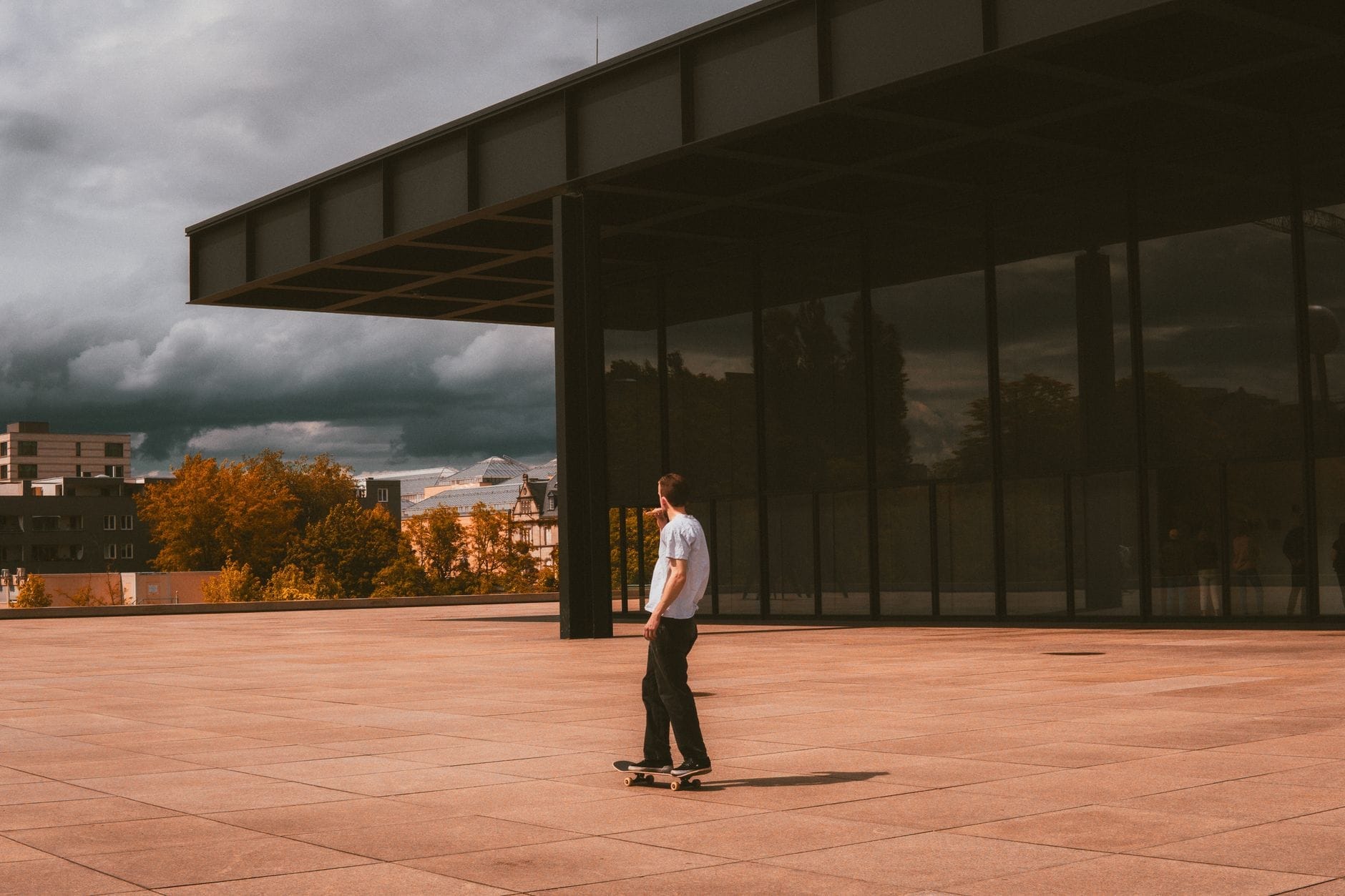
The Neue Nationalgalerie is one of those rare buildings where the architecture and the collection compete equally for your attention, and neither loses. Designed by Ludwig Mies van der Rohe and completed in 1968, it stands at the Kulturforum cultural campus as a near-perfect exercise in structural minimalism: a vast, flat steel roof suspended on just eight external columns, with floor-to-ceiling glass walls on all four sides. From a distance, the building looks almost weightless. Up close, the engineering feels quietly audacious.
This was the only building Mies van der Rohe completed in Germany after World War II, and its symbolism runs deep. Constructed in then West Berlin between 1965 and 1968, it was a statement of cultural confidence for a city still literally divided. It is listed in Berlin's register of historic buildings, and after a major six-year renovation led by David Chipperfield Architects, it reopened on 22 August 2021 in as close to original condition as modern conservation allows.
💡 Local tip
Free entry every first Thursday of the month from 16:00 to 20:00. This is genuinely free for all visitors; no registration is required. Arrive by 15:45 to avoid the queue that forms at the entrance.
The Architecture: Understanding What You're Looking At
Before stepping inside, spend a few minutes walking the perimeter. The upper pavilion, the part you see from street level, is a 64.8-metre square steel roof resting on its eight cross-shaped columns. No internal supports. The engineering achievement is that the entire roof structure is essentially a single welded steel plate, and the columns sit outside the glass envelope, meaning the interior is entirely column-free. The result is a single open room roughly the size of a football pitch, flooded with diffused natural light.
Mies called this kind of space a universal hall, a room flexible enough to serve any purpose. The paradox, which the museum has grappled with since 1968, is that the light levels and lack of wall surfaces make it difficult to hang traditional paintings. Temporary exhibitions in the upper hall tend to use freestanding structures or installations that work with the transparency rather than against it. The permanent 20th-century collection is housed in the lower level, partially below grade, where climate and light can be properly controlled.
The building sits within the broader Kulturforum complex, which also includes the Berliner Philharmonie concert hall and the Gemäldegalerie, home to one of Europe's great collections of Old Masters paintings. If you are spending a serious day at the Kulturforum, plan for at least half a day across both museums.
Tickets & tours
Hand-picked options from our booking partner. Prices are indicative; availability and final rates are confirmed when you complete your booking.
Berlin highlights tour with Neue Nationalgalerie Ticket
From 27 €Instant confirmationNeue Nationalgalerie Berlin entrance ticket
From 14 €Instant confirmationSolar-powered catamaran cruise on Berlin's Spree River at sunset
From 35 €Instant confirmationFree cancellationNeues Museum entrance ticket with self-guided audio tour
From 26 €Instant confirmation
The Collection: 20th-Century Art in Context
The Neue Nationalgalerie holds the Nationalgalerie's holdings of 20th-century European and international art, with particular depth in German Expressionism, New Objectivity, and post-war movements. Artists represented include Ernst Ludwig Kirchner, Max Beckmann, Otto Dix, George Grosz, Paul Klee, and Wassily Kandinsky, alongside international figures such as Picasso, Dalí, and Francis Bacon.
The lower gallery level presents the permanent collection in a series of interconnected rooms with carefully calibrated artificial lighting. The scale is intimate compared to the drama of the upper hall. Works by Kirchner and the Brücke group feel particularly charged in the Berlin context, painted in a city those artists knew intimately before that city was destroyed and rebuilt. Reading the collection chronologically gives a coherent narrative of European modernism through crisis, war, and reconstruction.
Note that the balance between permanent collection and temporary exhibitions shifts depending on the programming cycle. Major temporary shows can occupy significant portions of both floors, reducing access to permanent works. Check the official website before your visit to understand what is currently on display. Some visitors arrive expecting a full survey of the permanent collection and find a large-format temporary show in residence instead.
ℹ️ Good to know
The museum is closed on Mondays. Thursday opening hours extend to 20:00, making it a practical evening option after a full day elsewhere in the city.
How the Experience Changes by Time of Day
Morning visits, especially Tuesday through Friday, offer the quietest conditions. The light through the glass walls in the upper pavilion shifts noticeably through the day: in the morning it enters at a lower angle from the east, casting long lines across the polished granite floor. By midday the pavilion fills with an even, diffused brightness that makes photography more straightforward. Late afternoon in summer, particularly from the west-facing side, the glass walls admit warm, golden-toned light that makes the steel structure glow.
Weekend mornings, typically from 10:00 to 12:00, see the largest crowds, particularly when a major temporary exhibition is running. The upper hall, despite its size, can feel congested during peak periods because visitors cluster around the same points of visual interest. Thursday evenings are distinctly calmer than Saturdays, and the extended hours to 20:00 mean you can combine the museum with a dinner in the Potsdamer Platz area afterward.
Winter visits have a specific quality. The Kulturforum is less crowded between November and February, and the grey Berlin sky outside the glass walls creates a different but equally compelling relationship with the building. The interior warmth against the cold exterior, visible through the transparent walls, reinforces the pavilion's sense of being a protected space.
Getting There and Practical Logistics
The museum sits at Potsdamer Straße 50 in the Kulturforum complex, a 5-minute walk from Potsdamer Platz station. U-Bahn line U2 and S-Bahn lines S1, S2, and S25 all serve Potsdamer Platz. From the station, follow signs for the Kulturforum rather than for Potsdamer Platz itself, which sits in the opposite direction. The walk takes you past the back of the Sony Center and along Potsdamer Straße.
If you are combining this with other central Berlin sites, note that the Holocaust Memorial and the Brandenburg Gate are about a 15-minute walk north through the Tiergarten. The Neue Nationalgalerie fits naturally into a cultural day in central Berlin that spans the Kulturforum and the government quarter.
Bags must be checked at the cloakroom, which is free. Photography without flash is permitted in most areas; specific temporary exhibitions may have different rules, indicated by signage. The museum shop carries a well-curated selection of architecture and art publications, including comprehensive Mies van der Rohe titles that are difficult to find elsewhere at this range of prices. The café is located in the lower level.
💡 Local tip
The Berlin Museum Pass (3-Day Museum Pass) covers admission to the Neue Nationalgalerie and more than 30 other state museums including the Gemäldegalerie next door. If you plan more than three museum visits in a trip, the pass typically pays for itself quickly.
Photography and the Building as Subject
The Neue Nationalgalerie is one of the most photographed buildings in Berlin for good reason. The upper pavilion's reflective floor picks up the sky, the surrounding trees, and the steel structure simultaneously. For exterior shots, early morning on weekdays offers clean sightlines without tour groups or parked vehicles obscuring the approach. The view from the granite terrace looking south, with the pavilion framing the sky, is the defining image of the building.
Inside, the interplay of light, glass, steel, and the reflected landscape through the walls creates genuinely unusual photographic conditions. Standard travel photography rules apply: avoid shooting directly into bright exterior light without compensating exposure, and consider that the glass will show reflections you might not notice with the naked eye until you review the image. The lower gallery level, lit artificially, presents more predictable conditions but may have stricter photography rules depending on the exhibition.
Renovation and Why It Matters
The 2015 to 2021 renovation, led by David Chipperfield Architects, was an exercise in principled restraint. The mandate was to restore the building to Mies van der Rohe's original intentions rather than update or reinterpret it. This meant replicating original materials where replacements were necessary, restoring the granite floor, updating the technical infrastructure invisibly, and bringing the building into compliance with modern safety and accessibility standards without altering its appearance.
For visitors, the practical effect is a building that feels both historic and fresh. The 2021 reopening was notable precisely because it looked, to a casual eye, almost unchanged from 1968 photographs, while the underlying infrastructure was entirely renewed. This approach has been influential in conservation circles and is part of why the renovation received significant architectural attention internationally.
The renovation story fits into a broader Berlin pattern of careful stewardship of significant postwar buildings alongside more contentious reconstructions elsewhere in the city. For a deeper look at the cultural landscape surrounding this area, the best museums in Berlin guide covers how the Neue Nationalgalerie sits within the city's wider museum offer.
Who Should and Should Not Visit
This is an outstanding destination for anyone with a serious interest in 20th-century art, modernist architecture, or the cultural history of divided Berlin. It rewards visitors who take time to look carefully at both the building and the collection rather than moving quickly through.
Families with young children may find the visit challenging. The architecture and collection are not oriented toward interactive or child-focused programming, and the quiet, contemplative atmosphere of the lower galleries is easily disrupted. Similarly, visitors looking for a quick landmark photo without engaging with the collection will find more immediate satisfaction at more visually kinetic sites nearby.
Those who visit primarily during major temporary shows should have realistic expectations about permanent collection access. The museum programs ambitious temporary exhibitions, some of which occupy the upper hall completely. This is not a criticism, the temporary shows are often excellent, but it means the visit can differ significantly depending on what is on.
Insider Tips
- The first Thursday of each month brings free entry from 16:00 to 20:00. The queue builds quickly after 16:00, so arrive 10 to 15 minutes before it opens if you want to walk straight in.
- The granite terrace surrounding the upper pavilion is publicly accessible even when the museum is closed. The exterior of the building, the proportions, and the relationship with the Tiergarten and surrounding Kulturforum can be appreciated for free at any time.
- Thursday evenings, even outside the free entry window, are significantly quieter than weekends. The extended hours to 20:00 make it possible to visit after most tourist crowds have dispersed.
- The museum shop on the lower level stocks serious architecture monographs on Mies van der Rohe and related modernist figures at a wider price range than most Berlin museum shops. Worth browsing even if you do not buy.
- If you are visiting the Kulturforum specifically for the Neue Nationalgalerie, build in time to walk around the entire exterior before entering. The four elevations look and feel different from one another, and the relationship between the building and its surroundings shifts considerably depending on where you stand.
Who Is Neue Nationalgalerie For?
- Architecture enthusiasts, particularly those interested in International Style and Mies van der Rohe's career
- Modern and 20th-century art collectors and enthusiasts, especially with interests in German Expressionism and New Objectivity
- Photographers seeking compelling interior light conditions and a structurally distinctive exterior subject
- Cultural travelers spending more than two days in Berlin who want to move beyond the most visited sites
- Rainy day visits: the glass pavilion offers a genuinely different experience in overcast or wet conditions, and the lower galleries are fully sheltered
Nearby Attractions
Other things to see while in Potsdamer Platz:
- Berliner Philharmonie
The Berliner Philharmonie is one of the world's most celebrated concert venues, home to the Berliner Philharmoniker and a landmark of 20th-century architecture. Whether you come for a performance or a guided tour, the building alone rewards a detour.
- Gemäldegalerie
The Gemäldegalerie at Berlin's Kulturforum houses more than 1,200 European paintings spanning the 13th to 18th centuries, from Vermeer and Rembrandt to Raphael and Caravaggio. It is one of the most important Old Master galleries in the world, and among the least crowded for its caliber.