Hamburger Bahnhof: Berlin's Grand Station for Contemporary Art
Once the terminus of the Berlin-Hamburg railway, Hamburger Bahnhof is now one of Europe's most distinctive contemporary art museums, spreading across 13,000 square metres of exhibition space inside a landmarked 19th-century station complex in Mitte. It holds major works by Joseph Beuys, Andy Warhol, and Cy Twombly, and hosts rotating international exhibitions that regularly reshape what the space feels like.
Quick Facts
- Location
- Invalidenstraße 50–51, 10557 Berlin (Mitte/Moabit border, near Berlin Hauptbahnhof)
- Getting There
- Berlin Hauptbahnhof (S-Bahn S3, S5, S7, S9; U5); 10-minute walk along Invalidenstraße
- Time Needed
- 2–3 hours for the permanent collection; allow 3–4 hours if a major temporary exhibition is running
- Cost
- Regular 16 €, Reduced 8 €, Under-18s free. Closed Mondays, 24 & 31 Dec.
- Best for
- Contemporary art enthusiasts, architecture lovers, serious museum-goers
- Official website
- www.smb.museum/museen-einrichtungen/hamburger-bahnhof/home
What Hamburger Bahnhof Actually Is
Hamburger Bahnhof – Nationalgalerie der Gegenwart is Berlin's primary museum for contemporary art, run under the umbrella of the Staatliche Museen zu Berlin. It sits at Invalidenstraße 50–51, just north of Berlin Hauptbahnhof, on the edge of a district more associated with federal ministries and hospitals than gallery-hopping. The Charité hospital is practically next door. That contrast — monumental classical station architecture in a quiet, institutional quarter — is part of what makes the experience unusual compared to other major art museums in the city.
The building started life in 1847 as the terminus of the Berlin-Hamburg railway line, making it one of the oldest surviving station buildings in Germany. Passenger rail services ceased in 1884 when traffic migrated to the nearby Lehrter Bahnhof, and the building was repurposed as a transport and technology museum from 1906 onward. Decades of shifting use, wartime damage, and political division followed. It was not until 2 November 1996 that the building reopened in its current form as a contemporary art museum, and the transformation remains one of the more successful adaptive reuse projects in German cultural history.
The total site covers around 30,000 m² and was listed as a monument in February 2023. Exhibition space amounts to roughly 10,000 m², split between the historic station building itself and the Rieckhallen, a series of industrial warehouse galleries extending behind the main structure. If you are also exploring Museum Island during your Berlin trip, Hamburger Bahnhof offers a sharp counterpoint: this is not antiquity or the 19th century, but the art of the last seven decades.
The Building Before You Even Enter
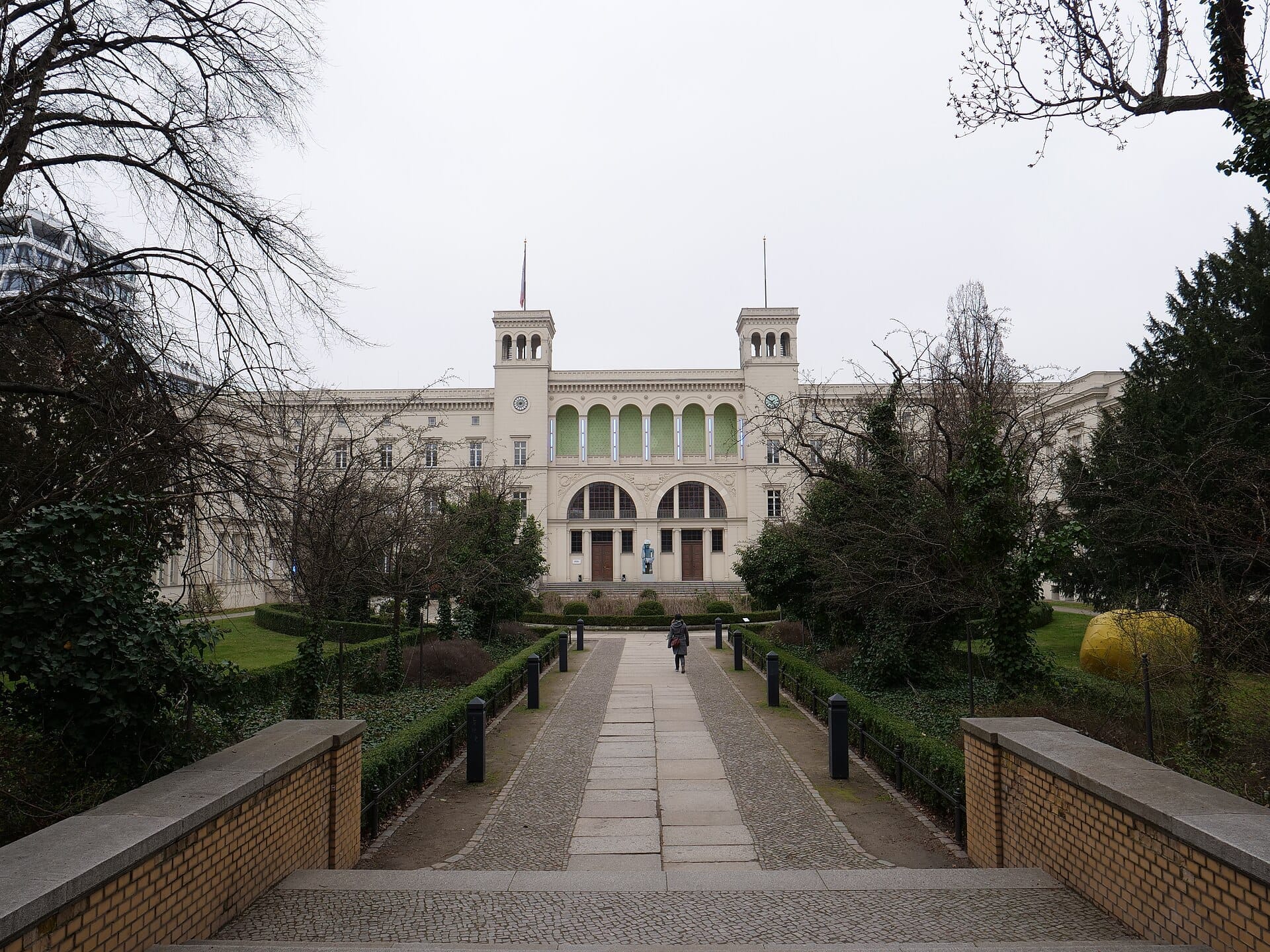
Approach from the Hauptbahnhof side and the station's neoclassical facade stops you. Two symmetrical towers flank a long horizontal wing, the whole thing rendered in sandy stone that has aged unevenly. There is still something unmistakably railway about the proportions: a central hall designed to accommodate large crowds in transit, wide doorways, high ceilings. A sculpture or installation usually occupies the forecourt, and it shifts with whatever major exhibition is running, so the exterior view is never quite the same twice.
In the early morning before opening, the forecourt is almost empty and the scale of the building reads most clearly. By early afternoon on weekends, school groups and tourist clusters begin filling the approach. The gardens on either side of the building are pleasant in warmer months and often include outdoor installations, worth a slow walk even before you buy a ticket.
💡 Local tip
Thursday is the only day the museum stays open until 20:00. If you want to visit without weekend crowds and still have enough time, a Thursday afternoon is the best option.
Tickets & tours
Hand-picked options from our booking partner. Prices are indicative; availability and final rates are confirmed when you complete your booking.
Berlin's history audio tour with Hamburger Bahnhof access
From 32 €Instant confirmationHamburger Bahnhof Nationalgalerie der Gegenwart skip-the-line ticket
From 16 €Instant confirmationSkip-the-line ticket for Gemaldegalerie Berlin
From 14 €Instant confirmationPanoramapunkt Berlin ticket with skip-the-line option
From 9 €Instant confirmation
Inside: The Permanent Collection and the Beuys Rooms
The permanent collection is anchored by major holdings from the Marx Collection, donated by collector Erich Marx and including significant bodies of work by Joseph Beuys, Andy Warhol, Cy Twombly, and Robert Rauschenberg. The Beuys installation rooms are among the most important in Europe for understanding his practice: felt rolls, fat sculptures, vitrines of objects, and the dense conceptual weight he attached to industrial materials. These are not light rooms. They reward slow attention and repel visitors looking for digestible visual entertainment.
Warhol's works appear in spaces where the station's original architecture is still visible: iron columns, high glazed rooflines, rough concrete floors. The friction between Pop Art's commercial slickness and the building's worn industrial surfaces is not accidental. The Cy Twombly canvases occupy rooms with better light control, their pale layered marks requiring the kind of quiet you get in a chapel. Don't rush them.
Beyond the Marx Collection core, the museum holds works from the National Gallery's contemporary holdings, meaning the mix of what you encounter can vary depending on what is in storage for a temporary show and what has been brought out. Check the museum's website before your visit to confirm which permanent collection rooms are accessible.
The Rieckhallen: Where Scale Becomes the Point
Behind the main building, through a passageway, the Rieckhallen are a different register entirely. These industrial warehouse galleries have raw concrete floors, exposed steel roofs, and ceiling heights that can swallow a double-decker bus. They were purpose-built to house large-scale temporary exhibitions, and the works shown here tend to match the space: monumental installations, video works that fill entire walls, sculptural pieces that would look wrong anywhere smaller.
Temperature in the Rieckhallen drops noticeably compared to the main building, especially outside summer. Bring a light layer regardless of the season. The acoustics are also markedly different: footsteps echo, conversations carry. This affects how you experience sound-based or video work, usually for the better.
ℹ️ Good to know
The Rieckhallen are sometimes closed or partially used for installation preparation between major exhibitions. Check the museum's current exhibition schedule before planning your visit around them.
How the Experience Changes by Time of Day
Tuesday and Wednesday mornings, shortly after the 10:00 opening, are when the museum is quietest. The main hall has a particular stillness at this hour: light comes through the glazed roof in long diagonal bands, the floors are still clean, and you can stand in front of major works without anyone moving through your sightline. The museum's cafe opens at the same time, so coffee is available immediately.
By early afternoon, especially on Fridays and weekends, the density increases. School groups are common on weekday afternoons and move through in clusters, generally staying in the main hall and permanent collection rooms. If a major temporary exhibition is running, weekend afternoons in the Rieckhallen can feel genuinely crowded. Saturday between 13:00 and 16:00 is the one window to avoid if you want contemplative space.
Late Thursday afternoons into early evening are a sweet spot. The building quiets after 18:00, and the extended hours until 20:00 give you an unhurried hour or two when most of Berlin's tourist traffic has moved on. If you are building an itinerary around Unter den Linden and the central axis, Hamburger Bahnhof is easily combined on a Thursday with an evening walk back toward Mitte.
Context: Where This Fits in Berlin's Art Landscape
Berlin has a layered museum infrastructure. Museum Island handles antiquity through the early 20th century. The Neue Nationalgalerie in Tiergarten covers classical modernism up to roughly 1970. Hamburger Bahnhof picks up from there, making it the logical third stop in any serious engagement with Berlin's state museum system. The Berlinische Galerie in Kreuzberg covers Berlin-specific art history as an alternative route, but Hamburger Bahnhof is broader in its international scope.
For visitors with limited time, the question is usually whether contemporary art is actually a priority. If you are working through a 3-day Berlin itinerary and art is not your central interest, there are stronger claims on your time elsewhere. But if you are genuinely interested in post-war and contemporary practice, this is the most important museum in the city for that period, and the building itself justifies the visit independently.
Practical Details Worth Knowing
Opening hours: Tuesday, Wednesday, Friday 10:00–18:00; Thursday 10:00–20:00; Saturday and Sunday 11:00–18:00; closed Monday. On 1 January the museum opens at 12:00. It is closed on 24 and 31 December. Public holidays including 8 March, 1 May, and 3 October follow the Saturday-Sunday pattern of 11:00–18:00.
Admission is 16 € regular, 8 € reduced. Under-18s enter free. The ticket covers both the permanent collection and current special exhibitions. There is no separate pricing for individual sections.
Getting there from Berlin Hauptbahnhof takes about 10 minutes on foot, heading north along Invalidenstraße. This is the simplest route and the one that gives you the best first impression of the building's exterior. Local buses along Invalidenstraße also serve the area if you are coming from elsewhere in Mitte. The museum does not have its own dedicated U-Bahn or S-Bahn stop.
Accessibility: the venue is described as partially wheelchair accessible. The main station building has level access in most areas, but the multi-building complex has uneven terrain between sections, and access to the Rieckhallen is currently not barrier-free. Visitors with specific mobility requirements should contact the museum directly before visiting: +49 (30) 266 42 42 42.
⚠️ What to skip
Photography policies vary by exhibition. The permanent collection generally allows non-flash photography, but many temporary exhibitions prohibit it entirely. Check the signage at each gallery entrance rather than assuming.
Who Should Consider Skipping This
Visitors with only a day or two in Berlin who are not specifically interested in post-war or contemporary art will likely find the admission cost and time commitment hard to justify given the competition. The German Historical Museum or the Holocaust Memorial and surrounding documentation centre may deliver more of what a first-time visitor to Berlin is actually looking for. Hamburger Bahnhof rewards focus and prior interest; it does not convert casual visitors the way a history museum or a city panorama does.
Families with young children may find the experience difficult unless the children have a genuine tolerance for abstract and conceptual work. The Beuys rooms in particular are dense and quiet in a way that is hard on restless visitors of any age. That said, large-scale installation exhibitions in the Rieckhallen occasionally have elements that hold younger attention.
Insider Tips
- The museum's garden is accessible separately from the ticketed galleries and is free to enter. In warmer months it often contains outdoor sculptures or installation works and is a pleasant place to sit before or after your visit.
- Thursday evenings after 18:00 offer the closest thing to a contemplative solo museum experience that this building allows. The crowd drops sharply and the light through the main hall's glazed roof shifts into a warmer register.
- The permanent collection rooms are occasionally reorganised or partially closed when major works go on loan. Checking the 'current exhibitions' section of the official website (smb.museum) before you visit tells you exactly what is on display that week.
- The museum cafe inside the main hall is a decent stop for coffee between sections, but the outdoor area near the garden is more pleasant on dry days. Neither is a destination meal, so plan lunch or dinner elsewhere.
- If you hold a Berlin Museum Pass or the Museumssonntag free Sunday ticket applies, confirm in advance whether it covers Hamburger Bahnhof, as special exhibition pricing sometimes applies separately.
Who Is Hamburger Bahnhof – Museum für Gegenwart For?
- Contemporary and post-war art enthusiasts wanting serious engagement with Beuys, Warhol, and Twombly
- Architecture lovers interested in 19th-century railway station design and adaptive reuse
- Repeat visitors to Berlin who have already covered the main historical sites
- Visitors on Thursday afternoons seeking a quieter, extended museum visit
- Art students and professionals looking for context on the international collection held by the Staatliche Museen zu Berlin
Nearby Attractions
Other things to see while in Mitte:
- Alexanderplatz
Alexanderplatz sits at the geographical and historical heart of former East Berlin, a vast open square with roots going back to the 13th century. Today it's a free, always-open crossroads of transit, Cold War monuments, and everyday Berlin life — chaotic, fascinating, and impossible to avoid.
- Berlin Cathedral (Berliner Dom)
The Berlin Cathedral, or Berliner Dom, is Germany's largest Protestant church and one of the most architecturally striking buildings in the city. Built between 1894 and 1905, it anchors Museum Island with a dome you can climb, a royal crypt below ground, and a nave that rewards slow, unhurried attention.
- Berlin TV Tower (Fernsehturm)
Standing 368 metres above central Berlin, the Berliner Fernsehturm is the tallest structure in Germany and the tallest publicly accessible building in Europe. Its observation deck at 203 metres delivers an unobstructed 360-degree panorama of the city. This guide covers what you actually see up there, when crowds are worst, and whether the ticket price is justified.
- Berlin Victory Column (Siegessäule)
Rising from the centre of the Großer Stern roundabout in Tiergarten, the Siegessäule is one of Berlin's most recognisable monuments. At around 67 metres tall, it offers a sweeping panorama over the city's forest-park heart — but you earn the view with 285 steps and no lift.