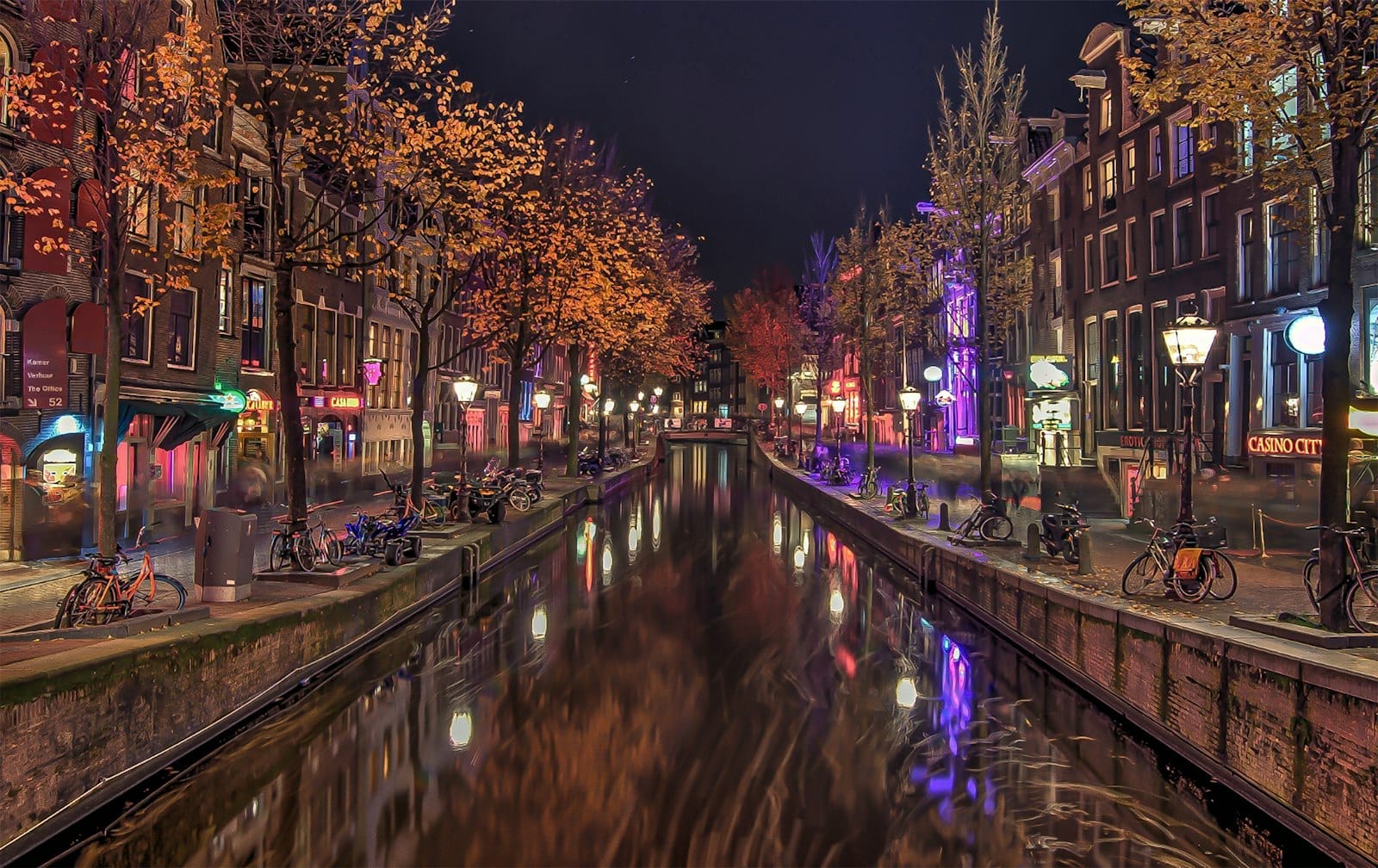
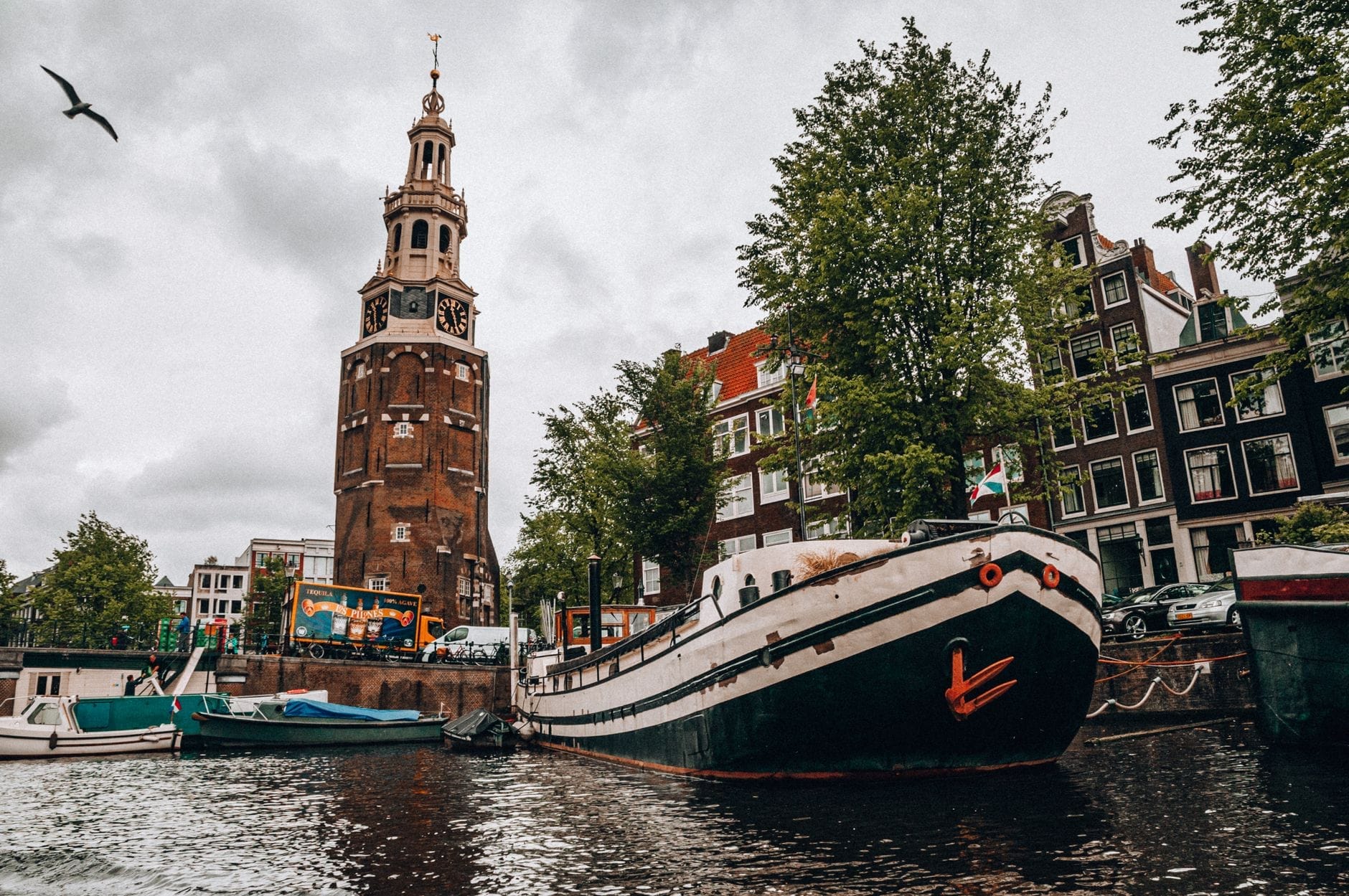
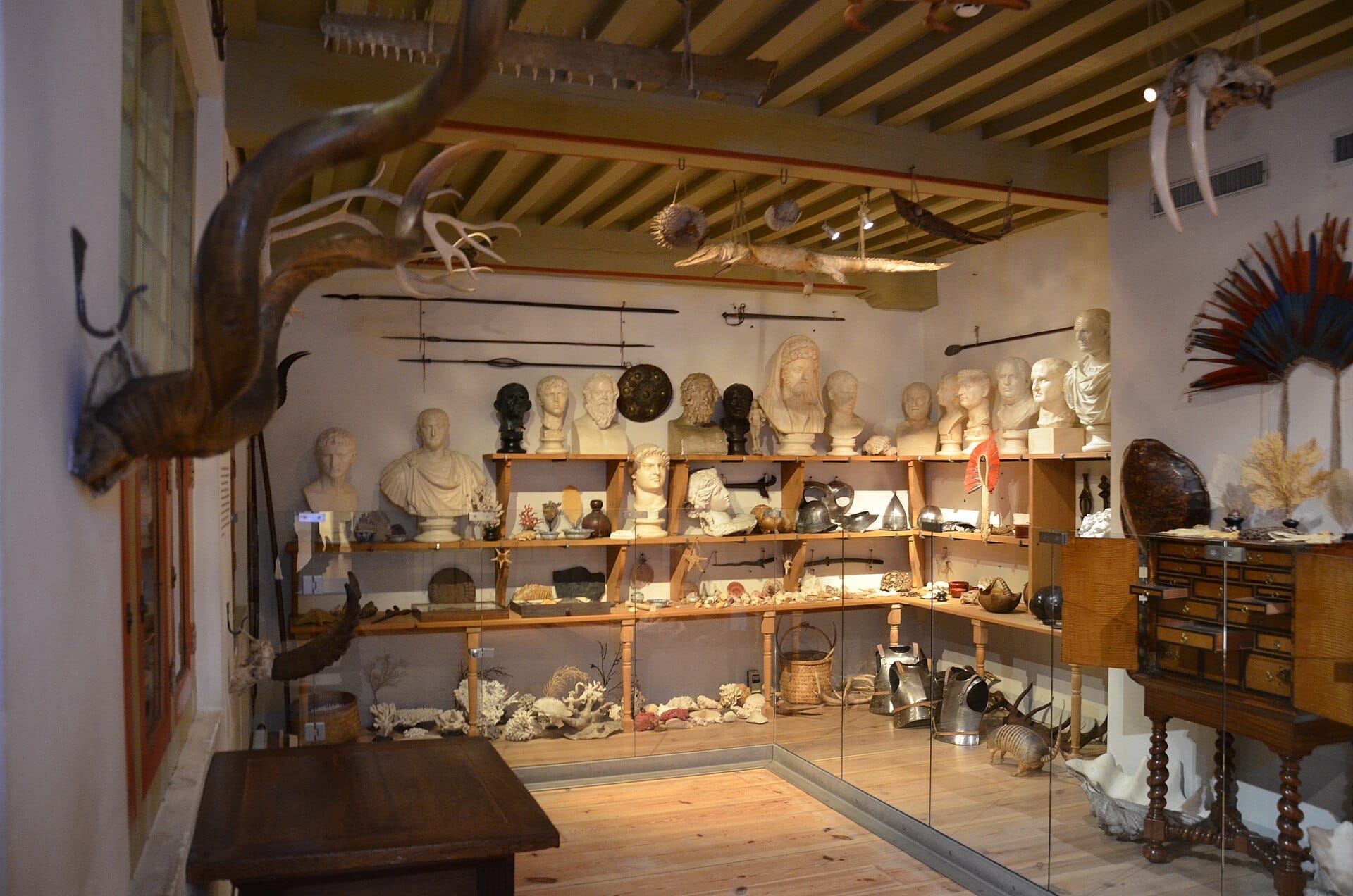
De Wallen is Amsterdam's medieval city centre and most notorious neighbourhood, stretching along the canals Oudezijds Voorburgwal and Oudezijds Achterburgwal. It is simultaneously the oldest part of the city and its most visited after dark, where Gothic church towers, working canal houses, and centuries of layered history sit alongside the regulated sex industry that made the area internationally famous.
De Wallen is Amsterdam's oldest neighbourhood and its most discussed, a compact medieval quarter where the Oude Kerk has stood since the 14th century and where the canal-lined alleyways have drawn curious visitors for generations. It is far more than its reputation suggests: a real residential neighbourhood with genuine history, serious coffee, and a streetscape that looks remarkably unchanged in parts since the Dutch Golden Age. But it is also, honestly, the loudest and most chaotic corner of the city after midnight.
Orientation
De Wallen sits in the oldest part of Amsterdam's city centre, directly south of Amsterdam Centraal Station and roughly bounded by Warmoesstraat to the west and Zeedijk to the east. The neighbourhood's spine is formed by two parallel canals, Oudezijds Voorburgwal and Oudezijds Achterburgwal, which run roughly north to south and are connected by a web of narrow alleyways and side streets. The Oude Kerk, Amsterdam's oldest surviving building, anchors the heart of the area and gives the neighbourhood a physical centre around which everything else organises itself.
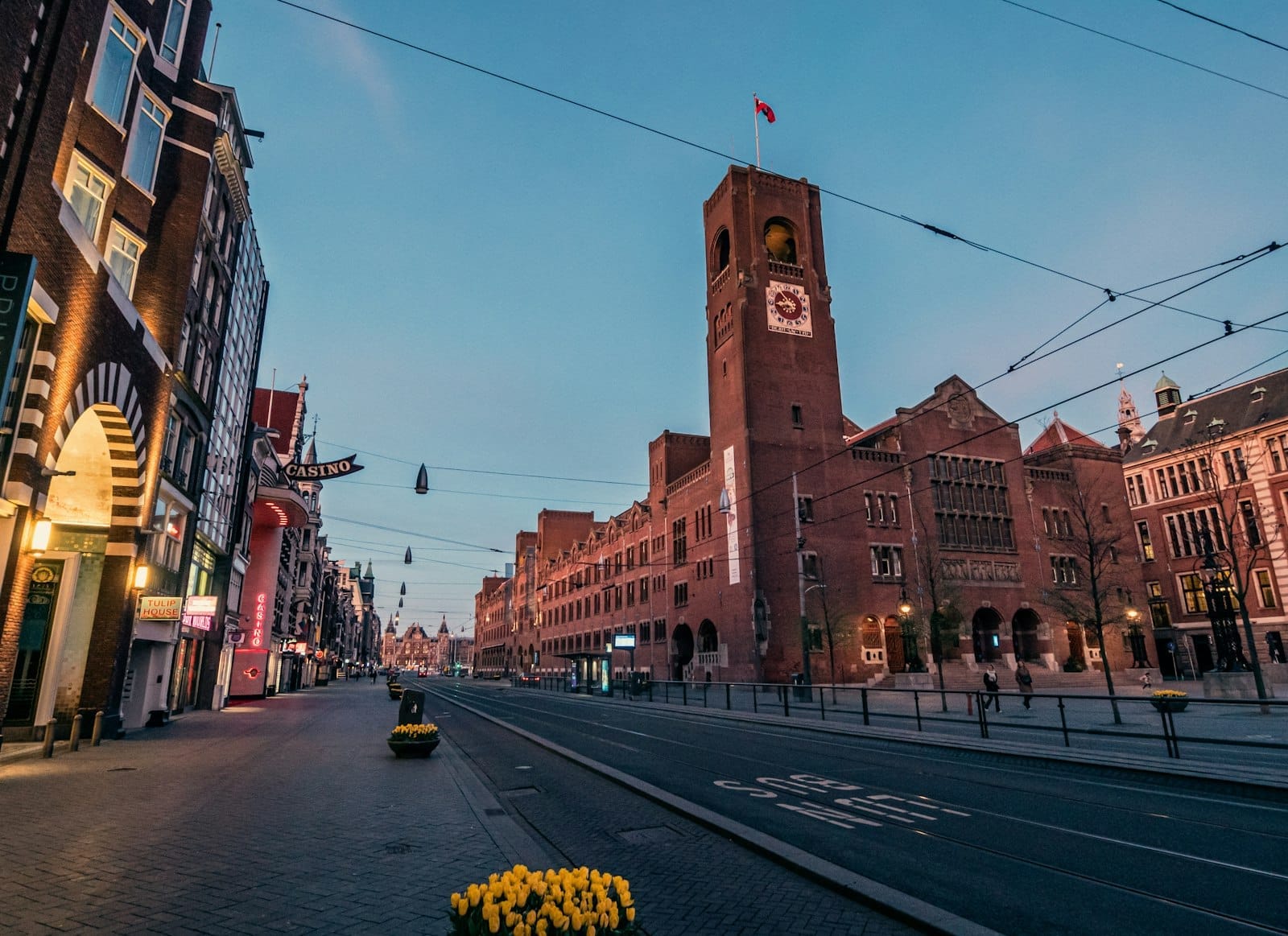
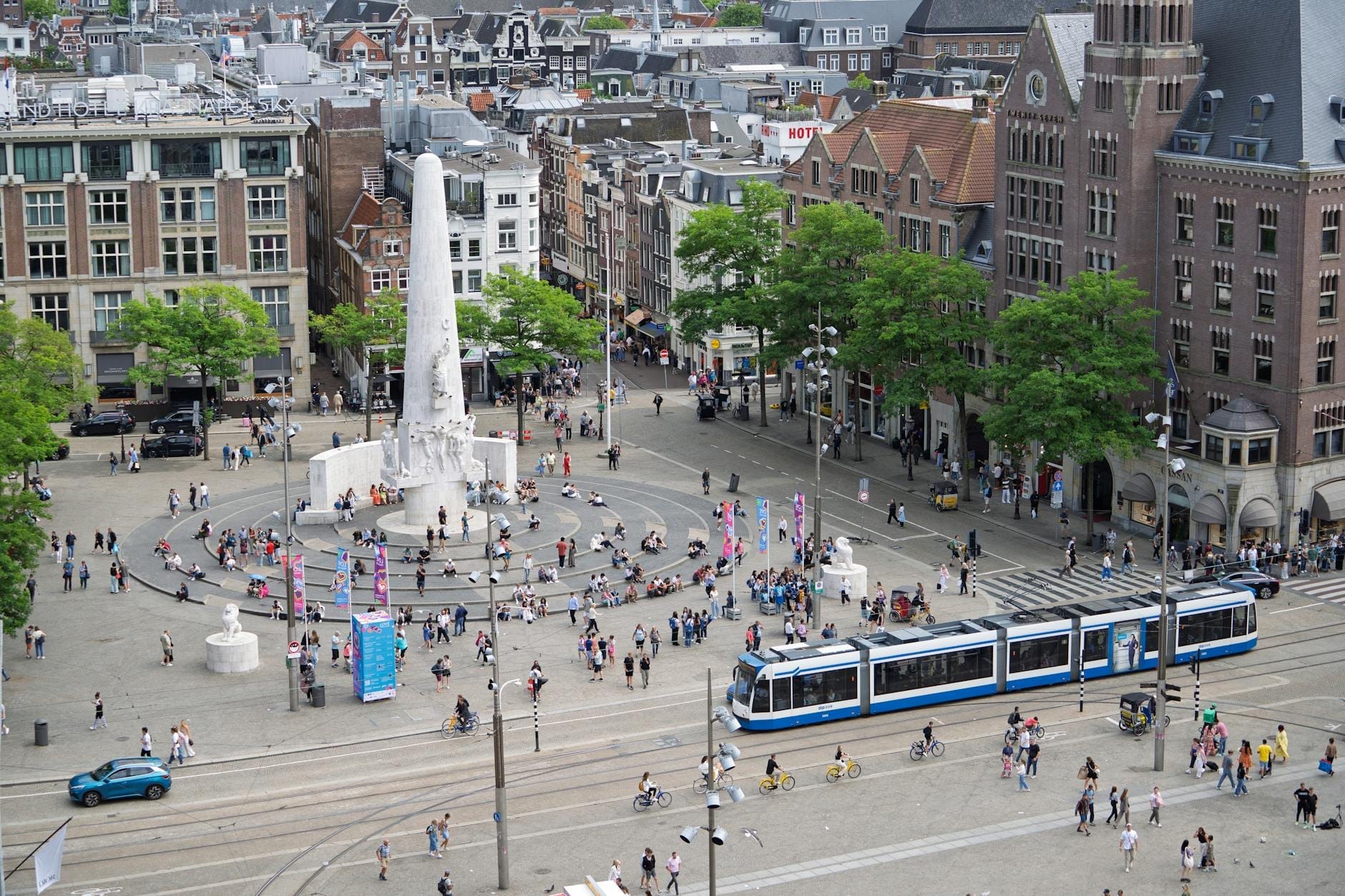
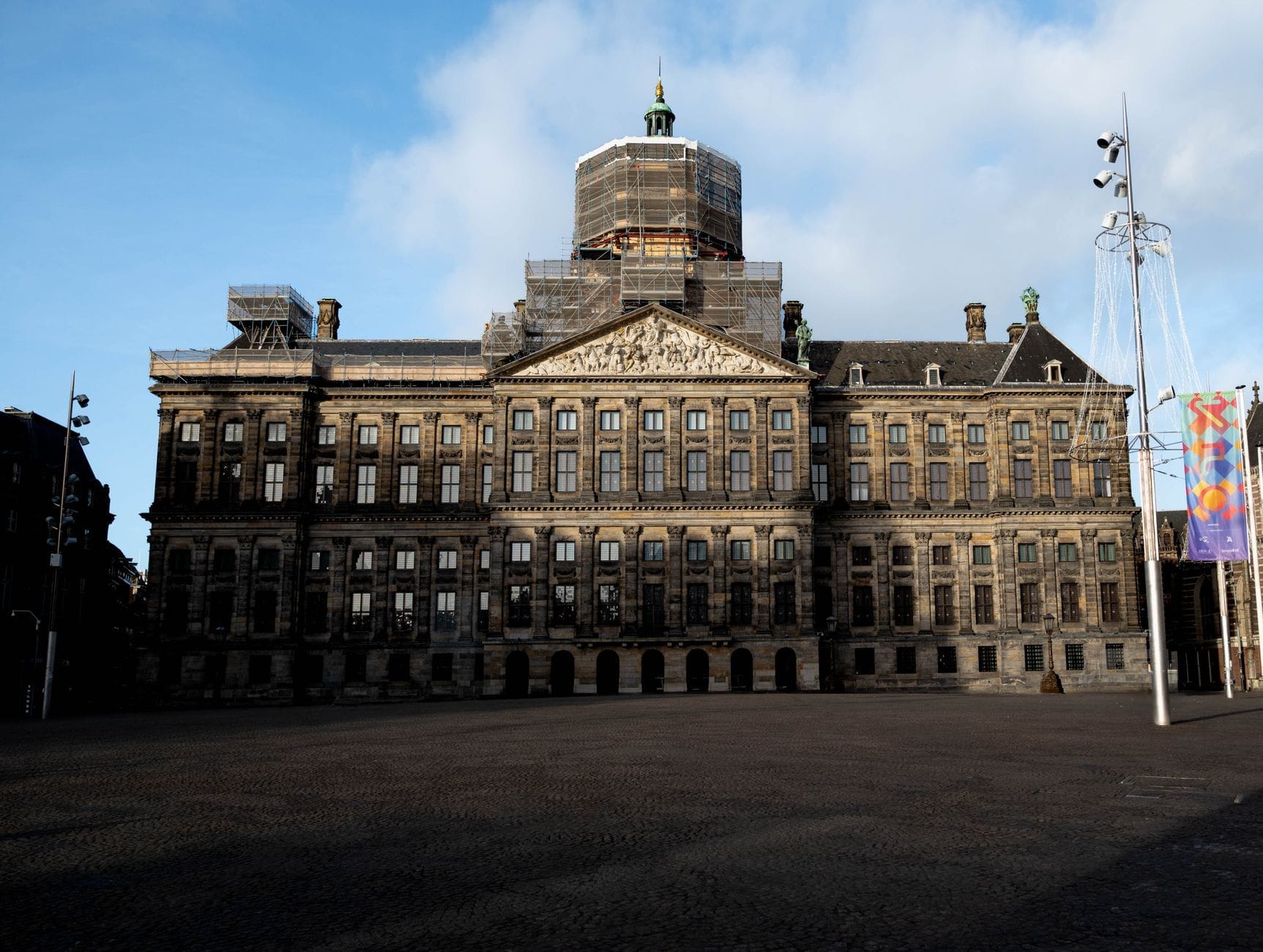
To the south, De Wallen blurs into Nieuwmarkt, a broader square that acts as a gateway between the medieval quarter and the Jodenbuurt (Jewish Quarter) further east. To the west, Warmoesstraat connects directly up to Damrak and Dam Square, putting the Royal Palace and the main shopping street of Kalverstraat within a five-minute walk. To the north, Zeedijk curves toward the Chinese quarter around Geldersekade and eventually toward the waterfront. This centrality is one of the reasons De Wallen attracts the visitor numbers it does: it is almost impossible to pass through the city centre without walking through at least its edges.
Understanding De Wallen's position within the broader Canal Ring helps build a useful mental map. The neighbourhood predates the famous 17th-century canal expansion that created the UNESCO-listed Canal Ring to the west. Where the Grachtengordel was rationally planned, De Wallen grew organically along medieval trade routes, which is why its streets are narrower, less symmetrical, and feel distinctly older underfoot.
Character & Atmosphere
The character of De Wallen changes dramatically depending on when you arrive. In the morning, roughly before 11am, it is a surprisingly quiet residential neighbourhood. Canal boats sit motionless on Oudezijds Voorburgwal, a few locals cycle past with groceries, and the Oude Kerk catches the low northern light in a way that makes it look genuinely medieval. The alleyways smell of canal water and fresh bread from nearby bakeries. It is, briefly, peaceful.
By early afternoon the first tour groups and independent visitors begin filtering in. The coffeeshops open, cafés fill up, and the window brothels along Oudezijds Achterburgwal and the smaller alleyways like Trompettersteeg and Stoofsteeg begin operating. The neighbourhood by this point is recognisably the place that features in a thousand travel photos: red-lit windows reflected in canal water, narrow bridges crowded with onlookers, hawkers outside live-show venues competing for attention.
After dark, especially on weekends, De Wallen becomes one of the loudest, most crowded spaces in the Netherlands. Stag parties from across Europe converge on Warmoesstraat and the main alley networks. The canal bridges become bottlenecks. This is not a neighbourhood where you will find quiet candlelit dinners or reflective evening strolls on Friday or Saturday nights. If you are looking for Amsterdam's nightlife scene in its most concentrated, unfiltered form, this is where it is. If you were hoping for something more atmospheric, the Jordaan or the southern Canal Ring offer very different evenings.
ℹ️ Good to know
De Wallen is a working residential neighbourhood as well as a tourist destination. Around 2,000 people live here. Residents have successfully pushed for stricter noise regulations, reduced street-drinking policies, and limits on certain types of tourism. Street drinking is banned, and the city has introduced rules limiting the hours of certain tours through the area.
The neighbourhood also has a quieter, more intellectual dimension that is easy to miss if you visit only after sunset. Several small museums, the historic Athenaeum Illustre building (Amsterdam's original university, founded in 1632), and a cluster of antiquarian bookshops along Oudezijds Voorburgwal signal a neighbourhood with serious cultural depth beneath its louder surface. The contrast between the Oude Kerk's stained glass and the window displays a few metres away is genuinely striking, and it tells you something true about Amsterdam's long tradition of pragmatic tolerance.
What to See & Do
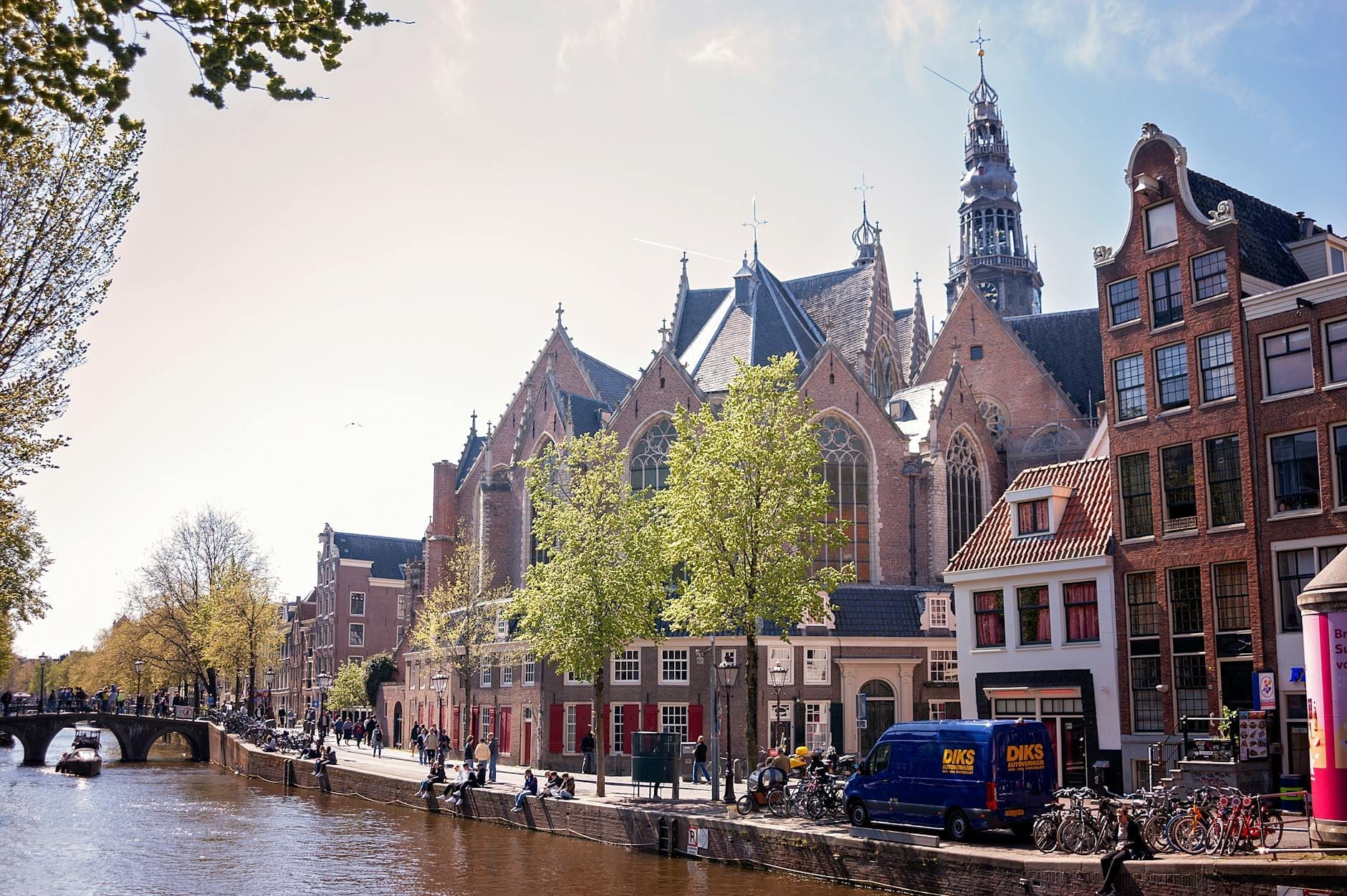
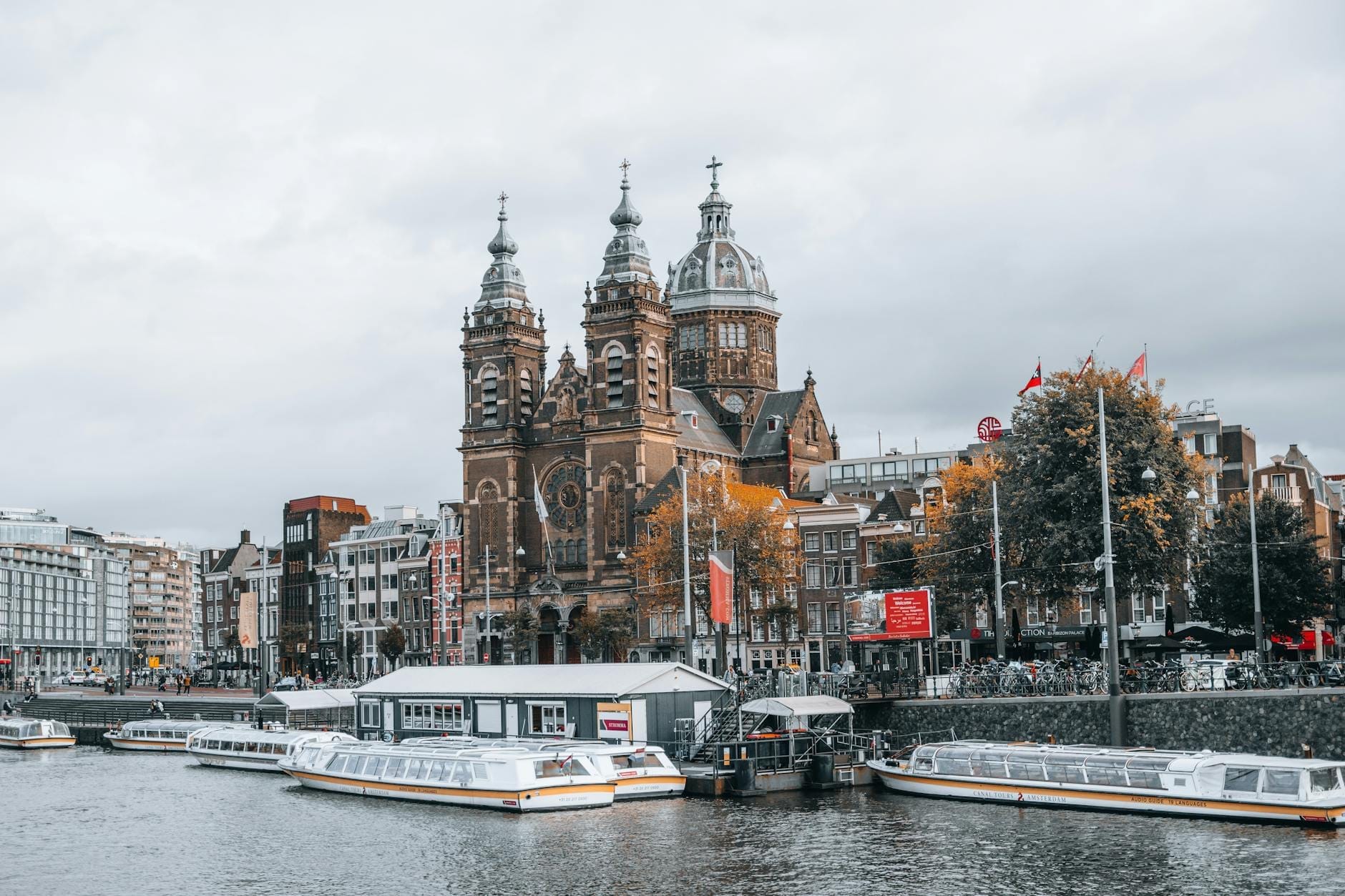
The Oude Kerk is the starting point for any serious visit to De Wallen. Amsterdam's oldest building dates to around 1306, though it was expanded and altered repeatedly through the 15th and 16th centuries. It sits in the middle of the Red Light District with remarkable equanimity, its interior used today for contemporary art exhibitions and cultural events as well as occasional services. The tombstones inside include that of Rembrandt's wife Saskia van Uylenburgh. Entry is ticketed and worth it for the architecture alone.
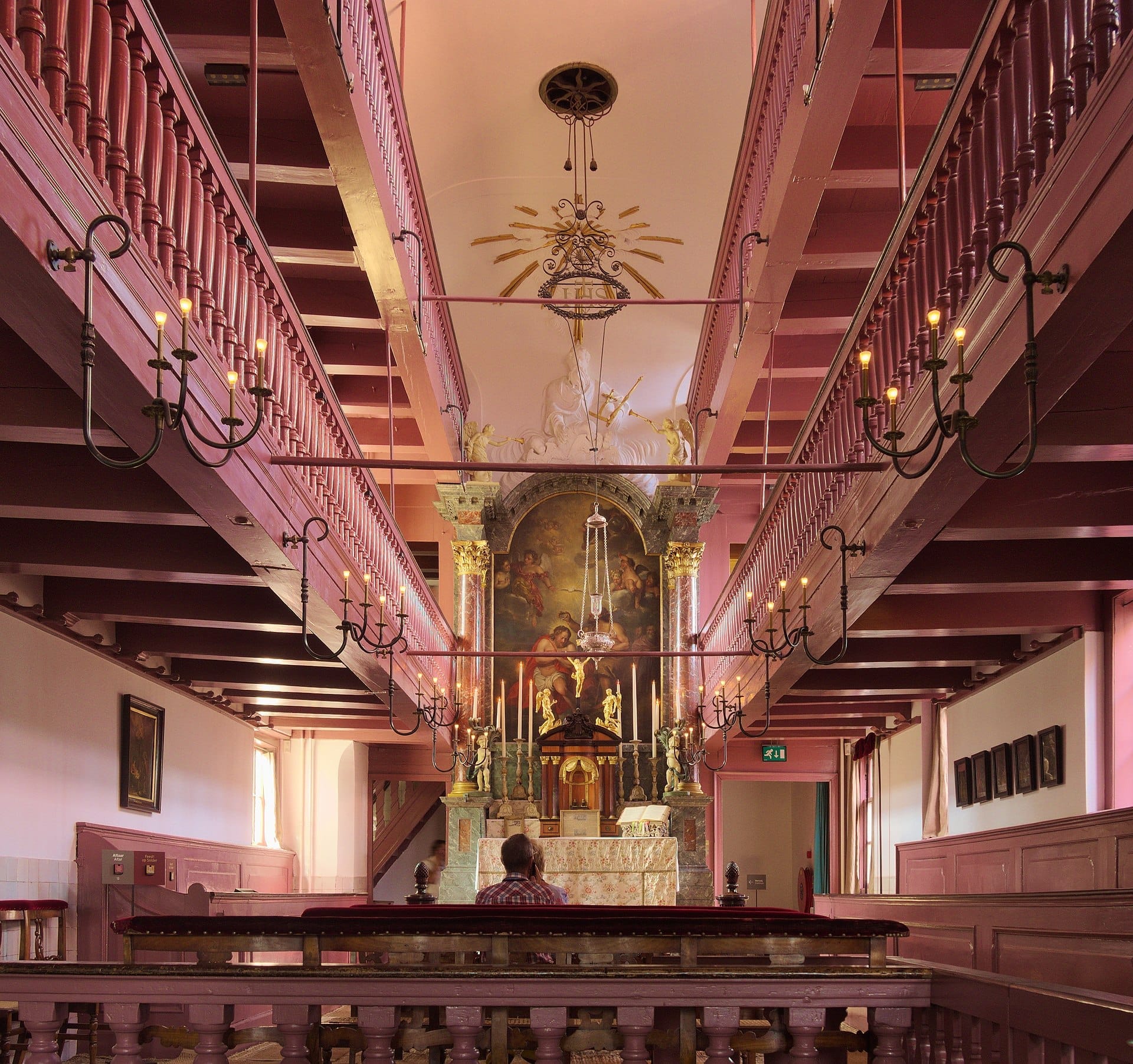
A few minutes' walk north along Zeedijk brings you to Our Lord in the Attic, a clandestine Catholic church hidden within the upper floors of a 17th-century canal house. Built during the period when Catholic worship was officially suppressed in Amsterdam, the church preserves its original interior almost entirely intact and offers one of the most genuinely surprising interiors in the city. It is consistently one of the most underrated attractions in De Wallen.
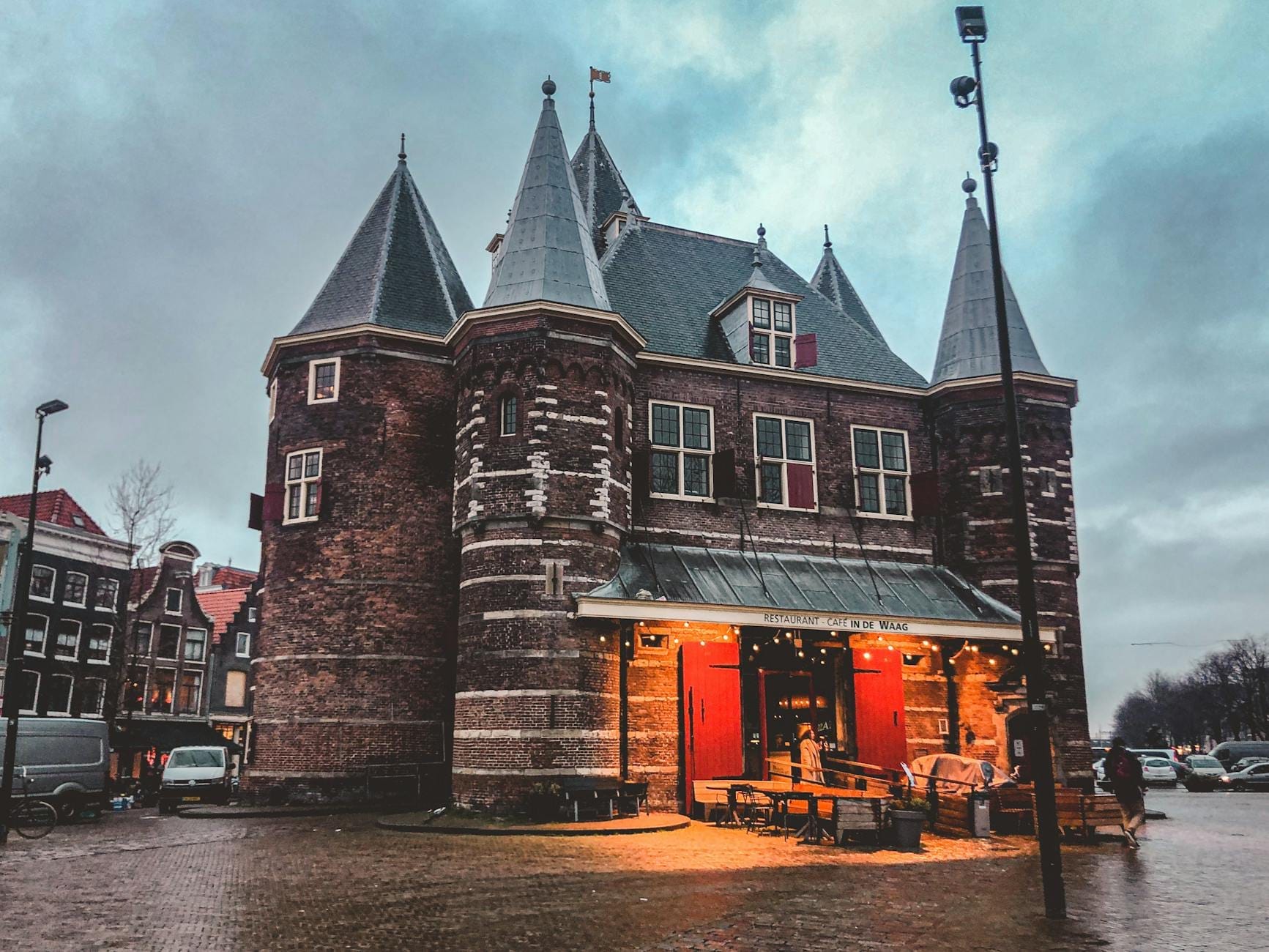
Nieuwmarkt, the large square just south of De Wallen's core, is anchored by the De Waag, a 15th-century city gate and weighing house that now houses a café-restaurant. The Nieuwmarkt square hosts a weekly organic market on Saturdays and is ringed by a mix of Chinese restaurants, Dutch brown cafés, and independent shops. It is a useful reference point for orienting yourself, and its atmosphere is noticeably calmer than the streets closer to the canal windows.
Oude Kerk: medieval church turned contemporary art venue, surrounded by the Red Light District
Our Lord in the Attic: hidden canal-house church with fully intact 17th-century interior
Nieuwmarkt and the De Waag: 15th-century city gate at the southern end of the neighbourhood
Oudezijds Voorburgwal: the broader of the two main canals, lined with bookshops, galleries, and historic façades
Zeedijk: the eastern boundary street, historically Amsterdam's sailortown, now home to a Chinese quarter with good dumpling restaurants and a few remaining brown cafés
Erotic Museum and Hash Marihuana & Hemp Museum: niche but genuinely informative for context on the neighbourhood's industries
⚠️ What to skip
Photography of sex workers in the window brothels is strictly prohibited and actively enforced. Cameras and phones pointed at the windows will attract immediate intervention from locals, security, or police. This is a matter of basic respect for the workers, not just a rule: treat the neighbourhood as you would any other working area of a city.
Eating & Drinking
The food scene in De Wallen has a split personality. On the main tourist corridors, especially along Warmoesstraat and the streets immediately adjacent to the window areas, you will find a concentration of mediocre pizza-and-burger places, overpriced tourist menus, and the kind of steak houses that exist primarily to serve people who need to eat quickly between bars. Avoid these unless you have no other option.
The better eating is concentrated around Zeedijk and Nieuwmarkt. Zeedijk has been home to Amsterdam's small Chinese community since the early 20th century, and the stretch near Geldersekade has a handful of genuinely good dim sum and noodle restaurants that local residents have eaten at for decades. The square around Nieuwmarkt has more options, ranging from Dutch brown cafés serving bitterballen and jenever to Thai and Indonesian places reflecting the city's broader demographic mix.
For coffee specifically, De Wallen has both kinds: the coffeeshops selling cannabis (of which there are many, concentrated especially along Oudezijds Achterburgwal and its side streets) and actual good espresso cafés aimed at people who live and work in the neighbourhood. The latter are worth seeking out for a morning visit when the streets are quiet. Several small independent roasters and café-bars along Oudezijds Voorburgwal cater to a different crowd than the tourist bars nearby.
If you want to eat well before or after exploring De Wallen, Dam Square is a five-minute walk west, and the side streets around Nieuwmarkt lead south toward the broader city centre. For a proper Amsterdam food experience, the Amsterdam food guide covers stroopwafels, rijsttafel, Indonesian cuisine, and the broader Dutch dining landscape better than any single neighbourhood visit can.
💡 Local tip
Cannabis smoking on public streets in the Red Light District is banned and carries fines. If you visit a coffeeshop, consume inside. The ban is enforced with fines of around €100, and the regulation is posted at the entrances to the district. The city has been gradually tightening rules around cannabis tourism in recent years, so check current regulations before your visit.
Getting There & Around
De Wallen is one of the easiest neighbourhoods in Amsterdam to reach without planning. From Amsterdam Centraal Station, it is a 5 to 10 minute walk: exit the station, cross Stationsplein, and head south along Damrak. Turn left onto Warmoesstraat before Dam Square and you are immediately in the neighbourhood. Alternatively, follow Damrak to Dam Square and cut east through the small streets toward Oudezijds Voorburgwal.
By metro, the nearest stop is Nieuwmarkt on the Noord/Zuidlijn (line 52), which connects directly to Amsterdam Centraal to the north and to De Pijp and Oud-Zuid to the south. Nieuwmarkt station drops you at the southern edge of De Wallen, a two-minute walk from the Oude Kerk. The station at Rokin (also line 52) is useful if you are coming from the museum quarter.
Trams on lines 4, 14, 24 stop at Dam Square, which is the western gateway to De Wallen. From Dam Square you can walk east in under five minutes to reach Oudezijds Voorburgwal. Cycling is technically possible but not advisable in the core area after midday: the alleyways are narrow, pedestrian traffic is heavy, and bicycle parking is genuinely difficult. If you are cycling,cycling in Amsterdam, lock your bike at one of the racks on Warmoesstraat or near Nieuwmarkt and continue on foot.
Where to Stay
Staying in De Wallen puts you at the geographic centre of Amsterdam, within walking distance of almost everything in the city core. Amsterdam Centraal is under 10 minutes on foot, the Canal Ring is immediately to the west, and Nieuwmarkt and the broader eastern city centre are steps away. For a short city visit focused on maximum accessibility, the location is hard to fault on logistics.
The honest trade-off is noise. On Thursday, Friday, and Saturday nights, the streets around Oudezijds Achterburgwal and the alley network are loud until the early hours of the morning. If you are a light sleeper or travelling with children, De Wallen is not the right base. Hotels here tend to have solid soundproofing as a necessity, but sound still penetrates, and the streets outside can be chaotic in a way that genuinely disrupts sleep.
For families or travellers who want a quieter base with similar central access, the Jordaan to the west or the streets around Nieuwmarkt just outside De Wallen's core offer a noticeably different experience. The Amsterdam accommodation guide breaks down the trade-offs across all central neighbourhoods in more detail.
The accommodation that exists in De Wallen ranges from budget hostel-style places on Warmoesstraat (which has been Amsterdam's main hostel street for decades) to mid-range and boutique hotels along Oudezijds Voorburgwal, where some of the canal houses have been converted with considerable care. If you want atmosphere and canal views with your morning coffee, the broader of the two canals, Oudezijds Achterburgwal, is the better address.
Practical Notes for Visitors
De Wallen is a safe neighbourhood in the sense that violent crime directed at tourists is rare. The main risk, as in any densely crowded urban area, is pickpocketing. Keep bags closed and in front of you, particularly on the bridges over Oudezijds Achterburgwal and in the narrow alleyways where crowds compress. Police maintain a consistent presence in the area.
The city of Amsterdam has introduced a series of measures in recent years aimed at reducing what officials call 'tourism nuisance' in De Wallen. These include bans on street drinking, restrictions on guided tours through the window areas, noise regulations, and a ban on street cannabis consumption. Rules continue to evolve, so checking the Amsterdam city government website for current regulations before your visit is worthwhile. The broader Amsterdam safety tips guide covers the practical details for navigating the city confidently.
The window prostitution in De Wallen is legal and regulated under Dutch law. Workers have their own advocacy organisations and legal protections. Treating the area as a spectacle or behaving intrusively toward workers is neither legal nor acceptable, and Amsterdam's residents have become increasingly vocal about tourist behaviour in the neighbourhood. Walking through to observe the streetscape is fine. Crowding around windows, taking photographs, or shouting at workers is not.
TL;DR
De Wallen is Amsterdam's oldest neighbourhood, built around the medieval Oude Kerk and the parallel canals Oudezijds Voorburgwal and Oudezijds Achterburgwal, a 5-10 minute walk from Amsterdam Centraal Station.
The neighbourhood is best experienced in the morning, when its genuine historic character is visible; after dark on weekends it becomes extremely crowded and noisy, with a heavy concentration of bars, stag parties, and tourist activity.
Key sights beyond the Red Light District itself include the Oude Kerk, the hidden church of Our Lord in the Attic, and the Nieuwmarkt square with its 15th-century De Waag building.
Photography of sex workers in windows is strictly prohibited; street drinking and public cannabis consumption are also banned and subject to fines.
Best suited to travellers who want maximum central access and aren't bothered by noise, or those visiting specifically for the history and atmosphere; not recommended as a family base or for light sleepers.
Two days in Amsterdam is enough to hit the genuine highlights without feeling rushed, if you plan smart. This itinerary covers the Rijksmuseum, Van Gogh Museum, Anne Frank House, canal cruises, and the best neighborhoods, with real pricing, booking warnings, and insider logistics so you don't waste a single hour.
Amsterdam Airport Schiphol (AMS) is one of Europe's largest and busiest international hubs, sitting just 9 km southwest of the city centre. This guide covers the airport layout, how to get into Amsterdam, security rules, facilities, and what to expect at peak times.
Amsterdam's architecture spans four centuries of ambition, from the UNESCO-listed 17th-century canal belt to the expressive social housing of the Amsterdam School and the bold contemporary buildings reshaping the city's waterfront. This guide breaks down what to look for, where to find it, and how to explore it without wasting time.
Amsterdam's 165 canals form a UNESCO World Heritage network stretching over 100 km through the city. This guide cuts through the noise to tell you exactly which type of canal cruise fits your trip, what each operator actually delivers, and when to go to avoid the crowds.
Amsterdam's Canal Ring is one of Europe's most ambitious feats of urban planning, a UNESCO World Heritage Site built during the Dutch Golden Age. This guide covers the history, the three main canals, how to explore by boat or on foot, seasonal conditions, and straightforward advice on what's worth your time.
The I Amsterdam City Card promises access to 70+ museums, unlimited trams and buses, a canal cruise, and a day's bike rental in one timed pass. Whether it actually saves you money depends entirely on how you plan to spend your days. This guide breaks down the real costs, what's excluded, and who should skip it.
Amsterdam's coffeeshops are unlike anything else in Europe, but they come with rules, limits, and legal nuances most visitors don't fully understand. This guide breaks down exactly how they work, what to expect inside, what you can legally do outside, and how to avoid the most common mistakes.
Amsterdam is one of Europe's most naturally romantic cities, with UNESCO-listed canals, world-class museums, and neighbourhoods designed for slow exploration. This guide covers the best experiences for couples, with practical advice on costs, booking, and timing.
Amsterdam rewards those who look beyond the Rijksmuseum and Anne Frank House. From a secret medieval courtyard to a craft brewery inside a working windmill, these off-the-beaten-path experiences reveal a city that most visitors never see.
October is one of Amsterdam's most interesting months to visit, split between a quieter shoulder season and one of the world's biggest electronic music events. This guide covers the Amsterdam Dance Event, what the weather actually looks like, and how to make the most of the city in autumn.
Spring is Amsterdam's most celebrated season, anchored by tulip fields, canal-side festivals, and the city-wide party of King's Day on April 27. This guide covers everything from bloom timing and Keukenhof logistics to what the weather actually looks like and which spring experiences are worth your time.
Amsterdam transforms in winter into one of Europe's most atmospheric cold-weather destinations. From the iconic Amsterdam Light Festival illuminating the canals to Christmas markets and cozy brown cafes, this guide covers everything you need to plan a rewarding winter visit.
Three days is enough time to hit Amsterdam's heavyweight museums, explore its most rewarding neighborhoods, and get out on the canals — if you plan it right. This guide breaks it all down day by day, with practical advice on booking, passes, and what to skip.
King's Day (Koningsdag) is the biggest street party in the Netherlands, and Amsterdam is its epicentre. This guide covers the full schedule, how to navigate crowds, where to find the best vrijmarkt stalls, and practical tips that make the difference between an unforgettable day and a frustrating one.
The Amsterdam Light Festival transforms the city's historic canals into an open-air gallery of illuminated art installations every winter. This guide covers the 2025-2026 edition dates, both routes, ticket prices, crowd patterns, and what first-timers consistently get wrong.
Amsterdam's markets are where the city reveals itself: locals haggling over vintage finds, stroopwafels fresh off the iron, tulip bulbs stacked in canal-side barges. This guide covers the best markets in Amsterdam across every category, from daily street markets to monthly flea market events.
Amsterdam's nightlife runs deeper than the Red Light District. This guide breaks down the best bars, clubs, and late-night experiences by neighborhood, with practical advice on tickets, timing, and where locals actually go.
Amsterdam has a reputation for being expensive, but careful planning cuts costs dramatically. This guide covers real 2026 price benchmarks, the best free experiences, transport passes, and the smartest times to visit — so you can see the city properly without draining your account.
Amsterdam is one of Europe's safest cities, but tourists are regularly caught out by petty theft, clever scams, and bike-related mishaps. This guide covers everything you need to know: how to spot fake police, navigate 400 km of cycle paths, use public transport correctly, and stay sharp across different seasons.
Amsterdam rewards shoppers who go beyond the souvenir shops. From the Albert Cuypmarkt in De Pijp to the boutique-lined streets of the Jordaan, this guide covers the city's best markets, shopping streets, and independent stores — with practical hours, clear assessments, and local context.
Amsterdam is one of Europe's most rewarding solo destinations: compact, English-friendly, and full of world-class culture. This guide covers everything you need to know before you go, from staying safe and getting around to the best activities and how to book them without the stress.
The direct ICE train from Amsterdam Centraal to Berlin Hbf takes about 5 hours 51 minutes and costs as little as €37.90 booked in advance. This guide covers every route option, real price ranges, booking platforms, and what to expect on board.
The Amsterdam to Brussels train is one of Europe's most convenient city-to-city rail connections. This guide covers train types, realistic prices, schedules, booking platforms, and what to expect on the day of travel.
The Eurostar connects Amsterdam Centraal to London St Pancras in around 4 hours 10 minutes, making it one of the most practical city-centre-to-city-centre journeys in Europe. This guide covers fares, booking windows, check-in procedures, and the key differences between direct and indirect routes.
The Amsterdam to Paris train journey takes around 3 hours 20 minutes on the Eurostar high-speed service. This guide covers fares, booking strategy, seat classes, what the route actually looks like, and the practical details that save you money and hassle.
Tulip season near Amsterdam runs from late March to mid-May, with peak bloom in the surrounding fields from roughly April 10 to 25. This guide covers the exact timing, top locations, transport options, common misconceptions, and practical tips to make the most of one of the Netherlands' most spectacular seasonal events.
Amsterdam rewards walkers more than almost any city in Europe. This guide covers the best guided tours, self-guided routes, and on-foot highlights across the city's most rewarding neighborhoods, from the medieval center to the creative enclaves of Amsterdam-Noord.
Amsterdam is a great city for families, with world-class science museums, a historic zoo, free parks, and canal cruises designed for children. This guide covers the best attractions, practical logistics, clear pricing, and seasonal advice to help you plan a smooth trip with kids of any age.
Amsterdam has one of the highest concentrations of world-class museums of any city in Europe. This guide covers the essential art, history, science, and specialist museums, with practical advice on booking, passes, and how to make the most of each visit.
Amsterdam rewards visitors year-round, but when you go shapes everything from hotel rates to what you can actually see. This month-by-month guide breaks down weather patterns, crowd levels, prices, and key events so you can pick the timing that suits your trip.
Amsterdam has around 400 km of dedicated bicycle paths and more bikes than residents. This guide covers exactly how to rent a bike, what it costs, the rules you need to know, where to park safely, and which routes are worth your time — whether you're riding through the canals or heading out to the countryside.
Amsterdam is an extraordinary city, but the Netherlands surrounding it rewards exploration just as much. These are the best day trips from Amsterdam, from the tulip gardens of Keukenhof to the Gothic streets of Haarlem, organized by how you want to spend your time.
Amsterdam rewards travelers who plan smartly. From free ferry rides to Noord and rooftop views from NEMO to world-class street art at NDSM, the city offers a surprising range of genuinely free experiences. This guide covers the best of them.
Amsterdam rewards visitors who understand how it moves. This guide covers every transport option in the city, from GVB trams and the metro to bike rentals and Schiphol airport transfers, with practical advice on costs, passes, and what to skip.
Amsterdam rewards visitors who look beyond the obvious. This guide covers the top things to do in Amsterdam across every interest and budget, from world-class museums and canal cruises to neighborhood markets and cross-IJ adventures, with practical advice on timing, booking, and what is worth your time.
Amsterdam is the capital of the Netherlands and one of Europe's most recognizable cities, famous for its UNESCO-listed canal ring, Rijksmuseum, Anne Frank House, cycling culture, and tolerant social policies. This guide breaks down exactly what makes Amsterdam distinctive, with practical details for planning your visit.
Amsterdam's food scene runs deeper than cheese and fries. This guide covers the essential Dutch dishes to try, where to find them across the city, seasonal specialties, and practical advice on what's worth your appetite and what isn't.
Choosing where to stay in Amsterdam shapes your entire trip. This guide breaks down the best neighborhoods by travel style, covers what each area actually costs, and cuts through the noise so you book the right hotel in the right location.