Amsterdam Architecture: Canal Houses, Amsterdam School & Modern Design
Amsterdam's architecture spans four centuries of ambition, from the UNESCO-listed 17th-century canal belt to the expressive social housing of the Amsterdam School and the bold contemporary buildings reshaping the city's waterfront. This guide breaks down what to look for, where to find it, and how to explore it without wasting time.
Tickets & tours
Live prices and dates from our booking partner. If you book, we may earn a commission at no extra cost to you.
TL;DR
- The 17th-century canal ring (Grachtengordel) is a UNESCO World Heritage Site with over 165 canals and approximately 1,500 bridges — more than Venice.
- Canal houses were built narrow to avoid façade-width taxes; many lean forward and have hoisting beams because the interior stairs are too steep for furniture.
- The Amsterdam School (c. 1910–1930s) produced some of Europe's finest expressionist social housing — best explored at Museum Het Schip in the Spaarndammerbuurt district.
- Modern architecture is concentrated in Amsterdam-Noord and along the IJ waterfront — easily combined with a canal cruise or a trip on the free ferry.
- For a deeper dive into the canal belt's urban planning logic, the Amsterdam canals guide covers the history, layout, and best walking routes.
The Canal Belt: What Makes It So Architecturally Remarkable
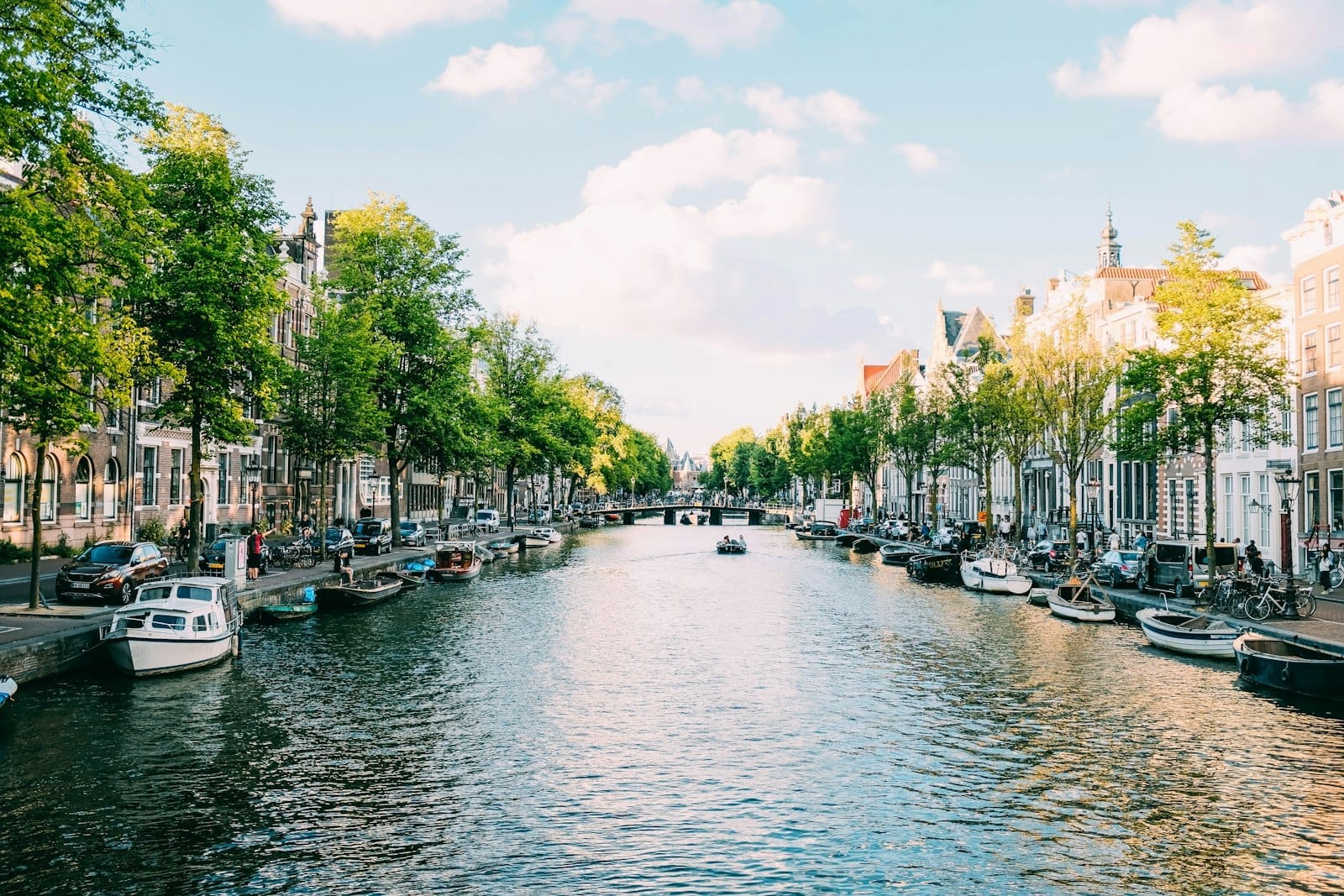
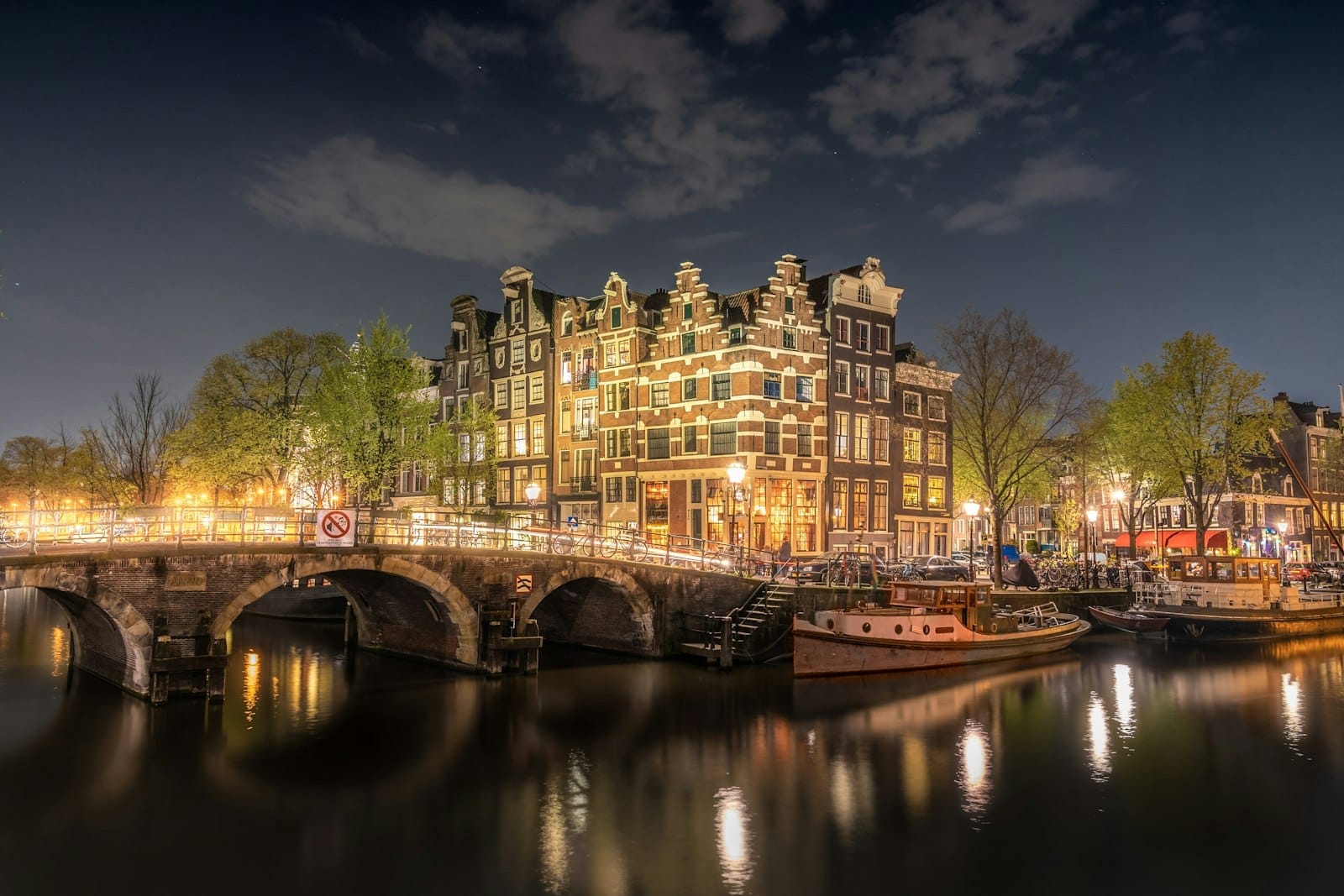
The Grachtengordel, Amsterdam's concentric canal ring, was not an accident of geography. It was one of the most deliberate urban planning projects of the 17th century, designed to accommodate a rapidly expanding merchant city while organizing land use, drainage, and property rights in a single coherent system. UNESCO recognized it as a World Heritage Site in 2010. What the designation doesn't fully convey is how legible that history remains at street level today.
The four main canals — Singel, Herengracht, Keizersgracht, and Prinsengracht — are arranged in a half-moon arc around the medieval city core. Herengracht (Gentlemen's Canal) was the most prestigious address, reserved for wealthy merchants and banking families. Keizersgracht (Emperor's Canal) followed, while Prinsengracht (Prince's Canal) was more mixed-use, lined with warehouses as much as residences. Walking these streets in order from the centre outward gives a clear sense of the social gradient that was baked into the city's design.
ℹ️ Good to know
The 'Golden Bend' (Gouden Bocht) on Herengracht, between Leidsestraat and Vijzelstraat, has the grandest canal houses in Amsterdam. Plots here were double width — a deliberate exception to the standard narrow-lot rule — which is why the houses look palatial compared to the rest of the belt.
If you want to understand how the canal belt actually functioned as a city system rather than just a pretty streetscape, the Canal Ring neighborhood page covers the district in detail. For exploring by water, the canal cruise guide breaks down which operators, routes, and ticket types give the best architectural perspective.
Canal Houses Up Close: Design, Quirks, and Social History
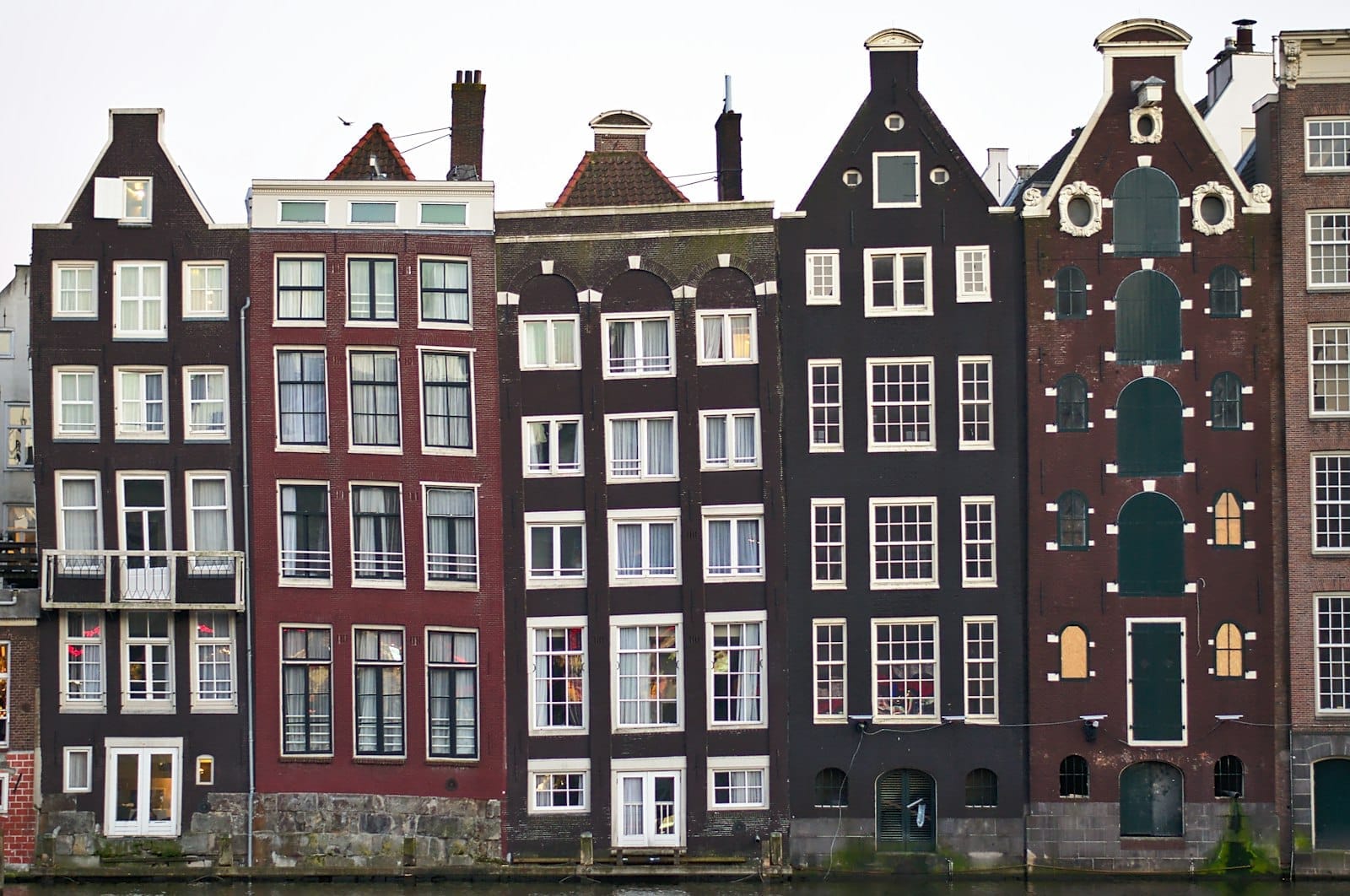
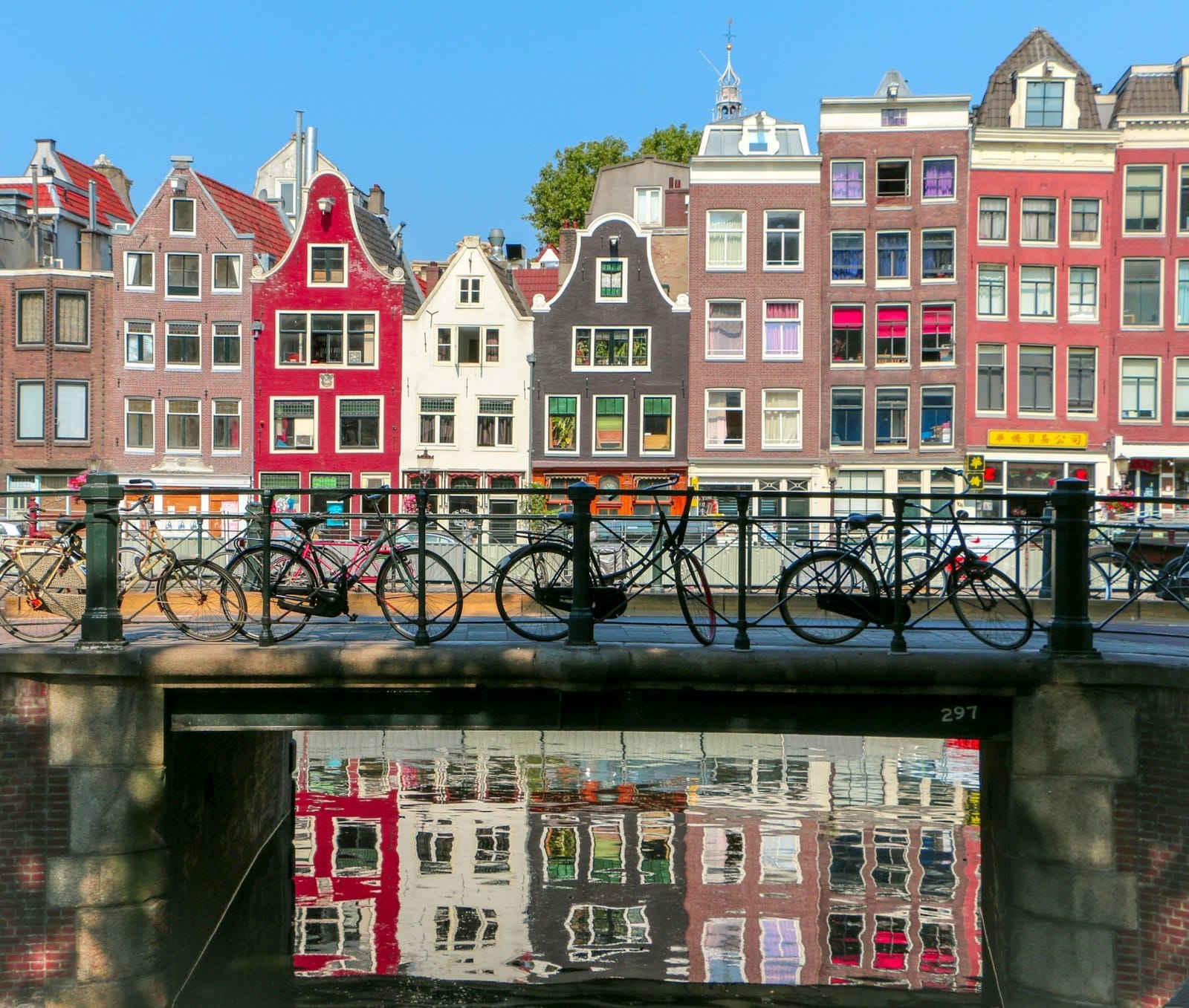
The narrow profile of Amsterdam's canal houses is not an aesthetic choice — it is a direct consequence of property tax. Levies were calculated on façade width, so merchants built houses that were often under 9 metres wide but extended deep into the plot, sometimes 30 metres or more. The result is a building type that prioritizes depth over breadth, with rooms stacked vertically on staircases so steep that moving furniture between floors is effectively impossible.
That explains the hoisting beam (hijsbalk) that protrudes from almost every gable. It was a functional piece of infrastructure, not a decorative flourish. Goods, furniture, and supplies were lifted from the canal or street level directly into upper-floor storage. Many houses also lean slightly forward toward the canal — deliberately, to allow hoisted loads to clear the façade. Over time, as the wooden foundations in Amsterdam's soft, swampy soil have shifted, some buildings have become more pronounced, giving the famous 'dancing houses' effect along Damrak and elsewhere.
- Gable types Look for step gables (trapgevel, common in the 16th–17th century), neck gables (halsgevel, elegant and elongated, popular from the mid-17th century), and bell gables (klokgevel, wider and more decorative, fashionable in the 18th century). The evolution of gable styles is a rough timeline in stone and brick.
- Double entrances Wealthier canal houses had two doors: a raised entrance at piano nobile level for the family, and a lower street-level door for servants and deliveries. Both are often still visible on the same façade.
- Window tax effects Some houses have bricked-up windows or unusually small panes. Window taxes — like the façade tax — shaped façade design in ways that are still visible today.
- Mixed-use origins Most canal houses were not purely residential. Merchants ran their businesses from the same building, with counting rooms on the lower floors, living quarters above, and warehousing at the top and rear. The idea of a purely residential canal house is largely a modern retrofit.
To see a canal house interior preserved and interpreted, the Willet-Holthuysen Museum on Herengracht offers a fully furnished 17th-century merchant house open to visitors. The Houseboat Museum on Prinsengracht provides a different angle — the floating homes that have lined Amsterdam's canals since the post-war housing shortage.
The Amsterdam School: Expressionist Brick and Social Housing
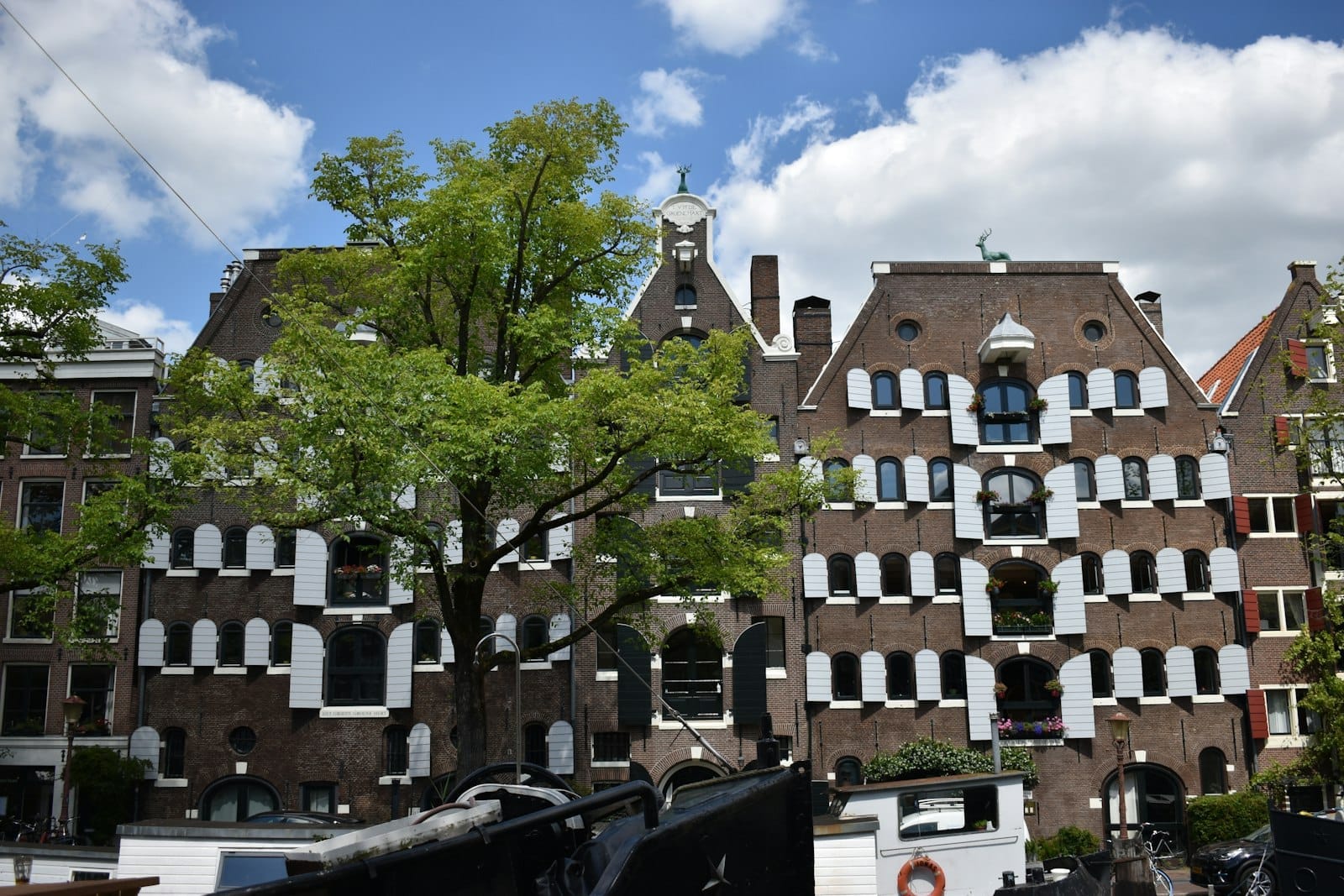
While the canal belt defines Amsterdam's historic identity, the Amsterdam School movement (roughly 1910 to the mid-1930s) is arguably more architecturally adventurous. It emerged in response to a housing crisis — overcrowded, unsanitary working-class districts needed urgent replacement — and it produced social housing that looks unlike social housing anywhere else in the world.
The key figures were Michel de Klerk, Piet Kramer, and Johan van der Mey. Their buildings use expressive, hand-crafted brickwork in curved walls, sculptural towers, and organic forms that reject the straight lines of contemporary rationalism. Ironwork, stained glass, tilework, and carved stone were integrated into the design rather than applied as afterthoughts. The movement treated working-class housing as an opportunity for total architectural design, not just functional shelter.
The single best place to understand the Amsterdam School is Museum Het Schip in the Spaarndammerbuurt, a short tram ride west of Centraal Station. Het Schip (The Ship) is a housing block designed by Michel de Klerk in 1921 and named for its ship-like form. The museum inside it runs guided tours that cover both the architecture and the social history of the housing reform movement. The surrounding Spaarndammerbuurt blocks are worth an hour of slow walking even without a museum ticket.
💡 Local tip
The Spaarndammerbuurt is not on most tourist itineraries, which makes it one of the few places in Amsterdam where you can genuinely study architecture without crowds. Go on a weekday morning for the best experience. The area is about 2.5 km from Centraal Station — walkable in 30 minutes or a quick ride on tram line 3.
Beyond Spaarndammerbuurt, Amsterdam School architecture is distributed across the city, particularly in districts built during the interwar expansion. The Rivierenbuurt (River Quarter) in Amsterdam Zuid contains large-scale residential blocks from the same era. Piet Kramer's work on Amsterdam's bridges is also worth noting — many of the canal bridges in the city centre and inner districts were designed by Kramer during his tenure as city bridge engineer, giving them a consistency of decorative detail that most visitors walk across without noticing.
Modern and Contemporary Architecture: Where Amsterdam Is Heading
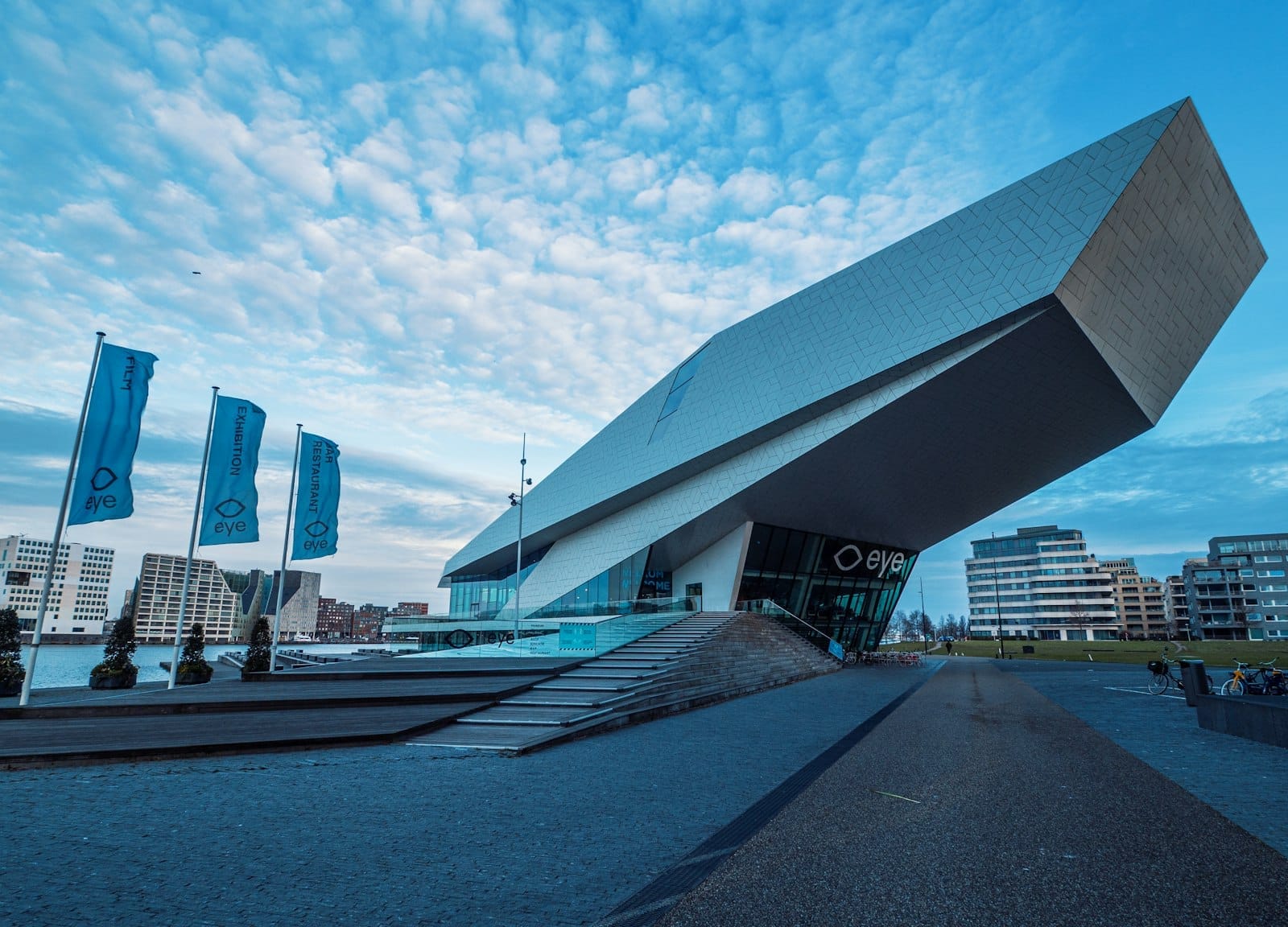
Amsterdam's post-war and contemporary architecture is uneven. The central city is heavily protected, so significant modern buildings tend to appear at the edges: along the IJ waterfront, in Amsterdam-Noord, and in the Zuidas business district to the south. Some of it is genuinely impressive; some of it is unremarkable corporate architecture that happens to be in an interesting city.
The most rewarding cluster of modern architecture is in Amsterdam-Noord, across the IJ from Centraal Station. The free GVB ferry (2-3 minutes from the rear of Centraal) takes you to a waterfront that has been transformed over the past two decades. The EYE Filmmuseum by Delugan Meissl Associated Architects (opened 2012) is the most photographed building on this stretch — a white angular form that cantilevers dramatically over the waterfront. Next to it, the A'DAM Tower (formerly a Shell office block) has been reimagined with a rooftop swing and observation deck operated by ADAM Lookout.
Further east along the IJ, the NEMO Science Museum building by Renzo Piano (1997) rises like a green copper ship above the entrance to the IJ Tunnel — a reference to Amsterdam's maritime history that works better from a distance than up close. The rooftop terrace is publicly accessible and offers one of the better free views over the city. The NEMO Science Museum is also worth a visit for families, but the architecture alone is a reason to walk the waterfront east of Centraal.
- EYE Filmmuseum (Amsterdam-Noord): angular white building by Delugan Meissl, 2012 — the most coherent piece of contemporary architecture in the city
- NEMO Science Museum (Oosterdok): Renzo Piano's copper-clad building, 1997 — best seen from the water or the Kattenburgerstraat bridge
- Beurs van Berlage (Damrak): H.P. Berlage's 1903 exchange building, technically late-19th century but the starting point for Dutch modernism and worth visiting for the interior
- Zuidas district: Amsterdam's financial centre has notable buildings by various international firms, best for architecture enthusiasts who want to compare corporate modernism styles
- Java Island and KNSM Island (Oostelijk Havengebied): former docklands redeveloped in the 1990s and 2000s with experimental residential architecture — an undervisited area with serious architectural interest
The Java Island and KNSM Island docklands east of the city centre represent a different strand of Amsterdam's architectural ambition — the 1990s effort to turn derelict port infrastructure into liveable housing districts. The density and variety of housing types on these islands, including work by Wiel Arets, Hans Kollhoff, and Jo Coenen, makes them worth the 20-minute tram ride from the centre for anyone seriously interested in late-20th-century urban design.
How to Explore Amsterdam's Architecture: Practical Routes and Tips
Amsterdam is compact enough that serious architectural exploration can be done largely on foot or by bicycle. The canal belt, the Jordaan, and the immediately adjacent districts can all be covered in a well-planned day. Adding Amsterdam-Noord and the eastern docklands requires at least half a day more.
For structured exploration, several operators offer dedicated architecture walking tours of the canal belt, the Amsterdam School districts, and the modern waterfront. The Amsterdam walking tours guide covers the best options, including self-guided routes. Cycling is faster for covering multiple districts — the cycling in Amsterdam guide has rental advice and route suggestions that work well for architectural itineraries.
⚠️ What to skip
Don't attempt to see canal houses, Amsterdam School buildings, and modern architecture in a single half-day. The canal belt alone rewards a full morning of slow walking. Rushing between neighbourhoods means missing the details — gable shapes, bridge ironwork, tiled entranceways — that make Amsterdam's architecture worth studying in the first place.
- Canal belt walk (3–4 hours) Start at Brouwersgracht in the Jordaan, walk south along Herengracht to the Golden Bend, then loop back via Keizersgracht. Look up at gable types and hoisting beams; look down at stoep (stoop) details and basement entrances.
- Amsterdam School half-day (3–4 hours) Take tram 3 to Spaarndammerbuurt, visit Museum Het Schip (allow 1.5 hours including a guided tour), then walk the surrounding blocks. Return via the Jordaan to compare 17th-century merchant architecture with 20th-century social housing.
- Modern waterfront (2–3 hours) Take the free GVB ferry behind Centraal to Amsterdam-Noord. Walk west to EYE, then east to the NDSM Wharf for large-scale street art and repurposed industrial architecture. Return by ferry.
- Eastern docklands (2–3 hours) Tram or bus to Java Island and KNSM Island. Walk the length of both islands to compare housing block typologies from the 1990s redevelopment. The Entrepotdok warehouse complex nearby is also worth a detour.
Honest Caveats: What's Overhyped and What's Genuinely Worth Your Time
The canal belt is not overrated — it genuinely earns its UNESCO designation and rewards careful attention. But the photogenic stretch of Singel near Bloemenmarkt or the view from the Magere Brug is crowded year-round and doesn't tell you much about how the architecture actually works. If your goal is architectural understanding rather than photography, skip the most-Instagrammed spots and spend time on quieter stretches of Keizersgracht or the eastern reaches of Prinsengracht near the Amstel.
The Amsterdam School is genuinely undervisited relative to its quality. Museum Het Schip is consistently excellent and rarely overcrowded — partly because it requires a deliberate effort to reach. Anyone with a serious interest in 20th-century architecture should treat it as a priority, not an optional add-on. The Beurs van Berlage on Damrak is the other essential stop for anyone tracing the lineage from Dutch historicism through to modernism, and its interior is accessible for events and exhibitions when the main space is not in use.
One honest caveat about canal cruises as architectural experiences: most standard sightseeing boats move too fast and have commentary that is more focused on famous residents and movie locations than on architectural details. If your primary goal is architectural observation, a self-guided kayak or pedal boat on the canals gives more control over pace. Alternatively, some specialist operators run architecture-focused canal tours — check the canal cruise guide for current operator options and how to identify the better tours.
FAQ
Why do Amsterdam canal houses lean forward?
Canal houses were built to lean slightly forward toward the canal or street to allow goods to be hoisted to upper floors without scraping the façade. Over time, as wooden foundations shifted in Amsterdam's soft, waterlogged soil, many houses developed more pronounced leans. This effect, visible particularly along Damrak and Oudezijds Voorburgwal, is sometimes called the 'dancing houses' phenomenon.
What is the Amsterdam School of architecture?
The Amsterdam School was an expressionist architectural movement active roughly from 1910 to the mid-1930s. Its leading figures — Michel de Klerk, Piet Kramer, and Johan van der Mey — designed social housing and public buildings using expressive brickwork, curved forms, integrated decorative art, and sculptural details. Unlike rationalist modernism developing in parallel, the Amsterdam School embraced craft and ornament. Museum Het Schip in the Spaarndammerbuurt district is the best place to understand the movement.
Is the Amsterdam canal belt really a UNESCO World Heritage Site?
Yes. The 17th-century canal ring, or Grachtengordel, was inscribed as a UNESCO World Heritage Site in 2010. The designation covers the four main canals (Singel, Herengracht, Keizersgracht, and Prinsengracht) and their associated streets, warehouse blocks, and canal house architecture from Amsterdam's Golden Age expansion.
Where is the best place to see modern architecture in Amsterdam?
The IJ waterfront in Amsterdam-Noord is the most concentrated area of high-quality contemporary architecture, particularly the EYE Filmmuseum (2012). The eastern docklands (Java Island, KNSM Island) offer a comprehensive survey of 1990s experimental housing design. The Beurs van Berlage on Damrak, while technically from 1903, is the foundational building for understanding Dutch modern architecture and essential context for everything that followed.
Are there guided architecture tours in Amsterdam?
Yes. Several operators run dedicated architecture walking tours covering the canal belt, Amsterdam School districts, and the modern waterfront. Museum Het Schip offers its own guided tours of the Het Schip housing block, which are among the most informative architecture experiences in the city. Self-guided options, including cycling routes, are also well-documented and practical for covering more ground. Check the Amsterdam walking tours guide for current options.
Tickets & tours
Live prices and dates from our booking partner. If you book, we may earn a commission at no extra cost to you.
Planning a trip? Discover personalized activities with the Nomado app.