Java Island & KNSM Island: Amsterdam's Waterfront Architecture Walk
Java Island and KNSM Island form one of Amsterdam's most ambitious urban renewal projects, transforming a former industrial harbor into a showcase of 1990s European residential architecture. Free to explore and largely crowd-free, they reward anyone interested in how cities reinvent themselves.
Quick Facts
- Location
- Eastern Harbour District (Oostelijk Havengebied), Amsterdam-Oost
- Getting There
- Bus 22 or 48 toward Javakade / Azartplein; tram 26 to Rietlandpark is a short walk away
- Time Needed
- 1.5 to 3 hours for a leisurely walk across both islands
- Cost
- Free — public residential streets, no admission required
- Best for
- Architecture enthusiasts, photographers, cyclists, and urban explorers
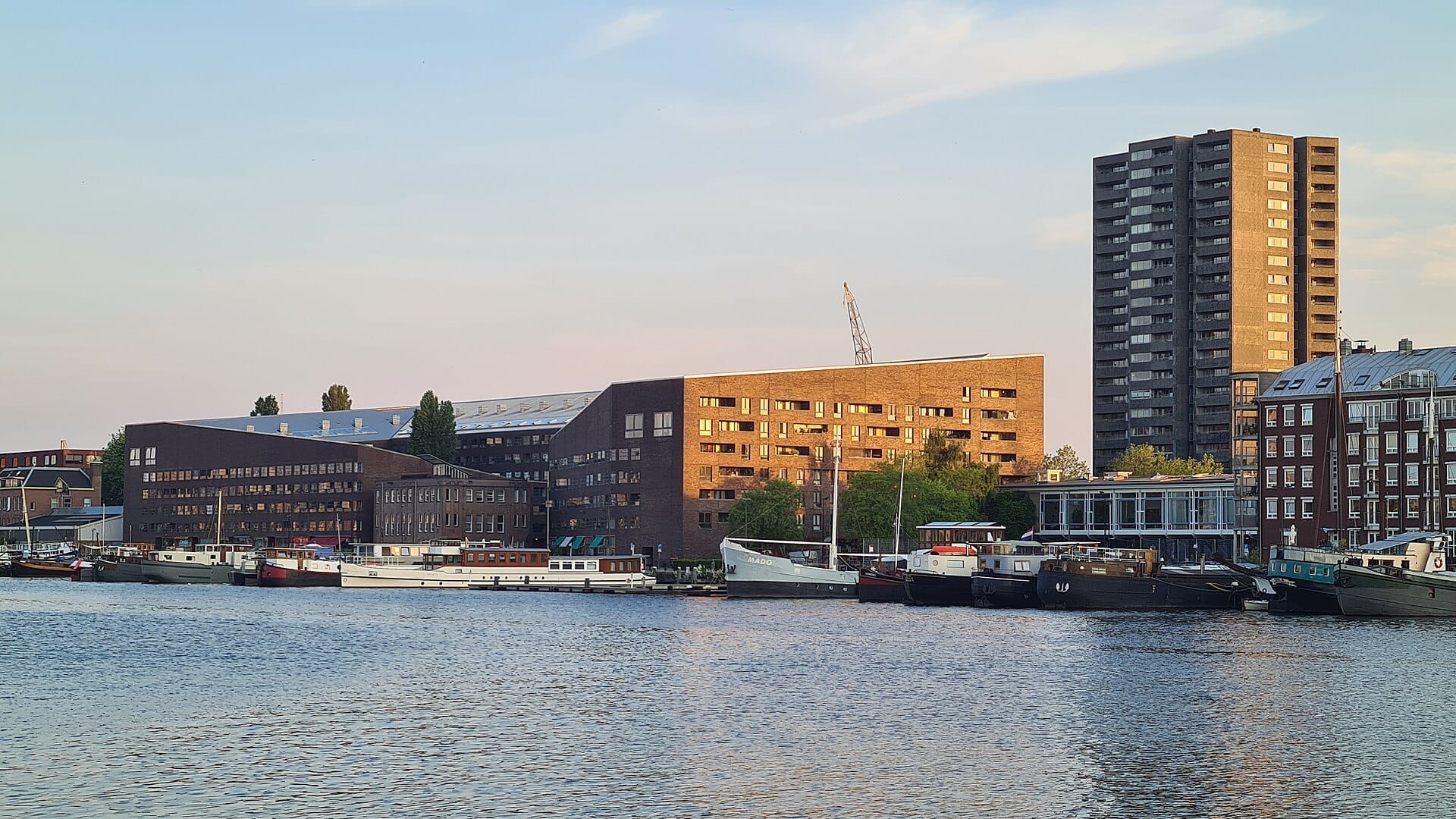
What Are Java Island and KNSM Island?
Java-eiland and KNSM-eiland are two narrow peninsulas extending into the IJ waterway east of Amsterdam Centraal, forming the western and eastern legs of what was once a Y-shaped industrial harbor. Built around 1900 as mooring infrastructure for large ocean-going ships, both islands fell into disuse as Amsterdam's port activity shifted westward in the late 20th century. What followed was one of the most closely watched urban redevelopment projects in the Netherlands.
In 1991, architect Sjoerd Soeters was commissioned to create a masterplan for Java Island that would bring residential life back to the waterfront. The plan ran from 1991 to 2000 and produced a dense sequence of housing blocks along the quays, each 27 meters wide and divided into five bays of 5.4 meters. Rather than imposing a single architectural style, Soeters invited different architects to design individual blocks, resulting in a street that reads like a catalog of late 20th-century European residential design. KNSM Island, slightly to the east and named after the Royal Dutch Steamship Company (Koninklijke Nederlandsche Stoomboot-Maatschappij) that once operated here, developed in parallel with its own distinct character.
ℹ️ Good to know
Both islands are functioning residential neighborhoods, not theme parks or open-air museums. Residents live here year-round. Explore respectfully: keep noise low in the mornings, avoid peering into ground-floor windows, and stay on public paths.
The Architecture: A Street-Level Design School
Walking the length of Java Island's main canal — the Javakade and the inner canals that divide the island into narrow strips — is as close as most visitors will get to a live architecture lecture. Each housing block was designed by a different firm, so within the span of a few hundred meters you encounter steep Dutch gables sitting alongside raw concrete facades, bright terracotta cladding next to zinc-grey paneling, and traditional brick punctuated by bold geometric cutouts. The variety is intentional, a deliberate rejection of the monolithic housing estates that defined post-war Dutch urban planning.
The blocks along the quays are particularly well-observed. Ground-floor units often open onto the water via small private terraces, and the relationship between the building faces and the canal edge creates a compressed, almost theatrical sense of scale. Stand at either end of the main canal on Java Island and the perspective closes into a tight urban canyon with water at its base. In good light, the reflections in the canal double the height of the facades and make the whole sequence feel more monumental than it actually is.
KNSM Island has a different texture. Here the scale shifts upward: the landmark Emerald Empire building (Venetiëhof), designed by Jo Coenen and completed in the late 1990s, dominates the eastern tip with its cylindrical form and ring of waterfront villas. Nearby, Hans Kollhoff and Christian Rapp's Piraeus block adds the dark brick mass and repeating window grids more typical of the island's 1990s housing. For more context on how this fits into Amsterdam's broader built environment, the Amsterdam architecture guide covers the full sweep from the Golden Age canal houses to modern docklands development.
Tickets & tours
Live prices and dates from our booking partner. If you book, we may earn a commission at no extra cost to you.
Gray Line Canal Cruise with snackbox & Heineken Experience
From 48 €Instant confirmationFree cancellationAmsterdam evening canal cruise
From 18 €Instant confirmationFree cancellationJewish Museum and Portuguese Synagogue entrance ticket
From 20 €Instant confirmationFree cancellationAdmission ticket for Artis Royal Zoo and Micropia
From 39 €Instant confirmationFree cancellation
How the Experience Changes Through the Day
Early mornings on both islands are genuinely quiet. Between 7 and 9am, you share the waterfront paths with commuting cyclists and dog walkers, and the light off the IJ is often soft and diffuse, particularly on overcast days, which describes a significant portion of the Amsterdam year. The water is still enough that architectural reflections hold cleanly. This is the best window for photography: the facades face mostly east and west, so morning and late afternoon light hits them at angles that reveal material texture rather than washing everything flat.
Midday on weekdays brings some foot traffic from local residents and the occasional group of architecture students with sketchbooks, but these are not attractions that draw large tourist crowds at any hour. Weekend afternoons in summer see more activity: families using the waterfront benches, cyclists crossing the pedestrian bridges, and a small amount of boat traffic on the inner canals. Even then, the density of visitors is a fraction of what you would encounter at the Rijksmuseum or the Anne Frank House on the same afternoon.
💡 Local tip
For photographers: the light on the Javakade is most interesting in the hour before sunset in spring and autumn, when low-angle light catches the vertical rhythm of the facades and the water picks up color from the sky. Bring a wide lens if you want to capture full building faces from the quayside.
Planning Your Walk: A Practical Route
The most straightforward approach is to arrive by tram 26 to Rietlandpark, then walk east along the waterfront to reach the western tip of Java Island. From there, walk the full length of the Javakade, cross one of the pedestrian bridges to explore the inner canal, and continue east to KNSM Island. The full circuit of both islands, including time to stop and look at individual buildings, takes between one and a half and three hours depending on pace.
Cyclists will find the route natural and easy. Both islands are flat, the roads are low-traffic, and the cycling infrastructure is consistent with the rest of the city. If you are already renting a bike for Amsterdam, the Eastern Docklands loop makes a logical extension of a day that might also include Artis Zoo or a walk through the Plantage neighborhood, both of which are close by.
There are no major visitor facilities on the islands themselves: no tourist information points, no dedicated guided tours, and limited cafe options. Plan accordingly. If you want food or coffee before or after, the area around Rietlandpark and the broader Eastern Docklands has a small number of local cafes. For a fuller day in the area, NDSM Wharf in Amsterdam-Noord offers a comparable post-industrial atmosphere on the other side of the IJ, accessible by free ferry from Centraal.
Honest Assessment: Who Benefits Most, and Who Should Skip It
These islands reward curiosity and a willingness to look closely. If you are interested in urban design, housing policy, or the specific challenge of making density livable, Java Island and KNSM Island offer more material per square meter than almost anywhere else in Amsterdam. The project was influential across the Netherlands and generated significant international attention when it was completed, and seeing it in person makes the debates around it feel concrete.
If architecture leaves you cold, these islands have limited entertainment value. There are no museums, no performances, no significant retail, and no major landscape features beyond the waterfront views. The IJ views from the eastern tip of KNSM Island are genuinely good, with wide open water and the distant outline of Amsterdam-Noord on the far shore, but you can get comparable or better views from the rooftop of the ADAM Lookout or from various canal cruise routes without making the journey east.
Families with young children should note that while the islands are stroller-friendly on the main paths, there are no playgrounds or child-focused attractions on the route. A visit to Artis Amsterdam Royal Zoo nearby would be a more focused choice for that group.
⚠️ What to skip
Weather matters more here than at indoor attractions. On cold, wet days with strong wind off the IJ, the open quaysides are genuinely uncomfortable and the architecture is harder to appreciate. Save this walk for dry days with reasonable visibility.
Getting There and Practical Notes
From Amsterdam Centraal, tram 26 runs east along the waterfront and reaches the Rietlandpark stop in about 10 minutes, from which Java Island is a short walk. Bus routes 22 and 48 also serve the Javakade and Azartplein stops and may be more convenient depending on your starting point. The journey by bike from Centraal takes around 15 to 20 minutes following the waterfront cycle paths.
There is no admission fee and no booking required. The streets are public and open at all hours. Parking for cars is limited on both islands, which is partly by design: the neighborhood was planned around pedestrian and cycling access rather than car ownership.
The islands are broadly accessible at street level, with flat surfaces on the main quays and most pedestrian bridges, though specific accessibility features vary by street and bridge design. If you are combining this with other architectural or cultural sites in the area, the Amsterdam architecture guide and a broader look at things to do in Amsterdam will help you build a coherent day.
Insider Tips
- The bridges connecting the strips of Java Island are worth examining individually: several were also designed as small architectural statements with distinctive railings, surfaces, and structural forms. Slow down at each crossing rather than treating them as purely functional.
- Look up at the rooflines. A number of buildings on Java Island have distinctive roof terraces, dormer configurations, and projecting upper floors that are only visible from street level with deliberate attention. The variety is greater than it first appears.
- The eastern tip of KNSM Island offers the widest unobstructed view of the IJ. On clear days in late afternoon, the water turns a deep grey-blue and the light on Amsterdam-Noord's cranes and waterfront buildings across the water is worth the extra 10 minutes of walking beyond the main architectural focus.
- Avoid visiting as part of a large organized group. The residential streets are narrow and the atmosphere is genuinely local. Small groups of two to four people blend in naturally; larger groups can feel intrusive and attract unfriendly attention from residents.
- If you want structured context before your visit, searching for Sjoerd Soeters' Java Island masterplan or Hans Kollhoff's Piraeus block online will surface architectural analysis that makes the walk considerably richer.
Who Is Java Island & KNSM Island For?
- Architecture students and design professionals who want to see a landmark 1990s European urban housing project in person
- Photographers looking for strong geometric subjects, water reflections, and minimal tourist crowds
- Cyclists building a longer Eastern Docklands loop into their Amsterdam day
- Travelers interested in how post-industrial waterfronts get repurposed for residential use
- Anyone who wants a genuine neighborhood walk away from the historic center without leaving the city
Nearby Attractions
Other things to see while in Plantage & Jewish Quarter:
- ARTIS Amsterdam Royal Zoo
Founded in 1838, ARTIS Amsterdam Royal Zoo is the oldest zoo in the Netherlands and the fifth oldest zoo in the world still in operation. Set across landscaped grounds in the Plantage neighborhood, it blends wildlife, botanical gardens, and 19th-century heritage architecture into a single half-day destination that works for families, history enthusiasts, and curious solo travelers alike.
- Brouwerij 't IJ
Brouwerij 't IJ is Amsterdam's most distinctive craft brewery, operating inside an early-20th-century bathhouse at the foot of the De Gooyer windmill. The tasting room is free to enter, pours a rotating lineup of house-brewed beers, and offers short brewery tours on weekends. It is one of the few places in the city where industrial heritage, local brewing culture, and canal-side atmosphere converge in a single address.
- De Gooyer Windmill
Standing 26.6 metres tall on the eastern edge of the city, De Gooyer is widely described as the tallest wooden windmill in the Netherlands and one of Amsterdam's most photogenic historic structures. The mill itself is private, but the exterior is free to visit, and the craft brewery in the former bathhouse beside it is reason enough to linger.
- Dutch Resistance Museum
The Dutch Resistance Museum (Verzetsmuseum Amsterdam) tells the story of the Nazi occupation of the Netherlands through the choices ordinary people made: those who resisted, those who complied, and those who stood between. Located in the Plantage district, it is one of the most thoughtfully curated war museums in Europe.
Planning a trip? Discover personalized activities with the Nomado app.