NDSM Wharf: Amsterdam's Industrial Creative District
NDSM Wharf (NDSM-Werf) is a former shipyard site of more than ten football pitches in size on the north bank of the IJ that now functions as Amsterdam's most raw and expansive creative space. Free to enter, open around the clock, and reachable by a free ferry from Centraal, it rewards visitors who want something far removed from canal-side tourism.
Quick Facts
- Location
- Amsterdam-Noord, north bank of the IJ
- Getting There
- Free GVB ferry (F4 Centraal Station – NDSM) from behind Amsterdam Centraal; separate F5 ferry serves Pontsteiger – NDSM
- Time Needed
- 2 to 4 hours; longer if you attend an event
- Cost
- Free to enter the site; individual venues and events charge separately
- Best for
- Street art, industrial architecture, flea markets, nightlife, creative culture
- Official website
- www.ndsm.nl
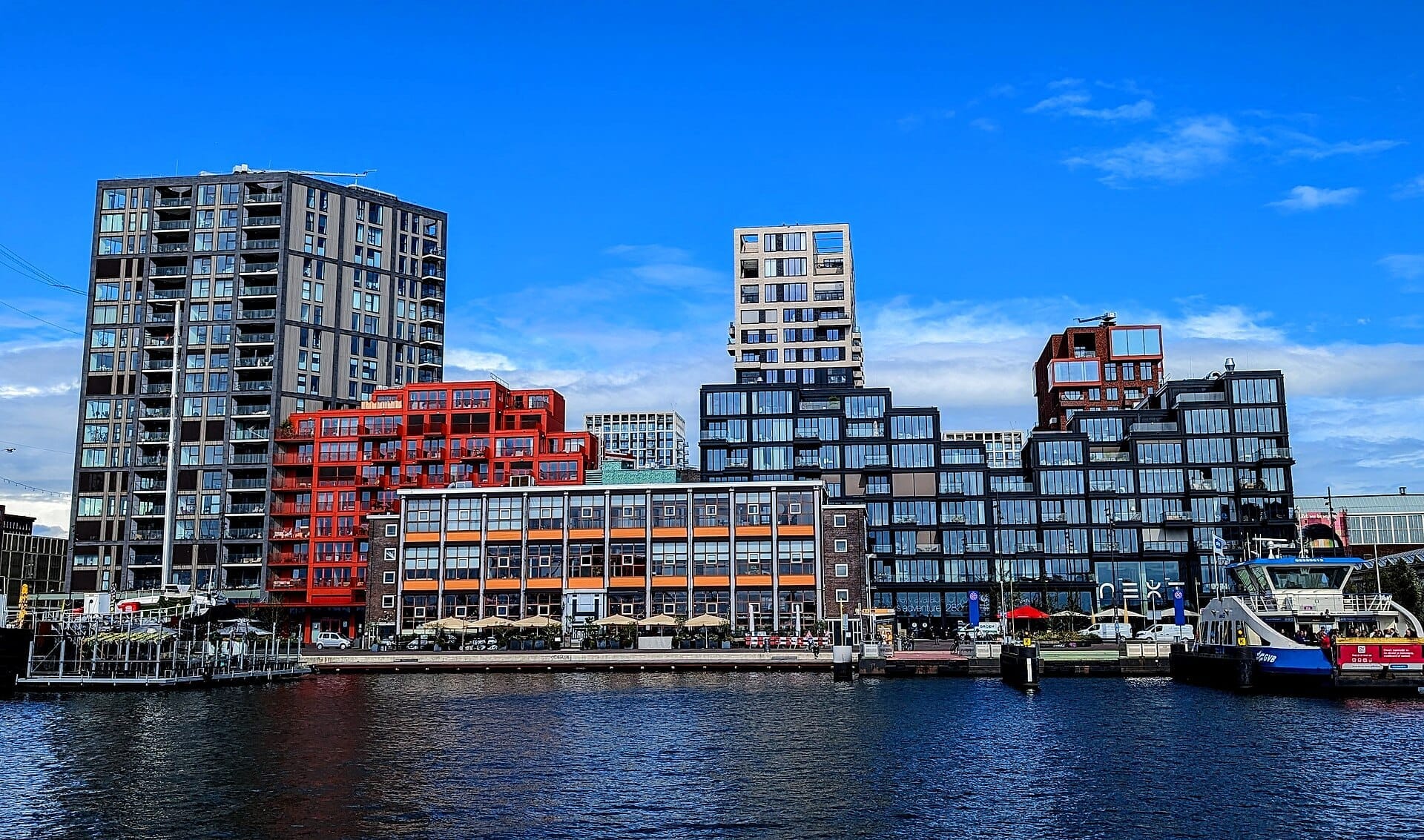
What NDSM Wharf Actually Is
NDSM Wharf, known in Dutch as NDSM-Werf, is the former yard of the Nederlandsche Dok en Scheepsbouw Maatschappij, a shipbuilding company that once employed thousands of workers on the north bank of the IJ. The yard closed in 1984, leaving behind a vast expanse of industrial infrastructure: enormous steel-framed warehouses, cranes, dry docks, and the kind of concrete that accumulates decades of grime in a way that no design studio can replicate. Rather than demolish it, Amsterdam has allowed the site to evolve organically into a large creative district where artists' studios, food and drink venues, event spaces, and street art coexist with the original industrial bones.
The result is unlike anything else in Amsterdam. This is not a polished cultural quarter with clean sight lines and gift shops. The warehouses still look like warehouses. The cranes still loom overhead. Pigeons nest in the steel trusses. The ground underfoot in some sections is original shipyard concrete, cracked and stained. That physicality is the point. NDSM has a texture that the city centre cannot offer.
💡 Local tip
The free GVB ferry to NDSM departs from behind Amsterdam Centraal on line F4 (Centraal Station – NDSM). Check the current timetable on the GVB website before you go, as sailings typically run 2 to 4 times per hour during the day and the last evening ferry is not indefinitely late.
The Ferry Crossing and First Impressions
The approach by ferry is genuinely one of the best free experiences in Amsterdam. Leaving the back of Centraal station, you cross the IJ, and within a few minutes the skyline of Amsterdam-Noord opens up: the EYE Filmmuseum's angular white form to the west, the A'DAM Tower with its rooftop swing above you if you pass that dock, and further along the NDSM cranes breaking the skyline. The ferry ride takes around 15 minutes on the NDSM-specific F4 line, which runs further west than the shorter Buiksloterweg crossing.
On arrival at the NDSM dock, the first thing you register is scale. The main warehouse, the Scheepsbouwloods, stretches for roughly 200 metres along the waterfront. Its rusted steel and corrugated panels make it look, at first glance, like it is still abandoned. Then you notice the murals covering every available surface, the food trucks lined up on the quayside, and the sound of music or power tools coming from somewhere inside. If you are curious about what else the Noord waterfront offers, the EYE Filmmuseum is a short walk or ferry stop away, with its striking architecture worth seeing from the outside even if you do not go in.
Tickets & tours
Live prices and dates from our booking partner. If you book, we may earn a commission at no extra cost to you.
Bike Tour to NDSM Wharf and Noorderpark with a Ferry Ride
From 44 €Instant confirmationFree cancellationGray Line Canal Cruise with snackbox & Heineken Experience
From 48 €Instant confirmationFree cancellationAmsterdam evening canal cruise
From 18 €Instant confirmationFree cancellationJewish Museum and Portuguese Synagogue entrance ticket
From 20 €Instant confirmationFree cancellation
The Scheepsbouwloods: Inside the Main Warehouse
The Scheepsbouwloods is the heart of the wharf. This enormous former assembly hall now contains artist studios, workshops, and small creative businesses occupying semi-permanent structures built inside the original shell. Think shipping containers stacked two or three high, with staircases welded on the outside and spray-painted facades, all under the original industrial roof with its skylights. It is part squat, part incubator, part permanent art installation.
Walking through it at midday on a weekday, you might find printmakers, sculptors, architects, and theatre companies working behind glass or open shutters. On weekends, the energy shifts: pop-up markets, film screenings, and brand events fill the central spaces. The building rewards slow exploration. There are dead ends, steep staircases, and corners where someone has created something extraordinary with no audience in mind.
Photography inside the Scheepsbouwloods is generally welcomed in the common areas, though individual studios may ask you not to photograph their work. The light inside is industrial and uneven, strongest in the late morning when the skylights do their job. Wide-angle lenses handle the scale; standard focal lengths get lost in it.
Street Art, Open Space, and the Waterfront
Outside the Scheepsbouwloods, the NDSM site extends across open concrete lots, smaller outbuildings, and a working waterfront where barges still occasionally dock. The outdoor murals here are among the largest and most serious in Amsterdam. Unlike the curated street art you find on designated walls elsewhere in the city, the works at NDSM accumulate over time, layer over each other, and exist in a context of industrial debris that gives them a different weight.
The outdoor space changes character significantly by time of day. In the morning, it is nearly empty: workers arriving at studios, delivery vehicles, gulls. By early afternoon on a weekend, families spread out across the open areas near the water, drawn by the food trucks and the large playground structures that have appeared in the southern section. By early evening, the crowd shifts again toward people heading to the bars and restaurants in the converted containers and outbuildings. If you are planning a full Noord day, the wharf pairs naturally with a walk around Amsterdam-Noord more broadly, which has developed a distinct food and design culture over the past decade.
ℹ️ Good to know
The IJ-Hallen flea market, held in the Scheepsbouwloods roughly once a month, is one of the largest indoor flea markets in Europe. If your visit coincides with it, the entire atmosphere of the wharf changes and the crowds multiply significantly. Check the IJ-Hallen website for dates before planning your trip.
Events, Nightlife, and the NDSM Calendar
NDSM operates as an event destination in a way that few outdoor public spaces in Amsterdam can match. The site has hosted large music festivals, circus performances, outdoor cinema events, and temporary art exhibitions that use the industrial structures as backdrops. Some of these events are free; many are ticketed. The official NDSM website publishes a calendar, and checking it before you visit is the single most useful thing you can do if you want to time your trip to coincide with something specific.
The permanent nightlife component is centred on a cluster of venues in the eastern section of the wharf, including Pllek, a bar and restaurant built from shipping containers on the waterfront with its own sandy urban beach area. This part of NDSM has become a fixture of Amsterdam's creative nightlife without becoming fashionable in the way that kills a place. It is too large, too rough, and too far from the centre for that. For a broader look at Amsterdam's after-dark options, the Amsterdam nightlife guide covers the full range from clubs to jazz bars.
In winter, NDSM can feel stark. The open concrete lots are cold and grey, and some outdoor food trucks reduce their hours. But winter also brings the Amsterdam Light Festival, and NDSM has featured as a venue in previous editions. The covered Scheepsbouwloods stays active year-round. Summer evenings, particularly from June through August, are when the wharf is at its most alive: long Dutch evenings, people gathering on the waterfront with drinks, music audible from multiple directions.
Historical Weight and Urban Context
The NDSM shipyard's closure in 1984 was part of a broader deindustrialisation of Amsterdam's waterfront, a process that reshaped the entire IJ basin over the following decades. NDSM was among the largest of the former industrial sites and among the most contested: squatters, artists, and developers all had competing visions for it through the 1990s. The compromise that emerged, a formally recognised creative zone with long-term studio leases and mixed cultural use, has become something of a model studied by urban planners from other cities.
The site sits within the broader regeneration of Amsterdam-Noord, which has transformed from a purely post-industrial periphery into a destination neighbourhood. The NDSM wharf is the anchor of that transformation, but it functions quite differently from the more polished developments closer to the EYE and A'DAM Tower. If you are interested in Amsterdam's architectural transformation more broadly, the Amsterdam architecture guide covers both historic and contemporary developments across the city.
Practical Details: Getting There, Getting Around, What to Bring
The free GVB ferry from behind Amsterdam Centraal is the standard route. There are two main Noord ferry lines from Centraal: the short F3 Buiksloterweg crossing takes about 5 minutes and drops you near the EYE Filmmuseum and A'DAM Tower, while the F4 NDSM ferry continues further west and takes around 15 minutes. Make sure you board the correct line. Ferries run frequently during the day but check the evening schedule if you plan to stay late, especially on nights without a major event at the wharf.
Once on site, the area is open and largely flat, which makes it easy to navigate on foot. The paving is uneven in sections, particularly around the older outbuildings and dry dock areas, so flat, comfortable shoes are advisable over heeled footwear. There is no formal map of the site at the entrance; part of the experience is discovery, but this can frustrate visitors expecting signage.
Cycling to NDSM is possible: you can take a bike on the ferry for free. From other parts of Amsterdam-Noord you can reach the wharf by local bus or by cycling along the IJ waterfront path. Bring cash as well as a card: some of the smaller food vendors and market stalls are cash-only.
⚠️ What to skip
NDSM is a working site, not a theme park. During weekdays especially, parts of the area may be restricted due to active construction, studio access, or event setup. Respect fencing and closed areas.
Who Will Love This, and Who Should Look Elsewhere
NDSM rewards visitors who are comfortable with ambiguity, who do not need a clear programme or a tidy end point. If you are travelling with children and looking for structured family activities, the site can be fun on a weekend with a market or outdoor event, but it is not designed for families in the way that the NEMO Science Museum or Artis Amsterdam Royal Zoo are.
Visitors who have only one or two days in Amsterdam and prioritise canonical highlights may find the 30-minute ferry round trip hard to justify compared to the concentration of major museums in Oud-Zuid. But if you have three or more days, have already visited the Rijksmuseum, and want to understand something about how Amsterdam actually functions as a city rather than as a tourist destination, the NDSM wharf is one of the most honest places in Amsterdam to spend an afternoon.
Insider Tips
- Check the IJ-Hallen flea market dates before your trip. The market fills the Scheepsbouwloods completely and fundamentally changes the character of a visit. It is worth planning around if you enjoy markets and equally worth avoiding if you prefer the quieter, studio-oriented atmosphere.
- A separate NDSM ferry line also links Pontsteiger, a newer residential tower with a public ground floor and waterfront walk, to NDSM. Riding the ferry one stop early on the return and walking back along the IJ gives you a different perspective on the Noord waterfront.
- The best light for photographing the outdoor murals and industrial structures is late afternoon, when the low sun catches the textured surfaces and the cranes cast long shadows across the concrete.
- Weekday mornings are the quietest time to visit if you want to see the artist studios in operation and have the Scheepsbouwloods largely to yourself. Weekend afternoons bring a very different, more social atmosphere.
- Some of the best food at NDSM comes from the rotating food trucks on the waterfront rather than the fixed restaurants. The lineup changes, so there is no reliable recommendation, but the quality has historically been higher than the informal setting suggests.
Who Is NDSM Wharf For?
- Street art and photography enthusiasts who want scale and context beyond decorated utility boxes
- Travellers with 3 or more days in Amsterdam looking to move beyond the canal-ring circuit
- Night owls and music fans visiting during a festival or event weekend
- Architecture and urban planning specialists interested in post-industrial creative reuse
- Anyone making a flea market trip to IJ-Hallen
Nearby Attractions
Other things to see while in Amsterdam-Noord:
- A'DAM Lookout
Perched atop the 22-storey A'DAM Tower in Amsterdam Noord, A'DAM Lookout delivers a sweeping panorama across the IJ waterfront and city centre. Whether you're riding the Over The Edge swing or simply scanning the rooftops with a coffee, it's one of the most distinctive viewpoints in the Netherlands.
- Eye Filmmuseum
Eye Filmmuseum is the Netherlands' national film institute and cinema museum, housed in a striking angular building on the north bank of the River IJ. Reachable by a free three-minute ferry from Amsterdam Centraal, it combines rotating exhibitions, four cinema screens, a waterfront restaurant, and free public spaces into one of the most architecturally distinctive buildings in the city.
- IJ-Hallen Flea Market
Held once a month at the former NDSM shipyard in Amsterdam-Noord, IJ-Hallen packs around 750 stands across two massive industrial halls and outdoor grounds. It is one of the few Amsterdam experiences that rewards an early alarm clock and a large tote bag in equal measure.
- STRAAT Museum
Housed in an 8,000 m² former shipyard hall on the NDSM wharf, STRAAT Museum brings together more than 180 large-scale artworks by over 170 international street artists. It is one of the largest dedicated street art museums in the world, reached by a free ferry from Amsterdam Centraal.
Planning a trip? Discover personalized activities with the Nomado app.