NEMO Science Museum Amsterdam: What to Expect Before You Go
NEMO Science Museum is the largest science centre in the Netherlands, housed in a striking Renzo Piano-designed building on Amsterdam's waterfront. Five floors of interactive exhibits make it one of the most engaging family attractions in the city, with a rooftop terrace that offers some of the best free views over the harbour.
Quick Facts
- Location
- Oosterdok 2, 1011 VX Amsterdam (Amsterdam-Centrum / Eastern Harbour)
- Getting There
- Amsterdam Centraal, approx. 10-15 min walk
- Time Needed
- 2.5 to 4 hours
- Cost
- Paid admission; timed-entry tickets required (check nemosciencemuseum.nl for current prices)
- Best for
- Families with children, curious adults, architecture lovers
- Official website
- www.nemosciencemuseum.nl/en
What Is NEMO Science Museum?
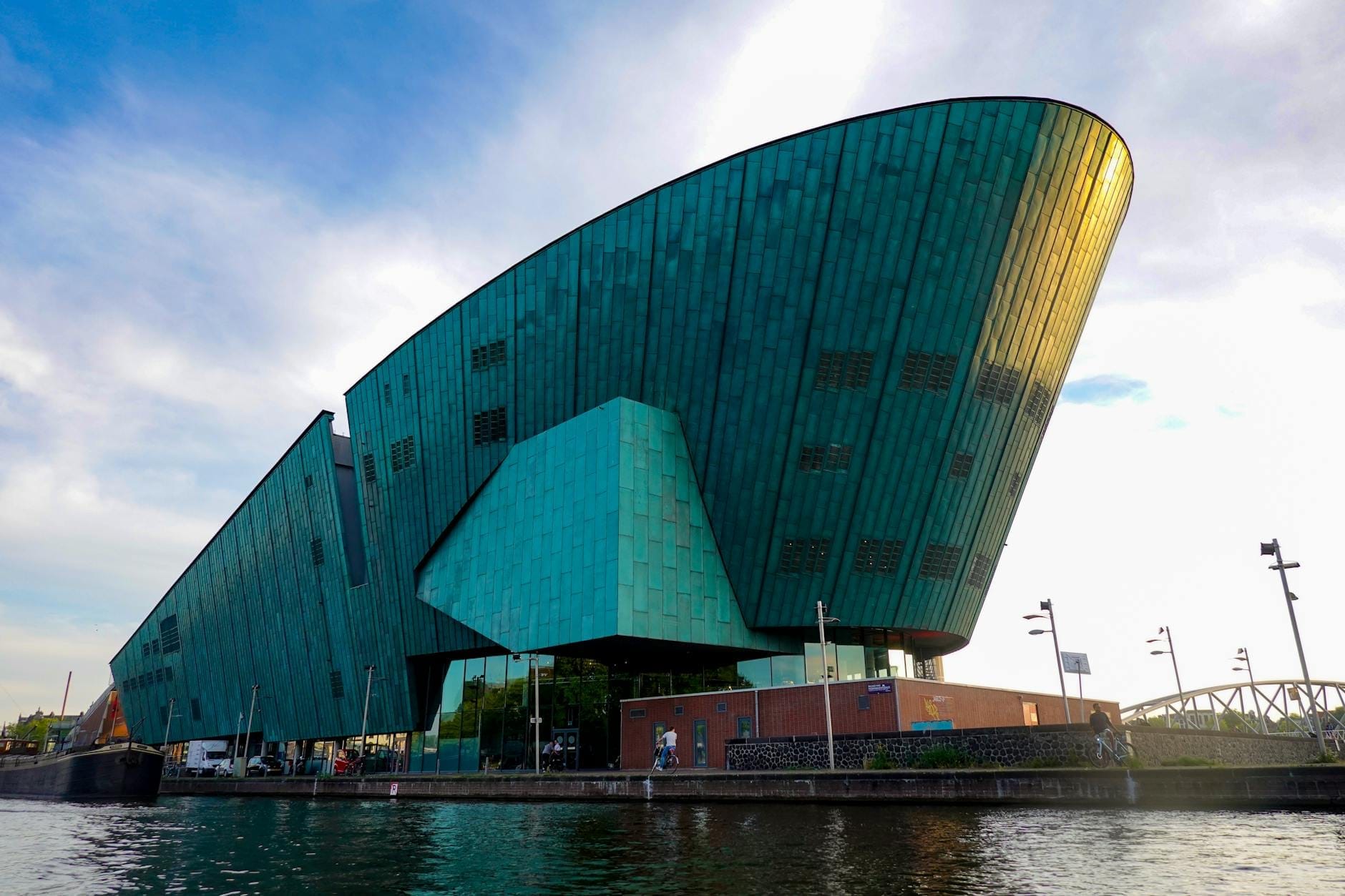
NEMO Science Museum sits on Oosterdokseiland, a narrow peninsula jutting into Amsterdam's harbour just east of the central station. The building is impossible to miss: a sloping copper-green hull rising above the IJ-tunnel entrance like a ship's bow frozen mid-launch. This is the work of Italian architect Renzo Piano, who completed the structure in 1997, and it remains one of the most architecturally distinctive modern buildings in the city.
Inside, the museum spans five floors of hands-on science exhibitions covering physics, chemistry, technology, biology, and mathematics. It traces its institutional roots back to 1923, making it one of the older science education organisations in the country, though the current building and its current name — adopted in 2016, shortened from the earlier name 'Science Center NEMO' — both reflect its modern identity. Today it holds the title of the largest science centre in the Netherlands.
For families planning a full day in the eastern part of the city, NEMO pairs naturally with the Artis Amsterdam Royal Zoo and the Hortus Botanicus, both within comfortable walking distance, even though NEMO itself is just north of Plantage in Oosterdokseiland.
The Building and the Rooftop: Architecture as Attraction
Before you even buy a ticket, the exterior rewards attention. Piano's design references the harbour setting directly: the steeply angled roof plane slopes up from the waterline like a nautical ramp, clad in oxidised copper panels that give the building its distinctive green-grey colouring. Stand on the footbridge approaching from Centraal and look back toward the old city: the silhouette of the building against the historic skyline is one of the sharper visual contrasts Amsterdam offers.
The rooftop terrace is publicly accessible without a museum ticket and is one of the genuinely underused viewpoints in Amsterdam. From up here, the view sweeps across the IJ harbour, back toward the towers and spires of the old city, and east along the post-industrial waterfront toward Java Island. On clear days in late afternoon, when the light drops low over the water, this is exceptional. The terrace hosts a café in warmer months and a cascading water feature that children inevitably try to interact with.
💡 Local tip
The rooftop is free to enter and has no ticketing requirement. If the weather is reasonable and you are short on time or budget, coming here just for the view is entirely worthwhile — allow 20 minutes.
If you are building a broader sense of Amsterdam's architectural landscape, this architecture guide places NEMO in context alongside the city's other landmark buildings.
Tickets & tours
Live prices and dates from our booking partner. If you book, we may earn a commission at no extra cost to you.
NEMO Science Museum and 1-hour Amsterdam canal cruise
From 34 €Instant confirmationGray Line Canal Cruise with snackbox & Heineken Experience
From 48 €Instant confirmationFree cancellationAmsterdam evening canal cruise
From 18 €Instant confirmationFree cancellationJewish Museum and Portuguese Synagogue entrance ticket
From 20 €Instant confirmationFree cancellation
Inside: Five Floors of Hands-On Exhibits
The interior is louder than most Amsterdam museums. That is not a criticism — it is the correct register for what NEMO does. The exhibits are built around physical interaction: you push levers, spin wheels, drop objects down chutes, and operate machinery. The design philosophy is that science should be felt before it is explained, and the execution is generally good.
Each floor has a thematic focus. The lower floors tend to be busier with younger children drawn to the more tactile, cause-and-effect exhibits. Higher floors shift toward more complex topics: energy systems, the human body, and technology. The fifth floor, when open for specific exhibitions, tends to be the quietest and is worth reaching if you want space to think. The permanent collection is supplemented by rotating temporary exhibitions, so repeat visits over the years will yield different content.
Adults without children sometimes wonder if NEMO is worth their time, and the honest answer is conditional. If you have genuine curiosity about how things work and appreciate well-designed interactive displays, there is enough here to hold your attention for two hours. If you are looking for contemplative museum-going — the kind you get at the Rijksmuseum or the Anne Frank House — this is a different experience entirely. The energy level is high throughout the day.
ℹ️ Good to know
NEMO is one of the attractions covered by the I amsterdam City Card, and while card holders can use the card for admission, a start time must still be selected when obtaining a ticket. Do not assume walk-in access is available on busy days.
Visiting by Time of Day and Season
Opening hours run Tuesday to Sunday, 10:00 to 17:30. The museum is typically closed on Mondays, with exceptions during school holidays and peak season — check the official website for current Monday openings before planning around them.
The museum fills quickly after 11:00 on weekends and during Dutch school holiday periods, particularly in summer and around national holidays. If you are visiting with children and want them to have room at exhibits without competing for space, aim to arrive at opening time. Weekday mornings outside school holidays are noticeably calmer.
Late afternoon on weekdays, especially between 14:00 and closing, sees a gradual thinning of crowds as school groups and younger children depart. This window is useful for adults who want to move through the upper floors at a slower pace. The rooftop terrace is at its best in the hour before closing on clear days, when the harbour light is at its warmest.
⚠️ What to skip
NEMO attracts large school groups on weekday mornings, particularly in spring. If your visit falls on a school day between 10:00 and 13:00, expect crowded ground-floor exhibits and some queuing at popular installations.
Getting There and Practical Logistics
The museum is at Oosterdok 2, 1011 VX Amsterdam. From Amsterdam Centraal station, the walk takes around 10 to 15 minutes along the harbour waterfront — follow the signs east along the water. The route is flat, straightforward, and passes alongside the Oosterdok waterway, making it a pleasant approach on dry days.
There is no dedicated metro stop directly at NEMO. Trams and buses running to Centraal bring you within walking range. If you are arriving by bicycle, the area has cycle parking near the museum entrance. Amsterdam's cycling infrastructure makes this a natural stop on a waterfront ride, and the approach path along the harbour is suitable for most cyclists.
If you are planning your transit options across the city, the getting around Amsterdam guide covers tram, bus, and cycling routes in useful detail.
Timed-entry tickets are sold through the museum's official website and should be booked in advance, especially for weekend visits or any visit during school holidays. Pricing is listed on the official plan-your-visit page, which also details concession rates and any current promotions. Prices do change, so checking before you go is more reliable than any figure published in advance.
Who This Museum Suits — and Who It Does Not
NEMO is at its best for children roughly between the ages of six and fourteen, and for adults who enjoy interactive science regardless of whether children are present. The design assumes engagement over observation, and visitors who embrace that get the most out of it.
It is less suited to visitors looking for a quiet cultural experience, those with sensory sensitivities to noise and movement, or travellers with only a few hours in Amsterdam who are weighing it against the Rijksmuseum, the Van Gogh Museum, or the Anne Frank House. Those institutions carry historical and cultural weight that NEMO does not attempt to match. The comparison is not a failing — they are doing different things — but it is worth being honest about priorities.
If you are still building your Amsterdam itinerary and comparing major attractions, the best museums in Amsterdam guide offers a direct comparison across the city's main institutions.
For families, this is one of the most genuinely child-centred major attractions in the city. Unlike some of Amsterdam's historic museums, which accommodate children without being designed for them, NEMO is built around active participation. Young visitors leave having actually done things rather than having looked at them behind glass.
Insider Tips
- Book timed-entry tickets as far in advance as possible for any Saturday or Sunday visit. Weekend slots sell out, and showing up without a pre-booked timeslot may mean you cannot get in at your preferred time, especially on busy days.
- The rooftop terrace is free and open separately from the museum. Even if you skip the paid exhibition, walking up to the terrace for the harbour view costs nothing and takes under half an hour.
- Weekday afternoons after 14:00, outside of Dutch school holiday periods, offer the calmest experience inside the museum. Upper floors thin out noticeably as the afternoon progresses.
- The café on the rooftop is seasonal and weather-dependent. If you are visiting in cooler months, pack a snack rather than counting on outdoor catering.
- If you hold an I amsterdam City Card, remember that you still need to book a timed-entry slot in advance through the museum website — the card covers admission but does not bypass the booking requirement.
Who Is NEMO Science Museum For?
- Families with children aged 6 to 14 looking for a full half-day activity
- Adults with a genuine interest in interactive science and technology
- Architecture enthusiasts drawn by Renzo Piano's harbour-facing design
- Visitors wanting a free harbour viewpoint from the rooftop terrace
- Travellers on a multi-day itinerary combining the museum with the Plantage neighbourhood
Nearby Attractions
Other things to see while in Plantage & Jewish Quarter:
- ARTIS Amsterdam Royal Zoo
Founded in 1838, ARTIS Amsterdam Royal Zoo is the oldest zoo in the Netherlands and the fifth oldest zoo in the world still in operation. Set across landscaped grounds in the Plantage neighborhood, it blends wildlife, botanical gardens, and 19th-century heritage architecture into a single half-day destination that works for families, history enthusiasts, and curious solo travelers alike.
- Brouwerij 't IJ
Brouwerij 't IJ is Amsterdam's most distinctive craft brewery, operating inside an early-20th-century bathhouse at the foot of the De Gooyer windmill. The tasting room is free to enter, pours a rotating lineup of house-brewed beers, and offers short brewery tours on weekends. It is one of the few places in the city where industrial heritage, local brewing culture, and canal-side atmosphere converge in a single address.
- De Gooyer Windmill
Standing 26.6 metres tall on the eastern edge of the city, De Gooyer is widely described as the tallest wooden windmill in the Netherlands and one of Amsterdam's most photogenic historic structures. The mill itself is private, but the exterior is free to visit, and the craft brewery in the former bathhouse beside it is reason enough to linger.
- Dutch Resistance Museum
The Dutch Resistance Museum (Verzetsmuseum Amsterdam) tells the story of the Nazi occupation of the Netherlands through the choices ordinary people made: those who resisted, those who complied, and those who stood between. Located in the Plantage district, it is one of the most thoughtfully curated war museums in Europe.
Planning a trip? Discover personalized activities with the Nomado app.