Dutch Resistance Museum: Amsterdam's Most Honest Account of World War II
The Dutch Resistance Museum (Verzetsmuseum Amsterdam) tells the story of the Nazi occupation of the Netherlands through the choices ordinary people made: those who resisted, those who complied, and those who stood between. Located in the Plantage district, it is one of the most thoughtfully curated war museums in Europe.
Quick Facts
- Location
- Plantage Kerklaan 61, Amsterdam (Plantage district, opposite Artis Zoo)
- Getting There
- Tram from Amsterdam Centraal (e.g. tram 14) to the Plantage Kerklaan/Artis area
- Time Needed
- 1.5 to 2.5 hours
- Cost
- Adults €17.50 | Ages 7–17 €9.50 | Family €42.50 | Free with Museumkaart or I amsterdam City Card
- Best for
- History lovers, families with older children, travelers interested in WWII and moral complexity
- Official website
- www.verzetsmuseum.org/en
What the Dutch Resistance Museum Actually Is
The Verzetsmuseum Amsterdam, often referred to in English as the Dutch Resistance Museum, opened in its current form in December 2022 with a fully reimagined permanent exhibition. It occupies the Plancius building on Plantage Kerklaan 61, a street that feels deliberately unhurried compared to Amsterdam's tourist core. The museum is not a monument to heroism. It is something harder and more useful: a structured inquiry into how a population responds when occupation replaces ordinary life.
The central premise of the exhibition is that Dutch people during the German occupation from 1940 to 1945 did not fall neatly into heroes and collaborators. The museum traces four main responses: active resistance, accommodation, passivity, and collaboration. That framework, rare in war museums, is what gives this place its intellectual weight. It asks the visitor directly: what would you have done?
💡 Local tip
A free audiotour is included with every ticket in multiple languages, including Dutch, English, German, French, Italian, Portuguese, Spanish, and Dutch Sign Language. Collect it at the entrance rather than skipping it — the audio adds significant context to photographs and objects that would otherwise read as sparse.
Inside the Exhibition: What You Will See and Hear
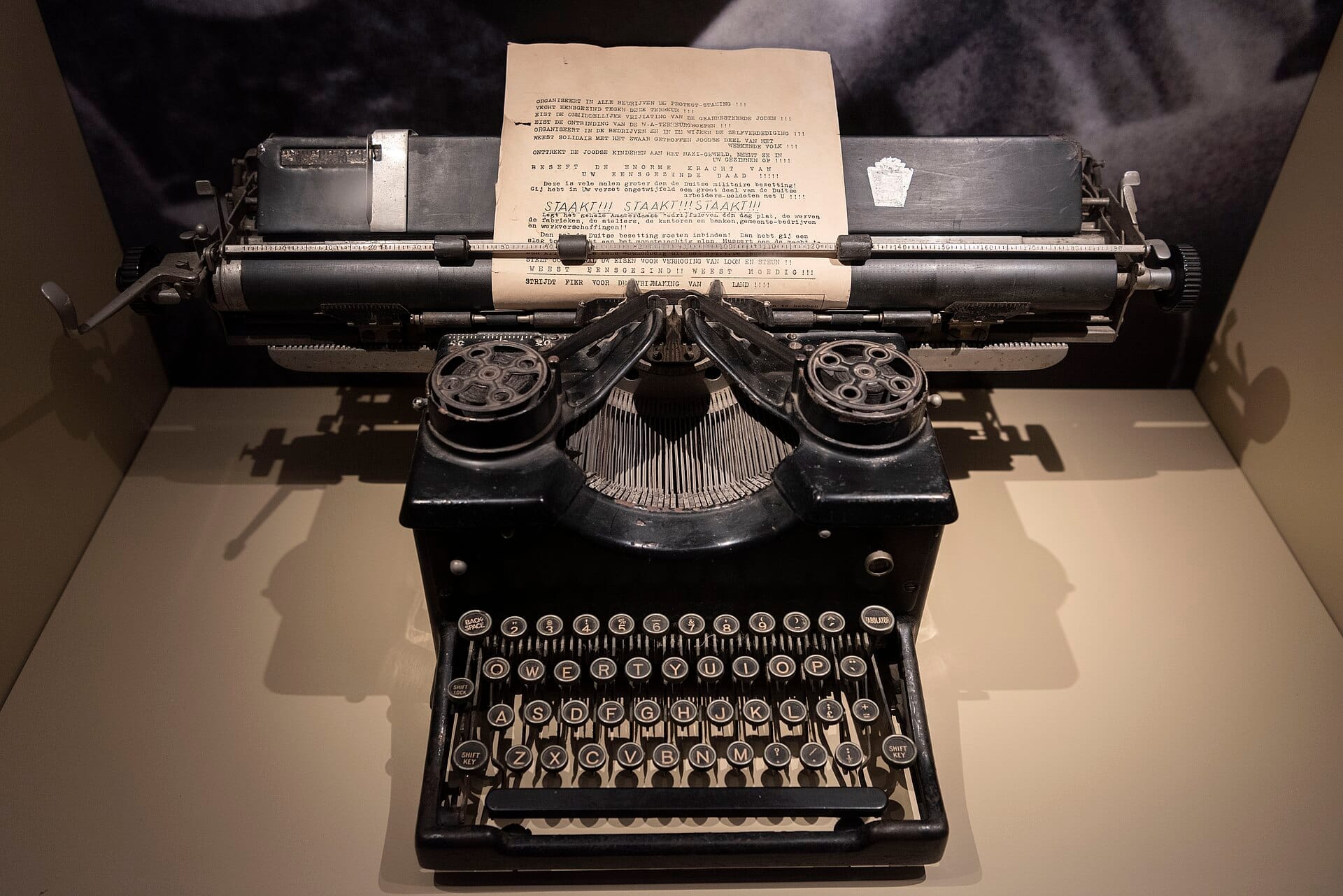
The permanent exhibition is built around personal stories rather than military timelines. Display cases hold forged identity documents, underground newspapers, hidden radios, and the small objects people used to hide or transmit information. Each artifact is connected to a named individual, which stops the experience from becoming abstract. You read about specific people making specific decisions under specific pressures, and the details accumulate into something that feels like understanding rather than information.
The exhibition space itself is neither flashy nor cramped. Lighting is controlled and deliberate, warmer around personal-scale displays, dimmer in sections dealing with deportation and persecution. Sound design is restrained: you will hear period radio broadcasts, fragments of Dutch street life from the early 1940s, and occasional silence. The effect is immersive without being manipulative. There are no shock tactics.
The museum covers the range of resistance activities: hiding Jewish families and others targeted by the occupiers, producing and distributing illegal newspapers, sabotaging infrastructure, and organizing strikes. The February Strike of 1941, in which Amsterdam dock workers walked out to protest the deportation of Jewish citizens, is given significant space. It was one of the only mass public protests against Jewish persecution in occupied Western Europe, and the museum presents it with the complexity it deserves, including what happened afterward.
For visitors who have already been to the Anne Frank House, the Resistance Museum offers essential complementary context. Where Anne Frank's house shows the experience of those in hiding, this museum explains the networks that made hiding possible, and the far larger number of people who chose not to participate in those networks.
Tickets & tours
Live prices and dates from our booking partner. If you book, we may earn a commission at no extra cost to you.
From Amsterdam Dutch countryside bike tour
From 35 €Instant confirmationFree cancellationDutch Cheese Market Experience in Alkmaar
From 60 €Instant confirmationFree cancellationAmsterdam canal cruise with Dutch wine and cheese
From 45 €Instant confirmationFree cancellationAmsterdam walking tour with Dutch Pancake Lunch
From 40 €Instant confirmationFree cancellation
Resistance Museum Junior: The Children's Section
Opened in 2013 and integrated into the current museum, Resistance Museum Junior is a dedicated section aimed at children roughly aged 9 to 12. It follows four children through the occupation years: Henk, Eva, Nelly, and Jan. Each child represents a different wartime experience, Jewish persecution, resistance family life, evacuation, and colonial occupation in the Dutch East Indies. The storytelling is age-appropriate without being sanitized.
This section is one of the more thoughtfully designed children's museum experiences in Amsterdam. Parents report that children engage seriously with the material rather than treating it as entertainment. The format is interactive but not trivializing. Families with children under 7 should note that this section is designed for readers; younger children will get less from it independently.
ℹ️ Good to know
Children under 7 enter free. The family ticket (€42.50) covers two adults and up to three children aged 7–17. If you have the Museumkaart or I amsterdam City Card, admission is included for the cardholder.
When to Visit and How the Experience Changes
The museum is open Monday–Friday from 10:00 to 17:00 and on Saturday, Sunday and Dutch public holidays from 11:00 to 17:00; it is closed on New Year's Day and Christmas Day. Because the collection is entirely indoors and climate-controlled, weather has no meaningful effect on the experience. Rain, in fact, often drives visitors here on days they had planned to spend outdoors, so Tuesday through Thursday mornings in spring and summer tend to be calmer. School groups arrive frequently on weekday mornings, particularly in autumn and spring, so arriving at opening time or after 14:00 on those days gives you more space around the displays.
The museum is not enormous, but it rewards slow movement. Visitors who rush through in under an hour typically miss the personal document sections and the contextual panels that explain the structural conditions of occupation. Budget 1.5 to 2.5 hours, with 2 hours being the most comfortable pace for adults who read the full texts.
The Plantage district rewards a longer visit. Artis Amsterdam Royal Zoo sits directly opposite the museum entrance, and the Hortus Botanicus botanical garden is a short walk away. Combining all three makes a full day in the neighbourhood without needing to return to the city centre.
Getting There and Practical Logistics
Plantage Kerklaan 61 is reachable by tram from Amsterdam Centraal Station. The stop closest to the museum serves the Artis/Plantage area; check the GVB journey planner for current tram line numbers, as routes can change seasonally. The journey from Centraal takes around 10 minutes. Cycling is straightforward along the canal-adjacent routes that run through the Plantage neighbourhood, and there is bike parking outside.
The museum building has lift access and companions of visitors with disabilities who cannot visit independently receive free entrance. The museum offers a free audio tour and provides accessibility support including Dutch Sign Language resources. For visitors with specific mobility or sensory needs, the museum's plan-your-visit page carries detailed accessibility information.
💡 Local tip
The I amsterdam City Card and the Museumkaart both include free entry. If you plan to visit multiple Amsterdam museums across two or more days, the Museumkaart typically pays for itself quickly and removes the friction of buying tickets at each location.
For broader museum planning in Amsterdam, the best museums in Amsterdam guide covers admission strategies, card comparisons, and how to prioritize if your time is limited.
Historical Context: The Plancius Building and the Museum's Origins
The Dutch Resistance Museum was founded in 1984, initially by a group of former resistance members who wanted to create a record before living memory faded entirely. It moved to the Plancius building on Plantage Kerklaan in 1999. The building itself has a layered history in a neighbourhood that was, before the war, home to a large portion of Amsterdam's Jewish population. The Plantage district lost a significant share of its residents to deportation during the occupation, a fact that gives the museum's location a weight that is worth knowing before you walk in.
The most recent permanent exhibition, which opened on 1 December 2022, represented a substantial curatorial overhaul rather than a refresh. It incorporated new research, new object acquisitions, and a structural rethinking of how the occupation story is organized. The result is a museum that feels current rather than archival.
The Jewish Historical Museum and the National Holocaust Museum are closely related destinations that trace the same period from the perspective of the communities most severely targeted. Taken together, these three institutions form a coherent, if emotionally demanding, account of Amsterdam under occupation.
Who Will Not Get Much from This Museum
Visitors looking for military hardware, battle maps, or a broad survey of the European war will find the scope too narrow. This museum is specifically about the Netherlands under occupation and specifically about civilian responses. It has no tanks, no weapons collections, and no tactical displays. It is also text-heavy; non-readers or very young children (under 7 or 8) will not absorb much of the content independently, though the Junior section addresses this for the middle childhood age range.
It is also worth being honest about emotional load. The museum deals with persecution, complicity, deportation, and death, presented through personal documents and photographs. It is not gratuitously graphic, but it is not comfortable either. Visitors who are looking for a lighter museum experience will find this challenging in a useful way, but should know what they are choosing.
Insider Tips
- Pick up the free audiotour in your language at the entrance even if you rarely use audio guides. Several displays are designed with the audio as the primary explanatory layer, and the objects make considerably more sense when you hear the story behind them.
- Arrive between 14:00 and 16:00 on weekdays to avoid school groups, which tend to move through the museum in the morning. The final hour before closing is typically very quiet.
- The museum shop stocks a range of Dutch-language and English-language publications on the occupation that go beyond typical gift-shop fare. If the subject interests you, it is worth 10 minutes browsing before you leave.
- Combine your visit with the Hortus Botanicus botanical garden a few minutes' walk away. The contrast, moving from the weight of the museum into a greenhouse full of tropical plants, is actually a useful mental reset before continuing your day.
- If you are visiting with teenagers, the Junior section is worth a look even if your children are older than the target age. The four personal narratives it follows provide a compressed and emotionally accessible entry point into stories that the main exhibition then expands.
Who Is Dutch Resistance Museum For?
- History and WWII researchers who want the Dutch civilian perspective rather than a military overview
- Families with children aged 8 and older, thanks to the dedicated Resistance Museum Junior section
- Visitors who have already seen the Anne Frank House and want to understand the broader context of the occupation
- Travelers with the Museumkaart or I amsterdam City Card looking to use their passes on genuinely substantive collections
- Anyone interested in moral philosophy or the sociology of complicity, resistance, and ordinary decision-making under pressure
Nearby Attractions
Other things to see while in Plantage & Jewish Quarter:
- ARTIS Amsterdam Royal Zoo
Founded in 1838, ARTIS Amsterdam Royal Zoo is the oldest zoo in the Netherlands and the fifth oldest zoo in the world still in operation. Set across landscaped grounds in the Plantage neighborhood, it blends wildlife, botanical gardens, and 19th-century heritage architecture into a single half-day destination that works for families, history enthusiasts, and curious solo travelers alike.
- Brouwerij 't IJ
Brouwerij 't IJ is Amsterdam's most distinctive craft brewery, operating inside an early-20th-century bathhouse at the foot of the De Gooyer windmill. The tasting room is free to enter, pours a rotating lineup of house-brewed beers, and offers short brewery tours on weekends. It is one of the few places in the city where industrial heritage, local brewing culture, and canal-side atmosphere converge in a single address.
- De Gooyer Windmill
Standing 26.6 metres tall on the eastern edge of the city, De Gooyer is widely described as the tallest wooden windmill in the Netherlands and one of Amsterdam's most photogenic historic structures. The mill itself is private, but the exterior is free to visit, and the craft brewery in the former bathhouse beside it is reason enough to linger.
- H'ART Museum
Housed in the historic Amstelhof on the Amstel river, H'ART Museum brings major international exhibitions to Amsterdam's Plantage district. Formerly Hermitage Amsterdam, it reinvented itself in 2023 as an independent venue partnering with institutions across the globe.
Planning a trip? Discover personalized activities with the Nomado app.