National Holocaust Museum Amsterdam: A Complete Visitor Guide
Opened in March 2024 in a historic former Protestant teacher training college in the Plantage district, the National Holocaust Museum tells the story of Dutch Jews under Nazi occupation. It is one of the most significant new museum openings in the Netherlands in years, and one of the most emotionally demanding.
Quick Facts
- Location
- Plantage Middenlaan 27, 1018 DB Amsterdam (Plantage district)
- Getting There
- Waterlooplein metro (~8 min walk) or Weesperplein metro (~9 min walk)
- Time Needed
- 2–3 hours minimum; allow longer if you read every panel
- Cost
- Approx. €20 standalone or €30 Jewish Cultural Quarter combi (all four sites); Museumkaart free — verify at jck.nl
- Best for
- History enthusiasts, those with family connections to WWII, students, and travelers seeking context beyond Amsterdam's canal-postcard image
- Official website
- jck.nl/en/location/national-holocaust-museum
What the National Holocaust Museum Is — and Why It Opened in 2024
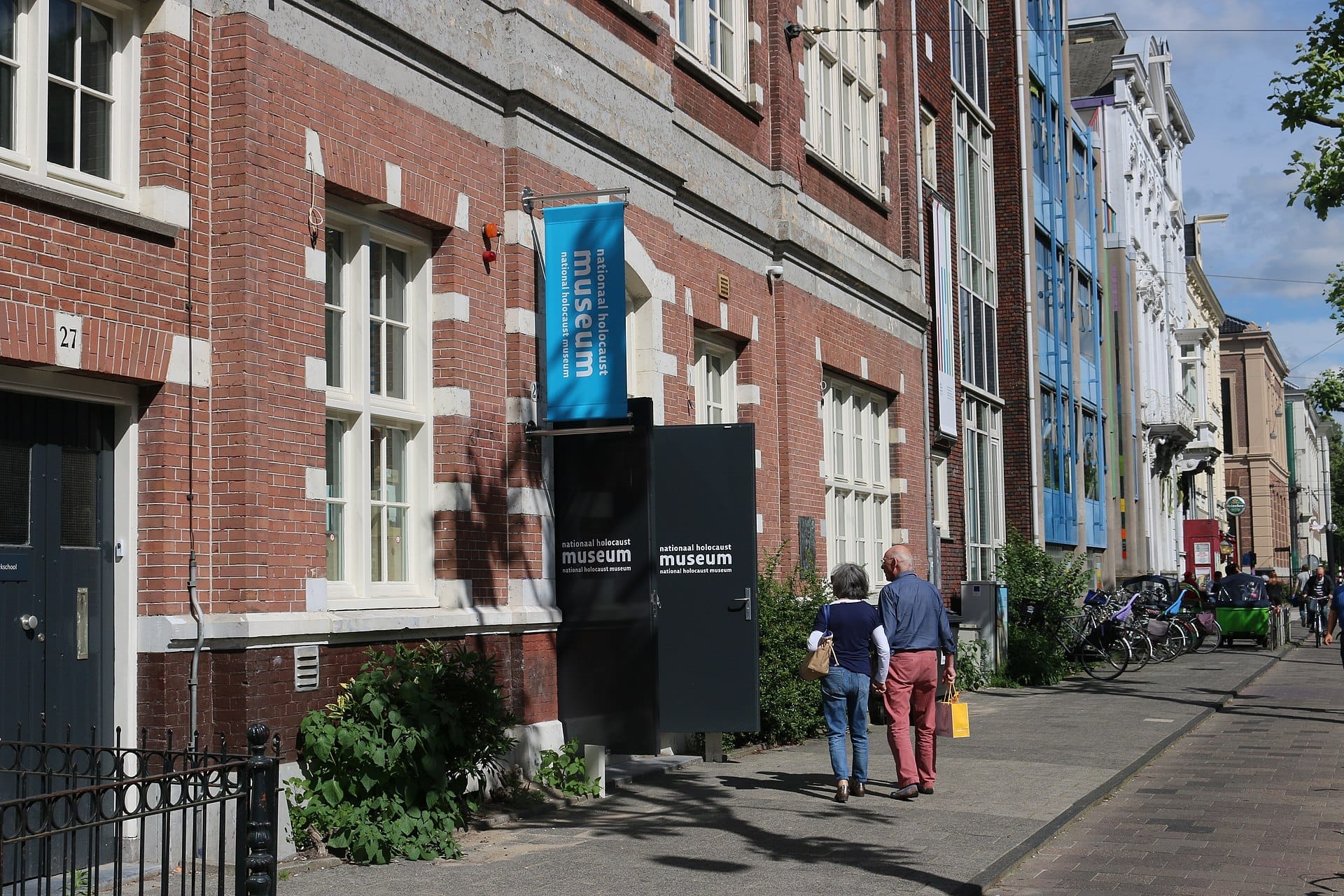
The National Holocaust Museum (Dutch: Nationaal Holocaustmuseum) reopened in its current, expanded form in March 2024 after years of development. It stands on Plantage Middenlaan 27, a street in Amsterdam's Plantage district that is dense with the memory of the city's pre-war Jewish community. The building itself is a former Protestant teacher training college, the Hervormde Kweekschool, and that context is not incidental: during the German occupation of the Netherlands, the kindergarten immediately next door to this building was used as a Nazi deportation assembly point for Jewish children. Director Henriëtte Pimentel and staff from the college helped hundreds of those children escape. The museum does not let visitors forget they are standing in a place where that happened.
The Netherlands had one of the highest rates of Jewish civilian deaths in Western Europe during the Holocaust. Roughly 75 percent of Dutch Jews were killed, a proportion that has long prompted difficult national conversation about collaboration, resistance, and indifference. The 2024 reopening is, in part, a public act of reckoning with that history. As Smithsonian Magazine noted at the time of opening, the museum represents the Netherlands formally confronting the scale of its own losses and the complexity of its wartime behavior.
ℹ️ Good to know
The museum is open daily from 10:00 to 17:00 — check jck.nl before visiting around public holidays or special events. Tickets are sold through the Jewish Cultural Quarter system; booking ahead online is strongly recommended, especially on weekends.
The Building: History Before You Enter a Single Gallery
Arriving at Plantage Middenlaan, the building reads as a solid, late-19th-century institutional structure. Its brick facade and tall windows are typical of Amsterdam's civic architecture from that era. Before the war it trained teachers; during the occupation it became a site of moral conflict and, for some children, survival. Walking the street toward the entrance, you pass the spot where the adjacent crèche stood — the deportation point that is central to the museum's founding story. There is no way to understand the museum without understanding the geography of this single city block.
The renovation work done ahead of the 2024 reopening preserved the original structure while adapting it for modern exhibition. Interior spaces feel deliberate rather than decorative: the proportions of the rooms, the original floors, the scale of the windows all carry weight. This is not a purpose-built glass-and-steel memorial institution. It is a place that was already soaked in history before the curators arrived.
Tickets & tours
Live prices and dates from our booking partner. If you book, we may earn a commission at no extra cost to you.
Amsterdam National Holocaust Museum and Hollandsche Schouwburg ticket
From 20 €Instant confirmationFree cancellationGray Line Canal Cruise with snackbox & Heineken Experience
From 48 €Instant confirmationFree cancellationAmsterdam evening canal cruise
From 18 €Instant confirmationFree cancellationJewish Museum and Portuguese Synagogue entrance ticket
From 20 €Instant confirmationFree cancellation
What You Will Actually See Inside
The permanent exhibition traces the history of Jews in the Netherlands from the early modern period through the rise of National Socialism, the occupation years of 1940 to 1945, the genocide itself, and its aftermath. The museum does not abstract these events into statistics alone. It works through individual stories: photographs, personal objects, documents, and testimony that anchor the numbers to specific people who lived in this city.
Expect the exhibition to be demanding. The subject matter is uncompromising, and the curatorial approach does not soften it. Certain sections address the deportation process in concrete logistical detail, which can be difficult to move through quickly. Visitors who have personal family connections to the Holocaust, or who are visiting with children, should consider in advance how much time they need between sections. There are quiet areas within the museum where visitors can pause.
Photography policies inside the permanent collection should be confirmed with staff on arrival, as they can vary for specific objects and testimonial materials. The museum is part of the Jewish Cultural Quarter, a network that also includes the Portuguese Synagogue and the Jewish Museum, both a short walk away. A combined ticket covering all Jewish Cultural Quarter locations offers the best value for visitors planning to spend a half-day or more in this part of the city.
The Jewish Historical Museum and the Portuguese Synagogue are both within easy walking distance and share the Jewish Cultural Quarter ticketing system. Together, these three sites form one of the most coherent and serious cultural itineraries in Amsterdam.
Visiting at Different Times of Day
Opening at 10:00, the museum's first hour tends to be quieter than the middle of the day. School groups and organized tours typically arrive mid-morning and peak around 11:00 to 13:00. If you want space to move through the exhibition at your own pace and read every panel without crowds pressing behind you, aim to arrive right at opening or after 14:30, when the afternoon school visits have usually cleared.
Weekend afternoons are the busiest period overall. The museum's subject matter means visitor behavior tends to be restrained regardless of crowd size — this is not a place where noise is an issue — but physical space around certain exhibits can feel tight when tour groups are present. The last entry window before the 17:00 closing is not recommended for first-time visitors; the exhibition is too dense to rush.
💡 Local tip
Book tickets online in advance through the Jewish Cultural Quarter website. Walk-up tickets may be available, but popular weekend dates can sell out. Arriving without a booking on a Saturday morning is a gamble not worth taking.
Getting There and the Surrounding Neighborhood
The Plantage district sits east of the historic city centre, roughly a 20-minute walk from Dam Square or a short metro ride. From Waterlooplein metro station the walk to the museum takes approximately eight minutes along Plantage Middenlaan; from Weesperplein metro station, allow about nine minutes. Several tram lines also connect the area to the city centre. The walk from either station passes through a quiet, tree-lined part of the city that feels distinct from the canal tourist core.
The Plantage district rewards exploration before or after your museum visit. The Hortus Botanicus botanical garden is a short walk away, as is the Artis Amsterdam Royal Zoo. The neighborhood has a different character from the Jordaan or De Pijp: lower foot traffic, broader streets, and a concentration of significant civic and cultural institutions.
Visitors combining the National Holocaust Museum with the Anne Frank House — another central Holocaust memorial site in Amsterdam — should note that the two are in different parts of the city. The Anne Frank House is in the Canal Ring area, roughly 25 minutes on foot or a short tram ride from Plantage Middenlaan. Both sites require advance booking; do not plan to visit both on foot in a single morning without accounting for travel time and emotional fatigue.
For a fuller picture of Amsterdam's Jewish history and the city's WWII context, the Dutch Resistance Museum is also in the Plantage district, just minutes away. It focuses on how Dutch citizens responded to the occupation, including both collaboration and resistance, and provides essential counterpoint to the National Holocaust Museum's perspective.
Practical Details: What to Bring and How to Prepare
There is no specific dress code, but the nature of the museum calls for attire that is comfortable and unobtrusive. Plan to spend a minimum of two hours, and three if you engage fully with the exhibition text and audiovisual materials. Audio guides may be available; check the official site for current language options.
The museum is part of the Jewish Cultural Quarter infrastructure, which provides accessibility information on its website. Visitors with specific mobility or accessibility needs are advised to consult jck.nl or contact the museum directly before arriving, as the building is historic and certain areas may have constraints not immediately obvious from online listings.
There is a cloakroom for bags and coats. The museum has toilet facilities. There is no large café on-site in the way that larger Amsterdam museums have; plan meals or coffee breaks before or after your visit. Several cafes and lunch spots are within a short walk on Plantage Middenlaan and the streets leading toward Artis.
⚠️ What to skip
This museum covers deeply distressing subject matter, including the systematic murder of children, forced deportations, and the near-total destruction of Amsterdam's Jewish community. Parents visiting with young children should review the exhibition content in advance. There is no age restriction, but the material is not softened for younger visitors.
Honest Assessment: Who This Museum Is For, and Who Might Not Be Ready for It
The National Holocaust Museum is not a light museum visit. It is serious, thorough, and at times harrowing. Visitors looking for a broad survey of Amsterdam's history, or who want an emotionally comfortable cultural afternoon, should know in advance that this is not that kind of institution. The museum does not apologize for the weight of its subject, and it should not.
That said, it is also an exceptionally well-constructed institution that handles an impossibly difficult subject with clarity and care. For travelers who want to understand Amsterdam beyond its postcard image — and who want to understand something real about 20th-century European history — it is one of the most important places to visit in the city. The 2024 reopening gives it a completeness and ambition that earlier versions of the institution did not always achieve.
If you are planning a wider visit to Amsterdam's historical and cultural sites, the best museums in Amsterdam guide offers context on how the National Holocaust Museum fits alongside the city's other major collections.
Insider Tips
- Buy a combined Jewish Cultural Quarter ticket online before you arrive. It covers the National Holocaust Museum, the Portuguese Synagogue, and the Jewish Museum — and visiting all three in a single day gives the history a depth that no individual site provides alone.
- The Dutch Resistance Museum is a five-minute walk from the National Holocaust Museum. Visiting both on the same day is emotionally demanding but historically rewarding: together they give you both the victim experience and the complicated story of Dutch civilian response to occupation.
- Arrive at 10:00 on a weekday if you want the quietest possible experience. The exhibition is dense with text and testimony; having space to stand and read without a group behind you makes a real difference.
- The block around Plantage Middenlaan 27 itself has historical significance. Before entering, take a moment to orient yourself to the adjacent site where the wartime crèche stood — the physical relationship between the two buildings is part of the story the museum tells.
- If you are combining this visit with the Anne Frank House, book both well in advance and do not schedule them back-to-back without a meal break and time to decompress in between. Both sites require emotional engagement, and exhaustion blunts the experience.
Who Is National Holocaust Museum For?
- Travelers with a serious interest in 20th-century European history and the Holocaust specifically
- Visitors with family connections to Dutch Jewry or the WWII period
- Students and educators looking for an authoritative, well-curated primary source environment
- Anyone who wants to understand Amsterdam's history beyond the 17th-century Golden Age narrative
- Travelers doing a dedicated Jewish Cultural Quarter day combining multiple related sites
Nearby Attractions
Other things to see while in Plantage & Jewish Quarter:
- ARTIS Amsterdam Royal Zoo
Founded in 1838, ARTIS Amsterdam Royal Zoo is the oldest zoo in the Netherlands and the fifth oldest zoo in the world still in operation. Set across landscaped grounds in the Plantage neighborhood, it blends wildlife, botanical gardens, and 19th-century heritage architecture into a single half-day destination that works for families, history enthusiasts, and curious solo travelers alike.
- Brouwerij 't IJ
Brouwerij 't IJ is Amsterdam's most distinctive craft brewery, operating inside an early-20th-century bathhouse at the foot of the De Gooyer windmill. The tasting room is free to enter, pours a rotating lineup of house-brewed beers, and offers short brewery tours on weekends. It is one of the few places in the city where industrial heritage, local brewing culture, and canal-side atmosphere converge in a single address.
- De Gooyer Windmill
Standing 26.6 metres tall on the eastern edge of the city, De Gooyer is widely described as the tallest wooden windmill in the Netherlands and one of Amsterdam's most photogenic historic structures. The mill itself is private, but the exterior is free to visit, and the craft brewery in the former bathhouse beside it is reason enough to linger.
- Dutch Resistance Museum
The Dutch Resistance Museum (Verzetsmuseum Amsterdam) tells the story of the Nazi occupation of the Netherlands through the choices ordinary people made: those who resisted, those who complied, and those who stood between. Located in the Plantage district, it is one of the most thoughtfully curated war museums in Europe.
Planning a trip? Discover personalized activities with the Nomado app.