De Gooyer Windmill: Amsterdam's Tallest Wooden Mill and the Brewery at Its Feet
Standing 26.6 metres tall on the eastern edge of the city, De Gooyer is widely described as the tallest wooden windmill in the Netherlands and one of Amsterdam's most photogenic historic structures. The mill itself is private, but the exterior is free to visit, and the craft brewery in the former bathhouse beside it is reason enough to linger.
Quick Facts
- Location
- Funenkade 5, 1018 AL Amsterdam (Plantage / Eastern Canal Ring edge)
- Getting There
- Tram 14 to Pontanusstraat, then a short walk
- Time Needed
- 20–30 min for the windmill; add 1–2 hours if visiting Brouwerij 't IJ
- Cost
- Free (exterior viewing); brewery drinks priced separately
- Best for
- Architecture lovers, history walkers, craft beer drinkers, photographers
What De Gooyer Actually Is
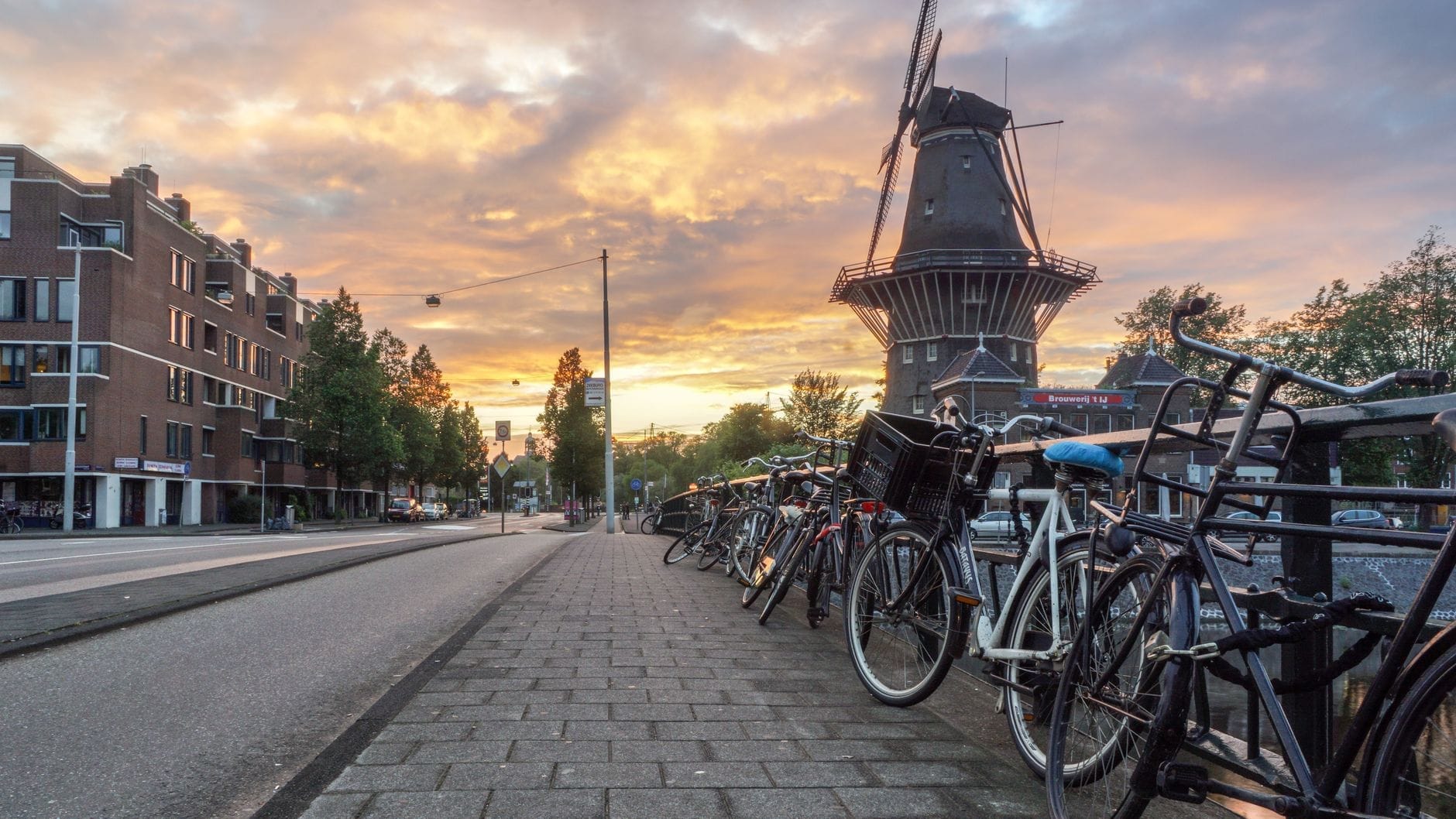
De Gooyer Windmill, officially called Molen De Gooyer and sometimes referred to as the Funenmolen (the mill on the Funen), is a fully intact octagonal wooden smock mill sitting between Funenkade and Zeeburgerstraat on the Nieuwevaart canal in Amsterdam's eastern side. At roughly 26.6 metres, it is widely described as the tallest wooden windmill in the Netherlands. That distinction alone sets it apart from the smaller, more visited mills you might see on a day trip to the countryside.
The mill is not a museum. You cannot buy a ticket and climb the stairs. It is a structure owned by the City of Amsterdam, and entry to the interior has not been available to the public. What draws visitors is the sheer physical presence of the thing, the chance to see a working wooden mill standing in the middle of an ordinary Amsterdam street, and the very good fortune that Brouwerij 't IJ, one of the city's most beloved craft breweries, operates directly at its base.
ℹ️ Good to know
The windmill interior is not open to visitors. All access is exterior only. Plan your visit around the photography, the history, and a stop at the brewery terrace rather than an interior tour.
A Long History of Being in the Wrong Place
The name De Gooyer appears in records as far back as 1609, when the mill was owned by brothers Claes and Jan Willemsz, and earlier versions of the mill stood in this part of the city for much of Amsterdam's formative period. The current octagonal structure dates from 1725, when it was rebuilt as a flour mill. What makes the mill's history particularly interesting is that it did not stay put: in 1814, the entire structure was relocated to its current position on the Funenkade because newly constructed military barracks blocked the wind it needed to operate. Moving a wooden windmill of this scale across an urban landscape was a considerable engineering undertaking for the period.
The City of Amsterdam purchased the mill in 1928 and restored it in 1929 and 1930, preserving it as a historic monument rather than continuing its milling function. A storm in 1972 damaged the sails and upper structure, but a full rebuild was completed and the sails were turning again by 1976. The mill remains a listed monument, which explains why its external appearance is so well maintained despite being surrounded by ordinary residential and commercial buildings.
For architectural context, De Gooyer fits into a broader story of Amsterdam's post-medieval industrial past, a period well explored in the Amsterdam architecture guide which covers the city's less obvious structural heritage.
Tickets & tours
Live prices and dates from our booking partner. If you book, we may earn a commission at no extra cost to you.
Day Trip to Keukenhof, Tulip Farm and Windmill Cruise
From 85 €Instant confirmationFree cancellationCountryside bike tour with windmill, cheese and clogs
From 28 €Instant confirmationFree cancellationTulips and windmills small-group tour with Keukenhof skip-the-line ticket
From 120 €Instant confirmationFree cancellationCountryside and windmills private day tour
From 110 €Instant confirmationFree cancellation
The Experience: What You See When You Arrive
The mill appears gradually as you walk east from the city centre along the Funenkade. There is no grand plaza or formal approach. One moment you are walking a quiet canal street lined with brick apartment buildings, and the next the dark wooden body of De Gooyer rises above the roofline. The octagonal cap sits atop a tall cylindrical brick base, and the four large sails extend outward over the surrounding street. The scale is more imposing in person than photographs suggest.
The area around the mill is calm by Amsterdam standards. The neighbourhood has a residential feel, with cyclists passing and locals walking dogs along the canal. There is no ticket queue, no souvenir stand, and no information kiosk. A modest information panel near the mill provides basic historical detail in Dutch and English. The canal itself, the Nieuwevaart, runs alongside and reflects the mill on clear days, which is the shot most photographers are looking for.
In the morning, before the brewery opens, the site is near-silent. The light from the east hits the wooden sails directly and the brick base glows in early sun. By mid-afternoon, when the brewery terrace fills, the atmosphere shifts entirely. The terrace of Brouwerij 't IJ wraps around the lower section of the mill, and on warm days it is genuinely lively, with people drinking unfiltered wheat beer a few metres from a nearly 300-year-old windmill. That contrast is part of what makes this place worth the detour.
💡 Local tip
For the best light and the fewest people, arrive between 9:00 and 11:00. The brewery taproom typically does not open until 14:00, so the morning is yours for quiet photography and unobstructed views of the mill base.
Brouwerij 't IJ: The Main Reason Most People Stay
Brouwerij 't IJ has been brewing craft beer in the converted former municipal bathhouse next to the mill since 1985, making it one of the older craft breweries in the Netherlands. The brewery is not inside the windmill itself but occupies the historic bathhouse building directly adjacent to the mill's base. The tap room and terrace are built into this structure, and the windmill towers overhead at a close enough distance to feel like you are drinking in its shadow.
Opening hours for the tap room are generally from 14:00 to 22:00 on weekdays and from 12:00 to 22:00 on weekends, though these hours can vary and should be confirmed before visiting. The brewery serves its own range of beers, including the IJwit wheat beer and several seasonal and limited releases. The terrace is open-air and faces the canal, which makes it a functional stop in almost any season, though a rainy autumn afternoon requires a certain level of commitment.
The brewery pairs naturally with a walk through the surrounding Plantage neighbourhood, which includes Artis Amsterdam Royal Zoo and the Hortus Botanicus botanical garden, both within comfortable walking distance.
How to Get There and How to Plan Your Visit
The windmill is at Funenkade 5, approximately 2.5 kilometres east-southeast of Amsterdam Centraal Station. The most direct public transport option is tram 14, which runs from Centraal Station toward the eastern city and stops at Pontanusstraat, a short walk from the mill. The journey takes roughly 15 minutes by tram. Cycling is also very practical: the Funenkade is on a flat, well-marked cycling route, and the ride from the centre takes under 15 minutes.
Walking from Centraal takes 25 to 30 minutes and passes through several interesting streets near the Plantage district. It is a reasonable option if the weather cooperates. There is no dedicated car parking at the mill, and driving is not recommended given Amsterdam's general parking constraints in this area.
If you are combining De Gooyer with other eastern Amsterdam sights, the Dutch Resistance Museum and the National Maritime Museum are both within a 15-minute walk, making a half-day eastern circuit very manageable.
💡 Local tip
The Amsterdam City Card covers tram travel, which makes the ride to Pontanusstraat part of a wider transit-included day rather than an extra cost. Check the card's current coverage before your trip.
Photography and Practical Details
The best full-frame view of the mill is from the opposite bank of the Nieuwevaart canal, where you can capture the entire structure including the sails with water in the foreground. The canal is narrow enough that a standard 24–35mm focal length works well. Early morning and the hour before sunset produce the most dramatic light on the dark wooden sails and the brick base. Overcast days, which are common in Amsterdam, produce soft even light that works particularly well for showing the texture of the weathered wood.
The area around the mill is accessible on foot and the canal path is flat with no steps, making it broadly accessible for visitors with mobility considerations. The brewery terrace involves some movement between indoor and outdoor areas; specific step-free access details for the brewery interior are not formally documented in public sources, so it is worth contacting the brewery directly if this is a requirement.
There is no need to plan much in advance for a visit to the mill itself. No booking, no queue, no timed entry. The main variable is the brewery: if visiting the tap room is your primary goal, check their current hours in advance, as seasonal adjustments can occur.
Honest Assessment: Who Should Visit and Who Can Skip It
De Gooyer is worth a detour if you have an interest in Amsterdam's architectural and industrial history, if you enjoy craft beer in an unusual setting, or if you are building a walking or cycling route through the eastern city. It rewards unhurried visitors who appreciate the combination of deep historical context and a functioning neighbourhood atmosphere.
It is not worth a special trip if your Amsterdam time is limited to one or two days and you are trying to cover major museums. The windmill cannot be entered, and in isolation, a ten-minute look at the exterior is the entirety of the experience without the brewery. Travellers who found Zaanse Schans or Keukenhof to be the highlights of their Netherlands trip should know that De Gooyer is a completely different proposition: urban, low-key, and entirely lacking in organised visitor infrastructure.
For visitors planning a broader exploration of Amsterdam's eastern districts, the Plantage neighbourhood guide covers the surrounding area and helps connect De Gooyer into a longer half-day route.
Insider Tips
- The sails on De Gooyer are not always in motion. Wind conditions and maintenance schedules determine when they turn. If you want to photograph or see the sails moving, this is a matter of timing and luck rather than planning.
- The canal bank directly opposite the mill, accessed by walking slightly north along the Funenkade, gives you a wider shooting angle and removes the foreground street clutter that affects photos taken from directly in front.
- Brouwerij 't IJ's IJwit is the flagship unfiltered wheat beer and a reliable order. If you visit on a day when a seasonal tap is available, ask the bar staff what is currently fresh. The rotating selection is often not listed online.
- The neighbourhood is quiet enough that a weekday morning visit will feel genuinely local. Avoid Sunday afternoons in summer when the brewery terrace fills quickly and the canal path becomes crowded with cyclists and pedestrians.
- De Gooyer is not signed from the main tourist routes. If you are navigating on foot without GPS, follow the Funenkade canal east from Hoogte Kadijk until the mill becomes visible above the rooftops.
Who Is De Gooyer Windmill For?
- Architecture and heritage enthusiasts who want to see Dutch industrial history in an urban context
- Craft beer drinkers looking for a genuinely characterful brewery setting
- Cyclists or walkers building a half-day route through Amsterdam's eastern neighbourhoods
- Photographers seeking canal reflections and wooden mill textures away from tourist crowds
- Travellers combining a visit with Artis Zoo, the Hortus Botanicus, or the National Maritime Museum
Nearby Attractions
Other things to see while in Plantage & Jewish Quarter:
- ARTIS Amsterdam Royal Zoo
Founded in 1838, ARTIS Amsterdam Royal Zoo is the oldest zoo in the Netherlands and the fifth oldest zoo in the world still in operation. Set across landscaped grounds in the Plantage neighborhood, it blends wildlife, botanical gardens, and 19th-century heritage architecture into a single half-day destination that works for families, history enthusiasts, and curious solo travelers alike.
- Brouwerij 't IJ
Brouwerij 't IJ is Amsterdam's most distinctive craft brewery, operating inside an early-20th-century bathhouse at the foot of the De Gooyer windmill. The tasting room is free to enter, pours a rotating lineup of house-brewed beers, and offers short brewery tours on weekends. It is one of the few places in the city where industrial heritage, local brewing culture, and canal-side atmosphere converge in a single address.
- Dutch Resistance Museum
The Dutch Resistance Museum (Verzetsmuseum Amsterdam) tells the story of the Nazi occupation of the Netherlands through the choices ordinary people made: those who resisted, those who complied, and those who stood between. Located in the Plantage district, it is one of the most thoughtfully curated war museums in Europe.
- H'ART Museum
Housed in the historic Amstelhof on the Amstel river, H'ART Museum brings major international exhibitions to Amsterdam's Plantage district. Formerly Hermitage Amsterdam, it reinvented itself in 2023 as an independent venue partnering with institutions across the globe.
Planning a trip? Discover personalized activities with the Nomado app.