Brouwerij 't IJ: Craft Beer Beneath De Gooyer Windmill
Brouwerij 't IJ is Amsterdam's most distinctive craft brewery, operating inside an early-20th-century bathhouse at the foot of the De Gooyer windmill. The tasting room is free to enter, pours a rotating lineup of house-brewed beers, and offers short brewery tours on weekends. It is one of the few places in the city where industrial heritage, local brewing culture, and canal-side atmosphere converge in a single address.
Quick Facts
- Location
- Funenkade 7, 1018 AL Amsterdam (Plantage / Oost)
- Getting There
- Tram 14 to Pontanusstraat, then a short walk; or tram 7 towards Azartplein to Hoogte Kadijk
- Time Needed
- 1 to 2 hours for a relaxed visit; add 20 minutes for a weekend tour
- Cost
- Free entry; drinks paid on consumption; brewery tours about €5.50 per person including a beer (Fri–Sun; check current price)
- Best for
- Craft beer lovers, architecture enthusiasts, afternoon drinkers, curious locals and visitors alike
- Official website
- brouwerijhetij.nl/en
What Brouwerij 't IJ Actually Is
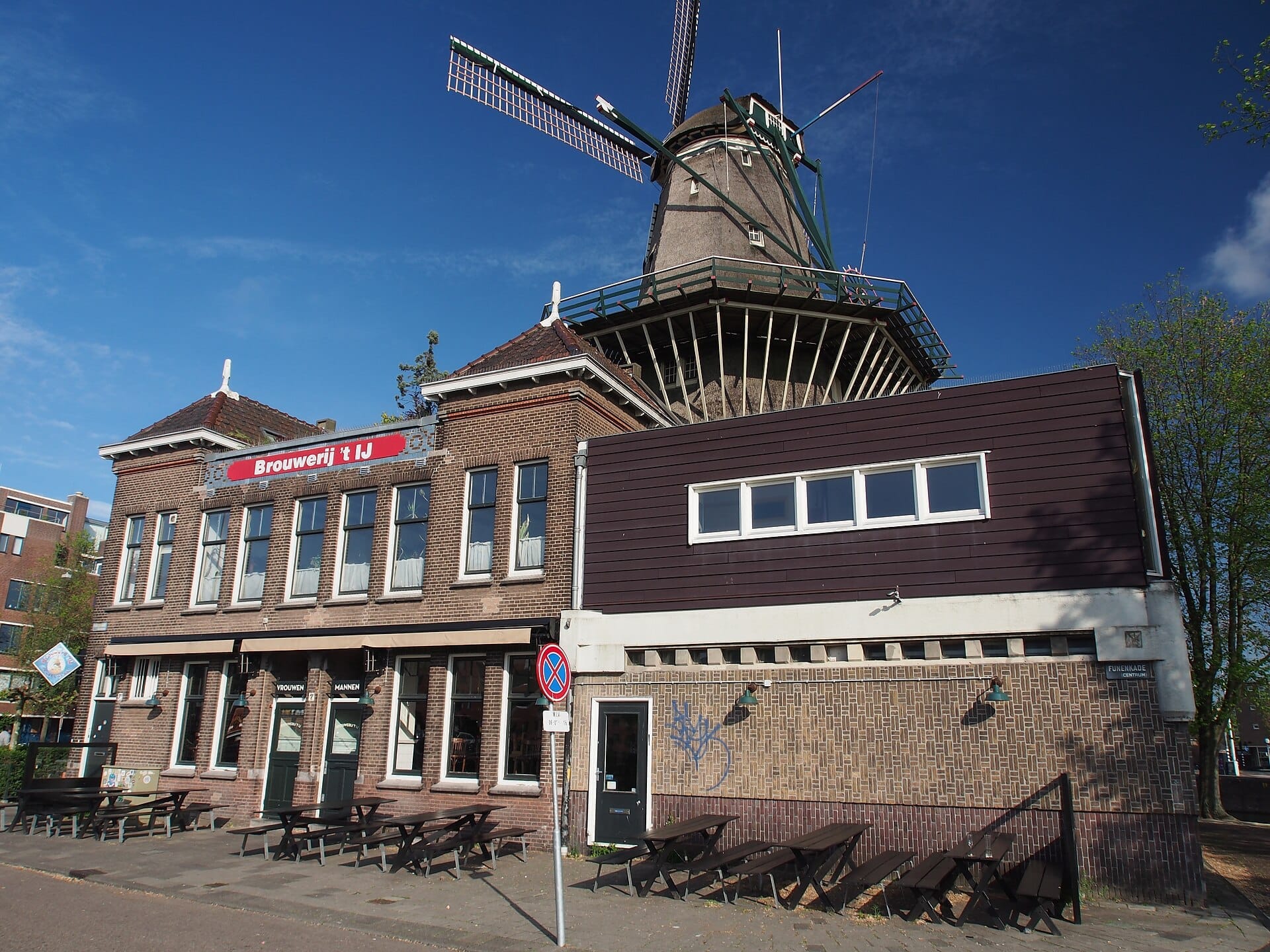
Brouwerij 't IJ is a craft brewery founded in October 1985 by Kaspar Peterson, making it one of the pioneers of the Dutch craft beer movement. It operates out of a former municipal bathhouse known as the Funen, a sturdy red-brick building that sits directly beneath the De Gooyer windmill on Funenkade. The windmill itself in its current form dates to the early 19th century and is one of the few surviving wooden-bodied windmills in Amsterdam. The pairing of an early-20th-century bathhouse and a centuries-old mill creates an architectural contrast you are unlikely to find at any other brewery in Northern Europe.
The tasting room, sometimes referred to as the Proeflokaal or Café Struis, is where most visitors spend their time. It is a compact, wood-panelled space with high ceilings, brewery tanks visible through glass panels, and a long bar stocked with the brewery's own beers on tap. There are outdoor benches along the canal, which fill quickly on warm afternoons. Entry is free, and the only cost is whatever you order.
💡 Local tip
The tasting room opens at 14:00 Monday–Friday and at 12:00 on Saturdays and Sundays, closing at 22:00, with last orders slightly before closing. Hours can change on public holidays; check the official site before you visit.
The Beers: What to Order
The brewery produces a core range of unfiltered, unpasteurised beers brewed on-site, alongside seasonal and limited releases. The names draw on Amsterdam canal and water imagery: Zatte is a strong tripel at 8%, Columbus is a hoppy amber at 8.7%, and IJwit is a refreshing wheat beer at 6.5% that is the most approachable choice for first-time visitors. Seasonal taps rotate through the year and are worth asking about at the bar.
Alcohol levels across the range are notably high by Dutch standards. The IJwit at 6.5% is among the lighter beers in the core lineup. If you are pacing yourself over an afternoon, order small glasses (kleinepils or a proefglaasje where available) rather than pints. The bar staff are accustomed to visitors asking for tasting recommendations and are generally happy to help.
⚠️ What to skip
Brouwerij 't IJ does not serve non-alcoholic options beyond water and soft drinks. If you are visiting with non-drinkers, the outdoor terrace and the setting itself are enjoyable regardless, but the experience is primarily beer-focused.
Tickets & tours
Live prices and dates from our booking partner. If you book, we may earn a commission at no extra cost to you.
Gray Line Canal Cruise with snackbox & Heineken Experience
From 48 €Instant confirmationFree cancellationAmsterdam evening canal cruise
From 18 €Instant confirmationFree cancellationJewish Museum and Portuguese Synagogue entrance ticket
From 20 €Instant confirmationFree cancellationAdmission ticket for Artis Royal Zoo and Micropia
From 39 €Instant confirmationFree cancellation
The De Gooyer Windmill and the Building's History
The De Gooyer windmill, which towers directly above the brewery entrance, is one of the tallest wooden mills in the Netherlands. It was relocated to its current site on Funenkade in 1814, having originally stood elsewhere in the city. The mill is privately owned and not open to the public, but it forms the unmistakable visual centrepiece of the site and makes Brouwerij 't IJ one of the most photographed spots in Amsterdam's eastern neighbourhoods.
The bathhouse beneath it was built in the early 20th century as a public washing facility for the working-class neighbourhood surrounding it. When the building fell out of use, Peterson converted it into a brewery at a time when Amsterdam had almost no independent craft beer production. The choice of location was pragmatic as much as poetic: the rent was low, the building had water infrastructure, and the windmill offered instant recognition. Today, the site sits at the edge of the Plantage neighbourhood, a quieter, greener part of the city that most visitors overlook in favour of the canal ring.
How the Experience Changes by Time of Day
Arriving just after 14:00 on a weekday gives you the best version of the tasting room: unhurried, with seats available both inside and on the canal-side terrace, and bar staff with time to talk through the beer list. The light in the late afternoon catches the brickwork of the bathhouse facade at a flattering angle, and the windmill sails are occasionally turning if there is a reasonable wind off the IJ waterway.
By 17:00 on a Friday or Saturday, the terrace is typically packed. Visitors and locals share the outdoor benches in a way that is convivial rather than crowded, but finding a table without waiting becomes difficult. The interior fills more slowly and usually has space even when the terrace does not. Weekend evenings, particularly in summer, can feel significantly more social and loud inside; the 22:00 closing time means the energy does not build to a late-night crescendo, which keeps the atmosphere manageable.
In winter, the terrace empties and the indoor space becomes more intimate. The low afternoon light through the bathhouse windows, combined with a warm IJwit or a Zatte tripel, makes a cold January visit genuinely pleasant rather than a compromise. This is one of the few Amsterdam attractions that works well in off-season conditions.
The Brewery Tour
Weekend brewery tours run Friday through Sunday and last approximately 20 minutes. The cost is about €5.50 per person including a beer, and groups are capped at 20 participants. The tour covers the production process, the history of the building, and the specific techniques the brewery uses for its unfiltered beers. It is short but informative, and the price-to-content ratio is unusually good.
Tours are not bookable online in advance as of this writing; check the official site for current scheduling as this may have changed. Arriving early on a weekend afternoon gives you the best chance of joining a tour at capacity. The tour ends in the tasting room, which is a logical segue into ordering.
ℹ️ Good to know
The tasting room under the windmill at Funenkade 7 is not wheelchair accessible, according to the brewery's own contact page. The terrace and exterior are navigable, but the interior layout presents access challenges. If accessibility is a concern, confirm current conditions directly with the brewery before visiting.
Getting There and the Surrounding Area
From Amsterdam Centraal, tram 14 runs directly to Pontanusstraat, from which the windmill is visible within a few minutes' walk along the canal. From Leidseplein, tram 7 towards Azartplein to Hoogte Kadijk brings you to the same area from the south. The walk from either stop along Funenkade is flat, canal-side, and passes some of the quieter residential streets that give Amsterdam's eastern districts their unhurried character.
The brewery is also reachable by bicycle, which is the most practical option for most Amsterdam visitors. The Plantage district sits between the city centre and the IJ waterfront, making it a natural stopping point on a longer eastern loop that could include the Artis Amsterdam Royal Zoo, the Hortus Botanicus, or the Dutch Resistance Museum nearby. The brewery makes a logical late-afternoon anchor for such a route.
For visitors combining this with a broader exploration of Amsterdam's craft beer scene or independent food and drink culture, the Amsterdam on a budget guide covers how to build an afternoon around low-cost, high-quality local spots without relying on tourist-facing venues.
Photography and What to Bring
The exterior of the brewery, with the De Gooyer windmill rising behind the red-brick bathhouse, is best photographed from across Funenkade on the canal bank opposite. Late afternoon light from the west catches the mill sails and the facade simultaneously. Wide-angle lenses are useful given the height of the windmill relative to its surroundings. Inside the tasting room, the light is low and warm; phone cameras perform adequately but dedicated cameras benefit from a wider aperture setting.
There is no strict dress code. The atmosphere is casual, and the clientele ranges from cyclists in activewear to couples who have come directly from nearby cultural institutions. The terrace can be cold and breezy even in spring and autumn given the waterfront exposure, so a layer is worth carrying.
Who Should Think Twice
Visitors who do not drink alcohol will find the setting interesting but the offering limited. The historic architecture and the windmill are genuinely worth seeing, but the entire experience is structured around beer consumption. Families with very young children can visit the outdoor terrace, but the interior tasting room is not a child-friendly environment. The 22:00 closing time rules this out as a late-night destination, which may frustrate visitors building a night-out itinerary.
Those looking for a full evening of Amsterdam nightlife should consult the Amsterdam nightlife guide for venues with later hours and a more structured late-night offering.
Insider Tips
- The terrace benches along the canal are first-come, first-served and have no table service. Order at the bar, collect your drinks, then claim a spot. Trying to save a table before ordering causes friction during busy periods.
- The brewery produces bottle-conditioned beers available to take away from the tasting room. If you enjoy what you drink, buying bottles to take home is often cheaper per unit than ordering additional glasses at the bar.
- Tram 14 is a slow, scenic route that passes through several interesting neighbourhoods east of the centre. Taking it to the brewery rather than cycling lets you see parts of Amsterdam that most itineraries skip entirely.
- The windmill sails turn when wind conditions allow, which is unpredictable. If seeing the mill in motion matters to you, mornings tend to have stronger wind off the IJ, but the tasting room is not open until 14:00.
- Weekend tours fill up quickly in summer. If you want to join one, arrive within the first 30 minutes of opening at 14:00 and ask at the bar immediately rather than after settling in with a drink.
Who Is Brouwerij 't IJ For?
- Craft beer enthusiasts who want to drink where the beer is actually made
- Architecture and history visitors combining the windmill with nearby Plantage cultural institutions
- Afternoon drinkers looking for a low-key, low-cost alternative to tourist-facing bars in the canal ring
- Cyclists building a half-day eastern Amsterdam loop that ends with a drink
- Visitors who want a genuine local atmosphere rather than a curated hospitality experience
Nearby Attractions
Other things to see while in Plantage & Jewish Quarter:
- ARTIS Amsterdam Royal Zoo
Founded in 1838, ARTIS Amsterdam Royal Zoo is the oldest zoo in the Netherlands and the fifth oldest zoo in the world still in operation. Set across landscaped grounds in the Plantage neighborhood, it blends wildlife, botanical gardens, and 19th-century heritage architecture into a single half-day destination that works for families, history enthusiasts, and curious solo travelers alike.
- De Gooyer Windmill
Standing 26.6 metres tall on the eastern edge of the city, De Gooyer is widely described as the tallest wooden windmill in the Netherlands and one of Amsterdam's most photogenic historic structures. The mill itself is private, but the exterior is free to visit, and the craft brewery in the former bathhouse beside it is reason enough to linger.
- Dutch Resistance Museum
The Dutch Resistance Museum (Verzetsmuseum Amsterdam) tells the story of the Nazi occupation of the Netherlands through the choices ordinary people made: those who resisted, those who complied, and those who stood between. Located in the Plantage district, it is one of the most thoughtfully curated war museums in Europe.
- H'ART Museum
Housed in the historic Amstelhof on the Amstel river, H'ART Museum brings major international exhibitions to Amsterdam's Plantage district. Formerly Hermitage Amsterdam, it reinvented itself in 2023 as an independent venue partnering with institutions across the globe.
Planning a trip? Discover personalized activities with the Nomado app.