Getting Around Amsterdam: Transport, Bikes & Airport Transfers
Amsterdam rewards visitors who understand how it moves. This guide covers every transport option in the city, from GVB trams and the metro to bike rentals and Schiphol airport transfers, with practical advice on costs, passes, and what to skip.
Tickets & tours
Live prices and dates from our booking partner. If you book, we may earn a commission at no extra cost to you.
TL;DR
- Getting around Amsterdam is easiest on foot, by tram, or by bike. The metro is useful but covers less of the city centre than trams do.
- GVB day passes range from €10 (24 hours) to €43 (7 days); children aged 0–3 travel free, and ages 4–11 pay around €5 per day.
- The train from Amsterdam Airport Schiphol to Amsterdam Centraal is the fastest and cheapest airport transfer, typically under 20 minutes.
- Bike lanes are serious infrastructure here. Walk or ride in them at your own risk. Always use designated lanes and lock bikes properly.
- The I Amsterdam City Card bundles unlimited GVB transport with museum entry and starts from €67 for 24 hours, worth it for heavy sightseers.
How Amsterdam's Transport Network is Structured
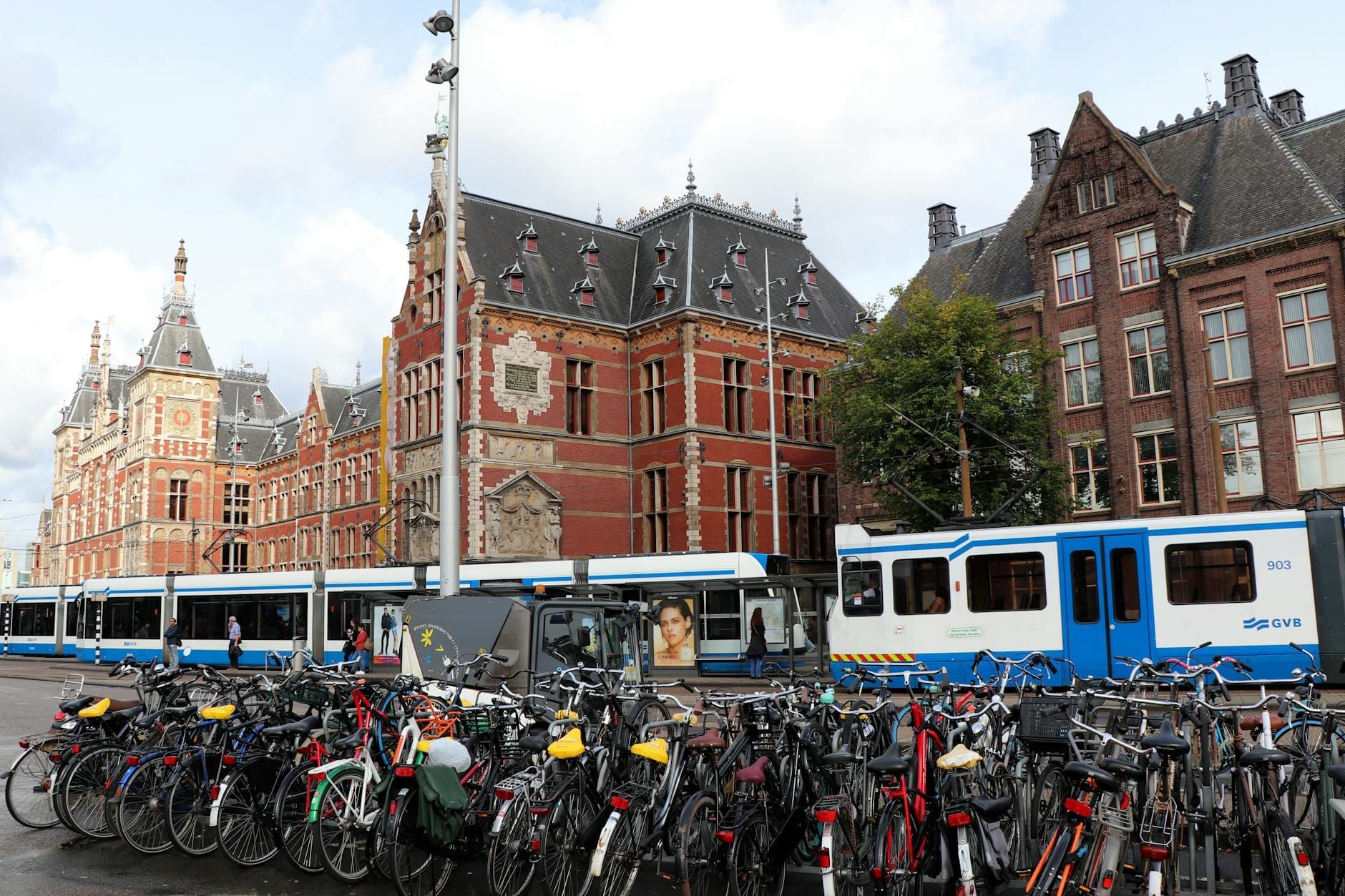
Amsterdam's transport system is split between two main operators. GVB runs everything within the city: trams, metro, city buses, and the free IJ ferries that connect Amsterdam Centraal to Amsterdam-Noord. NS (Nederlandse Spoorwegen) handles intercity and regional rail, including the crucial Schiphol airport connection. For most visitors staying in the centre, GVB is all you need. NS becomes relevant when you want to take day trips or arrive from the airport.
The GVB metro has 5 lines and 39 stations, but don't assume it covers the city centre in the way London's Tube or Paris's Métro does. Many of Amsterdam's most visited areas, including the Canal Ring, Jordaan, and De Pijp, are far better served by trams. The metro is most useful for reaching Zuidas, Amsterdam-Zuid, or making quick transfers at major interchanges like Centraal Station and Weesperplein.
ℹ️ Good to know
Trams are the backbone of Amsterdam's street-level transport. Lines 2, 11, 12, and 17 connect Amsterdam Centraal with Museumplein and the major cultural districts. If you're spending most of your time in the centre, trams will get you there faster than the metro in most cases.
GVB Tickets and Passes: What to Buy
GVB operates on a time-based ticketing system rather than a zone or single-trip model for most tourist use. You tap in and out with an OV-chipkaart (the national smart card) or buy a paper day pass. For most visitors, a multi-day pass is the practical choice.
- 24-hour pass Around €10 per adult. Good for a single full day of heavy tram and metro use.
- 48-hour pass Around €17. Works out cheaper than two single-day passes.
- 72-hour pass Around €21.50. The sweet spot for a 3-night stay.
- 7-day pass Around €43. Worth it for longer stays or anyone travelling with family.
- Child fares (4–11) Around €5 per day. Children 0–3 travel free. No multi-day child pass is available.
Passes are sold at GVB service points (including at Amsterdam Centraal and Schiphol), from ticket machines at major tram stops, and online. Always check the current fare on the official GVB or I amsterdam website before your trip, as pricing updates annually and varies slightly by purchase channel.
💡 Local tip
If you're planning to visit 3 or more museums in a day alongside transport use, compare the I Amsterdam City Card against buying separate museum tickets and a GVB pass. For two people doing a full museum day, the City Card often comes out ahead on value.
Getting from Schiphol Airport to the City Centre
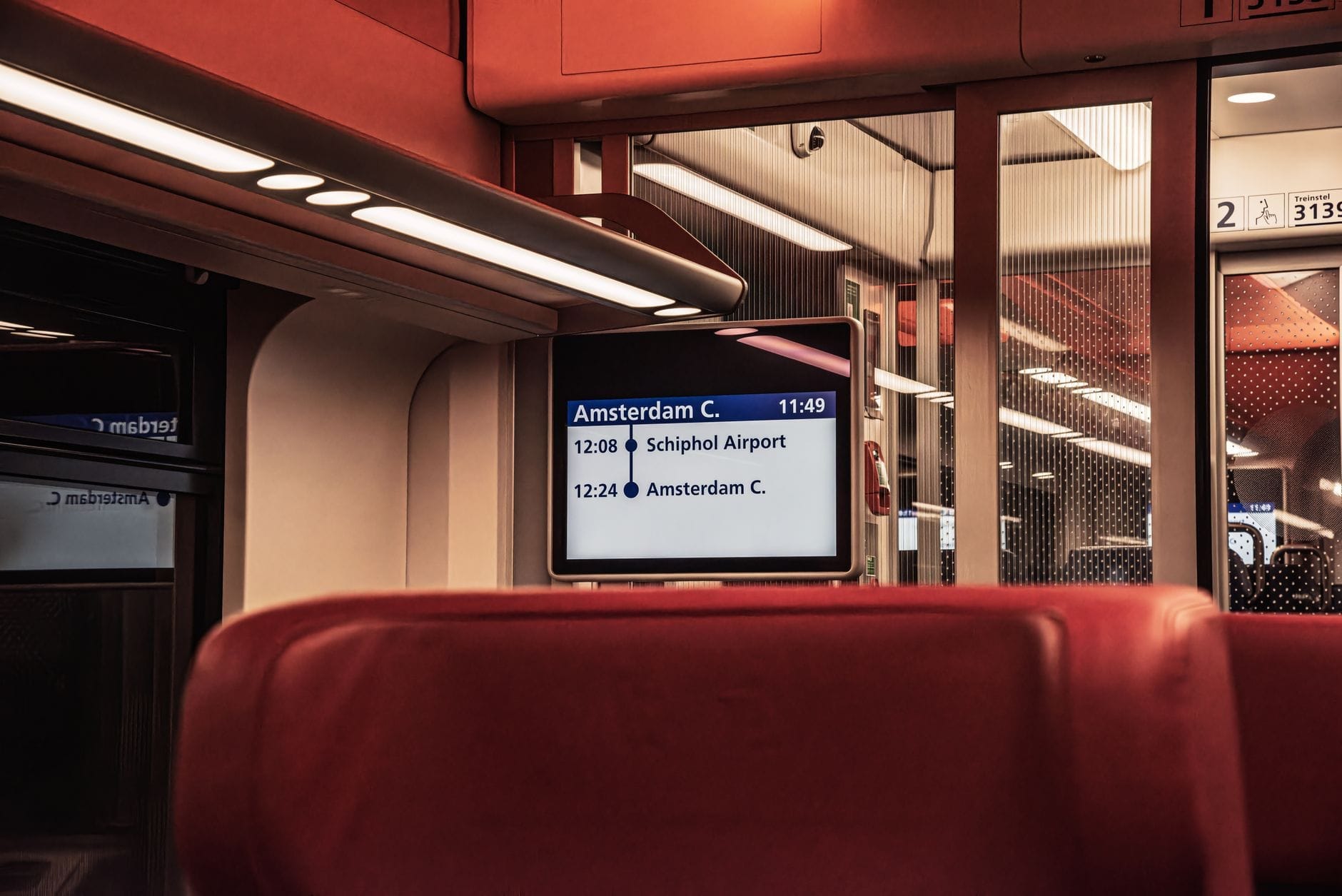
Amsterdam Airport Schiphol (AMS) is located about 17 km south-west of the city centre in the municipality of Haarlemmermeer. It has its own train station, Schiphol Station, directly below the terminal. This makes the train the obvious first choice for almost every traveller.
The direct train from Schiphol to Amsterdam Centraal runs multiple times per hour throughout the day and takes around 15 to 20 minutes. A standard single ticket costs around €5–6 depending on how you buy it. Trains run on the NS network, so your GVB city pass does not cover this leg. You'll need a separate NS ticket. For more detail on arrivals, connections, and what to expect at the airport itself, the Amsterdam Airport guide covers the full arrival process.
- Train (recommended) Schiphol Station to Amsterdam Centraal. Around 15-20 minutes, departing multiple times per hour. Buy tickets at NS machines or via the NS app. Around €5–6 per person.
- Bus Airport express buses (including night services when trains are less frequent) connect Schiphol with the city centre and key districts. Slower than the train but useful for specific destinations or late-night arrivals.
- Taxi / Ride-hailing Uber and Bolt operate from Schiphol. Expect to pay €30–50+ to the city centre depending on traffic, time of day, and surge pricing. Legitimate taxis are available at designated ranks outside arrivals.
- Private transfer Fixed-price private transfers can be booked in advance. More predictable than taxis, especially for groups with luggage or early morning flights.
⚠️ What to skip
Avoid unlicensed taxi touts inside the arrivals hall at Schiphol. They are common and frequently charge three to four times the standard rate. Always use the official taxi rank outside, or pre-book a licensed transfer or ride-hailing app.
Cycling in Amsterdam: The Real Way Locals Move
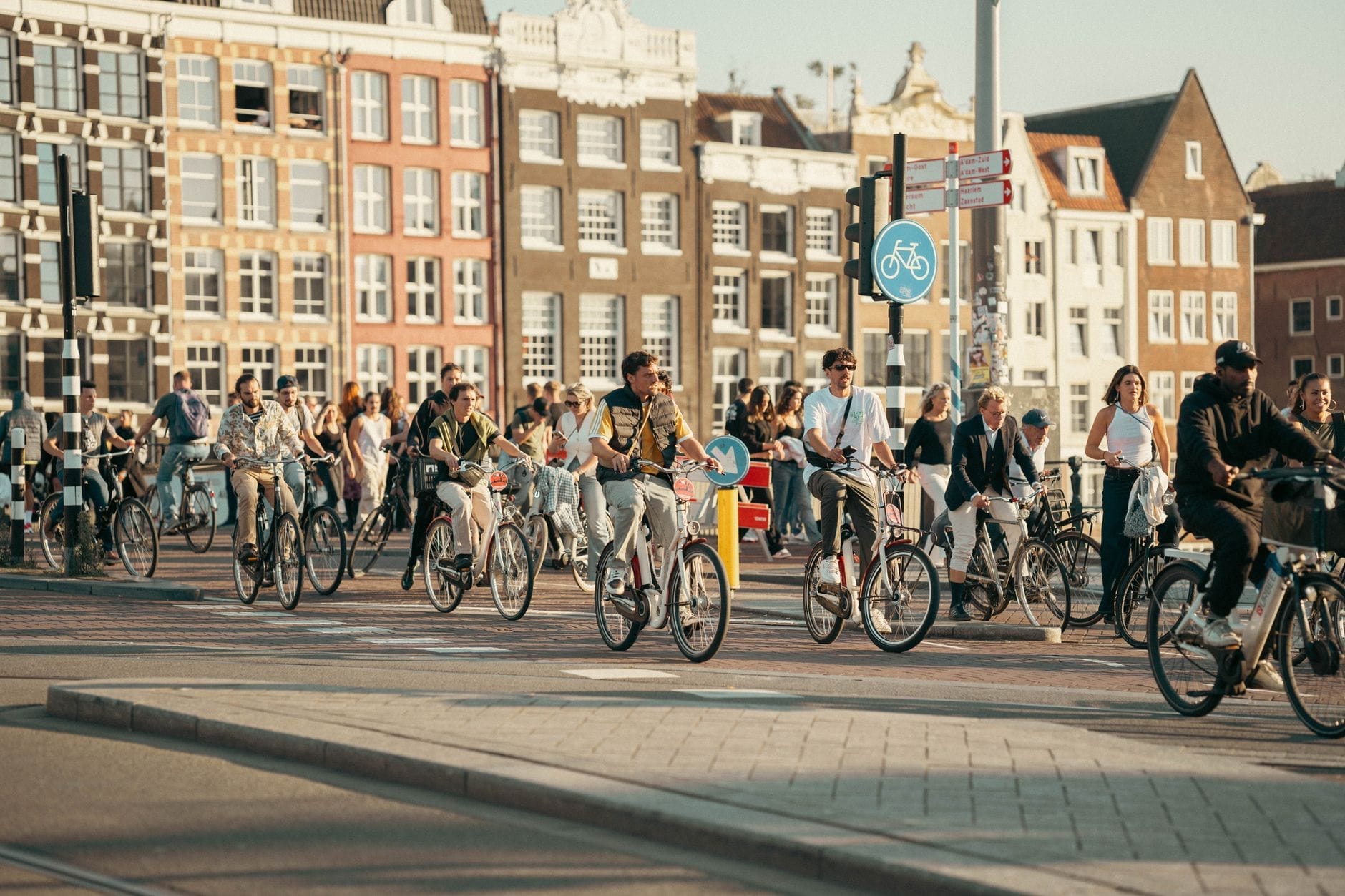
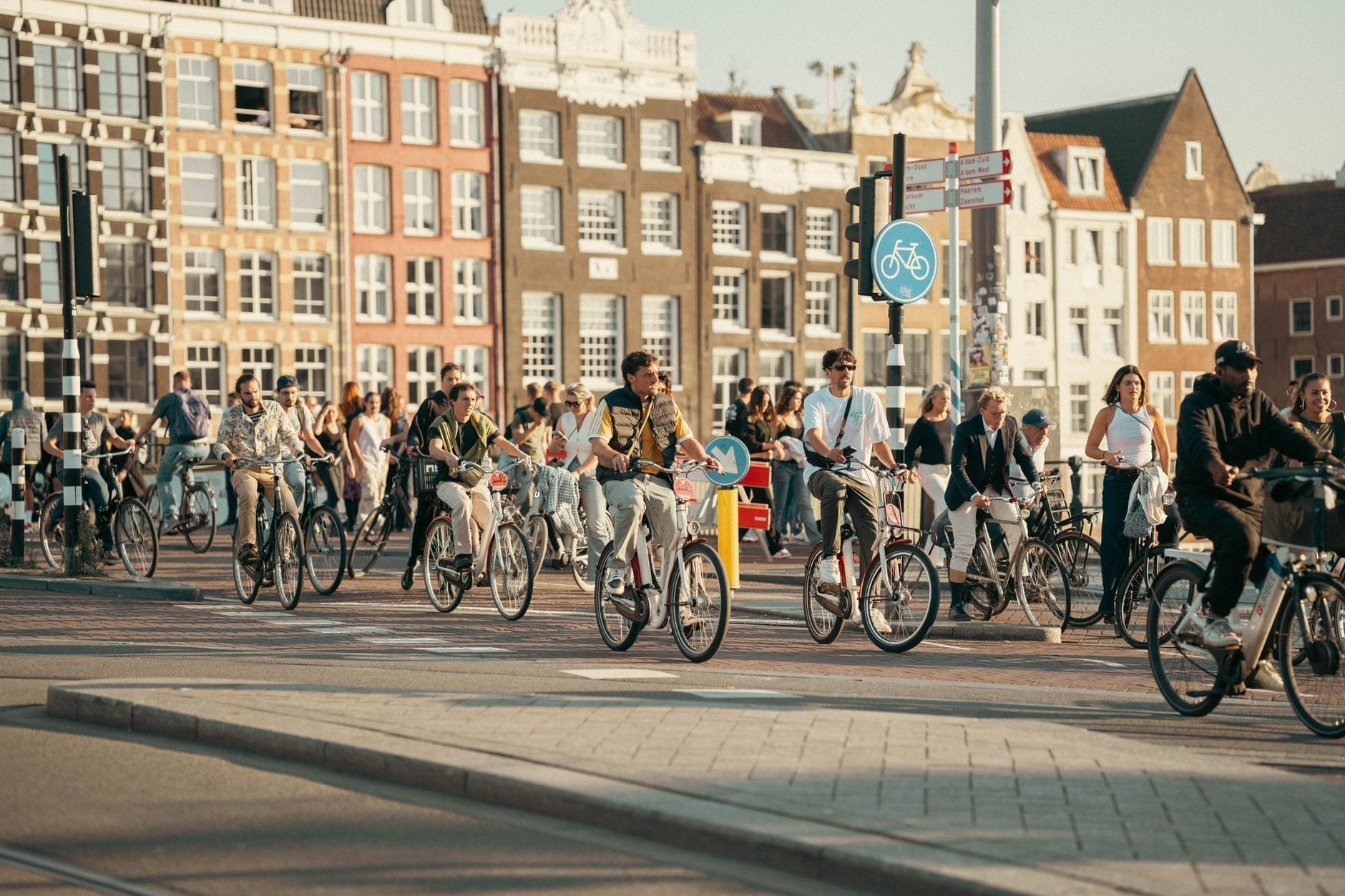
Amsterdam has more bikes than people. Cycling is not a tourist activity here, it is the dominant mode of daily transport for residents. The infrastructure reflects this: dedicated bike lanes run through virtually every part of the city, are separated from pedestrian pavements, and have their own traffic signals. If you want to understand how the city actually functions, getting on a bike is the answer. Our full cycling in Amsterdam guide goes deep on routes, rental options, and rules.
Rental bikes are widely available, with prices typically ranging from around €10–15 per day for a standard city bike from reputable shops. Avoid the cheapest rental stands near major tourist spots, as bike quality and lock security can be poor. MacBike, Rent A Bike, and several independent operators near Jordaan and Leidseplein are reliable choices. You will need a credit card deposit in most cases.
A critical rule that catches most visitors out: bike lanes are not optional footpaths. Walking or standing in a bike lane is genuinely dangerous and will earn you an angry bell, at minimum. Always walk on the pavement, cross at designated crossings, and look for bikes before stepping off a kerb. The volume and speed of cycle traffic, especially around Amsterdam Centraal and Damrak, is significantly higher than most visitors expect.
Taxis, Ride-Hailing, and When to Use Them
Taxis in Amsterdam are officially regulated and required to use meters. The standard tariff includes a flag-fall charge plus a per-kilometre rate, which makes short inner-city journeys relatively expensive compared to trams or walking. A 3 km trip within the centre can easily cost €15–20. For most daytime journeys, taxis make little sense when a tram covers the same route for €3–4 or you can walk it in 20 minutes.
Uber and Bolt both operate legally in Amsterdam and are generally cheaper and more predictable than street taxis. Bolt in particular tends to have lower base fares within the city. These apps are most useful for late-night journeys when trams are less frequent, for travel with heavy luggage or young children, or for reaching neighbourhoods poorly served by public transport. Surge pricing applies during events, Friday and Saturday nights, and major holidays including King's Day.
Free Ferries, Walking, and Other Ways to Get Around
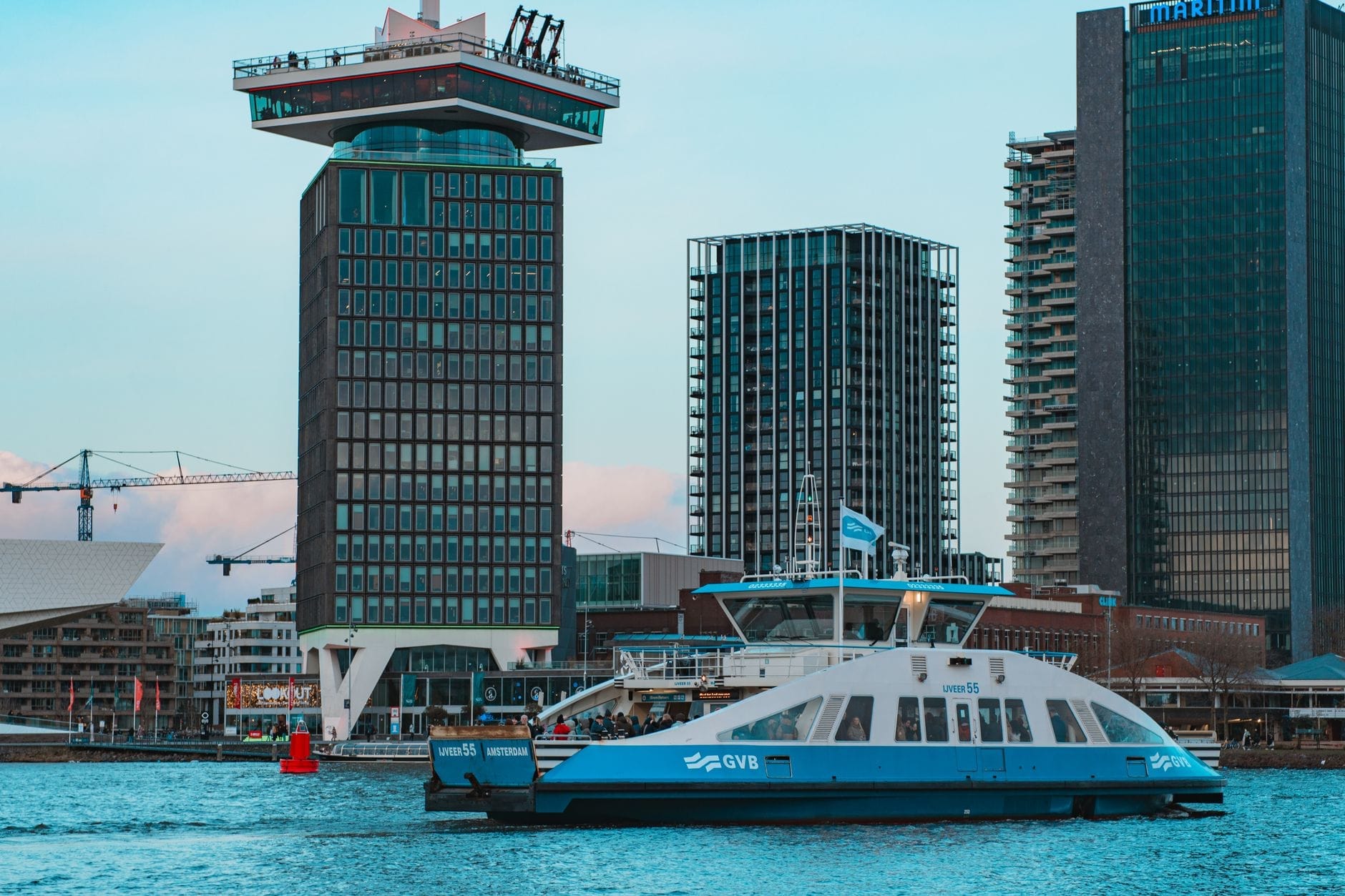
One of Amsterdam's most underused transport options is the free GVB ferry network across the IJ waterway. Several routes depart from the back of Amsterdam Centraal station and connect to Amsterdam-Noord in minutes. The ferries run 24 hours on some routes and carry bikes at no extra charge. If you're visiting the EYE Filmmuseum or the NDSM Wharf, the ferry is both the most practical and most scenic route.
For most visitors staying in the Canal Ring or Jordaan, walking covers a surprising amount. Amsterdam Centraal to the Rijksmuseum is about 3 km and walkable in under 40 minutes along canal-side streets. A canal cruise also doubles as a practical way to orient yourself and covers several key sights in a single loop.
Water taxis are available for private hire on the canals and IJ waterway, but at a premium. They're more of an experience than a transport solution. Canal bikes (pedal-powered boats) are rented near Leidseplein and Vondelpark and are popular with families, though they are slow and best treated as a leisure activity rather than a commuting option.
✨ Pro tip
Amsterdam's street layout, with its semicircular canal rings and irregular connecting streets, can disorient even experienced travellers. Download the GVB app and use offline maps before you arrive. The tram network map is far more useful for city-centre navigation than the metro schematic.
Seasonal and Practical Considerations
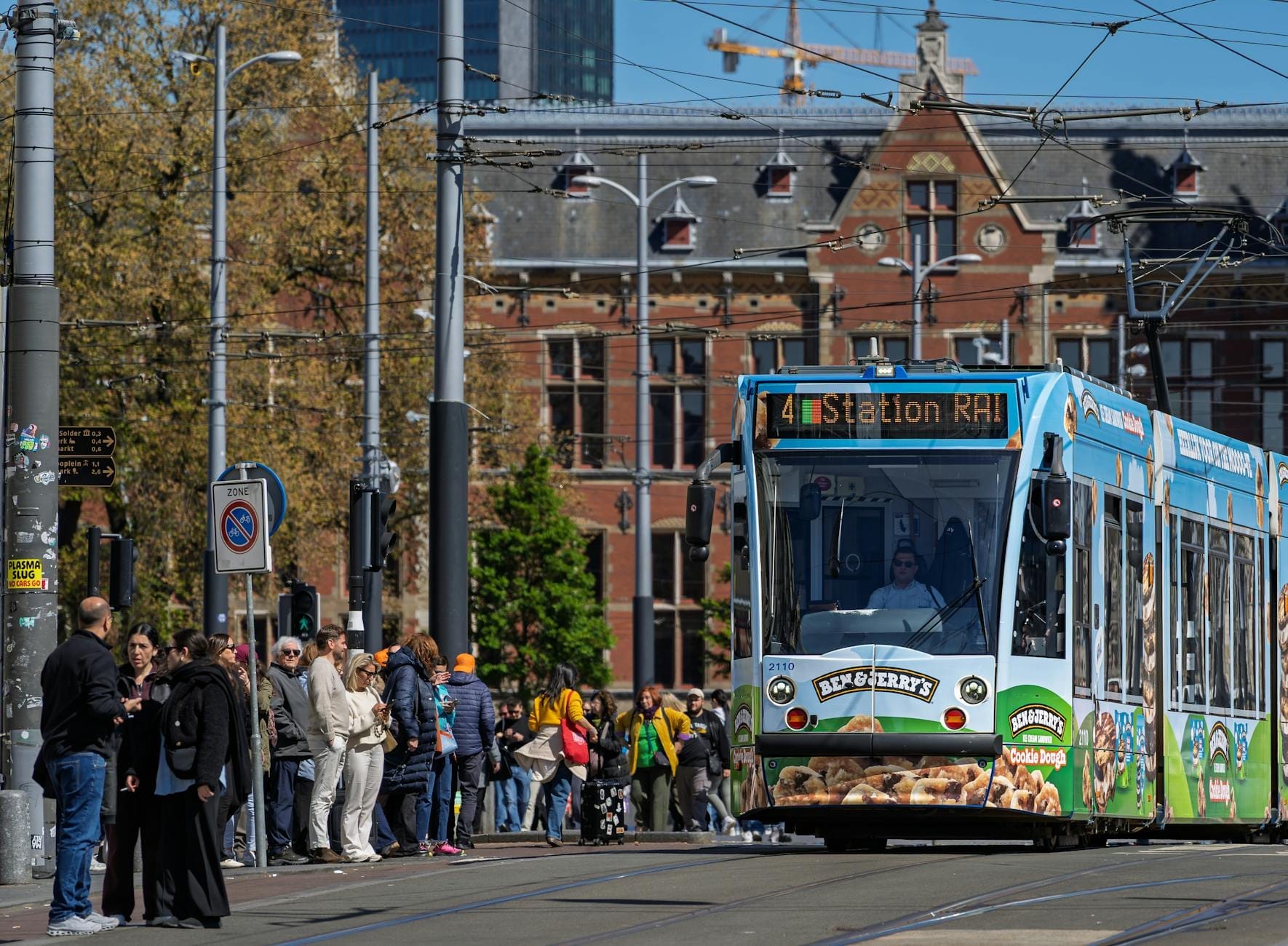
Transport patterns shift noticeably across the year. During peak tourist months (April through August), trams on key routes like lines 2 and 5 near Museumplein get very crowded in the middle of the day. Travelling before 9am or after 7pm makes a significant difference in comfort. Spring in Amsterdam also brings the highest overall visitor numbers, particularly around tulip season in April, which intensifies pressure on trams serving the south of the city.
During major events such as King's Day in late April and the Amsterdam Light Festival in winter, road closures and tram diversions are common. GVB publishes route changes on its website and app ahead of major events. Check before you travel during any public holiday or large-scale festival, as the city centre can become effectively pedestrianised for hours.
In winter, cycling remains practical but requires more caution on wet cobblestones and near canal edges. Rain is a year-round reality in Amsterdam, and a compact waterproof jacket is worth packing regardless of season. Transport infrastructure itself is largely weather-proof: trams and metros run in all conditions, and Schiphol cancellations are relatively rare outside of rare ice events.
FAQ
What is the cheapest way to get from Schiphol airport to Amsterdam city centre?
The NS train from Schiphol Station to Amsterdam Centraal is consistently the cheapest option, typically costing around €5–6 per person for a single ticket. The journey takes 15–20 minutes. Buying your ticket via the NS app or at the machines in the station avoids any service fees.
Do I need a separate ticket for the GVB metro, trams, and buses?
No. A single GVB pass covers all trams, metro lines, city buses, and the free IJ ferries within Amsterdam. You tap in and out on each vehicle. The pass does not cover NS trains, including the Schiphol airport route, which requires a separate NS ticket.
Is it safe to cycle in Amsterdam as a tourist?
Yes, with preparation. The infrastructure is excellent and drivers are used to cyclists. The main risk for visitors is unfamiliarity with local cycling etiquette: always use the bike lane, signal turns, don't stop abruptly, and lock your bike to a fixed point with a quality lock. Theft is common, and most rental shops provide decent locks included in the price.
Can I use Uber or Bolt in Amsterdam?
Yes. Both Uber and Bolt operate legally in Amsterdam and are generally reliable. Bolt often has lower base fares within the city. Ride-hailing is most useful for late nights or travel with luggage, but for daytime city trips, trams and bikes are almost always faster and cheaper.
Is the I Amsterdam City Card worth buying for transport?
It depends on your itinerary. The City Card includes unlimited GVB transport and entry to many major museums. If you plan to visit 3 or more paid attractions in a day alongside regular tram use, it can offer genuine savings. For a relaxed itinerary focused on free sights, canals, and markets, a standalone GVB day pass is the smarter choice.
Tickets & tours
Live prices and dates from our booking partner. If you book, we may earn a commission at no extra cost to you.
Planning a trip? Discover personalized activities with the Nomado app.