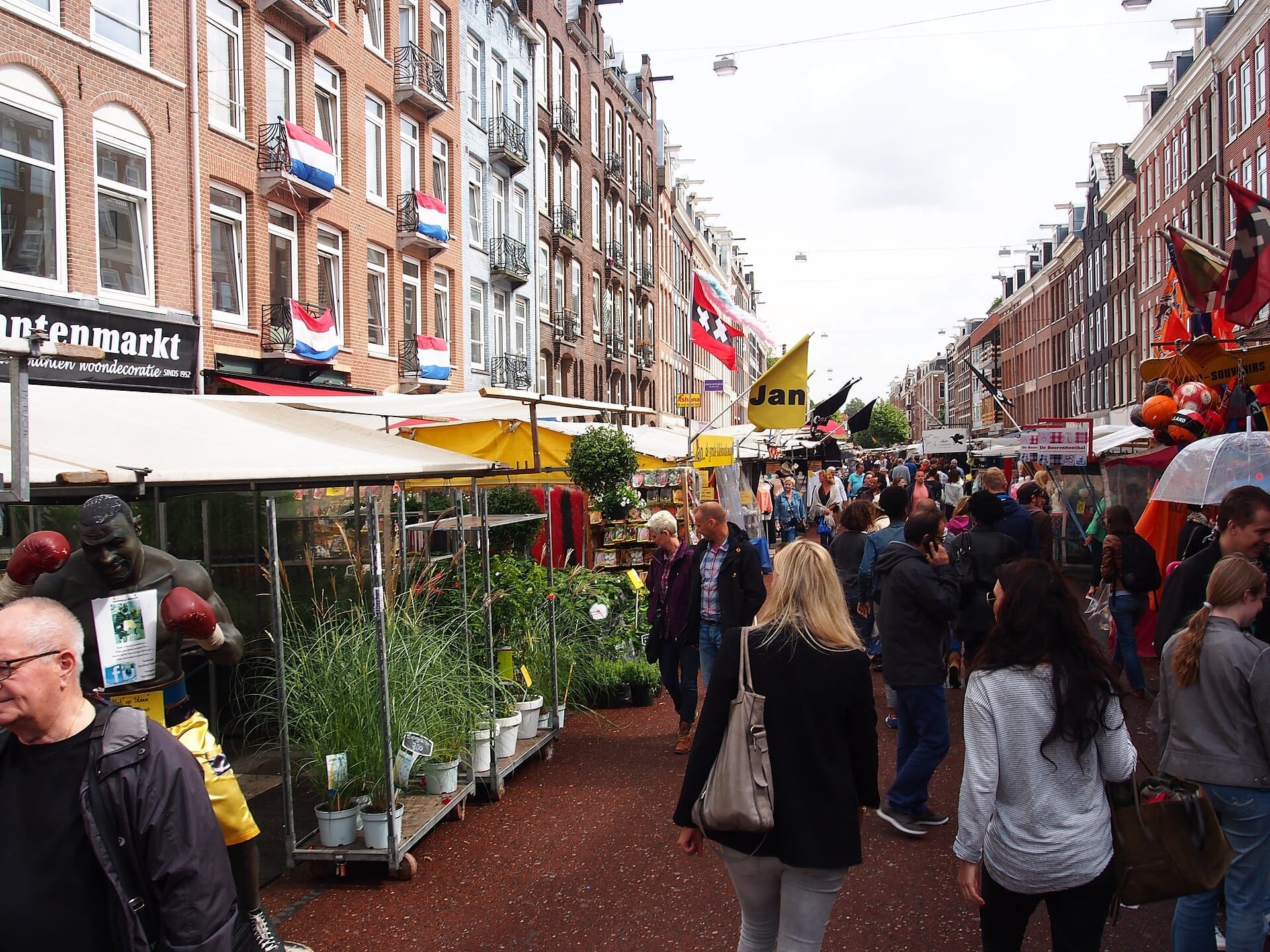
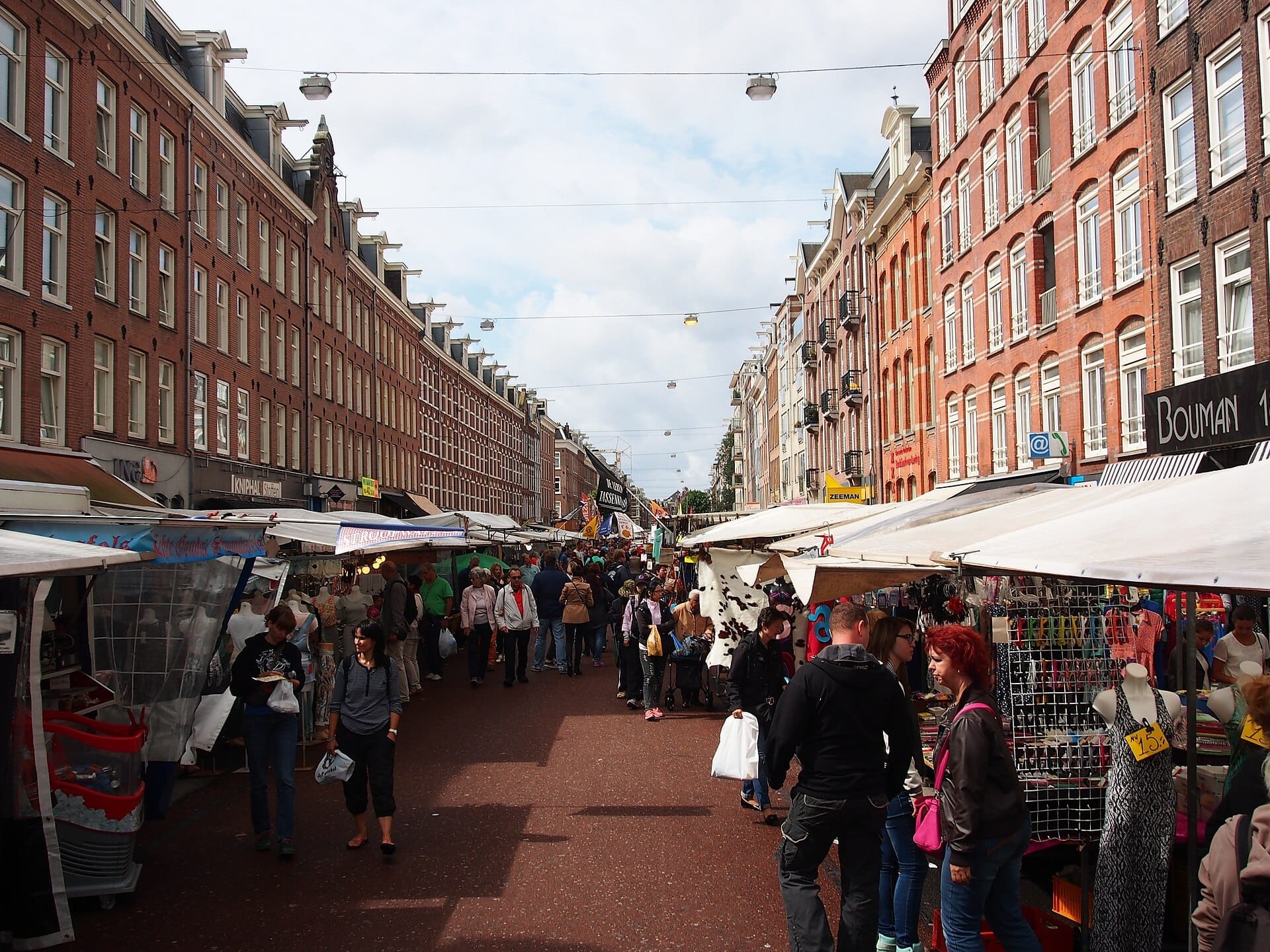
De Pijp sits just south of Amsterdam's canal ring and packs more daily life into its narrow streets than almost anywhere else in the city. From the long stalls of the Albert Cuyp Market to the art nouveau facades of Ceintuurbaan, it moves at a distinctly local rhythm while remaining easy to reach from the centre.
De Pijp is the neighborhood Amsterdam residents actually live in. Built in the late 19th century as working-class housing, it has evolved into one of the city's most culturally layered districts: a dense grid of streets lined with Indonesian warungs, Surinamese roti shops, specialty coffee bars, and independent boutiques, anchored by one of the largest and busiest street markets in the Netherlands.
Orientation
De Pijp sits in the Amsterdam-Zuid borough, directly south of the Singelgracht canal that marks the outer boundary of the historic canal ring. The Boerenwetering waterway forms its western edge and the Amstel river its eastern limit, making the neighborhood a compact, roughly rectangular grid that is easy to navigate on foot.
The neighborhood breaks into three sub-areas. Oude Pijp (Old Pijp) is the northernmost section, closest to Stadhouderskade and the Heineken Experience. This is where you find the Albert Cuyp Market, the densest concentration of cafés and bars, and the most tourist foot traffic. Nieuwe Pijp (New Pijp) stretches south of Ceintuurbaan and has a quieter, more purely residential character. Diamantbuurt sits at the southeastern edge, named for the diamond polishing industry that once employed many residents here.
De Pijp borders the Museumplein area to the west, meaning the Rijksmuseum and the Van Gogh Museum are a short walk away along Stadhouderskade. To the north, crossing the Singelgracht puts you directly into the southern reaches of the Canal Ring. De Pijp is not peripheral — it sits at the edge of Amsterdam's historic core, which is part of why it remains so well connected.
Character & Atmosphere
The streets of De Pijp are narrow by design. The neighborhood was built quickly in the 1880s and 1890s to absorb Amsterdam's growing working-class population, and the long, tight blocks were laid out for maximum housing density. Ferdinand Bolstraat, the main commercial spine running north to south, is wide enough for trams and cyclists, but most of the side streets barely fit two cyclists side by side. That compression gives De Pijp its particular energy: sound travels differently here, conversations spill out of open café doors, and the smell of street food from the market carries two blocks.
Mornings in De Pijp, especially on weekdays, belong to the people who live here. By 8am the bakeries on Van Woustraat are open, cyclists outnumber pedestrians, and the market stalls on Albert Cuypstraat are being set up in a controlled chaos of fold-out tables and overhead canopies. The light in autumn and winter is low and soft, catching the brick facades in a warm orange tone by mid-morning. In spring and summer, the streets stay bright until well past 9pm, and café terraces fill from early afternoon.
By midday, the Albert Cuyp Market is at full volume and the neighborhood shifts. Tourists mix with market regulars, queues form outside popular brunch spots on Ruysdaelkade and Gerard Douplein, and Ferdinand Bolstraat gets genuinely crowded. In the afternoon, the pace slows slightly: the southern end of the neighborhood around Sarphatipark fills with people reading on benches or lying in the grass. This is one of the few moments in De Pijp when it genuinely feels unhurried.
After dark, De Pijp becomes Amsterdam's most reliable neighborhood for an easy evening out. The bars around Gerard Douplein and on Ruysdaelkade draw a mostly local crowd in their twenties and thirties. It is not a late-night district in the way Leidseplein or Rembrandtplein can be, and there are no major clubs. The energy is more about staying at one place for three hours than moving between venues. It quiets considerably after midnight on weeknights.
💡 Local tip
Visit Albert Cuypstraat on a weekday morning if you want to actually shop the market without navigating weekend crowds. By 10am on a Saturday, the busiest sections near Ferdinand Bolstraat are already congested.
What to See & Do
The Albert Cuyp Market is the single most important reason to visit De Pijp. Running the full length of Albert Cuypstraat, it operates Monday through Saturday and is widely described as the country’s busiest daytime market. The stalls cover everything from raw herring and stroopwafels to fabrics, cheap electronics, and fresh-cut flowers. It is less a tourist market than a functional neighborhood institution — locals genuinely shop here for produce and household goods, which keeps the prices honest.
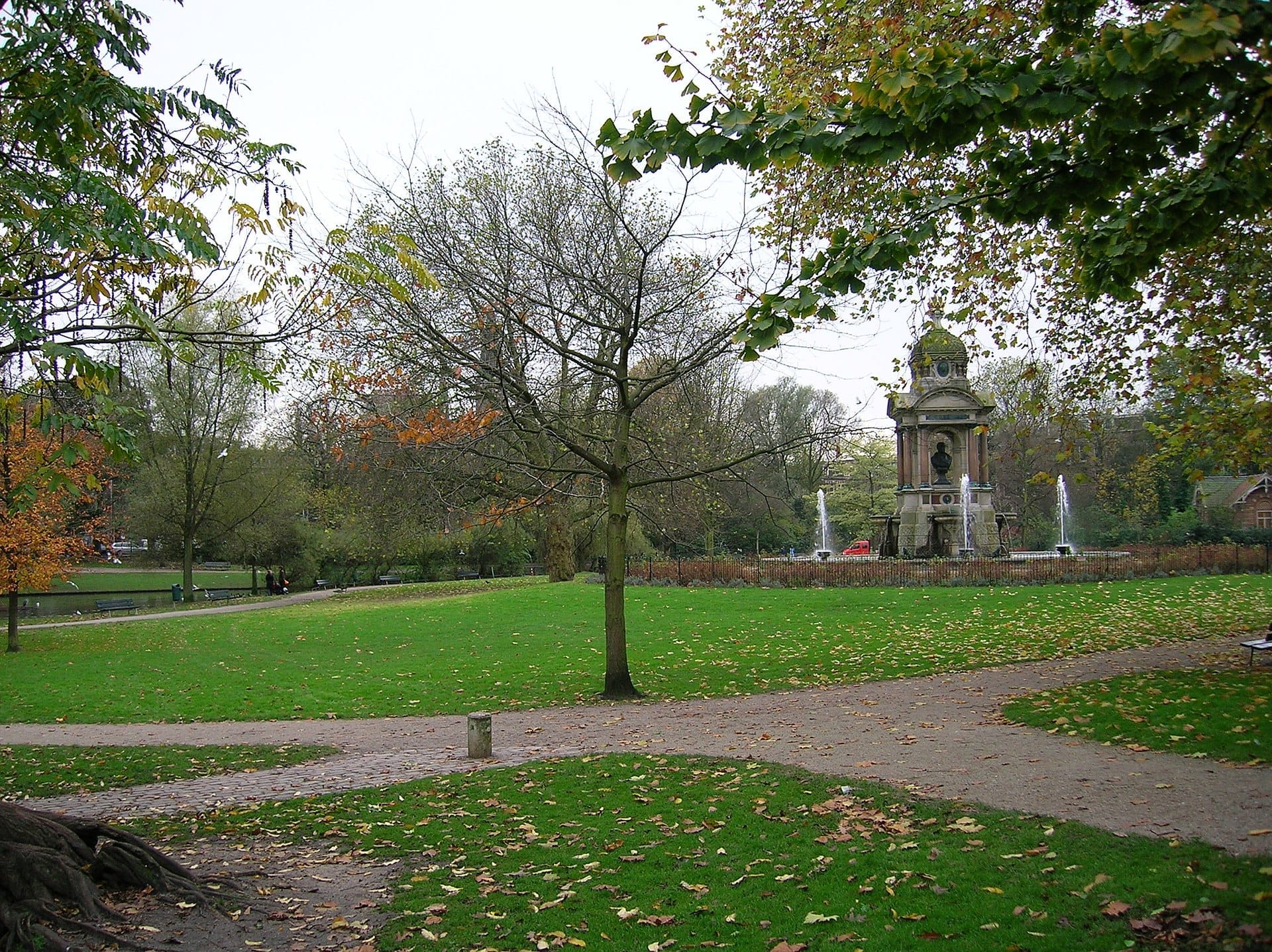
Sarphatipark sits at the quiet heart of De Pijp, just south of Albert Cuypstraat. It is a small, formally landscaped park with a central fountain and monument, mature trees, and enough lawn space to spread out. It lacks the size of Vondelpark but also lacks the crowds — on a weekday afternoon it is one of the genuinely peaceful spots in the inner city.
The architectural legacy of the Amsterdam School is concentrated in the Nieuwe Pijp section, particularly around the De Dageraad complex on P.L. Takstraat and Burgemeester Tellegenstraat. Built between 1919 and 1922 by architects Piet Kramer and Michel de Klerk, De Dageraad is a social housing project that reads more like sculpture than residential construction: curved brick facades, decorative towers, and integrated ironwork across the exterior. It is one of the finest examples of Amsterdam School architecture in the city and often overlooked because it sits south of the tourist circuit.
At the northern edge of the neighborhood, just inside Stadhouderskade, the former Heineken brewery has been converted into the Heineken Experience, a brand-focused brewery tour that draws large numbers of visitors, particularly in the afternoon. It adds foot traffic to the northern end of Ferdinand Bolstraat but has limited connection to the actual character of the neighborhood.
Albert Cuypstraat market (Mon–Sat, best on weekday mornings)
De Dageraad housing complex, P.L. Takstraat — Amsterdam School architecture
Sarphatipark for an afternoon break from the market streets
Ferdinand Bolstraat for independent shops and boutiques
Ruysdaelkade canal for a quieter, more scenic walk along the water
ℹ️ Good to know
De Pijp is a manageable walk from the Museumplein. Allow 10 minutes on foot from the Van Gogh Museum to the Albert Cuyp Market, making it easy to combine both in a single morning.
Eating & Drinking
De Pijp has one of the most diverse food scenes in Amsterdam, shaped by the neighborhood's long history as a home for immigrant communities. Surinamese, Indonesian, Turkish, and Moroccan influences sit alongside Dutch snack bars and modern European restaurants. For an overview of what Amsterdam's food culture looks like across the city, the Amsterdam food guide is a useful companion — but De Pijp deserves its own breakdown.
The market itself is a strong starting point for eating on a budget. Fresh stroopwafels made on-site, raw herring with onions and pickles, Dutch fries with a variety of sauces, and fresh fruit are all available for under a few euros. Indonesian and Surinamese food stalls appear throughout the market and provide a more substantial meal at street-food prices.
Brunch culture is deeply embedded in De Pijp. The streets around Gerard Douplein, on Ceintuurbaan, and along the side streets south of Albert Cuypstraat have a high concentration of cafés offering full breakfast and brunch menus until mid-afternoon. These places run from basic Dutch koffie with a broodje to full brunch plates with eggs, avocado, and sourdough. Expect queues on weekend mornings at the more popular spots.
Ferdinand Bolstraat has the widest variety of restaurants for dinner, ranging from casual Thai and Indian to Dutch and modern European. Ceintuurbaan, which crosses the neighborhood from east to west, adds more independent restaurants with slightly longer menus and sit-down service. Prices are noticeably lower here than in the Canal Ring or near Leidseplein, which is part of why De Pijp has become popular for evening meals among both locals and travelers who have done their research.
For bars, the area around Gerard Douplein, a small square midway along Albert Cuypstraat, is the informal center of De Pijp's drinking scene. The bars here are small, the terraces fill quickly on warm evenings, and the crowd skews local. Ruysdaelkade, which runs alongside a canal in the western part of the neighborhood, has several bars with canal-facing terraces that are worth finding.
Getting There & Around
De Pijp is served directly by the Noord-Zuidlijn metro (Line 52), which has a station named De Pijp on Ferdinand Bolstraat. This line connects directly to Amsterdam Centraal in under 10 minutes, making the neighborhood faster to reach by metro than much of the Canal Ring. The Noord-Zuidlijn also connects south to the RAI convention center and Station Zuid, where you can transfer toward Amstelstation. For a full breakdown of how to navigate Amsterdam's transit network, see the Amsterdam transit guide.
Several tram lines also serve the edges of the neighborhood. Tram 24 runs along Ferdinand Bolstraat and then Stadhouderskade near the northern boundary, connecting to Amsterdam Centraal via the canal ring. Tram 4 stops near Ceintuurbaan and runs north through Rembrandtplein toward the city centre. These tram routes are useful for reaching the Museumplein area from De Pijp without needing to use the metro.
Walking is the best way to explore De Pijp itself. The neighborhood is compact enough that crossing it on foot from north to south takes about 20 minutes. The grid layout means navigation is straightforward: Ferdinand Bolstraat runs the full north-south length and serves as an easy orientation point. Cycling is practical, and the neighborhood connects cleanly to Amsterdam's wider cycling infrastructure, with routes running along the Amstel toward Amstelpark to the south or north into the canal ring.
⚠️ What to skip
Albert Cuypstraat and Ferdinand Bolstraat are closed to through traffic during market hours, which can complicate taxi and ride-share drop-offs. Ask to be dropped on Stadhouderskade or Ceintuurbaan and walk in from either end.
Where to Stay
De Pijp has become one of the more appealing areas to stay in Amsterdam for travelers who want proximity to the centre without paying Canal Ring prices or tolerating the noise levels of De Wallen. For a broader look at the city's accommodation landscape, the Amsterdam neighborhoods guide compares all the main options.
The northern section of De Pijp, closest to Stadhouderskade and the Heineken Experience, has the highest concentration of hotels and guesthouses. This area is best for travelers who want walkable access to both the market and Museumplein. The downside is that Ferdinand Bolstraat and the streets immediately surrounding Albert Cuypstraat can be noisy on weekday mornings when the market sets up and on weekend evenings when the bars are full.
The Nieuwe Pijp area, south of Ceintuurbaan, is quieter and more residential. Accommodation options are fewer here, but for travelers who prioritize a calm environment and do not mind a 5-10 minute walk to the market and metro, it offers a more authentic experience of the neighborhood's daily rhythms. Apartment rentals are common throughout De Pijp, and for stays of more than a few nights, this area works well as a genuine base for exploring Amsterdam.
De Pijp suits independent travelers, couples, and anyone who values good food access and neighborhood character over a central postcode. It is less suited to visitors whose main priority is being within walking distance of the major canal ring sights at all hours, though the metro connection makes that a minor inconvenience at most.
Honest Assessment
De Pijp is not flawless. The Albert Cuyp Market draws significant tourist numbers, and on Saturday afternoons the northern end of the neighborhood feels crowded in a way that can undermine the local character that makes it worth visiting. Ferdinand Bolstraat, for all its commercial energy, has also attracted chain cafés and tourist-oriented shops alongside the independent businesses, particularly in the blocks closest to Stadhouderskade.
The Heineken Experience at the northern edge generates a distinctive crowd in the early afternoon: large tour groups, stag parties, and organized outings. This energy bleeds into the immediate surrounding streets and is worth factoring in if you are planning to explore that end of the neighborhood between noon and 4pm.
For travelers comparing neighborhoods, De Pijp sits between the polished residential quiet of Oud-Zuid to the west and the more unfiltered energy of the eastern districts. It is a neighborhood that rewards visitors who move at a walking pace and eat at street level, and it works particularly well as part of a longer stay in Amsterdam rather than a single-day detour. If your interest runs toward markets, street food, and architecture from the Amsterdam School period, De Pijp is worth centering your visit around.
TL;DR
De Pijp is Amsterdam's most culturally layered inner-city neighborhood, built in the 1880s as working-class housing and now home to one of the city's best food and market scenes.
The Albert Cuyp Market is the neighborhood's anchor: visit on a weekday morning for the best experience without weekend crowds.
Metro Line 52 (De Pijp station) connects the neighborhood to Amsterdam Centraal in under 10 minutes, making it one of the best-connected areas outside the historic centre.
The De Dageraad housing complex in Nieuwe Pijp is among the finest examples of Amsterdam School architecture in the city and is largely overlooked by mainstream tourist routes.
Best suited to independent travelers, food-focused visitors, and anyone who wants a local residential base close to the Museumplein museums — less ideal for visitors who want to be steps from the Canal Ring at all times.
Two days in Amsterdam is enough to hit the genuine highlights without feeling rushed, if you plan smart. This itinerary covers the Rijksmuseum, Van Gogh Museum, Anne Frank House, canal cruises, and the best neighborhoods, with real pricing, booking warnings, and insider logistics so you don't waste a single hour.
Amsterdam Airport Schiphol (AMS) is one of Europe's largest and busiest international hubs, sitting just 9 km southwest of the city centre. This guide covers the airport layout, how to get into Amsterdam, security rules, facilities, and what to expect at peak times.
Amsterdam's architecture spans four centuries of ambition, from the UNESCO-listed 17th-century canal belt to the expressive social housing of the Amsterdam School and the bold contemporary buildings reshaping the city's waterfront. This guide breaks down what to look for, where to find it, and how to explore it without wasting time.
Amsterdam's 165 canals form a UNESCO World Heritage network stretching over 100 km through the city. This guide cuts through the noise to tell you exactly which type of canal cruise fits your trip, what each operator actually delivers, and when to go to avoid the crowds.
Amsterdam's Canal Ring is one of Europe's most ambitious feats of urban planning, a UNESCO World Heritage Site built during the Dutch Golden Age. This guide covers the history, the three main canals, how to explore by boat or on foot, seasonal conditions, and straightforward advice on what's worth your time.
The I Amsterdam City Card promises access to 70+ museums, unlimited trams and buses, a canal cruise, and a day's bike rental in one timed pass. Whether it actually saves you money depends entirely on how you plan to spend your days. This guide breaks down the real costs, what's excluded, and who should skip it.
Amsterdam's coffeeshops are unlike anything else in Europe, but they come with rules, limits, and legal nuances most visitors don't fully understand. This guide breaks down exactly how they work, what to expect inside, what you can legally do outside, and how to avoid the most common mistakes.
Amsterdam is one of Europe's most naturally romantic cities, with UNESCO-listed canals, world-class museums, and neighbourhoods designed for slow exploration. This guide covers the best experiences for couples, with practical advice on costs, booking, and timing.
Amsterdam rewards those who look beyond the Rijksmuseum and Anne Frank House. From a secret medieval courtyard to a craft brewery inside a working windmill, these off-the-beaten-path experiences reveal a city that most visitors never see.
October is one of Amsterdam's most interesting months to visit, split between a quieter shoulder season and one of the world's biggest electronic music events. This guide covers the Amsterdam Dance Event, what the weather actually looks like, and how to make the most of the city in autumn.
Spring is Amsterdam's most celebrated season, anchored by tulip fields, canal-side festivals, and the city-wide party of King's Day on April 27. This guide covers everything from bloom timing and Keukenhof logistics to what the weather actually looks like and which spring experiences are worth your time.
Amsterdam transforms in winter into one of Europe's most atmospheric cold-weather destinations. From the iconic Amsterdam Light Festival illuminating the canals to Christmas markets and cozy brown cafes, this guide covers everything you need to plan a rewarding winter visit.
Three days is enough time to hit Amsterdam's heavyweight museums, explore its most rewarding neighborhoods, and get out on the canals — if you plan it right. This guide breaks it all down day by day, with practical advice on booking, passes, and what to skip.
King's Day (Koningsdag) is the biggest street party in the Netherlands, and Amsterdam is its epicentre. This guide covers the full schedule, how to navigate crowds, where to find the best vrijmarkt stalls, and practical tips that make the difference between an unforgettable day and a frustrating one.
The Amsterdam Light Festival transforms the city's historic canals into an open-air gallery of illuminated art installations every winter. This guide covers the 2025-2026 edition dates, both routes, ticket prices, crowd patterns, and what first-timers consistently get wrong.
Amsterdam's markets are where the city reveals itself: locals haggling over vintage finds, stroopwafels fresh off the iron, tulip bulbs stacked in canal-side barges. This guide covers the best markets in Amsterdam across every category, from daily street markets to monthly flea market events.
Amsterdam's nightlife runs deeper than the Red Light District. This guide breaks down the best bars, clubs, and late-night experiences by neighborhood, with practical advice on tickets, timing, and where locals actually go.
Amsterdam has a reputation for being expensive, but careful planning cuts costs dramatically. This guide covers real 2026 price benchmarks, the best free experiences, transport passes, and the smartest times to visit — so you can see the city properly without draining your account.
Amsterdam is one of Europe's safest cities, but tourists are regularly caught out by petty theft, clever scams, and bike-related mishaps. This guide covers everything you need to know: how to spot fake police, navigate 400 km of cycle paths, use public transport correctly, and stay sharp across different seasons.
Amsterdam rewards shoppers who go beyond the souvenir shops. From the Albert Cuypmarkt in De Pijp to the boutique-lined streets of the Jordaan, this guide covers the city's best markets, shopping streets, and independent stores — with practical hours, clear assessments, and local context.
Amsterdam is one of Europe's most rewarding solo destinations: compact, English-friendly, and full of world-class culture. This guide covers everything you need to know before you go, from staying safe and getting around to the best activities and how to book them without the stress.
The direct ICE train from Amsterdam Centraal to Berlin Hbf takes about 5 hours 51 minutes and costs as little as €37.90 booked in advance. This guide covers every route option, real price ranges, booking platforms, and what to expect on board.
The Amsterdam to Brussels train is one of Europe's most convenient city-to-city rail connections. This guide covers train types, realistic prices, schedules, booking platforms, and what to expect on the day of travel.
The Eurostar connects Amsterdam Centraal to London St Pancras in around 4 hours 10 minutes, making it one of the most practical city-centre-to-city-centre journeys in Europe. This guide covers fares, booking windows, check-in procedures, and the key differences between direct and indirect routes.
The Amsterdam to Paris train journey takes around 3 hours 20 minutes on the Eurostar high-speed service. This guide covers fares, booking strategy, seat classes, what the route actually looks like, and the practical details that save you money and hassle.
Tulip season near Amsterdam runs from late March to mid-May, with peak bloom in the surrounding fields from roughly April 10 to 25. This guide covers the exact timing, top locations, transport options, common misconceptions, and practical tips to make the most of one of the Netherlands' most spectacular seasonal events.
Amsterdam rewards walkers more than almost any city in Europe. This guide covers the best guided tours, self-guided routes, and on-foot highlights across the city's most rewarding neighborhoods, from the medieval center to the creative enclaves of Amsterdam-Noord.
Amsterdam is a great city for families, with world-class science museums, a historic zoo, free parks, and canal cruises designed for children. This guide covers the best attractions, practical logistics, clear pricing, and seasonal advice to help you plan a smooth trip with kids of any age.
Amsterdam has one of the highest concentrations of world-class museums of any city in Europe. This guide covers the essential art, history, science, and specialist museums, with practical advice on booking, passes, and how to make the most of each visit.
Amsterdam rewards visitors year-round, but when you go shapes everything from hotel rates to what you can actually see. This month-by-month guide breaks down weather patterns, crowd levels, prices, and key events so you can pick the timing that suits your trip.
Amsterdam has around 400 km of dedicated bicycle paths and more bikes than residents. This guide covers exactly how to rent a bike, what it costs, the rules you need to know, where to park safely, and which routes are worth your time — whether you're riding through the canals or heading out to the countryside.
Amsterdam is an extraordinary city, but the Netherlands surrounding it rewards exploration just as much. These are the best day trips from Amsterdam, from the tulip gardens of Keukenhof to the Gothic streets of Haarlem, organized by how you want to spend your time.
Amsterdam rewards travelers who plan smartly. From free ferry rides to Noord and rooftop views from NEMO to world-class street art at NDSM, the city offers a surprising range of genuinely free experiences. This guide covers the best of them.
Amsterdam rewards visitors who understand how it moves. This guide covers every transport option in the city, from GVB trams and the metro to bike rentals and Schiphol airport transfers, with practical advice on costs, passes, and what to skip.
Amsterdam rewards visitors who look beyond the obvious. This guide covers the top things to do in Amsterdam across every interest and budget, from world-class museums and canal cruises to neighborhood markets and cross-IJ adventures, with practical advice on timing, booking, and what is worth your time.
Amsterdam is the capital of the Netherlands and one of Europe's most recognizable cities, famous for its UNESCO-listed canal ring, Rijksmuseum, Anne Frank House, cycling culture, and tolerant social policies. This guide breaks down exactly what makes Amsterdam distinctive, with practical details for planning your visit.
Amsterdam's food scene runs deeper than cheese and fries. This guide covers the essential Dutch dishes to try, where to find them across the city, seasonal specialties, and practical advice on what's worth your appetite and what isn't.
Choosing where to stay in Amsterdam shapes your entire trip. This guide breaks down the best neighborhoods by travel style, covers what each area actually costs, and cuts through the noise so you book the right hotel in the right location.