Sarphatipark: The Quiet, History-Laden Heart of De Pijp
Tucked into the residential streets of De Pijp, Sarphatipark is a free, English landscape-style urban park with a 12-metre monument, a small waterfall, and a wartime history that adds unexpected weight to a leisurely afternoon. It is the kind of place locals use daily and most tourists never find.
Quick Facts
- Location
- Sarphatipark, 1073 CP Amsterdam, De Pijp
- Getting There
- Tram 3 or 25 to Tweede van der Helstraat
- Time Needed
- 30–60 minutes
- Cost
- Free, no tickets required
- Best for
- Locals, picnickers, history seekers, families with young children
What Sarphatipark Actually Is
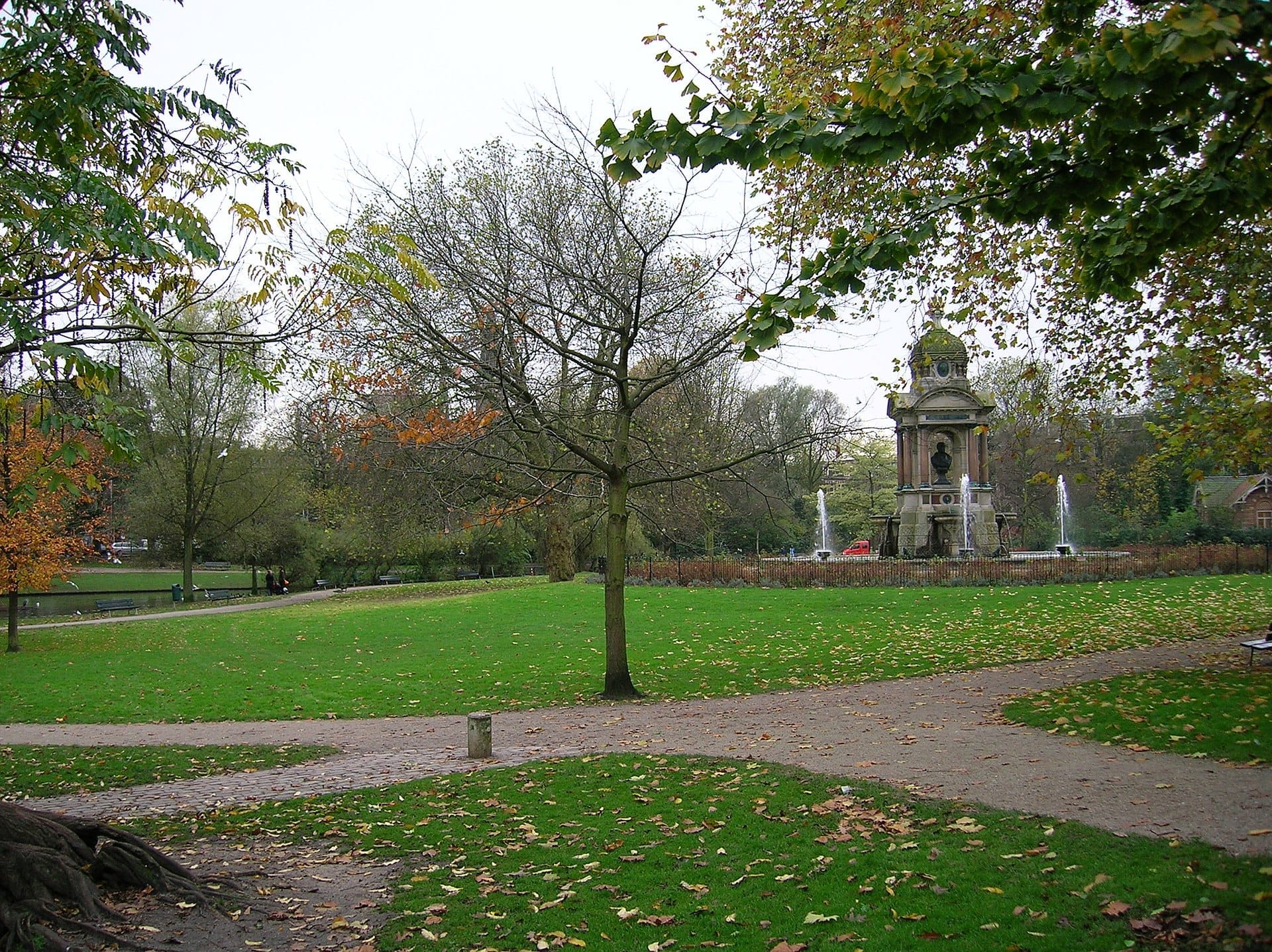
Sarphatipark is a small, well-kept municipal park in the heart of De Pijp, the dense inner-city neighborhood south of Amsterdam's canal ring. It covers roughly two city blocks, laid out in the English landscape style by architect Jacobus van Niftrik: gently curving paths, low bridges over narrow waterways, patches of manicured lawn, and a miniature waterfall that produces a faint background sound you notice mainly when foot traffic thins out.
For a park this size, it carries a surprising amount of history. The centrepiece is a 12-metre stone monument to Samuel Sarphati (1813–1866), a Portuguese-Jewish physician and social reformer who founded Amsterdam's first waste collection service, a flour factory, a bread company, and a credit bank, all in an era when the city was struggling with poverty and infrastructure collapse. The monument was completed in 1886 by sculptor Jacobus Roeland de Kruijff. Stand at its base and the scale is more imposing than the park's compact footprint suggests.
ℹ️ Good to know
The park is open 24 hours a day, every day of the year. There are no gates, no entry booths, and no admission charge. It is managed by the Municipality of Amsterdam as a standard public park.
A Name Erased and Restored: The Wartime History
In 1942, Nazi occupation authorities ordered the park's name changed to Bollandpark. The reason was straightforward: Samuel Sarphati was Jewish, and under occupation policy, public spaces named after Jewish figures were systematically renamed. The monument remained in place, but for three years the park existed under a name designed to erase the man it honoured.
The name Sarphatipark was restored after liberation. This detail is not prominently signposted in the park itself, which makes it easy to miss entirely. But it gives the space a different texture once you know it. The monument is not just decorative civic sculpture. It is a marker that was specifically targeted and then reclaimed.
For visitors combining this stop with a deeper examination of Amsterdam's wartime experience, the Dutch Resistance Museum and the Jewish Historical Museum are both within reasonable distance and provide essential context for understanding what the renaming of a park actually meant in practice.
Tickets & tours
Live prices and dates from our booking partner. If you book, we may earn a commission at no extra cost to you.
Gray Line Canal Cruise with snackbox & Heineken Experience
From 48 €Instant confirmationFree cancellationAmsterdam evening canal cruise
From 18 €Instant confirmationFree cancellationJewish Museum and Portuguese Synagogue entrance ticket
From 20 €Instant confirmationFree cancellationAdmission ticket for Artis Royal Zoo and Micropia
From 39 €Instant confirmationFree cancellation
How the Park Feels at Different Times of Day
Early mornings, roughly 7 to 9am, the park belongs to dog walkers and joggers. The paths are quiet, the light falls low across the grass, and the waterfall sound carries further than at any other hour. This is genuinely the best time to appreciate the park's design: without people picnicking on every square metre of lawn, the English landscape structure is easier to read.
Midday on weekdays, you will share the benches with office workers from the surrounding streets eating lunch. On weekends between April and September, the lawn fills up quickly and holds a particular De Pijp crowd: young families, groups of friends with supermarket bags, and students lying in the sun with books they may or may not be reading. The park is small enough that it feels social rather than anonymous, even when crowded.
Late afternoons in summer, the light catches the waterfall well from the eastern path. It is not a dramatic waterfall, but it photographs cleanly against the greenery with a longer exposure or in golden-hour light. By early evening, the crowd thins to dog walkers again and a handful of people sitting quietly on benches. The park does not have artificial lighting sufficient for lingering much after dark, and there is little reason to do so.
💡 Local tip
For photography, the monument photographs best in the morning when light comes from the east. The waterfall is most photogenic in late afternoon from the eastern path. Avoid overcast midday light, which flattens the monument's carved details.
The Surrounding De Pijp Context
Sarphatipark sits in the middle of De Pijp's residential grid. The streets immediately around it are lined with ground-floor cafes, small bakeries, and neighbourhood restaurants that are less tourist-oriented than those closer to the Albert Cuyp. This is useful: if you are hungry before or after the park, you will find better prices and more locals within three minutes' walk of the park gates than you will in the market street itself.
The Albert Cuyp Market, Amsterdam's largest street market, runs just a few blocks north of the park and is worth combining into the same visit. The market operates Monday through Saturday during the day and offers food, clothing, household goods, and street snacks at prices that reflect a working neighbourhood rather than a tourist corridor.
De Pijp as a whole rewards slow exploration. If you want to understand the neighbourhood more fully, the area's mix of early 20th-century rental housing, small independent shops, and dense street life is well covered in the De Pijp neighbourhood guide.
Getting There and Practical Notes
Tram lines 3 and 25 stop at Tweede van der Helstraat, which is the closest tram stop to the park's main access point. From Amsterdam Centraal, tram 3 takes approximately 15 to 20 minutes depending on traffic. The park is also about 20 minutes on foot from the Rijksmuseum, making it a natural extension of a nearby visit if you want to move away from the main tourist circuit.
The park's paths are paved, but the bridges and areas near the waterfall involve gentle slopes and possibly a few steps. Visitors with mobility considerations should note that specific step-free routes are not formally documented in published sources, so it is worth approaching cautiously and assessing on arrival. The park is not large, so it is easy to navigate around any sections that present difficulty.
There are no toilets inside the park itself. The nearest public facilities are in the surrounding cafes, most of which allow non-customers to use their facilities with a small purchase.
⚠️ What to skip
Amsterdam's autumn and spring months bring frequent rain. The park's grass paths near the waterfall can become muddy and slippery after rainfall. Wear shoes with grip if visiting between October and April.
Who This Park Is and Is Not For
Sarphatipark works well for people who want a pause in a real neighbourhood rather than a curated tourist experience. It suits families with young children who need outdoor space, travellers on a tight budget who want somewhere pleasant to sit without spending anything, and anyone interested in the intersection of Jewish history and Amsterdam's urban fabric.
It does not work well as a standalone destination if you are travelling from the other side of the city purely to see it. The park is small, there are no facilities or cafe pavilions inside, and the main monument is impressive in context but not a spectacle on its own. If you are already in De Pijp for the market or the neighbourhood's restaurants, Sarphatipark adds genuine texture to the visit. As a primary reason to cross the city, it does not merit the journey on its own terms.
Visitors planning a full day in this part of Amsterdam can structure time efficiently using the Amsterdam 3-day itinerary, which groups De Pijp attractions with nearby Museumplein stops to minimise transit time.
Insider Tips
- The monument to Samuel Sarphati is at its most readable as sculpture in the morning light. Walk all the way around the base to see the full relief work, which most visitors standing in front of it miss entirely.
- The cafes on the south side of the park along Ceintuurbaan are noticeably cheaper and less crowded than the Albert Cuyp strip a few blocks north. Good option for coffee before or after the park.
- If you visit on a Saturday morning, the Sarphatipark area is quiet while the Cuyp market is already at full noise a short walk away. The contrast between the two within a five-minute walk is a useful reminder of how layered De Pijp's street life actually is.
- The small waterfall is easy to miss if you enter from the north and stick to the main central path. Take the eastern perimeter path to find it.
- The park's history of renaming under Nazi occupation is not explained by any visible signage inside the park. If this is important to your visit, read about it before you arrive rather than expecting the park itself to explain it.
Who Is Sarphatipark For?
- Families with young children needing outdoor space in a safe, low-traffic setting
- Budget travellers looking for a free, pleasant place to sit and eat a market lunch
- History-focused visitors interested in Jewish Amsterdam and wartime urban history
- Photographers wanting a calm subject in morning or late-afternoon light
- Anyone already in De Pijp who wants a 30-minute break from the market crowds
Nearby Attractions
Other things to see while in De Pijp:
- Albert Cuyp Market
Running along Albert Cuypstraat in the heart of De Pijp since 1904, the Albert Cuyp Market is Amsterdam's largest and most attended outdoor market. With around 260 stalls selling everything from stroopwafels and raw herring to fabrics and cheap electronics, it offers a genuine cross-section of everyday Amsterdam life — and it costs nothing to walk through.
Planning a trip? Discover personalized activities with the Nomado app.