Albert Cuyp Market: Amsterdam's Largest Street Market
Running along Albert Cuypstraat in the heart of De Pijp since 1904, the Albert Cuyp Market is Amsterdam's largest and most attended outdoor market. With around 260 stalls selling everything from stroopwafels and raw herring to fabrics and cheap electronics, it offers a genuine cross-section of everyday Amsterdam life — and it costs nothing to walk through.
Quick Facts
- Location
- Albert Cuypstraat, 1073 BD Amsterdam, De Pijp
- Getting There
- Metro 52 to De Pijp; Trams 7, 16, 19, 24 nearby
- Time Needed
- 45 minutes to 2 hours
- Cost
- Free entry; food and goods vary by stall
- Best for
- Street food, people-watching, fresh produce, everyday Amsterdam atmosphere
- Official website
- albertcuyp-markt.amsterdam/?lang=en
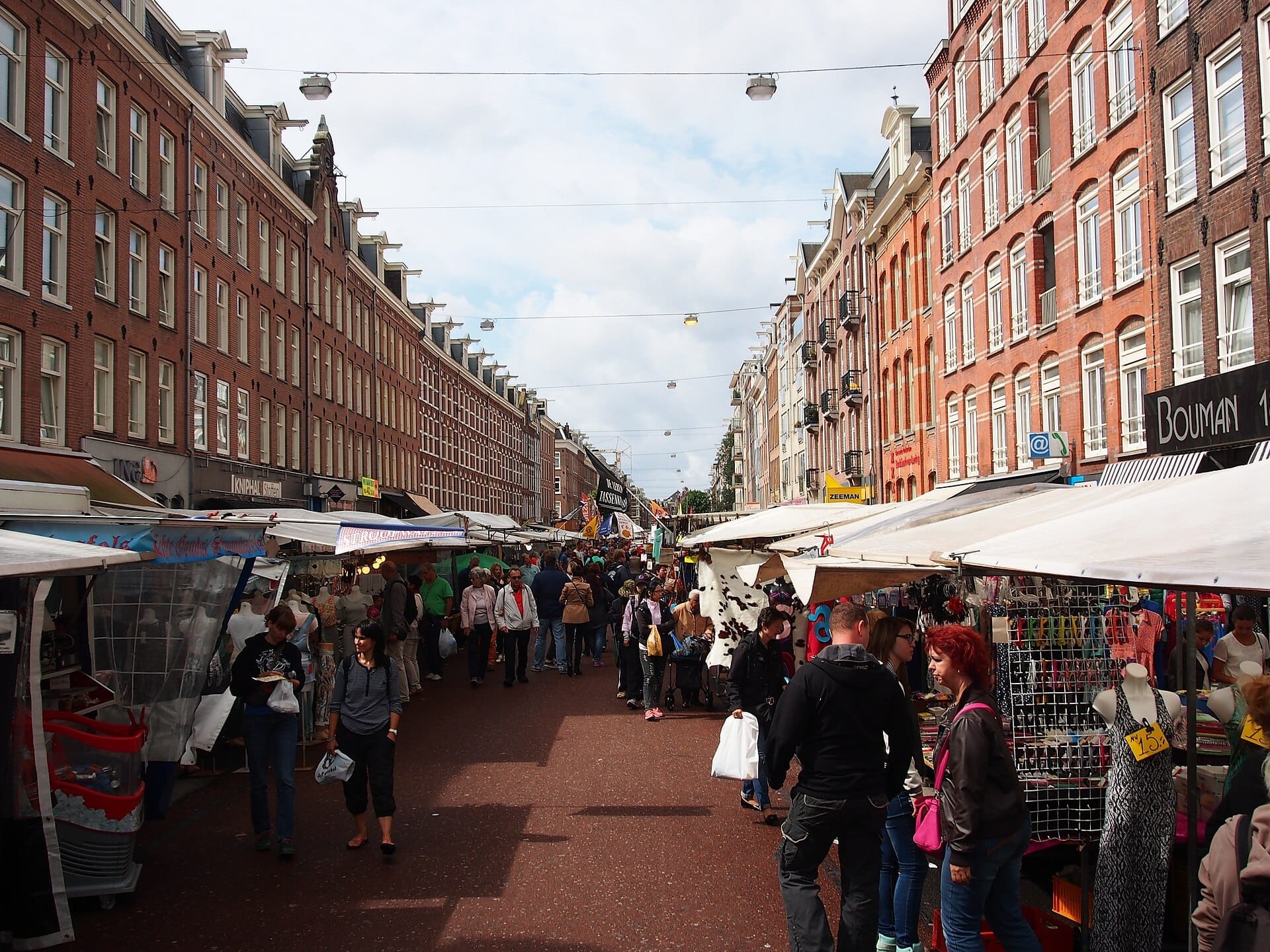
What the Albert Cuyp Market Actually Is
The Albert Cuypmarkt stretches along nearly the full length of Albert Cuypstraat, the main artery of De Pijp, for roughly 800 meters. On a busy weekday morning it holds around 260 stalls; some sources put the vendor count closer to 300 on peak days. Either way, it is the largest outdoor market in the Netherlands by attendance, and one of the few in Amsterdam that feels genuinely oriented toward local shoppers rather than tourists.
The stalls cover a wide and somewhat chaotic range: fresh fish, vegetables, wheels of cheese, bolts of fabric, discount clothing, phone accessories, flowers, herbs, olives, and the street snacks that make the whole walk worthwhile. The market operates Monday through Saturday from 09:00 to 17:00, though stalls begin packing up earlier in winter, often by 17:00. There is no admission fee of any kind.
💡 Local tip
Arrive between 10:00 and 11:30 on a weekday for the best balance of full stalls, reasonable crowds, and vendors in good spirits. Saturday afternoons between 13:00 and 16:00 are the most crowded stretch of the week — expect shoulder-to-shoulder foot traffic along the central section.
A Brief History: From 1905 to Now
The market opened in 1904 and became a daily fixture by 1912, growing alongside De Pijp itself, which was built in the second half of the 19th century as working-class housing for Amsterdam's expanding industrial workforce. The neighborhood's narrow streets and dense apartment blocks gave it a very different character from the grand canal houses to the north, and the market reflected that: practical, affordable, and serving people who needed to eat cheaply.
Over the following decades, De Pijp became one of Amsterdam's most ethnically mixed neighborhoods, and the market absorbed that diversity. Today you'll find Surinamese roti shops, Moroccan spice stalls, Indonesian snacks, and Turkish bread alongside Dutch stroopwafels and pickled herring. That layering of food traditions is one of the most honest reflections of what Amsterdam's inner city looks like today.
De Pijp is also home to the Sarphatipark, a small but carefully designed public garden just a few minutes' walk south of the market, worth including in the same visit if you want somewhere to sit after eating.
Tickets & tours
Live prices and dates from our booking partner. If you book, we may earn a commission at no extra cost to you.
Amsterdam food walk and tasting
From 72 €Instant confirmationFree cancellationGray Line Canal Cruise with snackbox & Heineken Experience
From 48 €Instant confirmationFree cancellationAmsterdam evening canal cruise
From 18 €Instant confirmationFree cancellationJewish Museum and Portuguese Synagogue entrance ticket
From 20 €Instant confirmationFree cancellation
How It Feels at Different Times of Day
Early mornings, around 09:00 to 09:30, the market is at its most functional. Vendors are still setting up, the street smells of cardboard and damp concrete, and the customers who are there are almost entirely local: older residents buying produce, restaurant workers sourcing ingredients, parents stopping before school runs. The noise level is low and the pace is unhurried.
By mid-morning the dynamic shifts. The herring stalls draw a queue, the stroopwafel vendor near the eastern end starts pulling fresh waffles off the iron, and the fish and chip smells begin drifting across the street. The light is often better at this hour too, with the low northern sun cutting between the apartment blocks and catching the produce displays in a way that photographers tend to notice.
Saturday afternoons bring a different kind of energy entirely. The central section of the street becomes slow-moving, the food stalls run out of popular items earlier than expected, and the surrounding cafes spill tables onto the pavement. It is not unpleasant, but it is genuinely crowded. If you find that kind of density draining, a Tuesday or Wednesday morning visit will give you effectively the same market with a fraction of the foot traffic.
⚠️ What to skip
The market is closed on Sundays. If your Amsterdam visit only covers a weekend, plan for Saturday. Many stalls also reduce stock noticeably after 16:00, so a late afternoon visit can feel thin.
What to Eat and Buy
Raw herring (haring) with raw onion and pickle is the canonical Dutch market snack, and the stalls here are among the more reliable places to try it in the city. The fish is cured rather than cooked, with a soft, briny texture and a much milder flavor than most first-timers expect. Order it chopped (gehakt) rather than whole if you want the easier eating experience.
Stroopwafels made to order are the other essential purchase. The version you buy here, warm from the iron with the caramel syrup still soft, is categorically different from the packaged version sold in supermarkets worldwide. The stall selling them is usually identifiable by smell alone before you can see it.
Beyond the snacks, the produce quality is generally good and priced below supermarket rates. The cheese stalls offer tastings without pressure, and the flower vendors toward the western end of the street tend to sell at lower prices than the more tourist-facing stalls near the Bloemenmarkt on the Singel.
If the market gives you an appetite for more of Amsterdam's food culture, the Amsterdam food guide covers where to find Dutch classics, Indonesian rijsttafel, and the city's best street eats beyond the market circuit.
Getting There and Getting Around
The most direct public transit option is Metro Line 52, which has a De Pijp station that deposits you about two minutes' walk from the eastern end of the market. Trams 7, 16, 19, and 24 also stop nearby on Ferdinand Bolstraat or Stadhouderskade, depending on direction. The walk from Leidseplein takes roughly 15 minutes through residential streets and is straightforward.
Cycling is practical but requires locking your bike before entering the market street, as the pedestrian density makes riding through inadvisable and, on busier days, genuinely difficult. Bike racks are available on the surrounding side streets. The market is on flat ground, which makes it manageable for most mobility levels, though the cobbled sections and unpredictable crowd gaps can be challenging for wheelchair users. No formal accessibility assessment from the market operators has been published.
If you are using the Amsterdam City Card for transit, it covers GVB trams and the metro, so the journey here is included.
Fitting It Into a Broader De Pijp Visit
The Albert Cuyp Market works well as the anchor point for a longer De Pijp morning. The neighborhood around it has a density of independent cafes, Indonesian and Surinamese restaurants, and small specialty food shops that reward wandering. Gerard Douplein, a small square one block north, is a local gathering point with a weekend farmers' presence.
The De Pijp neighborhood is also within easy walking distance of the museum quarter, so a morning at the market followed by an afternoon at the Rijksmuseum or Van Gogh Museum is one of Amsterdam's most practical and satisfying day structures.
One thing worth knowing: De Pijp has gentrified significantly over the past two decades. The market itself has remained relatively grounded, but the surrounding streets are now lined with cocktail bars, brunch spots, and design shops that cater to a very different demographic than the neighborhood's working-class origins. That contrast is part of what makes the area interesting, but it also means the market is one of the last places in De Pijp where the older, more mixed character of the neighborhood is still clearly visible.
ℹ️ Good to know
Photography is generally unproblematic at the stalls, but asking before pointing a camera at vendors or customers is both courteous and, in a market this local-facing, likely to get you better images. The light between 10:00 and 12:00 on clear mornings is best for produce and food stall shots.
Who This Market Is Not For
If you are looking for artisan, organic, or slow-food market experiences, the Albert Cuyp Market is not the right fit. The Noordermarkt on Saturday mornings and the Lindengracht Market on Saturdays cater more specifically to that kind of shopping. The Albert Cuyp is large, a bit noisy, and happily low-brow in the best sense: it is a working market that happens to be worth visiting, not a curated experience designed around visitors.
Travelers who find very large crowds uncomfortable, or who are visiting only on Sundays, will either need to adjust their expectations or choose one of the smaller neighborhood markets instead.
Insider Tips
- The stroopwafel stall makes them to order, and the warm version with soft caramel is the only version worth eating. Follow the smell rather than looking for a sign.
- Vendors on the eastern end of the market, closer to the metro exit, tend to be slightly more tourist-aware. If you want a more local shopping experience, walk toward the western half of the street.
- The cheese stalls offer free tastings without any obligation to buy. Aged Gouda (oud) and smoked varieties are the most interesting options for tasting on the spot.
- Bring cash. Many stalls still prefer cash, and the ATMs on Ferdinand Bolstraat can have queues on Saturday mornings.
- If you want to photograph the market without crowds in the frame, arrive at opening time (09:00) on a weekday. By 10:30, the street fills up and clear compositions become much harder to find.
Who Is Albert Cuyp Market For?
- First-time visitors wanting to see everyday Amsterdam beyond the tourist circuit
- Food-focused travelers looking to try Dutch street classics like haring and stroopwafels
- Budget travelers: the market is free to enter and food prices are low
- Families with children who can handle a busy street environment
- Photographers interested in documentary-style urban market imagery
Nearby Attractions
Other things to see while in De Pijp:
- Sarphatipark
Tucked into the residential streets of De Pijp, Sarphatipark is a free, English landscape-style urban park with a 12-metre monument, a small waterfall, and a wartime history that adds unexpected weight to a leisurely afternoon. It is the kind of place locals use daily and most tourists never find.
Planning a trip? Discover personalized activities with the Nomado app.