What Is Amsterdam Known For? 15 Things That Make the City Famous
Amsterdam is the capital of the Netherlands and one of Europe's most recognizable cities, famous for its UNESCO-listed canal ring, Rijksmuseum, Anne Frank House, cycling culture, and tolerant social policies. This guide breaks down exactly what makes Amsterdam distinctive, with practical details for planning your visit.
Tickets & tours
Live prices and dates from our booking partner. If you book, we may earn a commission at no extra cost to you.
TL;DR
- Amsterdam is famous for its 17th-century canal ring, a UNESCO World Heritage Site with roughly 165 canals stretching about 50 km — explore it properly with our Amsterdam canals guide.
- The city's three flagship museums — Rijksmuseum (€25), Van Gogh Museum (€32.50), and Anne Frank House (€16) — all require advance online booking and frequently sell out weeks ahead.
- More bicycles than residents: over 60% of Amsterdammers cycle daily, making this one of the most bike-centric cities on earth.
- Amsterdam is the constitutional capital of the Netherlands, though parliament and government sit in The Hague — a distinction most visitors don't know.
- Cannabis is tolerated under strict conditions, not fully legal — and many public spaces ban smoking entirely. See our Amsterdam coffee shop guide for accurate details.
The Canal Ring: Amsterdam's Most Iconic Feature
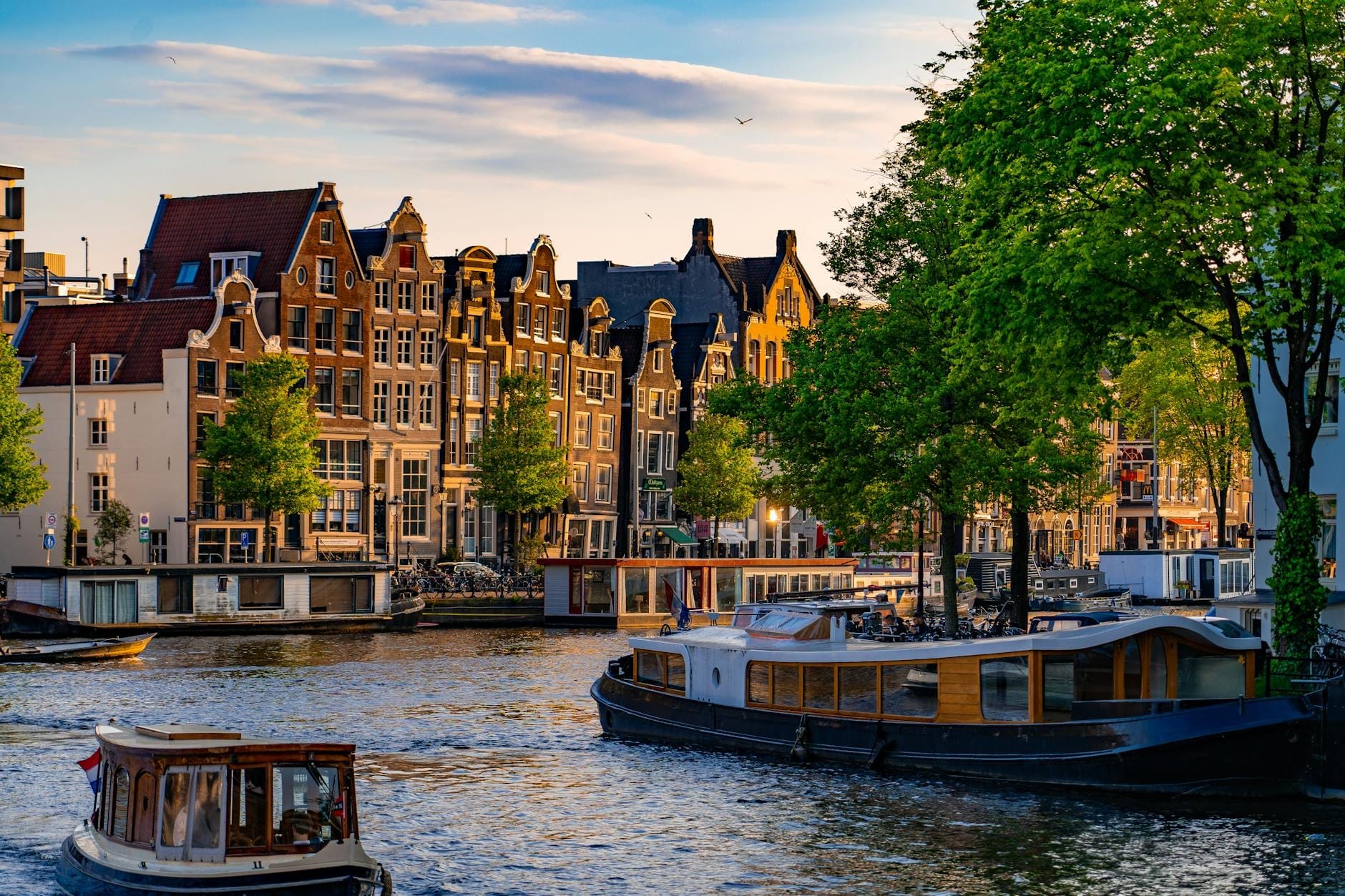
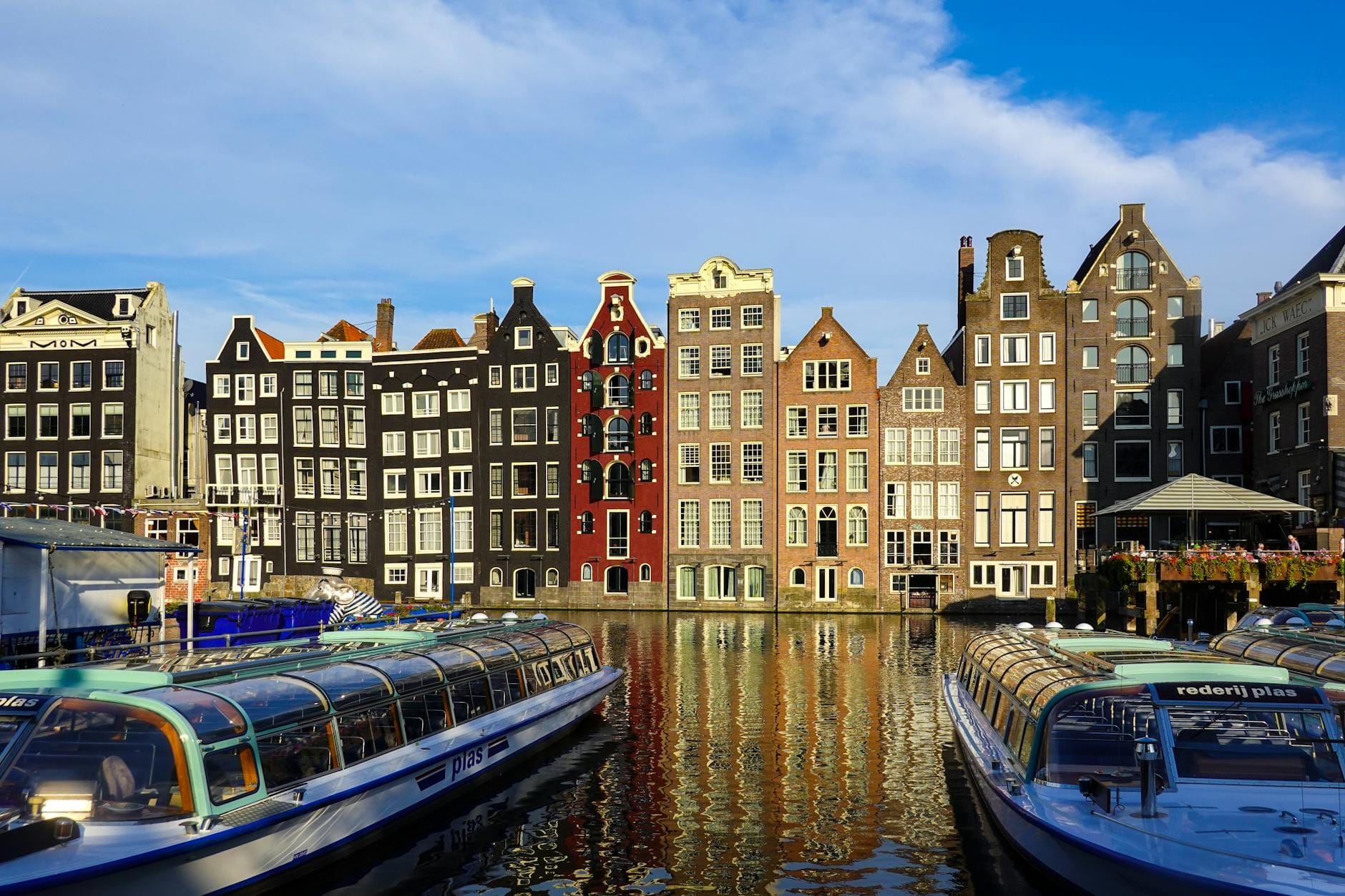
When people ask what Amsterdam is known for, the canals come up first — and for good reason. The Grachtengordel, or Canal Ring, was built during the Dutch Golden Age in the 17th century as a feat of urban engineering. The city expanded outward in concentric arcs, creating the horseshoe pattern of waterways that still defines Amsterdam today. UNESCO added it to the World Heritage List in 2010 for its 17th-century canal ring area inside the Singelgracht, recognizing its significance as one of the best-preserved planned urban expansions in history. For a deeper look at what makes this district so architecturally distinctive, the Amsterdam architecture guide is worth reading before your visit.
The numbers are striking: approximately 165 canals totaling around 100 km, crossed by over 1,200 bridges. The three main arcs — Herengracht, Keizersgracht, and Prinsengracht — each have their own character. Herengracht, the 'Gentlemen's Canal', was the most prestigious address in 17th-century Amsterdam. Today it still features some of the grandest canal houses in the city. The nickname 'Venice of the North' overstates the resemblance, but the canal-facing townhouses with their gabled facades are genuinely unlike anything else in Northern Europe.
💡 Local tip
The best times to photograph the canals are early morning (before 8am) when light is soft and crowds are minimal, or in the evening when the bridges are lit. Spring brings reflection of blossoming trees in the water — a significant visual bonus over summer visits.
World-Class Museums Concentrated in One City
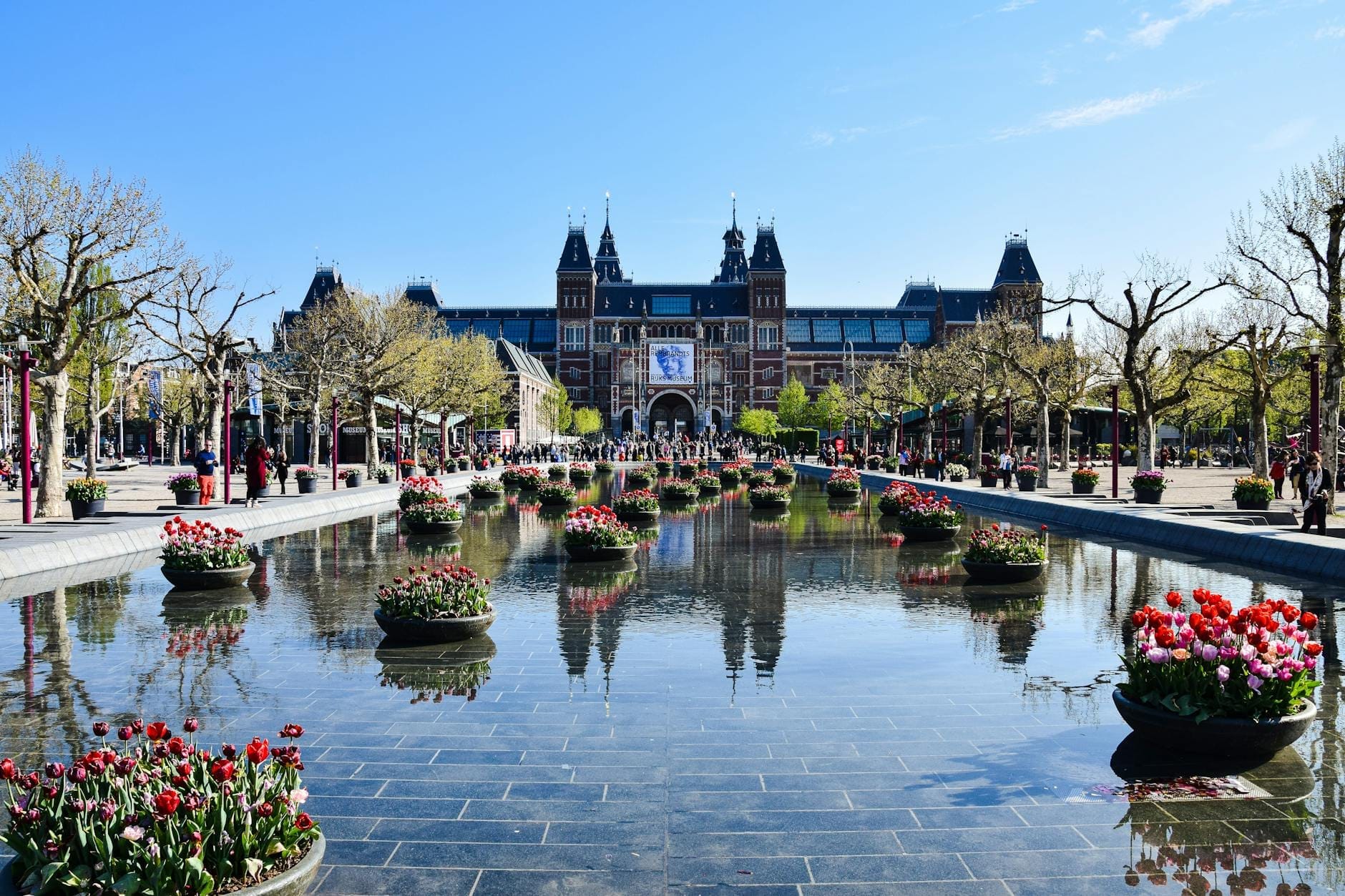
Amsterdam punches far above its weight for a city of under a million people. The concentration of major museums within walking distance of each other is remarkable. Museumplein, the square in the Oud-Zuid district, anchors three of the world's top institutions within a few hundred meters of each other.
- Rijksmuseum The national museum of the Netherlands holds Rembrandt's 'The Night Watch' and Vermeer's 'The Milkmaid', among 8,000 other objects on display. Adult tickets cost €22.50 and must be booked online in advance with a time slot.
- Van Gogh Museum The world's largest collection of Van Gogh's work — 200 paintings and 500 drawings. Adult tickets are €25, and all visitors must pre-book a dated, time-slotted ticket online. Walk-up entry is not available.
- Anne Frank House The preserved canal house where Anne Frank wrote her diary during Nazi occupation. Adult tickets are €16 and sell out days or weeks in advance. Booking the moment tickets open for your travel dates is strongly advised.
- Stedelijk Museum The city's modern and contemporary art museum, covering everything from De Stijl to present-day design. Often overlooked by first-time visitors, but one of Europe's strongest collections of 20th-century art.
- Dutch Resistance Museum A sobering, exceptionally well-curated museum covering the Dutch experience of World War II occupation. Less crowded than the big three but equally important for understanding the city's history.
⚠️ What to skip
Do not show up at the Anne Frank House, Rijksmuseum, or Van Gogh Museum without a pre-booked ticket. All three have moved to timed-entry online-only systems and regularly sell out, especially during April-October peak season. Check official museum websites directly for the most current booking windows and pricing.
Beyond these flagship institutions, Amsterdam has over 50 museums in total. The best museums in Amsterdam guide covers the full range, including niche options like the Houseboat Museum, FOAM Photography Museum, and the Micropia — a museum dedicated entirely to microbes, the only one of its kind in the world.
Cycling Culture: A City That Moves on Two Wheels
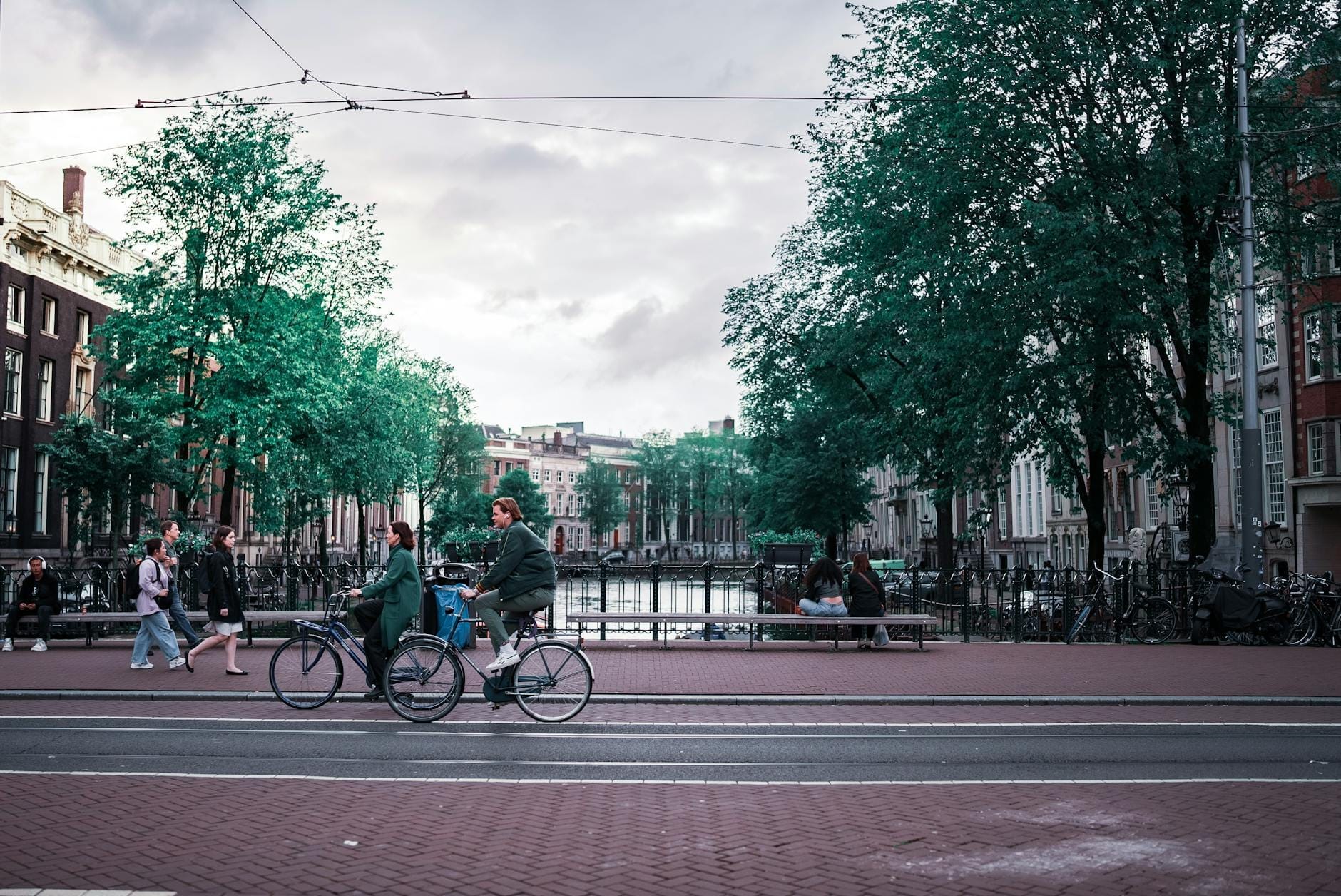
Amsterdam's cycling culture is not just a tourist talking point — it is the primary mode of daily transport for most residents. About 60% of Amsterdammers cycle every day, and the city has approximately 881,000 bicycles for a population of around 933,000. The cycling infrastructure is the result of decades of deliberate urban planning decisions made from the 1970s onward, when the city actively chose bikes over cars.
For visitors, renting a bike is genuinely one of the best ways to understand the city's layout. The flat terrain makes cycling accessible for most fitness levels, and the network of dedicated bike lanes is extensive. That said, Amsterdam's cycling streets follow their own etiquette: stay in bike lanes, signal turns, and avoid stopping suddenly in the flow of traffic. Locals cycle fast and with confidence. The cycling in Amsterdam guide covers rental options, route suggestions, and the unwritten rules that prevent accidents.
✨ Pro tip
Avoid renting bikes from kiosks directly outside Amsterdam Centraal station — prices are higher and quality is inconsistent. Rental shops a few streets into the Jordaan or near Leidseplein typically offer better bikes at lower rates, often around €10-15 per day.
Liberal Social Policies and Cultural Openness
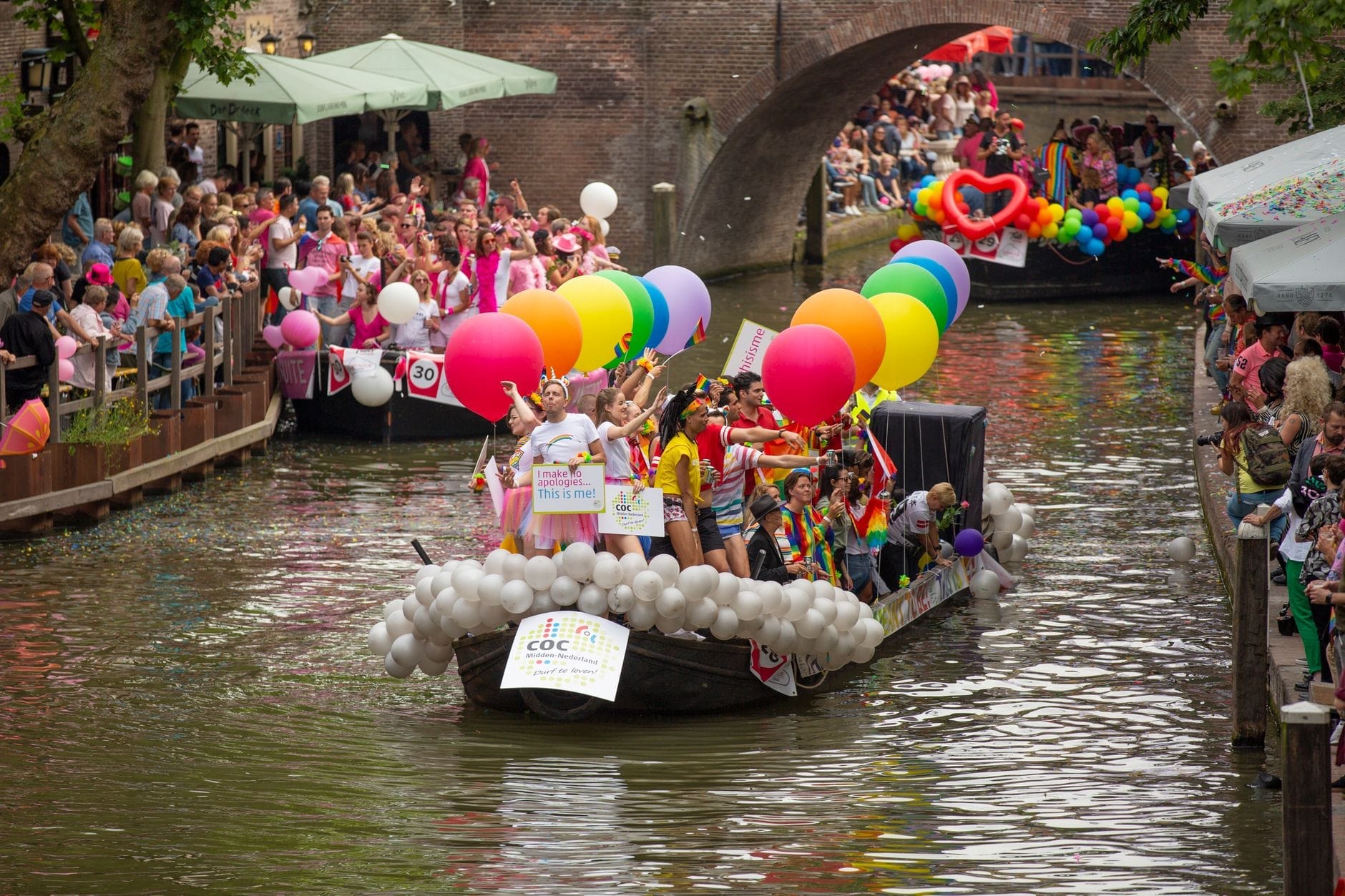
Amsterdam's international reputation for social liberalism is well-earned but frequently misunderstood. The city has been at the forefront of progressive legislation for decades: same-sex marriage became legal in the Netherlands in 2001, the first country in the world to do so. Amsterdam's LGBTQ+ community is visible and well-established, centered around the Reguliersdwarsstraat and Keizersgracht areas, with the Homomonument near Westerkerk serving as a significant memorial.
Cannabis occupies a grey area that confuses many visitors. Sale in licensed coffee shops and possession of small amounts (under 5 grams) are tolerated under a formal policy of non-enforcement — not legalized. Public smoking is banned in many areas, including near schools and in parks in some cases. The coffee shops themselves operate under strict conditions and are legal businesses with licensed premises. The situation is pragmatic rather than ideological, and Dutch policy around drugs is considerably more nuanced than the 'anything goes' reputation suggests.
The Red Light District (De Wallen) is another area where the reality differs from the stereotype. Sex work is legal and regulated in the Netherlands, and the district operates under municipal oversight. Photography of sex workers is effectively prohibited and can result in confrontation or confiscation of equipment. The city has actively worked in recent years to reduce tourist nuisance behavior in the area, including crowd control measures and restrictions on certain tour operators. It is a working neighborhood, not a theme park, and treating it as one will earn immediate local hostility.
Dutch Golden Age Architecture and Historic Neighborhoods
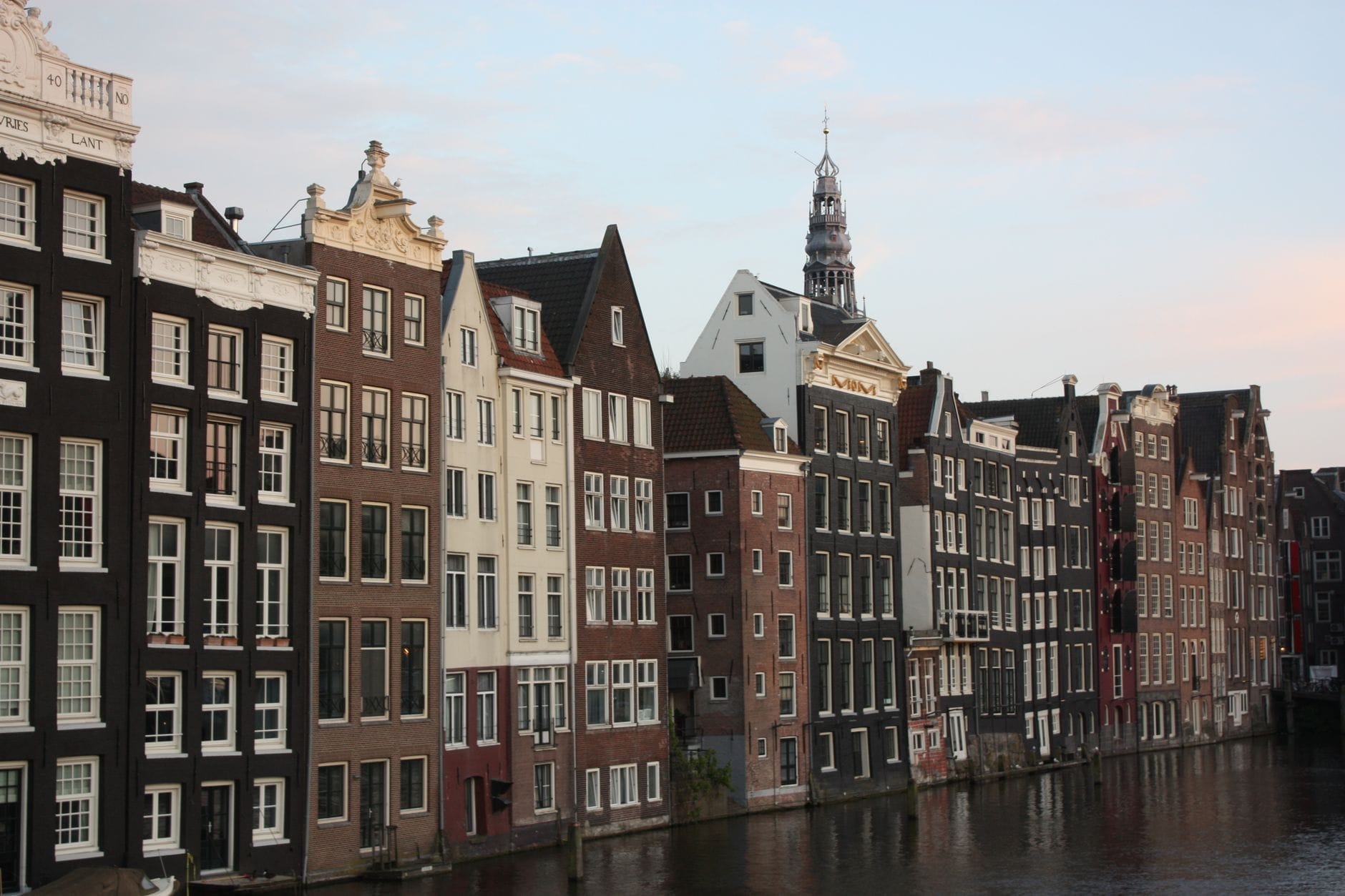
Amsterdam's physical fabric is largely intact from the 17th century, which is extraordinary given Europe's turbulent history. The canal houses along the main grachtengordel are narrow (built that way to minimize property tax, which was calculated on street width), tall, and topped with ornate gables in styles ranging from step gable to neck gable to bell gable. Many lean slightly forward, a deliberate design feature to allow furniture to be hoisted up to upper floors via the beam and hook visible at each roofline. The Jordaan neighborhood offers some of the best examples of this streetscape on a human scale, without the tourist density of the main canal belt.
Other architectural highlights worth seeking out include the Westerkerk (the tallest church tower in Amsterdam at 85 meters), the Begijnhof (a 14th-century enclosed courtyard that feels genuinely removed from the city around it), and the Beurs van Berlage, a late 19th-century exchange building that influenced Dutch modernism. For visitors with a serious interest in the built environment, the Canal Ring district warrants at least a half-day of deliberate exploration beyond the main tourist thoroughfares.
Markets, Food Culture, and Daily Life
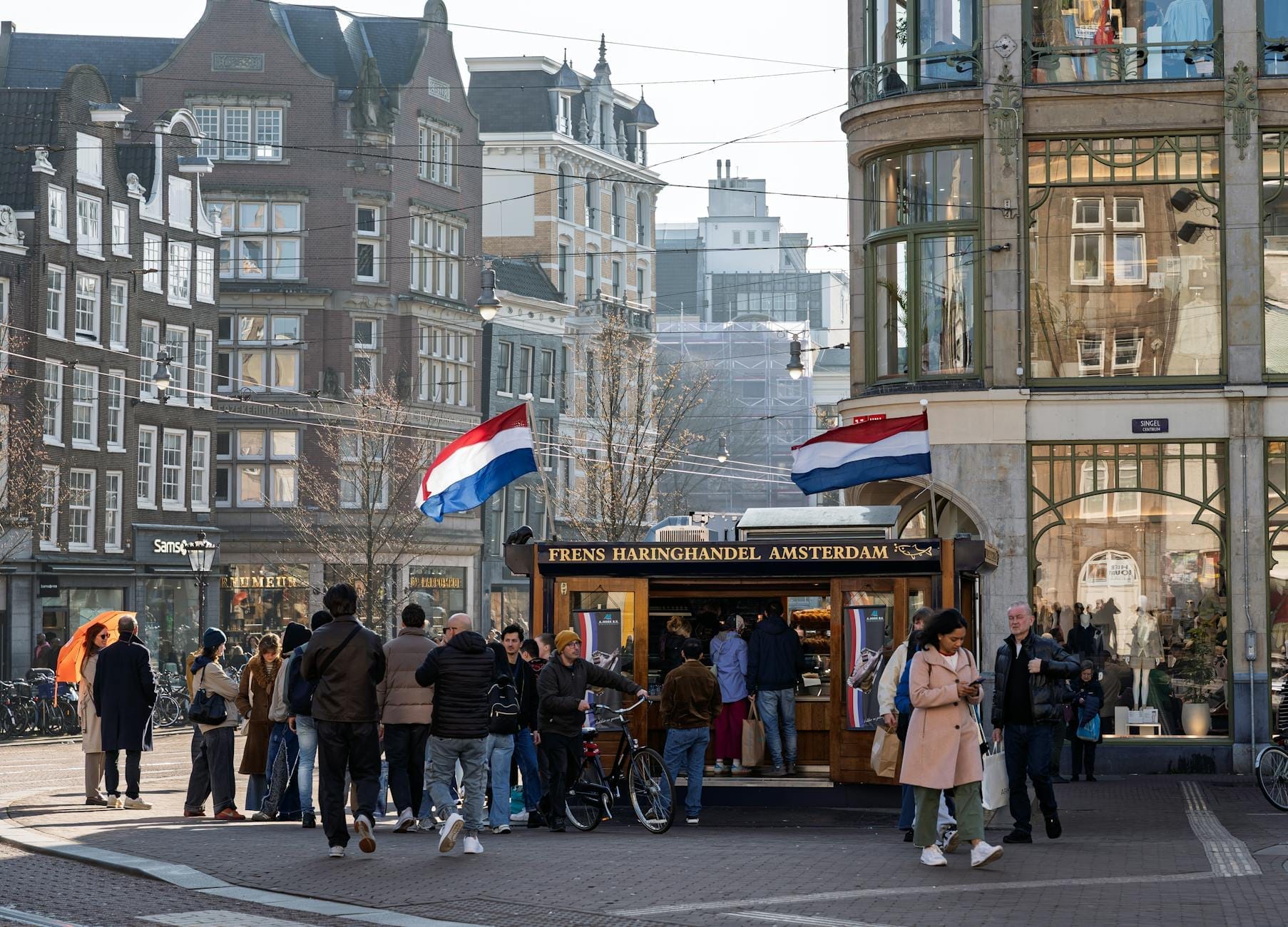
Amsterdam's market culture reveals more about how locals actually live than most tourist attractions. The Albert Cuyp Market in De Pijp is the largest street market in the Netherlands, running daily except Sunday along a 300-meter stretch of Albert Cuypstraat. It sells everything from fresh stroopwafels to Indonesian spices to cheap clothing, and the crowd is genuinely local. The Noordermarkt near Westerkerk runs on Saturday mornings and is known for its organic food stalls and antiques.
- Stroopwafels: thin waffle cookies sandwiched with caramel syrup — buy them fresh from market stalls rather than pre-packaged at the airport.
- Haring (raw herring): a genuine Dutch staple, traditionally eaten with raw onion and pickles, bought from street carts called haringkramen.
- Bitterballen: deep-fried meat ragout balls served with mustard, standard bar snack and genuinely good.
- Indonesian rijsttafel: Amsterdam has a large Indonesian community, a legacy of Dutch colonial history, and the city's Indonesian restaurants are among the best in Europe.
- Jenever (Dutch gin): the original gin, aged in oak barrels, served in traditional brown cafes (bruine kroegen). Order it neat in a tulip glass.
The what to eat in Amsterdam guide goes deeper on where to find the best versions of each, including which neighborhoods to target for specific cuisines and which market stalls have been consistent over time.
Practical Essentials for Visiting Amsterdam
Amsterdam Airport Schiphol (AMS) is the main international gateway, located about 17 km southwest of the city centre. The direct train from Schiphol Station to Amsterdam Centraal takes roughly 14-20 minutes and costs around €5-6 for a standard second-class single — easily the most efficient option. Taxis and ride-hailing services are significantly more expensive and subject to traffic. The Amsterdam airport guide covers all transfer options, baggage storage, and what to do if your connection is tight.
City transport runs on trams, metro, and buses operated by GVB. A GVB day ticket (around €9-10) provides unlimited city transport travel and is the most practical option for most visitors. Amsterdam Centraal is the main hub for national rail connections if you're planning day trips or onward travel. Tap water is safe to drink throughout the Netherlands, tipping is optional (rounding up is fine), and English is spoken fluently by nearly everyone in the service industry — you will rarely need Dutch, though local attempts at 'dank u wel' (thank you) are appreciated.
ℹ️ Good to know
Amsterdam is the constitutional capital of the Netherlands, but the Dutch parliament, government ministries, and the royal working residence are all based in The Hague (Den Haag), about 60 km southwest. This surprises many visitors who assume the capital city is also the seat of government.
Timing your visit significantly affects the experience. April brings tulip season and King's Day (Koningsdag) on April 27, when the entire city turns orange for a street party unlike anything else in Europe. Summer (June-August) means long daylight hours and terrace season, but also the highest prices and densest crowds. Winter is underrated: the Amsterdam Light Festival runs from late November through January and transforms the canal ring into an outdoor light art exhibition. For a full breakdown of when to go, the best time to visit Amsterdam guide weighs up each season in detail.
FAQ
What is Amsterdam most famous for?
Amsterdam is most famous for its UNESCO-listed canal ring (Grachtengordel), its world-class museums including the Rijksmuseum, Van Gogh Museum, and Anne Frank House, its cycling culture, and its historically liberal social policies around cannabis and sex work. The city is also the constitutional capital of the Netherlands and a major center of Dutch Golden Age art and architecture.
Is cannabis legal in Amsterdam?
No, cannabis is not fully legal in Amsterdam. The Netherlands operates under a formal tolerance policy: possession of small amounts (under 5 grams) and sale in licensed coffee shops are not prosecuted, but cannabis is not legally permitted in the same way alcohol is. Smoking in many public spaces is banned, and the rules around purchase and consumption are specific to licensed venues.
Do I need to book Amsterdam museum tickets in advance?
Yes, for the three most popular museums — the Rijksmuseum (€22.50), Van Gogh Museum (€25), and Anne Frank House (€16) — advance booking is essential. All three operate timed-entry systems with online-only tickets, and they regularly sell out, particularly during peak season from April to October. Book directly through each museum's official website.
What is the best area to stay in Amsterdam?
The Jordaan and Canal Ring are the most atmospheric options for first-time visitors, placing you within walking distance of major sights. De Pijp suits travelers who prefer a more local feel with excellent restaurants and markets. Amsterdam-Noord, accessed via a free ferry from Centraal station, offers lower accommodation prices with a creative, post-industrial character. Each neighborhood has a distinct personality — the where-to-stay guide breaks down the trade-offs in detail.
How do I get from Schiphol Airport to Amsterdam city centre?
The fastest and most cost-effective option is the direct train from Schiphol Station (directly beneath the airport terminal) to Amsterdam Centraal. The journey takes approximately 14-20 minutes and a standard second-class ticket costs around €5-6. Trains run frequently throughout the day and night. Taxis and ride-hailing apps like Uber and Bolt are available but substantially more expensive, especially in traffic.
Tickets & tours
Live prices and dates from our booking partner. If you book, we may earn a commission at no extra cost to you.
Planning a trip? Discover personalized activities with the Nomado app.