2 Days in Amsterdam: The Perfect Weekend Itinerary
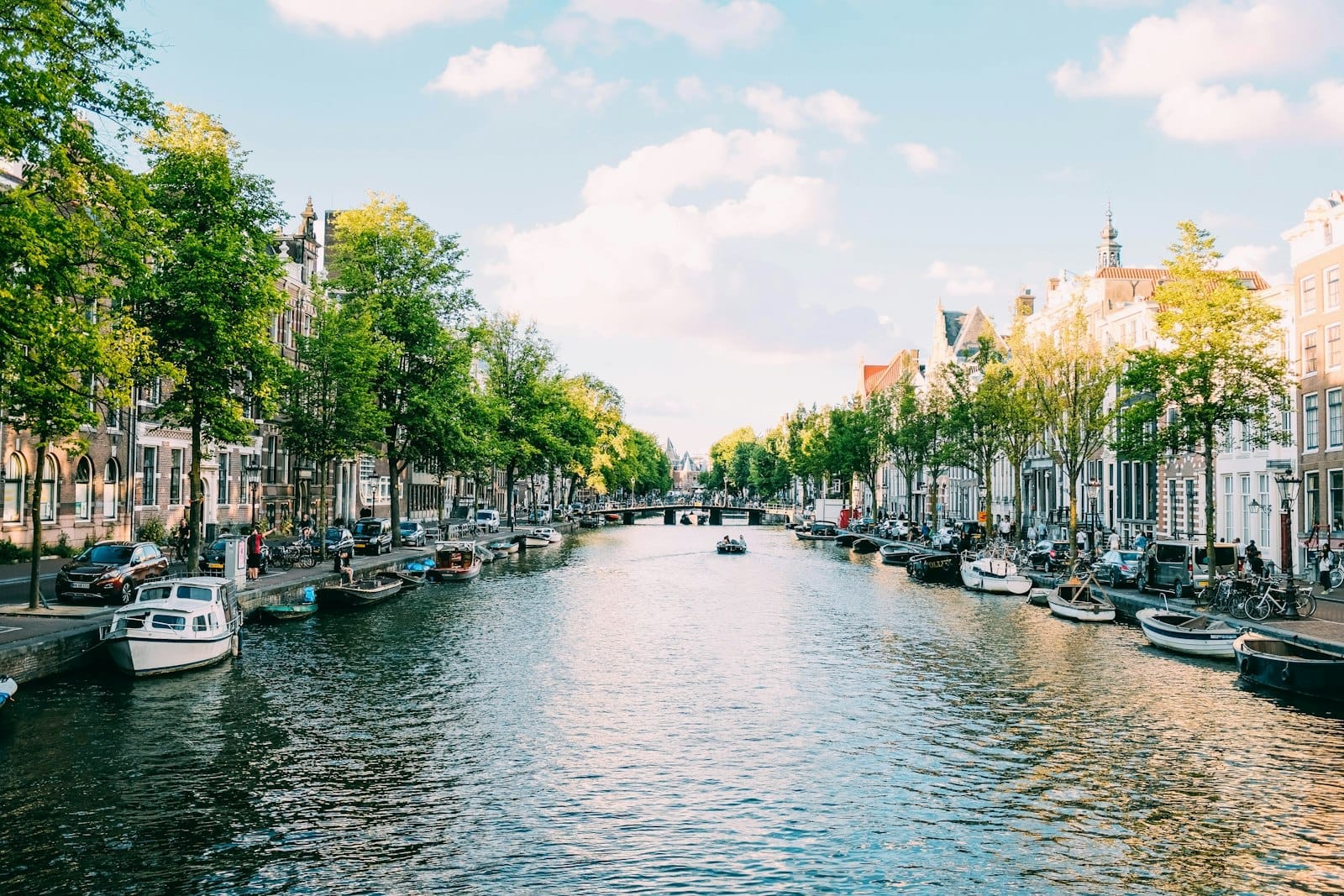
Two days in Amsterdam is enough to hit the genuine highlights without feeling rushed, if you plan smart. This itinerary covers the Rijksmuseum, Van Gogh Museum, Anne Frank House, canal cruises, and the best neighborhoods, with real pricing, booking warnings, and insider logistics so you don't waste a single hour.
Tickets & tours
Live prices and dates from our booking partner. If you book, we may earn a commission at no extra cost to you.
TL;DR
- Book timed tickets for the Rijksmuseum (€22.50), Van Gogh Museum (€25), and Anne Frank House (€16) before you arrive — walk-ins are not available for timed entry.
- The Anne Frank House does NOT accept the Iamsterdam City Card; buy tickets only via the official website, and they sell out days or weeks in advance.
- A 48-hour Iamsterdam City Card (€94) covers most museums, a canal cruise, and GVB public transport — see our Amsterdam City Card guide to decide if it's worth it for your trip.
- Train from Schiphol Airport to Amsterdam Centraal takes about 14 minutes and costs around €5.90 one-way in 2nd class.
- Concentrate Day 1 on Museumplein and the canals, Day 2 on the Jordaan and De Pijp — this routing minimizes backtracking and keeps pace comfortable.
Before You Arrive: Logistics and Booking
Amsterdam rewards the prepared traveler and punishes the spontaneous one, at least when it comes to major attractions. The three museums that define most 2-day itineraries — the Rijksmuseum, Van Gogh Museum, and Anne Frank House — all require pre-booked timed entry tickets. On weekends and throughout the April-to-October high season, same-day availability is limited. Buy your tickets in advance through each museum's official website; for the Anne Frank House, two to three weeks ahead is not excessive.
⚠️ What to skip
The Anne Frank House only sells tickets through annefrank.org. It does not accept the Iamsterdam City Card, any other city pass, or third-party booking platforms for standard timed entry. Tickets are non-transferable and tied to a specific time slot. If you don't book early, you may arrive to find everything sold out for your entire stay.
Getting into the city from Schiphol Airport is straightforward. The direct NS train from Schiphol Station (located inside the airport terminal) to Amsterdam Centraal runs several times per hour from early morning past midnight. The journey takes 14–18 minutes and costs around €5.90 in 2nd class when purchased at the station. Once in the city, a GVB 2-day tram/metro/bus pass costs €15.00 and covers everything you need. Alternatively, the Iamsterdam City Card (48-hour version: €94) bundles GVB transport with free entry to dozens of museums and a canal cruise — worth running the numbers before you buy.
💡 Local tip
If you're arriving by train from Paris, Brussels, or London, you'll already be rolling into Amsterdam Centraal. Check our guides on the Amsterdam to Paris train and Amsterdam to Brussels train routes for booking tips on those legs of the journey.
Day 1 Morning: Museumplein and the Golden Age
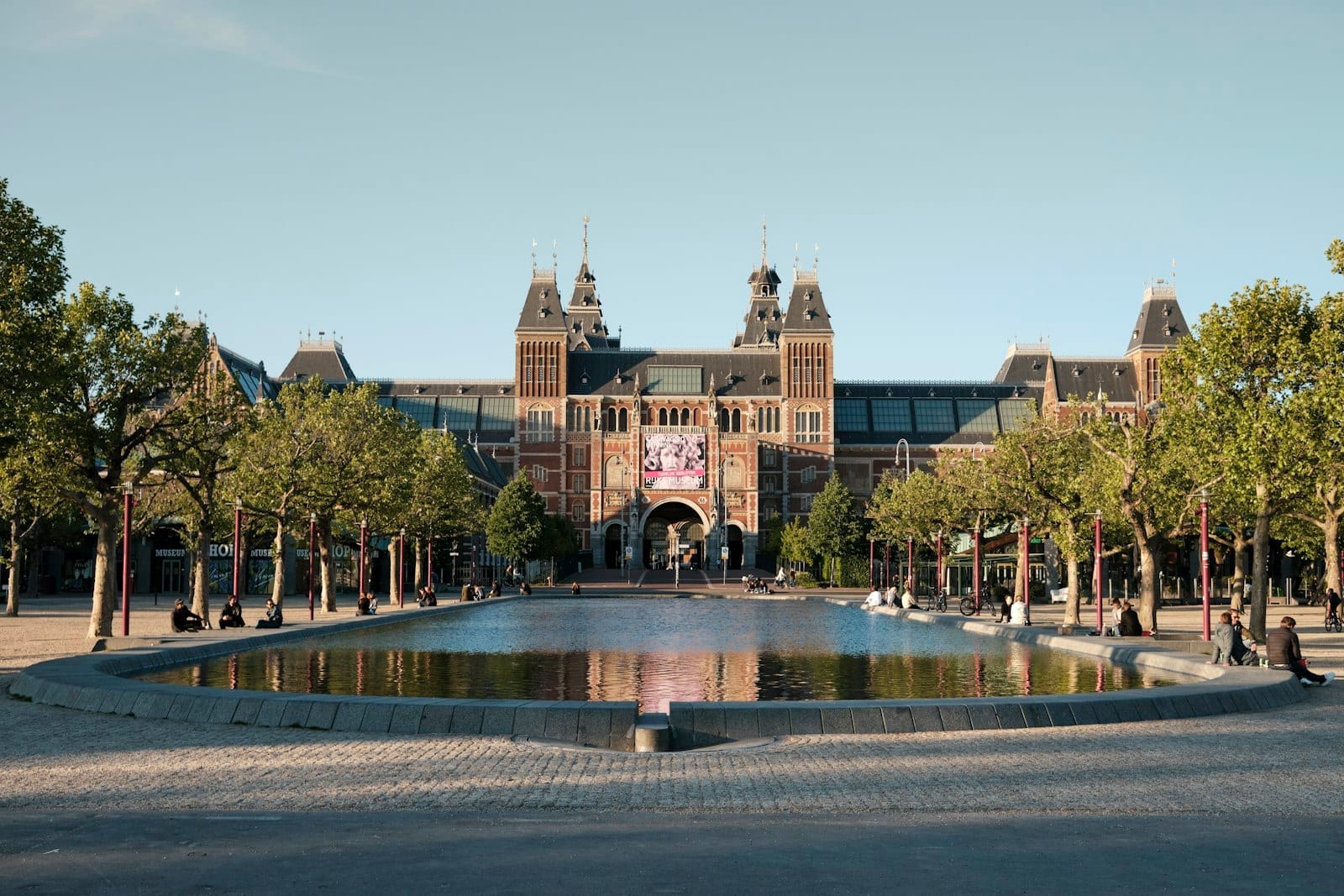
Start Day 1 at the Rijksmuseum, which opens at 09:00 daily. Arriving at opening time is the single best way to experience this museum without fighting crowds. The Rijksmuseum is genuinely one of the world's great art collections — Rembrandt's Night Watch, Vermeer's The Milkmaid, and an extraordinary collection of Delftware and Golden Age objects are all housed here. Plan for two to two-and-a-half hours minimum. The standard adult ticket is €22.50 and under-18s enter free.
Directly across the square, the Van Gogh Museum typically opens at 09:00 as well, with extended hours on some days. The museum holds the largest collection of Van Gogh's work in the world, organized chronologically so you follow his development from the dark Dutch palette of early work through the electric yellows and blues of Arles. Adult tickets are €25, under-18s free. Timed entry is mandatory — buy online. One to one-and-a-half hours is sufficient for most visitors, though art enthusiasts will want longer.
- Rijksmuseum Opens 09:00, adult ticket €22.50. Allow 2–2.5 hours. Book online at rijksmuseum.nl.
- Van Gogh Museum Opens 09:00, adult ticket €22. Timed entry required. Book at vangoghmuseum.nl.
- Stedelijk Museum Also on Museumplein; the city's modern and contemporary art museum. A good option if you have extra time or want a break from the Old Masters.
- Museumplein itself The open lawn between the museums is a useful breathing space. Locals picnic here in summer; it's also where the famous 'I Amsterdam' letters once stood.
Day 1 Afternoon: Canal Cruise and the Historic Centre
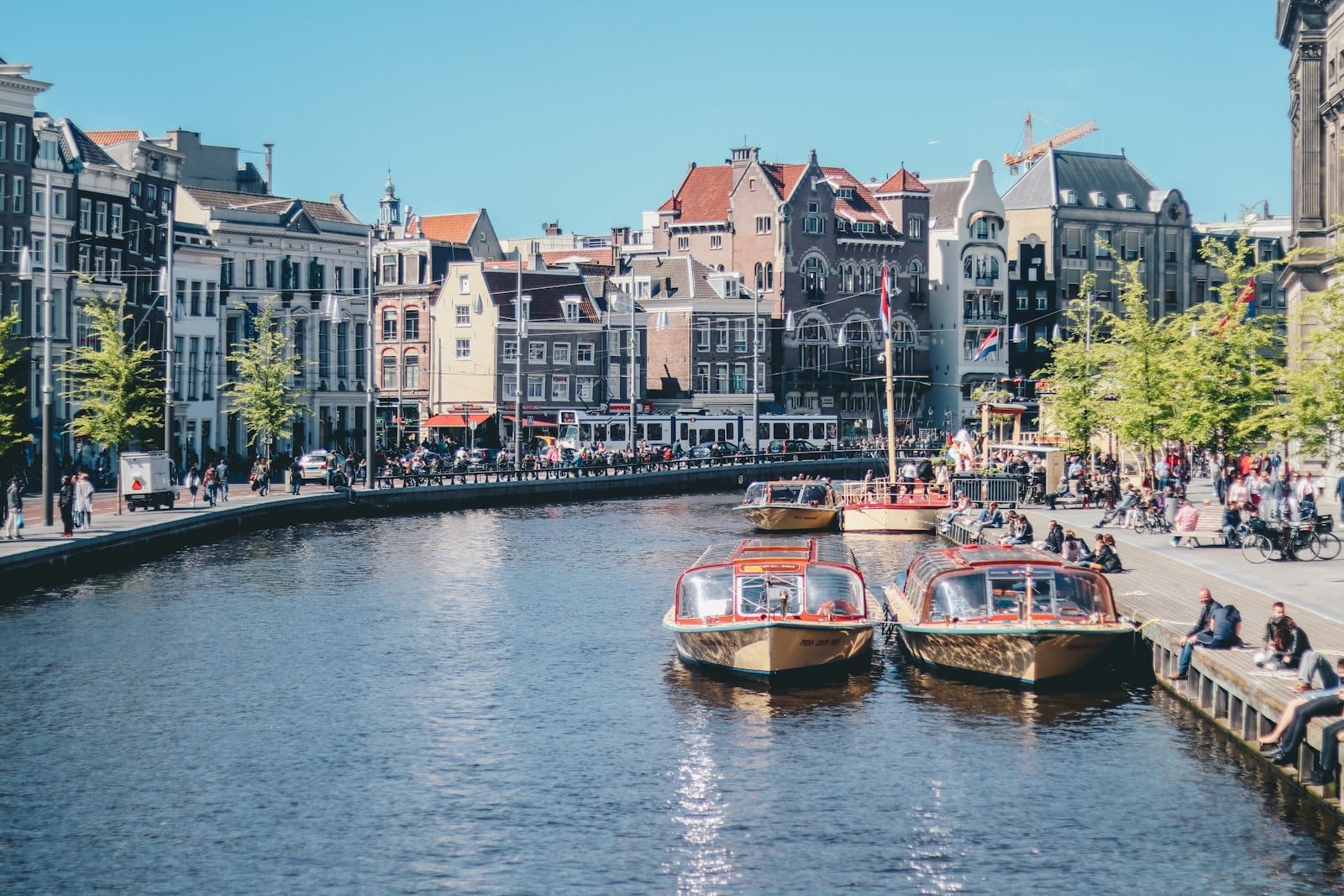
After Museumplein, head north into the city centre for lunch and a canal cruise. Amsterdam's canal ring is a UNESCO World Heritage Site and the most efficient way to understand the city's geography is from the water. Standard one-hour cruises depart from multiple points near Centraal Station and cost roughly €16–€25 depending on the operator and time of day. If you have the Iamsterdam City Card, a basic cruise is included. Evening cruises often cost more but offer a different atmosphere.
After the cruise, use the afternoon to walk through the Canal Ring on foot. The Negen Straatjes (Nine Streets) area is a compact grid of cross-streets connecting the main canals, lined with independent boutiques, cheese shops, and brown cafes. It's genuinely pleasant to navigate without a fixed plan. From here it's a short walk to the Bloemenmarkt, Amsterdam's floating flower market on the Singel canal, typically open from around 09:00 to 17:30. It's more tourist-facing than it once was, but the display of tulip bulbs, dried flowers, and Dutch souvenirs is still worth a look.
✨ Pro tip
The Bloemenmarkt is almost entirely oriented toward tourists these days. If you want a genuine Amsterdam market experience, save the Albert Cuyp Market or Noordermarkt for Day 2 — both have far more local character and better food options.
End Day 1 in the Jordaan for dinner. This neighbourhood, immediately west of the main canals, has some of Amsterdam's best independent restaurants and brown cafes (bruine kroegen) — traditional Dutch pubs with dark wood interiors and Heineken or Amstel on draft. The Jordaan gets livelier as the evening progresses; it's the right place to experience the city at a comfortable pace rather than the intensity of the red-light district area.
Day 2 Morning: Anne Frank House and the Jordaan
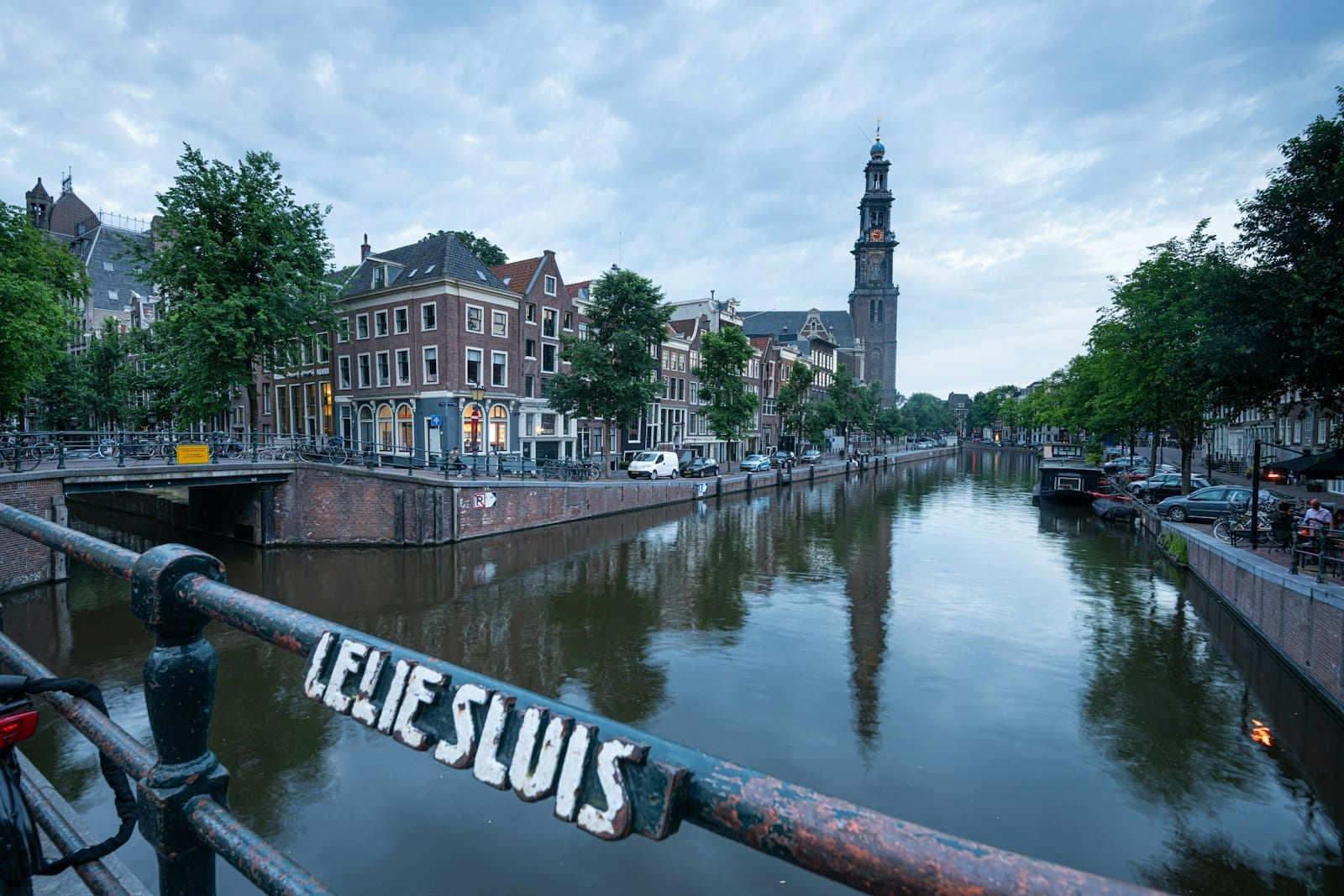
Book your Anne Frank House slot for 09:00 or 09:30 if possible — this is when the crowds are thinnest. The house on Prinsengracht 263-267 requires around 75–90 minutes to move through properly. The secret annex where Anne Frank and her family hid for over two years is small and the queues through each room can be slow, but the experience is sobering and genuinely moving. Adult tickets are €16, ages 10–17 cost €7, and children under 10 pay €1 (for the museum portion). Tickets are only valid from annefrank.org — no exceptions.
After the Anne Frank House, spend the rest of the morning walking the Jordaan properly. The neighbourhood rewards slow exploration: the Westerkerk tower (€10 to climb, with canal views at the top), the quiet Begijnhof courtyard just to the south, and the Noordermarkt on Saturdays (organic farmers market in the morning, flea market on Mondays) are all within easy walking distance. The Jordaan's residential streets feel genuinely different from the tourist core a few blocks east.
Day 2 Afternoon: De Pijp and Rembrandt's Amsterdam
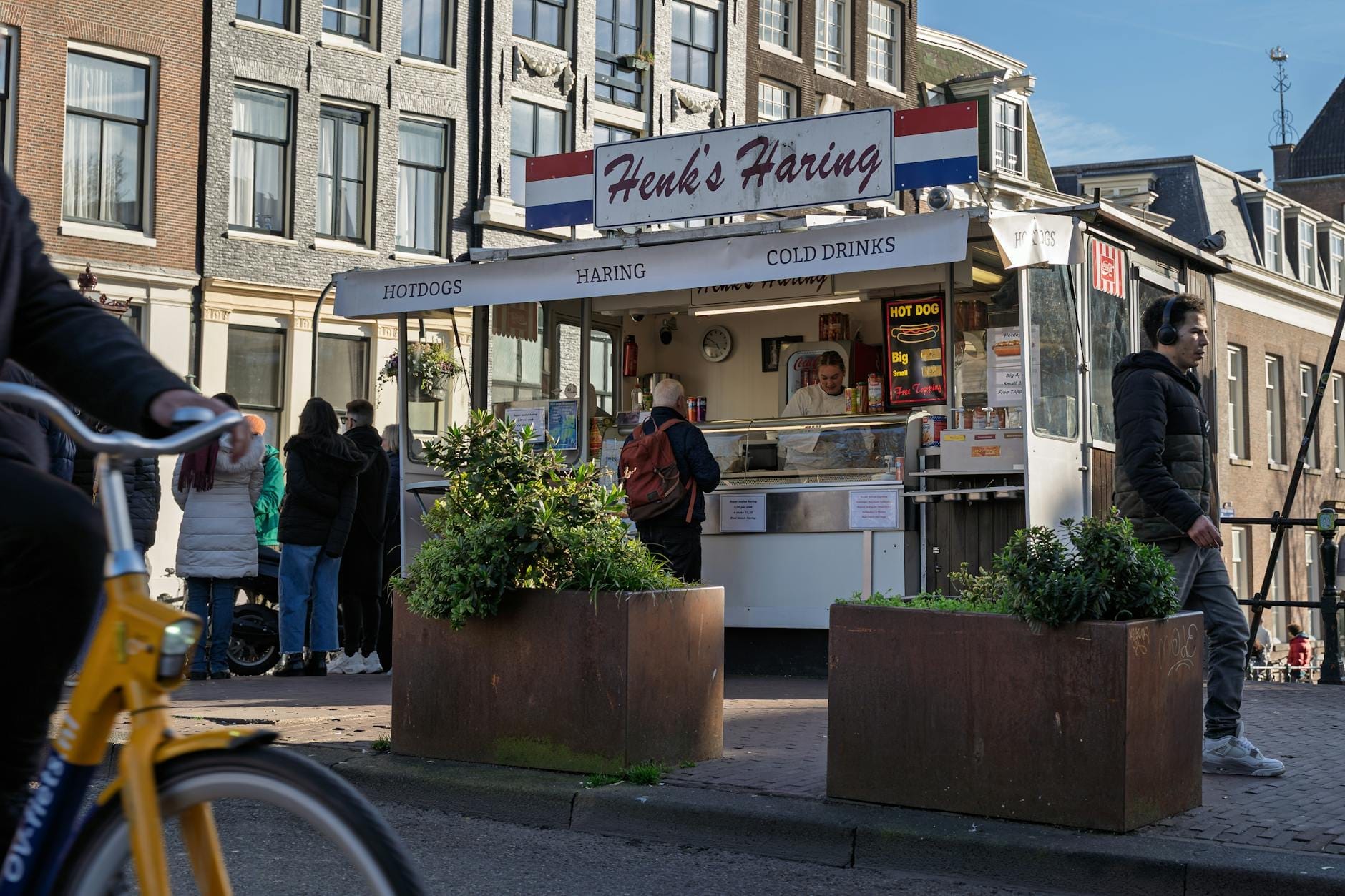
Head south to De Pijp for lunch. The Albert Cuyp Market, open Monday through Saturday until around 17:00, is Amsterdam's largest street market and one of the few that still functions primarily for locals. You can eat your way through it reasonably cheaply: stroopwafels fresh off the iron, raw herring with onions (the traditional Dutch street food), Indonesian snacks, and Dutch cheese samples are all available from stalls. It's a useful antidote to the museum-heavy morning.
From De Pijp, cross back into the old city to visit the Museum Het Rembrandthuis on Jodenbreestraat — the house where Rembrandt lived and worked from 1639 to 1658. It's smaller and less famous than the Rijksmuseum, which means it's also less crowded. The reconstructed studio and etching demonstrations give a more intimate picture of 17th-century artistic life than any painting on a gallery wall. Nearby, the Portuguese Synagogue (completed 1675) and the Jewish Historical Museum are within a few minutes' walk if your interest extends to the city's deep Sephardic Jewish history.
- Albert Cuyp Market: Mon–Sat, roughly 09:00–17:00. Best visited before 14:00 for the widest selection.
- Museum Het Rembrandthuis: Pre-book online to avoid queuing. Plan 60–90 minutes.
- Vondelpark: If the weather is good and you need a break from sightseeing, Amsterdam's main park is 15 minutes by tram from De Pijp and completely free.
- Heineken Experience: On Stadhouderskade in De Pijp. A commercial tour that's popular but overpriced relative to what you get. Skip it unless beer history is a genuine priority.
- Rembrandtplein: A lively square 10 minutes' walk northeast of De Pijp. Good for a final evening drink, with terrace bars and a bronze recreation of the Night Watch in the square itself.
Practical Notes: Getting Around and Staying Sane
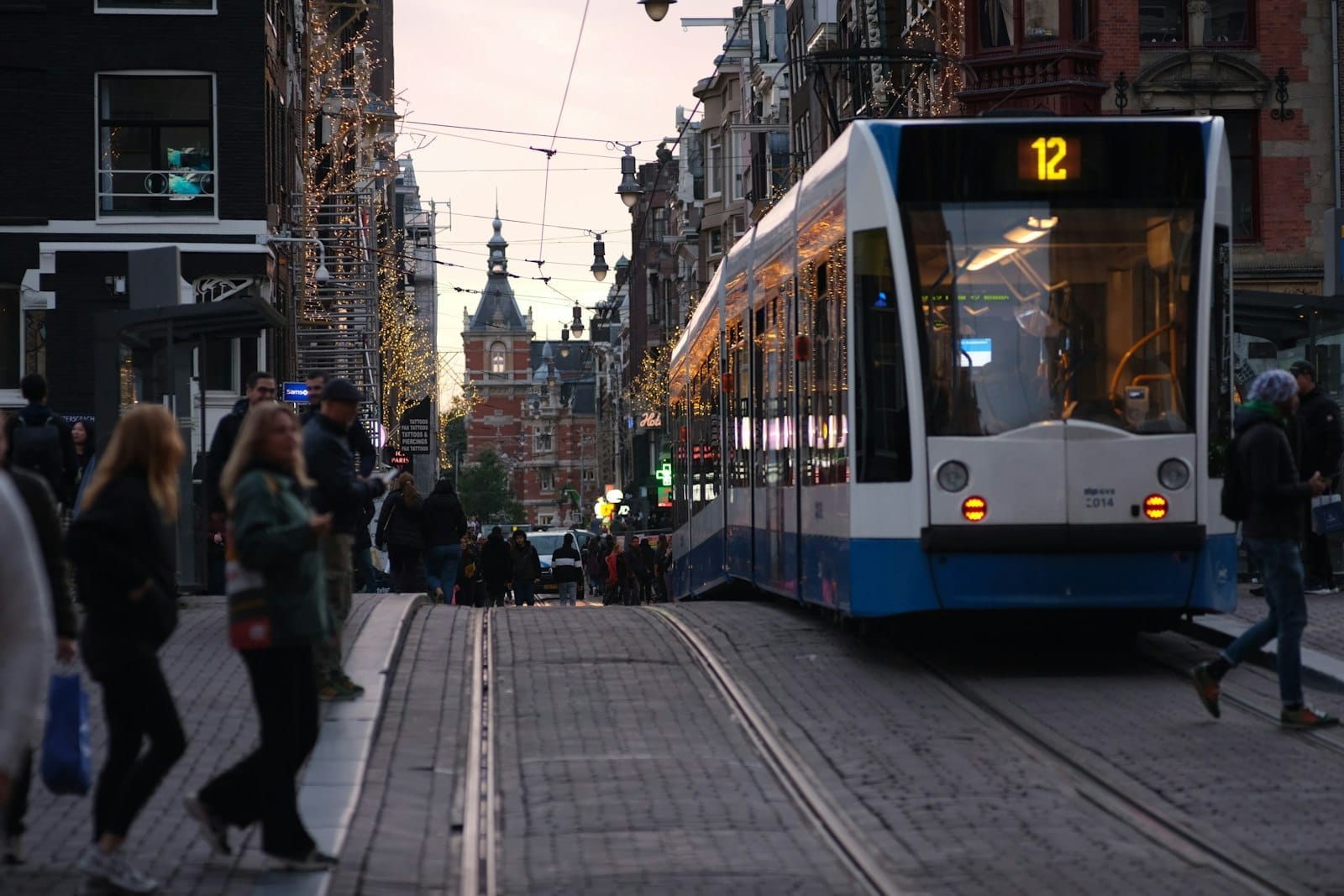
Amsterdam is compact enough that most of the sights in this itinerary are within 3–4 km of each other. Walking between Museumplein, the Canal Ring, the Jordaan, and De Pijp is realistic and often faster than waiting for a tram. That said, the GVB tram network is excellent and a 2-day pass (€15) removes any hesitation about using it. Trams run roughly 06:00–00:30, with night buses on key routes after that.
On cycling: Amsterdam has some of the densest bicycle traffic in the world and the rules are real. Bikes have dedicated lanes with right-of-way, and pedestrians who drift into them will find out quickly. Renting a bike as a first-time visitor on a tight 2-day schedule is not wrong, but it requires more attention than tram-and-walking. If you want to try it, read up on Amsterdam cycling rules before you get on a bike — the basics take about five minutes to learn and will save you a lot of stress.
ℹ️ Good to know
Amsterdam's tap water is safe to drink and generally excellent quality. You don't need to buy bottled water. English is spoken almost universally in hotels, restaurants, museums, and shops — Dutch is the official language but you'll rarely need it as a visitor. Tipping is optional; rounding up or leaving small change is standard practice.
For accommodation, the canal ring area and Jordaan put you closest to Day 1 and Day 2 sights respectively, but rooms there come at a premium. De Pijp and Oud-Zuid (near Museumplein) offer slightly better value with easy tram access to everything. For a full breakdown by budget and neighborhood, see our Amsterdam accommodation guide.
FAQ
Is 2 days enough time to see Amsterdam?
Two full days is genuinely enough to cover the city's major highlights — the Rijksmuseum, Van Gogh Museum, Anne Frank House, canal cruise, and a couple of neighborhoods — without feeling overwhelmed. You won't see everything, but you'll come away with a real sense of the city. Three days gives you breathing room to explore further afield or take a day trip to Haarlem or Zaanse Schans.
What should I book in advance for a 2-day Amsterdam trip?
At minimum: timed entry for the Anne Frank House (annefrank.org only), the Rijksmuseum (rijksmuseum.nl), and the Van Gogh Museum (vangoghmuseum.nl). All three require pre-booked timed slots, especially on weekends. Book at least a week ahead in high season; for the Anne Frank House, 2–3 weeks is safer. A canal cruise can usually be booked a day or two before without trouble.
Is the Iamsterdam City Card worth it for 2 days?
The 48-hour card includes free entry to many major museums (not Anne Frank House), a canal cruise, and unlimited GVB tram/metro/bus travel. If you're planning to visit the Rijksmuseum, Van Gogh Museum, and two or three other paid attractions, the math usually works out in your favour. It's less useful if you're spacing your sightseeing slowly or have already pre-paid for individual tickets.
What's the best way to get from Schiphol Airport to central Amsterdam?
The NS train from Schiphol Station (inside the terminal) to Amsterdam Centraal is the fastest and cheapest option: about 14 minutes and around €5.90 in 2nd class. Trains run several times per hour throughout the day and evening. Taxis and ride-hailing apps (Uber, Bolt) are available but significantly more expensive, particularly in traffic.
What are the biggest mistakes first-time visitors make in Amsterdam?
Three stand out: not booking museum tickets in advance (especially the Anne Frank House), trying to cycle without understanding the traffic rules, and spending most of Day 1 in the red-light district at the expense of the actual museums and canal neighborhoods. The city rewards those who plan the cultural highlights first and let the evening entertainment come naturally.
Tickets & tours
Live prices and dates from our booking partner. If you book, we may earn a commission at no extra cost to you.
Planning a trip? Discover personalized activities with the Nomado app.