Noordermarkt: The Jordaan's 400-Year-Old Market Square
Tucked into the northern edge of the Jordaan, Noordermarkt is a 17th-century square that comes alive twice a week with two very different markets: a Saturday organic farmers' market packed with locals and a Monday antiques and flea market. Both are free, both draw a genuinely neighborhood crowd, and together they offer one of the most authentic market experiences in Amsterdam.
Quick Facts
- Location
- Noordermarkt, 1015 MV Amsterdam (Jordaan)
- Getting There
- ~20-min walk from Amsterdam Centraal; Tram 3 to Marnixstraat/Marnixbad
- Time Needed
- 1–2 hours
- Cost
- Free entry
- Best for
- Food lovers, antique hunters, Jordaan explorers, slow-travel visitors
- Official website
- www.noordermarkt-amsterdam.nl/en/home-en
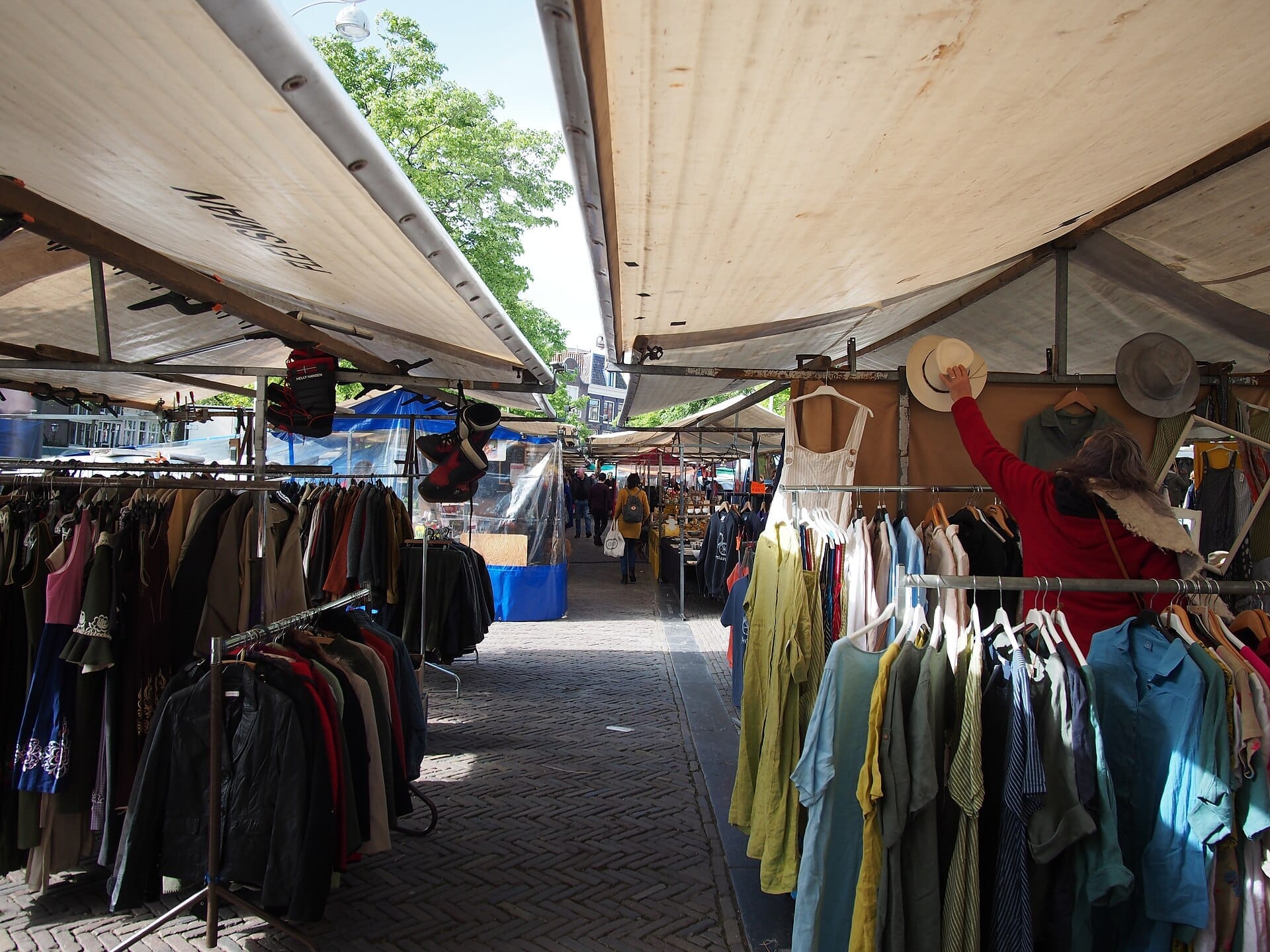
What Noordermarkt Actually Is
Noordermarkt is both a square and the name used for the markets held on it. The square sits at the northern end of the Jordaan, hemmed in by the Noorderkerk church on one side and narrow canal streets on the others. It is not a tourist market in the way the flower market or the cheese stalls near Dam Square are. The vendors here are mostly small Dutch producers, independent traders, and secondhand dealers, and the people browsing are mostly locals.
Two separate markets run on different days and have different characters. Monday brings a secondhand and antiques market, quieter and more contemplative. Saturday brings the Boerenmarkt, the organic farmers' market, which is louder, more crowded, and more festive. If you can only come once, Saturday is the fuller experience, but Monday has its own unhurried appeal.
ℹ️ Good to know
Opening hours: Monday market runs 9:00–14:00; Saturday market runs 9:00–16:00. Hours vary slightly by season and source, so check the official website before visiting.
The Saturday Boerenmarkt: Organic, Local, Crowded
By 9:30 on a Saturday morning, the square is already filling up. The Boerenmarkt is an organic farmers' market with a reputation that has spread well beyond the immediate neighborhood, and you will notice the mix: Jordaan residents doing their weekly food shop alongside visitors who have made a deliberate detour. The stalls sell produce, cheese, bread, eggs, herbs, honey, and prepared foods. Most vendors are small-scale Dutch producers.
The smells are the first thing you register: fresh bread from a wood-fired oven, raw cheese, roasting nuts. On cold mornings, there is usually hot stroopwafel being made to order and coffee sold from small carts. The cobblestones around the Noorderkerk get slippery when wet, which is worth knowing if you are pushing a stroller or moving slowly.
By 11:00, the square reaches peak density. The narrow paths between stalls can feel congested, and lines at popular food vendors get long. If you want to shop efficiently, arrive closer to opening. If you want the full atmosphere with the crowd and the noise, the 10:30–11:30 window is when the energy is at its highest.
💡 Local tip
Bring cash. Many stalls at the Boerenmarkt are cash-only or strongly prefer it. There is no ATM on the square itself, so withdraw beforehand.
Tickets & tours
Live prices and dates from our booking partner. If you book, we may earn a commission at no extra cost to you.
Gray Line Canal Cruise with snackbox & Heineken Experience
From 48 €Instant confirmationFree cancellationAmsterdam evening canal cruise
From 18 €Instant confirmationFree cancellationJewish Museum and Portuguese Synagogue entrance ticket
From 20 €Instant confirmationFree cancellationAdmission ticket for Artis Royal Zoo and Micropia
From 39 €Instant confirmationFree cancellation
The Monday Market: Antiques, Secondhand, and Quiet Hours
The Monday market is a different animal. It is a traditional secondhand and antiques market with a slower rhythm. Vendors spread out books, clothing, household items, vinyl records, old prints, and the occasional piece of furniture. The crowd is thinner and older on average, and the pace invites lingering.
It is not a high-end antiques fair. You are more likely to find interesting Dutch paperbacks or a vintage lamp than a signed painting. The pleasure is in the browsing rather than the finding, and the square is noticeably calmer, which lets you actually look at the Noorderkerk and the surrounding canal architecture without feeling rushed.
Monday mornings in the Jordaan are quiet by Amsterdam standards. The cafes around the square open their doors gradually, and by 10:00 a few have put chairs outside. This is one of the more relaxed ways to spend a weekday morning in the city.
The Noorderkerk and the Square's History
The square takes its character from the Noorderkerk, the austere Dutch Reformed church that anchors its northwest corner. The church was completed in 1623 and designed by Hendrick de Keyser, one of the leading architects of Amsterdam's Golden Age. Its Greek cross floor plan was unusual for the time and deliberately egalitarian: no one in the congregation was seated farther from the pulpit than anyone else. The exterior is sober brick, without the decorative flourishes of Catholic church architecture, and it fits the Jordaan's working-class history.
A market has operated on this square since at least 1618, when it reportedly began as a pottery market. That makes Noordermarkt one of Amsterdam's oldest market sites, now over 400 years old. The square has seen the Jordaan transition from an overcrowded working-class neighborhood in the 17th and 18th centuries, through post-war decline, and into its current status as one of the city's most sought-after residential areas.
The history of the broader neighborhood is worth understanding before you visit. The Jordaan was originally built to house workers and immigrants outside the main canal ring, and its grid of narrow streets and small bridges still reflects that dense, practical layout. Markets like Noordermarkt were essential infrastructure, not leisure attractions.
How to Approach a Visit
The square is small enough that you can cover it in 20 minutes if you are moving quickly, but most people who come for the Saturday market spend an hour or more. The natural pattern is to arrive, do a full circuit to see what is there, then double back to the stalls that caught your attention. Food purchases work best made toward the end of your visit unless you want to carry them the whole time.
After the market, the surrounding streets are worth exploring. Westerstraat runs along one edge of the square and has a handful of independent food shops and cafes. The Lindengracht, a few blocks north, has its own Saturday market with a slightly different mix of produce and street food stalls.
The Jordaan is a good neighborhood to walk without a fixed itinerary. If you are combining the market with a longer morning, the Westerkerk is about a 10-minute walk south, and the canals of the Canal Ring are immediately adjacent. For a full picture of Amsterdam's market culture, the Lindengracht market on Saturdays is close enough to combine into the same morning.
Photography and Atmosphere Notes
The square photographs well on overcast days more than in direct sunlight. The Noorderkerk's dark brick reads better in flat light, and the market stalls have a lot of color that gets blown out in strong midday sun. Early morning, before the crowds arrive, gives you the square with the church and empty stalls in the background, which is a very different image from the busy mid-morning scene.
On rainy Saturdays, the market still runs. Vendors have awnings and tarps, and the crowd shrinks but does not disappear. Rain in the Jordaan has its own atmosphere: the cobblestones reflect the lights, and the cafes fill up. It is not a reason to stay home.
⚠️ What to skip
The market does not run on public holidays. Dutch national holidays, including King's Day in late April, can shift or cancel regular market days. Check the official website if your visit falls near a holiday.
Honest Assessment: Who This Is For and Who Should Pass
Noordermarkt works best for travelers who are not optimizing for maximum sightseeing. If you have one day in Amsterdam and want to see the Rijksmuseum, Anne Frank House, and a canal cruise, this market is probably not where your time goes. It is a neighborhood market, and its appeal is in that local texture rather than in any single thing you will see or buy.
People who cook, who enjoy food shopping, or who find markets a useful way to read the character of a place will get the most from it. Antique and secondhand enthusiasts will find the Monday market worth an hour. Travelers who need constant stimulation or are only comfortable with large, organized tourist attractions may find it underwhelming.
If you are planning a longer stay and want to build a fuller picture of Amsterdam's market scene, the Amsterdam markets guide covers the range of options across the city, from daily tourist markets to weekly neighborhood ones like this.
Insider Tips
- The Saturday organic market draws the biggest crowds between 10:30 and 12:00. Arrive before 10:00 to browse without the squeeze, especially around the cheese and bread stalls near the church entrance.
- Several stalls sell prepared food to eat on the spot. The stroopwafels made fresh on the square are a reliable choice, and prices are lower than at tourist-facing stands elsewhere in the city.
- If you are interested in both markets, plan separate visits rather than combining days. Each has its own rhythm, and trying to rush either one misses the point.
- The cafes on Westerstraat adjacent to the square are good for a post-market coffee. They are used by locals and tend to be cheaper and less crowded than cafe terraces near the main canal tourist routes.
- Parking in the Jordaan is extremely limited. The nearest car park is Europaparking on Marnixstraat 250. Walking from Amsterdam Centraal (around 20 minutes) or taking Tram 3 to Marnixstraat/Marnixbad is more practical.
Who Is Noordermarkt For?
- Food lovers and home cooks looking for Dutch organic produce
- Travelers who prefer neighborhood atmosphere over landmark tourism
- Antique and secondhand browsers (Monday market)
- Photographers looking for street-level, unposed market scenes
- Visitors combining a Jordaan walk with a slow morning
Nearby Attractions
Other things to see while in Jordaan:
- Amsterdam Cheese Museum
Tucked into a building on Prinsengracht, often described as dating from around 1600, the Amsterdam Cheese Museum offers a free, compact introduction to Dutch cheese culture, complete with tastings and exhibits. It sits two minutes from the Anne Frank House, making it a natural addition to a Jordaan afternoon.
- Amsterdam Tulip Museum
Tucked into a canal house on Prinsengracht, directly across from the Anne Frank House, the Amsterdam Tulip Museum traces 400 years of tulip history, from Ottoman origins to the chaos of Tulip Mania and the flower's enduring grip on Dutch identity. Small in scale but precise in focus, it rewards curious visitors who want context beyond the postcard.
- De Negen Straatjes (The Nine Streets)
De Negen Straatjes, or The Nine Streets, is a grid of nine historic cross-streets threading through Amsterdam's Canal Ring between the Singel and Prinsengracht. Free to explore at any hour, the area blends 17th-century canal architecture with independent boutiques, specialist food shops, and unhurried café culture. It rewards slow walkers and curious browsers far more than shoppers with a checklist.
- Het Schip Museum
Museum Het Schip occupies a landmark 1919 public housing complex designed by Michel de Klerk, the defining genius of the Amsterdam School movement. Part architecture museum, part social history, it offers one of Amsterdam's most distinctive and undervisited cultural experiences.
Planning a trip? Discover personalized activities with the Nomado app.