Lindengracht Market: The Jordaan's Saturday Street Market Worth Waking Up For
Every Saturday, Lindengracht transforms into one of Amsterdam's most genuine street markets, stretching over more than 900 metres through the heart of the Jordaan. With 232 stalls selling everything from farm-fresh cheese to vintage clothing, it draws locals far more than tourists. Free to enter and easy to reach, it rewards an early morning visit.
Quick Facts
- Location
- Lindengracht, 1015 KL Amsterdam (Jordaan)
- Getting There
- Tram 3 to Nieuwe Willemsstraat (Marnixbad); or about a 20–25 min walk from Amsterdam Centraal
- Time Needed
- 45 minutes to 2 hours
- Cost
- Free entry; budget €5–15 for food and produce
- Best for
- Food lovers, slow-travel mornings, neighbourhood atmosphere
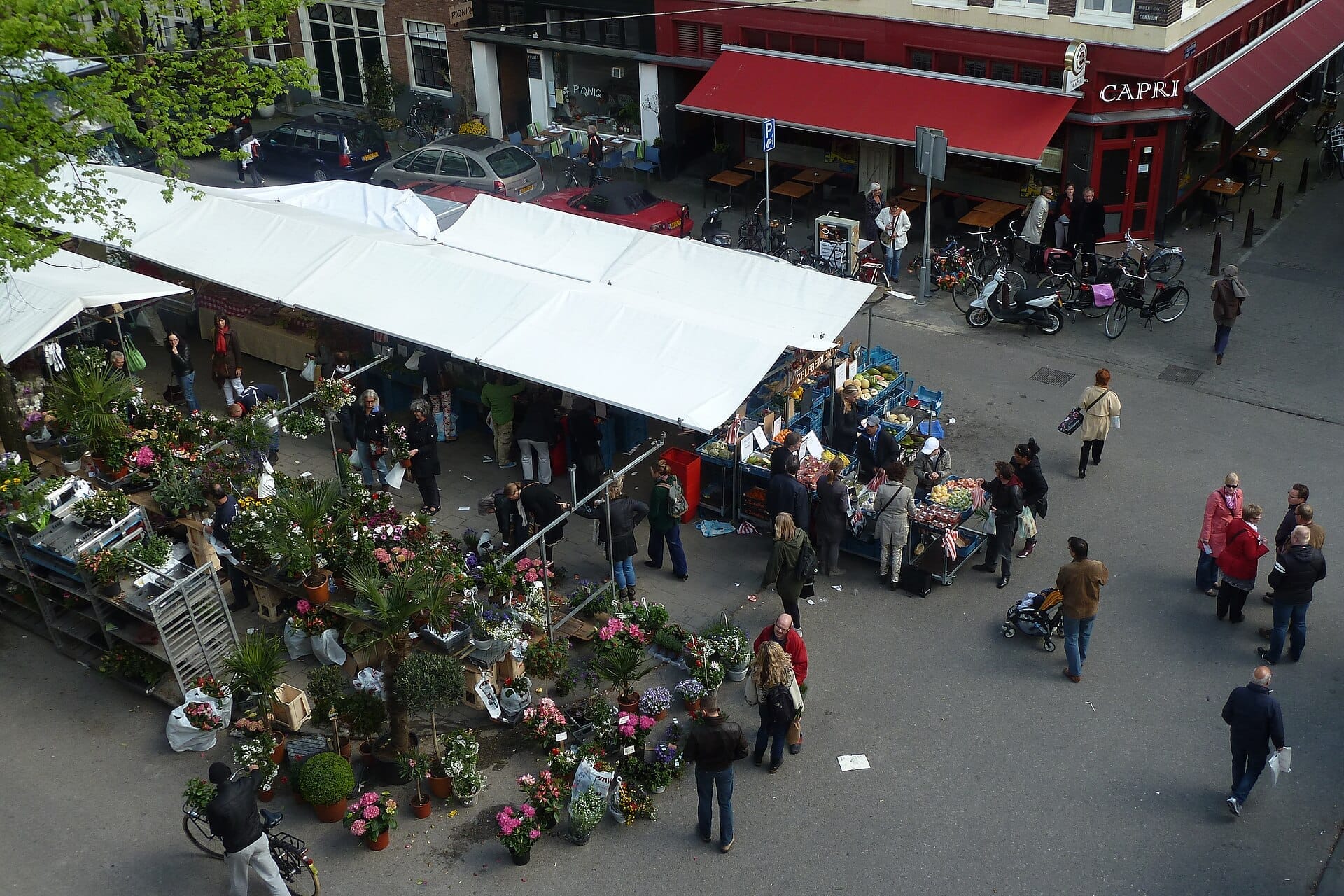
What the Lindengracht Market Actually Is
The Lindengracht Market is a Saturday street market held along the full length of Lindengracht in Amsterdam's Jordaan neighbourhood. It runs every Saturday from 09:00 to 17:00, and covers more than 900 metres of street with 232 stalls. There is no entry fee. It is not a tourist market masquerading as a local one. The produce stalls are stocked by Dutch suppliers, the customers are mostly Jordaan residents, and the conversations happening around you will largely be in Dutch.
The street itself has a quiet piece of Amsterdam history beneath it. Lindengracht was once a genuine canal, part of the network that defined the Jordaan when the neighbourhood was laid out in the early 17th century. By the late 19th century, the canal had been filled in, and by 1894 a market had taken hold on the newly flat street. That market has continued ever since, which makes Lindengracht one of the older continuously operating street markets in the city.
💡 Local tip
Arrive between 09:00 and 10:30 for the fullest stalls and the least crowded aisles. By noon, the most popular food vendors often run low on stock, and the central stretch becomes noticeably harder to navigate.
The Layout: What You'll Find and Where
The market runs the entire length of Lindengracht, so there is no single entrance. Most visitors approach from the southern end near Westerstraat, or drop in from one of the side streets that cross the Jordaan's grid. Walking the full length and back takes around 15 to 20 minutes at a relaxed pace, longer if you stop to browse or eat.
Fresh food dominates the first sections you encounter: Dutch cheeses, vegetables, bread, fish, flowers, and herbs. The smell of warm stroopwafels being pressed on-site is reliable, and a few stalls sell olives, deli meats, and Indonesian-influenced street food that reflects Amsterdam's culinary history. Further along, the market shifts toward clothing, household goods, secondhand items, and occasional antiques. The mix is uneven but that unevenness is part of the appeal. You are not moving through curated sections.
If you want to compare what a more tourist-oriented market feels like, the Bloemenmarkt on the Singel provides a useful contrast. Lindengracht operates with a different logic entirely: the stall holders know many of their customers by name.
Tickets & tours
Live prices and dates from our booking partner. If you book, we may earn a commission at no extra cost to you.
Gray Line Canal Cruise with snackbox & Heineken Experience
From 48 €Instant confirmationFree cancellationAmsterdam evening canal cruise
From 18 €Instant confirmationFree cancellationJewish Museum and Portuguese Synagogue entrance ticket
From 20 €Instant confirmationFree cancellationAdmission ticket for Artis Royal Zoo and Micropia
From 39 €Instant confirmationFree cancellation
How the Market Changes Through the Morning
At 09:00, the market is already fully open but the crowd is thin. The light in the Jordaan at that hour, especially in spring and early autumn, falls low across the canal houses on either side of Lindengracht and catches the produce displays at an angle that makes everything look better than it probably deserves. This is the best window for photography: good light, space to step back, and vendors who are not yet managing a queue.
By 10:30 to 11:00, the rhythm shifts. Families arrive with bags, cyclists lock up at the ends of the street, and the food stalls see steady lines. The atmosphere is relaxed but purposeful. This is not a market where people wander aimlessly; they are here to shop for the week. Between 11:30 and 13:00, the crowd peaks. Navigation slows, particularly through the central produce section, and the market takes on the kind of low-level noise that makes conversations carry over each other in pleasant layers.
From around 14:00 onward, stalls begin wrapping up or reducing stock. The market officially continues until 17:00, but the best of it is earlier.
ℹ️ Good to know
Weather matters here. The market runs in rain, but an overcast Saturday morning changes the experience significantly. Stalls stay open, vendors wear waterproofs, and die-hard locals still come. But if you have the choice of a sunny Saturday versus a grey one, the sunny morning wins by some margin.
Historical and Neighbourhood Context
The Jordaan was developed in the early 1600s as Amsterdam expanded rapidly during the Dutch Golden Age. It was designed as a working-class district, a dense grid of small streets, canals, and courtyards where artisans, labourers, and immigrants settled alongside each other. By the 20th century it had become one of the city's most densely populated and economically mixed neighbourhoods, known for a strong local identity and, eventually, for the gentrification that reshaped it from the 1980s onward.
The Lindengracht Market fits into that longer story. It predates the gentrification period by nearly a century and has remained a functional, working market rather than transforming into a lifestyle event. Walking it on a Saturday still gives a better sense of the Jordaan as a neighbourhood than most of what you'll find in the blocks around the Nine Streets shopping district, where the commercial offer has been almost entirely oriented toward visitors and high-income residents.
The Noordermarkt is the other major Saturday market in the Jordaan, held at the northern end of the neighbourhood around the Noorderkerk. The two markets are different in character: Noordermarkt has a stronger organic and artisan focus and a more self-consciously curated feel. Visiting both on the same morning is practical, since they overlap in time and are roughly 10 to 12 minutes apart on foot.
Getting There and Getting Around
Lindengracht is in the Jordaan, which sits between Amsterdam's main canal ring and the Singelgracht. From Amsterdam Centraal Station, the walk takes about 20 to 25 minutes through the Jordaan's side streets. Tram line 3 stops at Nieuwe Willemsstraat (Marnixbad), which puts you within a short walk of the market. Buses 18 and 21 also serve the area depending on your starting point.
Cycling is the most natural way to arrive, given that this is Amsterdam. There is no dedicated bike parking at the market itself, but the surrounding streets have racks and available lamp-post space. For a broader orientation of how to move around the city on market days, the cycling in Amsterdam guide covers practical route planning and rules worth knowing before you ride.
⚠️ What to skip
Lindengracht is a street market held on a public road, which means it is not a controlled environment. Cobblestones and narrow passages between stalls can make navigation difficult for wheelchair users or anyone with limited mobility. There are no dedicated accessible routes through the market.
What to Buy, What to Eat, What to Skip
The strongest reason to visit is the food. Fresh Dutch cheese, in particular, is worth picking up here rather than at a dedicated cheese museum or tourist shop, where prices carry a premium and the selection is narrower. Flower and herb stalls stock seasonal varieties that reflect what is actually growing in the Netherlands at that time of year, which makes them a better indicator of the season than any calendar.
The hot food options are modest but reliable. Vendors selling poffertjes (small Dutch pancakes dusted with powdered sugar), herring, and stroopwafels are standard. The Indonesian-influenced stalls reflect the historical ties between the Netherlands and Indonesia, and offer a quick way to try something that is genuinely part of the local food culture rather than imported for tourist appeal.
The secondhand clothing and household goods section is worth a pass-through if you have time, but it is uneven. Some weeks produce genuinely interesting finds; other weeks the tables are full of things nobody wants. This section is best approached without expectations.
If markets are a significant part of your Amsterdam visit, the Amsterdam markets guide covers the full range across the city, including day-specific schedules and neighbourhood context for each.
Who This Market Is Not For
If you are visiting Amsterdam on a tight schedule with one or two days and a list of major attractions to cover, Lindengracht Market is not a high-priority stop. It offers atmosphere and fresh food rather than sights, and the experience is difficult to appreciate when rushed. Travellers who feel uncomfortable in slow, unstructured environments may also find the market less rewarding than those who are happy to move at the pace of the people around them.
It is also worth being honest: on a cold, wet Saturday in January, the market is a different experience from a warm April morning. The vendors are there regardless, but the pleasure of walking 900 metres of open street in the rain with nowhere to shelter is limited. If weather is unreliable on your travel dates, check the forecast before making it a priority.
Insider Tips
- Bring a reusable bag. Several produce stalls will pack items loosely and you will run out of hands quickly without one.
- The stall closest to the Westerstraat end often has the best selection of Dutch flowers at prices significantly below the Bloemenmarkt. Buy them last, before you leave.
- If you want coffee before browsing, skip the tourist cafes on the main canal streets. The neighbourhood cafes on Lindengracht and Tweede Lindendwarsstraat open early on Saturdays and see mostly local trade.
- The market runs in rain, but many vendors near the centre of the street tend to use their own stall awnings and nearby façades for partial cover. If it starts raining while you are there, head toward the middle section.
- Combining Lindengracht with the Noordermarkt on the same Saturday morning is easy: the two markets overlap in time and the walk between them is about 10 to 12 minutes through pleasant Jordaan streets.
Who Is Lindengracht Market For?
- Travellers who want to see Amsterdam as a city people actually live in, not just visit
- Food lovers looking for Dutch cheese, fresh produce, and local street food at genuine prices
- Photographers who want early-morning light, candid street scenes, and architectural backdrops
- Slow travellers with a Saturday free and no fixed agenda
- Anyone pairing a market morning with a Jordaan neighbourhood walk
Nearby Attractions
Other things to see while in Jordaan:
- Amsterdam Cheese Museum
Tucked into a building on Prinsengracht, often described as dating from around 1600, the Amsterdam Cheese Museum offers a free, compact introduction to Dutch cheese culture, complete with tastings and exhibits. It sits two minutes from the Anne Frank House, making it a natural addition to a Jordaan afternoon.
- Amsterdam Tulip Museum
Tucked into a canal house on Prinsengracht, directly across from the Anne Frank House, the Amsterdam Tulip Museum traces 400 years of tulip history, from Ottoman origins to the chaos of Tulip Mania and the flower's enduring grip on Dutch identity. Small in scale but precise in focus, it rewards curious visitors who want context beyond the postcard.
- De Negen Straatjes (The Nine Streets)
De Negen Straatjes, or The Nine Streets, is a grid of nine historic cross-streets threading through Amsterdam's Canal Ring between the Singel and Prinsengracht. Free to explore at any hour, the area blends 17th-century canal architecture with independent boutiques, specialist food shops, and unhurried café culture. It rewards slow walkers and curious browsers far more than shoppers with a checklist.
- Het Schip Museum
Museum Het Schip occupies a landmark 1919 public housing complex designed by Michel de Klerk, the defining genius of the Amsterdam School movement. Part architecture museum, part social history, it offers one of Amsterdam's most distinctive and undervisited cultural experiences.
Planning a trip? Discover personalized activities with the Nomado app.