Bloemenmarkt: Amsterdam's Floating Flower Market Explained
The Bloemenmarkt sits on a row of fixed barges along the Singel canal, operating since 1862 as the world's only floating flower market. Free to enter and open daily, it sells tulip bulbs, cut flowers, and souvenirs in the heart of Amsterdam's Canal Ring. Here is what you will actually find there.
Quick Facts
- Location
- Singel canal, between Muntplein and Koningsplein, Canal Ring, Amsterdam
- Getting There
- Tram 2 or 12 to Koningsplein stop
- Time Needed
- 20–45 minutes for a thorough walk-through
- Cost
- Free entry; purchases vary by stall
- Best for
- Flower lovers, tulip bulb shopping, canal photography, quick cultural stops
- Official website
- tulipfestivalamsterdam.com/floating-flower-market-amsterdam
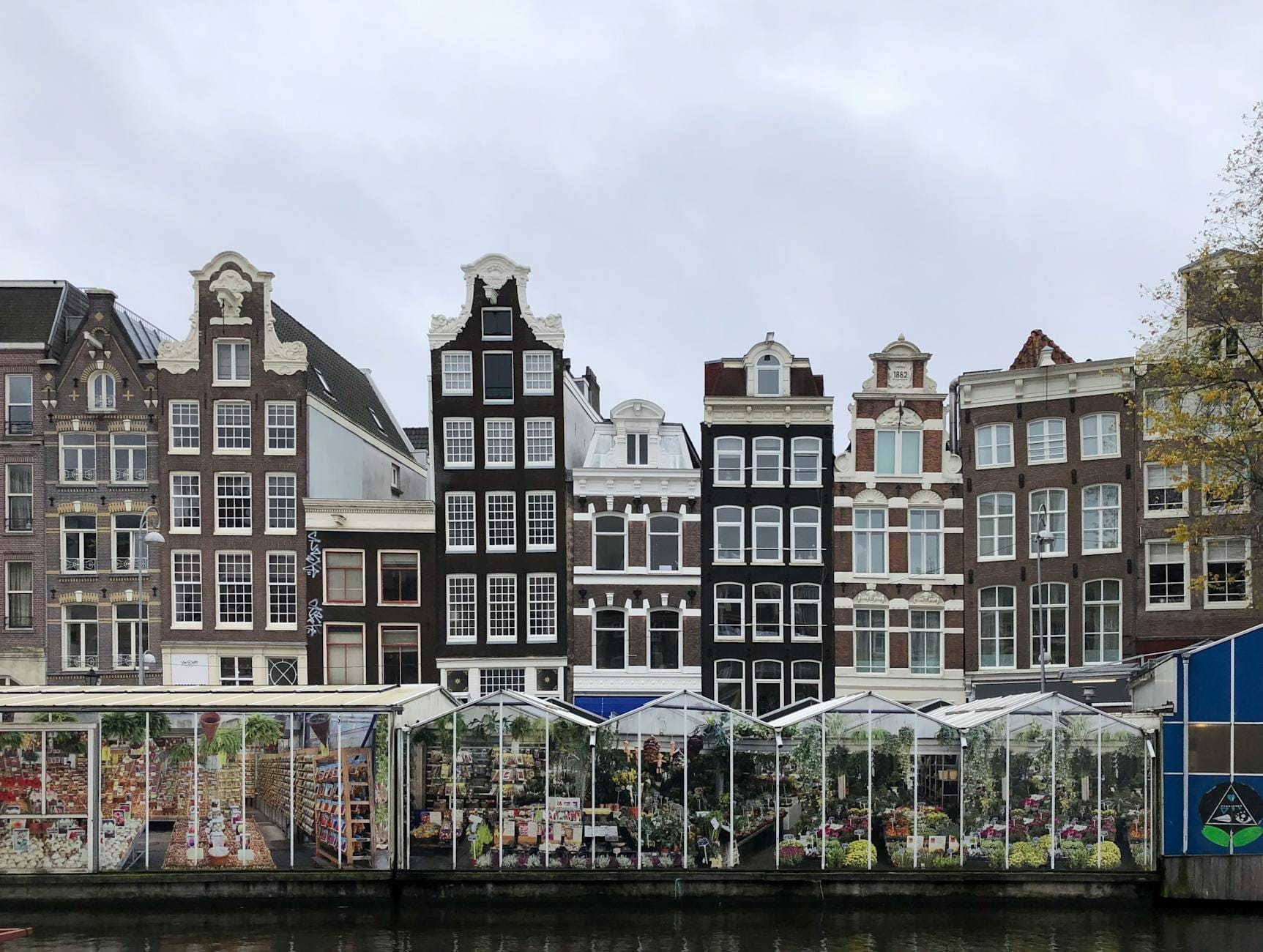
What the Bloemenmarkt Actually Is
The Bloemenmarkt is a row of roughly fifteen covered stalls built directly onto barges moored along the Singel canal. It has operated in this location since 1862, when flower sellers originally arrived by boat to sell directly from the water. The boats are no longer floating in any active sense, they are permanent structures, but the barges beneath each stall are real and still visible from the canal side or from a passing boat.
The market stretches between Muntplein and Koningsplein, two of the Canal Ring's main intersections. The Munttoren (Mint Tower) rises visibly at the eastern end, which makes orientation straightforward from almost any approach. Walking the full length takes only a few minutes at a relaxed pace, so most visitors do it twice: once to survey the stalls and once to buy.
ℹ️ Good to know
The Bloemenmarkt is open Monday to Saturday 09:00–17:30 and Sunday 11:30–17:30, year-round. There is no admission fee. Individual stall hours may vary slightly around public holidays.
The market sits squarely in the Canal Ring, Amsterdam's UNESCO-listed 17th-century waterway district. It is one of the most photographed street-level locations in the city, partly because of the colour and partly because the canal backdrop makes for an unusually compressed scene. That combination of visual density and easy access is what draws crowds — and it is worth knowing that crowds here can be substantial.
What You Will Find at the Stalls
The product mix has shifted considerably over the decades. A generation ago, the Bloemenmarkt was primarily a working flower market where Amsterdam residents and florists bought cut blooms. Today the balance has tipped toward tourism. Most stalls sell a combination of tulip and other flower bulbs (packaged for export and airline-approved), potted plants, seeds, dried flowers, and a broad range of Dutch souvenirs: wooden shoes, Delft ceramics, cheese-themed magnets, and miniature windmills.
Cut flowers are still sold but they are no longer the dominant offering. If you are a serious buyer of fresh-cut stems, the Albert Cuyp Market or local neighbourhood florists will give you better value and more variety. What the Bloemenmarkt does well is tulip bulbs: you can buy certified phytosanitary-inspected bulbs here that are approved for import into many countries, including the United States. Stall owners are generally accustomed to questions about export rules and packaging.
Spring is the peak season for bulb variety and visual impact. From late March through early May, the stalls overflow with colour and the whole stretch feels like a preview of the wider Amsterdam Tulip Festival. Outside spring, the market is quieter and the bulb selection is still present but the cut flower displays are more modest.
Tickets & tours
Live prices and dates from our booking partner. If you book, we may earn a commission at no extra cost to you.
Escape Tour self-guided, interactive city challenge in Amsterdam
From 0 €Instant confirmationEscape Tour self-guided, interactive city challenge in Amsterdam
From 0 €Instant confirmationGray Line Canal Cruise with snackbox & Heineken Experience
From 48 €Instant confirmationFree cancellationAmsterdam evening canal cruise
From 18 €Instant confirmationFree cancellation
How the Experience Changes by Time of Day
Arrive before 10:00 on a weekday and the Bloemenmarkt is a different place. Stall vendors are arranging displays, the pavement is clear, and the canal light at that hour, low and angled, catches the colour of the flowers in a way that midday sun simply does not replicate. The smell is also most noticeable in the morning: a combination of soil, fresh stems, and the slight dampness rising off the Singel. It is the version of this market closest to what it must have felt like when it was primarily a working trade venue.
Between 11:00 and 15:00, particularly on weekends, the narrow pavement becomes difficult to navigate. Tour groups and independent visitors converge from both ends, and the single-file width of the walkway means you will be stopping and starting constantly. Photography becomes harder because other visitors are always in frame. This is not a fatal flaw, just a practical reality worth anticipating.
💡 Local tip
Weekday mornings between 09:00 and 10:30 offer the best combination of open stalls, thin crowds, and good canal light for photography. Sunday does not open until 11:30, making it the most crowded start of the week.
By late afternoon the crowds thin again, especially after 16:30 as tour groups have moved on. The light becomes warmer and lower, which suits photography well, but a few stalls begin packing up before the official 17:30 closing time.
Historical and Cultural Context
The flower trade has been central to Dutch economic life since the 17th century, when tulip speculation during the period known as Tulip Mania made the bulb temporarily one of the most valuable commodities in Europe. That frenzy collapsed in 1637, but the underlying horticultural industry survived and the Netherlands remains the world's largest exporter of cut flowers and bulbs today.
The Bloemenmarkt was established in 1862, when the Sint Luciënwal, an earlier canal site used for flower trading, was filled in. Sellers moved their operations to the Singel, bringing their boats with them. The floating barge structure was a practical solution to the geography of a city built on water, not a picturesque affectation. Over time the barges were fixed and enclosed, and the stalls as they exist today are permanent constructions, but the original logic of canal-side access is still embedded in the layout.
If the history of Dutch flower cultivation interests you, the nearby Amsterdam Tulip Museum covers that story in considerably more depth, including the Tulip Mania period and the mechanics of the modern bulb export industry. It is a short walk from the Bloemenmarkt and makes for a natural pairing.
Getting There and Getting Around
The most direct public transport option is Tram 2 or Tram 12 to the Koningsplein stop, which deposits you near the western end of the market. From Amsterdam Centraal, the journey takes roughly ten minutes. The Muntplein area serves the eastern end if you are approaching from Rembrandtplein or further east.
On foot from the Dam Square area, the walk takes around twelve to fifteen minutes along Kalverstraat or via the Rokin. From Rembrandtplein it is a five-minute walk west along Reguliersbreestraat to Muntplein. The market is also a natural stop on any canal cruise route through the Singel, and passing boats give a clear view of the barge structure from the water.
Cycling is possible but you will need to lock your bike before entering the stall area. The pavement is too narrow for a bike to pass through comfortably, and there are designated bike parking spots at both ends of the market stretch.
⚠️ What to skip
Wheelchair and pushchair access is limited. Stall entrances involve small steps or uneven thresholds where the barge meets the pavement, typical of older canal-side structures in Amsterdam. Wide pushchairs may struggle at peak times due to pavement congestion.
Photography Notes
The Bloemenmarkt photographs well but requires some patience. The most effective compositions use the canal as a backdrop or frame the stall interiors against the water visible behind. A wide-angle lens captures the full depth of a stall; a longer focal length isolates individual blooms against the blurred canal background. On overcast days, the diffuse light is actually better for colour accuracy than direct sun, which washes out pale pinks and whites.
Drone photography is not practical or permitted in this part of the city centre. Bridge shots from the Koningsplein or Muntplein bridges give an elevated perspective on the barge rooflines and the canal stretch. These are worth taking a few minutes for, particularly in spring when the colour is densest.
Honest Assessment: Is It Worth Your Time?
The Bloemenmarkt is frequently described as one of Amsterdam's iconic experiences, and it is, in the sense that it is genuinely unique and historically significant. But it is also a short market with a high proportion of souvenir content, and visitors who arrive expecting a sprawling flower bazaar sometimes find the reality more compact and more commercial than expected.
It is worth visiting if you are already in the Canal Ring area, which most Amsterdam visitors are. It takes less than an hour including stall browsing, it costs nothing to enter, and the combination of cut flowers, bulbs, and canal backdrop is not replicated anywhere else in the city. It is not worth making a dedicated trip across the city for unless you have specific bulb purchases in mind.
Visitors who want a more authentic Amsterdam market experience with less tourist infrastructure might prefer the Noordermarkt or the Albert Cuyp Market in De Pijp, both of which serve a more local clientele and offer broader product ranges. Those who want the full Dutch flower spectacle should plan a visit to Keukenhof during spring, which is a different scale of experience entirely.
Insider Tips
- Check the export certification label before buying bulbs for international travel. Most reputable stalls at the Bloemenmarkt package their bulbs with the phytosanitary certificate required for entry into the US, Canada, and Australia. Ask explicitly if you do not see it displayed.
- The stalls toward the Koningsplein (western) end of the market tend to be slightly less crowded than the Muntplein end, where most visitors arrive first from the Kalverstraat shopping street. Starting from the Koningsplein tram stop and working eastward puts you ahead of the flow.
- If you want a photograph without strangers in the frame, the gap between when stalls open (09:00) and when tour groups typically arrive (around 10:30) is your window. The light is better then too.
- Several stalls sell loose tulip bulbs by the bag rather than pre-packaged sets. These are typically better value if you want a large quantity of a single variety, and staff can usually advise on planting timing for your home country.
- The Munttoren (Mint Tower) at the eastern end of the market is free to view from outside and makes a natural orientation point. The tower dates from 1620 and was originally part of the city's medieval gate system, worth a few minutes' pause before or after the market.
Who Is Bloemenmarkt (Floating Flower Market) For?
- Travellers who want to buy certified tulip bulbs to take home
- Canal Ring walkers combining multiple stops in the southern historic centre
- Spring visitors wanting to experience Amsterdam's flower culture at street level
- Photographers looking for colourful canal-side compositions
- First-time Amsterdam visitors checking off a genuinely unique and historically significant landmark
Nearby Attractions
Other things to see while in Canal Ring (Grachtengordel):
- Anne Frank House
The Anne Frank House on Prinsengracht 263 preserves the hidden rooms where Anne Frank and seven others lived in concealment from 1942 to 1944. One of the most significant memorial sites in Europe, it requires advance planning but rewards visitors with an experience that stays with them long after they leave Amsterdam.
- Amsterdam Canal Cruises
A canal cruise is one of the most efficient ways to understand Amsterdam's layout and its 17th-century heritage. This guide covers the main operators, departure points, what you'll actually see, and how to pick the right cruise for your trip.
- FOAM Photography Museum
Housed in a 17th-century canal house on Keizersgracht, FOAM Photography Museum (Fotografiemuseum Amsterdam) has been one of Europe's leading photography institutions since it opened in December 2001. Four floors of rotating exhibitions cover documentary work, fine art photography, fashion, and emerging talent, making it a serious cultural stop that rewards repeat visits.
- Houseboat Museum
The Houseboat Museum, or Woonbootmuseum, lets you step aboard the Hendrika Maria, a 23-metre cargo vessel moored on Prinsengracht that has been a houseboat since the 1960s. It is one of the few places in Amsterdam where you can genuinely understand how roughly 2,500 people call the city's canals home. Small, focused, and refreshingly honest about what it is, this is a niche museum that delivers exactly what it promises.
Planning a trip? Discover personalized activities with the Nomado app.