Houseboat Museum Amsterdam: Inside Life on the Canal
The Houseboat Museum, or Woonbootmuseum, lets you step aboard the Hendrika Maria, a 23-metre cargo vessel moored on Prinsengracht that has been a houseboat since the 1960s. It is one of the few places in Amsterdam where you can genuinely understand how roughly 2,500 people call the city's canals home. Small, focused, and refreshingly honest about what it is, this is a niche museum that delivers exactly what it promises.
Quick Facts
- Location
- Prinsengracht 296K, 1016 HW Amsterdam (Canal Ring)
- Getting There
- Tram 13 or 17 to Westermarkt, then a 5-minute walk south along Prinsengracht
- Time Needed
- 30–40 minutes
- Cost
- Approximately €9–€10 for adults; verify current prices at houseboatmuseum.nl
- Best for
- Curious travellers, architecture enthusiasts, and anyone wondering what canal life actually looks like
- Official website
- houseboatmuseum.nl/en
What the Houseboat Museum Actually Is
The Woonbootmuseum, officially known in English as the Houseboat Museum, is not a grand institution with soaring galleries. It is a single vessel: the Hendrika Maria, a 23-metre former cargo ship built in 1914 that spent decades hauling sand and gravel through Dutch waterways before being converted into a houseboat in the 1960s. It opened as a public museum in 1998, and the premise is straightforward. You pay a small entrance fee, step down into the hull, and spend half an hour learning how Amsterdam's roughly 2,500 houseboats are used as homes on the canals.
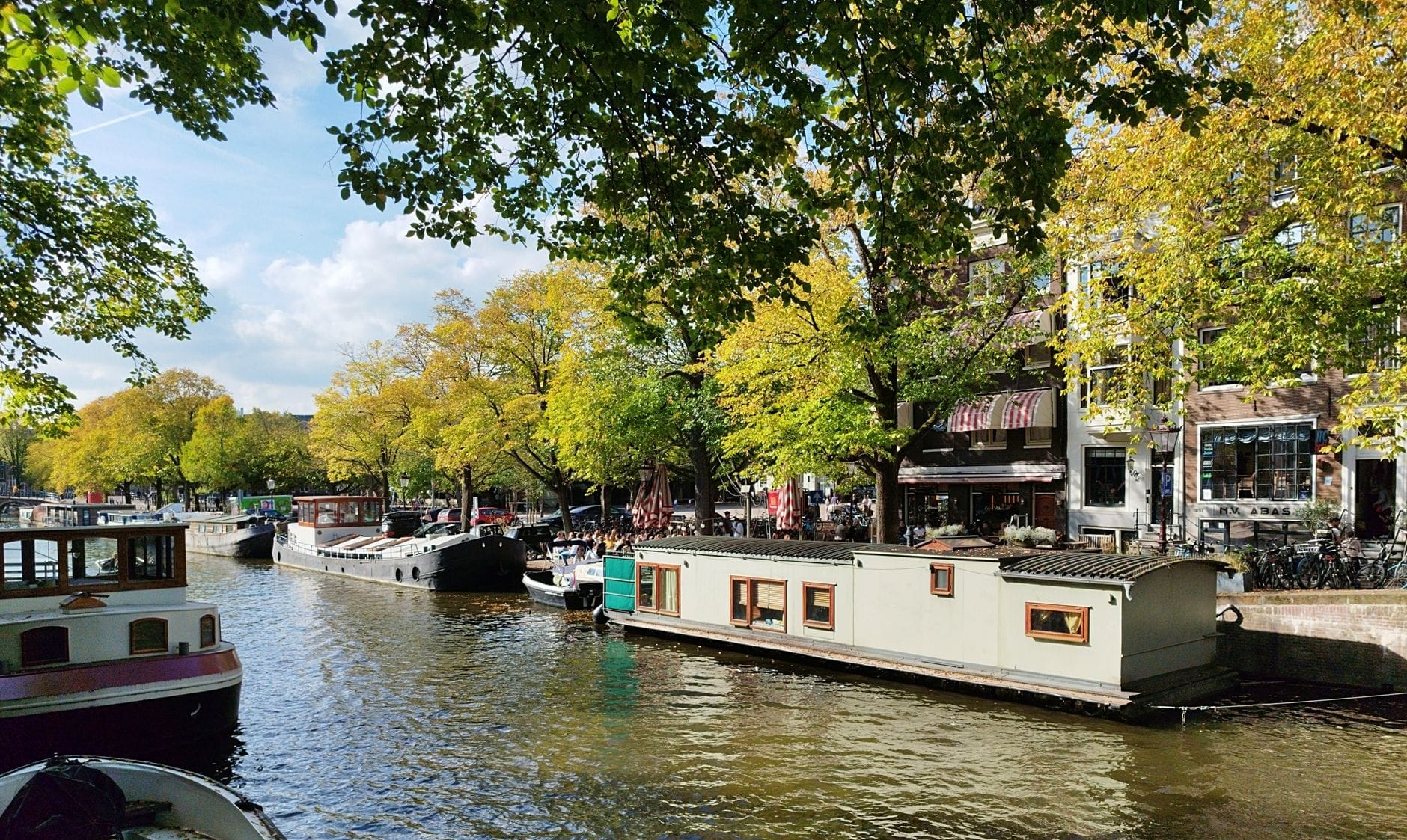
The museum sits on Prinsengracht, one of the three main canals of the UNESCO-listed Canal Ring, close to the Jordaan neighbourhood. The surrounding stretch of canal is lined with working houseboats, many with window boxes in bloom and bicycles chained to the roof. Walking the canalside path to reach the Hendrika Maria is itself part of the experience: you are already inside the context before you board.
💡 Local tip
Opening hours are currently listed as daily 10:00–17:00, but they can shift seasonally. Always confirm on the official website before visiting, especially in winter or during public holidays.
Boarding the Hendrika Maria: What You Will See
Access is via a short gangplank from the canal path. There is a small entrance area on deck before you descend into the main living space. The interior is organised into a series of compact rooms that recreate domestic life aboard a houseboat: a sitting room with period furnishings, a kitchen with a miniature layout that makes the logistics of cooking on water immediately clear, sleeping quarters, and a bathroom. The scale is tight. Ceilings clear the average adult with room to spare, but the width of the vessel means you are always aware of the water on either side.
A scale model shows how a typical Amsterdam houseboat sits in the canal: floating on a hull, connected to city water, electricity, and sewage networks by flexible umbilical lines. The museum explains the permit system governing houseboat ownership, the mooring fees involved, and the maintenance challenges that owners face, from hull inspection every few years to the complications of buying and selling a floating home.
Information is available in a wide range of languages, so language is rarely a barrier. The tone throughout is explanatory rather than sensational. This is a museum about domestic practicality, not romance, and it is more interesting for it.
Tickets & tours
Live prices and dates from our booking partner. If you book, we may earn a commission at no extra cost to you.
Houseboat Museum Amsterdam tickets with self guided audio tour
From 10 €Instant confirmationGray Line Canal Cruise with snackbox & Heineken Experience
From 48 €Instant confirmationFree cancellationAmsterdam evening canal cruise
From 18 €Instant confirmationFree cancellationJewish Museum and Portuguese Synagogue entrance ticket
From 20 €Instant confirmationFree cancellation
Historical and Cultural Context
Amsterdam's relationship with houseboats is post-war in origin. A severe housing shortage following World War II pushed many residents onto decommissioned vessels, and the practice became entrenched over decades. By the late 20th century, houseboats had shifted from necessity to lifestyle choice, though the waiting time for a legal mooring permit is now measured in years, sometimes decades.
The Hendrika Maria's working life as a cargo ship places it within a broader tradition of Dutch inland waterway transport, much of which passed through Amsterdam's historic port. If that industrial heritage interests you, the National Maritime Museum in the Plantage district tells the full story of the Netherlands' seafaring and commercial past with far greater scope.
The Canal Ring itself is the essential backdrop. Amsterdam's 17th-century canal system, a UNESCO World Heritage Site since 2010, was engineered as a rational urban grid, and the Prinsengracht is its outermost and longest main canal. For a proper orientation to the canals as a whole, a canal cruise from one of the nearby jetties pairs well with a visit to the museum.
How the Experience Changes by Time of Day
Arriving at opening time, around 10:00, means the Prinsengracht is still relatively quiet. Morning light comes in low across the water from the east, and the canal surface has a stillness that disappears once tour boats begin their circuits later in the morning. The museum itself is small enough that even a modest crowd of six to eight people inside simultaneously creates a sense of congestion.
By midday, the path outside fills with foot traffic heading to and from the Anne Frank House, which is a few minutes' walk north. If you visit the area primarily for the Anne Frank House and are looking to fill the time before your timed entry, the Houseboat Museum makes a sensible companion. Early afternoon brings the heaviest visitor pressure to the whole Prinsengracht corridor.
Late afternoon, from around 15:30 onwards, is often the calmest window. Light on the canal takes on a warm tone in spring and summer, and the neighbouring houseboats become more visibly inhabited as residents return home. This is when the museum's context feels most alive: the floating homes around you are not exhibits but addresses.
⚠️ What to skip
The museum has limited capacity. On peak summer days and holiday weekends, a short queue can form. Arriving at opening or after 15:00 reduces wait times.
Practical Walkthrough: Getting There and Getting In
A convenient tram approach is tram 13 or 17 to Westermarkt. From there, walk south along Prinsengracht for roughly five minutes. The Hendrika Maria is moored at number 296K on the western bank of the canal. The boat is painted in dark colours with clear signage, and the entrance flag is visible from the canalside path.
Tickets can be purchased on arrival. Admission is modest, around €9–€10 for adults at the time of research, though prices should be confirmed at the official site as they are subject to change. There is no café or gift shop of note, and the museum is compact enough that a timed entry system is not typically required outside peak periods.
Accessibility is limited. Boarding requires stepping across a narrow gangplank and descending steps into the hull. The vessel is not wheelchair accessible, and visitors with significant mobility restrictions may find the confined interior difficult to navigate. The museum is honest about this on its listings, so check before making the trip a centrepiece of an accessibility-focused day.
If you are planning a full day in the Canal Ring, consider combining this visit with the Anne Frank House nearby, a walk through the Jordaan, and a browse through the independent shops of De Negen Straatjes.
Photography and What to Bring
Photography inside the museum is generally permitted for personal use. The interior rooms are dim, so a phone with good low-light capability will serve you better than a wide-angle lens. The exterior, with the Hendrika Maria framed against the Prinsengracht and the canal houses behind it, is the most photogenic angle. Shoot from the opposite bank, or from the bridge at Elandsgracht to the south, for the classic canalscape composition.
There is no coat storage or lockers, so a light bag or backpack is easiest. The interior can feel warm on summer days with a full complement of visitors. The wooden gangplank can be slippery in wet weather, so footwear with grip matters more than most visitors expect.
ℹ️ Good to know
The museum provides information in multiple languages via printed guides and panels. No audio guide or app is required.
An Honest Assessment: Is It Worth Your Time?
The Houseboat Museum is a focused, well-maintained attraction that does one thing and does it well. It will not take more than an hour even at a leisurely pace, and the admission cost is low enough that the value equation is straightforward for anyone with a genuine curiosity about canal life. It is not, however, a major museum experience. There are no interactive digital installations, no extensive collections, and no theatrical interpretation. If you are working through Amsterdam's flagship cultural institutions on a short trip, this will likely fall lower on your list than the Rijksmuseum or the Van Gogh Museum.
Where it earns its place is as a complement: part of a longer walk along the Prinsengracht, a way to understand the neighbourhood context before or after a canal cruise, or a genuinely distinctive stop for travellers interested in domestic architecture and everyday urban life. If you have already seen Amsterdam's main museums, this is the kind of specific, quiet experience that makes a city visit feel less like a checklist and more like understanding.
Families with young children may find the confined space and the lack of hands-on exhibits less engaging than they hoped. The same applies to visitors who have already toured one of Amsterdam's grander canal houses, such as the Willet-Holthuysen Museum, and are looking for something with similar depth and breadth. On the other hand, travellers who spend time wondering what is happening behind the curtained windows of the houseboats they pass on canal cruises will find the Houseboat Museum answers exactly those questions.
Insider Tips
- For the best exterior photograph of the Hendrika Maria, cross to the opposite bank of Prinsengracht and shoot from the far side of the canal. The canal houses behind the boat provide a layered backdrop that photographs much better than shooting from the same bank.
- The stretch of Prinsengracht between Westermarkt and Elandsgracht has a notably high concentration of well-maintained working houseboats. Walk the full 10-minute stretch slowly and you will see the museum's subject matter in real life on both sides of you.
- If you want to understand the legal and practical side of houseboat ownership in depth, the museum's scale model and documentation on mooring permits is the most useful part of the interior. Give it more time than you might expect.
- Combine the visit with the Noordermarkt or Lindengracht market on a Saturday morning for a fuller picture of everyday life in this part of the city.
- The museum's gangplank can be slippery in rain. The rubber grip strips help, but take it slowly, especially when descending back to the canalside path after the visit.
Who Is Houseboat Museum For?
- Architecture and urban design enthusiasts curious about how floating domestic spaces actually work
- Travellers on a second or third visit to Amsterdam who want to go beyond the headline museums
- Families with older children (8+) who can engage with the practical and historical explanation
- Anyone on a walking tour of the Canal Ring looking for a short, affordable indoor stop
- Solo travellers who enjoy quiet, unhurried, content-rich small museums
Nearby Attractions
Other things to see while in Canal Ring (Grachtengordel):
- Anne Frank House
The Anne Frank House on Prinsengracht 263 preserves the hidden rooms where Anne Frank and seven others lived in concealment from 1942 to 1944. One of the most significant memorial sites in Europe, it requires advance planning but rewards visitors with an experience that stays with them long after they leave Amsterdam.
- Bloemenmarkt (Floating Flower Market)
The Bloemenmarkt sits on a row of fixed barges along the Singel canal, operating since 1862 as the world's only floating flower market. Free to enter and open daily, it sells tulip bulbs, cut flowers, and souvenirs in the heart of Amsterdam's Canal Ring. Here is what you will actually find there.
- Amsterdam Canal Cruises
A canal cruise is one of the most efficient ways to understand Amsterdam's layout and its 17th-century heritage. This guide covers the main operators, departure points, what you'll actually see, and how to pick the right cruise for your trip.
- FOAM Photography Museum
Housed in a 17th-century canal house on Keizersgracht, FOAM Photography Museum (Fotografiemuseum Amsterdam) has been one of Europe's leading photography institutions since it opened in December 2001. Four floors of rotating exhibitions cover documentary work, fine art photography, fashion, and emerging talent, making it a serious cultural stop that rewards repeat visits.
Planning a trip? Discover personalized activities with the Nomado app.