Amsterdam Tulip Festival: A City-Wide Floral Event Worth Planning Around
Every April, the Amsterdam Tulip Festival transforms more than 100 locations across the city into open-air tulip displays. From museum gardens to canal-side squares, the festival is largely free, walkable, and timed to the peak of the Dutch tulip season.
Quick Facts
- Location
- City-wide, Amsterdam (100+ locations across central districts and beyond)
- Getting There
- Amsterdam Centraal by train, then GVB tram, metro, or bus to individual locations
- Time Needed
- Half-day for a focused route; full day if you explore multiple districts
- Cost
- Free for public street and square displays; museum/garden venues charge their regular admission
- Best for
- Spring travelers, photography, families, leisurely city walks in April
- Official website
- tulpfestival.com
What the Amsterdam Tulip Festival Actually Is
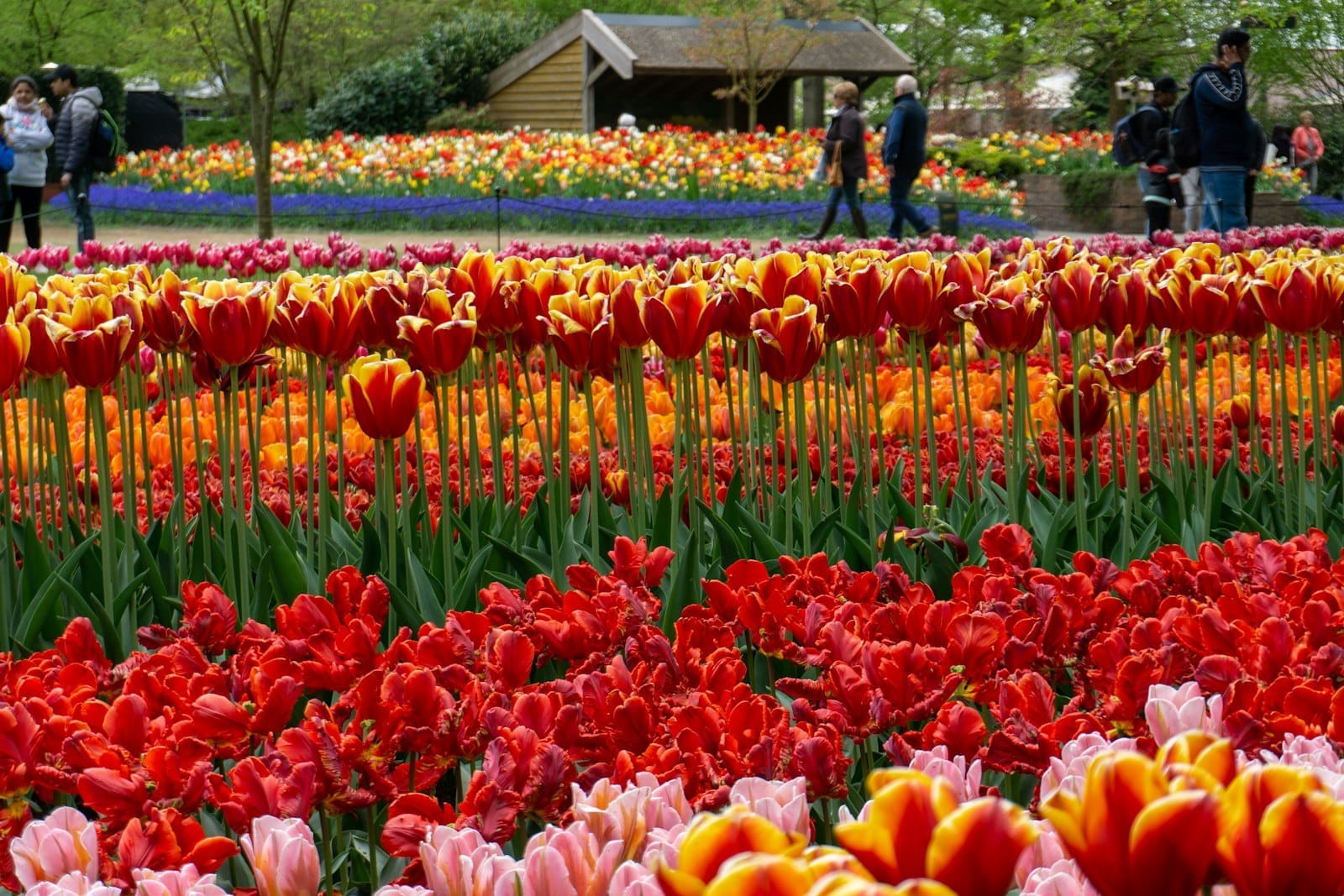
The Amsterdam Tulip Festival is not a fairground, not a ticketed event, and not a single destination. It is a city-wide planting initiative that fills more than 100 public locations across Amsterdam with tulip displays throughout the month of April. Think canal-side squares, hotel courtyards, museum gardens, and neighbourhood streets, each planted with a specific variety chosen to complement its surroundings.
The concept behind the festival is deliberately low-barrier: the majority of the displays are in public spaces, which means anyone walking or cycling through central Amsterdam during April will encounter them without spending a cent. For venues that plant tulips within a museum garden or private courtyard, the regular admission of that specific venue applies. There is no festival ticket, no wristband, and no single entrance gate.
ℹ️ Good to know
The official festival period typically runs throughout April, with displays open daily until approximately 17:00 at managed venues. Public street and square plantings can be enjoyed at any hour. Confirm exact dates each year at tulipfestivalamsterdam.com before you travel, as the window shifts slightly based on weather and bloom conditions.
The festival fits neatly into the wider Dutch tulip season, which runs from late March to mid-May, with peak bloom typically falling in mid-April. If you are planning a broader spring trip to the Netherlands, pair the Amsterdam festival with the Keukenhof gardens in Lisse, roughly 35 km south-west of the city, where over seven million bulbs flower across 32 hectares. The two experiences are complementary rather than interchangeable.
How the Festival Feels on the Ground
Walking through Amsterdam in April when the tulips are at peak bloom has a particular quality to it. The city is already photogenic at this time of year, with the canal trees in fresh leaf and the light lasting well into the evening. But the festival layers an additional element: unexpected flashes of colour in places you might not expect, a planting of deep purple Ronaldo tulips at the foot of a 17th-century canal house, a row of white and orange blooms in the garden of a small hotel you would otherwise walk past.
Early mornings, before 9:00, offer the cleanest light for photography and the quietest atmosphere. The city has not yet shifted into its daytime pace, cyclists are fewer, and the displays in squares and open plazas are unobstructed. By mid-morning the tourist traffic picks up noticeably in the centre, particularly around Museumplein and the canal ring. If you are specifically visiting locations near the Rijksmuseum or the Van Gogh Museum, arriving before those institutions open their doors gives you a calmer experience of the outdoor displays.
Afternoons are the busiest period, especially on weekends in mid-April. This is not necessarily a reason to avoid the festival, but it does change the character of the experience. The canal-side locations and neighbourhood spots in areas like the Jordaan tend to remain quieter than the major museum forecourts throughout the day.
Tickets & tours
Live prices and dates from our booking partner. If you book, we may earn a commission at no extra cost to you.
Amsterdam Light Festival canal cruise on a luxury boat with drinks
From 30 €Instant confirmationFree cancellationAmsterdam Light Festival cruise with open bar
From 27 €Instant confirmationFree cancellationKeukenhof Gardens and Tulip Experience From Amsterdam
From 79 €Instant confirmationFree cancellationBoat tour through the Amsterdam Light Festival
From 42 €Instant confirmationFree cancellation
Where to Find the Displays: Navigating 100+ Locations
With more than 100 planting locations spread across the city, the practical question is how to approach a visit without exhausting yourself or backtracking unnecessarily. The festival's official website publishes a map each year listing every location. Downloading or bookmarking this map before you set out is the single most useful piece of preparation you can do.
A loose self-guided route through central Amsterdam can connect a substantial number of locations in half a day on foot. Starting from Amsterdam Centraal and moving south through the Canal Ring toward Museumplein covers some of the densest clusters of displays. The route along the major canals, Herengracht, Keizersgracht, and Prinsengracht, passes through planted areas while also giving you the classic Amsterdam streetscape.
For visitors who prefer cycling, the festival is well-suited to two wheels. Amsterdam's cycling infrastructure is extensive, and covering 100+ locations in a day is far more feasible by bike than on foot. Rental options are available throughout the city. For guidance on getting around this way, the cycling in Amsterdam guide covers rental, routes, and road rules in detail.
💡 Local tip
The official festival map is updated each year and marks locations by type: public street displays, museum gardens, hotel gardens, and special installations. Use it to identify which locations require venue admission and plan accordingly.
Timing Your Visit: Peak Bloom and Weather Realities
Mid-April is the statistical sweet spot for tulip bloom in the Netherlands, though this shifts year to year depending on winter temperatures and spring warmth. A warm February can push flowering forward; a cold March can delay it into late April. The festival organisers select varieties partly for their staggered bloom times, which means the displays are designed to remain presentable across the full month rather than peaking and fading within a single week.
Amsterdam's climate in April is oceanic: mild but genuinely unpredictable. Average daytime temperatures sit in the low to mid-teens Celsius, but rain is a consistent companion throughout spring. A waterproof outer layer is not optional gear; it is practical necessity. The good news is that tulips photograph particularly well on overcast days, when diffuse light eliminates harsh shadows and the colour saturation appears richer than in direct midday sun.
If you are specifically optimising for warm, clear weather and iconic floral imagery, the Amsterdam in spring guide includes a more detailed breakdown of what to expect month by month, including typical rainfall patterns and what other events coincide with the tulip season.
⚠️ What to skip
Do not schedule your entire trip around a specific bloom peak date. Tulip flowering in the Netherlands can vary by up to two weeks depending on that year's temperatures. If peak bloom is your priority, check real-time updates from Dutch horticultural organisations and the festival's own social channels in the days before you travel.
Getting There and Getting Around
Amsterdam Centraal station is the practical hub for reaching the festival's central cluster of locations. From Schiphol Airport, direct trains run to Centraal in approximately 15 to 20 minutes, making day trips from the airport hotel corridor entirely feasible. From Centraal, the GVB tram network provides direct access to Museumplein, the Jordaan, and other key festival areas without requiring a metro transfer.
For visitors already staying in central Amsterdam, many locations are walkable from standard accommodation clusters. The Canal Ring, the Jordaan, and the streets around Leidseplein and Rembrandtplein all fall within a manageable walking radius of each other. Comfortable, waterproof shoes are more important than athletic footwear: Amsterdam's streets are largely flat, but the cobblestones in older districts are uneven and can be slippery when wet.
For a broader orientation to Amsterdam's public transport options, including day passes and the OV-chipkaart, the getting around Amsterdam guide covers the full range of practical choices.
The Tulip in Dutch Cultural Context
The tulip's relationship with the Netherlands is historically layered and occasionally misunderstood. The plant itself is not native: it originated in Central Asia and was introduced to the Netherlands in the late 16th century, likely via the Ottoman Empire, through the botanist Carolus Clusius at Leiden University. What followed, including the speculative frenzy of Tulip Mania in the 1630s when single bulbs briefly sold for the price of a canal house, embedded the flower into Dutch economic and cultural mythology in a way that persists today.
By the 20th century, the Netherlands had become the world's dominant tulip producer, and the industry remains economically significant. The festival in Amsterdam is partly a civic celebration of this heritage and partly a practical demonstration that a city built of brick, cobblestone, and water can absorb large-scale floral installations without feeling contrived.
For visitors curious about the commercial and cultural story of the bulb industry, the Amsterdam Tulip Museum in the Jordaan is a compact, focused option that covers the history of tulip cultivation and trade. It is one of the smaller museums in the city, but it is directly relevant to the festival's context.
Who Should Reconsider
The Amsterdam Tulip Festival is not an immersive, curated experience in the way that Keukenhof is. If you are travelling specifically to see tulips in dramatic mass plantings, fields of colour stretching to the horizon, or greenhouse displays of rare varieties, this city festival will feel modest by comparison. The displays are urban in scale, integrated into the city fabric rather than designed as a stand-alone spectacle.
Visitors with significant mobility limitations should check individual venue accessibility before visiting, as conditions vary considerably. Public pavement displays are generally reachable via standard city routes, but some canal-side areas and older museum gardens involve steps, uneven surfaces, or narrow access points that may present challenges. Museum venues with garden displays will have their own accessibility information available directly.
Finally, if you are visiting Amsterdam in late April and expecting full, pristine bloom across all 100+ locations, be aware that bloom timing is not uniform and late-season displays can include plantings past their peak. This is the nature of working with living plants in a northern European climate, not a festival planning failure.
Insider Tips
- The festival map on the official website marks each location with its type. Prioritise the museum garden locations early in the day, as these tend to have the most curated and densely planted displays, and they are best seen before midday crowds arrive at the museums themselves.
- If you are staying for more than two days in April, walk the same canal-side route twice: once in the first week and once in the third week. You will notice a visible shift in what is in bloom, which varieties have opened and which have already closed, giving a genuine sense of the season's movement.
- Overcast mornings produce better tulip photographs than bright midday sun. The diffuse light removes harsh shadows from tightly packed flower heads and makes the reds and oranges appear more saturated rather than washed out.
- Amsterdam's King's Day falls on 27 April each year, which coincides with the final days of the tulip festival. The city becomes extremely crowded with street markets, canal parties, and celebrations. The festival displays remain in place, but navigating them on that day requires patience. If crowds are not your preference, plan your festival walks earlier in the month.
- Several hotel gardens participating in the festival are open to non-guests during festival hours. These tend to be quieter than the major public squares and sometimes feature more unusual tulip varieties selected by the property. Check the official map for hotels marked as open locations.
Who Is Amsterdam Tulip Festival For?
- Spring travelers who want to experience the Dutch tulip season within a city rather than driving the bulb-growing fields
- Photographers looking for urban floral settings across varied architectural backdrops
- Families with children who benefit from a free, outdoor, walkable event with no ticketing required
- First-time Amsterdam visitors in April who want to understand why tulips are central to Dutch cultural identity
- Visitors combining the festival with a day trip to Keukenhof for a complete picture of the Dutch tulip season
Nearby Attractions
Combine your visit with:
- Amsterdam Dance Event (ADE)
Every October, Amsterdam transforms into the global capital of electronic music for five days. Amsterdam Dance Event brings together more than 1,000 shows across nearly 200 venues, from intimate club nights to warehouse raves, alongside a major industry conference that shapes the direction of dance music worldwide.
- Amsterdamse Bos (Amsterdam Forest)
Covering nearly 1,000 hectares on Amsterdam's southwestern edge, Amsterdamse Bos is a man-made forest park three times the size of New York's Central Park. Free to enter and open year-round, it offers cycling paths, a rowing lake, wildlife meadows, and genuine breathing room that the city centre simply cannot provide.
- Dappermarkt
Running along Dapperstraat in Amsterdam-East since 1910, Dappermarkt is a street market with around 200 stalls selling everything from fresh produce and spices to fabrics and secondhand clothing. Free to enter, open Monday through Saturday, and drawing locals from across the city, it offers a sharply different experience from the tourist-facing markets in the centre.
- Haarlem
Just under 20 km west of Amsterdam, Haarlem is the capital of North Holland and one of the Netherlands' oldest cities, granted city rights in 1245. A compact historic centre, the landmark Grote Kerk, the Frans Hals Museum, and a lively market square make it one of the most rewarding half-day escapes from the capital.
Planning a trip? Discover personalized activities with the Nomado app.