Amsterdam Dance Event (ADE): A Leading Electronic Music Festival and Conference
Every October, Amsterdam transforms into the global capital of electronic music for five days. Amsterdam Dance Event brings together more than 1,000 shows across nearly 200 venues, from intimate club nights to warehouse raves, alongside a major industry conference that shapes the direction of dance music worldwide.
Quick Facts
- Location
- City-wide, Amsterdam (organising office: Wilgenweg 6, 1031 HV, Amsterdam-Noord)
- Getting There
- Amsterdam Centraal (train/metro/tram hub); venues spread across the city, each accessible by GVB tram, metro, or bus
- Time Needed
- One to five days depending on how deep you go; most attendees commit at least two nights
- Cost
- Tickets sold per event by individual promoters; prices vary widely by show. Check each event page on the official ADE website from around June each year.
- Best for
- Electronic music fans, music industry professionals, night owls, and travellers who want to see Amsterdam at its most electric
- Official website
- www.amsterdam-dance-event.nl
What Is Amsterdam Dance Event?
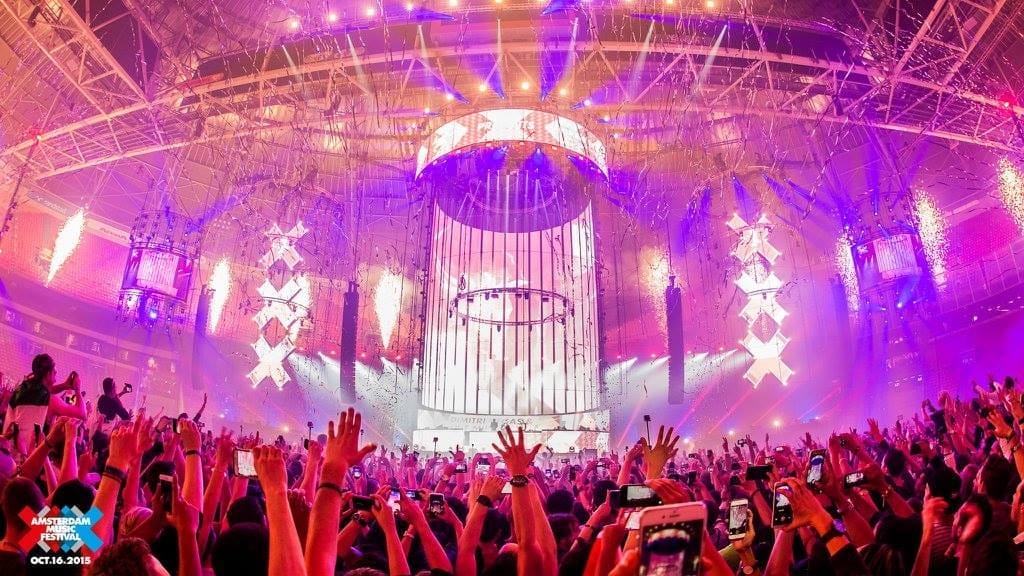
Amsterdam Dance Event, universally known as ADE, is a five-day electronic music conference and festival held every year in mid-October. It is the largest club festival of its kind in the world, with more than 1,000 individual events taking place across nearly 200 locations throughout Amsterdam. That number is not a typo. ADE is not a single ticketed event with one headliner on one stage. It is an umbrella organisation that coordinates an entire city's worth of electronic music activity for one week each autumn.
The scale is genuinely difficult to grasp until you are standing in Amsterdam mid-October and every café, converted shipyard, canal boat, warehouse, and proper club has a line outside. Techno in a church. Deep house in a museum basement. Trance on a waterfront terrace. The variety of music, setting, and crowd energy is one of the things that separates ADE from a standard festival: there is no single experience. You build your own programme from dozens of competing lineups, venues, and genres, night after night.
ADE runs alongside a major professional conference for the music industry, covering topics from music technology and artist rights to label strategy and streaming economics. The conference side is less visible to casual visitors but adds a layer of creative energy to the city. Producers, DJs, booking agents, and label managers all converge during the same week. For context on how Amsterdam's arts and cultural scene fits together year-round, the Amsterdam nightlife guide covers the broader landscape beyond ADE.
ℹ️ Good to know
ADE 2026 is scheduled for 21—25 October 2026. Dates shift slightly year to year, always landing in mid-October. Check the official website at amsterdam-dance-event.nl for confirmed dates each year.
A Brief History: From Club Night to Global Institution
ADE started in 1996 as a modest gathering for electronic music professionals. Amsterdam was already a natural home for it: the city had been a hub for club culture since the late 1980s, with venues and a regulatory culture that tolerated extended hours and experimentation in ways that many other European capitals did not. The conference format allowed people from across the industry to meet, share knowledge, and plan ahead. The festival component grew alongside it, eventually dwarfing the conference in sheer scale.
Over roughly three decades, ADE has evolved from an industry insiders' event into one of the most significant moments in the global electronic music calendar. Artists from every corner of the genre play here: techno pioneers from Berlin, house legends from Chicago and Detroit, Dutch titans of progressive and trance, and emerging names playing their first major European shows. The city's existing infrastructure of world-class clubs and flexible cultural venues made it possible to accommodate a program of this breadth without needing to build a single temporary structure.
Tickets & tours
Live prices and dates from our booking partner. If you book, we may earn a commission at no extra cost to you.
Axe Throwing Experience at UP Events Amsterdam
From 20 €Instant confirmationFree cancellationAmsterdam evening canal cruise
From 18 €Instant confirmationFree cancellationSpectacular evening cruise from Amsterdam
From 45 €Instant confirmationFree cancellationAmsterdam Evening Canal Cruise
From 0 €Instant confirmation
The Festival Experience: Venues, Genres, and What to Expect on the Ground
Walking through Amsterdam during ADE feels different from any other week of the year. By Thursday evening, the city's club district is noticeably busier. Lines form early at popular venues. You will hear sound checks bleeding out from converted warehouses in Amsterdam-Noord from mid-afternoon. The demographic shifts too: alongside the usual mix of Amsterdam residents and tourists, you get a very specific international crowd of music obsessives who have flown in from across Europe, North America, and further afield.
Venues span the full spectrum of Amsterdam's built environment. Some shows take place in the city's established electronic music institutions. Others are programmed into spaces that are not normally nightclubs at all: cultural centres, event halls, outdoor waterfront spaces, and occasionally genuinely unusual locations that change each year. Part of the appeal is discovering what's been activated that wasn't a venue the year before.
Amsterdam-Noord, the district across the IJ waterway from Centraal Station, hosts a disproportionate share of the larger warehouse-format shows. The area around the NDSM shipyard complex is particularly active during ADE. You can reach it via the free GVB ferry from behind Centraal. For a sense of Noord's everyday character and cultural scene outside of ADE, the Amsterdam-Noord neighbourhood guide gives useful context.
Genre-wise, ADE covers everything that falls under the broad umbrella of electronic music: techno, house in its many forms, drum and bass, ambient, experimental club music, and more. There is no single curatorial voice deciding what gets programmed. Each promoter and venue makes its own bookings. The result is genuine diversity across the week, meaning attendees with very different tastes can all find an ADE they care about.
💡 Local tip
The official ADE website publishes the full event lineup with individual ticket links from around June each year. Events sell out weeks or months in advance. If you have specific shows in mind, buy tickets as soon as they go on sale rather than leaving it to the week of the event.
Tickets, Pricing, and How the System Works
ADE does not sell a single festival pass that covers all events. Each show is organised and ticketed independently by its own promoter. When you buy a ticket, you are buying it from that promoter's designated platform, linked through the ADE website's event pages. Prices reflect the size of the show, the lineup, and the venue: a small basement techno night might cost under 20 EUR, while a major arena show or a headline performance at an iconic venue will cost considerably more. Always check the individual event page for current pricing.
Some events are free or low-cost, particularly earlier in the week when the conference programming intersects with public-facing showcases. Daytime conference sessions are primarily aimed at industry professionals, though some are open to the public. It is worth browsing the full programme once it goes live because the non-obvious, smaller shows often produce the most memorable nights.
⚠️ What to skip
Resale scams are a real risk during ADE. Only buy tickets through links on the official ADE event pages or directly from the named ticket platforms listed there. Avoid unofficial resale sites or strangers offering tickets outside venues.
Planning Your ADE Trip: Practical Intelligence
Amsterdam in mid-October sits at the edge of the city's shoulder season. Daytime temperatures typically hover in the single digits to low teens Celsius. Evenings are cold, often damp, and sometimes wet. If you are queuing outside a warehouse in Amsterdam-Noord at midnight, you will want a proper coat, not a light jacket. Rain is common in October, so waterproof outerwear is worth packing regardless of the forecast.
Accommodation books out fast. Many regular visitors book hotels or apartments months in advance, particularly for the Thursday-to-Saturday stretch. The closer to Centraal Station and the canal ring, the faster rooms go and the higher prices climb during ADE week. For help comparing neighbourhood options and budget strategies, the Amsterdam accommodation guide covers the key areas and what to expect.
Getting between venues at night works best on foot or by bike for shorter distances, and by GVB night bus or tram for longer ones. Amsterdam's public transport runs reduced night services, so check the GVB planner before you go out rather than assuming frequent service at 3am. Taxis and ride-hailing apps including Uber and Bolt operate across the city, but surge pricing during peak hours on ADE nights can make them expensive.
If you are visiting Amsterdam for the first time and want to fill your days while the nights are taken care of, ADE week falls during one of the better months for exploring the city. Daytime canal walks, museum visits, and neighbourhood browsing all work well in October's cool, clear light.
Photography and Social Media
Most ADE events operate a strict no-photography or no-video policy on the dancefloor, following standard club culture norms in Amsterdam and across northern Europe. Phones away on the floor is both enforced by staff and culturally expected by the crowd. Photography of venues, queues, and outdoor festival areas is generally fine. If in-venue photography matters to you, check the specific event's policy before attending.
Who ADE Is For, and Who Should Think Twice
ADE is built for people who genuinely love electronic music and are willing to structure a trip around late nights and multiple shows. If you are in Amsterdam primarily as a tourist and are curious about ADE as a side experience, you can absolutely pick one show and attend without committing to the full week. But the event rewards deep engagement. The more time you invest, the more you get out of it.
Travellers expecting a single-site festival with food stalls, camping, and a main stage will be confused. ADE has none of that. It is a city-wide programme requiring planning, navigation, and a certain tolerance for the unpredictability of club culture. If that sounds appealing rather than exhausting, you are the right audience. For a broader picture of Amsterdam beyond the nightlife, the Amsterdam things to do guide covers daytime options that pair naturally with an ADE trip.
Families with young children, travellers who keep early hours, and anyone who dislikes loud crowds in dark spaces should skip ADE entirely or visit Amsterdam during a different week. The festival does not disrupt the city in ways that make it unpleasant for non-attendees, but if you are booking a trip coinciding with ADE without realising it, be aware that accommodation costs will be higher and the canal ring will be noticeably busier than usual on Thursday through Saturday nights.
ℹ️ Good to know
Accessibility varies by venue. ADE is a multi-venue event and each location sets its own accessibility policies. If you need wheelchair access or specific facilities, contact the individual event organiser directly, or check the accessibility notes listed on that event's page on the ADE website before buying tickets.
Insider Tips
- Wednesday is underrated. The opening night of ADE is far less crowded than the weekend, tickets are cheaper, and the lineups are often just as strong. Many seasoned ADE regulars treat Wednesday as their favourite night of the week.
- Browse the conference programme even if you are not an industry professional. Some panels and showcases are open to the public and provide a genuinely different perspective on the music you love, direct from the people who make and book it.
- The ferry to Amsterdam-Noord is free and runs late into the night during ADE, with extra services on some routes but not all lines running truly 24 hours. Many of the most talked-about warehouse shows are over there, and the ferry journey itself becomes part of the experience: hundreds of people in club gear crossing the IJ at 2am.
- Build a buffer between shows. Amsterdam's venues are spread across a city that does not always cooperate with tight scheduling. A 25-minute journey between clubs can easily become 45 minutes on a busy ADE night. Leave more time between events than you think you need.
- Follow the promoters, not just the artists. Some of the best ADE nights are curated by labels and promoters who have assembled a coherent, well-paced lineup rather than stacking names. Research who is throwing the party, not just who is playing in it.
Who Is Amsterdam Dance Event (ADE) For?
- Electronic music fans who want to experience the genre's annual global meeting point
- Music industry professionals attending the conference alongside the festival
- Repeat Amsterdam visitors who want to see the city in a completely different mode
- Night owls happy to plan a trip around a schedule that starts late and ends at sunrise
- Solo travellers comfortable navigating a complex multi-venue programme independently
Nearby Attractions
Combine your visit with:
- Amsterdamse Bos (Amsterdam Forest)
Covering nearly 1,000 hectares on Amsterdam's southwestern edge, Amsterdamse Bos is a man-made forest park three times the size of New York's Central Park. Free to enter and open year-round, it offers cycling paths, a rowing lake, wildlife meadows, and genuine breathing room that the city centre simply cannot provide.
- Dappermarkt
Running along Dapperstraat in Amsterdam-East since 1910, Dappermarkt is a street market with around 200 stalls selling everything from fresh produce and spices to fabrics and secondhand clothing. Free to enter, open Monday through Saturday, and drawing locals from across the city, it offers a sharply different experience from the tourist-facing markets in the centre.
- Haarlem
Just under 20 km west of Amsterdam, Haarlem is the capital of North Holland and one of the Netherlands' oldest cities, granted city rights in 1245. A compact historic centre, the landmark Grote Kerk, the Frans Hals Museum, and a lively market square make it one of the most rewarding half-day escapes from the capital.
- Keukenhof Gardens
Keukenhof Gardens in Lisse, South Holland, is one of the world's largest flower parks, open for just eight weeks each spring. Planted with around 7 million bulbs across 32 hectares, it draws visitors from around the world for its tulip displays, historic landscape design, and glasshouse collections. Plan carefully: timing, transport, and ticket booking all matter more here than at most attractions.
Planning a trip? Discover personalized activities with the Nomado app.